
Table of Contents
- Why Mud Stains Require a Different Approach
- Let Mud Dry Before Cleaning
- Vacuum or Brush Away Dried Mud and Loose Soil
- How to Get Dried Mud Out of Carpet
- How to Clean Ground-In Dirt From Carpet
- Using Dish Soap for Mud Stains on Carpet
- Using Vinegar for Mud Stains on Carpet
- What Not to Do: Common Mistakes That Worsen Mud Stains
- When to Call a Professional for Stubborn Mud Stains
- Prevent Mud Stains Before They Start
- Frequently Asked Questions
Last Updated: October 8, 2026
Why Mud Stains Require a Different Approach
Mud stains are stubborn because they bond differently than other dirt, which is why knowing how to remove mud from carpet requires a specific approach. When mud dries on carpet fibers, it hardens and embeds deep into the pile, so standard cleaning methods fall short.
Mud contains clay particles that cling to fabric, and water alone won’t release them. You need a specific sequence of steps to lift dried particles without damaging your carpet.
Most people rush to scrub or pour water on fresh mud, which pushes it deeper into the fibers and backing. The right approach takes patience.
At Lake Geneva Carpet Cleaning, we’ve seen countless homeowners struggle because they skip the drying step, a mistake that costs hours of scrubbing. Here’s how to do it correctly.
Fresh mud is actually easier to remove than dried mud. If you catch it immediately, let it dry first anyway. The drying process helps the particles separate from the fibers, not bond tighter.
Let Mud Dry Before Cleaning
This is the most important step. Wet mud is sticky; dried mud is crumbly.
When mud is wet, cleaning solutions can’t penetrate the clay particles. They just spread the mud around. Wait for the mud to dry completely before you touch it.
How long does this take? It depends on humidity and air circulation. In most homes, mud dries within 4-8 hours; in humid conditions, 12-24 hours. Rushing this step costs you extra work later.
What happens when you wait:
- Clay particles lose moisture and shrink
- Mud pulls away from carpet fibers naturally
- Dried particles become easier to lift with a brush or vacuum
- Your cleaning solution will work more effectively
Don’t apply heat to speed drying, a hairdryer or space heater can set the stain by forcing moisture deeper into the pile. Let air circulation do the work.
Cleaning wet mud can spread it across a larger area of carpet. You may think you’re removing it, but you’re actually distributing the particles. Always wait for complete drying.
Vacuum or Brush Away Dried Mud and Loose Soil
Once the mud is completely dry, remove the loose particles, your second-most important step.
Use a stiff-bristled brush or your vacuum cleaner. Work in one direction to lift particles out of the pile. Don’t press hard. Let the tool do the work.
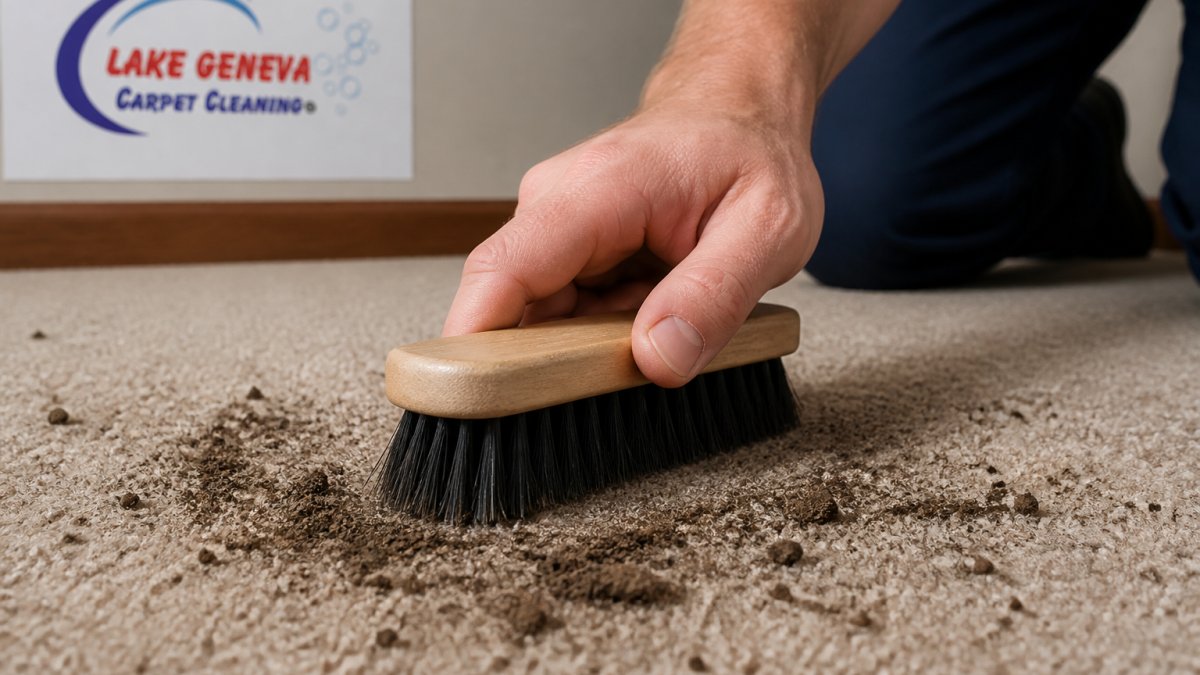
Brush method:
- Use short, controlled strokes
- Work from the outside edge of the stain toward the center
- Brush in one direction only
- Collect the loosened particles with a dustpan
Vacuum method:
- Use a standard upright or handheld vacuum
- Make several passes over the area
- Don’t press down hard
- Empty the vacuum bag or canister afterward
Many homeowners skip this step or rush it, yet this is where you remove 50-70% of the dried mud. Spend 2-3 minutes on it, the more you remove now, the less cleaning solution you’ll need later.
Removing loose soil first makes your cleaning solution work harder on what’s actually stuck. This is why professional cleaners always pre-treat stains this way.
How to Get Dried Mud Out of Carpet
After you’ve removed loose particles, the remaining stain needs a cleaning solution to remove mud from carpet effectively. This is where most DIY attempts go wrong.
The goal is to loosen remaining mud particles without damaging the carpet or leaving soap residue. Your two main options are dish soap and vinegar, and they work differently.
The basic process:
- Mix your chosen solution with cool or lukewarm water
- Test it on a hidden area first
- Apply the solution to the stain with a clean cloth
- Blot, don’t scrub
- Rinse with cool water
- Blot dry
The word “blot” is critical. Blotting means pressing the cloth down and lifting straight up; scrubbing rubs back and forth, spreading the stain and damaging fibers.
Apply your solution sparingly, too much liquid soaks into the backing and causes mildew or odors. Use just enough to dampen the stain.
Work from the outside edge of the stain toward the center. This prevents the stain from spreading outward.
How to Clean Ground-In Dirt From Carpet
Ground-in dirt is mud that’s been walked on, compacted, or left for days. It’s harder to remove because the particles have had time to bond with the fibers.
The same basic steps apply, but you may need to repeat the process. Don’t expect one application to work.
For stubborn ground-in stains:
- Remove loose soil with a brush or vacuum first
- Apply your cleaning solution and let it sit for 5-10 minutes
- Blot with a clean cloth
- Rinse with cool water
- Blot dry
- Repeat if needed
The waiting period matters: letting the solution sit breaks down the bond between mud particles and carpet fibers, making blotting more effective.
If the stain persists after two or three applications, you’ve likely reached the limit of DIY cleaning. Ground-in dirt can penetrate the backing and padding, and at that point professional equipment becomes necessary.
Lake Geneva Carpet Cleaning uses hot water extraction to reach deep stains that surface cleaning can’t touch. This technology is effective for ground-in mud that’s been embedded for weeks or months.
Using Dish Soap for Mud Stains on Carpet
Dish soap is a mild detergent that breaks down the oily film holding fine clay particles against carpet fibers. It’s the gentlest option for most wall-to-wall carpet, but not right for every fiber, how you mix and rinse it matters as much as the soap itself.
How to make a dish soap solution:
- Mix 1 teaspoon of clear, unscented liquid dish soap with 2 cups of cool water
- Stir gently to combine, do not shake it into a foam
- Mix a fresh batch each time; a batch left sitting can grow bacteria
Use cool water, not hot. Hot water can set protein-based soils and can shrink or distort some backing materials. Cool water lifts the same mud particles without that risk.
Match the method to your carpet fiber. This is where most DIY guides stop short, and it is the step that decides whether you get a clean patch or a permanently dull spot:
- Synthetic carpet (nylon, polyester, olefin/triexta): The most forgiving. Dish soap and cool water are fine. These fibers are solution-dyed or acid-dyed and hold color well, so brief moisture exposure is low-risk.
- Wool: Wool is a protein fiber with a natural scaly surface. Alkaline cleaners, and dish soap is mildly alkaline, can dull the luster and, over repeated use, felt the tips of the pile. Use the weakest dilution you can, blot rather than rub, and do not let the area stay damp. Wool also absorbs and releases moisture slowly, so it needs longer drying time.
- Delicate or hand-dyed rugs (viscose/rayon blends, some wool rugs with vegetable dyes): Viscose loses strength when wet and can brown or bleed. Hand-dyed and vegetable-dyed wools are prone to dye migration, the color can wick into the surrounding field. On these, test a hidden corner first and keep moisture to an absolute minimum, or skip home cleaning entirely.
Test on a hidden area first. Pick a spot behind a sofa leg, inside a closet, or under a heat vent. Apply a small amount of solution, wait 10 minutes, then blot with a white cloth. Check for dye bleed, a change in pile texture, and any ring or discoloration. If any appear, stop and use plain cool water only.
Apply with a clean white cloth. White matters because colored cloth can transfer dye to a damp carpet. Dampen the cloth, don’t soak it; a dripping cloth is too wet.
Press the cloth onto the stain for 10-15 seconds, lift straight up, then move to a clean section and repeat. Work from the outside edge toward the center so you don’t push soil into clean fibers.
Rinse thoroughly, this is the step people skip. Soap residue stays in the pile after the water evaporates and acts like a magnet for airborne dust, which is why a spot that looked clean looks dingy again within a week. Rinse by blotting with a cloth dampened with cool water only, then blot dry with a dry white towel. Repeat until the cloth comes up clean and no suds appear.
Dry the area completely. Lay a dry white towel over the spot and stand on it for a minute to pull moisture up out of the pile, then let air circulate with an open window or fan. Carpet that stays damp against the backing for more than about 24 hours is where mildew and musty odor start. If the spot still feels cool and damp the next morning, keep the fan on it.
If you are not sure what your carpet is made of, check the manufacturer’s label on the back of a remnant or look for the fiber content tag. When in doubt, plain cool water and a white cloth is the safest first pass, you can always escalate to a mild solution, but you cannot undo dye bleed or felted wool.
Never mix dish soap with vinegar, ammonia, or any other cleaner in the same batch. Combining cleaning chemicals can release irritating fumes, and some combinations can damage carpet dyes. Use one solution at a time, rinse between them, and never combine products in a single spray bottle.
Keep people and pets off the area until it is fully dry. A common pattern is to clean a spot, let a pet walk across it while damp, and end up with muddy paw prints two rooms over. Block the area with a chair or laundry basket until the carpet is dry to the touch.
If the spot is large, the mud has been there for more than a week, or you are working on wool, viscose, or a hand-dyed rug, the risk of doing more harm than good goes up quickly. That is the point where professional extraction, which flushes the soil out and pulls the moisture back out in the same pass, is the safer call.
Using Vinegar for Mud Stains on Carpet
Vinegar is a natural acid that dissolves mineral deposits and breaks down stain compounds, and it leaves no chemical residue.
How to make a vinegar solution:
- Mix 1 part white vinegar with 3 parts cool water
- Stir to combine
- Use immediately
The vinegar smell fades as the carpet dries. Don’t exceed the ratio, excessive vinegar can damage some carpet fibers and leave a strong odor.
Apply it the same way as dish soap: dampen a white cloth and blot from the edges toward the center, lifting straight up rather than rubbing.
Vinegar doesn’t require rinsing the way soap does, but still blot with a damp cloth afterward to remove excess moisture and keep the carpet from staying damp too long.
Vinegar works best on fresh or lightly ground-in mud. For older stains, the combination of vinegar and a gentle brush beforehand often produces better results.
What Not to Do: Common Mistakes That Worsen Mud Stains
Knowing what to avoid matters as much as knowing what to do.
Don’t scrub. Scrubbing pushes mud deeper and damages fibers, blotting is always better.
Don’t use hot water. Hot water can set stains and damage certain carpet types. Cool or lukewarm water is safer and just as effective.
Don’t apply too much liquid. Excess water soaks into the padding and backing, causing mold, mildew, and odors that last for months.
Don’t use colored cloths. Dyes can transfer to your carpet. Always use white cloths.
Don’t skip the drying step. Cleaning wet mud spreads it across a larger area. Wait for complete drying first.
Don’t leave soap residue. Rinse thoroughly after using dish soap. Residue attracts dirt and makes the stain reappear.
Don’t use bleach or harsh chemicals. These damage carpet fibers and create health hazards. Stick to mild dish soap or vinegar.
Don’t ignore the stain for weeks. Fresh stains are easier to remove; the longer mud sits, the deeper it bonds with the fibers.
One common mistake homeowners in lake geneva make during spring is cleaning mud from footprints without removing the loose soil first. The snow melt brings heavy mud, and rushing to clean it while wet spreads it across the carpet. Always wait for drying.
When to Call a Professional for Stubborn Mud Stains
Most mud spots come out with patience and a mild solution, but some are past the point where home methods help, and pushing further can cost you the carpet. Here’s how to tell the difference, and what professional cleaning does that a cloth and spray bottle cannot.
Call a professional if any of these apply:
- The stain covers a large area, roughly anything bigger than a doormat. A large wet area is hard to rinse and dry evenly by hand, and uneven drying leaves brown wicking rings and musty smells.
- The mud has been on the carpet for more than a week. Fresh mud sits on top of the pile; old mud has been walked on and pushed toward the backing, where surface blotting can’t reach it.
- You have already tried twice and the stain remains. A third attempt with the same method rarely works and risks overwetting the backing or dulling the fibers.
- The mud soaked through to the padding. If you press the spot and feel dampness below the carpet, or the stain reappears after drying, the soil is in the cushion, not just the pile, surface cleaning won’t fix that.
- The carpet is wool, viscose, silk, or a hand-dyed or antique rug. These fibers and dyes have real limits on moisture, pH, and agitation, and the risk of dye bleed, browning, or pile distortion is high enough to warrant someone who knows the fiber.
- The stain keeps coming back. A recurring spot usually means residue in the pile or soil in the backing, both need flushing, not blotting.
- You are not sure what the carpet is made of. If you cannot find a fiber label and the rug is valuable, do not experiment on it.
What professional extraction actually does differently. The key difference isn’t stronger chemicals, it’s water volume and recovery. A truck-mounted hot water extraction system injects heated water and cleaning solution into the pile under pressure, then immediately pulls it back out with the suspended soil. That two-way flow reaches soil that has migrated into the backing and pad, and helps prevent the carpet from staying wet for days. Hand blotting moves a small amount of moisture in one direction and leaves the rest behind.
A few things a professional can assess that you cannot from the surface:
- Fiber and dye testing. A quick hidden-area test shows whether the dye is stable and how much moisture the fiber can take.
- Backing and pad condition. If the pad is saturated or degraded, cleaning the pile alone will not stop the stain from wicking back up.
- Whether the stain is actually mud. Some dark spots that look like tracked-in soil are pet accidents, rust, or a set spill, and each needs a different approach, treating the wrong one can set it permanently.
Lake Geneva seasonal timing matters. Around Lake Geneva, the heaviest mud season runs from the late-winter thaw through spring rain, when snowmelt and saturated ground get tracked in from driveways, boat launches, and lakefront paths, often a fine, silty mix that packs deep into the pile fast. A second wave comes in fall, when wet leaves and shoreline soil get carried in on shoes. If you see repeated muddy traffic patterns near entryways during those windows, that’s a good time to have high-traffic areas cleaned before the soil gets ground in for the season.
What to have ready when you call. It helps to know roughly how big the area is, how long the stain has been there, what you’ve already tried, and whether the carpet is wall-to-wall or a rug. A fiber label or installation receipt is useful too.
Pricing depends on the job, the size of the area, the fiber, and how deep the soil has gone all factor in. Contact us for a free quote and we will tell you honestly whether the spot needs professional extraction or whether you can finish it yourself.
If you are unsure whether a stain is past the DIY stage, the safest move is to stop cleaning and get an assessment. Continuing to wet and rub a stain that has already soaked into the backing is the most common way a removable spot becomes a permanent one.
Prevent Mud Stains Before They Start
Prevention is easier than removal. A few simple habits will dramatically reduce mud stains in your home.
Use entry mats. Place absorbent, washable or replaceable mats at all exterior doors to catch mud before it reaches your carpet.
Establish a shoe-removal zone. Ask family members and guests to remove shoes at the door during wet seasons. Provide a bench or shoe rack for convenience.
Clean entryway carpets weekly. Vacuum high-traffic entry areas more often than the rest of your home. This removes soil before it gets ground in.
Apply carpet protector. Protective coatings make stains easier to clean and prevent them from setting. Professional-grade protectors last longer than consumer products.
Trim outdoor vegetation. Mud often comes from wet soil near the foundation. Keep plants trimmed back so water drains away from doorways.
Consider low-pile carpet in entry areas. Low-pile resists staining better than high-pile and is easier to clean.
Dry muddy shoes outside. Wipe muddy shoes on outdoor grass or a boot scraper before entering to remove most of the mud before it gets inside.
For homeowners in lake geneva and surrounding areas, spring and early summer bring the most mud from snowmelt and outdoor activities. Stepping up prevention during these seasons saves cleaning time later.
Mud stains are frustrating but manageable with the right approach. The key is patience: let the mud dry, remove loose particles, then use a mild cleaning solution and blot carefully. Most stains respond well to these steps.
For stains that resist your efforts, or if you want to protect your investment in your carpets, Lake Geneva Carpet Cleaning offers professional deep cleaning with our eco-friendly, state-of-the-art equipment. Contact us for a free quote and discover how we can restore your carpets to like-new condition.
Frequently Asked Questions
Should I let mud dry before cleaning it from carpet?
Yes, always let mud dry completely before attempting to remove it. Wet mud spreads and embeds deeper into carpet fibers, making the stain worse. Once dry, loose soil brushes away easily, and you can then treat any remaining stain residue with a cleaning solution. This two-stage approach prevents the mud from grinding further into the carpet backing.
Does dish soap remove mud stains from carpet?
Dish soap mixed with cool water is effective for mud stains on carpet. Use a mild detergent solution (a few drops in water), apply it to the stain with a clean cloth, and blot gently. Avoid scrubbing, which can damage carpet fibers. Rinse with cool water and blot again to remove soap residue. Test the solution on a hidden spot first to ensure it doesn’t affect colorfastness.
Will vinegar remove mud stains from carpet?
Vinegar can help treat mud stains when combined with water. Mix equal parts white vinegar and cool water, apply to the stain with a sponge, and blot thoroughly. Vinegar works best on light to moderate stains and can also help eliminate odors. Always test on a hidden area first, as vinegar may affect certain carpet dyes. Rinse with cool water after treatment to prevent vinegar smell.
When should I call a professional carpet cleaner for a mud stain?
Contact a professional if the mud stain covers a large area, has ground into the carpet for weeks, or returns after your cleaning attempts. Professionals use hot water extraction technology that reaches deep into carpet padding where dirt and stain residue hide. They also understand different carpet fibers and backing materials, ensuring safe, effective cleaning without damage. Professional treatment is especially important for high-traffic areas or delicate carpet types.