Table of Contents
- Why Professional Rug Cleaning Beats DIY Methods
- The Professional Rug Cleaning Process, Step by Step
- How to Remove Rug Odors From Pets, Smoke, and Mildew
- Rug Cleaning Frequency: How Often Is Often Enough?
- Rug Maintenance Tips for Lake Geneva Homes and Businesses
- Material Matters: Caring for Wool, Silk, and Oriental Area Rugs
- Rug Cleaning for Lake Geneva Homes, Rentals, and Businesses
- How to Vet a Rug Cleaner and Get an Accurate Quote
- Frequently Asked Questions
Last Updated: September 17, 2026
Why Professional Rug Cleaning Beats DIY Methods
Professional rug cleaning is the process of using commercial-grade equipment, fiber-specific solutions, and controlled drying to remove embedded soil, allergens, and odors from rugs that household methods cannot reach. At Lake Geneva Carpet Cleaning, we’ve spent over 32 years watching homeowners in lake geneva, Wisconsin, spend weekends with rental machines only to see the same dingy traffic lanes return within weeks. That pattern isn’t a coincidence, and it isn’t a failure of effort. It’s a failure of equipment.
The Carpet and Rug Institute’s cleaning guidelines confirm what most rental machines can’t deliver: sustained heat, strong extraction, and controlled moisture. Store-bought spot cleaners treat the surface. Professional equipment treats the fiber, the backing, and the padding beneath it.
What Rental Machines and Store-Bought Spot Cleaners Leave Behind
Rental machines and store-bought spot cleaners leave behind three things: dissolved soil that resettles, detergent residue that attracts new dirt, and moisture trapped deep in the backing. That residue is the reason carpets look dingy again so quickly. It acts like a magnet, pulling dust and grit back into the fiber within days.
A common mistake is treating a visible stain as the whole problem. In practice, the stain is a symptom; the soil reservoir sits below it, in the padding, where a surface pass never reaches.
Over-the-counter spot cleaners often leave a sticky residue that bonds with soil. If you keep spot-treating the same area, you’re feeding the problem, not fixing it.
The Hidden Risks of Over-Wetting Rugs
Over-wetting is the single most common DIY mistake, and it’s the most expensive one. When too much water soaks into a rug’s backing and pad, it can’t dry from the top down. Trapped moisture creates the conditions for mildew, delamination of the backing, and browning at the fiber tips.
Wool is especially vulnerable. A wool rug that stays damp for more than a day can lose its shape, its luster, and in severe cases, its structural integrity. Fast drying isn’t a convenience feature; it’s the difference between a clean rug and a damaged one.
The Professional Rug Cleaning Process, Step by Step
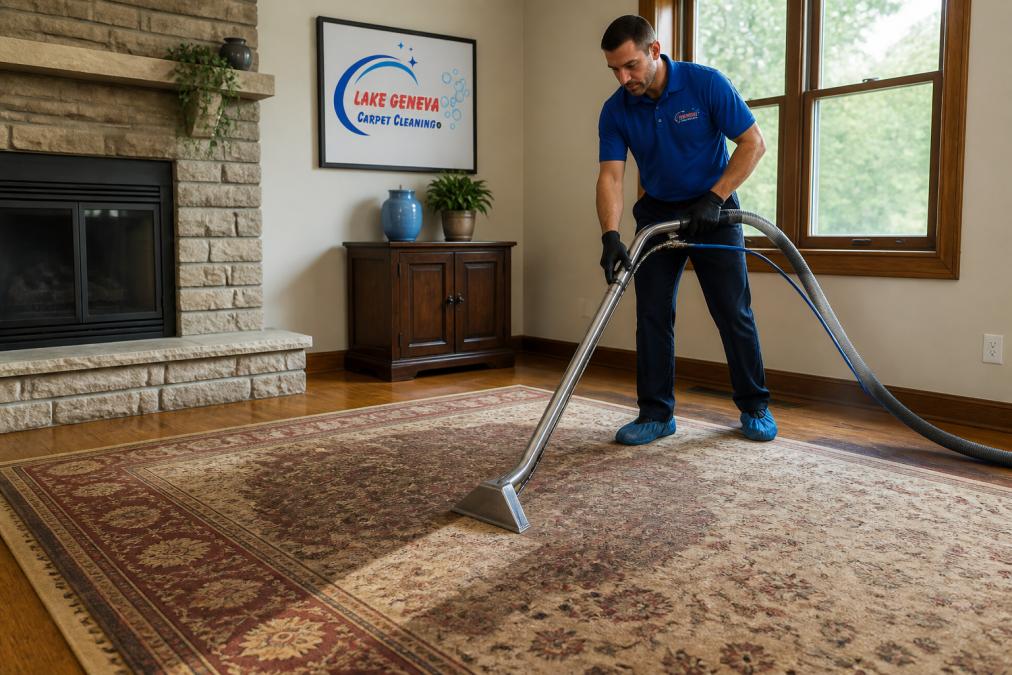
The professional rug cleaning process moves through inspection, fiber testing, soil extraction, hot water extraction with pH-balanced solutions, and controlled drying. Each stage exists because skipping it causes a specific, predictable failure.
Inspection, Fiber Testing, and Soil Extraction
Inspection comes first, and it’s where experience matters most. A technician identifies the fiber type, checks for color bleeding, tests for dye stability in an inconspicuous corner, and notes pre-existing damage before any water touches the rug.
Fiber testing is the practice of applying a small amount of cleaning solution to a hidden area to confirm the rug won’t bleed, shrink, or discolor. Skipping it is how rugs get ruined.
Dry soil extraction follows. Removing loose grit before wet cleaning prevents that grit from grinding into fibers during agitation, which is what causes premature wear in high-traffic areas.
Hot Water Extraction, pH-Balanced Solutions, and Fast Drying
Hot water extraction, often called steam cleaning, injects heated solution into the fiber and immediately pulls it back out under pressure. The heat breaks down oils; the extraction lifts them away. That combination is what separates deep cleaning from surface cleaning.
pH-balanced solutions matter because rug fibers have a natural pH range. Solutions that are too alkaline can dull wool and strip protective treatments; solutions that are too acidic can weaken certain dyes. Matching the solution to the fiber is fabric care, not guesswork.
Fast drying closes the loop. Air movers and controlled airflow bring dry times down to hours rather than days, which prevents mildew and keeps the backing intact.
How to Remove Rug Odors From Pets, Smoke, and Mildew
Removing rug odors requires eliminating the source, not masking it. Odor neutralization works by breaking down the compounds that cause the smell, while deodorizing alone only covers them up.
Pet accidents are the classic case. Urine soaks through the fiber, into the backing, and often into the pad. Surface cleaning removes the smell from the top layer, which is why it “comes back” within weeks: the residue underneath keeps releasing odor as humidity rises.
Smoke odor behaves differently. Smoke particles are fine and oily, and they settle deep into the pile. Removing them takes agitation, heat, and proper extraction, followed by odor neutralization that targets the residue rather than the air.
Mildew is the one you should never handle yourself. If a rug smells musty, it has already been damp too long, and disturbing it can release spores into the room. Professional sanitation techniques address both the odor and the microbial source.
If a pet odor returns after rain or humid weather, the contamination is in the pad, not the surface. That’s your signal that surface treatment isn’t the answer.
Rug Cleaning Frequency: How Often Is Often Enough?
Most households should schedule professional rug cleaning every 12 to 18 months. Homes with pets, children, allergy sufferers, or heavy foot traffic should aim for every 6 to 12 months. But in Lake Geneva, those general numbers need adjusting for the seasons, and that is where most rug cleaning advice falls short.
The Four Factors That Change the Schedule
Rug cleaning frequency depends on four things:
- Foot traffic through the room, including whether it is a main entry path
- Pets, and whether accidents happen even occasionally
- Allergy sufferers in the household, who react to the dust mite and pollen load that builds in the pile
- Local conditions, which in Lake Geneva means road salt, sand, mud, and lake humidity
A useful rule: if you vacuum weekly and the rug still looks dull at the edges, the soil has moved past the surface. That is the point where professional deep cleaning pays off. Preventative maintenance beats restoration every time.
Lake Geneva Seasonal Cleaning Calendar
The calendar here is different from most of the country, and ignoring it is why rugs in this area wear faster than their owners expect.
Late fall through early spring, salt and sand season. Road salt, sand, and grit get tracked in from driveways, sidewalks, and parking lots. That grit works its way into the pile and acts like sandpaper on the fibers with every step. Rugs near entryways should be cleaned at the end of this season, not at the start of the next one, so the abrasive material does not sit in the pile for months.
Spring, mud and pollen season. Melting snow and spring rain bring mud and pollen indoors. Pollen is fine enough to settle deep into the pile and is a common trigger for allergy sufferers. A spring cleaning resets the rug before the heavy summer use season.
Summer, lake humidity season. Lake Geneva’s summer humidity slows drying and reactivates old odors trapped in the pad. Rugs that got wet from a spill, a pet accident, or a plumbing leak in summer are at higher risk of mildew than the same spill in winter. If a rug smells musty at any point in summer, it has already been damp too long.
Fall, pre-holiday reset. Before the heating season begins and the house closes up, a professional cleaning removes the summer’s accumulated soil and prepares rugs for the months when windows stay shut and indoor air quality matters most.
Signs You Should Not Wait
Even if you are inside the recommended window, some signs mean the rug needs attention now:
- A musty or sour smell that returns when humidity rises
- Visible traffic lanes that vacuuming no longer lifts
- Pet odor that reappears after rain or humid weather, a sign the contamination is in the pad, not the surface
- Darkening at the edges of the rug, where soil accumulates against baseboards
- Allergic reactions that get worse when you are in the room
If you can’t remember the last time your rug was professionally cleaned, that is usually the answer. Rugs hide soil well until the pile is saturated, and by then the wear has already started.
Rental Properties and Businesses
Rental property owners in Lake Geneva should schedule cleaning between tenants rather than on a calendar. Turnover is the trigger, not the date. For offices and retail spaces, a maintenance schedule tied to traffic, quarterly for high-traffic entries, twice a year for lower-traffic areas, keeps the carpet looking consistent across the whole space rather than showing a bright, freshly cleaned patch next to a tired one.
Rug Maintenance Tips for Lake Geneva Homes and Businesses
Rug maintenance tips that actually work start with moisture control. Lakeside living means humidity swings, and humidity is what reactivates old odors and slows drying. Keep indoor humidity moderate, and give rugs airflow after any spill.
A practical weekly routine:
- Vacuum high-traffic areas twice a week, edges and under furniture once
- Rotate area rugs every few months so wear stays even
- Blot spills immediately with a clean white cloth, never rub
- Use rug padding to reduce friction and absorb impact
- Lift rugs during heavy salt and sand season to clean the floor beneath
Rug padding is the most underrated item on that list. It reduces fiber wear, keeps rugs from sliding, and adds a layer that absorbs spills before they reach the floor.
Padding extends textile longevity more than any single cleaning method. It’s the cheapest form of preventative maintenance a homeowner can add.
Material Matters: Caring for Wool, Silk, and Oriental Area Rugs
Most rug cleaning advice treats every rug the same, and that is exactly how valuable pieces get ruined. Fiber type determines how much moisture a rug can tolerate, how it reacts to heat, and which cleaning method will preserve its color and structure. A wool rug and a silk rug can look similar on a living room floor and require completely opposite approaches.
Wool Rugs
Wool is the most forgiving natural fiber, but it is not indestructible. It tolerates moisture well, holds dye deeply, and resists crushing, which is why it has been the standard for area rugs for centuries. The risks are specific: over-wetting causes the backing to delaminate, and alkaline solutions strip the natural lanolin that gives wool its luster. Wool also browns at the fiber tips when it dries too slowly, a condition that looks like a stain but is actually a drying failure.
The right approach is hot water extraction with a pH-balanced solution, followed by controlled airflow that brings dry time down to hours. In Lake Geneva, where lake humidity can slow drying in summer and fall, airflow matters even more than it does inland.
Silk Rugs
Silk is the least forgiving fiber in any home. It water-spots easily, loses sheen when agitated too aggressively, and can shrink or distort if it stays damp. Many silk rugs are also hand-knotted with delicate dyes that bleed at the first sign of excess moisture.
Silk should be cleaned with low-moisture or dry methods, never with the same hot water extraction used on wool or synthetic rugs. A technician should test dye stability in a hidden corner before any solution touches the pile. If a silk rug has been water-spotted by a spill, the spot is often permanent, which is why prevention and prompt professional attention matter more than any after-the-fact treatment.
Oriental and Hand-Knotted Rugs
Oriental rugs are rarely a single fiber. A single piece may combine wool pile, cotton foundation, silk highlights, and multiple natural dyes, each with a different tolerance for heat, moisture, and pH. That is why a single cleaning method almost never fits the whole rug.
A fiber-by-fiber assessment comes first. The technician identifies which areas can take moisture and which cannot, checks for dye migration in older pieces, and sets expectations before cleaning rather than after. Color correction is a separate concern: sun fading, dye migration, and uneven wear all change how a rug reads once it is clean, and no cleaning method reverses those conditions.
Synthetic and Viscose Rugs
Synthetic rugs, polypropylene, polyester, nylon, are the most durable and the most tolerant of hot water extraction. They handle heat and moisture well, and they respond to deep cleaning faster than natural fibers. The main risk is residue buildup from repeated store-bought spot treatments, which attracts new soil and makes the rug look dingy within days.
Viscose is the exception that trips people up. It looks like silk, feels like silk, and is often marketed as “art silk” or “bamboo silk,” but it is a cellulose-based fiber that distorts permanently when it gets wet. Viscose rugs should only be cleaned with low-moisture methods. A single over-wet cleaning can leave a viscose rug with crushed, matted areas that never recover.
| Rug Type | Best Cleaning Approach | Key Risk to Avoid |
|---|---|---|
| Wool | Hot water extraction, pH-balanced | Over-wetting, browning, lanolin loss |
| Silk | Low-moisture or dry methods | Water spotting, dye bleed |
| Oriental / hand-knotted | Fiber-by-fiber assessment | Dye migration, foundation damage |
| Synthetic (poly, nylon) | Hot water extraction | Residue buildup from spot cleaners |
| Viscose / art silk | Low-moisture only | Permanent fiber distortion |
The single most important question to ask any rug cleaner is how they identify fiber type before cleaning. If the answer is vague, the rug is at risk.
Why This Matters in Lake Geneva
Homes near the lake deal with humidity swings that most inland homes do not. Wool and silk rugs in lakefront properties dry more slowly, which raises the risk of browning, mildew, and dye migration. A cleaning method that works in a dry climate can fail here. That is why controlled drying and fiber-specific solutions are not optional in this area, they are the difference between a clean rug and a damaged one.
Rug Cleaning for Lake Geneva Homes, Rentals, and Businesses
Residential cleaning and commercial maintenance follow different schedules. A family home needs deep cleaning once or twice a year. A retail shop, professional office, or rental property needs a plan built around traffic and turnover, because appearance drives how customers read the business.
Seasonal contaminants are a local reality. Road salt, sand, and mud get tracked in from late fall through early spring, and they grind into fibers with every step. Left alone, that grit acts like sandpaper on the pile.
For rental property owners, scheduling cleaning between tenants prevents odor complaints and protects the flooring investment. For offices, a maintenance schedule keeps carpet looking consistent across the whole space rather than showing a bright, freshly cleaned patch next to a tired one.
How to Vet a Rug Cleaner and Get an Accurate Quote
Vetting a rug cleaner comes down to five questions, and any provider worth hiring will answer all of them without hesitation.
What to ask before you book:
- What method do you use, and why does it suit my rug’s fiber?
- How long will the rug take to dry?
- Do you test fibers and dyes before cleaning?
- What happens if a stain doesn’t come out?
- Can I see reviews or references from local customers?
That last question matters more than most people expect. You want proof that a provider has actually served customers near you, not just a polished website.
On quotes: pricing depends on the job. Rug size, fiber type, level of soiling, odor treatment, and whether padding needs attention all change the scope of work. Anyone quoting a flat figure over the phone without seeing the rug is guessing. Ask for an on-site assessment and a written quote, and treat a free quote as a standard request rather than a favor.
A 10-day satisfaction guarantee is a reasonable thing to ask about, because it signals a provider stands behind the work after the truck pulls away.
Finding a rug cleaner who actually understands fiber, moisture, and drying is harder than it should be. Lake Geneva Carpet Cleaning has served Wisconsin homeowners and business owners for over 32 years as an owner-operated business, using truck-mounted hot water extraction, eco-friendly methods, and meticulous attention to detail on every job. We back our work with a 10-day satisfaction guarantee. If your rugs need deep cleaning, pet stain and odor removal, or upholstery care, contact us for a free quote and get started with Lake Geneva Carpet Cleaning.
Frequently Asked Questions
Why should you choose professional rug cleaning over DIY methods?
Rental machines and store-bought spot cleaners often push water and detergent deep into the backing and padding, where they dry slowly and can feed mildew. Professional rug cleaning uses truck-mounted hot water extraction that flushes soil out and pulls most of the moisture back with it. The result is residue-free cleaning, faster drying, and protection for the fibers, which matters most for wool, silk, and oriental area rugs.
How often should area rugs in Lake Geneva homes be professionally cleaned?
Most homes do well with professional rug cleaning every 12 to 18 months. Lake Geneva’s lakeside environment adds road salt, sand, and mud tracked in from fall through spring, so entryway and high-traffic areas benefit from a yearly visit. Households with pets, kids, allergy sufferers, or heavy foot traffic should aim closer to every 12 months, while rugs in low-traffic rooms can stretch to 18 to 24 months.
How do you remove rug odors that keep coming back?
Recurring odors usually mean the source is still in the rug backing or padding, not the surface. To remove rug odors, the rug needs deep cleaning that reaches the pad, plus odor neutralization rather than masking. Pet accidents, spills, and damp storage leave proteins and oils that trap odor. A professional can treat the source, sanitize the fibers, and dry the rug quickly so new mildew does not form.
What does eco-friendly rug cleaning actually mean, and is it safe for kids and pets?
Eco-friendly rug cleaning means using pH-balanced solutions, avoiding harsh solvents, and flushing out residue so nothing sticky is left behind. Safe methods rely on hot water extraction, controlled moisture, and fast drying rather than heavy chemicals. Ask any provider what solutions they use, whether they are pH-balanced, and how they handle pet stain treatment and allergen removal. Once the rug is fully dry, it is safe for children and pets to use normally.