Table of Contents
- What Makes Eco-Friendly Carpet Cleaning Different
- How Often Should Carpets Be Cleaned for Optimal Health
- Removing Allergens from Carpets Naturally
- Carpet Cleaning Safety for Pets and Children
- The Professional Eco-Friendly Carpet Cleaning Process
- Why Non-Toxic Solutions Outperform Traditional Chemicals
- Protecting Your Carpet’s Longevity and Indoor Air Quality
- Frequently Asked Questions
Last Updated: September 1, 2026
What Makes Eco-Friendly Carpet Cleaning Different
Eco-friendly carpet cleaning is fundamentally different from traditional methods because it removes dirt, allergens, and odors without relying on harsh synthetic chemicals that linger in your home long after the cleaning is done. Instead of masking problems with fragrance, green cleaning targets the root cause: deep soil extraction and genuine sanitization that leaves your carpet fresh, your air cleaner, and your family safer.
The distinction matters more than most homeowners realize. Conventional cleaning often leaves chemical residue in carpet fibers, which can off-gas for days or weeks, affecting indoor air quality and potentially triggering allergies or respiratory sensitivity. Eco-friendly methods use plant-based or naturally derived cleaning agents combined with hot water extraction technology to break down soil at the molecular level, then remove it completely.
Lake Geneva Carpet Cleaning has spent over 32 years perfecting this approach for Wisconsin homeowners who care about both results and health. The difference shows up immediately: carpets stay fresher longer, pets stop reacting to cleaning chemicals, and homes feel genuinely clean rather than chemically treated.
The best time to switch to eco-friendly cleaning is before you have a problem. Once your carpet is saturated with chemical residue from repeated conventional cleanings, it takes longer to restore the fibers to their original state.
How Often Should Carpets Be Cleaned for Optimal Health
Most households should have carpets professionally cleaned every 12 to 18 months for general maintenance, but this depends on your specific situation. Homes with pets, children, or high foot traffic benefit from cleaning every 6 to 12 months. If anyone in your household has allergies or asthma, more frequent cleaning, every 6 months, can make a measurable difference in symptoms.
The reason is simple: soil and allergens accumulate faster than vacuuming alone can remove them. Regular vacuuming handles surface debris, but dust mites, pet dander, and embedded soil settle deep in the carpet padding where a household vacuum cannot reach. Professional extraction removes what’s hiding underneath.
Between professional cleanings, vacuum high-traffic areas weekly and use spot treatment on fresh spills within 24 hours. This prevents soil from setting permanently into the fibers. The combination of regular maintenance and professional eco-friendly cleaning every 12-18 months keeps your carpet looking newer longer and maintains healthier indoor air quality.
The real cost of infrequent cleaning is not money, it’s the accelerated breakdown of carpet fibers and the buildup of allergens that no amount of vacuuming can remove.
Removing Allergens from Carpets Naturally
Carpets are notorious allergen traps. Dust mites, pet dander, pollen, and mold spores settle into fibers and padding, creating an invisible layer of irritants that trigger sneezing, congestion, and asthma symptoms. Standard vacuuming captures only surface particles; the majority remains embedded where your vacuum cannot reach. For households with members who have asthma or allergies, this buildup directly impacts indoor air quality and symptom severity.
Eco-friendly carpet cleaning addresses this by combining two strategies: heat and extraction. Hot water breaks down the biofilm that holds allergens in place, while powerful extraction removes them completely from the carpet and padding. This is not a temporary fix, it actually reduces the allergen load in your home for weeks until new particles naturally accumulate. The difference is measurable: many allergy sufferers report noticeably fewer symptoms in the days and weeks following professional extraction compared to surface cleaning or spot treatment alone.
Deep Soil Extraction and Dust Mite Control
Dust mites thrive in warm, humid environments where dead skin cells accumulate. A single carpet can harbor thousands of dust mites, each producing allergens that trigger immune responses in sensitive individuals. Deep soil extraction removes the organic matter that feeds dust mites, disrupting their lifecycle and reducing the allergen-producing population.
The process works by injecting hot water deep into the carpet pile and padding, suspending soil particles, then immediately extracting them with industrial suction. This pulls out not just visible dirt but also the microscopic debris and allergen-carrying particles that regular cleaning methods miss. For households with dust mite allergies, this extraction method is far more effective than surface cleaning or chemical treatments alone.
Professional equipment can extract moisture so thoroughly that carpets dry in 2-4 hours rather than days, which prevents mold and mildew from developing in damp padding, another common allergen source. This rapid drying is critical: carpets that remain damp for extended periods create ideal conditions for mold spore proliferation, which can worsen respiratory symptoms and trigger new allergic reactions.
Fiber Type Matters: Eco-Friendly Cleaning for Different Carpet Materials
Not all carpets respond the same way to cleaning methods. The fiber composition determines how aggressively you can clean without causing damage, and this is where eco-friendly methods shine, they are gentler on delicate fibers while still delivering deep allergen removal.
Wool carpets are naturally resilient but sensitive to harsh chemicals and excessive heat. Eco-friendly plant-based solutions are ideal for wool because they clean without degrading the protein structure of the fibers. Wool’s natural lanolin also works synergistically with enzymatic cleaners, making eco-friendly methods particularly effective. Professional extraction removes allergens from wool without the brittleness or color fading that can result from chemical treatments.
Nylon carpets are durable and can tolerate higher water temperatures, making them excellent candidates for hot water extraction. Nylon’s synthetic structure resists chemical damage but can trap allergens deeply in the pile. Eco-friendly extraction is highly effective on nylon because the heat and mechanical action penetrate thoroughly without leaving surfactant residue that would re-attract soil.
Polyester carpets are stain-resistant by nature but can be damaged by excessive heat or harsh solvents. Eco-friendly methods work well on polyester because they rely on enzymatic action and moderate heat rather than chemical aggression. This preserves the fiber’s stain-resistant properties while removing embedded allergens.
If you are unsure of your carpet’s fiber type, check the manufacturer’s documentation or ask your cleaning provider to assess it during an inspection. Matching the cleaning method to your specific carpet material ensures maximum allergen removal without compromising fiber integrity or longevity.
DIY Spot Treatment vs. Professional Extraction: When to Do Each
Not every allergen problem requires professional cleaning, and understanding when to spot-treat versus when to call a professional saves time and prevents unnecessary wear on your carpet.
Use spot treatment for: Fresh spills, isolated pet accidents (within the last 24 hours), and small stains on high-quality carpet. Store-bought enzymatic spot cleaners work reasonably well on surface-level soil because the contamination hasn’t yet migrated deep into the padding. Apply the cleaner, let it sit for 10-15 minutes to allow enzymes to break down the organic matter, then blot thoroughly. The key is speed, treating within 24 hours prevents soil from setting permanently.
Use professional extraction for: Whole-room allergen buildup, chronic pet odor that spot treatment hasn’t resolved, carpet that hasn’t been professionally cleaned in over 18 months, and households where family members have asthma or severe allergies. Professional equipment reaches padding that household methods cannot access, and the extraction power removes allergens that spot treatment leaves behind. For allergy sufferers, professional cleaning every 6-12 months is often necessary to maintain acceptable indoor air quality.
The practical rule: if the problem is localized and recent, spot treatment works. If the problem is widespread, chronic, or affecting someone’s health, professional eco-friendly extraction is the only method that fully addresses it. Combining regular spot treatment between professional cleanings extends the time between deep cleanings while maintaining allergen levels that won’t trigger symptoms.
If you have asthma or allergies, schedule professional eco-friendly cleaning before symptoms peak (typically spring and fall). Removing the allergen load from your carpet proactively reduces the total allergen exposure your body encounters, making seasonal symptoms less severe.
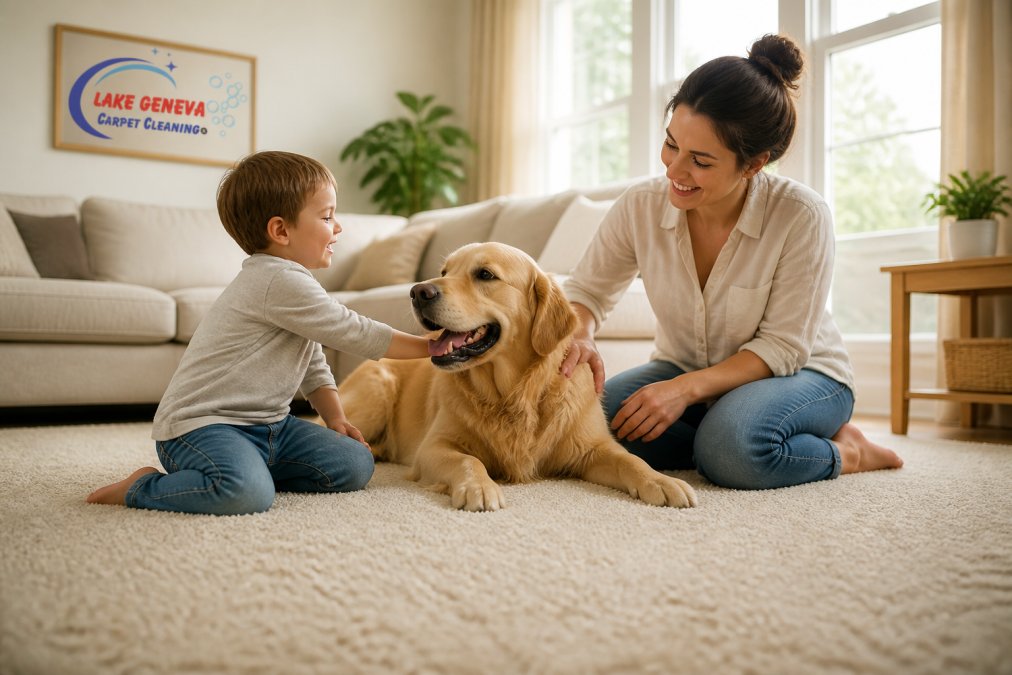
Carpet Cleaning Safety for Pets and Children
Your carpet is where your family spends the most time, crawling, playing, and breathing in whatever residue remains after cleaning. This makes safety the primary concern for any household with young children or pets.
Eco-friendly cleaning eliminates the risk of chemical poisoning from residual cleaners. Children absorb chemicals through skin contact and inhalation at much higher rates than adults because their bodies are smaller and their detoxification systems are still developing. Pets, which spend hours lying on carpet, face similar exposure risks. Conventional cleaning products often contain surfactants, optical brighteners, and fragrances that are toxic to pets and irritating to human lungs.
Non-Toxic Solutions That Protect Your Family
Plant-based and naturally derived cleaning agents clean as effectively as synthetic chemicals without the toxicity. These solutions break down organic matter through enzymatic action rather than chemical solvents. The result is a carpet that is genuinely clean, not just chemically masked.
Many eco-friendly solutions are biodegradable, meaning they break down into harmless compounds rather than accumulating in groundwater or your home’s indoor air. For lake communities like those in the Lake Geneva area, this environmental responsibility also protects local water quality.
The safest approach is to ensure your carpet dries completely before allowing children or pets back on it. Professional extraction removes so much moisture that drying time is minimal, and the absence of chemical residue means there is no off-gassing period to wait through.
Eliminating Pet Odors Without Harsh Chemicals
Pet accidents create two problems: visible stains and embedded odor molecules in the carpet padding. Store-bought spot cleaners mask odor temporarily by adding fragrance, but the underlying cause remains. The urine soaks through the carpet into the padding, where bacteria continue breaking down urine compounds and producing ammonia, the smell that keeps returning.
Eco-friendly deep cleaning removes the urine and bacteria at the source. Hot water extraction pulls contaminated moisture from the padding, and enzymatic cleaners break down the organic compounds causing the smell. Once the source is removed, the odor does not return within weeks like it does with surface treatments.
For stubborn pet odor situations, professional-grade extraction combined with natural enzyme treatments is far more effective than rental machines or consumer products. The difference is equipment power and the ability to reach padding that household methods cannot access.
The Professional Eco-Friendly Carpet Cleaning Process
Professional eco-friendly carpet cleaning follows a structured process designed to extract embedded soil and allergens without leaving chemical residue. Understanding what happens during cleaning helps you recognize quality work and know what to expect afterward.
The process begins with inspection and pre-treatment. Technicians assess carpet condition, identify stains, and apply targeted pre-treatment to break down stubborn soil. This step is crucial because it allows the cleaning solution time to penetrate and suspend soil before extraction.
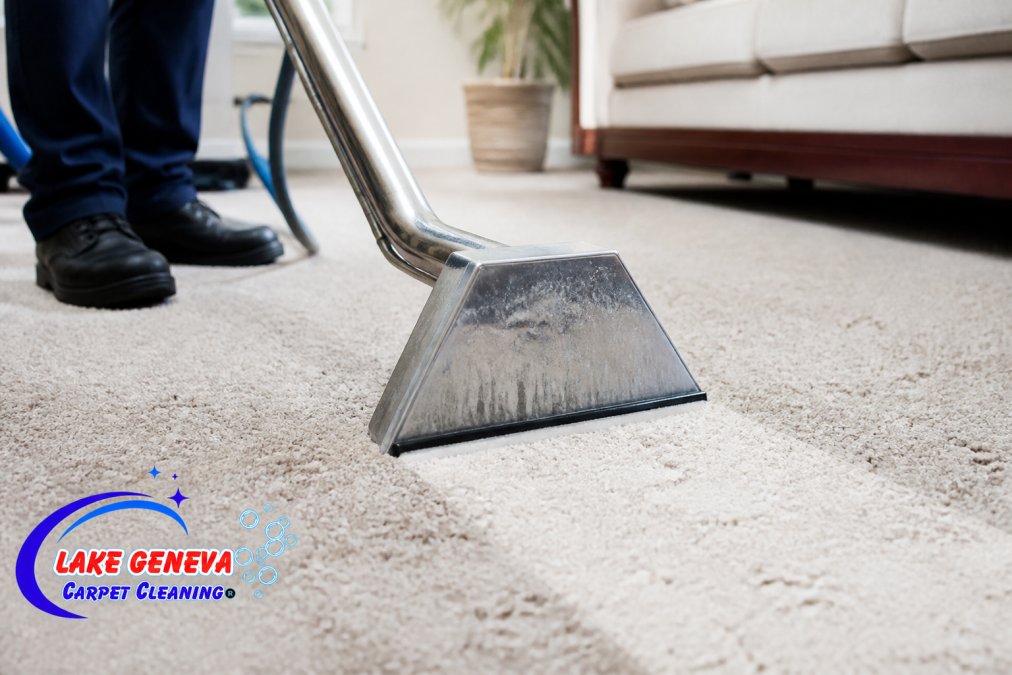
Next comes hot water injection. Professional equipment injects heated water deep into the carpet pile and padding while simultaneously breaking down soil at the molecular level. The water temperature, typically 200°F or higher, provides cleaning power without requiring harsh chemicals. This is where eco-friendly cleaning outperforms traditional methods: heat does the work that chemicals would otherwise do.
Immediate extraction follows. Industrial suction removes the water, soil, and allergens from the carpet. This step is critical for drying time and indoor air quality. Professional equipment extracts far more moisture than household methods, leaving carpet damp rather than soaking wet.
The final step is post-treatment and grooming. Technicians groom carpet fibers to restore appearance and may apply optional protective treatments to extend the time between cleanings. Quality professionals finish by ensuring all equipment is removed and the area is left clean and accessible.
Lake Geneva Carpet Cleaning uses truck-mounted hot water extraction technology, which provides more powerful suction and heating capacity than portable units. This translates to faster drying times and more thorough extraction, particularly important for removing allergens and pet odors that affect your family’s health.
Ask your cleaning provider about their extraction power and drying time guarantees. Higher water lift means more moisture removed from padding, which means faster drying and less mold risk.
Why Non-Toxic Solutions Outperform Traditional Chemicals
The assumption that stronger chemicals equal better cleaning is backwards. Non-toxic, plant-based solutions actually clean more effectively than synthetic chemicals because they work with heat and mechanical action rather than relying on toxicity alone.
Traditional chemical cleaners contain surfactants that break down soil but also leave residue. This residue attracts new soil faster, meaning your carpet gets dirty again quickly. It also off-gasses into your home’s air, creating indoor air quality problems that persist long after cleaning is done.
Eco-friendly solutions use enzymatic action to break down organic matter. Enzymes are naturally occurring proteins that catalyze specific chemical reactions, they target soil at the source rather than just coating it with surfactant. Once the soil is broken down, extraction removes it completely. No residue remains to attract new soil or off-gas into your home.
The result is carpet that stays cleaner longer and maintains better indoor air quality. For families in the Lake Geneva area concerned about health impacts, this difference is measurable: fewer allergy symptoms, better sleep quality, and reduced respiratory irritation.
Protecting Your Carpet’s Longevity and Indoor Air Quality
Carpet is an investment in your home’s comfort and appearance. How you clean it determines whether that investment lasts 5 years or 10 years. The cleaning method you choose affects both the physical durability of the fibers and the air quality in your home, two factors that compound over time.
How Cleaning Method Affects Carpet Lifespan
Traditional chemical cleaning degrades carpet fibers over time. The harsh solvents break down the polymer bonds that hold fibers together, leading to matting, discoloration, and accelerated wear. Every chemical cleaning shortens your carpet’s lifespan because the surfactants and solvents weaken the fiber structure itself. Over 5-10 years of repeated chemical cleaning, this degradation becomes visible: carpet that once felt plush becomes thin and worn, colors fade unevenly, and high-traffic areas show premature matting.
Eco-friendly cleaning preserves fiber integrity. Hot water and plant-based solutions clean without degrading the materials. Carpet cleaned this way maintains its texture, color, and resilience longer. You get more years of use from your investment. The difference is particularly pronounced in wool and natural fiber carpets, which are sensitive to chemical damage but respond beautifully to enzymatic cleaning.
Maintenance between professional cleanings also matters. Weekly vacuuming with a HEPA-filter vacuum removes surface soil before it embeds into fibers. Prompt spot treatment of spills prevents soil from setting. These habits, combined with professional eco-friendly cleaning every 12-18 months, can extend carpet life by 3-5 years compared to chemical cleaning on a similar schedule.
Indoor Air Quality: The Long-Term Health Benefit
Indoor air quality is equally important as physical durability. Carpet cleaned with non-toxic methods does not off-gas chemicals for weeks afterward. Your home remains safe to breathe immediately after cleaning. For households with asthma, allergies, or chemical sensitivity, this is not a minor benefit, it is a health necessity.
Chemical residue in carpet acts as a slow-release source of volatile organic compounds (VOCs). These compounds off-gas continuously, particularly in warm weather or when heating systems run, gradually degrading indoor air quality. Over months and years, this chronic low-level exposure contributes to respiratory irritation, headaches, and worsening allergy symptoms. Families who switch to eco-friendly cleaning often report that these symptoms improve noticeably within weeks.
Regular eco-friendly cleaning also prevents the buildup of allergens and microorganisms that degrade air quality over time. Dust mites, mold spores, and bacteria accumulate in dirty carpet. Removing them through professional extraction improves air quality measurably, particularly for people with respiratory sensitivity. The cumulative effect is significant: a home cleaned with eco-friendly methods every 12 months maintains substantially better indoor air quality than a home cleaned with chemicals on the same schedule.
The Real Equation: Fiber Preservation + Air Quality = True Value
The investment in professional eco-friendly cleaning protects both your carpet and your family’s health. It is not an expense, it is maintenance that extends the life of your flooring while keeping your home’s air safe to breathe. When you factor in the cost of premature carpet replacement due to chemical damage, plus the health costs of chronic exposure to off-gassing chemicals and accumulated allergens, eco-friendly cleaning becomes the economically and health-wise sound choice.
For homeowners in the Lake Geneva area with quality carpet, pets, or family members with respiratory sensitivity, this difference is especially important. The local climate’s humidity and seasonal allergen patterns make regular professional cleaning essential, and choosing eco-friendly methods ensures that cleaning improves your home rather than creating new problems. Lake Geneva Carpet Cleaning is dedicated to providing these essential services.
Carpet cleaned with eco-friendly methods lasts longer, maintains better appearance, and supports healthier indoor air. This is not a premium choice, it is the practical foundation of carpet care that actually protects your investment.
=== FAQ ANSWERS (audit these too, same rules) ===
[1] Q: What makes eco-friendly carpet cleaning safer than traditional methods?A: Eco-friendly carpet cleaning uses non-toxic, chemical-free solutions that don’t leave harmful residues on your carpets or in your home. Traditional chemical cleaners can off-gas and irritate respiratory systems, especially for children and pets. Natural cleaning agents work through soil suspension and hot water extraction rather than toxic fumes, delivering deep cleaning results while maintaining indoor air quality and protecting your family’s health. [2] Q: How often should carpets be cleaned to maintain allergen levels?
A: Most households benefit from professional eco-friendly carpet cleaning every 6-12 months, depending on foot traffic and household composition. Homes with pets, children, or allergy sufferers may need cleaning every 3-6 months to remove dust mites, pet dander, and allergens trapped deep in carpet fibers. Regular vacuuming between professional cleanings helps, but only professional hot water extraction can remove allergens embedded in the carpet padding where vacuums cannot reach. [3] Q: Can eco-friendly methods remove pet odors permanently?
A: Yes, professional eco-friendly carpet cleaning using hot water extraction can eliminate pet odors at the source by removing urine, bacteria, and organic matter from deep within carpet fibers and padding. Non-toxic enzymatic treatments break down odor-causing compounds without harsh chemicals. Unlike temporary fixes, this approach addresses the root cause rather than masking the smell, providing lasting results when combined with proper carpet maintenance and addressing the underlying accident spots. [4] Q: Is eco-friendly carpet cleaning as effective as chemical cleaning?
A: Eco-friendly carpet cleaning is equally effective and often superior. Hot water extraction with non-toxic solutions removes dirt, allergens, and stains as thoroughly as chemical methods while avoiding residue buildup that can attract soil and odors. Professional-grade equipment combined with organic cleaning agents delivers deep soil extraction and fiber protection without the health risks associated with chemical residues. Many homeowners find their carpets stay cleaner longer with eco-friendly methods because there’s no sticky chemical residue to trap new dirt.
Frequently Asked Questions
Q: What makes eco-friendly carpet cleaning safer than traditional methods?
A: Eco-friendly carpet cleaning uses non-toxic, chemical-free solutions that don’t leave harmful residues on your carpets or in your home. Traditional chemical cleaners can off-gas and irritate respiratory systems, especially for children and pets. Natural cleaning agents work through soil suspension and hot water extraction rather than toxic fumes, delivering deep cleaning results while maintaining indoor air quality and protecting your family’s health.
Q: How often should carpets be cleaned to maintain allergen levels?
A: Most households benefit from professional eco-friendly carpet cleaning every 6-12 months, depending on foot traffic and household composition. Homes with pets, children, or allergy sufferers may need cleaning every 3-6 months to remove dust mites, pet dander, and allergens trapped deep in carpet fibers. Regular vacuuming between professional cleanings helps, but only professional hot water extraction can remove allergens embedded in the carpet padding where vacuums cannot reach.
Q: Can eco-friendly methods remove pet odors permanently?
A: Yes, professional eco-friendly carpet cleaning using hot water extraction can eliminate pet odors at the source by removing urine, bacteria, and organic matter from deep within carpet fibers and padding. Non-toxic enzymatic treatments break down odor-causing compounds without harsh chemicals. Unlike temporary fixes, this approach addresses the root cause rather than masking the smell, providing lasting results when combined with proper carpet maintenance and addressing the underlying accident spots.
Q: Is eco-friendly carpet cleaning as effective as chemical cleaning?
A: Eco-friendly carpet cleaning is equally effective and often superior. Hot water extraction with non-toxic solutions removes dirt, allergens, and stains as thoroughly as chemical methods while avoiding residue buildup that can attract soil and odors. Professional-grade equipment combined with organic cleaning agents delivers deep soil extraction and fiber protection without the health risks associated with chemical residues. Many homeowners find their carpets stay cleaner longer with eco-friendly methods because there’s no sticky chemical residue to trap new dirt.
This article was written using GrandRanker