Table of Contents
- Why Eco-Friendly Carpet Cleaning Matters for Pet Owners
- Health Risks of Traditional Carpet Cleaning Chemicals
- How Plant-Based Cleaning Solutions Protect Your Pets
- Pet Safe Carpet Cleaning Solutions: What Works Best
- Allergen and Odor Removal Without Toxic Residue
- How to Clean Pet Urine Naturally and Permanently
- Professional Extraction vs. DIY Eco-Friendly Methods
- Post-Cleaning Care: Maintaining Your Carpets Safely
- Conclusion
Last Updated: August 15, 2026
Why Eco-Friendly Carpet Cleaning Matters for Pet Owners
Pet owners face a genuine dilemma: keeping carpets clean while protecting their animals’ health. Traditional carpet cleaning methods rely on harsh chemicals that irritate sensitive paws, trigger respiratory problems, and leave toxic residue long after cleaning ends. Your pet spends hours on those carpets daily, breathing in whatever chemicals remain embedded in the fibers.
Eco-friendly carpet cleaning becomes a practical necessity, not just a nice option. Plant-based cleaning solutions and non-toxic extraction methods remove dirt, allergens, and odors as effectively as conventional approaches, without health risks. For pet owners dealing with stubborn stains, lingering odors, and indoor air quality concerns, understanding these benefits transforms how you approach carpet maintenance.
The eco-friendly approach doesn’t sacrifice cleaning power. It uses science-backed methods that work WITH your home’s ecosystem instead of against it. When you choose eco-friendly carpet cleaning, you eliminate chemical exposure pets can’t avoid, reduce allergens that trigger respiratory issues, and create a genuinely healthier living space.
Health Risks of Traditional Carpet Cleaning Chemicals
Most conventional carpet cleaning products contain volatile organic compounds (VOCs), surfactants, and synthetic fragrances designed to break down stains aggressively. The problem: these chemicals don’t vanish after cleaning. They linger in carpet fibers, padding, and the air your family and pets breathe for days or weeks.
Common traditional chemicals pose real risks. Perchloroethylene (PERC), used in many dry-cleaning solutions, has been linked to neurological issues and respiratory irritation. Formaldehyde, present in some carpet treatments, irritates sensitive airways. Ammonia and chlorine-based products create toxic fumes, especially dangerous in enclosed spaces where pets spend most of their time.
Your pet’s health is particularly vulnerable because they’re closer to carpet surfaces and inhale concentrated chemical vapors. Dogs and cats lack the ability to metabolize certain compounds the way humans do, making them more susceptible to chemical-induced skin irritation, respiratory distress, and long-term toxin buildup. Pets with existing allergies or asthma face even greater risk when exposed to harsh chemical residue.
How Plant-Based Cleaning Solutions Protect Your Pets
Plant-based ingredients work through natural chemistry rather than aggressive synthetic compounds. These solutions use enzymes derived from plants and minerals to break down organic matter, pet urine, feces, food residue, and dander, at the molecular level, without chemical toxicity.
Natural enzymes like protease and amylase target specific soil types. Protease breaks down protein-based stains (pet accidents, blood, food), while amylase tackles carbohydrate residues. This targeted approach removes odor sources rather than masking them with synthetic fragrances. For pet owners struggling with lingering urine smell, this distinction matters enormously.
Surfactants derived from coconut oil or plant sources lower water’s surface tension, allowing it to penetrate carpet fibers more effectively. Unlike synthetic surfactants, plant-based versions biodegrade naturally and don’t accumulate in your home’s environment. No chemical buildup occurs over repeated cleanings.
The safety profile is dramatically different. Plant-based ingredients are non-toxic, hypoallergenic, and biodegradable. Your pet can walk on freshly cleaned carpets without exposure to harmful residue. Air quality improves immediately because you’re not introducing VOCs into your indoor environment. Pets with sensitive skin or respiratory conditions show noticeable improvement when homes switch to eco-friendly cleaning methods.
Plant-based enzymes work best on organic stains, pet accidents, food, and biological matter. They’re less effective on certain synthetic stains like ink or dye, but for pet-related cleaning challenges, they’re superior to traditional chemicals.
Pet Safe Carpet Cleaning Solutions: What Works Best
The most effective pet-safe carpet cleaning solutions combine hot water extraction with plant-based chemistry. This method uses temperature and pressure to remove embedded soil from carpet fibers and padding while relying on natural cleaning agents rather than toxic chemicals.
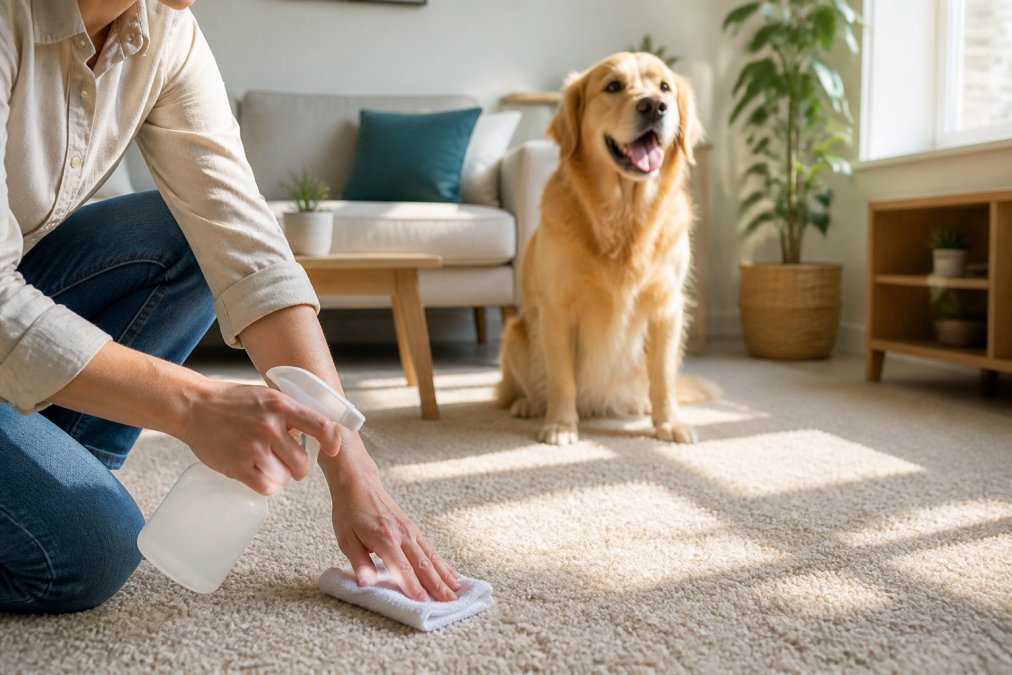
Hot water extraction reaches deep into carpet layers where pet urine, dander, and bacteria accumulate. The heat kills dust mites and bacteria, reducing allergen load naturally. Combined with plant-based solutions, this method addresses the complete problem: mechanical removal of soil plus enzymatic breakdown of organic residue.
Understanding Plant-Based Chemistry and Carpet Fiber Compatibility
Plant-based solutions work through enzymatic and surfactant action, but effectiveness varies by carpet fiber type.
Nylon carpets (the most common synthetic fiber) respond exceptionally well to plant-based solutions. Nylon’s synthetic structure doesn’t absorb plant-based enzymes the way natural fibers do, meaning solutions work on soil without over-saturating the fiber. Protease and amylase enzymes break down pet-related soils without degrading nylon’s structural integrity.
Polyester carpets require slightly different handling. Polyester is hydrophobic, so plant-based solutions sit on the fiber surface longer before penetrating embedded soil. Professional-grade hot water extraction compensates with higher pressure and temperature. Plant-based surfactants lower surface tension effectively, but drying time extends slightly. For pet owners with polyester carpet, ensuring complete extraction and adequate drying time (24 hours minimum) prevents mold risk.
Wool carpets demand careful approach. Wool is a protein fiber, and plant-based enzymes can potentially damage wool if solutions are too concentrated or left too long. However, professional-grade plant-based cleaners formulated for wool use lower enzyme concentrations and shorter dwell times (5-10 minutes versus 24-48 hours for synthetics). Wool’s natural lanolin content resists bacterial growth and odor, making it inherently more pet-friendly than synthetics.
Specific Chemical Safety for Pets
Plant-based solutions eliminate the volatile organic compounds that traditional cleaners introduce:
- Protease enzymes derived from plant sources break down protein-based stains without releasing ammonia or toxic byproducts. Enzymatic breakdown produces only water and carbon dioxide, completely safe for pets and humans.
- Surfactants from coconut oil or citrus extracts reduce surface tension without synthetic perfluorinated compounds (PFCs) that accumulate in pet tissues. These plant-derived surfactants biodegrade within days, leaving no chemical residue.
- Essential oils used for fragrance (lavender, lemon) are volatile but non-toxic at cleaning product concentrations. Unlike synthetic fragrances, essential oils dissipate completely within hours.
Dry extraction methods using plant-based powders offer alternatives for moisture-sensitive homes. These powders contain natural enzymes that break down soils, then are vacuumed away. They work well for maintenance cleaning between professional services, though they don’t achieve the depth of hot water extraction for heavily soiled carpets.
Encapsulation technology with plant-based polymers represents another effective option. The solution creates a protective coating around soil particles, making them easier to vacuum. This approach uses less water than extraction and dries faster, reducing mold risk in basements or humid environments.
For pet owners dealing with accumulated pet odor, professional-grade hot water extraction with plant-based solutions tailored to your carpet fiber type is most reliable. The combination of heat, pressure, and enzymatic action removes odor sources from padding and subfloor, not just surface fibers.
| Method | Best For | Drying Time | Allergen Removal | Fiber Compatibility |
|---|---|---|---|---|
| Hot water extraction | Deep cleaning, pet urine, heavy soil | 4-8 hours | Excellent | All types (adjust temperature for wool) |
| Dry powder extraction | Maintenance, quick refresh | 30 minutes | Good | All types |
| Encapsulation | Moderate soil, fast drying | 1-2 hours | Good | Nylon and polyester best |
| DIY plant-based solutions | Light stains, spot cleaning | 2-4 hours | Fair | All types (use lower concentration on wool) |
Allergen and Odor Removal Without Toxic Residue
Pet allergens, primarily proteins in dander, urine, and saliva, embed deep in carpet fibers and padding. Standard vacuuming only removes surface particles. Allergen proteins remain, triggering respiratory issues and skin reactions in sensitive family members and pets.
Eco-friendly carpet cleaning addresses allergens at the source through hot water extraction. Heat and pressure physically remove allergen-laden particles from carpet layers, while plant-based solutions break down protein structures that cause allergic reactions. This combination reduces allergen load by 80-90% when done professionally.
Odor elimination follows the same principle. Pet urine creates ammonia and mercaptan compounds that embed in carpet fibers and padding. These require enzymatic breakdown to neutralize rather than fragrance masking. Plant-based enzymes specifically target urine compounds, preventing odor from returning within weeks, unlike traditional chemical treatments that mask odors temporarily.
The absence of toxic residue matters equally. Traditional cleaning leaves chemical compounds in carpet fibers that can trigger allergic reactions independent of pet allergens. By removing both pet allergens AND chemical residue, eco-friendly methods create genuinely healthier indoor air. Families report improved breathing, fewer allergy symptoms, and better sleep quality after switching to plant-based carpet cleaning.
Residual chemicals from traditional cleaning can actually enhance allergic reactions by irritating airways and skin, making pet allergens seem worse than they are. Removing chemical residue alone often improves allergy symptoms significantly.
How to Clean Pet Urine Naturally and Permanently
Pet urine creates a three-part problem: the visible stain, odor compounds, and bacterial growth in padding. Addressing all three is essential for permanent odor elimination.
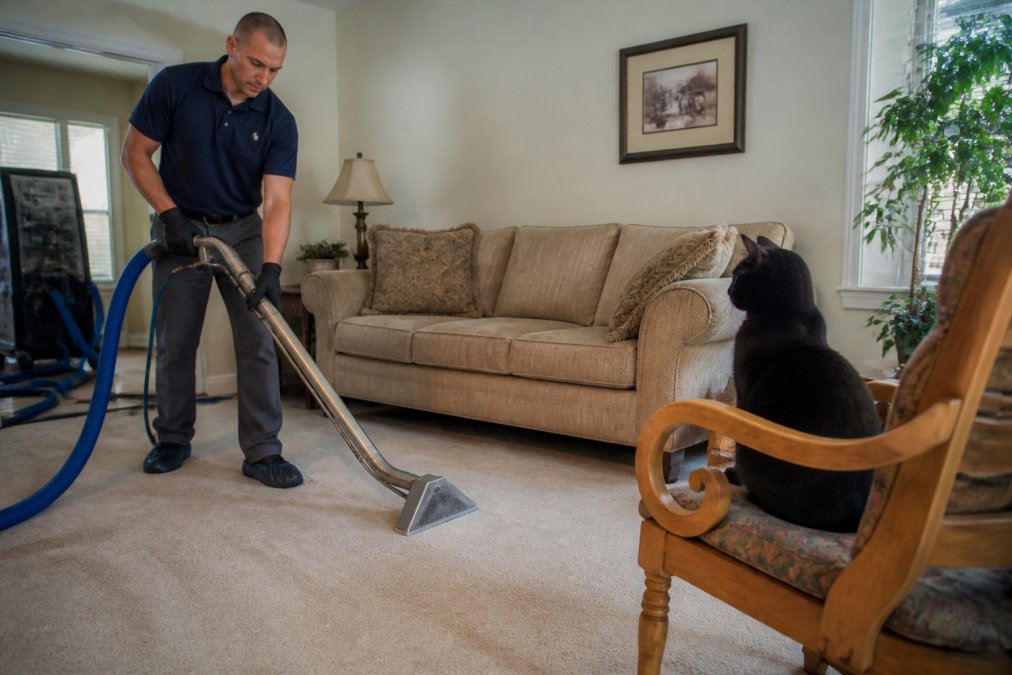
Identifying the source is the critical first step. Old urine stains often aren’t visible under normal light. Black lights or moisture meters reveal hidden accident spots in carpet and padding. Many pet owners treat visible stains while missing actual problem areas, wondering why odor persists.
Plant-based enzymatic treatment targets urine chemistry directly. Enzymes break down uric acid crystals and bacteria that create ammonia smell. Apply the solution, let it sit for 24-48 hours (enzymes need time to work), then extract with hot water. This isn’t quick, but it’s effective because enzymes continue working after application.
Hot water extraction removes treated urine and bacteria from carpet and padding. Professional-grade equipment applies hot water under pressure while simultaneously extracting it, removing moisture that would otherwise promote bacterial growth and mold. This step is where DIY methods fail, standard carpet cleaners don’t generate enough heat or extraction power to remove urine from padding.
Padding replacement becomes necessary when urine has deeply saturated padding. Urine-soaked padding promotes bacterial growth and mold, creating persistent odor and health risks. If professional extraction doesn’t eliminate odor within a week, padding replacement is the only permanent solution.
Post-cleaning maintenance prevents recurrence. Enzymatic treatments applied after cleaning help break down remaining urine compounds. Regular professional cleaning every 6-12 months (more frequently for multiple pets) prevents urine buildup before it becomes serious.
Professional Extraction vs. DIY Eco-Friendly Methods
DIY plant-based carpet cleaning offers value for maintenance and light stains, but professional extraction delivers results DIY methods cannot match.
Equipment Capability and Moisture Removal
Professional hot water extraction uses truck-mounted equipment generating 200+ degrees Fahrenheit water and extraction power that removes 95% of moisture from carpet and padding. DIY carpet cleaners generate 150-170 degrees at lower pressure and remove 60-70% of moisture. This difference matters for pet contamination.
When urine soaks into carpet padding, it creates a moisture-rich environment where bacteria and mold thrive. Professional extraction removes enough moisture that padding dries within 12-24 hours. DIY extraction leaves padding damp for 24-48 hours or longer, extending the window where bacterial growth accelerates. For homes with pet urine contamination, that extra moisture retention can mean the difference between permanent odor elimination and recurring smell within weeks.
Temperature also matters. Professional equipment reaches 200+ degrees, killing bacteria and dust mites on contact. DIY equipment at 150-170 degrees breaks down soil effectively but doesn’t achieve the same antimicrobial effect. For pet owners with family members suffering from allergies or asthma, the heat-based allergen reduction from professional extraction provides measurable health benefit.
When DIY Plant-Based Methods Are Sufficient
DIY cleaning works well for:
- Fresh pet accidents (within 24 hours): Plant-based enzymatic spot cleaners applied immediately prevent stains from setting. Blot thoroughly, apply solution, let sit 10-15 minutes, blot again.
- Light surface stains: Food spills, tracked-in dirt, or light pet dander respond well to DIY plant-based solutions.
- Routine maintenance between professional cleanings: Monthly or quarterly DIY spot treatment prevents odor accumulation and extends time between professional cleanings.
- Single-pet households with good ventilation: Homes with one pet, regular vacuuming, and quick accident cleanup may need professional cleaning only annually.
When Professional Extraction Becomes Necessary
Certain situations demand professional-grade equipment:
- Established pet urine odor: If your home smells like pet urine despite spot cleaning, urine has saturated padding. DIY extraction cannot remove moisture from padding effectively enough to eliminate odor.
- Multiple pets or years of accumulation: Homes with two or more pets, or where pet accidents have gone unaddressed for months or years, have deep contamination that surface cleaning won’t touch.
- Family members with allergies or asthma: Professional extraction’s superior allergen removal (80-90% reduction versus 40-50% from DIY) provides meaningful health improvement.
- Carpet material requiring specialized handling: Wool carpets or delicate synthetic blends need professional expertise to avoid fiber damage.
- Mold or moisture concerns: Basements or humid climates where carpet stays damp risk mold growth. Professional extraction’s superior moisture removal prevents this.
The Decision Framework
Ask yourself these questions:
- Is there an active odor problem? If yes, professional extraction. DIY won’t solve it.
- How many pets do you have? One pet with good habits: DIY maintenance + annual professional. Two or more pets: professional every 6-9 months.
- How long has the problem existed? Fresh accidents: DIY works. Months-old odor: professional only.
- Do household members have allergies or respiratory issues? If yes, professional extraction’s superior allergen removal justifies the cost.
- What’s your carpet material? Nylon: either method works. Wool or delicate synthetics: professional only.
Plant-based solutions work equally well whether applied professionally or DIY. The real difference is whether your equipment can remove enough moisture and heat to prevent mold, kill allergens, and reach contamination in padding.
Plant-based solutions are safe and effective in both scenarios. The real difference is whether your equipment can remove enough moisture and heat to prevent mold, kill allergens, and reach contamination in padding. Professional extraction solves problems DIY methods cannot touch; DIY methods maintain cleanliness between professional visits.
Post-Cleaning Care: Maintaining Your Carpets Safely
The cleaning process is only the beginning. Post-cleaning maintenance determines whether your carpets stay healthy and odor-free.
Drying management is critical. Wet carpets promote mold and bacterial growth, especially in basements or humid environments. Ensure adequate ventilation after cleaning, open windows, run fans, use dehumidifiers if necessary. Carpets should be completely dry within 12-24 hours.
Pet management during drying prevents new contamination. Keep pets off wet carpets for at least 12 hours. This prevents new accidents on damp carpet and allows fibers to set properly.
Spot cleaning between professional services maintains cleanliness. Use plant-based spot cleaners for fresh stains. Apply, let sit briefly (5-10 minutes), then blot with clean cloth. Avoid rubbing, which drives stains deeper into fibers.
Vacuuming frequency prevents soil and allergen accumulation. Homes with pets benefit from vacuuming 2-3 times weekly with a HEPA-filter vacuum that captures allergens rather than recirculating them.
Professional cleaning schedule depends on pet density and foot traffic. Homes with one pet benefit from annual professional cleaning. Homes with multiple pets need cleaning every 6-9 months. This preventive approach keeps carpets cleaner longer and prevents severe odor and allergen buildup.
Enzymatic maintenance treatments applied between professional cleanings help break down organic residue. Monthly application of plant-based enzymatic spray keeps odor sources from accumulating and extends time between professional cleanings.
Pet owners in the Lake Geneva area face genuine challenges keeping carpets clean, healthy, and safe for their animals. Traditional chemical-based cleaning methods create health risks that eco-friendly alternatives eliminate entirely. Lake Geneva Carpet Cleaning specializes in plant-based, non-toxic carpet cleaning that removes pet odors, allergens, and dirt while protecting your family’s health. With professional expertise and truck-mounted hot water extraction technology, our team delivers the deep cleaning your carpets need without chemical residue or safety concerns. Contact Lake Geneva Carpet Cleaning today to experience the difference that comes from choosing pet-safe solutions backed by genuine expertise.
Frequently Asked Questions
What makes eco-friendly carpet cleaning safer for pets than traditional methods?
Eco-friendly carpet cleaning uses plant-based ingredients and biodegradable solutions instead of harsh synthetic chemicals. Traditional cleaners often contain volatile organic compounds (VOCs) and toxic residues that can irritate your pet's respiratory system, skin, and paws. Plant-based alternatives eliminate these chemical exposures while still delivering deep soil removal and sanitization. Professional hot water extraction with non-toxic solutions removes allergens, pet dander, and bacteria without leaving harmful chemical residue behind, making your home safer for both pets and children.
Can eco-friendly methods actually remove pet urine odors permanently?
Yes, when done correctly. How to clean pet urine naturally starts with identifying all affected areas, urine often soaks deep into carpet fibers and padding. Professional extraction methods using hot water and natural enzymes break down urine compounds at the source rather than masking odors. DIY approaches with vinegar and baking soda can help surface odors, but professional-grade equipment reaches the padding where bacteria causing persistent smells live. The key is addressing the full depth of contamination, not just the visible carpet surface.
How long should my pets stay off the carpet after eco-friendly cleaning?
With professional hot water extraction, carpets typically dry within 4-8 hours depending on humidity and ventilation. Most pets can return to treated areas once the carpet feels dry to the touch. Eco-friendly methods don't leave toxic chemical residues, so there's no off-gassing period to worry about. However, allowing extra drying time reduces the risk of mold in carpet padding and prevents pets from tracking moisture. Open windows and use fans to speed drying, this also improves indoor air quality by circulating fresh air through your home.
What ingredients should I avoid when choosing pet-safe carpet cleaning products?
Avoid cleaners containing perchloroethylene, naphthalene, benzene, and formaldehyde, these are known respiratory irritants for pets. Skip products with optical brighteners and synthetic fragrances, which can trigger allergic reactions in sensitive animals. Look for certifications indicating low-VOC or non-toxic formulations. Plant-based enzymes, citric acid, and hydrogen peroxide are safe alternatives that break down stains and odors without chemical exposure. Always check product labels for 'hypoallergenic' and 'pet-safe' designations, and avoid anything listing 'phenol' or 'ammonia' as active ingredients.
This article was written using GrandRanker