Table of Contents
- Why Deep Cleaning Carpets for Health Benefits Matters More Than You Think
- The Dangers of Dirty Carpets: What’s Really Living in Your Floors
- 8 Proven Health Benefits of Deep Cleaning Your Carpets
- 1. Improved Indoor Air Quality
- 2. Allergen Reduction and Allergy Relief
- 3. Removal of Dust Mites and Pet Dander
- 4. Prevention of Mold and Mildew Growth
- 5. Elimination of Bacteria and Germs
- 6. Removal of Stubborn Stains, Odors, and Volatile Organic Compounds
- 7. Health Benefits for Children and the Elderly
- 8. Extending Carpet Lifespan While Supporting a Healthier Home
- Hot Water Extraction Health Benefits vs. Other Cleaning Methods
- Carpet Cleaning for Allergy Sufferers and Sensitive Households
- How Often to Deep Clean Carpets for Optimal Health
- Post-Cleaning Indoor Air Quality Testing: How to Verify Your Results
- Conclusion: Invest in Deep Carpet Cleaning for a Healthier Lake Geneva Home
Last Updated: June 7, 2026
Why Deep Cleaning Carpets for Health Benefits Matters More Than You Think
Most homeowners vacuum regularly and assume their carpets are clean. They are not. Deep cleaning carpets for health benefits is one of the most overlooked aspects of indoor wellness, and the gap between "vacuumed" and "genuinely clean" is far larger than most people realize. At Lake Geneva Carpet Cleaning, we have spent over 32 years pulling contaminants from carpets that looked perfectly fine on the surface but were harboring layers of biological material deep in the fiber pile.
Appearance is the least important reason to clean your carpets. The real argument is about indoor air quality, allergen load, respiratory health, and long-term wellbeing. According to the EPA’s indoor air quality resource center, indoor air can be two to five times more polluted than outdoor air, and carpets are a primary reservoir for the contaminants driving that statistic. If you have children, elderly family members, or anyone with asthma or allergies in your Lake Geneva, Wisconsin home, this is not optional reading.
The Dangers of Dirty Carpets: What’s Really Living in Your Floors
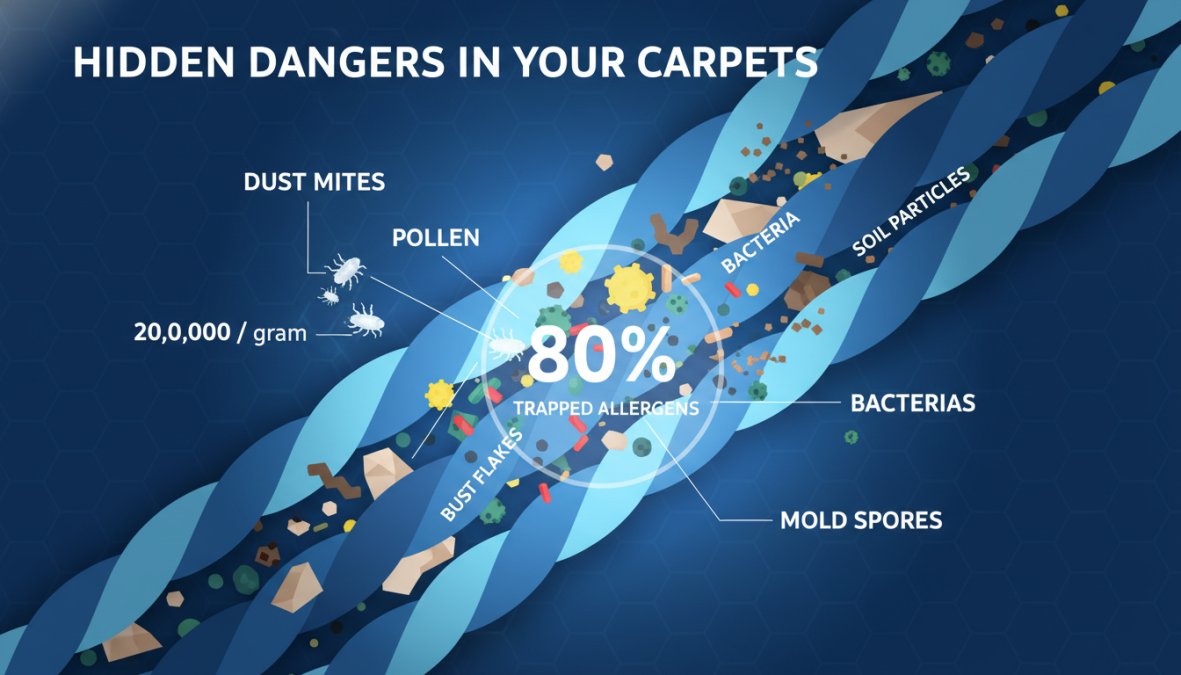
Carpets function as a filter, trapping everything that enters your home: pollen, pet dander, soil, bacteria, mold spores, dust mites, and volatile organic compounds. That filtering function is beneficial up to a point. Once the carpet reaches saturation, it stops trapping and starts releasing contaminants back into the air every time someone walks across it.
Trapped Contaminants You Can’t See
The contaminants embedded in carpet fibers are almost entirely invisible. Dust mites measure roughly 0.3 millimeters; pet dander particles can be as small as 2.5 microns, small enough to stay airborne for hours after being disturbed. Standard vacuums without HEPA filtration often recirculate these particles rather than capturing them, so routine vacuuming alone does not solve the problem. By the time discoloration is visible at the surface, the lower pile is already heavily contaminated.
How Carpet Fibers Become a Reservoir for Indoor Pollution
Carpet fibers create a dense, three-dimensional matrix that traps particles at multiple depths. Foot traffic compresses the pile and forces contaminants beyond the reach of consumer vacuum suction. Humidity from cooking, bathing, and seasonal Wisconsin weather then creates the moisture conditions that allow mold and bacteria to colonize those trapped organic particles, producing a slow, invisible buildup over months and years.
Waiting until a carpet looks dirty to [schedule a deep clean](/how-often-to-clean-carpets/) is a significant health mistake. By the time visible soiling appears, the carpet has already been functioning as a contamination source for months. The biological load builds long before aesthetic degradation is visible.
8 Proven Health Benefits of Deep Cleaning Your Carpets
Deep cleaning carpets for health benefits produces a cascade of improvements affecting air quality, allergen levels, microbial load, and long-term respiratory health. Here are the eight most significant.
1. Improved Indoor Air Quality
Improved indoor air quality is the most immediate and measurable benefit of professional carpet deep cleaning. When truck-mounted hot water extraction removes trapped contaminants, particulate matter released during normal activity drops significantly, and carpet fibers return to functioning as a filter rather than a contamination source. For Lake Geneva homeowners, this matters especially during Wisconsin’s shoulder seasons when windows stay closed and indoor air recirculates without fresh air dilution.
2. Allergen Reduction and Allergy Relief
Carpet cleaning for allergy sufferers addresses root causes rather than symptoms. Allergens including pollen, pet dander, and mold spores bind to carpet fibers and resist standard vacuuming; hot water extraction physically removes them from the fiber matrix rather than redistributing them. Many allergy sufferers report noticeable symptom improvement within days of a professional deep clean. Note that allergen reduction is not elimination, ongoing maintenance schedules are required to keep levels consistently low, particularly in households with pets.
3. Removal of Dust Mites and Pet Dander
Dust mites are the most common asthma trigger in residential environments, according to the Asthma and Allergy Foundation of America. They feed on dead skin cells in carpet fibers and thrive in typical household humidity. Hot water extraction at high temperatures disrupts the mite colony, removes their food source, and extracts both live mites and their waste, the actual allergenic material. Pet dander particles are microscopically small and sticky, adhering to fiber surfaces in ways that surface cleaning cannot address; wet extraction is the most effective removal method.
4. Prevention of Mold and Mildew Growth
Mold colonizes carpet when moisture becomes trapped in the pile and backing, then releases spores continuously, degrading indoor air quality and posing direct respiratory risks. Professional deep cleaning removes the organic material that feeds mold colonies and, when performed with proper extraction, leaves carpets with lower residual moisture than consumer machines. Technique matters: over-wetting during cleaning can actually promote mold growth rather than prevent it.
After any professional carpet cleaning, run your HVAC system or open windows to accelerate drying. Carpets that dry within 6-8 hours have a significantly lower risk of mold re-colonization than those that remain damp for 24 hours or more.
5. Elimination of Bacteria and Germs
Carpet fibers harbor bacteria introduced through foot traffic, pet activity, food spills, and airborne deposition. Hot water extraction at sufficient temperatures, combined with appropriate sanitization solutions, reduces bacterial load to levels that are no longer a meaningful health concern. This benefit is particularly relevant for households with young children who spend time on the floor and for anyone who has experienced illness in the home.
6. Removal of Stubborn Stains, Odors, and Volatile Organic Compounds
Volatile organic compounds (VOCs) emitted by cleaning products, adhesives, and paints bind to carpet fibers over time, contributing to headaches, eye irritation, and respiratory discomfort. Deep cleaning removes these compounds along with the organic material generating biological odors. Pet urine deposits penetrate through carpet fibers into the backing and subfloor padding; surface deodorizers only mask the smell. Effective odor elimination requires enzyme-based treatment combined with deep extraction to remove the responsible organic compounds.
7. Health Benefits for Children and the Elderly
Children spend more time in direct contact with floor surfaces, increasing exposure to dust mites, bacteria, and chemical residues, while their developing immune systems are more reactive to allergens. Elderly individuals often have compromised respiratory function that makes them less able to tolerate elevated allergen and pathogen loads. For these populations, maintaining a regular carpet deep cleaning schedule is a meaningful health intervention, not a luxury.
8. Extending Carpet Lifespan While Supporting a Healthier Home
Fine particles embedded in carpet fibers act like sandpaper on the fiber structure with every footstep, causing premature wear. Regular deep cleaning removes this abrasive material and extends carpet life significantly, which means fewer replacement cycles and less off-gassing from new carpet installations. New carpets off-gas VOCs for weeks to months after installation, so extending the lifespan of existing carpets directly reduces the frequency of that exposure cycle.
Hot Water Extraction Health Benefits vs. Other Cleaning Methods
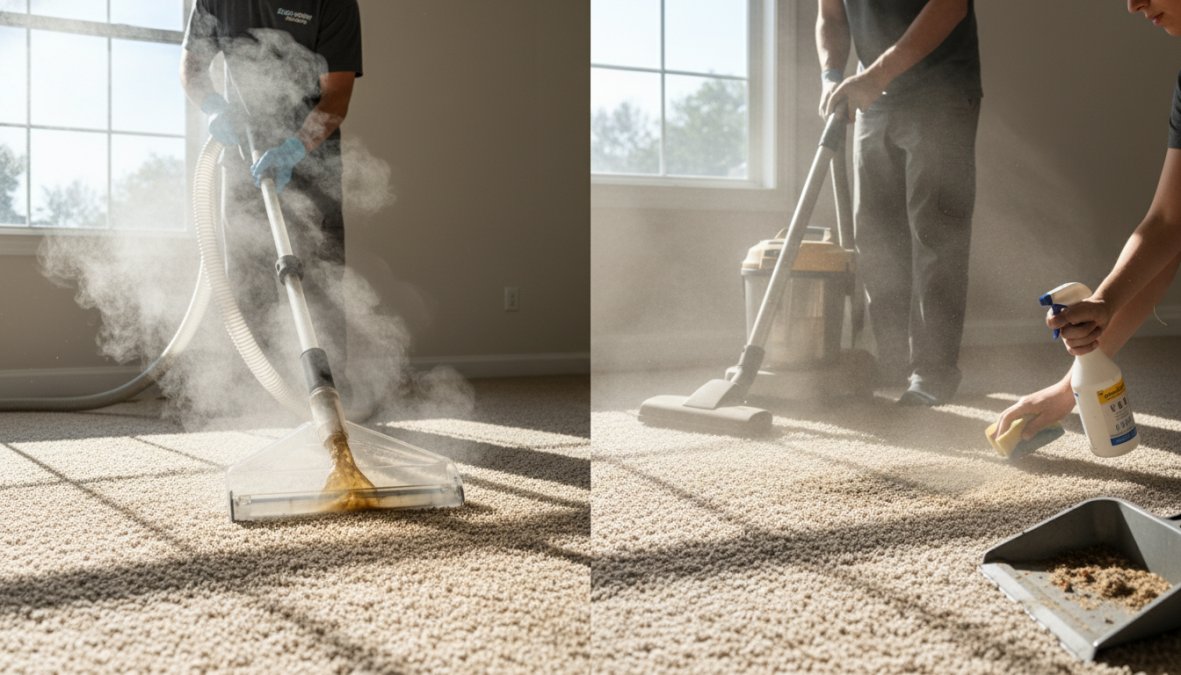
Hot water extraction, commonly called steam cleaning, is the method most consistently recommended by carpet manufacturers and indoor air quality specialists for deep cleaning carpets for health benefits. It injects heated water and cleaning solution deep into the carpet pile, then extracts it along with dissolved soils, allergens, and biological material using powerful suction.
Steam Cleaning and Wet Extraction: How They Remove Microscopic Particles
High-pressure injection breaks the adhesion between contaminants and fiber surfaces. Heat reduces the viability of biological organisms including dust mites and bacteria. Powerful suction then extracts the loosened material along with the water carrier, leaving a carpet that is genuinely clean rather than surface-treated. According to the Institute of Inspection Cleaning and Restoration Certification, hot water extraction is the most effective method for removing deeply embedded soils and biological contaminants from residential carpets. Truck-mounted systems generate significantly more suction than portable units, translating directly to lower residual moisture and more complete contaminant removal.
Dry Carpet Cleaning: When It Works and When It Falls Short
Dry carpet cleaning methods use absorbent compounds or low-moisture foam to capture surface soils with fast drying times, an advantage when carpet downtime is a concern. The limitation is depth: dry methods cannot reach contaminants embedded in the lower pile and backing where the majority of allergens, dust mites, and bacteria reside. For households prioritizing health outcomes, dry cleaning is a maintenance option between deep cleans, not a replacement for them.
| Method | Depth of Clean | Drying Time | Allergen Removal | Best For |
|---|---|---|---|---|
| Hot Water Extraction | Deep (full pile) | 6-12 hours | High | Full health-focused deep clean |
| Dry Compound | Surface only | 1-2 hours | Low | Maintenance between deep cleans |
| Bonnet Cleaning | Surface only | 1-2 hours | Low | Commercial appearance maintenance |
| Carbonated Extraction | Mid-depth | 2-4 hours | Moderate | Fast-dry situations |
Carpet Cleaning for Allergy Sufferers and Sensitive Households
Carpet cleaning for allergy sufferers requires a different approach than standard cleaning. The goal is allergen reduction to clinically meaningful levels, and the cleaning agents used matter as much as the method.
Chemical Sensitivity and Eco-Friendly Cleaning Solutions
Many conventional carpet cleaning solutions contain fragrances, optical brighteners, and surfactant residues that trigger reactions in chemically sensitive individuals, a cleaning process intended to improve health can introduce new irritants if the wrong products are used. Eco-friendly formulations using plant-derived surfactants avoid synthetic fragrances, phosphates, and harsh solvents, removing soils and allergens without leaving residues that continue off-gassing after cleaning. For households with asthma, chemical sensitivities, or young children, specifying eco-friendly solutions is a health requirement. Lake Geneva Carpet Cleaning uses eco-friendly cleaning methods specifically because the health argument for carpet cleaning is undermined if the process itself introduces new chemical stressors.
Maintenance Schedules for Specific Health Conditions
The right cleaning frequency depends on the health profile of your household, not just traffic levels.
Recommended maintenance schedule by household profile:
- Standard household (no pets, no allergies): Professional deep clean every 12-18 months, vacuum twice weekly
- Pet owners: Professional deep clean every 6-12 months, vacuum three times weekly with HEPA-filter vacuum
- Allergy sufferers (mild to moderate): Professional deep clean every 6 months, vacuum three to four times weekly
- Asthma or severe allergies: Professional deep clean every 3-6 months, HEPA vacuum four times weekly, consider air purifier with HEPA filtration
- Households with infants or toddlers: Professional deep clean every 6 months minimum, vacuum four times weekly
- Elderly residents with respiratory conditions: Professional deep clean every 6 months, vacuum three to four times weekly
The most common scheduling mistake is treating all households the same. A home with two indoor cats and an asthmatic child needs professional cleaning twice as frequently as a standard household. Matching the cleaning schedule to the actual health risk profile is what produces consistent health outcomes.
How Often to Deep Clean Carpets for Optimal Health
The standard recommendation is once per year for average households, a floor, not a target. Most carpet manufacturers recommend professional cleaning every 12-18 months to maintain warranty coverage, but health-focused schedules should be driven by household risk factors rather than manufacturer minimums.
A practical rule: if anyone in your home experiences unexplained allergy symptoms, worsening asthma, or persistent respiratory irritation, the cleaning interval is too long regardless of when the last cleaning occurred. For Lake Geneva, Wisconsin homes specifically, the seasonal transition from winter to spring is an ideal time for professional deep cleaning, Wisconsin winters concentrate indoor contaminants through months of sealed-home living, and spring pollen adds a new allergen load on top of accumulated winter soils.
Post-Cleaning Indoor Air Quality Testing: How to Verify Your Results
Most homeowners trust visible results and stop there. Post-cleaning air quality testing provides objective data on whether cleaning actually reduced the contaminant load in your indoor environment.
Consumer-grade indoor air quality monitors now measure particulate matter (PM2.5 and PM10), VOCs, humidity, and temperature in real time. Running a monitor before and after professional carpet cleaning provides a direct comparison, many households see measurable reductions in PM2.5 readings within 24-48 hours of a thorough deep clean. According to the American Lung Association’s indoor air quality guidance, reducing fine particulate matter exposure indoors is one of the most impactful steps households can take for respiratory health. Results vary significantly based on cleaning method: hot water extraction with high-powered suction produces the most measurable air quality improvement, while low-moisture methods show smaller gains in post-cleaning particulate measurements.
Dirty carpets are a slow, invisible health problem that most Lake Geneva households are significantly underestimating. Lake Geneva Carpet Cleaning has spent over 32 years addressing exactly this problem for Wisconsin homeowners, using truck-mounted hot water extraction technology and eco-friendly cleaning solutions to remove the allergens, bacteria, dust mites, and VOCs that conventional cleaning cannot reach. With a 10-day satisfaction guarantee and an owner-operated commitment to meticulous detail, the results are verifiable, not just visible. Schedule a professional deep clean with Lake Geneva Carpet Cleaning and take the first concrete step toward a measurably healthier home.
Frequently Asked Questions
Does deep cleaning carpets actually improve indoor air quality?
Yes. Carpet fibers act as a filter, trapping airborne particles like dust mites, mold spores, pet dander, and bacteria over time. Regular vacuuming only removes surface debris. Deep cleaning carpets for health benefits, especially through hot water extraction, flushes out microscopic particles embedded deep in the fibers, reducing the concentration of indoor pollutants and measurably improving indoor air quality throughout your home.
How often should you deep clean carpets for health reasons?
For most households, professional deep cleaning every 12 to 18 months is a general baseline. However, homes with allergy sufferers, asthma triggers, pets, or young children may benefit from deep cleaning every 6 to 12 months. High-traffic areas accumulate soil and allergens faster, so more frequent carpet cleaning for allergy sufferers and sensitive individuals is often recommended to maintain respiratory health and reduce trapped contaminants.
Can dirty carpets cause respiratory issues or worsen asthma?
Dirty carpets can contribute to respiratory issues by releasing trapped allergens, dust mites, mold spores, and pet dander back into the air when disturbed by foot traffic. These airborne particles are known asthma triggers and can aggravate conditions like allergies and chronic respiratory inflammation. Deep cleaning carpets for health benefits removes these contaminants at the source, reducing the risk of flare-ups and supporting better respiratory health, especially for vulnerable household members.
What is the difference between vacuuming and deep carpet cleaning?
Vacuuming, even with HEPA filtration, only removes loose surface debris from the top layer of carpet fibers. Deep cleaning methods like hot water extraction or steam cleaning penetrate deep into the carpet pile to dislodge and extract embedded allergens, bacteria, mold spores, and volatile organic compounds that vacuuming cannot reach. Professional carpet cleaning with wet extraction provides a level of sanitization and allergen reduction that routine vacuuming simply cannot match.
Are eco-friendly carpet cleaning solutions as effective for health benefits?
Eco-friendly and non-toxic carpet cleaning solutions can be highly effective, particularly for households with chemical sensitivity, children, or pets. Many professional services now use plant-based or low-VOC formulas that remove allergens, bacteria, and odors without leaving harmful residues in carpet fibers. When combined with hot water extraction, these solutions deliver thorough sanitization while keeping indoor air quality safe from harsh chemical off-gassing after the cleaning process.
This article was written using GrandRanker