Table of Contents
- Why Professional Steam Cleaning Is Healthier Than Surface Cleaning
- How Carpets Act as Air Filters, and Why That Backfires
- Professional Carpet Cleaning for Allergies: What Actually Works
- Truck-Mounted Hot Water Extraction vs Portable Units: Which Is Deeper?
- Vacuuming Frequency, Technique, and Why It Is Not Enough Alone
- How Often to Steam Clean Carpets for a Healthier Home
- Carpet Material Sensitivity: Why Not All Carpets Clean the Same Way
- DIY vs. Professional Equipment: An Honest Comparison
- Preventative Maintenance Tips to Protect Indoor Air Quality Year-Round
- Why Professional Steam Cleaning Is Healthier: The Bottom Line for Lake Geneva Homeowners
Last Updated: May 15, 2026
Understanding why professional steam cleaning is healthier for your home starts with one uncomfortable truth: your carpet is not just a floor covering. Lake Geneva Carpet Cleaning has spent over 32 years watching homeowners unknowingly breathe in what their carpets trap, and the list is longer than most people expect. Below, we’ll walk through exactly how carpet fibers collect and release allergens, why surface cleaning barely scratches the problem, and what truck-mounted hot water extraction actually does that rental machines cannot replicate.
Here’s what most guides get wrong: they treat carpet cleaning as a cosmetic issue. Clean-looking carpet and genuinely clean carpet are two very different things. Dust mites, pet dander, pollen, mold spores, and embedded soil can all sit invisible inside carpet fibers while your family breathes the particulate matter they release every time someone walks across the room. The health stakes are real, and the cleaning method you choose determines whether you’re actually addressing them.
Why Professional Steam Cleaning Is Healthier Than Surface Cleaning
Professional steam cleaning is healthier than surface cleaning because it reaches the base of carpet fibers where allergens, bacteria, and embedded soil accumulate beyond the reach of conventional vacuums or consumer-grade machines. Surface methods agitate the top layer of carpet, which can actually become counterproductive by temporarily suspending microscopic particles into the air before they resettle.
The distinction matters most for allergy sufferers and households with children or pets. Dust mites, for instance, do not live on the surface of carpet. They live deep in the fiber structure, feeding on shed skin cells. Pollen and pet dander behave similarly, embedding into the pile over time. A standard cleaning pass moves these contaminants around; it does not remove them.
Truck-mounted hot water extraction, the method used by professional carpet cleaners, injects heated water and cleaning solution deep into the carpet pile, then extracts it under high vacuum pressure. The combination of heat and suction physically pulls allergens, debris, and chemical residue out of the carpet rather than masking them. According to the Asthma and Allergy Foundation of America’s guidance on indoor allergens, reducing allergen load in the home environment is one of the most effective steps allergy sufferers can take to manage symptoms.
The other factor most homeowners overlook is drying time. Consumer steam machines and rental units leave carpets significantly wetter than truck-mounted systems, creating conditions where mold growth becomes a real risk within 24 to 48 hours. Professional equipment extracts the majority of moisture during the cleaning pass, reducing drying time and eliminating one of the most common post-cleaning problems.
Using a rental carpet cleaning machine on a heavy allergen load can temporarily worsen indoor air quality by stirring up embedded particulate matter without fully extracting it. If anyone in your household has respiratory sensitivities, professional extraction is the safer choice.
How Carpets Act as Air Filters, and Why That Backfires
Think of your carpet as a passive air filter. It traps airborne particles that would otherwise circulate continuously through your living space. For a period, this is actually beneficial: the carpet holds contaminants in place rather than letting them float freely.
The problem is that filters have a saturation point. Once carpet fibers are loaded with dust mites, pollen, pet dander, mold spores, and embedded soil, the trapping function reverses. Every footstep, every pet running through the room, every child rolling on the floor becomes a release event, sending previously trapped particulate matter back into the breathing zone.
Common Household Allergens Hiding in Your Carpet
The most common allergens embedded in carpet fibers include:
- Dust mites: Microscopic organisms that thrive in warm, humid environments. Their waste particles are among the most potent indoor allergens.
- Pet dander: Tiny flecks of skin shed by cats, dogs, and other animals. Dander is lightweight and clings to carpet fibers for extended periods.
- Pollen: Tracked in from outdoors on shoes and clothing, pollen accumulates in high-traffic areas and near entryways.
- Mold spores: In humid climates or after any moisture exposure, mold can colonize the carpet backing and padding.
- Particulate matter from combustion: Cooking fumes, candles, and outdoor pollution all contribute fine particles that settle into carpet.
How Embedded Soil and Debris Affect Respiratory Health
Embedded soil is more than a visual problem. As grit and debris accumulate at the base of carpet fibers, they act as an abrasive, breaking down fiber structure over time. This accelerates shedding of microscopic fiber particles into the air. For households where someone manages asthma or seasonal allergies, this ongoing release of airborne allergens can sustain or worsen symptoms even when windows are closed and the home appears clean.
The deeper the soil load, the more aggressively it needs to be addressed. Pre-spray treatment loosens embedded particles before extraction, making the hot water extraction pass significantly more effective.
Professional Carpet Cleaning for Allergies: What Actually Works
Professional carpet cleaning for allergies works best when it combines pre-spray treatment, truck-mounted hot water extraction, and appropriate drying protocols. No single step alone is sufficient for households with significant allergen loads.
The pre-spray stage applies a cleaning solution that breaks the bond between allergens and carpet fibers, making them mobile enough for the extraction phase to remove. Hot water extraction then flushes the loosened material out of the pile under high vacuum pressure. The final drying phase, accelerated by professional-grade airflow, prevents the moisture conditions that encourage mold growth.
For allergy sufferers in Lake Geneva, Wisconsin, the timing of professional cleaning also matters. Spring cleaning removes the pollen and tracked-in debris that accumulates through winter. Fall cleaning clears out the summer’s accumulation before windows close and the home seals for the cold months, concentrating whatever allergen load remains.
The Role of HEPA Filtration in Allergen Removal
HEPA filtration is the standard that separates effective allergen removal from simple debris collection. A HEPA filter captures particles as small as 0.3 microns at a 99.97% efficiency rate, which covers the size range of dust mite waste particles, mold spores, and most pollen types.
Both vacuums and professional cleaning equipment benefit from HEPA filtration, but for different reasons. In a vacuum, a HEPA filter prevents captured particles from being exhausted back into the room air. In professional cleaning systems, filtration ensures that extracted material is fully contained rather than partially recirculated.
If you’re purchasing a vacuum for allergy management, verify that it carries a certified HEPA filter rating, not just “HEPA-style” filtration. The difference in particle capture between certified and uncertified filters is significant for fine allergens like dust mite waste.
According to EPA guidance on indoor air quality and particle filtration, HEPA filtration is specifically recommended for households where occupants have respiratory conditions or allergies.
Truck-Mounted Hot Water Extraction vs Portable Units: Which Is Deeper?
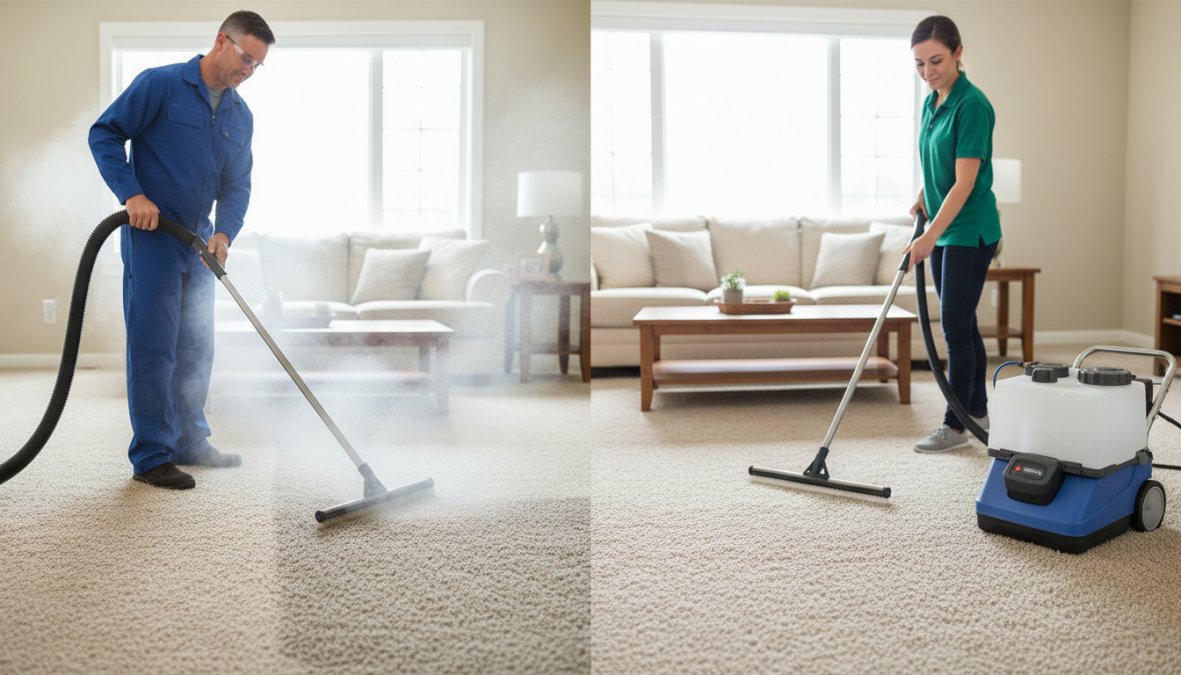
Truck-mounted hot water extraction is the deepest carpet cleaning method available, and the gap between truck-mounted systems and portable rental units is wider than most homeowners realize. Truck-mounted equipment generates water temperatures and vacuum pressures that portable machines cannot physically match because they draw power from the vehicle’s engine rather than a household electrical outlet.
A professional carpet cleaning technician operating a truck-mounted system in a residential home can reach water temperatures that effectively sanitize carpet fibers, not just clean them. The suction power extracts significantly more moisture and debris per pass, which translates directly to shorter drying times and more thorough allergen removal.
Why Truck-Mounted Equipment Outperforms Rental Machines
The performance gap comes down to three measurable factors:
| Factor | Truck-Mounted System | Portable Rental Unit |
|---|---|---|
| Water Temperature | Very high (sanitizing range) | Moderate (cleaning range) |
| Vacuum Pressure | Industrial-grade suction | Limited by outlet power |
| Drying Time | 4-8 hours typical | 12-24 hours common |
| Allergen Extraction | Deep fiber penetration | Surface and mid-pile |
| Mold Risk Post-Clean | Low (less residual moisture) | Higher (more moisture left) |
Rental machines also tend to leave behind chemical residue when operators use too much cleaning solution to compensate for lower water pressure. That residue attracts soil faster after cleaning, meaning carpets look dirty again sooner. Truck-mounted systems extract more thoroughly, leaving less residue and extending the time between cleanings.
The honest comparison: rental machines are adequate for fresh, light soil on low-traffic carpet. For allergen removal, embedded debris, pet dander, or any carpet that sees regular use, they are not the right tool.
Vacuuming Frequency, Technique, and Why It Is Not Enough Alone
Vacuuming is non-negotiable for carpet health, but it is the maintenance layer, not the solution. Regular vacuuming removes surface debris and slows the rate at which allergens embed deeper into carpet fibers. It does not remove what is already embedded, and it cannot address the microbial load that accumulates over time.
For high-traffic areas, vacuuming three to four times per week is a reasonable target. Bedrooms and lower-traffic spaces can typically be maintained with once or twice weekly passes. The technique matters as much as the frequency: slow, overlapping passes in multiple directions extract more debris than quick single-direction passes. Moving at roughly one foot per second, noticeably slower than most people vacuum, gives the beater bar and suction time to dislodge and lift particles from mid-pile depth rather than just skimming the surface.
Allergy-Specific Vacuum Maintenance You Cannot Skip
The vacuum itself becomes a liability if it is not maintained correctly. A dirty or clogged filter reduces suction and, more critically, can exhaust fine allergen particles back into the room air. For allergy-specific vacuum maintenance:
- Replace or clean HEPA filters on the schedule specified by the manufacturer, typically every three to six months depending on use.
- Empty the canister or replace bags before they reach full capacity. A full collection chamber reduces suction and can force particles back through the filter.
- Clean the beater bar regularly. Pet hair and fiber wrap around the brush roll, reducing its effectiveness and potentially damaging carpet pile.
- Check seals and gaskets periodically. Air leaking around seals bypasses the filtration system entirely.
- Replace worn brushes. A worn beater bar agitates carpet less effectively, leaving more debris in the pile.
What most guides miss is that vacuum maintenance is the single biggest reason a technically adequate machine underperforms. A well-maintained mid-range vacuum outperforms a neglected premium model every time.
The Hidden Re-Exposure Risk: How to Empty Your Vacuum Without Releasing Allergens
This is the step almost no carpet cleaning guide addresses, and for allergy sufferers it may be the most important maintenance detail of all. When you empty a bagless canister or change a vacuum bag, the collected material, which is heavily concentrated with dust mite waste particles, pet dander, and mold spores, becomes briefly airborne. Done carelessly, this single act can spike indoor particulate matter levels and trigger the exact symptoms you were trying to prevent.
A safe canister-emptying protocol for allergy-sensitive households:
- Take the vacuum outside before opening the canister. Emptying over an outdoor trash bin means any released particles disperse into outdoor air rather than your living space.
- Wear a close-fitting N95 or equivalent mask. Standard dust masks do not filter particles small enough to include dust mite waste fragments, which can be as small as 0.5 to 5 microns.
- Open the canister slowly and away from your face. Rapid opening creates a pressure puff that sends fine particles upward.
- Wipe the canister interior with a damp cloth before reassembly. Fine particles cling to plastic surfaces electrostatically; a damp wipe captures them rather than leaving them to be recirculated on the next use.
- Wash your hands and change your outer layer if you have severe sensitivities, particularly during high-pollen seasons.
For bagged vacuums, the protocol is simpler but the principle is the same: change the bag before it reaches capacity, handle it in a sealed plastic bag, and dispose of it immediately rather than leaving a full bag sitting in a trash can inside the home.
If someone in your household has diagnosed dust mite or pet dander allergies, assign vacuum maintenance tasks to a non-allergic household member whenever possible. The concentrated allergen load inside a used canister or bag is significantly higher than what is present in the carpet itself during normal use.
According to the Asthma and Allergy Foundation of America’s guidance on indoor allergens, reducing allergen exposure during cleaning tasks, not just after them, is an important part of managing allergy symptoms at home. The cleaning process itself is a high-exposure moment if proper precautions are not taken.
The practical takeaway: vacuuming frequency and HEPA certification matter, but neither delivers their full benefit if the maintenance habits around the vacuum reintroduce what the machine collected. Treating canister emptying and filter changes as health-critical tasks, not just housekeeping chores, closes the loop that most allergy management guides leave open.
How Often to Steam Clean Carpets for a Healthier Home
How often to steam clean carpets depends on household-specific factors, but the general guidance for most homes is once every 12 to 18 months for professional hot water extraction. That baseline shifts significantly based on conditions.
Households with pets, allergy sufferers, or children who spend time on the floor should target professional cleaning every six to twelve months. High-traffic areas like hallways, living rooms, and entryways accumulate allergen loads faster than bedrooms or low-use spaces, and benefit from more frequent attention.
Seasonal timing adds another layer of strategy. Spring professional cleaning addresses the pollen and tracked-in debris from winter. Fall cleaning before the home seals up for cold weather removes summer accumulation. For Lake Geneva homeowners dealing with Wisconsin’s distinct seasonal patterns, this twice-yearly approach aligns cleaning schedules with the times allergen loads peak.
A practical maintenance checklist for year-round carpet health:
- Vacuum high-traffic areas 3-4 times per week
- Vacuum bedrooms and low-traffic areas 1-2 times per week
- Clean vacuum filter or replace bag monthly
- Schedule professional hot water extraction every 6-12 months (pets/allergies) or 12-18 months (standard households)
- Address spills and stains immediately to prevent setting
- Use walk-off mats at all entry points to reduce tracked-in soil and pollen
Carpet Material Sensitivity: Why Not All Carpets Clean the Same Way
This is the angle most carpet cleaning guides skip entirely, and it matters more than homeowners expect. Natural fibers like wool and sisal respond very differently to hot water extraction than synthetic fibers like nylon or polyester. Applying the wrong water temperature, cleaning solution, or drying protocol to the wrong fiber type can cause shrinkage, color bleeding, or permanent texture damage.
Wool carpets, for example, require lower water temperatures and pH-neutral cleaning solutions. Aggressive alkaline cleaners that work well on synthetic fibers can strip the natural lanolin from wool, damaging fiber structure and making the carpet more susceptible to future soiling. Sisal and other natural plant-based fibers are highly sensitive to moisture and can warp or shrink if over-wetted.
Synthetic carpets, by contrast, handle higher temperatures and more aggressive cleaning chemistry without damage. Nylon is particularly resilient and responds well to truck-mounted hot water extraction. Polyester holds stains more stubbornly but cleans effectively with appropriate pre-spray treatment.
The practical implication: a professional carpet cleaner should assess fiber type before selecting a cleaning protocol. This is one of the genuine advantages of hiring an experienced operator over using a one-size-fits-all rental machine. Lake Geneva Carpet Cleaning’s 32 years of experience includes working across the full range of carpet materials found in Wisconsin homes, from modern synthetic installations to antique wool area rugs.
DIY vs. Professional Equipment: An Honest Comparison
The appeal of DIY carpet cleaning is understandable: rental machines are available at most grocery stores, and the upfront cost looks favorable compared to professional service. The honest assessment is more complicated, and for households where allergen removal is the actual goal, the comparison is not close.
The performance gap between a consumer rental unit and a professional truck-mounted system is not a matter of degree, it is a difference in the underlying engineering. Rental machines draw power from a standard household electrical outlet, which caps both their water heating capacity and their vacuum motor output. Truck-mounted systems draw power directly from the vehicle’s engine, which removes that ceiling entirely. The result is a measurable difference across every variable that determines how thoroughly allergens are extracted from carpet fibers.
Side-by-Side: Rental Steam Cleaner vs. Truck-Mounted System for Allergen Extraction
| Performance Variable | Truck-Mounted Professional System | Consumer Rental Unit |
|---|---|---|
| Water temperature | High enough to reach sanitizing range for carpet fibers | Warm to moderately hot; below sanitizing threshold |
| Vacuum (suction) pressure | Industrial-grade; draws from vehicle engine | Limited by standard outlet amperage |
| Allergen extraction depth | Reaches carpet backing and pad interface | Effective at surface and upper mid-pile only |
| Residual moisture left in carpet | Low; typical drying time 4-8 hours | Higher; typical drying time 12-24 hours or more |
| Mold risk post-cleaning | Low when used correctly | Elevated, particularly on plush or high-pile carpet |
| Chemical residue left behind | Minimal due to high-pressure rinse and extraction | Higher; operators often over-apply solution to compensate for low pressure |
| Operator training | Certified technician with fiber and chemistry knowledge | Self-directed; no training required at point of rental |
Each of these variables has a direct consequence for allergen removal specifically, not just for appearance.
Water temperature matters because dust mite populations and certain mold spores are heat-sensitive. The sanitizing temperature range for soft surfaces is well-established in professional cleaning standards; rental machines typically do not reach it, meaning the cleaning pass removes visible soil but does not address the microbial component of the allergen load.
Vacuum pressure determines how much of the loosened material is actually extracted versus left behind in the pile. Higher suction pulls allergens, cleaning solution, and moisture out of the fiber structure more completely. Lower suction leaves more behind, which means more residue to attract future soil and more allergen particles remaining in the carpet after the job is considered done.
Residual moisture is the variable with the most direct health consequence. Carpet padding that remains wet for more than 24 hours creates conditions where mold and mildew can begin colonizing the backing, introducing a new allergen source in the process of trying to remove existing ones. This is not a theoretical risk; it is a documented pattern in professional remediation work, particularly in homes where rental machines were used on thick or high-pile carpet.
The Over-Wetting Problem in Detail
Over-wetting is the most common and most consequential DIY cleaning mistake, and it is structurally built into how rental machines work. Because rental units cannot generate the vacuum pressure needed to extract moisture efficiently, operators instinctively apply more water and cleaning solution in an attempt to compensate. The result is a carpet that looks cleaner immediately after cleaning but is saturated at the backing level.
The sequence that follows is predictable: the surface dries within several hours and appears fine. The backing and padding, which hold moisture longer, remain damp for a day or more. In that window, mold spores already present in the environment, which are always present at some level in any home, find the conditions they need to establish growth. By the time visible signs appear, the colonization is already underway.
For households managing allergies, this outcome is worse than not cleaning at all. Mold spores are among the most potent indoor allergens, and a mold colony established in carpet padding is significantly harder to remediate than the original dust mite or pet dander load the cleaning was meant to address.
If you use a rental machine and your carpet still feels damp or cool to the touch 24 hours after cleaning, increase airflow immediately using fans and open windows if outdoor conditions allow. Damp carpet backing after 24 hours is the primary risk window for mold establishment in the padding beneath.
When DIY Is and Is Not Appropriate
A fair comparison acknowledges that rental machines are not useless, they are simply the wrong tool for specific jobs.
Rental machines are adequate for:
- Light, fresh soil on low-traffic carpet in otherwise well-maintained homes
- Spot treatment of a specific area before a professional cleaning is scheduled
- Households with no allergy sufferers, no pets, and low-pile synthetic carpet
Rental machines are not appropriate for:
- Any household where allergen removal is the primary goal
- Homes with pets, where dander is embedded throughout the pile
- High-pile, plush, or wool carpet where over-wetting risk is elevated
- Carpets that have not been professionally cleaned in more than two years
- Any situation where mold or mildew odor is already present
The cost-benefit calculation that makes rental machines look attractive changes when you account for the full outcome. A rental machine that leaves allergens behind and introduces mold risk does not save money, it defers a larger problem. For the specific goal of creating a healthier indoor environment, professional truck-mounted extraction is not a premium upgrade. It is the method that actually accomplishes the task.
According to EPA guidance on indoor air quality and particle filtration, reducing allergen load in the home environment requires methods capable of genuine extraction, not surface agitation. The equipment used determines whether that standard is met.
Preventative Maintenance Tips to Protect Indoor Air Quality Year-Round
Protecting indoor air quality is a year-round discipline, not a single annual event. The goal is to reduce the rate at which allergens accumulate in carpet fibers between professional cleanings, which extends the effectiveness of each professional cleaning session.
The most impactful preventative steps, ranked by practical effect:
- Use walk-off mats at every entry point. A quality mat at the front and back door captures a significant portion of the pollen, soil, and debris that would otherwise be tracked directly onto carpet.
- Implement a no-shoes policy in carpeted areas. Shoes track in pollen, outdoor particulate matter, and chemical residue from pavement and lawn treatments.
- Groom pets regularly. Brushing pets outdoors reduces the volume of pet dander and loose hair deposited into carpet fibers.
- Maintain consistent indoor humidity. Dust mites thrive at relative humidity above 50%. Keeping indoor humidity between 40% and 50% makes the carpet environment less hospitable to dust mite populations.
- Address spills immediately. Moisture that sits in carpet backing creates conditions for mold growth. Blot, do not rub, and dry the area thoroughly.
- Vacuum with proper technique. Slow, overlapping passes extract more than fast single-direction passes.
Post-Cleaning Air Quality Monitoring: The Step Most Homeowners Skip
Most homeowners consider the job finished when the carpet dries after a professional cleaning. Post-cleaning air quality monitoring is the step that closes the loop, and almost no one does it.
After a deep cleaning session, particularly in homes with significant allergen loads, indoor air quality typically improves measurably within 24 to 48 hours as the extracted allergens are gone and the disturbed particles settle. Consumer-grade indoor air quality monitors, widely available from home improvement retailers, can track particulate matter levels in real time. Running one before and after a professional cleaning gives you an objective measure of the improvement and helps identify whether any specific rooms or areas need additional attention.
This matters most in households where someone is managing diagnosed allergies or asthma. Objective air quality data helps correlate cleaning schedules with symptom patterns, making it easier to determine whether the current cleaning frequency is adequate or whether specific problem areas, like a bedroom with heavy pet traffic, need more frequent professional attention.
According to indoor air quality monitoring guidance from the Consumer Product Safety Commission, tracking particulate matter levels is a practical approach for households with respiratory sensitivities.
Post-cleaning air quality monitoring gives allergy sufferers objective data rather than guesswork. A simple particulate matter monitor used before and after professional cleaning shows exactly how much the allergen load has changed, and helps calibrate how often professional cleaning is actually needed.
Why Professional Steam Cleaning Is Healthier: The Bottom Line for Lake Geneva Homeowners
Understanding why professional steam cleaning is healthier comes down to a simple mechanical reality: allergens, dust mites, pet dander, and embedded soil accumulate at depths that surface cleaning cannot reach. Truck-mounted hot water extraction reaches those depths, extracts the material under industrial vacuum pressure, and leaves carpets dry enough to prevent the mold growth that DIY equipment frequently causes.
For Lake Geneva, Wisconsin homeowners, the seasonal allergen cycle makes this more than a general principle. Spring pollen, summer humidity, fall debris, and winter’s sealed-home conditions each contribute to a year-round allergen load that builds without professional intervention. Regular vacuuming with a certified HEPA filter vacuum slows the accumulation. Professional hot water extraction resets it.
The practical guidance is straightforward. Vacuum frequently, maintain your equipment, use walk-off mats, and schedule professional cleaning every six to twelve months if you have pets or allergy sufferers in the household. For standard households, twelve to eighteen months is the appropriate interval.
If you’re looking for professional carpet cleaning near me in the Lake Geneva area, the combination of fiber expertise, truck-mounted equipment, and genuine allergen extraction matters more than price alone. Not all cleaning methods deliver the same health outcomes, and the difference is measurable.
As documented in the American Lung Association’s guidance on reducing indoor allergen exposure, regular deep cleaning of carpets is among the recommended strategies for improving indoor respiratory health.
Carpets in active Wisconsin households accumulate allergens faster than most homeowners realize, and surface cleaning leaves the underlying problem untouched. Lake Geneva Carpet Cleaning addresses this with truck-mounted hot water extraction, eco-friendly non-toxic solutions, and over 32 years of fiber-specific expertise. Their 10-day satisfaction guarantee means you can verify the results before considering the job complete. Call Lake Geneva Carpet Cleaning at 262-581-6140 to schedule professional cleaning that actually improves the air your family breathes.
Frequently Asked Questions
Does professional steam cleaning remove allergens like dust mites and pet dander?
Yes. Professional steam cleaning using truck-mounted hot water extraction reaches deep into carpet fibers where dust mites, pet dander, pollen, and other microscopic particles accumulate. The high-temperature water and powerful extraction remove embedded allergens that regular vacuuming leaves behind, making it one of the most effective methods for improving indoor air quality and reducing allergy symptoms in the home.
How often should you have your carpets professionally cleaned for health reasons?
For most households, professional carpet cleaning once or twice a year is a reasonable baseline. However, homes with allergy sufferers, pets, young children, or high-traffic areas may benefit from cleaning every three to six months. Seasonal allergies can also influence timing, cleaning in spring and fall helps remove pollen and other seasonal contaminants before they become embedded deep in carpet fibers and affect respiratory health.
What is truck-mounted hot water extraction and why is it the deepest cleaning method?
Truck-mounted hot water extraction is a professional carpet cleaning method where powerful equipment mounted in a service vehicle heats water to high temperatures and injects it deep into carpet fibers, then extracts it along with dissolved dirt, allergens, and debris. Because the machine stays outside, it generates far more suction and heat than portable rental units. This makes it the deepest carpet cleaning method available, removing embedded soil and allergens that surface cleaning methods cannot reach.
Is professional steam cleaning better than dry cleaning for allergy sufferers?
For allergy sufferers, professional hot water extraction is generally the preferred method. Dry cleaning methods use chemical compounds that can leave residue in carpet fibers, which may irritate sensitive individuals. Steam cleaning with proper extraction flushes out allergens, dust mites, and particulate matter without leaving chemical residue behind. Using eco-friendly, non-toxic solutions, as offered by services like Lake Geneva Carpet Cleaning, further reduces the risk of triggering allergy symptoms after cleaning.
Can I use a rental carpet cleaner instead of hiring a professional?
Rental machines can handle light surface cleaning but lack the heat output and suction power of truck-mounted professional equipment. They often leave excess moisture in carpet fibers, which can promote mold growth, a serious concern for allergy sufferers. Professional carpet cleaners use pre-spray treatments, calibrated water pressure, and industrial extraction to ensure carpets dry faster and are cleaned more thoroughly. For health-focused deep cleaning, professional service consistently outperforms DIY rental equipment.
This article was written using GrandRanker