Table of Contents
- Why Carpets Trap So Many Allergens (And Why It Matters)
- Step-by-Step: How to Remove Allergens from Carpets at Home
- Best Vacuum for Carpet Allergies: What to Look For
- Natural Carpet Allergen Remover: DIY Non-Toxic Solutions
- How Often to Clean Carpets for Allergies: A Maintenance Schedule
- Does Carpet Material Affect Allergen Buildup?
- Professional Carpet Cleaning for Dust Mites: When DIY Isn’t Enough
- How to Remove Allergens from Carpets: Common Mistakes to Avoid
- Post-Cleaning Maintenance to Keep Allergens Away Longer
- Conclusion: Build a Cleaner, Healthier Home Starting with Your Carpet
Last Updated: May 13, 2026
Carpets hold onto allergens far longer than most people realize, and knowing how to remove allergens from carpets is one of the most practical steps you can take for your family’s health. At Lake Geneva Carpet Cleaning, we’ve spent over 32 years helping Wisconsin homeowners tackle this exact problem. The results speak for themselves: cleaner carpets, fewer allergy symptoms, and better indoor air quality across hundreds of homes in Lake Geneva and the surrounding area. Below, we’ll show you exactly how to clean carpets for allergies using a step-by-step approach, plus the maintenance habits that keep allergens from coming back.
Here’s what most guides get wrong: they focus entirely on cleaning frequency and ignore the technique. Vacuuming the wrong way can actually stir allergens back into the air instead of removing them. We’ll cover that critical mistake in detail.
Why Carpets Trap So Many Allergens (And Why It Matters)
Carpet is essentially a filter for your home’s air. Every footstep, open window, and pet that walks through your door deposits microscopic particles into carpet fibers, where they settle and accumulate over time. The problem is that carpets are very good at holding onto those particles.
Allergen-loaded carpet is a significant trigger for people with allergic asthma and respiratory sensitivities. Unlike hard floors where particles sit on the surface and can be wiped away, carpet fibers grip allergens deep within the pile where standard cleaning doesn’t reach.
According to the Asthma and Allergy Foundation of America’s guidance on indoor allergens, carpets can harbor multiple types of allergens simultaneously, making them one of the highest-risk surfaces in any home.
Common Allergens Hiding in Carpet Fibers
The most common allergens found in residential carpets include:
- Dust mites and dust mite waste: These microscopic creatures thrive in warm, humid carpet fibers. Their waste particles are a leading trigger for allergy symptoms and allergic asthma.
- Pet dander: Tiny flecks of skin shed by cats, dogs, and other animals. Pet dander is lightweight and clings to carpet fibers for months.
- Pollen: Tracked in on shoes and clothing, pollen settles deep into carpet pile where it stays active.
- Mold spores: In humid climates or after water exposure, mold spores can colonize carpet backing and padding.
- Airborne allergens: General particulate matter from cooking, traffic, and outdoor air continuously settles into carpet.
The challenge with all of these is that they’re invisible. You can’t see dust mite waste or pollen particles, which is why a carpet that looks clean can still trigger symptoms every time someone walks across it.
Never assume a carpet is allergen-free just because it looks clean. Dust mite waste and pet dander particles are far too small to see with the naked eye. A carpet can look spotless and still carry a heavy allergen load deep in the fibers.
Step-by-Step: How to Remove Allergens from Carpets at Home
Removing allergens from carpet requires a specific sequence. Skip steps or do them out of order, and you’ll either miss embedded particles or redistribute what you’ve already loosened. Here’s the process that actually works.
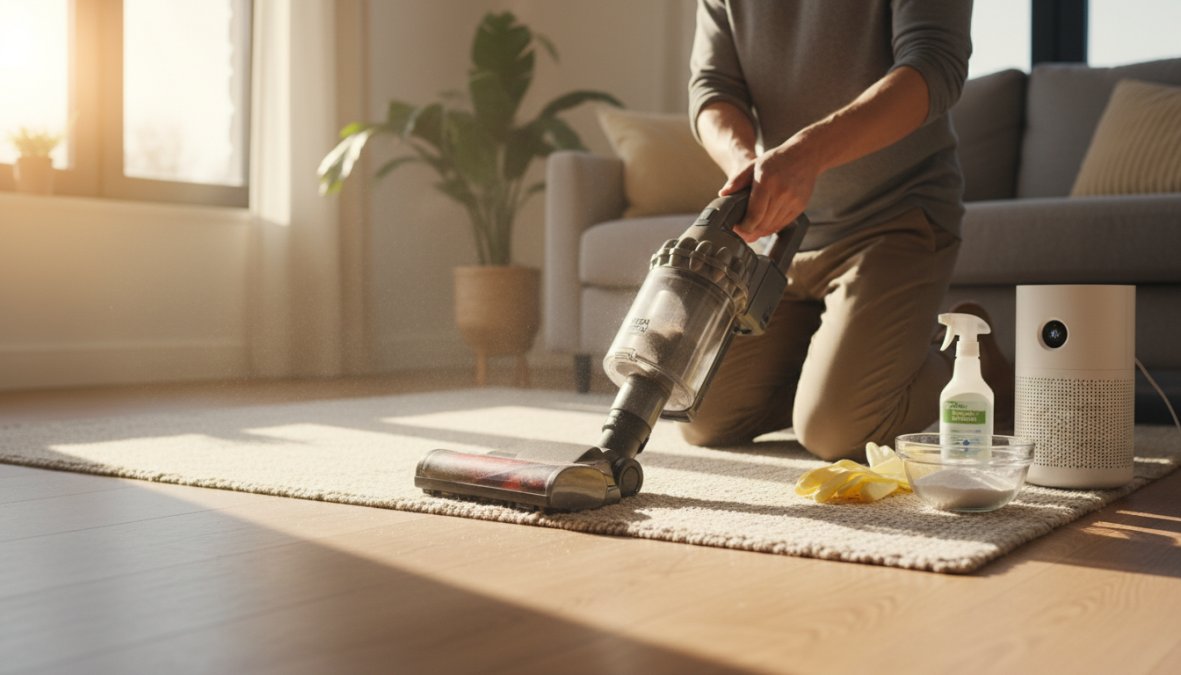
Step 1: Prepare the Room Before You Clean
Open windows to improve ventilation before you start. Move furniture away from walls and clear the floor as much as possible. If you have an air purifier, turn it on and leave it running throughout the process.
- Remove loose items, toys, and clutter from the floor
- Open at least two windows to create airflow
- Turn on ceiling fans to help carry dislodged particles toward air filters
- If anyone in the household has severe allergies, have them leave the room during cleaning
Time required: 10-15 minutes
Step 2: Vacuum Thoroughly with the Right Technique
This is where most people lose the battle. Vacuuming too fast moves the vacuum head before suction can pull particles from deep in the fibers. The correct technique is slow, overlapping passes.
- Start at the far end of the room and work toward the door
- Push the vacuum forward slowly (count to 3 per stroke)
- Pull back even more slowly, allowing full suction contact
- Overlap each pass by 50% to catch what the previous stroke missed
- Vacuum in two directions: first with the grain of the carpet, then across it
- Pay extra attention to edges and corners where allergens accumulate
Use a vacuum with a certified HEPA filter. Standard vacuums without HEPA filtration can exhaust fine particles back into the air, making the problem worse.
Time required: 20-30 minutes for an average room
Step 3: Treat High-Traffic and Pet Areas
High-traffic zones and pet resting spots carry the densest concentration of allergens. These areas need targeted treatment before any deep cleaning.
For pet dander and dust mites, apply a baking soda treatment (detailed in the DIY section below) and let it sit for at least 15 minutes before vacuuming again. For visible soiling or strong odors, use an enzyme-based cleaner designed for pet areas. These break down organic material at the molecular level rather than just masking it.
For homes with pets, vacuum high-traffic areas and pet resting spots at least three times per week. Allergen levels in pet zones can be dramatically higher than the rest of the carpet, and more frequent vacuuming is the single most effective way to manage them between deep cleans.
Step 4: Deep Clean with Hot Water Extraction
Hot water extraction, also called steam cleaning, is the most effective method for removing embedded allergens from carpet fibers. The process injects hot water and cleaning solution deep into the pile, then extracts it along with loosened allergens, dust mite waste, mold spores, and bacteria.
For DIY hot water extraction:
- Rent a commercial-grade carpet cleaning machine from a hardware store
- Pre-treat heavily soiled areas with a carpet pre-spray
- Make slow, overlapping passes with the extraction wand
- Allow the carpet to dry fully before walking on it (typically 6-8 hours with good airflow)
A rented machine works, but it won’t match the water temperature or suction power of truck-mounted professional equipment. For households with severe allergies, professional hot water extraction delivers a noticeably deeper result.
Expected result: Significantly reduced allergen load, fresher smell, and improved indoor air quality within 24 hours of drying.
Best Vacuum for Carpet Allergies: What to Look For
The best vacuum for carpet allergies is one with a sealed HEPA filter system, strong suction rated for carpet pile, and a brush roll that agitates fibers without launching particles into the air. These three features together determine whether a vacuum actually removes allergens or just moves them around.
Here’s what to look for when choosing a vacuum cleaner for allergy control:
| Feature | Why It Matters | What to Look For |
|---|---|---|
| HEPA filter | Captures particles 0.3 microns and larger | "True HEPA" or "sealed HEPA" label |
| Sealed system | Prevents exhaust leaks | Gaskets around all compartments |
| Suction power | Pulls allergens from deep pile | High airwatts rating for carpet |
| Brush roll control | Avoids redistributing particles | Adjustable height or on/off switch |
| Bag vs. bagless | Bagged models contain allergens better | Bagged preferred for allergy households |
A common mistake is buying a vacuum marketed as "allergy-friendly" without checking whether the filter system is truly sealed. Some models use HEPA filters but have loose housing that allows unfiltered air to bypass the filter entirely.
According to EPA guidance on indoor air quality and HEPA filtration, HEPA filters must capture at least 99.97% of particles at 0.3 microns to meet the standard. Verify the certification before buying.
For low-pile carpet, upright vacuums with strong suction typically outperform canister models. For high-pile or shag carpet, a vacuum with adjustable brush height prevents the roller from embedding particles deeper instead of lifting them.
Natural Carpet Allergen Remover: DIY Non-Toxic Solutions
Many commercial carpet cleaning products contain fragrances and chemical compounds that can themselves trigger allergy symptoms. A natural carpet allergen remover approach works well for routine maintenance between professional cleanings, and both solutions below are safe for households with children and pets.
Baking Soda Treatment for Dust Mites and Odors
Baking soda is one of the most effective DIY treatments for dust mites and general allergen control. It works by dehydrating dust mites and absorbing odor-causing compounds trapped in carpet fibers.
How to apply:
- Sprinkle a generous, even layer of plain baking soda over the carpet
- For extra effectiveness, mix in a few drops of tea tree oil (a natural antimicrobial)
- Work the powder into the fibers with a stiff brush or broom
- Leave it for a minimum of 15 minutes, or up to an hour for heavily affected areas
- Vacuum thoroughly using the slow-pass technique described above
Repeat this treatment weekly in rooms with pets or high foot traffic.
White Vinegar Spray for Mold Spores and Bacteria
White vinegar is mildly acidic, which makes it effective against mold spores and surface bacteria without introducing harsh chemicals into your home environment.
How to apply:
- Mix equal parts white vinegar and water in a spray bottle
- Lightly mist the carpet surface. Do not saturate.
- Allow it to sit for 10 minutes
- Blot with a clean cloth, working from the outside of any affected area inward
- Allow the carpet to dry completely before walking on it
The vinegar smell dissipates fully as the carpet dries, usually within 30-60 minutes. This treatment works well for surface mold spores but will not reach mold that has penetrated into carpet backing or padding. If you see visible mold growth, that’s a job for professional cleaning.
Never mix white vinegar with baking soda on carpet as a combined treatment. The reaction neutralizes both compounds, making them less effective. Apply them separately on different days.
How Often to Clean Carpets for Allergies: A Maintenance Schedule
How often to clean carpets for allergies depends on the specific allergen load in your home. A household with no pets and no smokers needs less frequent cleaning than one with multiple animals or family members with allergic asthma. Use this schedule as a baseline and adjust upward based on your situation.
Weekly:
- Vacuum all carpeted areas using HEPA filter vacuum
- Apply baking soda treatment to pet areas and high-traffic zones
- Run an air purifier in main living areas
Monthly:
- Deep vacuum furniture and upholstery in carpeted rooms
- Apply white vinegar spray to any areas showing odor or moisture exposure
- Check and replace HEPA filter in your vacuum cleaner
Every 3-6 months:
- Rent a commercial-grade hot water extraction machine for a full DIY deep clean
- Clean air purifier filters
- Inspect carpet edges and under furniture for mold or heavy soiling
Annually (minimum):
- Schedule professional carpet cleaning with truck-mounted hot water extraction
- For households with severe allergies, pets, or children: every 6 months is a better target
Many Lake Geneva homeowners find that sticking to this schedule reduces allergy symptoms noticeably within the first few months, particularly during Wisconsin’s high-pollen spring and fall seasons when airborne allergens peak.
Does Carpet Material Affect Allergen Buildup?
Carpet material has a direct impact on how many allergens accumulate and how easy they are to remove. This is one of the angles most cleaning guides skip entirely, and it matters a great deal if you’re choosing new carpet or trying to understand why your current carpet seems harder to clean.
Low-pile carpet (short, tightly woven fibers) traps fewer allergens and releases them more easily during vacuuming. It’s the best choice for allergy-prone households.
High-pile and shag carpet creates more surface area for allergens to cling to. Dust mites, pet dander, and pollen settle deeper into the pile, making them harder to extract with standard vacuuming.
Synthetic materials like nylon and polyester are generally more allergen-resistant than natural fibers. They’re less absorbent, which limits mold spore growth and reduces dust mite habitat. Natural wool carpet, while beautiful, holds more moisture and provides a more hospitable environment for dust mites.
According to research on indoor allergen exposure and carpet type from the National Institutes of Health, low-pile synthetic carpets consistently show lower allergen concentrations than high-pile or natural fiber alternatives under the same household conditions.
If you’re living with existing high-pile carpet, increase your vacuuming frequency and prioritize professional hot water extraction twice yearly rather than once.
Professional Carpet Cleaning for Dust Mites: When DIY Isn’t Enough
DIY cleaning handles surface allergens well. But professional carpet cleaning for dust mites reaches a level of extraction that no rented machine or home vacuum can match.
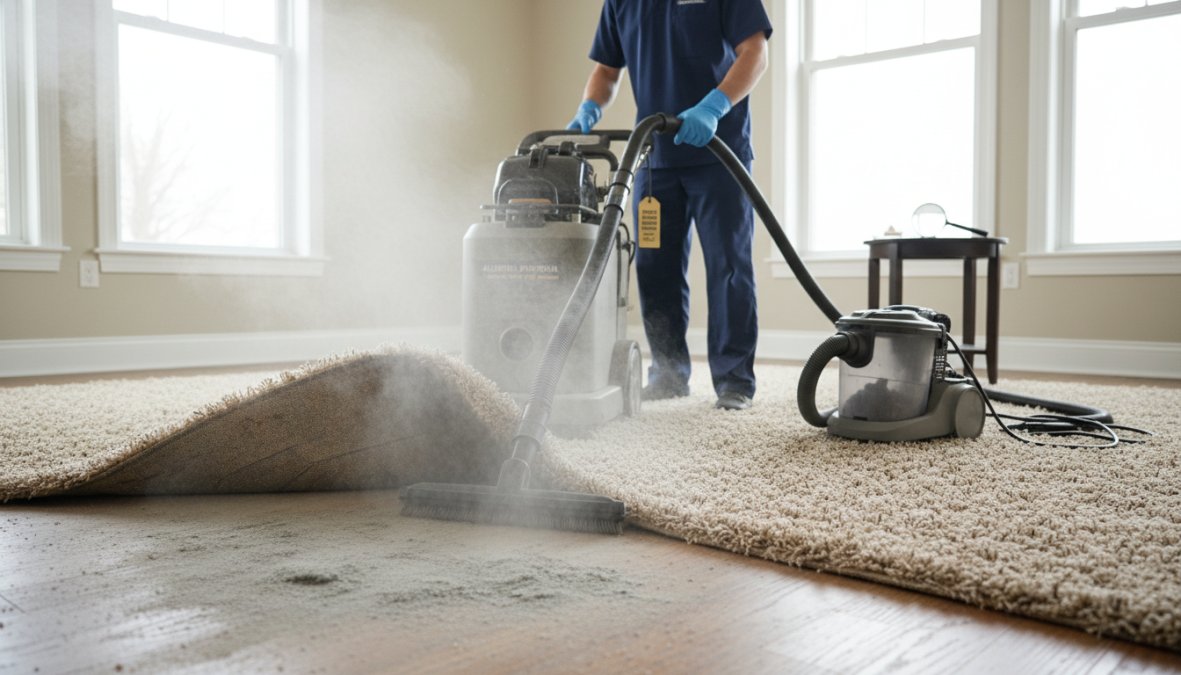
The difference comes down to equipment. Truck-mounted hot water extraction systems operate at water temperatures and suction pressures far beyond what portable rental units produce. The heat alone is a critical factor: dust mites and mold spores are killed at sustained high temperatures that only commercial-grade machines reliably achieve.
Lake Geneva Carpet Cleaning uses truck-mounted hot water extraction technology to reach deep into carpet fibers, removing embedded allergens, pet dander, mold spores, and dust mite waste that DIY methods leave behind. The process also extracts the cleaning solution fully, leaving no residue that could itself attract new allergens.
Signs you need professional cleaning sooner rather than later:
- Allergy symptoms persist despite regular vacuuming
- Visible staining or pet accident areas that haven’t fully responded to home treatment
- A musty odor that returns after DIY cleaning
- Carpet hasn’t been professionally cleaned in over 12 months
- Household members with allergic asthma or severe respiratory sensitivities
For Lake Geneva and surrounding Wisconsin communities, scheduling professional cleaning before spring pollen season and again before fall is a practical strategy that many allergy-affected families find significantly reduces their symptom burden.
How to Remove Allergens from Carpets: Common Mistakes to Avoid
Knowing how to remove allergens from carpets correctly means knowing what not to do. These mistakes are extremely common, and each one either wastes your effort or actively makes the allergen problem worse.
Vacuuming too fast. This is the most widespread mistake. Moving the vacuum head quickly doesn’t give suction enough contact time to pull particles from deep fibers. Slow down.
Using a vacuum without a sealed HEPA filter. Standard vacuums exhaust fine particles back into the air. Without a sealed system, you’re redistributing allergens rather than removing them.
Over-wetting carpet during DIY steam cleaning. Saturating carpet creates the moisture conditions that mold spores and dust mites thrive in. Use the minimum effective amount of water and ensure thorough drying.
Ignoring carpet edges and under furniture. Allergens accumulate heavily in corners, along baseboards, and under furniture where foot traffic doesn’t disturb them. These areas need deliberate attention.
Cleaning carpets and then closing all windows. Allergens dislodged during cleaning need somewhere to go. Ventilation during and after cleaning is essential for improving indoor air quality.
Skipping the pre-treatment step. Jumping straight to extraction without pre-treating high-traffic areas means the machine has to work harder and results are less thorough.
Waiting too long between cleanings. Allergen loads compound over time. A carpet that goes 18 months without deep cleaning requires significantly more effort to restore to a hygienic home baseline than one cleaned every 6-12 months.
The single most impactful change most households can make is switching to a sealed HEPA filter vacuum and slowing down their vacuuming technique. These two changes alone produce a measurable improvement in allergen levels without any additional cost.
Post-Cleaning Maintenance to Keep Allergens Away Longer
Getting carpets clean is only half the work. Keeping them that way requires a few consistent habits that most guides don’t cover in enough detail.
Use doormats at every entry point. A high-quality doormat captures pollen, dust, and outdoor particulate matter before it reaches your carpet. A two-mat system (one outside, one inside) is more effective than a single mat.
Implement a no-shoes policy indoors. Shoes track in the majority of outdoor allergens including pollen, mold spores, and general particulate matter. This single habit can dramatically reduce how quickly allergens accumulate in carpet fibers.
Run an air purifier with a HEPA filter in main living areas. Airborne allergens settle into carpet continuously. An air purifier reduces the concentration of particles in the air before they get the chance to land.
Groom pets regularly outside the home. Pet dander production is continuous. Regular brushing and bathing reduces the volume of dander shed onto carpet surfaces.
Control indoor humidity. Dust mites thrive at humidity levels above 50%. Keeping indoor humidity between 30-50% creates a less hospitable environment for dust mite populations. A dehumidifier in humid Wisconsin summers is a practical investment for allergy-prone households.
Spot clean immediately. Any spill or pet accident that isn’t addressed quickly creates a moisture zone that encourages mold spore growth. Blot immediately, apply an enzyme cleaner, and dry thoroughly.
According to the American Lung Association’s guidance on controlling indoor allergens, combining regular vacuuming with humidity control and entry point management produces better long-term allergen reduction than any single cleaning intervention alone.
These habits compound over time. A household that implements all of them consistently will maintain a significantly lower allergen load between professional cleanings, making each deep clean more effective and longer-lasting.
Conclusion: Build a Cleaner, Healthier Home Starting with Your Carpet
Allergen control in carpet is a process, not a one-time fix. The combination of correct vacuuming technique, targeted DIY treatments, and scheduled professional deep cleaning creates a layered defense that actually works for allergy-prone households.
Living with persistent allergy symptoms despite regular cleaning is a sign that surface-level maintenance isn’t reaching the embedded allergens in your carpet fibers. Lake Geneva Carpet Cleaning has helped Wisconsin homeowners solve this exact problem for over 32 years, using truck-mounted hot water extraction technology and eco-friendly methods that remove embedded allergens, pet dander, and mold spores at a depth that DIY equipment simply can’t match. With a 10-day satisfaction guarantee and an owner-operated commitment to meticulous detail, the results are consistent and lasting. Get started with Lake Geneva Carpet Cleaning and experience the difference a genuinely deep clean makes for your home’s air quality and your family’s health.
Frequently Asked Questions
Does vacuuming actually remove allergens from carpet?
Vacuuming helps, but only a HEPA filter vacuum can capture microscopic particles like dust mite waste, pet dander, and pollen effectively. Standard vacuum cleaners may recirculate airborne allergens back into the room. For best results, vacuum at least twice a week in high-traffic areas and use slow, overlapping passes to give the machine time to extract deeply embedded particulate matter from carpet fibers.
How often should you clean carpets if you have allergies?
For allergy sufferers, vacuuming frequency should be at least two to three times per week. A deeper carpet cleaning, using hot water extraction or steam cleaning, is recommended every three to six months. Homes with pets, children, or allergy-triggered asthma may benefit from professional cleaning every three months. Sticking to a consistent carpet maintenance schedule is one of the most effective ways to reduce allergen buildup year-round.
Can baking soda work as a natural carpet allergen remover?
Yes, baking soda is a practical natural carpet allergen remover for light maintenance. Sprinkle it generously over the carpet, let it sit for 15 to 30 minutes to absorb odors and help loosen dust mite waste, then vacuum thoroughly with a HEPA filter vacuum. While it won't eliminate deeply embedded allergens on its own, it's a safe, non-toxic option that complements your regular cleaning routine without harsh chemicals.
Is professional carpet cleaning better for allergy sufferers than DIY methods?
Professional carpet cleaning for dust mites and other allergens is significantly more effective than most DIY approaches. Commercial-grade truck-mounted hot water extraction machines reach deeper into carpet fibers, remove more allergens, and extract more moisture than rental units. For households dealing with allergic asthma, pet dander, or heavy mold spore exposure, professional cleaning at least once or twice a year provides a level of deep cleaning that standard home methods simply cannot match.
Do HEPA vacuums really make a difference for carpet allergens?
HEPA filter vacuums are widely considered the best vacuum for carpet allergies because they trap 99.97% of particles as small as 0.3 microns, including dust mites, pollen, and pet dander. Without a HEPA filter, a vacuum may pull allergens out of carpet fibers but release them back into the air. If improving indoor air quality and reducing allergy symptoms is your goal, a HEPA vacuum is one of the most worthwhile investments you can make.
This article was written using GrandRanker