Table of Contents
- Ground Rules for How to Remove Stubborn Stains the Right Way
- Tools and Supplies You Need Before You Start
- How to Remove Set-In Stains from Clothes That Won’t Budge
- Natural Stain Removal Hacks Using Everyday Ingredients
- Removing Stains from Upholstery Without Causing Fiber Damage
- Best Stain Remover for Old Stains: Products and DIY Recipes
- Troubleshooting Failed Stain Removal Attempts
- How to Remove Stubborn Stains from Non-Fabric Surfaces
Last Updated: June 11, 2026
Knowing how to remove stubborn stains is one of those skills that separates a ruined garment from a rescued one. At Lake Geneva Carpet Cleaning, we’ve spent over 32 years tackling the worst stains Wisconsin homeowners throw at us, and the single most important lesson is this: the wrong technique causes more damage than the stain itself. Coffee, blood, and grease each require a completely different chemical approach, applying heat to a protein-based stain permanently bonds it to fabric fibers. Getting the chemistry right before you start is the difference between a clean surface and a permanent mark.
Ground Rules for How to Remove Stubborn Stains the Right Way
Pre-treatment decisions made in the first two minutes after a spill determine whether a stain becomes permanent. Act fast, use the right technique, and you’ll save fabric that most people would throw out.
Always Test for Colorfastness First
Colorfastness is the ability of a fabric dye to resist fading or bleeding when exposed to cleaning agents. Before applying any solution, test it on a hidden area such as an inside seam and wait three minutes. If dye transfers to your cloth, stop and choose a gentler option. Hydrogen peroxide whitens beautifully on white cotton but can strip color from dyed upholstery in seconds.
Never skip the colorfastness test on silk, wool, or any dyed fabric. A failed test on a visible area can cause irreversible color loss that no professional can fix.
Blotting vs. Rubbing: Why It Matters
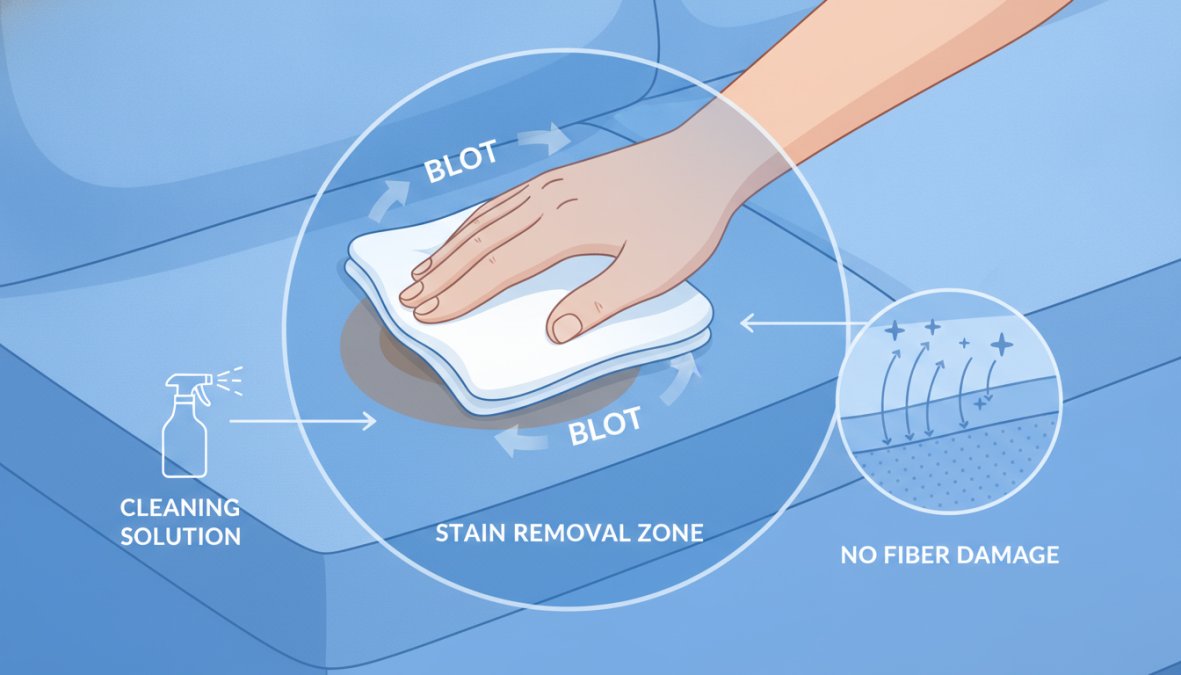
Blotting is the correct technique. Rubbing spreads the stain laterally, pushes it deeper into fiber layers, and creates fiber damage that shows as a fuzzy, worn patch even after the stain is gone. Use a clean absorbent cloth, press straight down, and work from the outer edge toward the center. Replace the cloth frequently so you’re lifting the stain, not redistributing it.
Tools and Supplies You Need Before You Start
Having the right supplies assembled before a spill happens is a practical advantage most households overlook, scrambling for supplies gives the stain time to set.
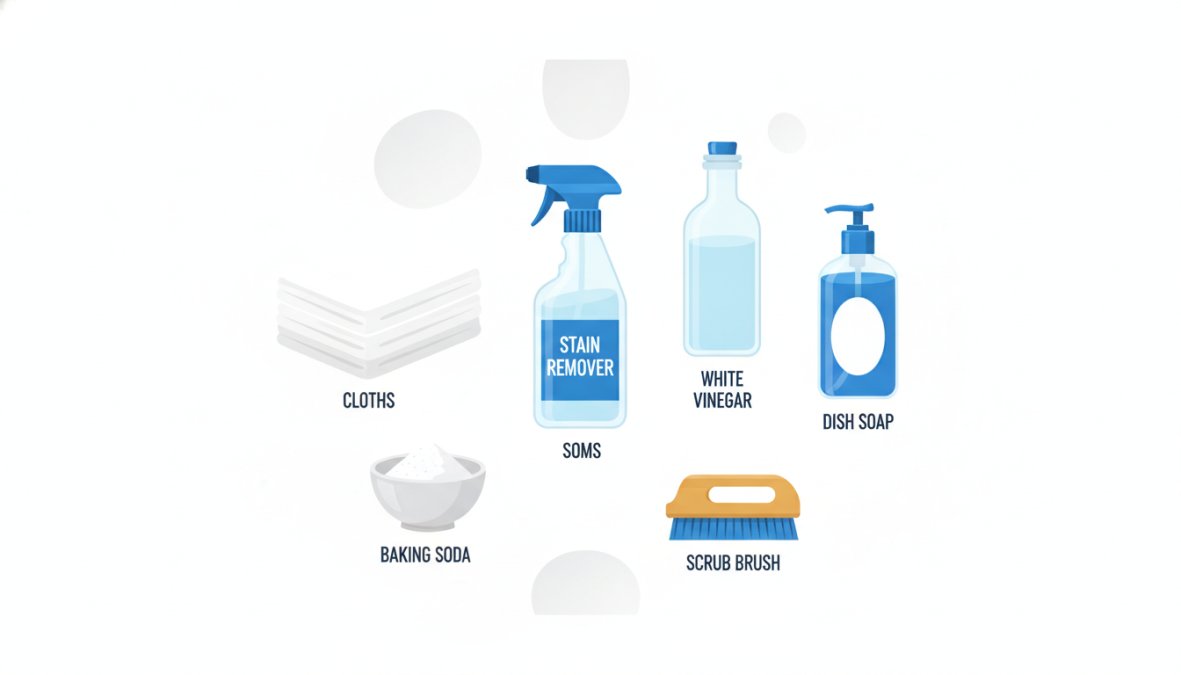
Keep these items in a dedicated cleaning kit:
- Absorbent cloths: White microfiber or cotton only. Colored cloths can transfer dye.
- Cold water and a spray bottle: Cold water rinse is critical for protein-based stains.
- Distilled white vinegar: Effective on tannin and acidic stains.
- Baking soda: Absorbs grease and neutralizes odors.
- Dish soap: A surfactant-based solution for oil-based stains.
- Hydrogen peroxide (3%): For tough discoloration on white or light fabrics only.
- Enzyme cleaner: Essential for protein-based stains like blood, sweat, and pet accidents.
- Dry solvent or rubbing alcohol: For ink and solvent-based stains.
- Stain-resistant spray: For post-cleaning protection.
According to the American Cleaning Institute’s fabric care guidance, having the correct cleaning agent matched to the stain type is the single most important factor in successful spot treatment.
How to Remove Set-In Stains from Clothes That Won’t Budge
Set-in stains are harder, but not impossible. Rehydrate the stain before treating it to reopen the fiber structure and make the stain accessible again, soak the area in cold water for 15-30 minutes before applying any cleaning agent.
Protein-Based Stains (Blood, Sweat, Egg)
Heat denatures protein, essentially cooking it into the fabric permanently. Always use cold water.
- Rinse immediately with cold water to flush as much of the stain as possible.
- Apply an enzyme cleaner directly and allow it to sit for 15-20 minutes.
- Blot with a clean absorbent cloth, working from the outside edge inward.
- Rinse with cold water and repeat if needed.
- Wash in cold water with standard laundry detergent.
For dried blood, a paste of meat tenderizer (which contains protease enzymes) and cold water applied for 30 minutes can reactivate and lift the stain.
Tannin Stains (Coffee, Wine, Tea)
Tannin stains are acidic, making alkaline cleaners your best tool.
- Blot excess liquid immediately. Do not rub.
- Mix one tablespoon of dish soap with two cups of cold water and blot repeatedly.
- For red wine, pour a small amount of club soda over the stain while still wet, carbonation helps lift tannin from fibers.
- Rinse with cold water; if residue remains, apply diluted distilled white vinegar (one part vinegar to two parts water) and blot again.
Never put a tannin-stained garment in the dryer until the stain is completely gone, heat sets tannin as permanently as protein.
Oil-Based and Grease Stains
Water alone will not dissolve grease. Use a solvent-based approach.
- Scrape off solid grease with a dull knife or spoon.
- Apply baking soda directly and let it sit for 15 minutes to absorb the oil.
- Brush off the powder and work a small amount of dish soap into the stain with a soft brush.
- Rinse with warm water; for stubborn residue, apply rubbing alcohol or a dry-cleaning solvent before washing.
For grease stains on delicate fabrics, apply white chalk or talcum powder instead of baking soda. It absorbs oil just as effectively with less abrasion risk.
Natural Stain Removal Hacks Using Everyday Ingredients
Natural stain removal hacks work because they address the pH balance of the stain directly, without harsh synthetic chemicals that can damage fibers or leave toxic residue.
Baking Soda Paste for Grease and Odors
Mix three parts baking soda with one part water to form a thick paste. Apply directly to the stain, press in gently, and leave for at least 30 minutes before brushing off and rinsing. Unlike many commercial removers that eliminate the visual stain but leave odor molecules behind, baking soda neutralizes odor-causing compounds rather than masking them.
Distilled White Vinegar for Tannin and Acidic Stains
The acetic acid in distilled white vinegar disrupts the stain’s bond with fabric fibers. Mix equal parts vinegar and cold water, apply to the stain, allow a five-minute dwell time, then blot with a clean cloth. A second application is often necessary for heavy tannin stains on upholstery. Do not use vinegar on stone surfaces, the acidity etches marble and granite permanently.
Hydrogen Peroxide for Tough Discoloration
Hydrogen peroxide (3% solution) releases oxygen molecules that break apart the chromophores responsible for stain color. Apply directly to white or light-colored fabrics only, allow 10 minutes, then rinse thoroughly with cold water. As documented in the Environmental Working Group’s cleaning product safety database, hydrogen peroxide at 3% concentration is one of the safer oxidizing agents for household fabric care, with minimal toxicity compared to chlorine-based bleaches.
Removing Stains from Upholstery Without Causing Fiber Damage
The biggest DIY mistake on upholstery is over-wetting the fabric, which soaks through to cushion filling, promotes mildew, and causes shrinkage or puckering as it dries. Use as little liquid as possible, blot rather than saturate, and use a fan or open window to speed drying.
Fabric-Specific Compatibility: What Works on Which Material
| Fabric Type | Safe Cleaners | Avoid | Notes |
|---|---|---|---|
| Cotton/Linen | Dish soap, vinegar, enzyme cleaner | Bleach, hot water | Test colorfastness first |
| Microfiber | Rubbing alcohol, dry solvent | Water (can leave rings) | Use solvent-based only |
| Wool | Cold water, mild detergent | Hot water, alkaline cleaners | Enzyme cleaners safe |
| Silk | Cold water only | All solvents, vinegar | Professional cleaning recommended |
| Synthetic (polyester, nylon) | Most water-based cleaners | Acetone | Check care label code |
| Leather | Mild soap, leather cleaner | Vinegar, peroxide | Condition after cleaning |
Check the care tag for cleaning codes: W (water-based only), S (solvent-based only), WS (either), or X (vacuum only).
The care code on upholstery is the single most important piece of information before any spot treatment. An “S” code means water-based cleaners will leave permanent rings, regardless of technique.
Best Stain Remover for Old Stains: Products and DIY Recipes
Old stains that have been through the dryer or sat for days require aggressive pre-treatment that rehydrates the dried stain and introduces enzymes or oxidizers to break the chemical bond.
For a reliable DIY recipe, combine:
- 1 tablespoon dish soap
- 1 tablespoon distilled white vinegar
- 2 tablespoons hydrogen peroxide (3%)
Apply to the stain, cover with plastic wrap to prevent evaporation, and allow it to sit for one to two hours before rinsing. This combination addresses protein, tannin, and oil-based components simultaneously, making it effective for mixed stains like food spills.
For commercial options, enzyme-based cleaners such as Folex are widely recommended by professional cleaners, water-based, non-toxic, and safe for most fabric types. According to University of Illinois Extension’s textile care resources, soaking a set-in stain in cold water for 30 minutes before applying any cleaner significantly improves removal rates by rehydrating dried stain particles.
Troubleshooting Failed Stain Removal Attempts
A failed first attempt is not the end. The most common reason stain removal fails is using the wrong cleaner for the stain type, or using the right cleaner incorrectly. Work through this checklist before giving up:
- Did you identify the stain type correctly? (Protein, tannin, oil, or ink?)
- Did you use cold water for protein stains, not warm or hot?
- Did you blot rather than rub?
- Did the stain go through the dryer before treatment? If yes, rehydrate before re-treating.
- Did you allow enough dwell time for the enzyme cleaner or pre-treatment solution?
- Did you test for colorfastness before applying hydrogen peroxide or vinegar?
If the stain remains after two or three correct attempts, it has likely set into the fiber structure. Professional hot water extraction forces cleaning solution deep into the fiber matrix and extracts it along with stain particles, something no surface-level DIY method can replicate. Repeated incorrect attempts also make professional removal harder, as each wrong cleaner can push the stain deeper or chemically alter it in ways that complicate treatment.
How to Remove Stubborn Stains from Non-Fabric Surfaces
Porous surfaces like grout, unfinished wood, and concrete absorb stains into the material itself, while non-porous surfaces like tile and sealed countertops hold stains on the surface, each requires a different approach.
For tile and grout: Baking soda paste scrubbed with a stiff brush removes most surface staining. For deep discoloration, apply diluted hydrogen peroxide, leave for 10 minutes, then scrub. Avoid vinegar on grout, acidity degrades the grout material over time.
For sealed stone countertops: Use pH-neutral cleaners only. Both acidic cleaners (vinegar, lemon juice) and alkaline cleaners (baking soda paste) damage sealant over time. A small amount of dish soap in warm water is the safest option.
For hardwood floors: Oil-based stains require a dry solvent applied with a cloth, followed by a wood-safe cleaner. Address water-based stains immediately with a dry cloth, prolonged moisture causes swelling and warping.
For carpet: The principles of blotting, pre-treatment, and enzyme cleaners apply equally to carpet as to clothing. The added challenge is that carpet padding retains moisture and can develop mildew if over-wet. According to the Carpet and Rug Institute’s care and maintenance guidelines, encapsulation cleaning and hot water extraction are the two professional methods with the highest documented success rates for set-in carpet stains.
For grout, tile, and carpet stains in Lake Geneva homes that don’t respond to DIY methods, professional cleaning services with truck-mounted hot water extraction equipment can reach depths that household tools cannot.
Stubborn stains that survive multiple DIY attempts are a common frustration for Lake Geneva, Wisconsin homeowners, particularly with high-traffic carpet areas and upholstered furniture. Lake Geneva Carpet Cleaning has addressed exactly these situations for over 32 years, using truck-mounted hot water extraction technology that removes embedded stains, allergens, and odors at a depth no surface treatment reaches. With a 10-day satisfaction guarantee and an owner-operated commitment to meticulous results, the team brings professional-grade outcomes to residential and commercial clients across the region. Contact Lake Geneva Carpet Cleaning and get the clean your carpets actually need.
Frequently Asked Questions
What is the best way to remove old, set-in stains?
The best approach for set-in stains is a targeted pre-treatment using an enzyme cleaner or a baking soda paste mixed with dish soap. Apply the solution, let it sit for 15-30 minutes to break down the stain at a molecular level, then blot with a clean absorbent cloth. For protein-based stains like blood, always use cold water, hot water locks them in permanently. Repeat the process if needed rather than scrubbing harder, which causes fiber damage.
Can you remove stubborn stains without damaging the fabric?
Yes, but only if you follow safe stain removal practices. Always test for colorfastness on a hidden area before applying any solution. Blot, never rub, to avoid spreading the stain or breaking down fibers. Match your cleaner to the stain type: enzyme cleaners for protein-based stains, distilled white vinegar for tannin stains, and solvent-based removers for oil-based stains. Avoid hot water on most delicate fabrics, and always rinse with a cold water rinse after treatment.
What household items work best for removing tough stains naturally?
Several common household items are highly effective for natural stain removal. Baking soda paste lifts grease and neutralizes odors. Distilled white vinegar cuts through tannin stains like coffee and wine. Hydrogen peroxide (3%) works on tough discoloration but requires a colorfastness check first. Dish soap acts as a surfactant that breaks down oil-based stains. Combining these with cold water and patience can tackle many stubborn stains without harsh chemicals, making them excellent eco-friendly alternatives.
Is it possible to remove a stain that has already been dried and ironed?
It is more difficult but often still possible. Heat from drying or ironing can set a stain by bonding it to fabric fibers. Start by re-wetting the area with cold water and applying a pre-treatment enzyme cleaner or dish soap. Allow significant dwell time, up to an hour, before blotting. For stubborn cases, a solvent-based cleaner may help break the bond. If the stain still remains after multiple attempts, a professional hot water extraction cleaning service is your best next step.
How do you remove stubborn stains from upholstery without soaking the fabric?
When removing stains from upholstery, moisture control is critical. Apply your cleaning solution sparingly to an absorbent cloth first, then press it onto the stain, never pour liquid directly onto the fabric. Use a spot treatment approach, blotting from the outside edge inward to prevent spreading. After treatment, place a dry absorbent cloth over the area and press firmly to draw out moisture. This prevents over-wetting, which can cause mildew, water rings, or damage to the upholstery padding underneath.
This article was written using GrandRanker