Table of Contents
- 9 Professional Carpet Cleaning Benefits You Should Know
- How Professional Cleaning Improves Indoor Air Quality and Removes Allergens
- Benefits of Steam Cleaning Carpets: Hot Water Extraction Explained
- Prolonging Carpet Lifespan and Protecting Your Investment
- Professional Carpet Cleaning vs DIY: Cost-Benefit Analysis
- Stain Removal, Carpet Restoration, and Preventing Mold and Mildew
- Eco-Friendly Cleaning and Pre-Cleaning Preparation Checklist
- How Often to Get Carpets Professionally Cleaned in Lake Geneva
Last Updated: June 10, 2026
9 Professional Carpet Cleaning Benefits You Should Know
The professional carpet cleaning benefits most homeowners overlook go far beyond surface appearance. At Lake Geneva Carpet Cleaning, we’ve spent over 32 years watching Wisconsin families transform their homes through regular professional care, and the difference between professionally cleaned carpet and one maintained only by vacuuming is not subtle. Most guides treat carpet cleaning as a cosmetic service. It isn’t.
Carpet fibers act as a filter, trapping dry soil, pet dander, dust mites, volatile organic compounds, and bacteria deep within the pile. Surface vacuuming removes loose debris from the top layer, but the real threat lives further down. According to the Carpet and Rug Institute’s maintenance standards, professional deep cleaning is the only method that reliably extracts embedded pollutants from carpet fibers. The nine benefits below address how expert care improves your home, your health, and your budget.
How Professional Cleaning Improves Indoor Air Quality and Removes Allergens
Professional carpet cleaning improves indoor air quality by extracting the trapped pollutants that vacuuming leaves behind. Carpet acts as a reservoir for airborne contaminants, and without periodic deep cleaning, that reservoir fills and begins releasing particles back into the air you breathe.
Dust Mites, Pet Dander, and Volatile Organic Compounds
Dust mites thrive in carpet fibers, feeding on dead skin cells. A single square yard of carpet can harbor thousands of them, and their waste particles are among the most common household allergens. Pet dander compounds the problem, adhering to fibers and resisting conventional vacuuming.
Volatile organic compounds (VOCs) enter carpet from tracked-in residues, cleaning products, and off-gassing materials. Hot water extraction flushes these compounds from deep in the pile in a way rental machines cannot replicate. The EPA guidance on indoor air quality and carpet maintenance notes that carpets can accumulate contaminants at levels far exceeding outdoor concentrations, making regular professional cleaning a meaningful component of home hygiene.
Health Benefits for Families and Pets
Families with young children and pets face the highest exposure risk because both groups spend significant time at floor level. Infants crawling on carpet contact allergens and bacteria directly; pets track in outdoor pollutants with every entry. Professional sanitization removes these contaminants at the source, and many homeowners report measurable improvements in allergy symptoms following cleaning, particularly during Wisconsin’s high-pollen spring and fall seasons.
Schedule professional cleaning at the start of allergy season in Lake Geneva, typically late April, to remove winter’s accumulated allergen buildup before pollen compounds the problem.
Benefits of Steam Cleaning Carpets: Hot Water Extraction Explained
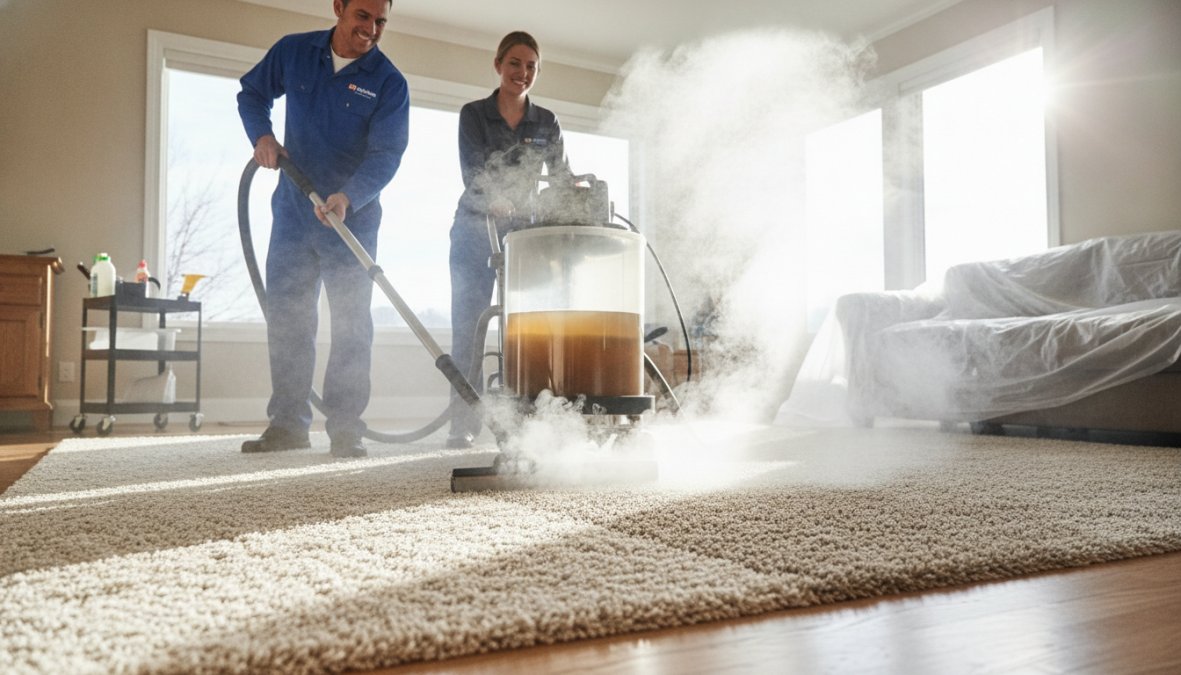
The benefits of steam cleaning carpets center on one principle: heat and pressure reach where surface methods cannot. Hot water extraction injects heated water under pressure into the carpet pile, agitates embedded soil, then immediately extracts the solution along with loosened debris. The heat kills bacteria and dust mites on contact, and the extraction leaves carpets significantly drier than older wet-cleaning methods, reducing mold and mildew risk.
Truck-Mounted Systems vs. Portable Equipment
Truck-mounted systems operate from a vehicle outside the home, generating significantly higher water temperatures, stronger suction, and greater pressure than any portable rental unit. The result is deeper extraction, faster drying, and more thorough sanitization.
Rental machines operate at lower temperatures and pressure, leaving more moisture in the carpet after cleaning, creating conditions favorable to mold and mildew growth.
| Feature | Truck-Mounted System | Rental Machine |
|---|---|---|
| Water temperature | 200-230°F | 120-150°F |
| Suction power | Commercial-grade | Consumer-grade |
| Drying time | 4-6 hours | 12-24 hours |
| Allergen removal | Deep extraction | Surface-level |
| Mold risk | Low | Elevated |
The professional carpet cleaning benefits tied to truck-mounted systems represent a fundamentally different cleaning outcome, not a marginal improvement.
Prolonging Carpet Lifespan and Protecting Your Investment
Most carpet replacement decisions are premature. The carpet is often structurally sound, but accumulated dry soil has abraded the fibers until appearance suffers irreparably. Dry soil particles have sharp, irregular edges that grind against carpet fibers with every footstep, cutting and fraying the pile. Surface vacuuming removes the top layer, but particles that migrate deeper continue their abrasive work between cleanings. Regular deep cleaning interrupts this cycle, preserving fiber integrity and extending carpet lifespan by years, most visibly in high-traffic hallways, living rooms, and stairs.
Carpet Warranty Requirements and Maintenance Schedules
Many carpet warranties require documented professional cleaning at specified intervals to remain valid. Failing to meet those requirements can void coverage for defects and premature wear. The standard recommendation from most manufacturers is professional cleaning every 12-18 months for average households, with more frequent cleaning for homes with pets, children, or high foot traffic. Keeping service records protects your warranty claim if fiber or backing issues emerge.
Carpet warranties often require professional cleaning documentation. Keep your service receipts as proof of maintenance to protect your investment against manufacturer defects.
Professional Carpet Cleaning vs DIY: Cost-Benefit Analysis
Professional carpet cleaning vs DIY is a comparison most homeowners approach with the wrong math. They calculate rental fee against service cost and conclude the rental is cheaper, missing several critical variables. Rental costs add up when you factor in machine rental, cleaning solution, transportation, and time. The cleaning outcome is also substantially inferior. Improper technique can damage carpet fibers, over-wet the backing, or leave soap residue that attracts future soil faster than before.
Professional service delivers deeper cleaning, faster drying, and lower risk of damage or mold growth. Over a carpet’s life, professional cleaning typically extends replacement intervals significantly, making total cost of ownership lower despite the higher per-visit price.
What Rental Machines Cannot Do
The professional carpet cleaning benefits that rental equipment cannot replicate include:
- Deep extraction of allergens and bacteria from the base of the carpet pile
- Water temperatures high enough to kill dust mites and sanitize effectively
- Sufficient suction to prevent over-wetting and mold risk
- Stain protection treatments applied post-cleaning to extend results
- Expert identification of fiber type and appropriate cleaning chemistry
- Odor elimination at the source rather than masking
A common mistake is applying too much cleaning solution with a rental machine, leaving residue that acts as a soil magnet. Professional technicians use calibrated solution ratios and rinse thoroughly, leaving no residue behind.
Stain Removal, Carpet Restoration, and Preventing Mold and Mildew
Stain removal is where professional carpet cleaning separates itself most visibly from DIY attempts. Many stains that appear permanent respond to professional treatment because technicians match cleaning chemistry to the stain type, carpet fiber, and age of the stain.
Common stains that professional cleaning addresses effectively:
- Pet urine and odor (requires enzyme-based treatment at the fiber and backing level)
- Red wine and tannin stains (requires oxidizing agents calibrated to fiber type)
- Grease and oil-based stains (requires emulsifying chemistry)
- Mud and clay tracked in from outdoor areas
- Coffee, juice, and food spills that have set over time
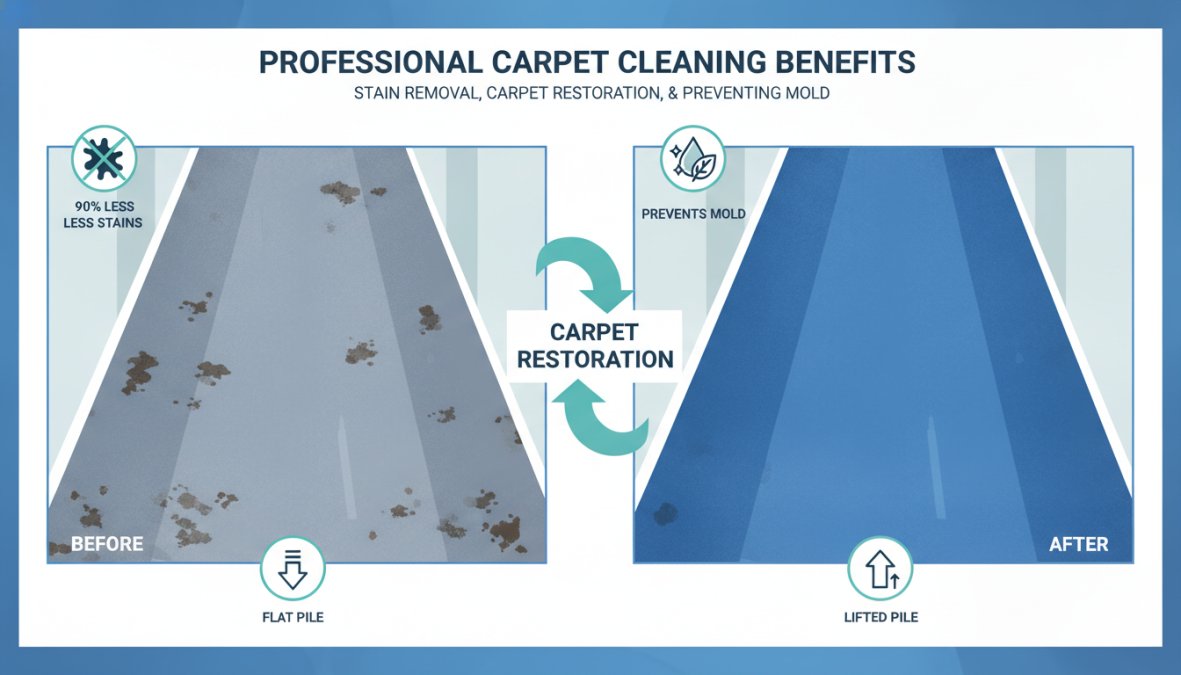
Carpet restoration goes beyond stain removal, professional cleaning revives compressed pile in high-traffic areas, restoring texture and appearance. Grooming tools used post-cleaning lift the pile and improve visual uniformity.
Mold and mildew prevention is where professional technique matters most. Over-wetting during DIY cleaning, combined with inadequate extraction, creates conditions for mold growth within 24-48 hours, particularly in humid Wisconsin summers. Truck-mounted extraction removes moisture efficiently, reducing drying time and eliminating the window for mold development. According to CDC guidance on mold prevention in residential settings, controlling moisture is the primary strategy for preventing mold, and professional extraction directly supports that goal.
DIY carpet cleaning with rental machines frequently leaves excess moisture in the carpet backing. In humid conditions, mold can begin developing within 24 hours if drying is incomplete. Always ensure adequate ventilation after any carpet cleaning.
Eco-Friendly Cleaning and Pre-Cleaning Preparation Checklist
Sustainability: Green Cleaning Solutions That Work
The assumption that effective carpet cleaning requires harsh chemicals is outdated. Green cleaning solutions matter for two reasons: residues from cleaning agents remain in carpet fibers and can off-gas VOCs or irritate sensitive individuals, and wastewater enters the household drainage system, making solution chemistry an environmental consideration. Lake Geneva Carpet Cleaning uses eco-friendly cleaning methods that address allergens, odors, and stains without compromising indoor air quality, a cleaner home that is also a healthier one.
The Green Seal certification standards for cleaning products provide a useful benchmark for evaluating cleaning solutions. Asking your service provider about their solution certifications is a worthwhile question.
Pre-Cleaning Checklist: How to Prepare Your Home
Preparing your home before a professional cleaning appointment improves results and reduces appointment time.
Pre-cleaning preparation checklist:
- Vacuum all carpeted areas thoroughly to remove surface dry soil before the technician arrives
- Clear small items, toys, and breakables from carpeted rooms
- Identify and point out stains, pet accident areas, and high-traffic zones to the technician
- Secure pets in a separate area of the home during cleaning
- Plan for 4-6 hours of drying time and arrange foot traffic accordingly
- Move small furniture items (chairs, ottomans, floor lamps) off carpeted areas
- Note any areas of carpet with known moisture issues or previous water damage
- Confirm your carpet fiber type if known (nylon, polyester, wool, or blended textile)
How Often to Get Carpets Professionally Cleaned in Lake Geneva
How often to get carpets professionally cleaned depends on household traffic, occupant health needs, and carpet type. The general guidance for most Lake Geneva households is every 12-18 months, but several factors push that frequency higher. Households with pets should plan for cleaning every 6-12 months, pet dander, tracked-in contaminants, and odor compounds accumulate faster, and the professional carpet cleaning benefits are more pronounced with more frequent service. Families with allergy or asthma sufferers benefit from a similar schedule given Wisconsin’s seasonal allergen patterns.
The practical answer for most Lake Geneva, Wisconsin homeowners: schedule professional cleaning once a year at minimum, twice if you have pets or allergy concerns, and immediately following any significant moisture event, pet accident, or stain that resists spot treatment. The professional carpet cleaning benefits compound over time when cleaning is consistent rather than reactive.
Lake Geneva’s humid summer season and leaf-tracked fall months are the two periods when carpet soil accumulation accelerates most. Scheduling one cleaning in late spring and one in early fall keeps allergen levels manageable year-round.
Carpet cleaning near me is a common search for Lake Geneva residents, and local service matters because Wisconsin’s humidity and seasonal pollen loads directly affect how quickly carpets accumulate the contaminants that professional cleaning addresses.
The challenge most homeowners face is not recognizing the need for professional carpet cleaning but finding a service they can trust. Lake Geneva Carpet Cleaning has served Wisconsin homeowners for over 32 years as an owner-operated business, using truck-mounted hot water extraction technology and eco-friendly cleaning solutions to remove allergens, odors, and embedded soil that surface cleaning leaves behind. The 10-day satisfaction guarantee means the results are backed, not just promised. Schedule your cleaning with Lake Geneva Carpet Cleaning and experience the difference that 32 years of meticulous, professional care delivers.
Frequently Asked Questions
Is professional carpet cleaning really worth it?
Yes, professional carpet cleaning benefits go well beyond appearance. Truck-mounted hot water extraction removes deep-seated dirt, allergens, bacteria, and pet dander that surface vacuuming cannot reach. Over time, this protects carpet fibers, extends carpet lifespan, and improves indoor air quality. When you factor in the cost of premature carpet replacement versus routine professional cleaning, the investment typically pays for itself several times over.
How often should you have your carpets professionally cleaned?
Most carpet manufacturers and cleaning professionals recommend scheduling a deep cleaning at least once every 12 to 18 months for average households. Homes with pets, children, allergy sufferers, or high-traffic areas may benefit from cleaning every 6 to 12 months. In Lake Geneva, Wisconsin, seasonal factors like mud, pollen, and winter salt tracked indoors can also increase how often professional carpet cleaning is needed to maintain home hygiene.
What is the difference between steam cleaning and dry carpet cleaning?
Steam cleaning, more accurately called hot water extraction, injects heated water and cleaning solution deep into carpet fibers, then extracts it along with dissolved dirt, allergens, and bacteria. It is widely considered the most effective method for sanitization and stain removal. Dry carpet cleaning uses low-moisture compounds or encapsulation chemicals that bind to dry soil and are vacuumed away. While dry methods offer faster drying times, they typically do not achieve the same depth of clean as hot water extraction.
Does professional carpet cleaning remove all stains?
Professional carpet cleaning removes the vast majority of common stains, including pet stains, food spills, and mud, especially when treated promptly. However, some stains that have been heat-set, chemically altered, or left untreated for extended periods may be permanent. A skilled professional technician will assess each stain before cleaning and apply targeted stain removal treatments. Results depend on the carpet fiber type, the stain's age, and whether any prior DIY cleaning attempts have affected the carpet pile.
What are the health benefits of professional carpet cleaning for families with pets?
Professional carpet cleaning significantly reduces household allergens including pet dander, dust mites, mold spores, and bacteria that accumulate deep within carpet fibers. For families with pets, hot water extraction also neutralizes odor-causing compounds trapped in the carpet pile. Reducing these pollutants can ease respiratory issues, reduce allergy symptoms, and create a healthier living environment, especially important for children and anyone with asthma or sensitivities to household allergens.
This article was written using GrandRanker