Table of Contents
- Why Old Pet Urine Stains Are So Stubborn (The Science Behind the Smell)
- How to Find Hidden Pet Urine Stains Before You Start Cleaning
- What You’ll Need: Cleaning Ingredients and Tools
- How to Remove Old Pet Urine Stains from Carpet: Step-by-Step
- Best Enzymatic Cleaner for Old Pet Urine: DIY vs. Store-Bought
- Carpet Fiber-Specific Advice and Sub-Floor Treatment
- How to Get Rid of Pet Urine Smell in Carpet Permanently
- How to Remove Old Pet Urine Stains from Carpet: Common Mistakes to Avoid
Last Updated: June 12, 2026
Old pet stains are one of the most stubborn cleaning challenges homeowners face, and knowing how to remove old pet urine stains from carpet correctly makes the difference between a fresh-smelling room and one that never quite loses that lingering odor. At Lake Geneva Carpet Cleaning, we’ve treated hundreds of these stains across Wisconsin homes, and the single biggest mistake we see is people treating dried urine the same way they’d treat a fresh spill. Below, we’ll walk you through exactly why old stains behave differently, what tools you actually need, and a step-by-step process that addresses both the visible stain and the invisible uric acid crystals causing the smell.
Here’s what most guides get wrong: they focus entirely on the surface. Old pet urine soaks through the carpet backing, saturates the padding, and in serious cases reaches the sub-floor. Treating only the visible stain leaves the odor source completely intact.
Why Old Pet Urine Stains Are So Stubborn (The Science Behind the Smell)
Dried pet urine is chemically different from fresh urine. Fresh urine is acidic, but as it dries, bacteria break it down and the chemistry shifts, producing alkaline salts and uric acid crystals that bond tightly to carpet fibers and are nearly impervious to water alone.
Uric acid crystals are insoluble mineral deposits that reactivate when exposed to moisture, which is why a stain you thought was gone suddenly smells worse on a humid day or after cleaning with plain water.
The pH balance of your cleaning solution matters. Acidic cleaners like distilled white vinegar neutralize the alkaline salts. Enzymatic cleaners go further by biologically digesting the uric acid crystals. Neither hot water nor dish soap alone touches the underlying chemistry. According to American Kennel Club’s pet care resources, dogs are also drawn back to spots where they’ve previously urinated because of residual scent markers, compounding the problem over time.
How to Find Hidden Pet Urine Stains Before You Start Cleaning
Finding hidden pet urine stains is best done with a UV black light in a darkened room. Urine fluoresces under ultraviolet light, revealing stains invisible in normal lighting. A UV flashlight around 365nm works best, urine stains glow yellow-green. Mark each stain with painter’s tape before turning the lights back on.
A few practical notes:
- Some cleaning products and carpet fibers also fluoresce; use your nose as secondary confirmation.
- Check along baseboards and furniture edges where pets tend to spray or squat.
- In heavily affected rooms, the entire perimeter may need treatment rather than individual spot cleaning.
For large rooms with multiple stains, number your tape markers and treat them in order of severity. Heavily saturated areas need longer dwell times and may require multiple treatment rounds.
What You’ll Need: Cleaning Ingredients and Tools
Cleaning solutions:
- Distilled white vinegar (plain, not apple cider)
- Baking soda
- 3% hydrogen peroxide (standard drugstore concentration)
- Dish soap (a few drops only)
- Enzymatic cleaner (store-bought or DIY)
Tools:
- Spray bottle (two, ideally)
- Clean white cloths or paper towels
- Stiff-bristled brush
- Wet/dry vacuum or carpet extractor
- UV black light and painter’s tape
- Fan or dehumidifier for drying
Never use ammonia-based cleaners on pet urine stains, ammonia mimics urine smell and encourages pets to re-mark. Similarly, steam cleaners applied before urine is fully neutralized can permanently set the stain by bonding proteins to carpet fibers with heat.
How to Remove Old Pet Urine Stains from Carpet: Step-by-Step
Work through each step in order. Skipping steps or rushing dwell times is the most common reason DIY attempts fall short.
Total Time: 2-4 hours (including drying time)
Difficulty: Beginner to Intermediate
Step 1: Dry-Vacuum the Area and Test for Colorfastness
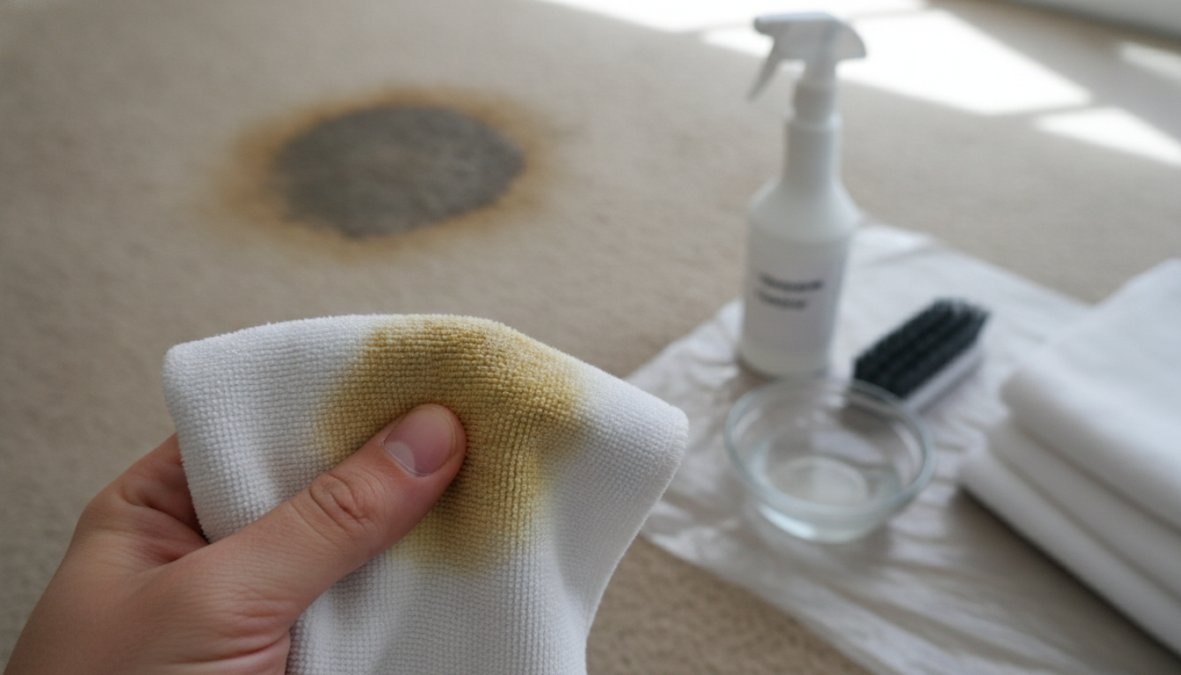
Vacuum the stained area thoroughly to remove debris and loosen crystallized deposits. Then run a colorfastness test: apply a small amount of your cleaning solution to a hidden area, wait five minutes, and blot with a white cloth. If color transfers, use a gentler solution or call a professional. This step is non-negotiable for wool, silk, or natural fiber carpets.
Step 2: Apply a Vinegar and Water Solution
Mix equal parts distilled white vinegar and cool water and apply generously, saturating enough to reach the carpet backing. Allow it to dwell for 10 to 15 minutes, vinegar neutralizes the alkaline urine salts and begins breaking down odor compounds. Blot firmly with a clean white cloth using a pressing motion rather than scrubbing. For stains present for months, two rounds of vinegar solution before moving on produces noticeably better results.
Step 3: Use Baking Soda to Neutralize Odor
Once the area is damp but not soaking, sprinkle a generous layer of baking soda over the stain and work it gently into the fibers. Leave it for at least 8 hours, overnight is better for old stains. Then vacuum thoroughly.
Never mix baking soda and vinegar directly on the carpet. The fizzing neutralizes both compounds before either can do meaningful work. Apply them sequentially with a drying period in between.
Step 4: Treat Persistent Stains with Hydrogen Peroxide
For stains still visible after vinegar and baking soda, mix one cup of 3% hydrogen peroxide with one teaspoon of dish soap. Apply to the stain and allow it to sit for 10 minutes. Hydrogen peroxide breaks down the chromogens responsible for yellow discoloration and has antibacterial properties that address odor. Caution: it can bleach wool and darker synthetic carpets, always test first, never exceed 3% concentration, and don’t leave it on longer than 15 minutes. Blot thoroughly and rinse with clean water.
Step 5: Extract Moisture and Dry Thoroughly
Incomplete drying is where many otherwise successful treatments fail. Use a wet/dry vacuum or carpet extractor to remove as much moisture as possible, then set up airflow with fans and a dehumidifier. In Wisconsin’s humid summer months, mechanical drying is especially important. Keep foot traffic off the area for 6 to 12 hours. Placing a clean dry towel weighted with a heavy object can help wick remaining moisture from deep in the pile.
Best Enzymatic Cleaner for Old Pet Urine: DIY vs. Store-Bought
The best enzymatic cleaner for old pet urine contains live bacterial cultures or active enzymes specifically formulated to digest uric acid crystals. According to University of California Agriculture and Natural Resources pest management resources, enzymatic products are among the most effective options for permanently eliminating pet odor because they address the uric acid crystals other cleaners leave behind.
DIY enzymatic cleaner option: Combine 400ml of water, 100ml of white vinegar, 2 tablespoons of baking soda, and 1 teaspoon of dish soap. This works for mild or recent stains but lacks the biological cultures of commercial products.
Store-bought enzymatic cleaners (look for "protease" or "uricase" on the label) are more reliable for old stains. Apply generously, cover with plastic wrap to slow evaporation, and leave for 24 to 48 hours on severe stains.
| Approach | Addresses Uric Acid Crystals | Dwell Time Needed | Best For |
|---|---|---|---|
| Vinegar + water | Partially | 10-15 minutes | Fresh to moderate stains |
| Baking soda | Odor absorption only | 8+ hours | Odor control, secondary treatment |
| Hydrogen peroxide | Stain discoloration | 10-15 minutes | Visible yellow staining |
| DIY enzymatic mix | Partially | 2-4 hours | Mild old stains |
| Commercial enzymatic cleaner | Yes, fully | 24-48 hours | Old, set, or repeated stains |
Carpet Fiber-Specific Advice and Sub-Floor Treatment
The carpet fiber type changes the approach significantly, this is the part generic guides consistently ignore.
Treating Urine That Has Soaked into Carpet Padding and Sub-Floor
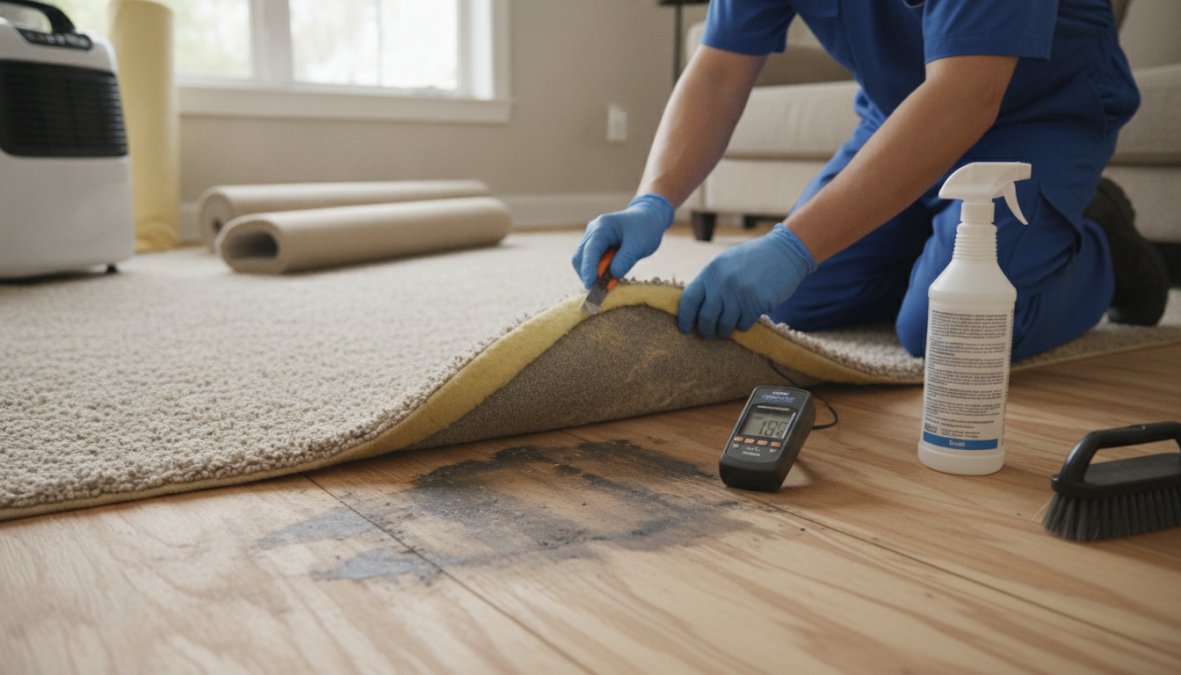
When pet urine soaks through carpet backing into the padding, surface treatment alone will not eliminate the odor. Signs that padding is affected include odor that returns after cleaning, soft or spongy texture underfoot, and visible staining on the carpet backing when a corner is lifted.
For moderate saturation, apply enzymatic cleaner generously enough to penetrate through the carpet into the padding and cover with plastic wrap for 24 to 48 hours. For severe cases, padding replacement is the only reliable solution. If replacing padding, treat the sub-floor with an antimicrobial primer or enzymatic solution first, wood sub-floors absorb urine deeply and will continue to off-gas odor through new carpet if untreated.
If odor persists after two full treatment cycles, the problem is almost certainly in the padding or sub-floor. Continuing to treat the surface without addressing what’s underneath is a waste of time and cleaning products.
Adjusting Your Approach by Carpet Fiber Type
Synthetic carpets (nylon, polyester, olefin): The most forgiving fiber type. Tolerate vinegar, hydrogen peroxide at 3%, and most commercial enzymatic cleaners.
Wool carpets: Require a gentle, pH-neutral approach. Avoid vinegar, hydrogen peroxide, and hot water. Use a commercial enzymatic cleaner specifically labeled safe for wool and test colorfastness carefully.
Berber and loop pile carpets: The looped construction traps moisture and makes extraction difficult. Use less solution and make more extractor passes to compensate.
Natural fiber carpets (sisal, jute, seagrass): Extremely sensitive to moisture and can shrink, warp, or mold quickly. Professional cleaning is strongly recommended.
How to Get Rid of Pet Urine Smell in Carpet Permanently
Getting rid of pet urine smell in carpet permanently requires eliminating the uric acid crystals, not masking the odor. Air fresheners and scented cleaners temporarily suppress the smell while leaving the source intact.
The permanent odor elimination process follows a clear hierarchy:
- Neutralize the alkaline salts with an acidic solution (vinegar)
- Absorb surface odor compounds (baking soda)
- Oxidize visible staining (hydrogen peroxide)
- Biologically digest uric acid crystals (enzymatic cleaner)
- Extract all moisture completely (wet/dry vacuum, fans, dehumidifier)
- Address padding and sub-floor if surface treatment doesn’t resolve the odor
Stopping after step two or three is the most common mistake, the smell disappears temporarily, then returns with humidity or heat. Completing all six steps, particularly the enzymatic treatment, is what produces lasting results. According to EPA guidance on indoor air quality and biological contaminants, biological odor sources like pet urine require source removal rather than odor masking for long-term indoor air quality improvement.
How to Remove Old Pet Urine Stains from Carpet: Common Mistakes to Avoid
Most failed attempts trace back to a handful of predictable errors.
Mistake 1: Using hot water or steam too early. Heat bonds urine proteins to carpet fibers permanently. Always use cool or lukewarm water for initial treatment.
Mistake 2: Scrubbing instead of blotting. Scrubbing spreads the stain and drives it deeper. Always press and lift with a clean cloth.
Mistake 3: Insufficient saturation. Old stains require solutions that penetrate to the same depth as the original urine. Lightly misting the surface treats only the top layer.
Mistake 4: Skipping the colorfastness test. Hydrogen peroxide and vinegar can alter carpet dye on certain fiber types. A five-minute test prevents permanent discoloration.
Mistake 5: Treating the carpet but not the padding. The most common reason odor returns. If the stain is old and large, assume the padding is affected.
Mistake 6: Using ammonia-based cleaners. Ammonia smells like urine to pets and actively encourages re-marking.
Mistake 7: Inadequate drying. Damp carpet padding is a mold risk and keeps odor compounds active. Mechanical drying is not optional in humid climates.
A quick-reference checklist before you start:
- Located all stains with UV light
- Completed colorfastness test
- Gathered all tools and solutions
- Vacuumed the area dry
- Planned for 24-48 hour enzymatic dwell time if needed
- Have wet/dry vacuum or extractor available
- Fan or dehumidifier ready for drying phase
For Lake Geneva homeowners dealing with stains set for months or years, or for natural fiber rugs and wool carpets where DIY chemistry carries real risk, professional extraction is often the more practical path. The Institute of Inspection Cleaning and Restoration Certification guidelines for carpet cleaning recommends professional treatment for any stain that has penetrated to the sub-floor or involves natural fiber carpets.
Old pet urine stains that have been sitting for weeks or months are genuinely difficult to fully resolve with consumer products alone, particularly when the padding or sub-floor is involved. Lake Geneva Carpet Cleaning specializes in exactly this kind of deep contamination, using truck-mounted hot water extraction technology that reaches depths no rental machine can match, combined with eco-friendly enzymatic treatments that permanently eliminate uric acid crystals rather than masking them. With over 32 years of experience serving Wisconsin homeowners and a 10-day satisfaction guarantee, the work is backed by a commitment that goes beyond a single visit. Contact Lake Geneva Carpet Cleaning for pet stain and odor removal that addresses the problem at its source.
Frequently Asked Questions
Can you really remove old pet urine stains from carpet completely?
Yes, but old stains are significantly harder to remove than fresh ones because uric acid crystals bond deeply to carpet fibers and can penetrate the carpet padding and sub-floor. Complete removal usually requires an enzymatic cleaner that breaks down uric acid at a chemical level, combined with thorough extraction. Stains that have dried and set for weeks or months may need repeated treatments or professional hot water extraction to fully eliminate both the stain and the odor.
What is the best enzymatic cleaner for old pet urine stains?
The best enzymatic cleaner for old pet urine is one specifically formulated to break down uric acid crystals, not just mask odors. Look for products that list live bacterial cultures or enzyme strains on the label. Allow the cleaner to dwell for at least 10-15 minutes so the enzymes can fully react with the uric acid. Avoid using ammonia-based cleaners beforehand, as ammonia can interfere with the enzymatic reaction and actually attract pets back to the same spot.
Does vinegar remove old pet urine stains from carpet?
Distilled white vinegar helps neutralize the alkaline salts left behind by dried urine and can lighten visible staining, but it does not break down uric acid crystals the way an enzymatic cleaner does. A vinegar and water solution (roughly 1:1 ratio) works best as a first-step treatment to rehydrate and loosen a dried stain before applying baking soda or an enzymatic cleaner. On its own, vinegar rarely eliminates deep odor from old pet urine permanently.
How do you get rid of pet urine smell in carpet permanently?
To permanently eliminate pet urine smell, you must neutralize the uric acid crystals embedded in the carpet fibers, padding, and potentially the sub-floor, not just the surface. Start with an enzymatic cleaner, allow full dwell time, then extract moisture thoroughly. If the odor persists, the carpet padding may need to be replaced. Steam cleaning with hot water extraction can reach deeper layers. Masking products like baking soda provide temporary relief but won't permanently solve the problem without addressing the source.
When should you call a professional carpet cleaner for pet urine stains?
Call a professional when DIY methods have been tried multiple times without success, when the urine has visibly soaked through to the padding or sub-floor, when you detect odor but can't locate the source, or when the carpet is made of delicate fibers like wool that require specialized treatment. Professional truck-mounted hot water extraction reaches deeper than consumer equipment and can treat the carpet backing and padding layers that DIY spot cleaning cannot effectively address.
This article was written using GrandRanker