
Table of Contents
- Understanding Delicate Fabrics and Their Care Needs
- How to Hand Wash Silk and Other Delicate Fibers
- Delicate Cycle Settings on Washing Machines
- Choosing the Best Detergent for Delicate Clothes
- Drying Methods for Delicate Fabrics Without Damage
- Stain Removal Techniques for Delicate Materials
- Preventing Shrinkage, Stretching, and Pilling
- Using Mesh Laundry Bags and Sorting Strategies
- Eco-Friendly and Natural Cleaning Alternatives
- When to Seek Professional Help for Delicate Items
Last Updated: August 15, 2026
Best Methods for Delicate Fabric Cleaning: A Step-by-Step Guide
Delicate fabrics demand care beyond standard washing routines. Silk, cashmere, lace, and wool require specific techniques to preserve fiber integrity and extend lifespan. This guide covers the best methods for delicate fabric cleaning, from handwashing fundamentals to professional solutions for items needing expert attention.
Proper cleaning prevents shrinkage, color bleeding, pilling, and fiber damage that can render expensive garments unwearable. Whether caring for a silk blouse, cashmere sweater, or lace tablecloth, your chosen methods determine whether items stay beautiful or deteriorate over time.
Understanding Delicate Fabrics and Their Care Needs
Delicate fabrics are textiles with reduced fiber strength compared to everyday materials like cotton and polyester. These include natural fibers like silk, wool, and linen, as well as synthetic blends designed for delicate applications.
Natural fibers have thinner strands that break down under agitation, heat, and harsh chemicals. Silk fibers are particularly susceptible to damage from wringing and high temperatures. Wool shrinks when exposed to hot water and mechanical friction. Lace can snag and tear during standard washing cycles.
The garment care label provides the manufacturer’s recommended cleaning method. Labels marked "hand wash only" or "delicate cycle" indicate fabrics that cannot tolerate standard washing. Some items marked "dry clean only" can actually be hand washed at home with the right technique, saving money on professional services. However, certain fabrics, particularly those with special finishes, intricate beading, or unstable dyes, genuinely require professional dry cleaning to avoid permanent damage.
How to Hand Wash Silk and Other Delicate Fibers
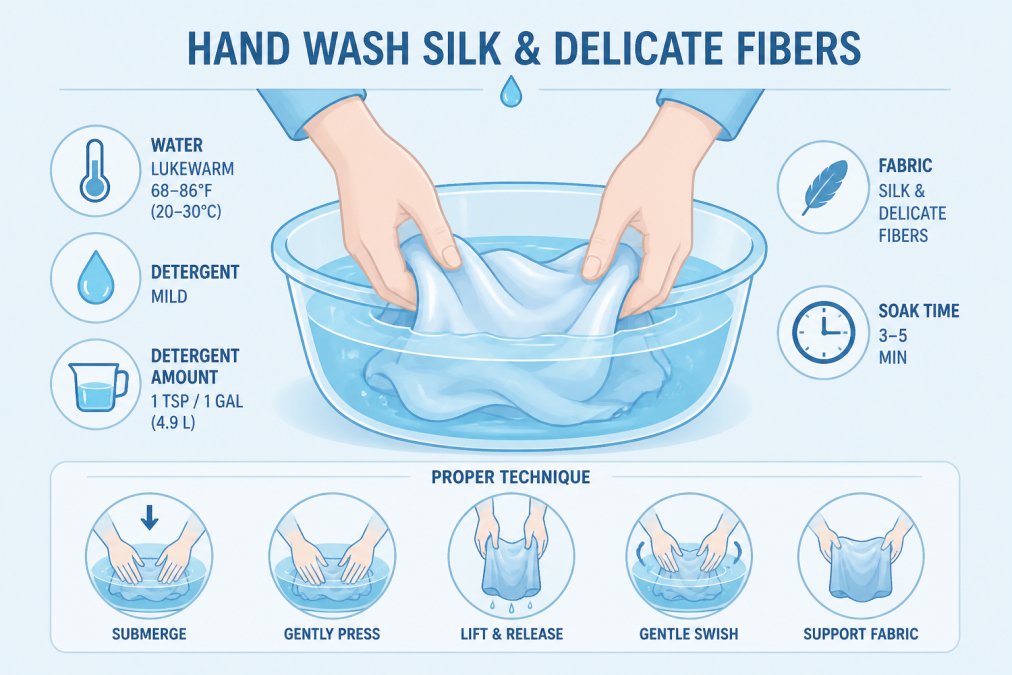
Hand washing is the gentlest method for delicate fabric cleaning and works effectively for most hand-washable items. The process requires lukewarm water, minimal agitation, and a pH-neutral detergent specifically formulated for delicate materials.
Step-by-Step Handwashing Process
Fill a basin with lukewarm water. Use water between 65-75°F, cold enough to prevent shrinkage but warm enough to help detergent dissolve. Never use hot water, as heat weakens fibers and can set stains permanently.
Add delicate detergent to the water. Use only one teaspoon for a standard basin. Delicate detergent is formulated with lower pH levels and gentler surfactants that clean without stripping natural oils from fibers. Avoid regular laundry detergent and skip fabric softener, which coats fibers and reduces moisture absorption.
Submerge the garment and let it soak. Place the item in the basin for 5-10 minutes. This soaking period allows water to penetrate fibers and loosen dirt without requiring aggressive agitation.
Gently agitate the water around the garment. Use your hands to move the fabric through soapy water with a gentle squeezing motion. Do not wring, twist, or rub. Focus on visibly soiled areas with light fingertip pressure.
Drain and rinse thoroughly. Empty the soapy water and refill with clean lukewarm water. Gently squeeze the rinse water through the garment until all soap residue is gone. Repeat 2-3 times if necessary.
Rinsing and Wringing Techniques
Proper rinsing removes all detergent residue, which can leave stains or stiffness if left in the fabric. Never wring delicate fabrics by twisting them, as this concentrates stress on small areas and causes stretching or tearing.
Instead, use the gentle press method: hold the garment over the sink and gently press it between your palms, allowing water to run out. For heavier items like sweaters, lay them flat on a clean towel, roll the towel with the garment inside, and gently press to absorb moisture.
Delicate Cycle Settings on Washing Machines
Machine washing can work for some delicate fabrics using correct settings. The delicate cycle uses slower spin speeds, shorter wash times, and reduced agitation compared to standard cycles.
Select the delicate cycle setting and fill the drum only halfway; overcrowding prevents proper water circulation. Use cold water to prevent shrinkage and color bleeding. Add a small amount of delicate detergent; machines require less than hand washing due to higher water volume.
Place delicate items inside a mesh laundry bag before washing to reduce agitation and prevent snagging. Set the cycle to the shortest available time, typically 15-20 minutes. Skip fabric softener, which leaves residue that damages delicate fabrics over time.
Choosing the Best Detergent for Delicate Clothes
Standard laundry detergents contain harsh surfactants and alkaline pH levels that strip natural oils from delicate fibers and cause color fading. The best detergent for delicate clothes is specifically formulated to be gentler.
Detergent Type by Fabric
For Silk: Look for detergents labeled "silk" or with pH levels between 6.5-7.5. Silk fibers are protein-based and sensitive to alkaline conditions. Wool-specific detergents often work well for silk. Avoid detergents with optical brighteners, which can yellow delicate silks. Liquid formulations dissolve more evenly in cold water than powders.
For Cashmere and Wool: Use detergents explicitly labeled "wool" or "cashmere." These products typically contain lanolin or similar conditioning agents that maintain the natural protective coating on wool fibers and prevent felting. For cashmere, choose products labeled specifically for cashmere when possible.
For Lace and Blended Fabrics: Follow care instructions for the most delicate fiber in the blend. Avoid enzyme-based detergents, which can weaken lace fibers and cause snags to enlarge.
What to Avoid
Bleach, oxygen-based cleaners, and enzyme-based detergents break down delicate fibers. Fabric softeners and dryer sheets leave residue that coats fibers and traps odors. Detergents with added perfumes or dyes can stain light-colored fabrics or cause allergic reactions.
Dosage Matters
Using too much detergent is a common mistake. Excess detergent leaves residue that appears as white streaks on dark fabrics and requires multiple rinses to remove. For hand washing, use approximately one teaspoon of liquid detergent per basin. For machine washing on the delicate cycle, use half the amount recommended on the bottle.
Natural and Hypoallergenic Options
Plant-based detergents formulated for delicate fabrics work effectively for those with sensitive skin. Castile soap is a gentler alternative to synthetic detergents, though it requires careful rinsing. Hypoallergenic detergents free from dyes and perfumes work well for delicate items, particularly garments worn close to sensitive skin.
Liquid detergents dissolve more easily in cold water than powders, making them the better choice for delicate fabric cleaning.
Drying Methods for Delicate Fabrics Without Damage
Machine drying with tumbling heat damages delicate fabrics. Even the lowest heat setting can cause shrinkage, pilling, and fiber weakening.
Air drying is the safest method for most delicate fabrics. Lay items flat on a clean, dry towel in a well-ventilated area. Arrange them in their natural shape and smooth out wrinkles gently. For sweaters and knits, flat-drying prevents stretching that occurs when items hang while wet.
For items that can tolerate hanging, use a padded hanger rather than a wire hanger. Never hang delicate items near direct heat sources, radiators, or in direct sunlight. Heat accelerates drying but damages fibers and causes color fading.
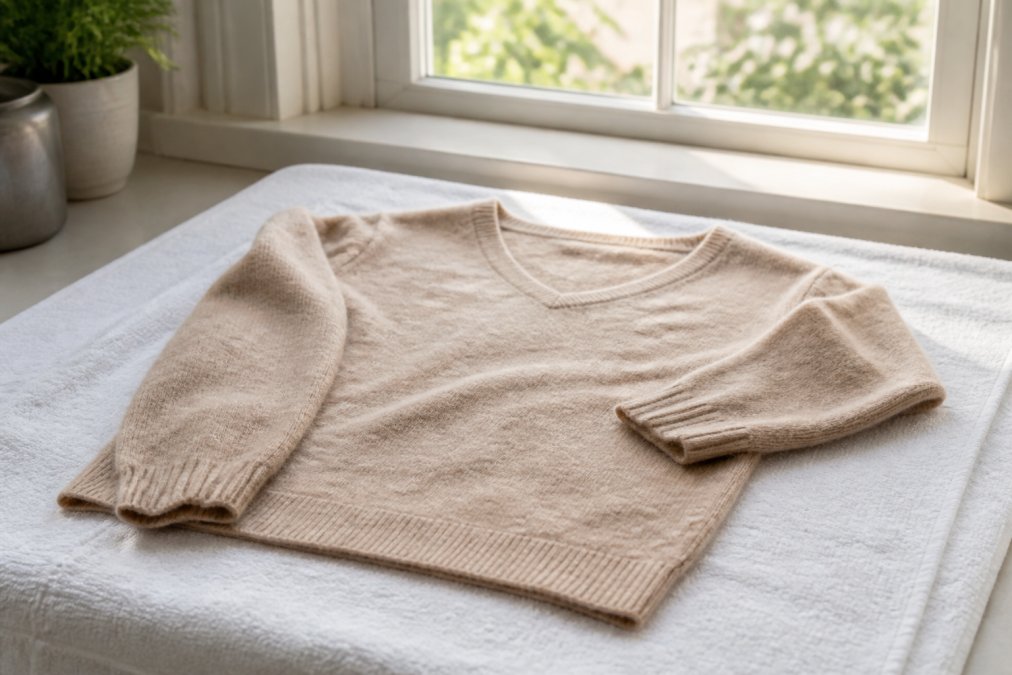
Drying typically takes 24-48 hours depending on humidity and air circulation.
Stain Removal Techniques for Delicate Materials
Stains on delicate fabrics require immediate attention and a gentle approach. The longer a stain sits, the more likely it is to set permanently.
For fresh stains, blot immediately with a clean, white cloth. Do not rub, which pushes the stain deeper into fibers. Blot from the outside of the stain toward the center to prevent spreading.
For oily stains, sprinkle talcum powder or cornstarch on the affected area and let it sit for 15-30 minutes. Brush it away gently and repeat if necessary before washing.
For water-soluble stains like juice or wine, rinse the area with cold water immediately. For protein-based stains like blood or egg, use cold water only; hot water sets these stains permanently.
For stubborn stains, create a paste using cold water and a small amount of delicate detergent. Apply to the stain and let it sit for 10-15 minutes. Gently rub with your fingertips, then rinse thoroughly with cold water.
Never apply heat to a stained delicate garment. Heat sets stains permanently and makes them impossible to remove later.
Preventing Shrinkage, Stretching, and Pilling
Prevention is easier than repair when it comes to delicate fabrics.
Shrinkage occurs when heat and moisture cause fibers to contract. Prevent shrinkage by always using cold or lukewarm water and avoiding heat during drying.
Stretching happens when wet delicate fabrics are subjected to weight or tension. Prevent stretching by supporting the weight of wet items evenly; lay them flat to dry rather than hanging them.
Pilling occurs when short fibers break off and ball up on the surface. This is particularly common on wool and cashmere. Once pills form, remove them gently using a fabric shaver or fine-tooth comb rather than picking at them with your fingers.
Color bleeding happens when dyes transfer to other garments during washing. Prevent this by washing new items separately for the first few washes, using cold water, and avoiding excessive agitation.
Using Mesh Laundry Bags and Sorting Strategies
Mesh laundry bags are essential tools for protecting delicate fabrics during machine washing. These bags create a barrier between your delicate items and the washing machine drum, reducing friction and agitation.
Place each delicate item in its own mesh bag before washing. For items with embellishments, beading, or loose threads, a mesh bag is necessary.
Proper sorting prevents damage from color bleeding and ensures each load receives appropriate care. Sort by color first: whites, lights, darks, and colors. Within each color group, separate by fabric type.
Wash delicate fabrics separately from standard items. For items with mixed fiber content, follow the care instructions for the most delicate fiber in the blend.
Eco-Friendly and Natural Cleaning Alternatives
Several natural alternatives work effectively for specific cleaning scenarios, though they have real limitations.
White Vinegar as a Rinse Agent and Brightener
White vinegar is an excellent natural rinse agent for delicate fabrics. After washing with delicate detergent, add one tablespoon of white vinegar to the final rinse water. Vinegar’s acidity helps set dyes, reducing color bleeding in future washes. The vinegar smell dissipates completely as the fabric dries.
Vinegar excels at removing detergent buildup and is ideal for maintenance washing of lightly soiled items. However, vinegar is not a cleaning agent; it cannot remove dirt, oils, or stains on its own.
Baking Soda for Deodorizing Without Washing
Baking soda can deodorize delicate items without requiring a full wash. Sprinkle baking soda lightly over the garment, let it sit for 30 minutes to 1 hour, then brush it away gently. This method works well for items that smell stale but are not visibly soiled.
Baking soda does not remove dirt, stains, or body oils. If a garment is visibly soiled, baking soda alone is insufficient.
Castile Soap as a Gentle Detergent Alternative
Castile soap is a plant-based alternative to synthetic detergents, made from vegetable oils. Use it at the same dilution rate as commercial delicate detergent, one teaspoon per basin for hand washing.
Castile soap is effective for lightly to moderately soiled delicate fabrics and is excellent for those with chemical sensitivities. However, it is less effective than commercial detergents on heavy soils, oils, or stubborn stains and requires thorough rinsing.
Lemon Juice as a Natural Bleach Alternative for Whites
Lemon juice acts as a gentle bleach alternative for white delicate fabrics. Soak white items in water with fresh lemon juice (approximately one lemon per gallon of water) for 1-2 hours before washing.
Lemon juice is safe for all white delicate fabrics and provides subtle brightening. However, it is not a stain remover and will not remove set-in stains or yellowing caused by age.
Combining Methods for Best Results
Natural alternatives work best when layered: wash with castile soap or gentle commercial detergent, rinse with vinegar to remove soap residue and set dyes, and use baking soda between washes for deodorizing. For heavily soiled delicate fabrics or stubborn stains, commercial delicate detergents remain more effective.
When to Seek Professional Help for Delicate Items
Some delicate items require professional cleaning to prevent damage. Items labeled "dry clean only" should generally go to a professional dry cleaner, as these labels indicate that the fabric, dyes, or construction cannot tolerate water-based washing.
Heavily beaded, sequined, or embroidered items need professional care. Antique or vintage delicate fabrics should be professionally cleaned, as older fabrics may have weakened fibers or unstable dyes. Items with set-in stains that don’t respond to home treatment benefit from professional stain removal.
For delicate items in your home, fine linens, vintage textiles, or heirloom pieces, professional cleaning ensures they’re cared for by experts. Consider professional cleaning for your delicate textiles.
Delicate fabrics require a different approach than everyday laundry, but the investment in proper care pays dividends in longevity and appearance. Hand washing with cold water and gentle detergent works for most items, while the delicate cycle offers a convenient alternative when used correctly. For items that demand expert attention, heirlooms, heavily embellished pieces, or anything labeled dry clean only, Lake Geneva Carpet Cleaning offers professional fabric care. With over 32 years of experience serving the Lake Geneva area, our team understands textile care and uses gentle, eco-friendly methods to preserve your delicate household textiles. Contact Lake Geneva Carpet Cleaning to learn how professional care can extend the life of your most valued items.
| Cleaning Method | Best For | Water Temperature | Drying Method |
|---|---|---|---|
| Hand washing | Silk, cashmere, lace, delicate blends | Lukewarm (65-75°F) | Lay flat on towel |
| Delicate cycle | Machine-safe delicate items | Cold water | Air dry, never tumble |
| Spot cleaning | Fresh stains, localized soiling | Cold water | Air dry naturally |
| Professional cleaning | Dry-clean-only, antique, heavily embellished | Professional solvents | Professional methods |
Frequently Asked Questions
What is the safest way to hand wash delicate clothes?
Fill a basin with lukewarm water (around 65-75°F) and add a pH-neutral, bleach-free detergent designed for delicate fabrics. Submerge your garments and gently agitate the water for 3-5 minutes. Avoid wringing or twisting. Rinse thoroughly in clean, cool water until all soap residue is gone. Gently squeeze out excess water without wringing, then lay flat or hang to air dry. This method preserves fiber integrity and prevents damage to silk, cashmere, lace, and other delicate materials.
Can you wash delicate fabrics in a washing machine?
Yes, many delicate fabrics can be machine washed using the gentle cycle with cold or lukewarm water. Use a mesh laundry bag to protect items from agitation and snagging. Select a delicate detergent and avoid fabric softener, which can weaken fibers. The gentle cycle uses minimal agitation and a shorter spin cycle, reducing stress on synthetic fibers and natural fibers alike. However, extremely delicate items like vintage lace or hand-beaded garments are safer handwashed.
What detergent should I use for delicate fabrics?
Choose a pH-neutral, bleach-free delicate detergent specifically formulated for silk, wool, cashmere, and lace. These detergents are gentler on fiber strength and help prevent color bleeding. Avoid regular laundry detergent, which contains harsh chemicals and surfactants that can damage delicate materials. Liquid detergents are generally better than powders for delicate fabrics because they dissolve more easily and are less likely to leave residue. Always follow the garment care label instructions for the recommended detergent type and water temperature.
How do you dry delicate fabrics without damaging them?
Air drying is the safest method for delicate fabrics. Lay garments flat on a clean, dry towel away from direct sunlight and heat sources, or hang them on a padded hanger in a well-ventilated area. Never use a tumble dryer, as the heat and agitation can cause shrinkage, pilling, and fiber damage. For items like cashmere and wool, flat drying prevents stretching. Ensure items are completely dry before storing to prevent mildew and color issues.
This article was written using GrandRanker