Table of Contents
- Act Fast: The First 15 Minutes After a Spill
- Blotting vs. Scrubbing: Why Your First Move Matters
- Best Practices for Carpet Spot Cleaning
- DIY Carpet Cleaning Solutions That Work
- Stain Removal by Type: Protein, Oil, and Tannin Stains
- Tackling Set-In and Old Stains
- Upholstery Stain Removal Techniques
- Rinsing, Drying, and Preventing Residue Buildup
- Professional Carpet Cleaning Benefits
- Conclusion
Last Updated: August 30, 2026
Act Fast: The First 15 Minutes After a Spill
The difference between a permanent stain and a recoverable one often comes down to what you do in the first 15 minutes. Carpet stain removal starts the moment liquid hits the fibers, and those initial moments matter far more than most homeowners realize.
When a spill happens, your instinct might be to grab paper towels and scrub. Don’t. Instead, grab a clean cloth and blot the area gently. The goal is to absorb as much liquid as possible before it saturates the carpet backing and padding underneath. Work from the outside of the spill toward the center to avoid pushing the stain deeper into the fibers.
If the spill is fresh, you’re working with a significant advantage. The longer a stain sits, the more it bonds with the carpet fibers and the deeper it penetrates. Homeowners in Wisconsin often deal with seasonal spills, winter salt tracked inside, spring mud, summer drinks on the patio. The faster you respond, the better your chances of complete removal.
Keep a clean white cloth or paper towels within arm’s reach of high-traffic areas. Colored cloths can transfer dye to carpet fibers, making the problem worse. White cloth lets you see exactly how much liquid you’re pulling out.
For liquid spills, blot repeatedly with fresh sections of cloth until no more moisture transfers. This single step removes the bulk of the problem before it becomes a stain. If you wait even an hour, the liquid has already begun bonding with the fibers, and the cleanup becomes exponentially harder.
Blotting vs. Scrubbing: Why Your First Move Matters
Blotting and scrubbing are not the same thing, and choosing the wrong one can turn a removable stain into a permanent one. Understanding the difference is essential for effective carpet stain removal.
Blotting uses light pressure to absorb liquid without damaging carpet fibers. You press a cloth onto the stain, hold it for a few seconds, then lift. The wicking action pulls moisture up and out. Scrubbing, by contrast, uses circular motions and pressure that works the stain deeper into the fibers and can fray or damage the carpet pile.
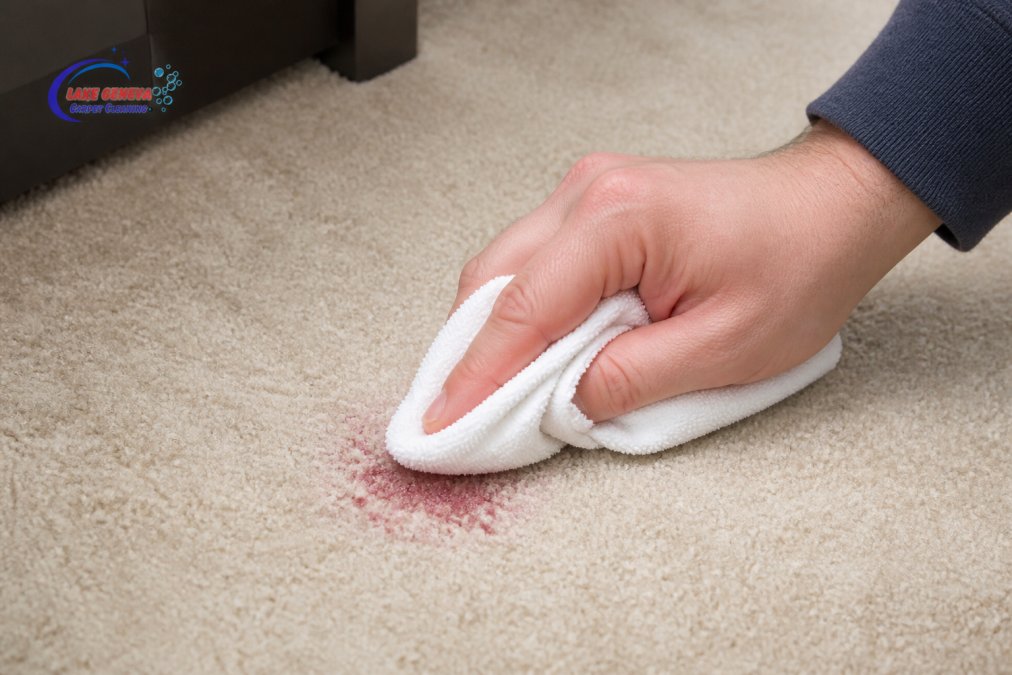
Most homeowners scrub because it feels like they’re doing something. The motion looks productive. But scrubbing is one of the fastest ways to set a stain permanently. It drives the staining agent deeper into the fiber structure and can damage the carpet itself.
Blotting works because it respects how carpet fibers are constructed. The fibers are designed to release moisture when pressure is applied from above, that’s the wicking action. Scrubbing works against this structure. It tangles fibers, breaks them, and forces stain particles deeper where they’re harder to extract.
Blot every fresh stain. Scrub only when the stain is completely dry and you’re using a soft-bristled brush with minimal pressure to loosen dried particles before vacuuming.
The exception to the no-scrubbing rule is when you’re working with a completely dry stain. Once a stain has set, gentle brushing with a soft-bristled brush can help loosen particles before you apply cleaning solution. But even then, the pressure should be light and the motion should be gentle.
For homeowners in the Lake Geneva area dealing with pet accidents or food spills, blotting is non-negotiable for the first response. If you scrub a fresh accident, you’re working against the carpet’s natural ability to release the contaminant.
Best Practices for Carpet Spot Cleaning
Spot cleaning is the most common form of carpet stain removal for homeowners. It’s faster than full cleaning and targets only the affected area. Done correctly, spot cleaning can handle most household stains before they become permanent.
The key to effective spot cleaning is understanding your carpet type and the stain composition. Different fibers respond differently to moisture and cleaning solutions. Different stains require different approaches. A one-size-fits-all solution rarely works.
Test for Colorfastness Before You Clean
Before applying any cleaning solution to your carpet, test it on a hidden area first. This prevents accidental dye transfer or bleaching that could damage the carpet permanently.
Find a spot in a closet, under furniture, or in another area where the carpet won’t be seen. Apply your cleaning solution to a white cloth and press it onto the carpet for 10 seconds. If the cloth shows any color transfer from the carpet, do not use that solution. If the carpet shows any discoloration, stop immediately.
This simple test takes 30 seconds and prevents costly damage. Many homeowners skip it and regret it. A test for colorfastness is the difference between a recoverable mistake and a permanent one.
Never test colorfastness on visible carpet. Use a closet, under a bed, or behind furniture. If the test shows color transfer, that solution will damage your carpet.
Understanding Your Carpet Fibers
Carpet fiber type determines how it responds to moisture, heat, and cleaning solutions. Synthetic fibers like polyester and nylon are more forgiving than natural fibers. Wool and natural fiber blends require gentler treatment.
Synthetic carpets can tolerate more aggressive cleaning and higher water temperatures. Natural fiber carpets are more delicate. Excessive moisture can cause shrinkage, and some cleaning solutions can damage or discolor natural fibers.
If you’re unsure what your carpet is made of, check the carpet documentation or look at the label on the back. If you can’t find it, assume it’s synthetic and use gentler methods. You can always escalate to stronger solutions, but you can’t undo damage from a solution that was too harsh.
DIY Carpet Cleaning Solutions That Work
You don’t need expensive commercial cleaners to handle most household stains. Common household items create effective cleaning solutions for carpet stain removal. These solutions are safer around pets and children, and they’re significantly cheaper than store-bought alternatives.
The key is understanding which solution works for which stain type. A solution that works on grease won’t work on a protein-based stain. Matching the solution to the stain is what makes the difference.
Vinegar and Baking Soda for Everyday Stains
White vinegar and baking soda are the workhorses of DIY carpet cleaning. This combination works on most general-purpose stains and is safe for nearly all carpet types.
Mix one part white vinegar with one part water in a spray bottle. Spray the stain until the carpet is damp but not saturated. Let it sit for 5-10 minutes. Blot with a clean cloth, working from the outside of the stain toward the center. Sprinkle baking soda over the damp area and let it dry completely (usually 24 hours). The baking soda absorbs odors as it dries. Vacuum thoroughly once dry.
This method works because vinegar breaks down many staining compounds while baking soda neutralizes odors and absorbs residual moisture. The combination is effective for everyday spills, light food stains, and general dirt.
The vinegar smell dissipates as the carpet dries. If you’re sensitive to vinegar odor, add a few drops of essential oil to the spray bottle. Lemon and lavender are popular choices that also add mild antibacterial properties.
Dish Soap and Water for Fresh Spills
For fresh spills that are still wet, a simple solution of warm water and a small amount of dish soap is often all you need.
Mix one-quarter teaspoon of dish soap with one cup of warm water. Apply with a spray bottle or by dampening a cloth. Blot repeatedly until the stain transfers to the cloth. Rinse with clean water by spraying and blotting again. The goal is to remove all soap residue, as leftover soap can attract dirt and cause the stain to reappear.
This solution works because dish soap is a surfactant that breaks the surface tension of the staining liquid, allowing it to release from the fibers. It’s gentle enough for most carpet types and won’t leave residue if you rinse thoroughly.
Hydrogen Peroxide for Protein-Based Stains
Hydrogen peroxide is your tool for protein-based stains like blood, egg, or pet accidents. It’s stronger than vinegar and more targeted for this stain type.
Test colorfastness first. If the carpet passes, apply 3% hydrogen peroxide directly to the stain. Let it sit for 5-10 minutes. You’ll see it bubble as it breaks down the protein. Blot thoroughly with a clean cloth. Rinse with water and blot again to remove all residue.
Hydrogen peroxide works because it oxidizes protein molecules, breaking them down at a chemical level. This is why it’s so effective for blood, pet accidents, and food-based stains. It’s less effective on oil or tannin stains, so save it for protein problems.
Stain Removal by Type: Protein, Oil, and Tannin Stains
Different stains require different approaches. Understanding what you’re dealing with determines which solution will work and how aggressive you need to be.
Protein-Based Stains (Pet Accidents, Food, Blood)
Protein stains come from organic matter: pet urine and feces, blood, egg, dairy, and meat. These stains respond well to enzymatic cleaners and hydrogen peroxide because these solutions break down the protein molecules themselves.
For fresh protein stains, blot immediately and apply hydrogen peroxide or an enzymatic cleaner. Let it work for 5-10 minutes, then blot and rinse. For set-in protein stains, soak the area with an enzymatic cleaner, let it work for several hours or overnight, then blot and rinse thoroughly.
Pet accidents are particularly challenging because the urine soaks into the carpet backing and padding, creating an odor that returns when humidity increases. Blotting the surface isn’t enough. You need to saturate the area with a cleaning solution that reaches the backing.
Oil and Grease Stains
Oil stains are hydrophobic, they repel water. Water-based solutions won’t work on these. You need a solvent or a surfactant that can break down the oil molecules.
For fresh oil stains, sprinkle baking soda or cornstarch on the area and let it sit for 15-30 minutes. The powder absorbs the oil. Vacuum thoroughly. If residue remains, use a small amount of dish soap mixed with water. The soap acts as a surfactant, allowing water to mix with the oil. Apply, let sit for 5 minutes, blot, and rinse.
For set-in grease stains, you may need a stronger solvent. Rubbing alcohol can work for some grease stains. Test colorfastness first, then apply with a cloth, let sit for a few minutes, and blot.
Tannin Stains (Wine, Coffee, Tea)
Tannins are plant compounds that create brown stains. Wine, coffee, tea, and fruit juice all contain tannins. These stains respond well to acidic solutions like vinegar.
For fresh tannin stains, apply the vinegar and water solution (1:1 ratio) immediately. Let it sit for 5-10 minutes and blot. The acidity breaks down the tannin molecules. For set-in tannin stains, you may need to repeat the process several times or use a slightly stronger vinegar solution.
A common mistake is using club soda for tannin stains. While club soda can help with fresh spills, the sugar in it can actually feed the stain and make it worse over time. Stick with vinegar for tannin problems.
Tackling Set-In and Old Stains
Set-in stains are those that have dried and bonded with the carpet fibers. They’re significantly harder to remove than fresh stains, but not impossible. The approach depends on how long the stain has been there and what caused it.
For stains that have been there for days or weeks, you need to rehydrate them first. Spray the stain generously with your chosen cleaning solution and let it sit for 30 minutes to an hour. This gives the solution time to penetrate and break down the stain compounds. Then blot repeatedly.
For very old stains, you may need to repeat this process multiple times. Apply solution, let it sit, blot, rinse, and repeat. Each cycle removes some of the stain. After several cycles, most stains will lighten significantly.
Some set-in stains won’t respond to DIY methods. If you’ve tried multiple approaches and the stain remains, it’s time to call a professional. This is where the expertise of services like Lake Geneva Carpet Cleaning becomes valuable. Professional equipment and cleaning solutions can reach stains that household methods can’t.
Upholstery Stain Removal Techniques
Upholstered furniture requires slightly different techniques than carpet because the fabric is often more delicate and the backing is different.
The same blotting principle applies: never scrub upholstery. Blot stains immediately with a clean cloth. For fresh spills, the dish soap and water solution works well on most upholstery fabrics.
Test colorfastness on an inconspicuous area first. Upholstery dyes are often less colorfast than carpet dyes. Apply your cleaning solution to a small area and check for color transfer before treating the visible stain.
For set-in upholstery stains, the same vinegar and water solution works, but use less water. Upholstery shouldn’t be as wet as carpet during cleaning because it dries more slowly and excess moisture can damage the fabric or the frame underneath.
Rinsing, Drying, and Preventing Residue Buildup
After you’ve removed the stain, the cleanup isn’t finished. Improper rinsing and drying can leave residue that attracts dirt and makes the stain reappear within weeks.
The Importance of Thorough Rinsing
Every cleaning solution leaves residue if not rinsed completely. Vinegar residue, soap residue, and cleaning solution residue all attract dirt. As the carpet gets dirty again, the stain appears to return.
After blotting your cleaning solution, spray the area with clean water and blot again. Repeat this rinse-and-blot cycle at least twice. The goal is to remove all cleaning solution. If the water you’re blotting comes away clean with no soap bubbles or discoloration, you’re done rinsing.
This is the step many homeowners skip, and it’s why they see stains reappear. Thorough rinsing is the difference between a stain that stays gone and one that comes back.
Rinse until the blotted water is completely clear. Leftover cleaning solution residue will attract dirt and make the stain look like it’s returning.
Speeding Up Dry Time with Air Circulation
Carpet needs to dry completely after cleaning. Damp carpet is vulnerable to mold, mildew, and odors. Proper drying also prevents the stain from wicking back up as the carpet dries.
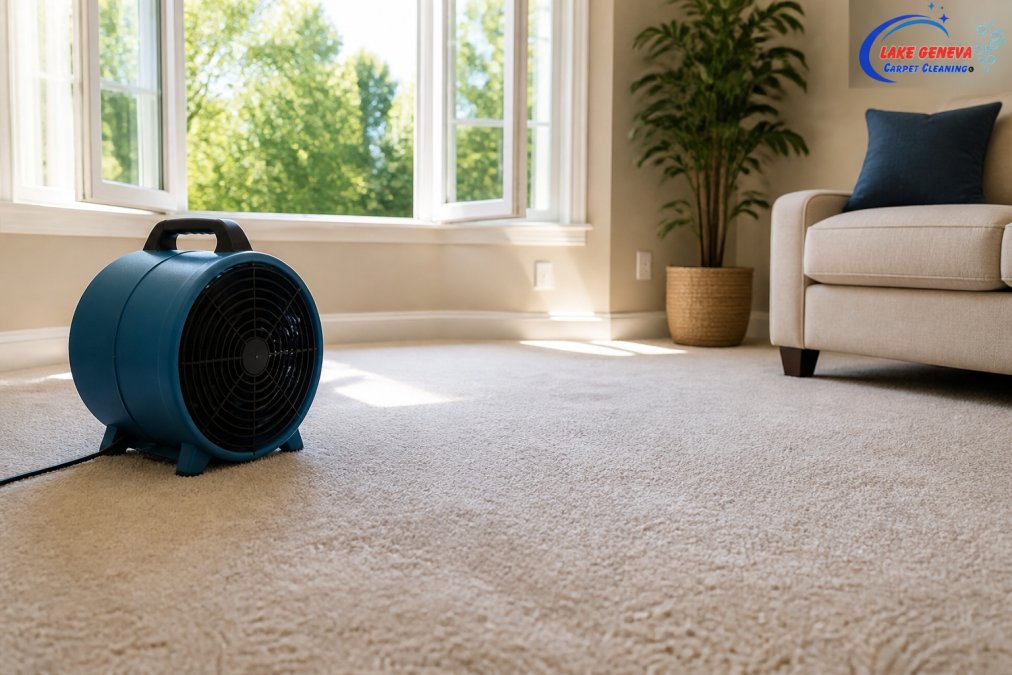
Open windows to increase air circulation. Position a fan to blow across the damp area. If weather permits, open doors to create cross-ventilation. In humid conditions, a dehumidifier helps remove moisture from the air, speeding evaporation.
Avoid walking on the carpet while it’s drying. Foot traffic can disturb the fibers and reactivate any remaining stain compounds. Most carpet should be dry within 24 hours with proper air circulation. If it takes longer, increase air movement.
Professional Carpet Cleaning Benefits
DIY spot cleaning handles most household stains, but some situations call for professional help. Professional carpet cleaners have equipment, solutions, and expertise that go beyond what homeowners can do.
Professional carpet cleaning benefits include removal of embedded allergens, stubborn pet odors that DIY methods can’t touch, and stains that have penetrated the carpet backing and padding. Professional equipment uses hot water extraction, truck-mounted systems that inject heated water deep into the carpet and extract it back out, removing contaminants that surface cleaning misses.
For homeowners in the Lake Geneva area dealing with seasonal contaminants like road salt and mud, or pet owners struggling with stubborn odors, professional cleaning is often the most effective solution. It’s also the right choice when you’ve tried DIY methods and the stain persists.
Professional services also extend carpet life. Regular professional cleaning removes dirt and contaminants that wear down fibers over time. A carpet that’s professionally cleaned every 12-18 months typically lasts significantly longer than one that’s only spot-cleaned.
Conclusion
Carpet stain removal starts with understanding that the first 15 minutes matter more than anything else. Blot immediately, test your solution on hidden carpet first, and match your cleaning approach to the stain type. Vinegar and baking soda handle most everyday stains. Hydrogen peroxide works for protein-based problems. Thorough rinsing and proper drying prevent stains from reappearing.
When DIY methods aren’t enough, whether you’re dealing with set-in stains, pet odors that won’t quit, or seasonal contaminants, Lake Geneva Carpet Cleaning can help. With over 32 years of experience serving Wisconsin homeowners, they use professional-grade hot water extraction to reach stains and odors that household methods can’t touch. Contact Lake Geneva Carpet Cleaning for a free quote and see how their eco-friendly approach can restore your carpets and improve your home’s air quality.
Frequently Asked Questions
How quickly should I treat a carpet stain after a spill?
The first 15 minutes are critical. Fresh spills are much easier to remove because the stain hasn't had time to set into the carpet fibers. Blot immediately with a clean, damp cloth using light pressure. The longer you wait, the deeper the stain penetrates into the carpet backing and padding, making removal exponentially harder. Even waiting a few hours can turn a simple cleanup into a stubborn stain removal challenge.
What is the most effective homemade carpet stain remover?
The best DIY solution depends on the stain type. For general stains, mix one tablespoon of white vinegar, one tablespoon of dish soap, and two cups of warm water in a spray bottle. For protein-based stains like pet accidents, hydrogen peroxide works well on light-colored carpets. Baking soda is excellent for absorbing odors and loosening dried stains. Always test any solution on a hidden area first to ensure it won't damage or discolor your carpet fibers.
When should I call a professional for carpet stain removal?
Call a professional if the stain is set-in (older than a few days), covers a large area, involves delicate carpet material, or if DIY attempts have failed. Professional cleaners use hot water extraction and enzymatic cleaners that penetrate deep into the carpet backing and padding, areas DIY methods cannot effectively reach. They also have the equipment to remove excess moisture, preventing mold and mildew. For stubborn pet odors or allergen removal, professional extraction is far more effective than spot cleaning.
Will hot water extraction actually remove allergens and dust mites deep in carpet padding?
Yes. Hot water extraction uses pressurized water heated to high temperatures that penetrates carpet fibers and the padding beneath, dislodging dust mites, allergens, and bacteria that vacuuming alone cannot reach. The extraction process then removes the contaminated water and residue. This deep-cleaning method is significantly more effective than surface-level cleaning for allergen removal and is recommended by health professionals for homes with allergy sufferers.
This article was written using GrandRanker