Table of Contents
- What Professional Carpet Shampooing Service Does
- How to Prepare for Carpet Cleaning
- Understanding Carpet Cleaning Drying Time
- Benefits of Professional Carpet Cleaning
- Professional Equipment vs. DIY Carpet Cleaning
- Hot Water Extraction and Deep Cleaning Methods
- Eco-Friendly and Non-Toxic Cleaning Solutions
- Residential vs. Commercial Carpet Shampooing
- Seasonal Cleaning Schedules and High-Traffic Areas
- Same-Day and Emergency Service Availability
Last Updated: August 29, 2026
What Professional Carpet Shampooing Service Does
Professional carpet shampooing is a deep cleaning process that removes embedded dirt, allergens, bacteria, and odors from carpet fibers and padding using hot water extraction. Unlike vacuuming, this method injects heated water mixed with cleaning solution deep into the carpet, then immediately extracts it along with loosened soil and debris.
For Lake Geneva residents dealing with Wisconsin’s seasonal weather, road salt, mud, sand, and moisture, professional shampooing is essential maintenance. Lake Geneva Carpet Cleaning has spent over 32 years perfecting this service for both residential and commercial properties. Professional equipment delivers far greater pressure and heat than rental machines, reaching deep into the carpet backing where allergens, dust mites, and pet accident residue hide.
Schedule professional shampooing before carpet problems become visible. Once stains set or odors become noticeable, more intensive treatment is required. Most homeowners should plan for professional cleaning every 12-18 months, more frequently in high-traffic areas or homes with pets.
How to Prepare for Carpet Cleaning
Preparation directly impacts cleaning results and drying time.
Clear the Room
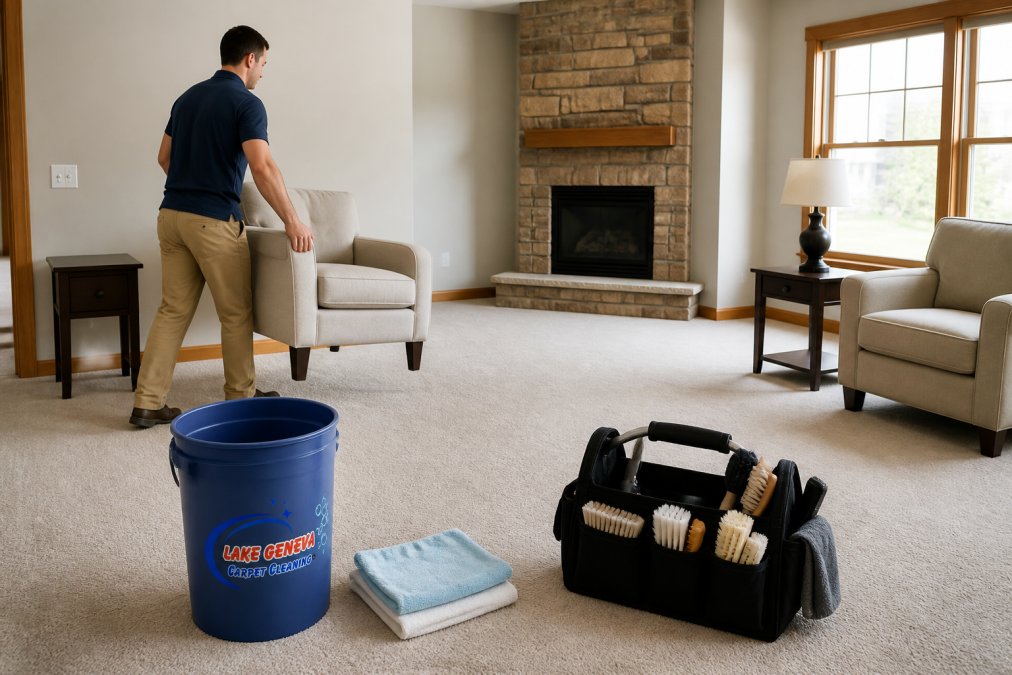
Remove all furniture, toys, and personal items from carpeted areas. The technician needs clear access to the entire surface; working around obstacles leaves missed spots. For large items you cannot move, notify the cleaning team in advance. Close doors to rooms that won’t be cleaned to prevent moisture from spreading and to speed drying.
Address Pet and Stain Issues Beforehand
Point out visible stains, pet accidents, or problem areas to the technician before work begins. Pre-treating is often necessary for stubborn stains or old odors. If your pet has had accidents in certain spots, urine residue may linger in the padding beneath the carpet even after DIY cleaning. Professional odor neutralization works best when the technician knows exactly where to focus treatment.
Vacuum thoroughly the day before cleaning. This removes loose dirt and pet hair, allowing shampooing equipment to work more effectively on embedded soil.
Understanding Carpet Cleaning Drying Time
Drying time depends on carpet thickness, humidity levels, air circulation, and equipment used. Professional truck-mounted extraction systems remove significantly more water than rental machines, speeding drying to 4-8 hours under normal conditions. High humidity or poor air circulation can extend this to 12-24 hours.
Accelerate drying by turning on ceiling fans, opening windows, running air conditioning, avoiding walking on wet carpet, keeping interior doors open, and using portable fans directed across the surface. Mold requires sustained moisture combined with poor air circulation. By maintaining good airflow and allowing the carpet to dry completely within 24 hours, you eliminate mold conditions. Lake Geneva‘s seasonal humidity variations mean drying times vary; summer humidity may extend drying, while winter’s drier air accelerates it.
Professional equipment dries carpets faster than rental machines because it extracts more water initially. The key to preventing problems is air circulation, not avoiding professional cleaning.
Benefits of Professional Carpet Cleaning
Allergen and Dust Mite Removal
Carpets trap allergens and dust mites deep in fibers and padding. Regular vacuuming removes only surface particles. Professional hot water extraction reaches these microscopic pests and their allergens, killing them through heated water while removing them through extraction. For health-conscious residents concerned about indoor air quality, this represents meaningful improvement.
Odor Neutralization and Pet Accident Treatment
Pet odors that return after DIY cleaning persist because urine soaks through carpet fibers into padding and subfloor. Store-bought spot cleaners treat only the surface; the smell returns as moisture reactivates residue beneath. Professional odor neutralization breaks down chemical compounds causing the smell rather than masking them. Combined with deep extraction that removes urine-saturated padding, results last. Lake Geneva’s humid climate can intensify pet odors, making professional treatment especially valuable for pet owners.
Professional Equipment vs. DIY Carpet Cleaning
The gap between professional and DIY equipment is substantial. Understanding the mechanical principles explains why professional results look, feel, and last longer.
Water Temperature and Fiber Penetration
Professional truck-mounted systems operate at 200-220°F, while rental machines typically max out at 150-180°F. Heat opens carpet fibers, allowing cleaning solution to penetrate deeper; breaks down oils and soil compounds that cold water cannot dissolve; and kills bacteria, dust mites, and microorganisms. At lower temperatures, rental machines struggle with these functions. Oils that dissolve easily at 200°F remain sticky at 150°F, and bacteria survive in carpets cleaned with lukewarm water. This is why carpets cleaned with rental equipment often look dingy again within weeks, soil wasn’t fully broken down and extracted.
Extraction Pressure and Water Recovery
Professional systems deliver 500+ PSI of extraction pressure, while rental machines operate at 200-300 PSI. Higher pressure creates stronger suction, removing more water and dissolved soil in a single pass. Professional equipment recovers 80% or more of injected water; rental machines recover 50-70%.
This difference directly impacts drying time and long-term carpet condition. Carpets left wetter take longer to dry, creating conditions where mold and mildew develop. Additionally, soil left behind attracts dirt faster, making carpet look soiled again sooner.
Truck-Mounted vs. Portable Systems
Professional carpet cleaning companies use truck-mounted systems, meaning equipment is permanently installed in a vehicle and powered by the vehicle’s engine. This allows for consistent power delivery, larger solution and recovery tanks, hose length flexibility, and heat maintenance throughout the job.
Rental machines are portable but less powerful because they must be moved by hand and run on household electricity or small motors. Solution tanks are smaller, requiring frequent refilling. Hoses are shorter, limiting reach. Water temperature drops as solution sits in the portable tank.
DIY methods, using household steam cleaners, store-bought spot cleaners, or dish soap and water, operate at even more limited scale, cleaning only visible carpet surface without reaching padding where allergens, dust mites, pet accident residue, and deep soil accumulate.
Why This Matters for Lake Geneva Homeowners
Wisconsin’s climate intensifies the difference between professional and DIY results. Winter salt and sand tracked indoors are abrasive particles that embed deep in carpet fibers and can damage carpet backing. Spring mud deposits moisture-laden soil that promotes mold if not fully extracted. Summer humidity slows drying, making water recovery efficiency critical. Professional equipment’s superior extraction capacity becomes especially valuable in a climate where moisture management prevents long-term carpet damage.
| Aspect | Professional Equipment | Rental Machines | DIY Methods |
|---|---|---|---|
| Water Temperature | 200-220°F | 150-180°F | Room temperature to 120°F |
| Extraction Pressure | 500+ PSI | 200-300 PSI | Minimal suction |
| Water Recovery | Removes 80%+ of moisture | Removes 50-70% | Leaves carpet very wet |
| Drying Time | 4-8 hours | 12-24 hours | 24-48+ hours |
| Deep Cleaning Reach | Padding and subfloor | Mostly carpet fibers | Surface only |
| Bacteria/Dust Mite Elimination | Yes, via heat | Partial | No |
Professional equipment outperforms DIY and rental alternatives through the combination of heat, pressure, and extraction working together. This removes soil, kills allergens, and dries carpets fast enough to prevent mold, results that rental machines and DIY methods cannot match.
Hot Water Extraction and Deep Cleaning Methods
Hot water extraction is the gold standard for professional carpet cleaning, endorsed by carpet manufacturers and industry organizations.
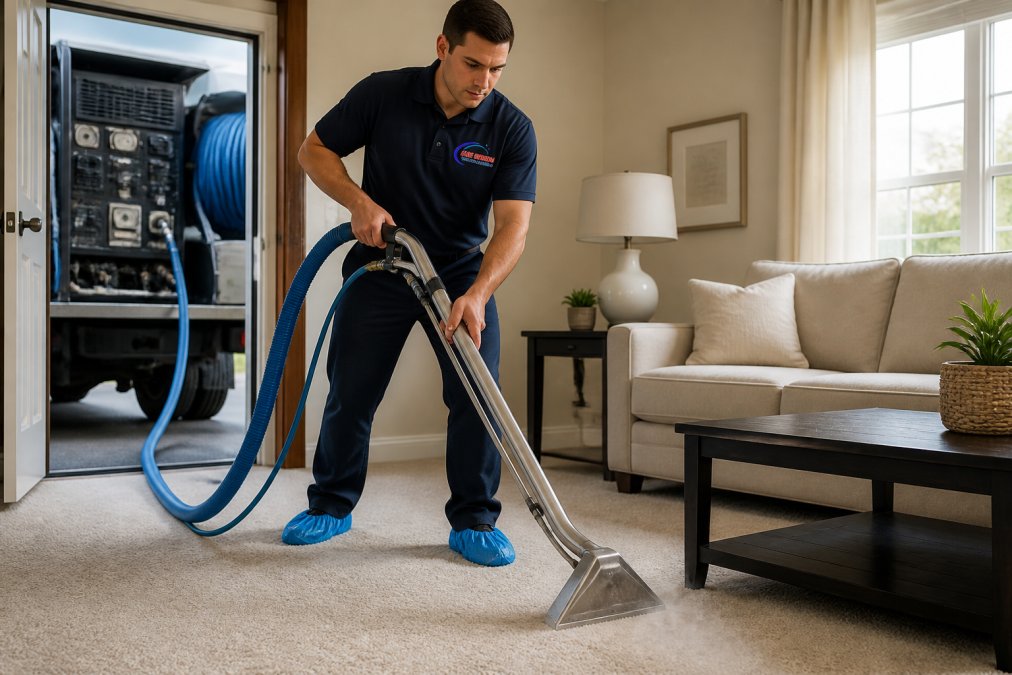
The process begins with pre-treatment. The technician applies specialized cleaning solution to the carpet, allowing it to dwell for several minutes to break down soil and oils. Next comes extraction: hot water mixed with cleaning solution is injected under pressure into the carpet, and the machine’s powerful vacuum immediately pulls the water back out along with loosened soil, bacteria, and allergens.
Heated water opens carpet fibers, allowing cleaning solution to penetrate deeper, kills bacteria and dust mites, and removes contaminants that survive other cleaning methods. Deep cleaning involves multiple passes, longer dwell times, and additional treatments for problem areas, addressing accumulated issues that standard cleaning cannot.
Avoid using excessive cleaning solution. Over-wetting the carpet leaves residue that attracts dirt faster, making carpets look dingy again within weeks. Professional technicians know the right solution-to-water ratio; DIY attempts often get this wrong.
Eco-Friendly and Non-Toxic Cleaning Solutions
Environmental and health concerns drive many homeowners to ask about cleaning chemicals. Professional carpet shampooing no longer requires harsh chemicals that leave toxic residues.
Eco-friendly cleaning solutions use plant-based surfactants and biodegradable compounds instead of petroleum-derived chemicals. These solutions break down soil and oils effectively without leaving chemical residue in your carpet or home’s air. Non-toxic solutions matter if you have children, pets, or anyone with chemical sensitivities. Once the carpet dries, there’s no chemical smell lingering for days.
Professional-grade eco-friendly solutions differ from store-bought green cleaners. They’re formulated for industrial equipment and deliver better results because they’re designed to work with professional extraction systems. Lake Geneva Carpet Cleaning uses eco-friendly methods that effectively remove dirt, allergens, and odors without health concerns of traditional chemical cleaners.
Residential vs. Commercial Carpet Shampooing
Residential cleaning focuses on family spaces where appearance and health matter most. Pet stains, allergen reduction, and odor elimination drive many residential decisions. Commercial cleaning serves businesses where carpet appearance affects customer perception. Retail shops, professional offices, and hospitality spaces require more frequent cleaning because foot traffic is heavier and more diverse.
Commercial spaces often need specialized treatments. High-traffic areas wear faster and accumulate more soil. Stains from multiple sources require different approaches than typical residential issues. Commercial cleaning schedules are often more aggressive, sometimes quarterly or monthly rather than annually. Both residential and commercial properties benefit from professional shampooing, but frequency and intensity differ.
Seasonal Cleaning Schedules and High-Traffic Areas
Wisconsin’s climate creates distinct seasonal carpet challenges. Understanding seasonal patterns and your carpet’s composition helps maintain it effectively year-round.
Identifying Your Carpet Fiber Type
Nylon carpets are the most common and durable. Nylon fibers are naturally stain-resistant, hold up well to heavy foot traffic, and respond well to hot water extraction. Nylon is resilient, bouncing back after being walked on, so footprints are less visible.
Polyester carpets are softer and more luxurious-feeling but less durable in high-traffic areas. Polyester is naturally stain-resistant but more prone to matting and crushing. Polyester fibers can be damaged by excessive heat, so lower temperatures are sometimes preferred.
Wool carpets are premium, naturally fire-resistant, and provide excellent insulation. Wool is more delicate than synthetic fibers and requires gentler cleaning. Wool can shrink if exposed to excessive heat or agitation, so professional cleaners must use lower temperatures and specialized techniques.
You can identify your carpet fiber by checking the carpet label or asking a professional cleaner to assess it.
Seasonal Challenges in Wisconsin Climate
Winter (December-February): Road salt, sand, and de-icing chemicals tracked indoors are the primary challenge. These abrasive particles embed deep in carpet fibers and can damage carpet backing. Salt attracts moisture, creating damp conditions that promote mold if the carpet isn’t dried quickly. Schedule winter cleaning in mid-January or early February, after the heaviest snow and salt season.
Spring (March-May): Mud season is spring’s primary challenge. Wet soil tracked indoors is heavier and wetter than winter’s dry salt and sand. This moisture can soak into carpet padding and create conditions for mold if not fully extracted. All fiber types benefit from professional extraction during mud season. Schedule spring cleaning in late April or early May.
Summer (June-August): Summer brings pollen, dust, and increased foot traffic. Humidity is high, which slows drying, but foot traffic is typically higher, depositing more soil. One professional cleaning during summer maintains carpet condition. If you have young children, multiple pets, or frequent guests, schedule cleaning in early summer. If your household is quieter, mid-to-late summer works fine.
Fall (September-November): Fall brings leaf debris, increased pollen, and preparation for winter. This is an ideal time for preventive cleaning before winter salt and moisture arrive. Fall humidity is dropping, which aids drying. Pre-winter cleaning in October prepares your carpet for the season ahead.
Fiber-Specific Seasonal Considerations
Nylon: Tolerates all seasonal cleaning well. Increase cleaning frequency in winter and spring when salt and mud are heaviest. Annual or biennial cleaning is typical for nylon in moderate-traffic homes; high-traffic areas may need cleaning twice yearly.
Polyester: Requires slightly gentler treatment, especially during spring and summer when humidity is high and matting risk increases. Professional cleaners can adjust water temperature and extraction intensity for polyester. Seasonal cleaning schedule is similar to nylon, but prioritize spring and fall to prevent matting in high-traffic zones.
Wool: Needs professional care year-round. Winter salt and spring mud are particularly challenging for wool. Professional cleaners experienced with wool will use lower temperatures and specialized solutions. Consider professional cleaning twice yearly if you have wool carpet in high-traffic areas.
High-Traffic Areas and Frequency Adjustments
High-traffic areas accumulate soil faster than low-traffic zones. Entryways, hallways, stairs, and areas near doors may need professional cleaning every 6-9 months, while low-traffic bedrooms could stretch to annual or biennial cleaning. Pet owners should add extra cleaning during shedding seasons to manage allergens and odors.
A practical approach is scheduling one comprehensive professional cleaning annually (ideally in fall for winter preparation) and adding targeted cleaning for high-traffic areas or seasonal issues as needed.
If you’re unsure about your carpet’s fiber type or the best cleaning schedule for your specific situation, a professional cleaner can assess your carpet and recommend a tailored maintenance plan during your first service.
Same-Day and Emergency Service Availability
Accidents happen. A pet has an accident, a guest spills something on the carpet, or you discover a stain that’s been there longer than you realized. Same-day and emergency carpet shampooing service addresses these urgent situations.
Fresh stains respond better to immediate treatment than old ones. The longer a stain sits, the more it sets into fibers and padding, making removal harder. Emergency services also cover situations like water damage from flooding or burst pipes. Quick response prevents mold growth and secondary damage.
Availability varies by provider and season. Summer months tend to be busier, making same-day appointments harder to secure. Winter may offer more flexibility. Local providers in the Lake Geneva area often have better availability than larger regional companies because they serve a smaller geographic area.
When you need immediate service, contact your preferred provider directly rather than relying on online booking systems. A phone conversation clarifies urgency and often results in faster scheduling.
Professional carpet shampooing service transforms how your home looks and feels while addressing health concerns that surface cleaning cannot. Whether you’re dealing with stubborn pet odors, allergen concerns, or simply maintaining your carpet investment, the difference between professional and DIY approaches is substantial.
Lake Geneva Carpet Cleaning brings over 32 years of experience to every job, using truck-mounted hot water extraction equipment and eco-friendly solutions that deliver results you can see and feel. Our owner-operated approach means meticulous attention to detail and genuine commitment to your satisfaction. Contact Lake Geneva Carpet Cleaning for a free quote tailored to your specific needs.
Frequently Asked Questions
What is the difference between carpet shampooing and steam cleaning?
Carpet shampooing service uses hot water extraction, which injects heated water and cleaning solution deep into carpet fibers and backing, then extracts soil and moisture. This method removes embedded dirt, allergens, and odors more effectively than surface-level cleaning. The process sanitizes and deodorizes simultaneously, making it superior for deep cleaning and allergen removal.
How long does it take for carpets to dry after professional carpet shampooing service?
Drying time depends on humidity, carpet thickness, and air circulation, but typically ranges from 4 to 12 hours. Professional truck-mounted extraction removes more moisture than rental machines, speeding up drying. Opening windows, running fans, and maintaining air conditioning accelerates the process. Avoid walking on wet carpets to prevent re-soiling.
Does professional carpet cleaning remove pet odors and allergens?
Yes. Hot water extraction reaches deep into carpet padding where pet odors and allergen-causing dust mites hide. The heat and pressure dislodge these contaminants, and the extraction removes them completely. Professional-grade equipment and eco-friendly solutions eliminate odors permanently rather than masking them, creating a healthier indoor environment for families with pets and allergies.
How often should I have my carpets professionally cleaned?
Most homeowners benefit from professional carpet shampooing service every 12 to 18 months for regular household use. High-traffic areas, pet owners, and those with allergies should clean every 6 to 12 months. Seasonal contaminants in certain climates may require additional cleanings. Regular maintenance extends carpet life and maintains indoor air quality.
This article was written using GrandRanker