
Table of Contents
- Why Carpet Fibers Become Matted
- How Often Should Carpets Be Cleaned to Prevent Matting
- Best Tools for Carpet Pile Restoration
- Preventing Carpet Matting in High-Traffic Areas
- DIY Methods to Restore Matted Carpet Fibers
- Signs Your Carpet Needs Professional Cleaning
- Understanding Fiber Types and Restoration
- When to Call a Professional
- Conclusion
Last Updated: August 28, 2026
Why Carpet Fibers Become Matted
Carpet matting happens when foot traffic, furniture weight, and abrasive dirt particles grind fibers down, flattening the pile and creating a worn appearance. Synthetic fibers like nylon and polyester have natural memory and want to return to their original shape, but soil accumulation combined with repeated crushing weakens that memory.
High-traffic areas are most vulnerable because constant pressure gradually compresses pile fibers. What makes matting worse is that it becomes a cycle: flattened fibers trap more grit and dirt because they can’t stand upright to shed particles. This extra soil weight presses down harder, accelerating the crushing process.
The distinction between matting and permanent damage matters. Matting is fiber crush, recoverable. Permanent damage means fibers have broken or melted. Most matting you see at home is reversible with [the right](/best-carpet-cleaning-company-guide/) approach.
How Often Should Carpets Be Cleaned to Prevent Matting
Regular cleaning prevents matting by removing soil that weighs fibers down and accelerates crushing. Most homeowners should aim for deep cleaning every 12 to 18 months, depending on foot traffic and household activity (iicrc.org). Homes with pets, young children, or high-traffic zones may benefit from cleaning every 12 months.
Weekly vacuuming removes surface soil before it embeds into the pile, preventing abrasive grit from accumulating at the fiber base. In high-traffic areas, vacuuming twice weekly extends the time before matting becomes visible. When soil sits in carpet fibers, it acts like sandpaper, grinding away at the pile structure. Regular extraction removes that soil before it causes permanent fiber distortion.
Different fiber types respond differently to cleaning schedules. Nylon carpet holds up well with regular maintenance, while polyester may require slightly more frequent attention in high-traffic areas because it’s more prone to matting when soil accumulates.
Best Tools for Carpet Pile Restoration
The right tool depends on your carpet’s pile height, matting severity, and fiber type. Using the wrong tool can flatten fibers further or cause damage.
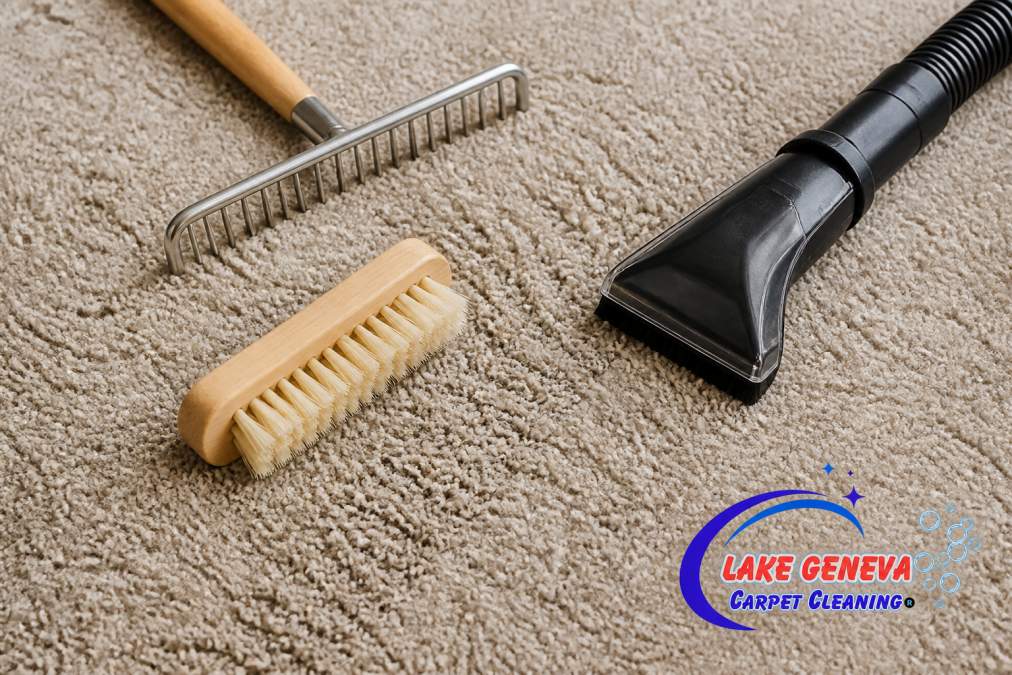
Carpet Rakes vs. Brushes: Choosing by Pile Height
Carpet rakes work best on medium-to-high pile carpet (pile height greater than 0.5 inches) (peer-reviewed research). The short, stiff bristles penetrate deep into the pile and physically separate matted fibers, making them ideal for severe matting in high-traffic areas. However, aggressive raking can damage delicate fibers, so it’s not suitable for low-pile carpet, wool, or fine synthetic fibers.
For low-pile carpet (pile height under 0.5 inches), a soft-bristled upholstery brush is safer and more effective. These tools lift fibers without risk of over-aggressive action that can cause permanent distortion. They work well for light-to-moderate matting and are ideal for maintenance between deeper treatments.
Medium-pile carpet (0.5 to 1 inch) can tolerate either tool, but start with a soft brush; if results plateau, graduate to a carpet rake for more aggressive lifting.
Technique Matters More Than Tool Selection
Push the tool firmly against the pile, working in one consistent direction across the matted area. Make 5 to 10 passes in that direction, then reverse and work perpendicular to your first direction. This cross-directional approach lifts fibers from multiple angles, breaking up the matted structure far more effectively than random strokes. Most homeowners see visible improvement within 10 to 15 minutes of focused work on a single area.
Working against the pile direction requires more force but lifts fibers more dramatically. Alternating directions ensures fibers are lifted from all angles and less likely to resettle into the matted position.
Vacuuming as a Lifting Tool
Your household vacuum can contribute to fiber restoration if used strategically. Vacuums with adjustable brush-roll settings are most useful: engage the brush roll and make multiple passes in different directions over matted areas. The brush agitation lifts fibers while suction removes loosened soil simultaneously.
For high-pile carpet, use a vacuum designed for that pile height with adjustable settings. For low-pile carpet, standard vacuums work adequately. Daily or every-other-day vacuuming in matted areas, combined with mechanical lifting tools, compounds the restoration effect.
Heat Application: Activating Fiber Memory
Heat restores fiber memory by making fibers more flexible and responsive to lifting efforts. A handheld steamer is the safest heat application method for most carpet types (the CDC). After steaming a small section (10 to 15 seconds), immediately use a carpet rake or brush while the area is still warm. Fibers are most likely to hold their lifted position as they cool.
Always place a damp cloth over the matted area before steaming to prevent direct heat contact with fibers. A low-heat iron method works on nylon and polyester but is riskier than steam. Place a damp cloth over the matted area and press a household iron on the lowest heat setting for 3 to 5 seconds. Remove the iron immediately and rake the fibers upward while warm. Test this method on a hidden area first.
Never apply high heat directly to carpet fibers, synthetic materials can melt, and wool can felt. Always use a protective damp cloth barrier between any heat source and the carpet. Polyester requires lower temperatures than nylon. Wool should only be treated with steam, never direct iron heat. Test any heat method on a hidden area first.
Tool Selection Decision Matrix
For low-pile carpet: Soft-bristled brush + vacuuming + ice cube or baking soda methods. Avoid carpet rakes and high heat.
For medium-pile carpet: Start with soft brush; escalate to carpet rake if needed. Steam cleaning is safe. Vacuuming with brush roll engaged helps.
For high-pile carpet: Carpet rake is most effective. Steam cleaning works well. Vacuuming with proper settings contributes to results.
For wool carpet: Soft-bristled brush only. Steam cleaning is safe and effective. Avoid rakes, vinegar, and direct heat.
For severe matting: Combine mechanical lifting (rake or brush) with heat (steam) for maximum effect. Multiple treatments over several days often outperform a single aggressive treatment.
For light matting or maintenance: Soft brush + regular vacuuming + ice cube method. These gentler approaches prevent progression to severe matting.
Preventing Carpet Matting in High-Traffic Areas
High-traffic areas need proactive strategies because matting begins earlier and progresses faster in these zones. Identify where your highest-traffic patterns form, typically pathways between rooms, areas near doors, and spaces in front of furniture.
Area rugs placed strategically reduce direct foot traffic on carpet beneath them. Rotating furniture occasionally changes pressure points, preventing permanent matting in the same spots. Vacuuming high-traffic areas twice weekly, compared to weekly vacuuming elsewhere, removes soil faster and reduces the weight that accelerates fiber crushing.
In commercial settings or homes with extremely heavy foot traffic, professional-grade treatments become necessary. Professional extraction removes deeply embedded soil that household vacuums miss, and professionals have access to fiber conditioning treatments that restore pile height more effectively than DIY methods alone.
DIY Methods to Restore Matted Carpet Fibers
When matting has already set in, several DIY approaches can restore fiber structure at home. The most effective methods combine mechanical lifting with moisture or heat to reactivate fiber memory.
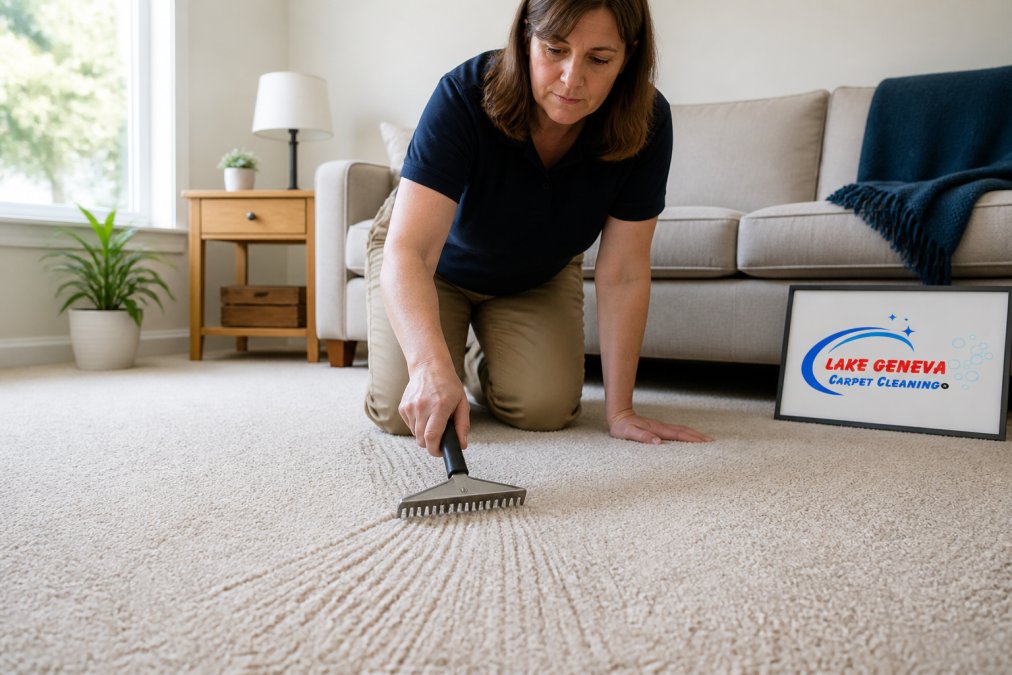
The Ice Cube Method
Place ice cubes directly on the matted area and let them melt slowly. As the ice melts, the moisture penetrates the fibers and softens them slightly. Once the ice has melted and the area is damp, use a carpet rake or stiff brush to lift the fibers while they’re still moist. Work in multiple directions to break up the matted structure. As the carpet dries, the fibers often hold their lifted position better than before.
This method requires nothing beyond ice and works best on small to medium-sized matted areas. For larger sections, repeat the process multiple times, or combine it with other methods for faster results.
Baking Soda and Vinegar Solutions
Sprinkle baking soda generously over the matted area and let it sit for 15 to 30 minutes. Next, mix equal parts white vinegar and water in a spray bottle and lightly mist the baking soda-treated area. The chemical reaction between baking soda and vinegar creates agitation that helps lift fibers. Let this sit for another 15 minutes.
After the reaction settles, use a carpet rake or brush to lift the fibers. Vacuum thoroughly once the area dries to remove all baking soda residue. This method is eco-friendly and works particularly well when matting is combined with odor problems.
Steam Cleaning for Fiber Rejuvenation
Steam cleaning is one of the most effective DIY methods for fiber rejuvenation. A handheld steamer applies heat and moisture that soften fibers and break up matted structure. Fill the steamer with water and allow it to heat according to manufacturer instructions. Direct the steam nozzle at the matted area for a few seconds to allow heat and moisture to penetrate. Don’t oversaturate, you want damp, not soaking wet.
Immediately after steaming, use a carpet rake or upholstery brush to lift the fibers while they’re warm and flexible. Multiple passes in different directions help break up stubborn matting. Allow the area to dry completely before walking on it.
Steam cleaning combined with mechanical lifting produces the most dramatic results for moderate to severe matting. The heat reactivates fiber memory, and the mechanical action prevents fibers from resettling into the matted position as they cool.
Signs Your Carpet Needs Professional Cleaning
Some matting situations exceed what DIY methods can address. If matting returns within days of your DIY restoration efforts, embedded soil is the root cause. Professional extraction removes soil that household vacuums and handheld steamers can’t reach, addressing the problem at its source.
Persistent odors combined with matting suggest that moisture or biological growth has set into the carpet padding. Professional hot water extraction is necessary to eliminate the problem completely. Matting that covers large areas or entire rooms, rather than isolated high-traffic zones, indicates that the carpet’s overall condition may be deteriorating. Professional assessment can determine whether the carpet is salvageable or approaching the end of its useful life.
Visible fiber distortion or permanent crushing that doesn’t respond to any lifting method suggests permanent damage. Professional cleaning can still improve appearance and remove odors, but it won’t restore fibers that have been broken or melted.
Understanding Fiber Types and Restoration
Different carpet materials respond dramatically differently to restoration methods. Identifying your carpet fiber type is the single most important step before attempting any restoration method.
Nylon Carpet
Nylon is the most common residential fiber and the most forgiving for DIY restoration. Nylon fibers have excellent elastic memory and respond exceptionally well to mechanical lifting, heat application, and moisture treatments. All major DIY methods work effectively on nylon: ice cube treatments, baking soda and vinegar solutions, steam cleaning, and carpet raking all produce visible results. Heat application is particularly effective because fibers become more flexible when warmed, making them easier to lift and more likely to hold their lifted position as they cool. You can safely use handheld steamers and low-heat iron methods on nylon without risk of fiber damage. The main limitation is that DIY methods work best on light-to-moderate matting; severe matting combined with heavy soil accumulation often requires professional extraction.
Polyester Carpet
Polyester is more prone to matting than nylon because the fibers have less natural memory. Once polyester fibers flatten, they’re slower to spring back, which is why prevention through regular vacuuming is especially critical. Use softer brushes and gentler pressure than you would on nylon. Ice cube and baking soda methods work well because they’re gentle and rely on moisture rather than heat or force. Steam cleaning is effective, but keep temperatures moderate, polyester fibers can become limp if exposed to excessive heat. Never use a direct iron method on polyester; the risk of fiber melting is higher than with nylon. Professional extraction is often more valuable for polyester because the fibers benefit from the deep soil removal that allows them to recover.
Wool Carpet
Wool is a premium natural fiber that naturally resists matting better than synthetics because of its crimp structure and elasticity. However, wool requires gentler handling than synthetic fibers. Use soft-bristled brushes rather than stiff carpet rakes. Wool responds exceptionally well to steam because the heat and moisture activate the fiber’s natural elasticity without causing damage. Ice cube methods and baking soda treatments are safe and effective on wool. Avoid vinegar solutions on wool carpet, as the acidity can affect the fiber’s natural oils. Never use high heat or direct iron methods on wool, the fibers can felt or become permanently distorted. Wool’s natural lanolin content means it resists soil accumulation better than synthetics, so matting on wool often indicates a deeper problem like moisture or padding issues.
Identifying Your Fiber Type
Check your carpet’s manufacturer documentation, warranty paperwork, or the backing label for fiber content. If documentation isn’t available, a simple touch test can help: nylon feels slightly waxy and has a consistent sheen; polyester feels softer and duller; wool feels natural and slightly coarser. When in doubt, test your chosen restoration method on a hidden area before treating visible carpet.
When to Call a Professional
Professional carpet cleaning becomes the right choice when DIY efforts plateau or when the scope of the problem exceeds household equipment capabilities. Professional assessment identifies problems that DIY approaches can’t address. If matting is accompanied by persistent odors, water damage, or pet stains that keep returning, professionals can determine the root cause and apply targeted solutions.
For large matted areas, multiple high-traffic zones, or commercial spaces, professional cleaning saves time and delivers superior results. The investment in professional service often extends carpet life significantly, delaying replacement and protecting your property value.
Matted carpet fibers are frustrating, but they’re also one of the most recoverable carpet problems when you act early. Whether you start with DIY methods like the ice cube technique, baking soda solutions, or steam cleaning, the key is consistent effort and understanding your specific fiber type. When DIY approaches reach their limits, professional hot water extraction technology removes the deep soil that prevents fibers from recovering. Lake Geneva Carpet Cleaning offers unparalleled, eco-friendly carpet and rug cleaning services for both residential and commercial clients, meticulously removing dirt, germs, allergens, and odors, ensuring healthier living and working spaces. Contact us for a free quote and discover how professional cleaning can restore your carpet’s appearance and extend its life for years to come.
Frequently Asked Questions
Q: Can you actually revive matted down carpet at home?
A: Yes, many cases of matted carpet fibers can be restored at home using simple tools and techniques. Ice cubes, carpet rakes, proper vacuuming, and heat application can lift flattened fibers and restore pile height. However, severe matting caused by deep soil accumulation or fiber crush may require professional cleaning to fully rejuvenate the carpet and extract embedded grit that prevents fibers from bouncing back.
Q: How often should carpets be cleaned to prevent matting?
A: Most carpets benefit from professional deep cleaning every 12 to 18 months to prevent matting and maintain fiber health. High-traffic areas may need cleaning more frequently, every 6 to 12 months, to remove abrasive dirt and grit before they cause permanent fiber distortion. Regular vacuuming between cleanings helps prevent soil accumulation that accelerates matting.
Q: What's the best tool for lifting carpet pile?
A: A carpet rake designed specifically for pile restoration is highly effective for lifting fibers in matted areas. Upholstery brushes and stiff-bristled grooming tools also work well for fiber rejuvenation. For best results, combine these tools with proper vacuuming technique using a high-suction setting, which removes grit and allows fibers to stand upright naturally.
Q: Will heat actually help restore matted carpet fibers?
A: Yes, heat can help restore matted fibers by softening synthetic materials and allowing them to bounce back to their original position. Steam cleaning uses heat and moisture extraction together to rejuvenate pile height and remove embedded soil. A household hairdryer on a cool to warm setting can also help lift fibers when combined with brushing techniques, though professional extraction can deliver deeper, more lasting results.
This article was written using GrandRanker