
Table of Contents
- What Are Traffic Lanes and Why They Matter
- How Soil Accumulation Creates Gray Carpet Traffic Lanes
- Fiber Distortion and Wear: The Physical Damage Behind Graying
- Carpet Fiber Wear vs. Soil Accumulation: Understanding the Difference
- How Often Should Carpets Be Cleaned to Prevent Traffic Lane Graying
- Best Practices for Carpet Maintenance and Traffic Lane Prevention
- Professional Cleaning vs. DIY Methods for Removing Gray Traffic Lanes
- Can Professional Cleaning Restore Gray Traffic Lanes Permanently
- Conclusion
What Are Traffic Lanes and Why They Matter
Traffic lanes are the visible wear patterns that develop across carpets in high-foot-traffic areas, typically appearing as dull gray streaks running through hallways, entryways, and other frequently traveled paths. These lanes form where people naturally walk day after day, and they represent one of the most common carpet maintenance challenges homeowners and business owners in Wisconsin face.
Understanding why carpet traffic lanes turn gray over time matters because it directly affects how long your carpet looks fresh and how much you’ll need to invest in cleaning or replacement. The good news is that this graying isn’t always permanent damage, it’s often the result of soil accumulation and fiber distortion that professional cleaning can address. At Lake Geneva Carpet Cleaning, we’ve spent over 32 years helping homeowners and local business owners understand what’s happening beneath the surface of their carpets and how to prevent or reverse it.
Traffic lanes typically appear within the first few years of carpet installation, depending on foot traffic volume and maintenance habits. They’re most noticeable in synthetic fibers, which are common in residential carpets throughout Wisconsin. The pattern is predictable: the more people walk across a spot, the grayer it becomes. This isn’t random wear, it follows the natural pathways people create moving through their homes and businesses.
Traffic lanes develop fastest in entryways, hallways, and living room paths because these areas experience the most foot traffic. Knowing where they’ll form helps you plan preventative maintenance and catch early warning signs before damage becomes severe.
How Soil Accumulation Creates Gray Carpet Traffic Lanes
Soil accumulation is the primary culprit behind most gray traffic lanes. When feet repeatedly press down on carpet fibers, they drive microscopic particles of dirt, dust, and grit deeper into the pile and down toward the backing. Over time, these trapped particles build up and create a visible gray or brown discoloration that makes the carpet look dingy and worn, even when the fibers themselves aren’t damaged.
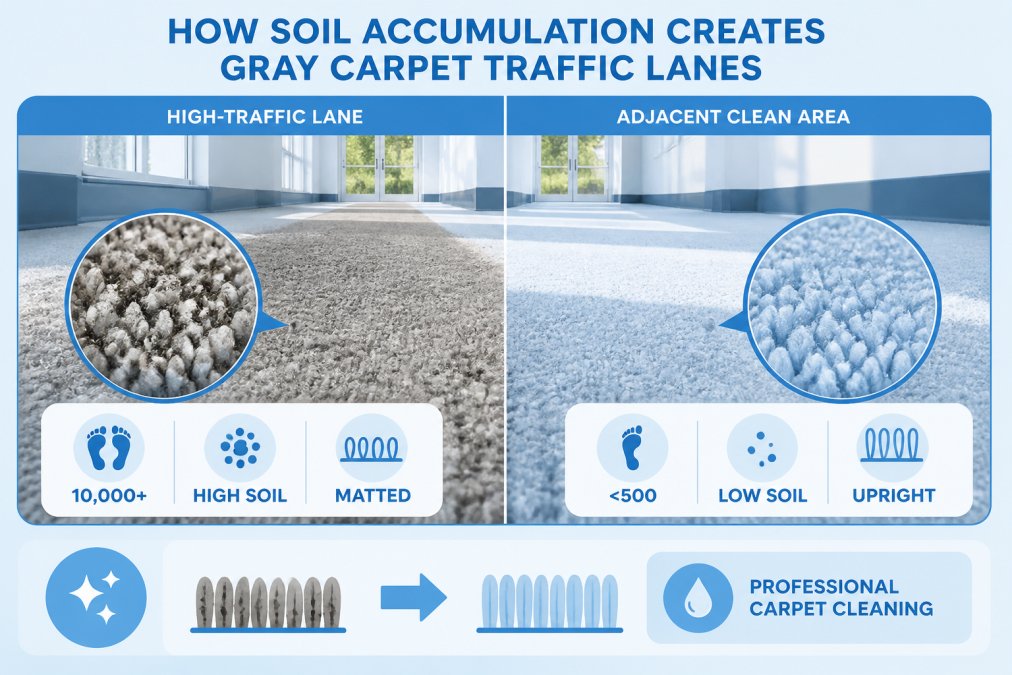
The mechanism is straightforward: outdoor contaminants, road salt, sand, mud, and pollen, get tracked inside on shoes and clothing. Once they land on carpet, foot traffic grinds them into the fiber. Household dust, pet hair, and skin cells also accumulate in these zones. Unlike the surrounding carpet, which gets foot traffic distributed across a wider area, traffic lanes concentrate this grinding action in narrow paths. The result is a visible darkening that looks like permanent staining.
What makes this problem worse in high-traffic environments is that regular vacuuming alone can’t remove deeply embedded soil. Vacuums work on the surface of the carpet pile. They pick up loose particles, but they can’t extract grit that’s been driven down through the fibers and into the backing. This is why traffic lanes persist even in homes where people vacuum frequently. The soil stays trapped, and the gray appearance worsens with each passing season.
Seasonal factors amplify soil accumulation, especially in Wisconsin. Winter brings road salt and sand tracked in from driveways and streets. Spring and fall introduce mud and wet leaves. Summer brings dust and pollen. Each season adds layers of contaminants that settle into traffic lanes. Homes near lakeside areas face additional challenges from moisture, mineral deposits, and sand carried by wind and foot traffic.
If you wait too long to address soil accumulation, the trapped particles can actually begin to break down carpet fibers through abrasion. What starts as discoloration can progress to actual fiber damage if the grit isn’t removed. This is why professional deep cleaning becomes increasingly important as traffic lanes develop.
Fiber Distortion and Wear: The Physical Damage Behind Graying
While soil accumulation creates most of the gray appearance, fiber distortion is the physical component that makes traffic lanes look permanently worn. When carpet fibers are compressed repeatedly by foot traffic, they bend, flatten, and lose their original texture and light-reflecting properties. This distortion changes how light bounces off the fibers, making them appear darker and duller than surrounding carpet.
Fiber distortion happens because carpet fibers are designed to spring back after compression, but only to a point. Constant, repetitive pressure from foot traffic overwhelms this resilience. The fibers become matted down and stay flattened rather than returning to their upright position. This matting reduces the surface area that reflects light, which is why traffic lanes often look gray even after vacuuming removes loose soil.
The severity of fiber distortion depends on carpet fiber type. Synthetic fibers like polyester and nylon are more prone to permanent distortion than natural fibers, though they’re also more stain-resistant and durable overall. Nylon fibers, commonly used in residential carpets, will gradually lose their texture in high-traffic areas (peer-reviewed research). Polyester fibers show distortion more visibly because they don’t recover as quickly from compression. Wool and other natural fibers can also distort, but they often recover better if given time and proper care.
Fiber blooming is another phenomenon related to distortion. When synthetic fibers are compressed and then cleaned, they sometimes release tiny fibrils, loose strands that separate from the main fiber. These fibrils catch light differently and can contribute to a grayed appearance. This is why some carpet looks worse immediately after cleaning before the fibers have time to dry and recover their texture.
Carpet Fiber Wear vs. Soil Accumulation: Understanding the Difference
The distinction between fiber wear and soil accumulation is critical because it determines whether professional cleaning can restore your carpet or whether the damage is permanent. Soil accumulation is reversible, deep cleaning can extract trapped particles and restore the carpet’s appearance. Fiber wear is not reversible, though professional cleaning can minimize its visual impact.
Soil accumulation creates gray traffic lanes that look dirty and dull but feel relatively normal when you run your hand across the carpet. The fibers still have some texture and spring. When you clean the area deeply, the gray appearance often fades significantly because the trapped soil is removed. This is the reversible component of traffic lane graying.
Fiber wear, by contrast, is permanent. Once fibers are flattened and distorted by years of foot traffic, they won’t fully recover. The matting is structural, the fibers have been physically changed. You can feel this when you run your hand across a traffic lane; the fibers feel noticeably flatter and smoother than surrounding carpet. Professional cleaning can’t restore the original texture, though it can remove soil that’s making the wear look worse.
Most traffic lanes involve both components working together. This is why professional cleaning often produces dramatic improvements, it removes the soil component, which is the larger visual problem. The remaining fiber distortion is usually much less noticeable once the soil is gone.
Understanding this difference helps you set realistic expectations. If your traffic lanes are relatively new (developed within the last 2-3 years), professional cleaning can often restore them to near-original appearance. If they’ve been developing for 5+ years, cleaning will improve them but won’t make them disappear completely because permanent fiber wear has accumulated.
How Often Should Carpets Be Cleaned to Prevent Traffic Lane Graying
The frequency of carpet cleaning depends on foot traffic volume, household size, presence of pets, and local environmental factors. Homes in Wisconsin with significant seasonal contaminants require more frequent cleaning than homes in drier climates. Preventative cleaning is far more effective than waiting until traffic lanes become severe.
For typical residential homes with moderate foot traffic, professional cleaning every 12-18 months helps prevent traffic lanes from developing (iicrc.org). Homes with pets, children, or high foot traffic benefit from cleaning every 6-12 months. Commercial spaces in Lake Geneva and surrounding areas typically need quarterly or semi-annual cleaning depending on customer volume and foot traffic patterns.
Between professional cleanings, regular vacuuming is essential. Vacuuming high-traffic areas 2-3 times per week removes loose soil before it gets driven deeper into the carpet (apha.org). Standard residential vacuuming once per week is adequate for low-traffic areas but insufficient for traffic lanes. The more frequently you vacuum traffic zones, the less soil accumulates.
Spot cleaning of fresh spills and stains prevents them from setting into traffic lanes. A spill in a traffic zone is more likely to become permanent because soil is already present and the area experiences constant foot traffic that can drive stains deeper. Addressing spills immediately, before they dry, prevents this compounding effect.
Seasonal deep cleaning is particularly valuable in Wisconsin. A professional cleaning in late fall, before winter brings road salt and sand, helps protect your carpet. Another cleaning in early spring removes accumulated winter contaminants. This two-cleaning-per-year schedule, combined with regular vacuuming, significantly slows traffic lane development.
The best prevention strategy combines regular vacuuming (2-3 times weekly in traffic areas), prompt spot cleaning, and professional deep cleaning every 12-18 months. This routine keeps soil from accumulating and fiber distortion from worsening, extending your carpet’s lifespan by years.
Best Practices for Carpet Maintenance and Traffic Lane Prevention
Preventing traffic lanes requires a multi-layered approach that addresses soil accumulation at the source, protects fibers from excessive compression, and removes embedded contaminants before they cause permanent damage.
Start at your entryways. Walk-off mats placed outside doors and just inside entryways capture soil before it reaches your carpet. These mats should be at least 6 feet long to allow multiple steps for soil removal. Mats placed in high-traffic hallways and living room paths also help by reducing the number of steps taken directly on carpet. Replace or clean these mats regularly so they don’t become sources of soil themselves.
Encourage household members and guests to remove shoes in entryways, especially during winter and wet seasons. This single practice dramatically reduces the volume of outdoor contaminants reaching your carpet. In Lake Geneva and surrounding Wisconsin areas, where winter brings salt and sand, a shoe-removal policy can cut soil accumulation.
Vacuum high-traffic areas more frequently than low-traffic areas. Traffic lanes need 2-3 passes per week, while living room perimeters might need only weekly vacuuming. Use a vacuum with good suction and a beater bar that agitates fibers to lift soil. Bagless vacuums should be emptied when half-full to maintain suction power. Check filters monthly and replace them according to manufacturer recommendations.
Address spills and stains immediately. Blot, don’t rub, fresh spills with a clean cloth to remove excess liquid. For stubborn stains, use cool water and a neutral pH cleaner. Avoid over-wetting, which can drive stains deeper into the carpet and padding. If a stain persists after home cleaning, contact a professional before it sets permanently.
Manage humidity in your home. High humidity encourages mold and mildew growth in carpet, especially in basements and bathrooms. Dehumidifiers and proper ventilation help prevent moisture-related issues that can compound traffic lane problems. This is particularly important in homes near water, where humidity levels tend to be higher.
Rotate furniture periodically to distribute foot traffic more evenly across your carpet. Moving a sofa or rearranging seating changes where people naturally walk, which can reduce traffic lane concentration in any single path. This is a simple practice that extends the life of your carpet.
Professional Cleaning vs. DIY Methods for Removing Gray Traffic Lanes
The choice between professional cleaning and DIY methods depends on traffic lane severity, your budget, and your willingness to invest time in the process. Understanding the strengths and limitations of each approach helps you make the right decision for your situation.
DIY methods include renting machines from hardware stores, using store-bought carpet cleaners, and hiring carpet cleaning services. Rental machines use hot water extraction similar to professional equipment, but they typically have less suction power and heating capacity than truck-mounted systems. This means they leave carpet wetter and remove less soil. Drying time is often 24+ hours, which creates risk of mold in basements or areas with poor air circulation.
Store-bought spot cleaners and foam products can address fresh stains but are less effective on deep soil accumulation in traffic lanes. These products often leave residue that can reattract soil, making traffic lanes look gray again within weeks. The chemicals in some consumer products can also affect carpet fibers or leave buildup that reduces fiber texture.
Professional cleaning using hot water extraction is significantly more effective for traffic lanes. Truck-mounted systems generate higher water temperature and more powerful suction than rental equipment. This combination extracts more soil and leaves carpet drier. Professional technicians also know which cleaning solutions work best for different fiber types and traffic lane severity.
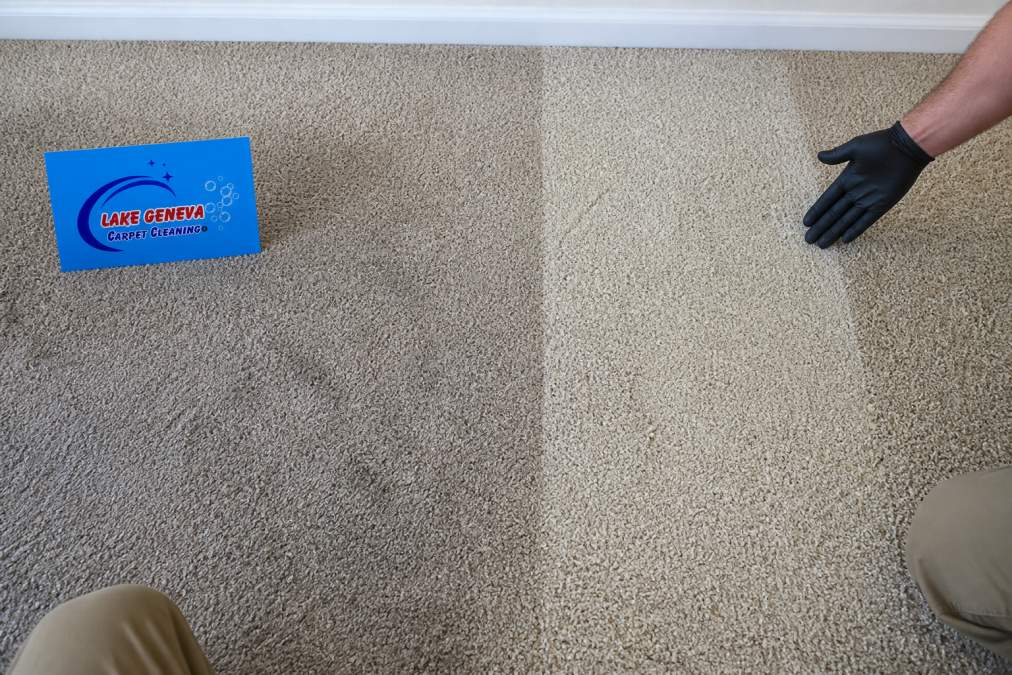
The key difference is extraction power. Professional equipment removes more embedded soil and moisture, while rental machines typically remove less. This difference is dramatic when you see results. Professional cleaning often restores traffic lanes to near-original appearance, while DIY methods produce more modest improvements.
Professional cleaning also addresses fiber distortion more effectively through grooming techniques. After hot water extraction, professional technicians use carpet grooming tools to lift and separate flattened fibers, helping them return to their upright position. This step is rarely done in DIY cleaning and significantly improves the final appearance.
For homeowners and business owners in Lake Geneva and surrounding Wisconsin areas, professional cleaning is the most reliable way to address established traffic lanes. The investment pays for itself through extended carpet life and maintained appearance that supports property value.
Can Professional Cleaning Restore Gray Traffic Lanes Permanently
Professional cleaning can restore gray traffic lanes dramatically, but the permanence of the restoration depends on what caused the graying in the first place. If traffic lanes are primarily from soil accumulation, professional cleaning often produces results that last 6-12 months with proper maintenance. If they involve significant fiber distortion and wear, the restoration is less permanent because the underlying fiber damage remains.
Immediately after professional cleaning, traffic lanes often look nearly invisible. The removal of embedded soil, dust, and grit reveals the original carpet color and texture. Fibers that were matted down often recover somewhat as they dry, adding to the improvement. Many homeowners are surprised by how much their carpet improves after professional cleaning.
The restoration lasts longest when combined with preventative maintenance. If you return to regular vacuuming, prompt spot cleaning, and use walk-off mats, traffic lanes develop much more slowly. A traffic lane that took 3-4 years to develop might take 5-7 years to return to the same severity after professional cleaning and proper maintenance.
Without follow-up maintenance, traffic lanes can return within 4-6 months. Soil accumulates quickly in high-traffic areas, and without regular vacuuming and professional cleaning on schedule, the gray appearance returns. This is why understanding the maintenance commitment is important before investing in professional cleaning.
For established fiber wear and distortion (traffic lanes that have been developing for 5+ years), professional cleaning improves appearance but won’t restore the carpet to new condition. The fiber texture remains somewhat flattened. However, the improvement is still significant because soil removal is the primary visual component of graying.
Some homeowners ask whether professional cleaning can make traffic lanes worse. This is a valid concern, but it’s unlikely with reputable service providers. Improper cleaning technique can leave residue that reattracks soil or damage fibers, but professional companies use proven methods that don’t cause these problems. Lake Geneva Carpet Cleaning‘s 32 years of experience means technicians understand fiber types and proper extraction techniques that restore rather than damage carpet.
Gray traffic lanes develop through a combination of soil accumulation and fiber distortion that’s nearly inevitable in high-traffic areas. Understanding why they form, and that they’re often reversible, helps you make informed decisions about carpet maintenance and cleaning frequency. Regular vacuuming, preventative professional cleaning, and simple practices like using entry mats can dramatically slow their development and extend your carpet’s lifespan. When traffic lanes do develop, professional cleaning removes the soil component that creates most of the gray appearance. For homeowners and business owners in the Lake Geneva area looking to restore their carpets and prevent future traffic lanes, Lake Geneva Carpet Cleaning offers the expertise and advanced hot water extraction technology needed to address these issues effectively. Contact us for a free quote and discover how professional cleaning can restore your carpets and improve your property’s appearance.
=== FAQ ANSWERS (audit these too, same rules) ===
[1] Q: What causes carpet to turn gray in high-traffic areas?A: Gray carpet traffic lanes result from two combined factors: embedded soil and grit that accumulate in the carpet pile, and physical fiber distortion from constant foot traffic. The ground-in dirt reflects less light, appearing dull and gray, while flattened fibers lose their original texture. Both issues typically worsen simultaneously in high-traffic hallways, entryways, and living areas where foot traffic is heaviest. [2] Q: Can professional cleaning remove gray traffic lanes permanently?
A: Professional hot-water extraction can significantly restore the appearance of gray traffic lanes by removing deep soil accumulation and reviving fiber texture. However, if the carpet fibers have experienced permanent distortion from years of wear, some graying may remain. Prevention through regular cleaning and maintenance is more effective than waiting for restoration. Professional cleaning combined with preventative care offers the best long-term results. [3] Q: How often should carpets be cleaned to prevent traffic lane graying?
A: Most homeowners benefit from professional deep cleaning every 12-18 months, with more frequent cleaning (6-12 months) in high-traffic areas or homes with pets and children. Regular vacuuming two to three times per week helps slow soil accumulation. Seasonal maintenance in spring and fall addresses contaminants specific to your climate. More frequent cleaning prevents soil from becoming ground-in and fiber distortion from becoming permanent. [4] Q: Are gray traffic lanes just dirt or is it permanent fiber damage?
A: Gray traffic lanes involve both issues. The immediate dullness is primarily soil accumulation and residue buildup, which professional cleaning can remove. However, if traffic lanes persist for years, the carpet fibers themselves become permanently flattened and distorted, reducing their ability to reflect light. Early intervention through regular cleaning prevents this permanent damage, while established traffic lanes may show improvement but not complete restoration.
Frequently Asked Questions
What causes carpet to turn gray in high-traffic areas?
Gray carpet traffic lanes result from two combined factors: embedded soil and grit that accumulate in the carpet pile, and physical fiber distortion from constant foot traffic. The ground-in dirt reflects less light, appearing dull and gray, while flattened fibers lose their original texture. Both issues typically worsen simultaneously in high-traffic hallways, entryways, and living areas where foot traffic is heaviest.
Can professional cleaning remove gray traffic lanes permanently?
Professional hot-water extraction can significantly restore the appearance of gray traffic lanes by removing deep soil accumulation and reviving fiber texture. However, if the carpet fibers have experienced permanent distortion from years of wear, some graying may remain. Prevention through regular cleaning and maintenance is more effective than waiting for restoration. Professional cleaning combined with preventative care offers the best long-term results.
How often should carpets be cleaned to prevent traffic lane graying?
Most homeowners benefit from professional deep cleaning every 12-18 months, with more frequent cleaning (6-12 months) in high-traffic areas or homes with pets and children. Regular vacuuming two to three times per week helps slow soil accumulation. Seasonal maintenance in spring and fall addresses contaminants specific to your climate. More frequent cleaning prevents soil from becoming ground-in and fiber distortion from becoming permanent.
Are gray traffic lanes just dirt or is it permanent fiber damage?
Gray traffic lanes involve both issues. The immediate dullness is primarily soil accumulation and residue buildup, which professional cleaning can remove. However, if traffic lanes persist for years, the carpet fibers themselves become permanently flattened and distorted, reducing their ability to reflect light. Early intervention through regular cleaning prevents this permanent damage, while established traffic lanes may show improvement but not complete restoration.
This article was written using GrandRanker