Table of Contents
- Steam Cleaning vs Dry Cleaning Carpets: A Side-by-Side Overview
- Pros and Cons of Steam Cleaning Carpets
- Pros and Cons of Dry Carpet Cleaning
- How Long Does Carpet Take to Dry After Steam Cleaning?
- Best Carpet Cleaning Method for Pet Stains and Odors
- Carpet Fiber Types, Warranty Implications, and Environmental Impact
- DIY Equipment vs. Professional Truck-Mounted Systems
- Which Method Is Right for Your Carpet? A Decision Framework
- Conclusion: Steam Cleaning vs Dry Cleaning Carpets in Lake Geneva, WI
Last Updated: June 1, 2026
Steam Cleaning vs Dry Cleaning Carpets: A Side-by-Side Overview
Choosing between steam cleaning vs dry cleaning carpets is one of the most consequential decisions you can make for your carpet’s longevity, appearance, and indoor air quality. At Lake Geneva Carpet Cleaning, we’ve spent over 32 years helping Wisconsin homeowners navigate exactly this choice, and the answer is rarely as simple as most guides suggest. The method that works brilliantly for one carpet can damage another. Below, we’ll walk you through the real differences, the trade-offs most people overlook, and a clear decision framework so you can stop guessing.
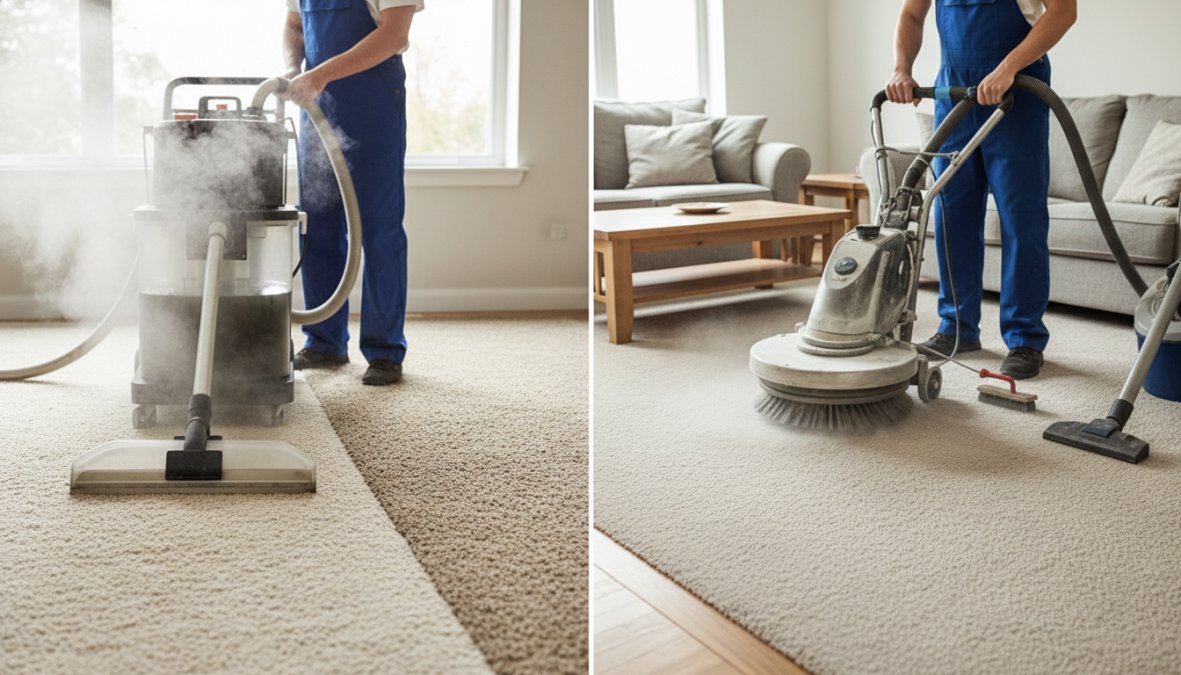
Here’s what most comparisons get wrong: they treat these two methods as interchangeable options on a menu. They’re not. Each method works through a fundamentally different mechanism, and that mechanism determines everything from drying time to allergen removal to whether your carpet warranty stays intact.
What Is Steam Cleaning (Hot Water Extraction)?
Hot water extraction is a deep cleaning process that injects heated water mixed with a cleaning solution deep into carpet fibers at high pressure, then immediately vacuums the loosened soil, bacteria, and chemical residue back out. Despite the name "steam cleaning," the process uses hot water rather than actual steam vapor.
A truck-mounted system, the kind used by professional technicians, generates significantly more heat, suction, and water pressure than any portable unit. The result is deeper soil suspension and more thorough moisture extraction. According to the Institute of Inspection, Cleaning and Restoration Certification guidelines, hot water extraction is the most widely recommended method for deep cleaning residential carpets because of its ability to flush contaminants out of the carpet padding and backing.
The process typically takes 20-45 minutes per room, and carpets require a drying period of several hours before normal foot traffic resumes.
What Is Dry Carpet Cleaning?
Dry carpet cleaning is a low-moisture cleaning method that applies a compound, powder, or encapsulation chemical to carpet fibers, allows the compound to absorb soil and contaminants, then removes it via vacuuming. No significant water is introduced, which means no meaningful drying time.
The encapsulation method is one of the more advanced dry cleaning approaches: a crystallizing polymer surrounds soil particles, which then dry into brittle crystals that vacuum away cleanly. Products like Host Dry Carpet Cleaner use plant-based organic micro-sponges to absorb dirt and allergens, while Capture Carpet & Rug Dry Cleaner uses a polymer-based compound that works on contact. Both eliminate the moisture retention risk entirely, making them genuinely useful for certain carpet types and situations.
| Feature | Steam Cleaning (Hot Water Extraction) | Dry Carpet Cleaning |
|---|---|---|
| Moisture used | High | Minimal |
| Drying time | 4-12 hours | Near zero |
| Deep cleaning depth | Full fiber and backing | Surface to mid-fiber |
| Allergen removal | Excellent | Moderate |
| Set-in stains | Very effective | Limited effectiveness |
| Safe for wool/natural fibers | Requires care | Generally safe |
| Professional truck-mounted option | Yes | Rarely |
| Carpet warranty compliance | Often required | Varies by manufacturer |
Pros and Cons of Steam Cleaning Carpets
Steam cleaning carpets, more precisely, hot water extraction, delivers the most thorough clean available for most residential carpet types. But the performance you actually get depends heavily on the equipment doing the work and the technician operating it. Understanding the real pros and cons means separating what the method can do from what a specific machine or operator will actually deliver.
The Pros of Steam Cleaning: What the Method Actually Does
Physically flushes contaminants from the full carpet structure.
This is the core mechanical advantage that dry methods cannot replicate. Hot water extraction injects heated water under pressure, suspending soil, bacteria, and allergens, then immediately vacuums the contaminated water back out. The process reaches the carpet backing and, with sufficient pressure, the top layer of the carpet padding. Dry cleaning compounds work at the fiber surface and mid-pile level. They cannot flush material out of the backing. For households with allergy sufferers, asthma, or young children who spend time on the floor, this depth difference is clinically meaningful: dust mite allergens, pet dander, and mold spores concentrate in the lower carpet structure where surface methods don’t reach.
Heat is a genuine cleaning agent, not just a comfort feature.
The hot water in hot water extraction does more than carry cleaning solution. Heat denatures proteins in organic stains, pet urine, blood, food, breaking the molecular bonds that lock them to carpet fibers. Heat also kills dust mites and their eggs on contact. Most professional truck-mounted systems deliver water at temperatures well above what portable consumer units can achieve, which is one of the primary reasons professional results differ from DIY results even when the same cleaning chemistry is used.
No cleaning compound residue left in the fiber.
When performed correctly, hot water extraction rinses the cleaning solution out of the carpet as part of the extraction pass. This matters for long-term carpet appearance: residue left in carpet fibers acts as a soil magnet, causing the carpet to re-soil faster after cleaning. Dry encapsulation methods are designed to crystallize residue for vacuuming, but incomplete vacuuming, which is common, leaves polymer residue embedded in the pile. A properly executed hot water extraction leaves no meaningful residue behind.
Supports carpet warranty compliance.
This is the pro most homeowners never check until it’s too late. Many major carpet manufacturers, including Shaw, Mohawk, and Stainmaster, specify hot water extraction as the required cleaning method in their warranty terms. Using an alternative method as your primary cleaning approach can void the warranty. This is covered in more depth in the fiber and warranty section below, but it belongs here too: for carpets still under manufacturer warranty, hot water extraction isn’t just a preference, it may be a contractual requirement.
Removes abrasive soil that physically destroys carpet fibers.
Soil particles, particularly fine grit tracked in from outdoors, have sharp edges at the microscopic level. Every footstep grinds those particles against carpet fibers, cutting them over time. This is the primary mechanical cause of carpet wear in high-traffic areas. Hot water extraction removes this abrasive load from deep in the pile where vacuuming alone cannot reach. Regular professional extraction cleaning is one of the most evidence-supported ways to extend carpet service life.
The Cons of Steam Cleaning: Where the Method Creates Real Risk
Drying time is the most disruptive trade-off.
Carpets cleaned with hot water extraction require 4 to 12 hours before normal foot traffic resumes, and that range is wide for a reason. A professional truck-mounted system with high extraction power can leave carpets dry enough for light traffic in 4 to 6 hours under good ventilation conditions. A portable consumer machine with weaker suction can leave carpets damp for 12 hours or more. Humidity, carpet thickness, and airflow all compound the variable. For households that cannot tolerate a room being out of service for half a day, this is a genuine constraint, not a minor inconvenience.
Over-wetting is the most consequential DIY mistake.
Excess moisture that saturates the carpet padding creates anaerobic conditions beneath the surface where mildew develops invisibly. You won’t see it. You won’t smell it immediately. By the time the odor becomes noticeable, the mold colony is already established in the padding and potentially in the subfloor beneath. This risk is almost entirely a function of equipment quality and operator technique. A professional truck-mounted system extracts moisture so efficiently that over-wetting is rare. Consumer machines with limited suction leave significantly more water behind, and operators who make fewer extraction passes compound the problem.
If your carpet still feels damp to the touch 24 hours after cleaning, you have a moisture problem that needs active intervention, not just waiting. Run a dehumidifier directly in the room, increase airflow with fans, and check whether the padding feels wet by pressing firmly through the carpet. Padding that stays saturated beyond 24 hours is at genuine mildew risk. This is the scenario where a professional re-extraction pass may be necessary.
Consumer equipment delivers a meaningfully different result than professional equipment.
The BISSELL Revolution HydroSteam Pet Carpet Cleaner and the Rug Doctor Mighty Pro X3 are among the best consumer and rental options available. They are legitimate improvements over basic carpet washers. But both operate on 120-volt household current with suction and water temperature levels that are a fraction of what a truck-mounted professional system generates. The practical consequence is less soil extraction, more moisture left in the carpet, and longer drying time. For lightly soiled carpets and routine maintenance, consumer machines are a reasonable option. For deep-set stains, pet urine that has reached the padding, or carpets that haven’t been professionally cleaned in over a year, the performance gap between consumer and professional equipment is large enough to affect the outcome.
Requires a competent operator to avoid damage.
Hot water extraction can damage carpets when performed incorrectly. Over-wetting is the most common failure mode, but incorrect cleaning chemistry, particularly high-alkaline solutions used on wool or other natural fibers, can cause fiber damage, color change, or shrinkage. Inexperienced operators who move the cleaning wand too quickly reduce soil extraction. Those who move it too slowly increase moisture saturation. The method’s effectiveness is more operator-dependent than dry cleaning, which is more forgiving of inconsistent technique.
Steam cleaning’s advantages are real and significant, but they are most fully realized with professional truck-mounted equipment and an experienced operator. The method’s risks are almost entirely a function of equipment quality and technique, not the method itself. If you’re evaluating DIY steam cleaning, the honest question is whether your equipment can extract enough moisture to avoid the over-wetting risk that undermines the method’s core benefits.
Pros and Cons of Dry Carpet Cleaning
Dry cleaning solves the drying time problem completely. That single advantage makes it the right answer for specific situations, even if it can’t match hot water extraction for deep cleaning power.
Pros of dry carpet cleaning:
- Carpets are immediately walkable after cleaning. For commercial settings, short-term rentals, or households that simply can’t shut down a room for half a day, this matters enormously.
- Safe for delicate natural fiber carpets. Wool, sisal, and certain olefin blends can be damaged or shrunk by excessive moisture. Dry methods eliminate that risk entirely.
- Consistent results for surface maintenance. For high-traffic areas that need frequent refreshing between deep cleans, dry encapsulation or powder methods work well as a carpet maintenance tool.
- No risk of mildew or mold from moisture retention.
Cons of dry carpet cleaning:
- Limited penetration. Dry compounds work at the surface and mid-fiber level. They cannot flush contaminants out of the carpet backing or padding the way hot water extraction can.
- Powder residue requires thorough vacuuming. Products like Host Dry Carpet Cleaner and Capture Carpet & Rug Dry Cleaner are effective, but incomplete vacuuming leaves powder embedded in the pile, which can attract additional soil over time.
- Less effective on set-in stains. Oily, deep-set stains that have bonded to carpet fibers generally require the heat and pressure of hot water extraction to break down fully.
- Not a substitute for periodic deep cleaning. Most carpet maintenance professionals recommend dry cleaning as a complement to hot water extraction, not a replacement.
Dry carpet cleaning excels at quick-dry surface maintenance and is the right choice for natural fiber rugs, commercial settings with no downtime tolerance, or routine spot cleaning between professional deep cleans.
How Long Does Carpet Take to Dry After Steam Cleaning?
Carpet drying time after steam cleaning typically ranges from 4 to 12 hours under normal conditions. Several variables determine where your carpet lands in that range.
The most important factor is equipment quality. A professional truck-mounted system extracts far more moisture than a portable rental machine, which directly shortens drying time. A well-executed professional cleaning in a ventilated room can leave carpets dry enough for light foot traffic in 4-6 hours. A portable machine with weaker suction can leave carpets damp for 12 hours or more.
Other factors that affect drying time:
- Humidity: Wisconsin summers bring high ambient humidity that slows evaporation. Running air conditioning or a dehumidifier during and after cleaning accelerates drying significantly.
- Airflow: Open windows, ceiling fans, and portable fans all help. Stagnant air is the enemy of quick-dry results.
- Carpet thickness and fiber type: Dense, plush carpets hold more moisture than low-pile commercial carpet. Nylon and olefin dry faster than wool or thick polyester blends.
- Pre-treatment: Heavy soil loading requires more water and cleaning solution, which increases the moisture left in the carpet.
- Number of extraction passes: An experienced professional technician will make multiple slow extraction passes to pull maximum moisture out before leaving.
The BISSELL Revolution HydroSteam Pet Carpet Cleaner includes a Fast Dry mode that the manufacturer claims can reduce drying time to approximately 30 minutes for light cleaning tasks, though heavily soiled carpets will still require standard drying time.
Place aluminum foil squares under furniture legs immediately after steam cleaning. This prevents rust stains and wood tannin transfer from wet furniture legs onto damp carpet fibers, which can be difficult to remove once set.
Best Carpet Cleaning Method for Pet Stains and Odors
Hot water extraction is the most effective carpet cleaning method for pet stains and odors, and it’s not particularly close. Here’s why the method matters so much for this specific problem.
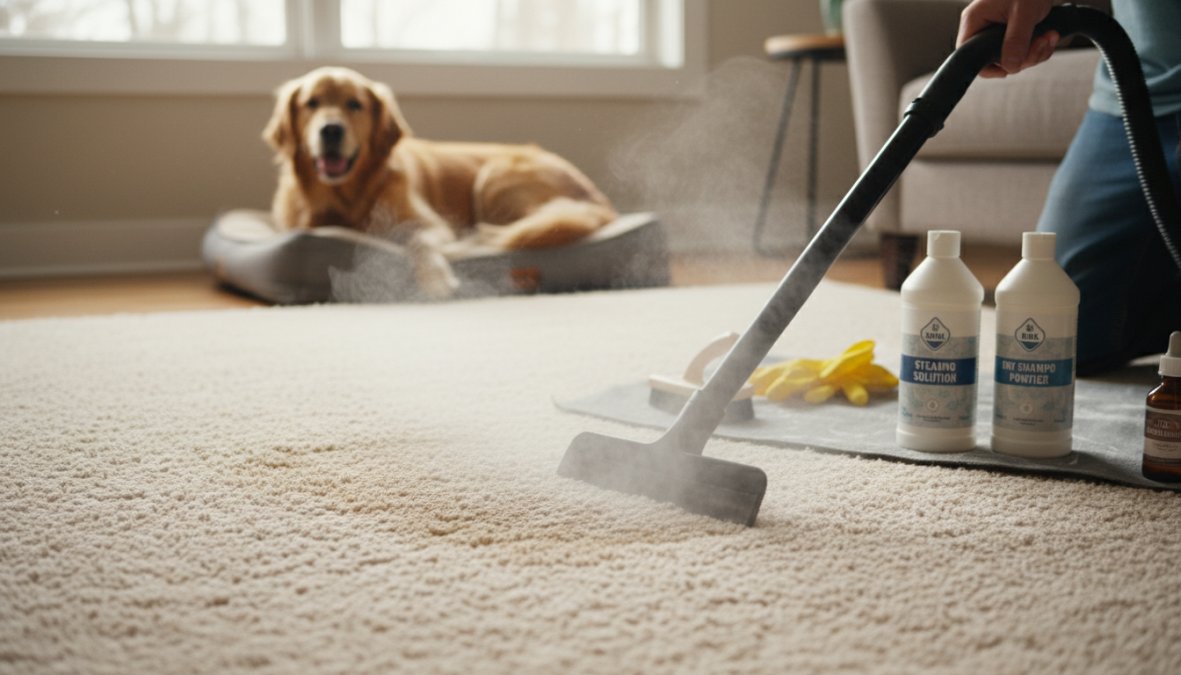
Pet urine doesn’t stay at the carpet surface. It wicks downward through the carpet fibers, through the backing, and into the carpet padding beneath. Dry cleaning methods, regardless of how effective their compounds are at the surface level, cannot reach the padding. This means the odor source remains even after the visible stain appears treated. The urine salts left in the padding reactivate with humidity, which explains why pet odors seem to return after a surface-only clean.
Hot water extraction addresses this by flushing the entire depth of the carpet structure. The heat breaks down the uric acid crystals responsible for persistent odor, and the high-pressure extraction physically removes the broken-down material from the carpet padding. This is the approach Lake Geneva Carpet Cleaning uses with truck-mounted hot water extraction technology, specifically because it reaches the contamination that surface methods miss.
For pet owners considering DIY options, the pros and cons of steam cleaning carpets for pet stains come down to equipment capability. The Rug Doctor Mighty Pro X3 uses vibrating brush technology and an industrial-grade vacuum motor that gets closer to professional results than most home units. The BISSELL Revolution HydroSteam Pet Carpet Cleaner is highly rated for pet urine removal and includes a Steam Pretreat mode for deep-set messes. Both are meaningful improvements over basic carpet washers, though neither matches the extraction power of a truck-mounted professional system.
A common mistake with pet stains is treating only the visible area. Pet urine spreads laterally as it wicks down, so the contaminated zone is typically larger than the visible stain. A professional technician will use UV light to map the full contamination area before treating.
Carpet Fiber Types, Warranty Implications, and Environmental Impact
Most steam cleaning vs dry cleaning comparisons stop at drying time and stain removal. This section covers the three factors that actually determine whether you’re making the right long-term decision for your specific carpet: what the fiber can tolerate, what your warranty requires, and what the environmental trade-offs actually look like when you examine them honestly.
Matching the Cleaning Method to Your Carpet Fiber
Carpet fiber type is the single most important variable in choosing a cleaning method, and it’s the variable most homeowners don’t check before booking a service or renting a machine. Here’s what each major fiber type actually needs.
Nylon
Nylon is the most common residential carpet fiber and the most forgiving. It handles hot water extraction well, tolerates the heat and moisture involved, and responds to the heat activation that improves cleaning chemistry performance. Nylon’s resilience means it bounces back from the compression of the cleaning process. Both methods work on nylon, but hot water extraction delivers superior results for set-in stains and deep allergen removal. If your carpet is nylon and you’re choosing between methods for a deep clean, hot water extraction is the right call.
Olefin (Polypropylene)
Olefin is naturally stain resistant and moisture tolerant, which makes it seem like an easy candidate for either method. The complication is that olefin is oleophilic, it has a chemical affinity for oily substances. Oily soils bond to olefin fibers in a way they don’t bond to nylon, and dry cleaning compounds generally struggle to break that bond. Hot water extraction with a cleaning solution formulated for oily soil removal is more effective on olefin carpets that have accumulated traffic-related grime. The moisture tolerance of olefin also means over-wetting risk is lower than with natural fibers.
Wool
Wool is the fiber that demands the most careful method selection, and getting it wrong is expensive. Wool can shrink when exposed to excessive moisture, particularly hot moisture. It can also develop a condition called browning or wicking, where tannins in the fiber migrate to the surface as moisture evaporates, leaving yellowish discoloration. High-alkaline cleaning solutions, common in standard hot water extraction chemistry, can damage wool’s protein structure and cause color change. Dry cleaning methods are generally the safer default for wool because they eliminate the moisture and alkalinity risks entirely. However, a professional technician experienced with wool can perform hot water extraction safely using pH-neutral, wool-safe cleaning solutions at controlled temperatures. The key word is experienced: wool cleaning is not a job for a rental machine or a technician who hasn’t worked with natural fibers before.
Polyester and Triexta
Both fibers handle moisture well and respond to hot water extraction without the shrinkage or browning risks associated with wool. The more relevant issue with polyester and triexta is that both tend to mat and crush in high-traffic areas over time. Cleaning method matters less than cleaning frequency for these fibers, regular extraction cleaning removes the abrasive soil load that accelerates matting. Either method works for routine maintenance; hot water extraction is preferable for deep cleaning cycles.
Sisal, Seagrass, and Jute
Natural plant-fiber rugs and carpets are the most moisture-sensitive category. These fibers can shrink, distort, and develop permanent water staining from excessive moisture. Dry cleaning is strongly preferred. If hot water extraction is used at all, it should be performed by a technician with specific natural fiber experience, using minimal moisture and extended drying time with active airflow.
Carpet Warranty Implications: The High-Stakes Detail Most Homeowners Miss
This is the content gap that almost no carpet cleaning comparison covers, and it’s one of the most consequential details for homeowners with newer carpets still under manufacturer warranty.
Many major carpet manufacturers include specific cleaning method requirements in their warranty terms. The general pattern across major residential carpet warranties is that professional hot water extraction, performed at defined intervals, typically every 12 to 18 months, is required to keep the warranty valid. Using dry cleaning as your primary method, or relying exclusively on DIY consumer machines rather than professional service, can constitute non-compliance with the warranty terms.
The practical stakes are real. Carpet warranties often cover manufacturing defects, fiber wear, and stain resistance performance for periods ranging from 5 years to the lifetime of the carpet. A warranty claim for premature wear or stain resistance failure that occurs after years of dry-only cleaning may be denied if the manufacturer can establish that the required cleaning protocol wasn’t followed. Most manufacturers ask for documentation of professional cleaning when a warranty claim is filed.
What to actually do before choosing a cleaning method:
- Locate your carpet’s original documentation, the warranty card, the installation paperwork, or the manufacturer’s website for your specific product line.
- Look for the maintenance requirements section. It will typically specify the cleaning method (usually hot water extraction), the frequency, and whether professional service is required or whether certified DIY equipment qualifies.
- Check whether the warranty requires cleaning by a certified professional. Some manufacturers specify that cleaning must be performed by a technician certified by the Institute of Inspection, Cleaning and Restoration Certification, which would exclude rental machine use from warranty compliance.
- Keep records. If you ever need to file a warranty claim, documentation of professional cleaning dates and service providers is typically required.
The Carpet and Rug Institute’s Seal of Approval program certifies both cleaning equipment and cleaning service providers. Some carpet warranties reference CRI certification as a qualifying standard for warranty-compliant cleaning. If your warranty documentation references CRI standards, verify that your chosen cleaning service or equipment meets that certification.
Do not assume your carpet warranty is flexible on cleaning method. Warranty language is written by manufacturers to define exactly what they will and won’t cover. If the warranty specifies hot water extraction at 12-month intervals by a certified professional, that is the standard you need to meet to preserve your coverage. Check the documentation before you book a dry cleaning service as your primary annual clean.
Environmental Impact: An Honest Comparison Beyond the Marketing Claims
The environmental comparison between steam cleaning and dry cleaning is more nuanced than either method’s marketing materials suggest. Here’s what the trade-offs actually look like.
Water consumption
Hot water extraction uses significantly more water than dry cleaning, that is simply true. A professional cleaning session for a typical home uses a meaningful volume of water, with the exact amount varying by room size, soil load, and the number of passes required. Dry cleaning methods use minimal water by design. For homeowners in water-restricted regions or with genuine water conservation priorities, this is a real difference worth factoring in.
The counterpoint is cleaning frequency. If dry cleaning requires more frequent applications to maintain the same carpet condition that a single annual hot water extraction achieves, the cumulative water and resource comparison shifts. A single professional hot water extraction performed once or twice per year may use less total water than multiple dry cleaning applications over the same period, depending on the carpet’s soil load and the household’s maintenance habits.
Chemical footprint
Both methods involve cleaning chemistry, and both have environmental considerations that marketing materials tend to understate.
Hot water extraction cleaning solutions range from highly eco-friendly pH-balanced formulations with low volatile organic compound profiles to older solvent-based products with higher environmental impact. The chemistry used matters as much as the method. Professional services that use EPA Safer Choice certified cleaning products have a substantially lower chemical footprint than those using conventional solvent-based solutions. When evaluating a professional cleaning service from an environmental standpoint, asking about their cleaning chemistry is a legitimate and useful question.
Dry cleaning compounds have their own chemical profile. Encapsulation polymers are synthetic compounds that crystallize around soil particles. Some dry cleaning products use plant-derived ingredients, Host Dry Carpet Cleaner, for example, uses organic micro-sponges derived from plant materials and carries a lower VOC profile than solvent-based alternatives. However, not all dry cleaning products are low-impact, and the powder or compound residue that remains in the carpet after vacuuming continues to off-gas into the indoor environment at low levels.
Indoor air quality during and after cleaning
This is the environmental dimension most relevant to occupant health. Hot water extraction, when performed with low-VOC chemistry, leaves minimal chemical residue in the carpet after extraction. The primary indoor air quality concern is moisture, if the carpet doesn’t dry adequately, mold spore counts in the indoor environment can increase. Dry cleaning methods eliminate the moisture risk but introduce the question of residual compound off-gassing. For households with chemical sensitivities, the choice of cleaning chemistry matters more than the choice of method.
The environmentally responsible choice isn’t automatically dry cleaning because it uses less water, nor is it automatically hot water extraction because it removes more contaminants. The most defensible environmental position is: professional hot water extraction using certified low-VOC, Safer Choice cleaning chemistry, performed at appropriate frequency rather than excessively, with active drying to prevent mold risk. This approach minimizes both chemical exposure and the cumulative resource cost of frequent surface-only cleaning cycles.
DIY Equipment vs. Professional Truck-Mounted Systems
The performance gap between consumer equipment and professional truck-mounted systems is larger than most homeowners realize, and understanding it changes how you think about the steam cleaning vs dry cleaning carpets decision.
Consumer hot water extraction machines, even high-end models like the Rug Doctor Mighty Pro X3 at roughly $598 or the BISSELL Revolution HydroSteam at roughly $400, operate on 120-volt household current. They generate limited water temperature and, critically, limited suction. The extraction power of these machines, measured in water lift, is a fraction of what a truck-mounted system produces.
A professional truck-mounted system runs off the truck’s engine, generating water temperatures and suction levels that portable units physically cannot match. This translates directly to:
- Deeper soil extraction: The higher suction pulls contaminants from deeper in the carpet pile and backing
- More moisture removed: Less water left in the carpet means shorter drying time and lower mildew risk
- Higher cleaning temperature: Heat is a critical factor in breaking down organic stains and killing bacteria
For dry cleaning, the equipment gap is smaller. Consumer dry cleaning products like Host and Capture perform similarly to commercial versions because the chemistry does most of the work. The main difference is the professional-grade brush machine used to work the compound into the carpet fibers, which provides more consistent agitation than hand application.
The practical guidance: DIY steam cleaning with a rental or consumer unit is a reasonable option for lightly soiled carpets and routine maintenance. For deep cleaning, set-in stains, pet odor removal, or carpets that haven’t been professionally cleaned in over a year, the truck-mounted professional system delivers results that consumer equipment cannot replicate.
Which Method Is Right for Your Carpet? A Decision Framework
Stop treating this as a one-size-fits-all question. The right answer depends on four specific factors: your carpet fiber type, the nature of the soiling, your drying time tolerance, and your cleaning objectives.
Use this framework to make the call:
Choose hot water extraction (steam cleaning) if:
- Your carpet is nylon, olefin, polyester, or triexta
- You’re dealing with pet stains, pet odors, or deep-set stains
- Allergen removal is a priority (allergy sufferers, asthma, young children)
- Your carpet hasn’t been deep cleaned in 12 months or more
- Your carpet warranty specifies hot water extraction
- You have 4-12 hours for the carpet to dry
Choose dry carpet cleaning if:
- Your carpet is wool, sisal, or another sensitive natural fiber
- You need the room usable within hours of cleaning
- You’re doing routine maintenance between professional deep cleans
- The soiling is surface-level and recent
- You’re refreshing a commercial space with zero downtime tolerance
The honest middle ground: For most Lake Geneva homeowners, the ideal carpet maintenance approach combines both methods. Professional hot water extraction once or twice per year for deep cleaning and allergen removal, with dry cleaning methods used for spot cleaning and maintenance in between. This approach protects carpet longevity, maintains appearance, and keeps cleaning frequency appropriate without over-wetting carpets.
A quick decision checklist before booking any carpet cleaning:
- Check your carpet fiber type (look at the original documentation or flip back a corner)
- Check your carpet warranty for any specified cleaning method
- Identify the nature of soiling (surface dirt, pet stains, deep-set stains, or general maintenance)
- Assess your drying time tolerance for the space
- Determine whether you need allergen removal or surface refreshing
- Decide between DIY equipment and professional service based on soil depth and stain severity
As the American Lung Association’s guidance on indoor air quality notes, regular carpet cleaning plays a meaningful role in reducing indoor allergen loads, which is particularly relevant for households with respiratory sensitivities.
Choosing between steam cleaning vs dry cleaning carpets gets complicated fast when you factor in fiber types, warranty requirements, pet contamination, and drying time constraints. Lake Geneva Carpet Cleaning specializes in exactly this complexity, using truck-mounted hot water extraction technology to deliver deep cleaning that removes embedded allergens, stubborn pet odors, and seasonal contaminants from Wisconsin homes. With over 32 years of owner-operated experience and a 10-day satisfaction guarantee, the team brings the expertise and equipment to get it right the first time. Contact Lake Geneva Carpet Cleaning for carpet cleaning near Lake Geneva, WI, and experience the difference that professional-grade equipment and genuine accountability make.
Frequently Asked Questions
Is steam cleaning or dry cleaning better for carpets?
For most carpets, steam cleaning, specifically hot water extraction, delivers a deeper clean by flushing out embedded dirt, allergens, and bacteria from deep within carpet fibers. Dry cleaning is better suited for delicate fibers like wool, situations requiring immediate use of the carpet, or light maintenance between deep cleans. The best method depends on your carpet type, soil level, and drying time tolerance.
How long does carpet take to dry after steam cleaning?
After professional steam cleaning using a truck-mounted hot water extraction system, carpets typically dry in 4 to 8 hours under normal ventilation conditions. Opening windows, running fans, or using air conditioning can reduce drying time. Portable DIY steam cleaners often leave more moisture behind, extending drying time to 12 to 24 hours. Dry cleaning methods require virtually no drying time, making carpets walkable almost immediately after treatment.
Does dry cleaning actually clean carpets deeply?
Dry cleaning methods like encapsulation or powder-based systems are effective for surface cleaning and routine carpet maintenance, but they generally cannot match the deep cleaning power of hot water extraction. They work by suspending or absorbing surface-level dirt and are excellent for quick-dry situations or delicate fibers. However, for set-in stains, allergen removal, or heavily soiled high-traffic areas, steam cleaning with hot water extraction is the more thorough option.
Which carpet cleaning method is recommended by manufacturers?
Many major carpet manufacturers, including those producing nylon and olefin carpets, recommend hot water extraction as the primary deep cleaning method and may require it to maintain your carpet warranty. Always check your specific carpet warranty documentation before choosing a cleaning method. Using an unapproved cleaning method, such as certain dry chemical processes, could void stain resistance or fiber guarantees. When in doubt, consult a professional technician familiar with your carpet brand.
What is the best carpet cleaning method for pet stains?
Hot water extraction is generally the best carpet cleaning method for pet stains and odors. The high-temperature water and powerful suction penetrate deep into carpet fibers and padding to flush out urine crystals and bacteria that dry cleaning methods typically cannot reach. For stubborn pet odors, professional technicians may apply enzyme-based cleaning solutions before extraction. Dry cleaning products can help with fresh surface spills but are rarely sufficient for set-in pet stains.
This article was written using GrandRanker