Table of Contents
- Why High Traffic Areas Cause Carpet Trails and Darkening
- How to Clean High Traffic Carpet: Step-by-Step Daily and Weekly Methods
- How to Remove Traffic Lanes from Carpet Using Dry and Wet Methods
- Best Carpet Cleaner for High Traffic Areas: Products and Equipment
- Carpet Fiber-Specific Advice for High Traffic Cleaning
- Carpet Cleaning Frequency for High Traffic Zones
- How to Protect Carpet from High Traffic and Extend Its Life
- When to Call a Professional Carpet Cleaning Service in Lake Geneva
- Conclusion
Last Updated: May 29, 2026
Knowing how to clean high traffic carpet is one of those things that sounds simple until you’re staring at a dark, matted trail running from your front door to your kitchen. Lake Geneva Carpet Cleaning has helped Wisconsin homeowners tackle exactly this problem for over 32 years, and the pattern we see most often is the same: people wait too long, use the wrong method, and end up with carpet that looks permanently damaged. Below, we’ll show you exactly how to reverse traffic lane darkening, which DIY solutions actually work, and when it’s time to call in professional equipment.
Here’s what most guides get wrong: they treat high traffic cleaning as a stain problem. It isn’t. It’s a soil accumulation problem, and the two require fundamentally different approaches.
Traffic lane darkening is the gradual discoloration of carpet fibers caused by embedded particles, body oils, and atmospheric soiling that bond to carpet fibers over time. Once you understand that distinction, the entire cleaning strategy changes.
Why High Traffic Areas Cause Carpet Trails and Darkening
Carpet darkening in high traffic areas is not random. The physics behind it are straightforward: foot traffic drives dirt and debris deeper into the pile with every step, and the mechanical action of walking also flattens carpet fibers, reducing their ability to reflect light evenly.
The result is what professionals call traffic lanes, those worn, grayish-brown paths that appear in hallways, along furniture edges, and in front of doorways. Soil accumulation in these zones is denser than anywhere else on the floor. Fine particles like skin cells, outdoor pollutants, and atmospheric dust cling to carpet fibers through static and oil bonding, which is why vacuuming alone rarely restores full brightness.
Carpet darkening also accelerates when a home lacks entry mats or a shoe-removal policy. Without those barriers, outdoor contaminants travel directly onto carpet, compounding the embedded particle load with every pass.
There’s another factor most guides skip entirely: carpet fiber type. Nylon and polyester fibers respond differently to soil accumulation. Nylon, which is more common in commercial settings, tends to show traffic lanes faster but also responds better to deep cleaning. Polyester holds stains more stubbornly but can often be refreshed with the right pre-treatment. Knowing your fiber type before you start cleaning prevents damage and wasted effort.
Never scrub a traffic lane with a stiff brush before loosening the soil first. Scrubbing dry, embedded particles grinds them deeper into the carpet pile, making restoration significantly harder and sometimes causing permanent fiber damage.
How to Clean High Traffic Carpet: Step-by-Step Daily and Weekly Methods
The most effective approach to cleaning high traffic carpet combines daily maintenance with a weekly deeper clean. Skipping the daily step is where most people lose ground, because soil that sits for 48 hours bonds to fibers at a rate that makes weekly-only cleaning a losing battle.
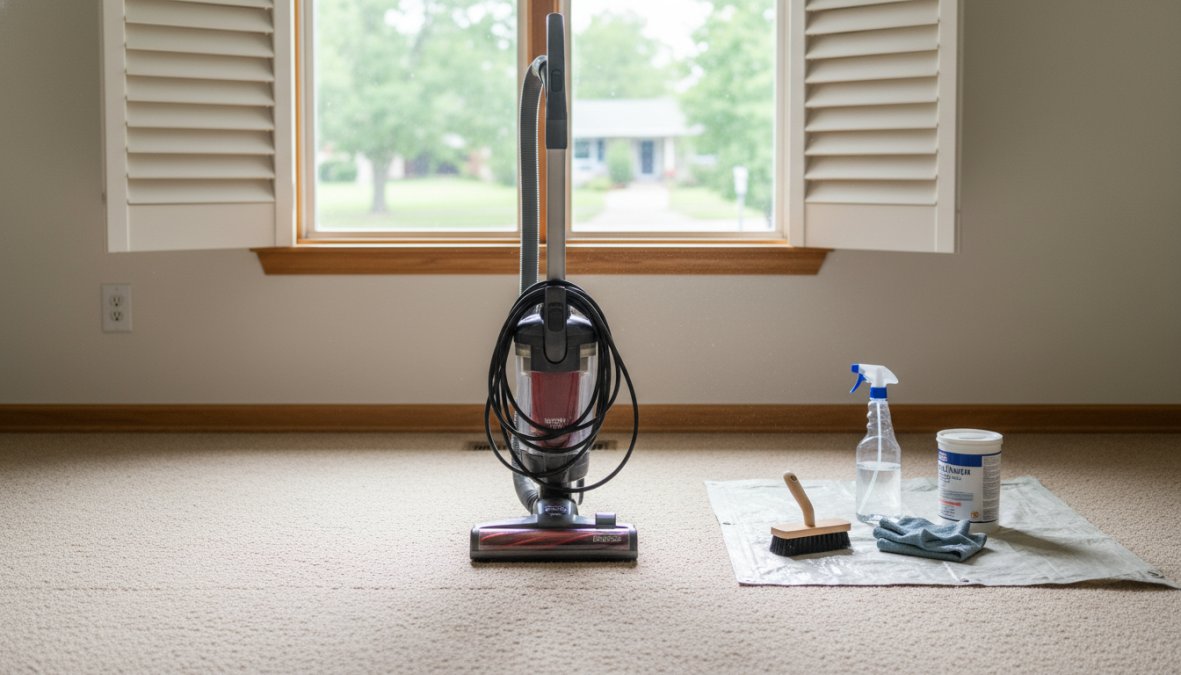
Daily Vacuuming Techniques That Actually Lift Embedded Particles
Daily vacuuming in high traffic zones is the single highest-return maintenance habit for carpet health. The key is using the right equipment and technique, not just running a vacuum over the surface.
For high traffic areas, a commercial grade vacuum with strong suction power and an active brush roll is essential. The brush roll agitates carpet fibers, loosening embedded particles so the suction can extract them. Vacuums without a brush roll, or with a worn brush roll, leave the majority of embedded soil behind.
Follow these steps for effective daily vacuuming:
- Slow down your pass rate. Moving the vacuum too quickly reduces suction contact time per square inch.
- Vacuum in two directions: once along the traffic pattern, then perpendicular to it. Cross-directional passes lift matted fibers and expose embedded particles from multiple angles.
- Use a pile lifter attachment for heavily matted zones before your main vacuum pass.
- Empty the canister or replace the bag before it reaches full capacity. A full collection chamber drops suction power noticeably.
- Check the brush roll weekly for hair and debris wrap, which degrades agitation performance.
According to the Carpet and Rug Institute’s care and maintenance guidelines, regular vacuuming is the most important factor in extending carpet life in high use environments. The frequency recommendation for high traffic zones is daily, not weekly.
DIY Cleaning Solutions: Vinegar, Baking Soda, and Dish Detergent
DIY cleaning solutions work well for mild to moderate traffic lane buildup, provided you apply them correctly and don’t over-wet the carpet. Three household ingredients form the foundation of most effective DIY approaches.
White vinegar solution: Mix one part white vinegar with two parts warm water. Apply by spraying lightly over the traffic lane, wait five minutes, then blot with a clean white cloth. Vinegar breaks down alkaline soil deposits and neutralizes odors without leaving a chemical residue. Do not saturate the carpet.
Baking soda pre-treatment: Sprinkle baking soda generously over the affected area and work it gently into the pile with a soft brush. Leave it for 15-30 minutes before vacuuming. Baking soda absorbs oils and deodorizes simultaneously, making it an ideal first step before wet cleaning.
Dish detergent spot treatment: Mix one teaspoon of clear dish detergent with one cup of warm water. Apply sparingly to a clean cloth and blot the traffic lane from the outside inward. Rinse by blotting with plain water. Never pour the solution directly onto the carpet.
For best results, use the baking soda dry treatment first, vacuum it out, then follow with the vinegar solution. This two-step sequence handles both oil-based and particulate soil, which is why it outperforms either method used alone.
How to Remove Traffic Lanes from Carpet Using Dry and Wet Methods
Removing established traffic lanes requires more than surface cleaning. The soil is embedded in the lower two-thirds of the carpet pile, and surface methods simply don’t reach it. This is where the choice between dry and wet cleaning methods becomes critical.
Dry Carpet Cleaning Methods for Set-In Soil Accumulation
Dry carpet cleaning is the right choice when you need fast drying times, when the carpet backing is sensitive to moisture, or when you’re dealing with moderate soil accumulation that hasn’t fully bonded to fibers.
The most common dry method uses an absorbent cleaning compound, a powder that you work into the carpet with a brush, allow to sit for the manufacturer’s recommended time, then vacuum out. The compound attracts and absorbs soil particles, which then get extracted with the vacuum. This method works well for routine traffic lane maintenance but has limitations with heavy set-in stains.
A pile lifter machine, available at most equipment rental centers, is a worthwhile addition to any dry cleaning routine. It uses counter-rotating brushes to lift matted fibers and loosen compacted soil before vacuuming, dramatically improving extraction results.
Dry cleaning advantages:
- No drying time required
- Safe for moisture-sensitive carpet backings
- Effective for regular maintenance cycles
- Lower risk of over-wetting
The limitation is clear: dry methods cannot fully address deeply embedded particles or set-in stains. For those situations, wet methods are necessary.
Removing Set-In Stains with Pre-Treatment and Spot Treatment
Set-in stains in high traffic zones are among the most frustrating carpet problems because they’ve had time to bond chemically with fibers. Pre-treatment is non-negotiable here. Attempting to clean a set-in stain without pre-treatment is like trying to remove dried paint with water.
For set-in organic stains (food, pet waste, beverages):
- Apply an enzyme-based pre-treatment cleaner directly to the stain. Enzyme cleaners break down organic compounds at the molecular level.
- Cover with a damp cloth and let sit for 10-15 minutes.
- Blot firmly from the outer edge toward the center. Never rub.
- Rinse with cold water and blot dry.
- If color remains, repeat the enzyme application before attempting any other cleaner.
For set-in soil stains (the dark, ground-in type common in traffic lanes):
- Vacuum thoroughly first to remove loose particles.
- Apply a commercial carpet shampoo or diluted dish detergent solution.
- Work gently with a soft brush in the direction of the carpet pile.
- Extract with a wet-dry vacuum or blot with clean towels.
- Allow to dry completely before foot traffic resumes.
According to guidance from the Institute of Inspection Cleaning and Restoration Certification, blotting rather than rubbing is the single most important technique for preventing stain spread and fiber damage during spot treatment.
Best Carpet Cleaner for High Traffic Areas: Products and Equipment
The best carpet cleaner for high traffic areas depends on your carpet fiber type, the severity of the soil, and how frequently you’re cleaning. There’s no single product that wins every situation, but a few categories consistently outperform the rest.
For consumer-grade products, enzyme-based carpet shampoos designed for pet and heavy traffic use tend to outperform standard formulas because they address both organic soil and odors. Look for products that specify traffic lane or heavy soil on the label, as these contain higher concentrations of surfactants.
For equipment, the hierarchy looks like this:
| Equipment Type | Best For | Drying Time | Soil Removal Depth |
|---|---|---|---|
| Upright vacuum with brush roll | Daily maintenance | None | Surface to mid-pile |
| Dry compound system | Moderate buildup | None | Mid-pile |
| Consumer hot water extractor | Moderate to heavy buildup | 4-8 hours | Full pile depth |
| Professional truck-mounted extractor | Heavy buildup, restoration | 1-2 hours | Full pile + backing |
Equipment Rental vs. Purchase: Which Makes More Sense?
This is the question most carpet cleaning guides skip entirely, and it’s the one that causes the most wasted money. The answer is not "it depends", it depends on specific, measurable factors that you can evaluate right now.
The core trade-off: Consumer hot water extractors available for purchase (typically in the range of entry-level to mid-range appliances) deliver adequate results for moderate traffic lanes but operate at lower water temperatures and lower vacuum lift than professional truck-mounted systems. Rental units from hardware and grocery stores are the same category of machine, portable, tank-fed, limited by water heater capacity and motor size. Neither matches the extraction power of a truck-mounted system, which draws power directly from a vehicle engine and can maintain consistent water temperature and pressure across an entire job.
The practical implication: rental and consumer-purchased machines leave more moisture and residue in the carpet backing than professional extraction does. Residue left behind acts as a soil magnet, which is why carpets cleaned with rental machines often look dirty again faster than carpets cleaned professionally, a phenomenon sometimes called rapid re-soiling.
Use the following decision framework before spending money on equipment:
| Your Situation | Best Choice | Reasoning |
|---|---|---|
| Cleaning high traffic areas 1-3 times per year, single home | Rent when needed | Purchase cost rarely justified; rental gives access to a maintained machine |
| Cleaning 4+ times per year, or managing pet accidents regularly | Purchase a consumer extractor | Frequency makes ownership cost-effective; convenience matters for quick response |
| Multiple carpeted rooms, whole-home deep cleaning 2+ times per year | Professional service | Truck-mounted extraction outperforms any portable unit on full-room jobs |
| Commercial property or multi-unit residential | Professional service on contract | Volume and liability make professional-grade equipment the only practical option |
| Spot cleaning between professional visits | Purchase a portable spot cleaner | Small-footprint machines designed for spot work outperform full extractors for targeted use |
What rental machines actually deliver: Hardware store rental units typically operate at water temperatures between 120°F and 140°F and generate vacuum lift in the range that consumer machines are designed for. Professional truck-mounted systems operate at significantly higher temperatures and vacuum lift levels. The temperature difference matters because hotter water breaks down oily soil more effectively and kills a broader range of bacteria and dust mites.
What to look for if you purchase a consumer extractor:
- Prioritize vacuum lift (suction) over tank size. A machine that extracts more water than it deposits dries faster and leaves less residue. Tank size determines how long you can clean between refills, it does not determine cleaning performance.
- Look for a heated cleaning solution option. Machines that heat their own water outperform those that rely on tap water temperature.
- Check brush roll or cleaning head design. Rotating brush heads agitate fibers during extraction, improving soil release compared to passive spray-and-suck designs.
- Confirm the hose and tool reach. For hallways and stairs, the most common high traffic zones, a short hose is a significant practical limitation.
The honest case for renting over buying: Rental machines are maintained by the rental company, so you’re not dealing with a machine that’s lost suction because the filter is clogged or the brush roll is worn. For homeowners who clean high traffic areas two to four times per year, the total annual rental cost is typically lower than the purchase price of a comparable consumer machine, and you avoid storage, maintenance, and depreciation entirely.
The honest case for buying over renting: Rental availability is not guaranteed, rental machines are used by many customers and may not be in optimal condition, and the inconvenience of scheduling a rental trip creates a friction that causes many homeowners to delay cleaning, which is exactly how moderate traffic lane buildup becomes severe embedded soil. Owning a machine removes that friction entirely.
If you’re on the fence between renting and buying, ask yourself one question: In the last 12 months, how many times did you want to clean your carpet but didn’t because it was inconvenient? If the answer is more than twice, ownership pays for itself in carpet life extended, not just in dollars saved on rentals.
When neither rental nor purchase is the right answer: For traffic lanes that have been accumulating soil for more than 12 months, or for carpet that has visible matting, persistent odor, or staining that has survived two rounds of DIY treatment, consumer-grade equipment, rented or purchased, is unlikely to produce a satisfying result. The embedded soil load and the fiber condition at that point require the water temperature, pressure, and extraction power that only truck-mounted professional systems deliver. Spending money on rental equipment first and then calling a professional anyway is the most common and most avoidable carpet cleaning mistake.
Carpet Fiber-Specific Advice for High Traffic Cleaning
Most cleaning guides treat all carpet the same. This is a significant mistake, and it’s where DIY attempts most often go wrong.
Nylon carpet is the most durable fiber for high traffic zones and responds well to hot water extraction. It can handle aggressive cleaning methods and bounces back from traffic lane matting better than other fibers. Nylon also accepts stain protection treatments effectively, making it the best candidate for post-cleaning protectant application.
Polyester carpet is more resistant to water-based stains but holds oily soil stubbornly. For polyester traffic lanes, a solvent-based pre-treatment works better than water-based solutions for the initial soil loosening step. Avoid high-heat extraction on polyester, as it can cause fiber distortion.
Wool carpet requires the most careful approach. Wool is sensitive to high pH cleaners, high water temperatures, and aggressive agitation. Use pH-neutral cleaning solutions only, keep water temperature below 150°F, and avoid stiff brushes. Wool also requires faster drying to prevent mold growth in the backing.
Olefin (polypropylene) carpet is common in commercial settings and basements. It resists moisture well but attracts oily soil at a high rate, which is why olefin traffic lanes can look dirty even after cleaning. Solvent-based cleaners outperform water-based options here.
Identifying your carpet fiber before cleaning determines which products and temperatures to use. Using the wrong approach, such as hot water extraction on wool or high-pH cleaners on olefin, can cause permanent damage that no amount of cleaning will reverse.
Carpet Cleaning Frequency for High Traffic Zones
Carpet cleaning frequency for high traffic zones should follow a tiered schedule based on use intensity, not a one-size-fits-all calendar. Many homeowners under-clean high traffic areas and over-clean low traffic zones, which wastes effort and money.
A practical frequency framework:
- Daily: Vacuum all high traffic paths (entryways, hallways, main living areas)
- Weekly: Apply dry cleaning compound or baking soda treatment to visible traffic lanes
- Monthly: Spot treat any emerging stains; use a consumer hot water extractor on the heaviest zones
- Every 6-12 months: Professional deep cleaning for the entire carpeted area
Homes with pets, children, or allergy sufferers should move the professional cleaning interval to every 6 months. Commercial spaces with daily foot traffic from multiple people typically require professional cleaning every 3-4 months to prevent permanent fiber damage.
The Environmental Protection Agency’s indoor air quality guidance notes that carpet acts as a reservoir for allergens, dust mites, and particulate matter, which reinforces the case for frequent professional extraction in homes with respiratory health concerns.
How to Protect Carpet from High Traffic and Extend Its Life
The most cost-effective carpet maintenance strategy focuses on prevention and restoration, not just cleaning. Most guides stop at "keep it clean", but high traffic carpet has two distinct problems: soil accumulation (which cleaning addresses) and physical fiber damage (which cleaning alone does not reverse). Understanding both is what separates carpet that lasts 15 years from carpet that needs replacement at 8.
The two-problem framework:
- Soil accumulation is addressed by the cleaning methods covered earlier in this guide.
- Fiber crushing and matting is a mechanical problem caused by repeated compression of carpet pile. Cleaning removes the dirt but does not restore the fiber structure. Matted carpet reflects light unevenly, looks worn even when clean, and loses its ability to trap and hold soil at the surface, which accelerates re-soiling.
The highest-impact preventative changes are also the simplest: entry mats at every exterior door (both inside and outside), a no-shoes policy in carpeted areas, and furniture placement that redirects traffic patterns away from the same worn paths.
Stain protection treatments applied after professional cleaning create a chemical barrier that slows soil accumulation and makes spot cleaning easier. These treatments wear off over time and should be reapplied after each professional cleaning.
Carpet runners placed over the highest traffic lanes protect the underlying carpet from direct wear. This is particularly effective in hallways, where traffic is concentrated into a narrow path.
How to Restore Crushed Carpet Pile in High Traffic Zones
This is the step most homeowners never take, and it’s the reason cleaned carpet still looks worn. Fiber restoration is not the same as cleaning. It is a separate process that addresses the physical compression damage caused by foot traffic.
Why pile crushing happens: Carpet fibers are twisted or looped during manufacturing to give them resilience. Repeated foot traffic compresses the fiber structure, breaking down that twist and causing fibers to lie flat. Once flat, they reflect light differently than upright fibers, creating the dull, matted appearance associated with traffic lanes, even on clean carpet.
How to lift crushed pile, in order of intensity:
Ice cube method (for furniture dents and localized crushing): Place an ice cube directly on the crushed area and allow it to melt slowly. As the water is absorbed, it causes the fiber to swell and partially restore its original shape. Once dry, use a coin or the edge of a spoon to gently lift the fibers upright. This works best on nylon and wool; results on polyester are more limited.
Steam and brush method (for traffic lane matting): Hold a clothes steamer or the steam setting of a household iron several inches above the matted area, never touch the iron to the carpet. The steam relaxes the fiber structure. Immediately after steaming, use a stiff-bristled carpet brush or a clean, dry scrub brush to work the fibers back upright in the direction of the original pile. Work in small sections. This method produces visible results on nylon and wool traffic lanes and is the most accessible restoration technique for homeowners.
Pile lifter machine (for widespread matting): A pile lifter uses counter-rotating brushes to mechanically lift compressed fibers across a large area. These are available at equipment rental centers and are typically used before hot water extraction to improve cleaning results, but they also function as a standalone restoration tool for matted carpet that is otherwise clean. Running a pile lifter over a vacuumed, dry traffic lane before any wet cleaning dramatically improves both the cleaning result and the post-cleaning appearance.
Professional grooming rake (post-cleaning): After professional hot water extraction, a carpet grooming rake is used to set the pile in a uniform direction while the carpet dries. This step is often skipped by lower-quality cleaning services but makes a significant visual difference in the final result. If you’re having carpet professionally cleaned, ask specifically whether post-cleaning grooming is included.
Do not use a stiff brush on dry, heavily matted carpet without steaming first. Brushing compressed dry fibers without relaxing them first can cause fiber breakage, particularly in cut-pile carpets. Steam first, then brush.
Realistic expectations by fiber type:
- Nylon: Best restoration response. Twisted nylon fibers have memory and respond well to steam and brushing. Severely matted nylon can often be substantially restored.
- Polyester: Moderate restoration response. Polyester fibers have less memory than nylon and are more prone to permanent crushing under heavy traffic. Early intervention produces better results than waiting.
- Wool: Good restoration response with careful technique. Wool fibers are resilient but sensitive to heat. Use low-temperature steam and a soft brush. Aggressive steaming can cause shrinkage.
- Olefin: Limited restoration response. Olefin fibers have low resilience and tend to crush permanently under sustained traffic. Prevention is more important than restoration for olefin carpet.
The long-term health metric most homeowners ignore: Carpet pile height. In high traffic zones, pile height gradually decreases over time due to fiber compression and wear. Measuring pile height in a traffic lane versus an undisturbed area (such as under a piece of furniture) gives you an objective measure of wear progression. A significant difference in pile height between traffic and non-traffic zones indicates that the carpet is approaching the end of its restorable life, and that professional intervention sooner rather than later will produce better results than waiting.
Eco-Friendly and Non-Toxic Preventative Maintenance Strategies
Eco-friendly carpet maintenance is not a compromise. Many non-toxic approaches outperform conventional chemical products for routine maintenance, and they’re safer for households with children, pets, and allergy sufferers. The key is understanding why each non-toxic tool works, so you can apply it correctly rather than just hoping it does something.
Baking soda: Works through physical absorption and mild alkalinity. It draws oils and moisture out of carpet fibers and neutralizes acidic odor compounds. It does not disinfect and does not break down set-in stains, but as a weekly maintenance treatment on high traffic zones, it reduces the oil load that makes soil stick to fibers. Safe for all fiber types including wool.
White vinegar solution (1 part vinegar to 2 parts water): Works by breaking down alkaline soil deposits, the type of buildup most common in high traffic areas where foot traffic deposits body oils and atmospheric dust. The acetic acid in vinegar also neutralizes many odor-causing compounds. Important limitation: do not use on wool or natural fiber carpets. The acidity can damage the fiber cuticle and cause color change over time. For nylon, polyester, and olefin, it is safe and effective.
Steam cleaning: Uses heat and water only, with no chemical additives. Effective for sanitizing, killing dust mites, and light soil removal. The limitation is that steam alone does not have the surfactant action needed to break down oily soil, it works best as a maintenance tool between deeper cleanings, not as a replacement for extraction. For households with chemical sensitivities, steam cleaning combined with regular vacuuming handles the majority of routine maintenance needs.
Plant-based enzyme cleaners: These are the most technically capable non-toxic option for organic soil and odors. Enzyme cleaners contain biological catalysts that break down proteins, fats, and carbohydrates at the molecular level, the same mechanism used in professional-grade pet stain treatments. Look for products that list specific enzyme types (protease for protein stains, lipase for fat/oil, amylase for starch). Biodegradable and safe for children and pets once dry.
Microfiber cloths: Replace chemical-soaked disposable wipes for blotting and spot cleaning. Microfiber’s split-fiber structure captures particles mechanically rather than chemically, making it effective for blotting fresh spills without introducing any cleaning agent.
Building a non-toxic maintenance routine that actually works:
| Frequency | Non-Toxic Action | What It Addresses |
|---|---|---|
| Daily | Vacuum with brush roll | Loose particles, surface soil |
| Weekly | Baking soda treatment + vacuum | Oil accumulation, odors |
| Monthly | Vinegar solution spot treatment | Alkaline soil deposits, mild staining |
| As needed | Plant-based enzyme cleaner | Organic stains, pet accidents |
| Seasonally | Steam cleaning | Dust mites, bacteria, light soil |
The practical reality is that for moderate traffic lane buildup, this non-toxic toolkit handles the majority of maintenance needs without any synthetic chemicals. Heavy soil accumulation and set-in stains may still require professional-grade solutions, but the frequency of those interventions drops significantly with consistent eco-friendly maintenance, which means less chemical exposure overall, not more.
Restoring carpet pile and preventing fiber crushing is a separate discipline from cleaning. Homeowners who address both, cleaning the soil and restoring the fiber structure, extend carpet life significantly beyond what cleaning alone achieves. Steam, a carpet brush, and a pile lifter are the three tools that make the difference between carpet that looks clean and carpet that looks new.
When to Call a Professional Carpet Cleaning Service in Lake Geneva
There are clear signals that DIY methods have reached their limit. Recognizing them early saves carpet that would otherwise require replacement.
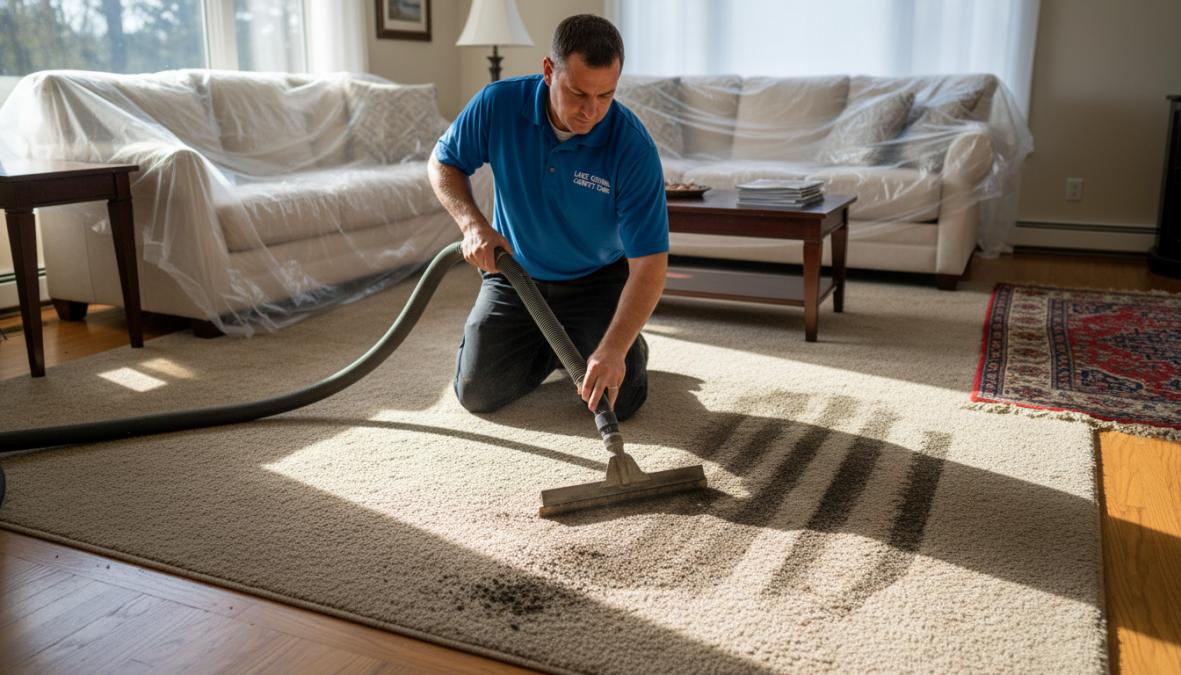
Call a professional when traffic lanes remain dark after two rounds of DIY cleaning, when carpet fibers feel stiff or crunchy after cleaning (a sign of residue buildup), when odors persist despite treatment, or when you notice any mold or mildew smell from the carpet backing.
Professional truck-mounted hot water extraction systems operate at water temperatures and pressure levels that consumer equipment cannot match. The extraction power also removes significantly more water and residue, which means faster drying and less re-soiling after the service.
For Lake Geneva homeowners and businesses, the question of "professional carpet cleaning near me" often comes down to trust and track record. A provider with decades of local experience understands the specific soil conditions, seasonal contaminants, and carpet types common to Wisconsin homes, which translates directly into better results.
Professional cleaning also addresses what DIY methods structurally cannot: the embedded particles and allergens that have migrated to the carpet backing. According to research on indoor allergen levels from the American Lung Association, professional hot water extraction is among the most effective methods for reducing allergen load in residential carpet.
The Lake Geneva Carpet Cleaning team uses truck-mounted hot water extraction technology specifically because it outperforms portable units on every meaningful metric: temperature, pressure, extraction rate, and drying time. For heavily soiled traffic lanes or carpets that haven’t been professionally cleaned in over a year, this equipment difference is the deciding factor in whether the carpet is restored or simply surface-cleaned.
High traffic carpet trails are a manageable problem, but they require the right sequence of methods, the right products for your fiber type, and honest judgment about when DIY has reached its limit. Lake Geneva Carpet Cleaning brings over 32 years of owner-operated experience to exactly this kind of work, using eco-friendly methods and truck-mounted hot water extraction to restore carpet that most people assume is past saving. With a 10-day satisfaction guarantee and a reputation built on meticulous attention to detail, the team is the clear choice for carpet cleaning in Lake Geneva, Wisconsin. Get started with Lake Geneva Carpet Cleaning and see what genuinely deep extraction does for your high traffic areas.
Frequently Asked Questions
What is the best way to clean high traffic carpet areas?
The best approach to clean high traffic carpet combines consistent vacuuming with a commercial-grade vacuum, periodic DIY spot treatment using white vinegar or baking soda, and deep cleaning every 6 to 12 months. For severe soil accumulation or set-in stains along traffic patterns, hot water extraction by a professional cleaning service delivers the deepest results and helps restore flattened carpet fibers more effectively than surface methods alone.
How often should you clean high traffic carpet?
Carpet cleaning frequency for high traffic areas should be higher than low-use zones. Vacuum high traffic areas at least three to five times per week. Apply a DIY cleaning solution or dry carpet cleaning treatment monthly. Schedule a professional deep clean every six months for heavily used residential spaces, or every three to four months in commercial settings. Homes with pets, children, or allergy sufferers may benefit from more frequent professional cleaning.
What is the best carpet cleaner for high traffic areas?
The best carpet cleaner for high traffic areas depends on your carpet fiber type and the severity of soiling. For routine maintenance, a commercial-grade vacuum with strong suction power and an active brush roll is essential. For deep cleaning, enzyme-based carpet shampoos or hot water extraction machines work well on embedded particles. Eco-friendly options using plant-based surfactants are effective and safer for households with children or pets. For serious traffic lane restoration, professional-grade equipment consistently outperforms consumer rentals.
How do I prevent high traffic carpet from getting dirty so quickly?
To protect carpet from high traffic, place entry mats at all exterior doors to trap dirt and debris before it reaches carpet fibers. Use area rugs over the highest-traffic lanes. Apply a carpet stain protection treatment after each professional cleaning. Enforce a no-shoes policy indoors where practical. Rotate furniture periodically to redistribute traffic patterns. These preventative maintenance strategies significantly slow soil accumulation and reduce how often deep cleaning is needed.
Can you remove dark traffic lanes from carpet yourself?
Yes, you can reduce the appearance of carpet trails using DIY methods. Start by vacuuming thoroughly with a pile lifter or high-suction vacuum. Apply a pre-treatment of white vinegar diluted with water, let it dwell for five minutes, then blot, never scrub. Follow with a baking soda application to absorb loosened soil. For deeply embedded particles causing persistent carpet darkening, a rental carpet shampooer or professional hot water extraction will achieve better results than DIY methods alone.
This article was written using GrandRanker