Table of Contents
- Why Eco Friendly Carpet Cleaning for Homes Actually Matters
- Ingredients to Avoid in Conventional Carpet Cleaners
- DIY Natural Carpet Cleaner Recipes You Can Make at Home
- Pet-Safe Carpet Cleaning Methods That Actually Work
- Eco Friendly Carpet Cleaning for Homes: Professional vs. DIY
- Professional Eco-Friendly Carpet Cleaning Cost: What to Expect
- Post-Cleaning Safety Protocols and Allergy-Specific Routines
- Conclusion
Last Updated: May 31, 2026
Eco friendly carpet cleaning for homes is one of the most searched topics among Wisconsin homeowners right now, and for good reason. At Lake Geneva Carpet Cleaning, we’ve spent over 32 years watching families unknowingly expose themselves to harsh chemical residues left behind by conventional carpet cleaners. The good news: safer, greener alternatives work just as well, and in many cases better, at removing allergens, bacteria, and embedded soil. Below, we’ll show you exactly which ingredients to avoid, how to make effective DIY solutions, and when it’s worth calling a professional.
Here’s what most guides get wrong: they focus entirely on the "eco" label without addressing what happens after the cleaning is done. Post-cleaning safety protocols matter just as much as the products you use. We cover that gap in detail.
Why Eco Friendly Carpet Cleaning for Homes Actually Matters
Carpets trap far more than visible dirt. Dust mites, bacteria, pet dander, pollen, and chemical residue from previous cleaning treatments all accumulate deep within carpet fibers over time. The problem isn’t just what’s in your carpet, it’s what gets released into your indoor air every time someone walks across it.
Conventional carpet cleaners frequently rely on synthetic fragrances, ammonia-based compounds, and other volatile organic compounds (VOCs) to cut through stains and odors. These chemicals don’t simply evaporate after cleaning. They off-gas into the air you breathe and leave residue on fibers that children and pets contact directly. According to EPA guidance on indoor air quality, indoor air can contain two to five times more pollutants than outdoor air, and cleaning products are a significant contributor.
Switching to non-toxic, biodegradable, and plant-based formulas reduces that chemical load substantially. It’s a straightforward trade-off with no real downside, except that some homeowners assume "natural" means "less effective." That assumption is outdated.
Hidden Dangers: Volatile Organic Compounds and Chemical Residue
Volatile organic compounds are carbon-based chemicals that evaporate at room temperature, releasing gases into indoor air. Many conventional carpet cleaning products contain VOCs including formaldehyde, benzene, and perchloroethylene. Repeated exposure, even at low levels, is associated with respiratory irritation, headaches, and skin sensitivity.
Phthalates are another concern. These synthetic compounds appear in many fragranced cleaning products and have been flagged by researchers as potential endocrine disruptors. Bleach-based formulas, while effective at sanitization, can react with other household chemicals to form chloramine gases, which are genuinely harmful in enclosed spaces.
The residue problem is equally important. Hot water extraction removes most of the cleaning solution from carpet fibers, but spray-and-leave products or low-moisture methods often leave concentrated chemical residue behind. That residue then becomes part of the household dust cycle.
Never use bleach-based carpet cleaners in rooms with poor ventilation. The reaction between bleach and ammonia, a compound found in some pet stain removers, produces toxic chloramine gas. The consequence in an enclosed room can range from eye irritation to serious respiratory distress.
How Carpets Affect Indoor Air Quality for Crawling Infants and Allergy Sufferers
Crawling infants spend more time in direct contact with carpet fibers than any other household member. Their respiratory systems are still developing, making them significantly more vulnerable to chemical residue, dust mites, and allergens trapped at floor level. A carpet that looks clean to an adult standing upright is a very different environment for a child at ground level.
For allergy sufferers, carpet acts as both a reservoir and a release mechanism. Allergens settle into carpet fibers and re-enter the air with every footstep. HEPA vacuum filtration helps, but without regular deep cleaning, the reservoir keeps refilling. The combination of a HEPA vacuum and periodic hot water extraction is the most effective approach for managing allergen load in homes with sensitive occupants.
Ingredients to Avoid in Conventional Carpet Cleaners
The label "carpet cleaner" covers a wide spectrum of formulations, and many of the most aggressive ones are sold in standard grocery stores with no prominent safety warnings. Knowing what to look for on the ingredient list is the first line of defense.
Avoid these compounds:
- Ammonia: A strong alkaline compound that releases sharp fumes and can damage wool carpet fibers. It’s also a respiratory irritant at elevated concentrations.
- Bleach (sodium hypochlorite): Effective at sanitization but highly corrosive to carpet fibers and dangerous when mixed with other cleaning agents.
- Phthalates: Found in synthetic fragrances. Look for "fragrance" on the label as a catch-all term that may hide phthalate compounds.
- Perchloroethylene (PERC): A solvent used in some dry-cleaning formulas. Classified as a probable human carcinogen by multiple regulatory bodies.
- Optical brighteners: Synthetic chemicals that make carpets appear whiter under UV light but don’t biodegrade cleanly and can cause skin sensitivity.
- Quaternary ammonium compounds (Quats): Used as disinfectants in some products, but associated with skin irritation and linked to respiratory issues with repeated exposure.
pH-neutral cleaners based on plant-derived surfactants avoid most of these concerns. Look for products certified by organizations like the EPA’s Safer Choice program, which screens formulations against a restricted substance list.
According to EPA Safer Choice program standards, certified products must meet strict criteria for human health and environmental safety, including biodegradability and aquatic toxicity limits.
DIY Natural Carpet Cleaner Recipes You Can Make at Home
Most effective DIY carpet cleaning solutions use three or four ingredients you likely already own. The science behind them is straightforward: baking soda deodorizes and acts as a mild abrasive for soil suspension, white vinegar provides mild acidity that breaks down alkaline stains, and dish soap (plant-based) lifts grease and oils from carpet fibers.
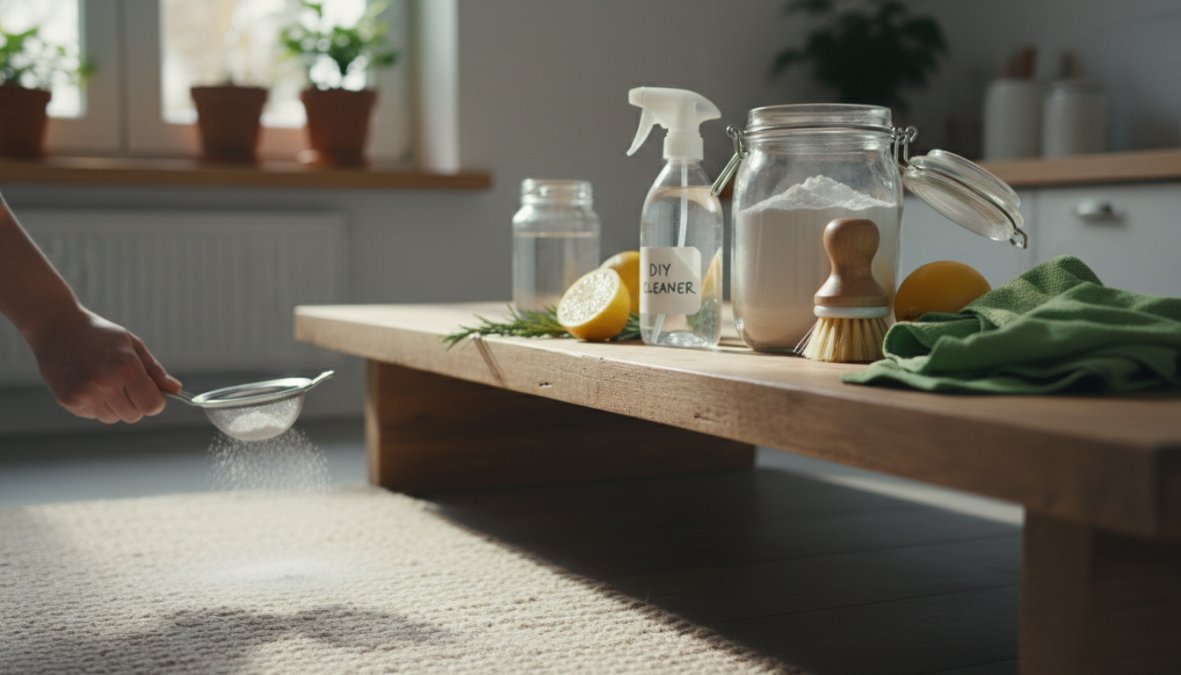
These aren’t just folk remedies. The chemistry is sound, and for most household stains, they compete directly with commercial products. The limitation is deep-set stains and heavy soil loads, where professional hot water extraction will outperform any DIY approach.
Step-by-Step: Basic Baking Soda and Vinegar Stain Removal
Total Time: 20-30 minutes (plus drying time)
Best for: Fresh stains, general odors, light soil
What You’ll Need:
- Baking soda
- White distilled vinegar
- Clean spray bottle
- Dry white cloths or paper towels
- Warm water
Steps:
- Blot the stain immediately with a dry cloth. Work from the outside edge toward the center to avoid spreading.
- Apply a generous layer of baking soda directly over the stain. Allow it to sit for 10-15 minutes to absorb moisture and odor.
- Vacuum up the baking soda thoroughly.
- Mix one part white vinegar with two parts warm water in a spray bottle. Add a few drops of plant-based dish soap for greasy stains.
- Spray the solution onto the stained area. You’ll see light fizzing as the vinegar reacts with any remaining baking soda residue. This is normal.
- Blot firmly with a clean white cloth. Avoid rubbing, which pushes the stain deeper into carpet fibers.
- Rinse by blotting with a cloth dampened with plain water.
- Place a dry towel over the area and press firmly to absorb remaining moisture. Allow to dry completely before walking on the area.
For pet urine stains, add an enzymatic component. Mix one teaspoon of plant-based dish soap with one cup of 3% hydrogen peroxide. Apply after the baking soda step. The enzymes in the peroxide solution break down the uric acid crystals responsible for persistent odors.
DIY Carpet Cleaning Comparison Table
| Method | Best For | Effectiveness | Drying Time | Cost |
|---|---|---|---|---|
| Baking soda + vinegar | Fresh stains, odors | Moderate | 1-2 hours | Very low |
| Hydrogen peroxide + dish soap | Pet stains, organic matter | Moderate-high | 1-2 hours | Low |
| Club soda | Wine, coffee, fresh spills | Moderate | 1 hour | Low |
| Salt + cold water | Fresh blood, wine | Moderate | 1-2 hours | Very low |
| Commercial plant-based spray | General stains | High | 30-60 min | Medium |
| Rental machine (hot water) | Full room deep clean | High | 4-8 hours | Medium |
| Professional hot water extraction | All soil types, allergens | Very high | 2-4 hours | Higher |
Pet-Safe Carpet Cleaning Methods That Actually Work
Pet-safe carpet cleaning and allergy-safe carpet cleaning are not the same problem, and most guides treat them as if they are. A home with a dog and a child who has asthma requires a different protocol than a home with a cat and no respiratory conditions. This section covers both, with specific attention to the intersection of pet ownership and childhood respiratory conditions, an area almost no competitor addresses in practical terms.
Why Pet Dander Is a Different Problem Than Pet Stains
Pet stains are visible and localized. Pet dander is invisible, airborne, and systemic throughout the entire carpeted surface. The two require different tools and different cleaning logic.
Dander is composed of microscopic flecks of shed skin protein. In cats, the primary allergen is a protein called Fel d 1, produced in saliva and sebaceous glands and deposited on fur during grooming. In dogs, the primary allergens are Can f 1 and Can f 2, found in saliva, urine, and dander. Both proteins are lightweight enough to remain airborne for extended periods and small enough to penetrate deep into carpet pile and backing where standard vacuuming cannot reach them.
For a child with asthma or eczema, these proteins are not just irritants, they are documented triggers. Eczema flares in children have been linked to elevated indoor allergen loads, and asthma attacks can be precipitated by dander concentrations that cause no symptoms in non-sensitized household members. Cleaning the carpet for a child with these conditions means reducing the total allergen protein load, not just removing visible hair and odor.
Enzymatic Cleaners: What They Actually Do and What They Don’t
Enzymatic cleaners are the correct tool for pet stains, but their mechanism is specific and their limitations matter. These products contain biological enzymes, most commonly proteases, lipases, and amylases, that break down the organic molecules in urine, feces, and vomit at a molecular level. Protease enzymes digest the uric acid crystals in dried urine that are responsible for persistent odor. Lipase enzymes break down fat-based compounds. The result is genuine neutralization rather than fragrance masking.
What enzymatic cleaners do not do is reduce airborne dander allergen load or address dust mite populations embedded in carpet backing. They are stain and odor tools, not allergen-reduction tools. Conflating the two is a common mistake that leaves families believing their carpet is safer than it is.
For allergen reduction, the correct tool is hot water extraction at sufficient temperature combined with a HEPA vacuum. Heat above approximately 130°F denatures the protein structure of allergens, rendering them inert. Most professional truck-mounted systems operate well above this threshold. Rental machines typically do not reach or sustain these temperatures consistently, which is a meaningful limitation for households managing active respiratory conditions.
Avoid enzymatic cleaners that list essential oils, particularly tea tree, eucalyptus, pennyroyal, or clove, as active or fragrance ingredients. While marketed as natural, these compounds are toxic to cats at relatively low concentrations and can cause neurological symptoms in dogs with repeated exposure. Check the full ingredient list, not just the front-label claims.
Allergy-Specific Cleaning Protocol for Homes With Pets and Asthmatic Children
The following protocol is designed specifically for households managing both pet ownership and a child with asthma, eczema, or diagnosed dust mite allergy. It goes beyond standard pet-cleaning advice to address the full allergen cycle.
Daily (during high-symptom periods):
- Remove pets from carpeted rooms for at least two hours before the child uses the space. Dander that has been disturbed by pet movement needs time to resettle before vacuuming is effective.
- Wipe pets down with a damp microfiber cloth before they re-enter carpeted areas. This reduces the volume of dander deposited per contact.
Weekly:
- Vacuum all carpeted surfaces with a HEPA-filtered vacuum using slow, overlapping passes. A single forward-and-back pass at normal walking speed captures a fraction of what two slow overlapping passes capture. This is not a minor difference, it is the single most impactful variable in routine allergen management that homeowners control.
- Focus additional passes on areas where pets sleep or rest habitually. Dander concentration in these zones is measurably higher than in general traffic areas.
- Do not vacuum immediately before the child uses the room. Even HEPA vacuuming disturbs some fine particles. Allow 20-30 minutes after vacuuming before a child with active respiratory symptoms enters the space.
Monthly:
- Apply a plant-based allergen-neutralizing spray to high-contact carpet areas. Products containing tannic acid are the most studied option for denaturing dust mite and pet dander proteins without introducing synthetic chemical residue. Apply according to product directions and allow to dry fully before re-entry.
- Wash any area rugs in hot water (above 130°F) if the care label permits. Area rugs in pet zones accumulate allergen loads faster than wall-to-wall carpet because they receive concentrated contact.
Every 6 months (not annually):
- Schedule professional hot water extraction. For households managing asthma or eczema in a child, the standard annual recommendation is insufficient. Most practitioners working with allergists recommend a 6-month interval for carpeted homes with pets and a sensitized child. The difference in allergen load between a 6-month and 12-month cleaning cycle is significant enough to affect symptom frequency.
- Request a pre-treatment enzyme application for pet dander zones before the main extraction pass. This loosens embedded biological material and improves extraction efficiency.
- Ask the service provider specifically whether their cleaning solution is free of synthetic fragrance. Fragrance compounds are a documented asthma trigger independent of the allergens being removed. A cleaning that reduces dander but introduces fragrance VOCs is a net-neutral outcome for an asthmatic child.
The Dust Mite Factor: What Pet Owners Often Overlook
Homes with pets tend to have elevated dust mite populations as well, because pet dander is a food source for dust mites. This creates a compounding allergen problem: the pet produces dander, the dander feeds mite colonies, and the mites produce their own allergenic proteins in the form of fecal particles and shed body parts. All of these accumulate in carpet fibers simultaneously.
Dust mite allergens are heavier than dander proteins and settle faster, which means they concentrate in carpet at floor level, exactly where crawling infants and young children spend their time. The combination of pet dander and dust mite allergen at floor level is the primary reason that households with both pets and young children should treat carpet cleaning as a health maintenance task rather than a cosmetic one.
Hot water extraction at professional temperatures addresses both allergen types in a single service. No surface-level DIY method achieves comparable results for embedded dust mite populations, because the mites and their allergenic byproducts are located in the carpet backing and lower pile layers that topical treatments cannot reach.
According to Asthma and Allergy Foundation of America guidance on indoor allergens, dust mites are among the most common indoor asthma triggers, and carpets are their primary habitat in most homes. Reducing carpet allergen load through consistent HEPA vacuuming and periodic hot water extraction is one of the most evidence-supported environmental interventions available to families managing childhood asthma.
Eco Friendly Carpet Cleaning for Homes: Professional vs. DIY
The honest answer is that DIY and professional cleaning serve different purposes, and the choice shouldn’t be either/or.
DIY methods excel at immediate stain response. Speed matters more than method for fresh spills. The faster you blot and treat, the less likely a stain is to set permanently. No professional service can respond in five minutes, but you can.
Professional cleaning excels at removing what DIY methods physically cannot reach: deeply embedded soil, bacteria, dust mites, and allergens that have migrated below the surface pile into the carpet backing. This is where the environmental argument for professional eco-friendly cleaning becomes particularly strong.
Hot Water Extraction vs. Encapsulation Method: Which Is Greener?
Hot water extraction is the greener option for most residential applications. Hot water extraction, also called steam cleaning, uses heated water injected deep into carpet fibers at high pressure, then immediately extracted along with dissolved soil, bacteria, and allergens. When performed with a plant-based, biodegradable cleaning solution, it leaves minimal chemical residue and achieves genuine deep cleaning of carpet fibers.
The encapsulation method uses a polymer-based solution that surrounds soil particles and crystallizes around them as it dries. The crystallized residue is then vacuumed away. Encapsulation uses significantly less water, which reduces drying time and is an advantage in commercial settings. For residential deep cleaning, though, it doesn’t remove allergens and bacteria as thoroughly as hot water extraction.
For households with allergy sufferers or crawling infants in the Lake Geneva area, hot water extraction with a certified non-toxic solution is the clear recommendation.
Rental Machine Safety: What Most Homeowners Get Wrong
Rental carpet cleaning machines are a legitimate middle ground, but they come with risks most homeowners don’t anticipate. The biggest mistake is over-wetting. Rental machines have less extraction power than truck-mounted professional units, which means they leave significantly more moisture in the carpet. That excess moisture, if not dried within 24 hours, creates ideal conditions for mold and mildew growth inside the carpet backing.
A second common problem is using the wrong cleaning solution in the machine. Many rental locations supply concentrated conventional cleaners that contain the same VOCs and synthetic fragrances found in grocery-store products. Always ask whether a plant-based, pH-neutral formula is available, or bring your own certified non-toxic solution.
Rental machine safety checklist:
- Open windows and run fans during and after cleaning
- Make no more than two wet passes over any area
- Do not walk on wet carpet with shoes
- Use a dehumidifier in the room during drying
- Allow 24-48 hours before replacing furniture
According to CDC guidance on mold prevention in homes, mold can begin growing on damp surfaces within 24-48 hours, making rapid drying after any wet cleaning process critical.
Professional Eco-Friendly Carpet Cleaning Cost: What to Expect
Professional eco-friendly carpet cleaning cost varies based on square footage, soil level, and whether the service includes specialty treatments for pet odors or allergen removal. For a typical Lake Geneva, Wisconsin home, most professional cleaning services charge per room or per square foot, with whole-home packages generally offering better value.
Several factors push costs higher: heavy pet odor treatment requires pre-treatment enzyme application and additional dwell time; high-traffic areas with embedded soil need more passes; and truck-mounted hot water extraction, while more effective than portable units, requires a higher service investment.
What you’re paying for with a reputable eco-friendly service isn’t just the cleaning itself. It’s the post-cleaning air quality improvement, the allergen reduction, and the absence of chemical residue that a conventional service leaves behind. For families with children, pets, or allergy sufferers, that difference has measurable health value.
A few questions worth asking any professional service before booking:
- What cleaning solution do you use, and is it certified non-toxic or biodegradable?
- Do you use truck-mounted or portable extraction equipment?
- What is your drying time estimate?
- Do you offer a satisfaction guarantee?
Post-Cleaning Safety Protocols and Allergy-Specific Routines
Post-cleaning safety protocols are the step most homeowners skip entirely, and skipping them undermines the work that was just done. The period immediately after cleaning is when carpets are most vulnerable to recontamination, and when residual moisture creates the conditions for microbial growth.
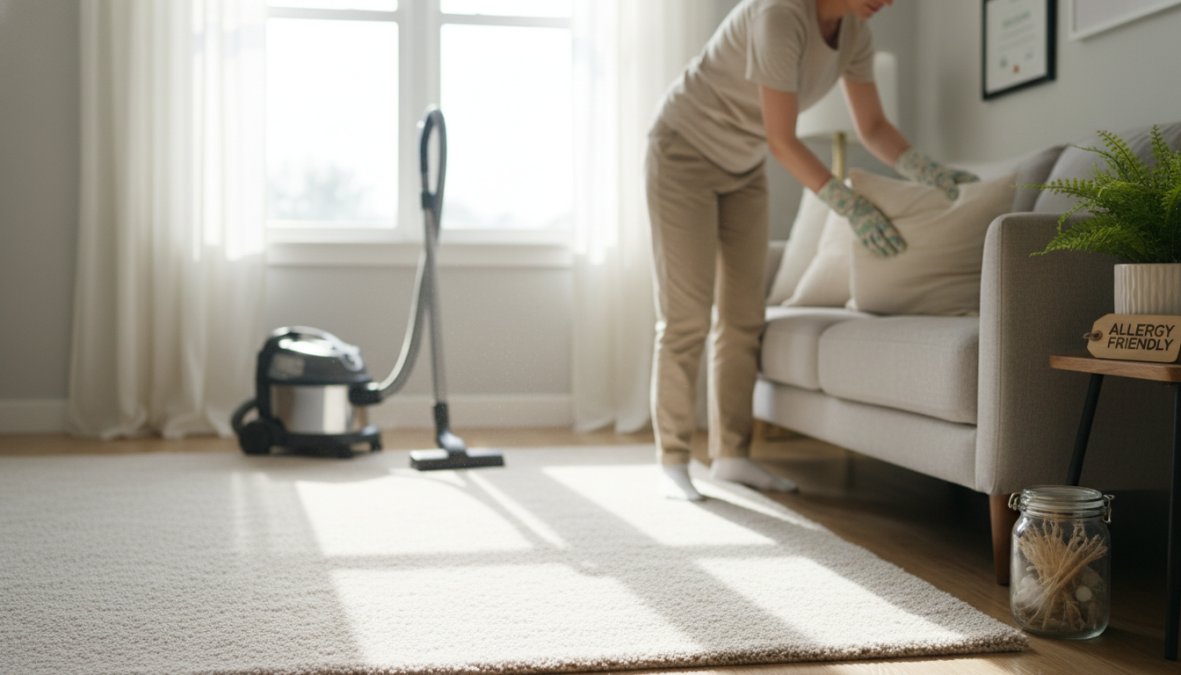
The standard advice to "stay off the carpet until dry" is correct but incomplete. Drying time depends heavily on ventilation, humidity, and the amount of moisture introduced during cleaning. In Wisconsin’s humid summer months, carpets cleaned with rental machines can take considerably longer to dry than the same carpet cleaned with a truck-mounted unit in drier conditions.
Post-Cleaning Checklist Before Letting Kids and Pets Back on Carpets
- Confirm carpet is dry to the touch throughout, not just on the surface
- Run a dehumidifier in the room for at least 4 hours after cleaning
- Keep windows open or run HVAC fan (not heating/cooling) to circulate air
- Vacuum lightly once dry to restore carpet pile and remove any crystallized residue
- Wait a minimum of 2-4 hours after professional hot water extraction before allowing children and pets back on carpet
- If rental machine was used, extend the wait to 6-8 hours and confirm no damp smell remains
- Check carpet backing in one corner by lifting an edge, if it feels damp, continue drying
The single most important post-cleaning step is confirming the carpet backing, not just the surface pile, is fully dry before allowing prolonged contact. Mold growth begins in the backing before it becomes visible from above.
Allergy-Specific Carpet Maintenance Routine
An allergy-specific carpet maintenance routine addresses the full allergen cycle, not just visible soil. Dust mites, pet dander, and pollen all accumulate in carpet fibers continuously, regardless of how clean the carpet looks. The goal is to keep the allergen load below the threshold that triggers symptoms.
Weekly:
- Vacuum all carpeted areas with a HEPA-filtered vacuum. HEPA filtration is non-negotiable for allergy management; standard vacuum filters recirculate fine particles back into the air.
- Use slow, overlapping passes rather than quick strokes. Slow passes allow the vacuum to capture more embedded material.
Monthly:
- Treat high-traffic areas with a plant-based, allergen-neutralizing spray. Products containing tannic acid or specific enzyme formulas denature dust mite proteins without introducing synthetic chemicals.
- Rotate area rugs if applicable to prevent uneven soil accumulation.
Every 6-12 months:
- Schedule professional hot water extraction. For households with severe allergies or asthma, every 6 months is a more appropriate interval than the standard annual recommendation.
- Request a pre-treatment enzyme application for pet dander if animals are present in the home.
For Lake Geneva homeowners dealing with seasonal allergens, the timing of professional cleaning matters. Scheduling a deep clean at the end of spring and the end of fall removes the pollen and mold spores that accumulate during peak seasons. This approach, combined with consistent HEPA vacuuming, produces measurably cleaner indoor air than reactive cleaning alone.
According to Asthma and Allergy Foundation of America guidance on indoor allergens, dust mite allergen levels in carpets can be reduced significantly through regular hot water extraction combined with HEPA vacuuming, making this combination the most evidence-supported approach for allergy management in carpeted homes.
Keeping carpets genuinely clean in a home with children, pets, or allergy sufferers requires more than occasional spot treatment. It requires a consistent routine, the right products, and periodic professional deep cleaning that reaches what surface methods cannot. Lake Geneva Carpet Cleaning has served Wisconsin homeowners for over 32 years using truck-mounted hot water extraction and eco-friendly, non-toxic solutions that remove embedded allergens, bacteria, and pet odors without leaving harmful chemical residue behind. With a 10-day satisfaction guarantee and an owner-operated commitment to detail that larger franchises don’t match, they’re the straightforward choice for homeowners who want cleaner carpets and healthier indoor air. Contact Lake Geneva Carpet Cleaning to schedule a deep clean and experience the difference that genuinely eco-friendly professional service delivers.
Frequently Asked Questions
Is eco friendly carpet cleaning as effective as traditional methods?
Yes, eco friendly carpet cleaning can be just as effective as conventional methods when the right techniques are used. Hot water extraction with plant-based, biodegradable formulas removes embedded allergens, bacteria, and dust mites without leaving harsh chemical residue. The encapsulation method is another non-toxic option that performs well for routine maintenance. The key is matching the cleaning method to the soil level and carpet fiber type for best results.
What ingredients are used in non-toxic carpet cleaners?
Non-toxic, eco friendly carpet cleaners typically use plant-based surfactants, enzymes, and pH-neutral formulas to lift dirt and stains from carpet fibers. Common safe ingredients include baking soda, white vinegar, hydrogen peroxide, and essential oils. Reputable products avoid ammonia, bleach, phthalates, and synthetic fragrances, all of which can cause respiratory irritation and skin sensitivity, especially in children and pets.
Are pet-safe carpet cleaning methods effective at removing odors?
Pet-safe carpet cleaning methods can be highly effective at eliminating odors when enzyme-based, non-toxic cleaners are used. Enzymes break down the organic compounds in pet urine and waste at the source rather than just masking the smell. For deep odor removal, professional hot water extraction with a child-safe, biodegradable formula reaches deeper into carpet fibers than DIY surface treatments, making it the most thorough pet-safe option available.
How much does professional eco-friendly carpet cleaning cost?
Professional eco-friendly carpet cleaning typically costs between $100 and $300 for an average home, depending on square footage, soil level, and the cleaning method used. Hot water extraction services using non-toxic, plant-based solutions may carry a slight premium over standard cleaning but deliver deeper sanitization and better indoor air quality. Many owner-operated services, like those in the Lake Geneva, Wisconsin area, offer competitive rates with satisfaction guarantees.
Can I clean my carpets naturally at home?
Yes, you can clean carpets naturally at home using simple ingredients like baking soda, white vinegar, and warm water. These DIY natural carpet cleaner recipes work well for light stains and routine carpet maintenance. However, for deep cleaning, allergen removal, or stubborn pet odors, a HEPA vacuum followed by professional hot water extraction with eco-friendly solutions will deliver results that DIY methods cannot fully replicate on their own.
This article was written using GrandRanker