Table of Contents
- What Is Eco-Friendly Carpet Cleaning?
- The Real Effectiveness of Green Cleaning Solutions
- Carpet Cleaning Safety for Pets and Children
- How Long Does Carpet Take to Dry After Cleaning?
- Traditional vs. Eco-Friendly Methods: The Real Differences
- Impact on Indoor Air Quality and Allergen Removal
- Long-Term Carpet Health and Longevity
- Chemical Transparency and Green Certifications
- Is Eco-Friendly Carpet Cleaning Worth Your Investment?
- Conclusion
Last Updated: August 10, 2026
What Is Eco-Friendly Carpet Cleaning?
Eco-friendly carpet cleaning is a method that removes dirt, allergens, and odors from carpets using plant-based solutions and sustainable practices instead of harsh synthetic chemicals. This approach prioritizes both environmental responsibility and the health of your home’s occupants.
Traditional carpet cleaning often relies on volatile organic compounds (VOCs) and synthetic detergents that can linger in your carpet fibers long after the cleaning is complete. Eco-friendly methods replace these with biodegradable solutions, plant-based surfactants, and hot-water extraction technology that achieves deep cleaning without leaving toxic residues behind.
The core difference lies in what happens after the cleaning. While conventional methods may leave chemical residue that off-gasses into your indoor air, eco-friendly approaches use pH-balanced formulas that break down naturally. According to EPA guidance on indoor air quality, reducing chemical exposure in your home directly impacts respiratory health and overall air quality.
At Lake Geneva Carpet Cleaning, we employ state-of-the-art truck-mounted hot water extraction technology combined with eco-friendly solutions to address embedded allergens, pet odors, and seasonal contaminants, delivering results that go beyond surface-level cleaning. This method suspends soil particles so they can be fully extracted rather than just rearranged on your carpet fibers.
The process typically involves three stages: pre-treatment with biodegradable solutions, hot-water extraction that uses temperature and pressure to lift embedded dirt, and professional extraction that removes moisture and contaminants. The result is a carpet that’s not just cleaner but healthier.
Many homeowners don’t realize that standard vacuuming removes only surface dirt. Deep cleaning targets the padding and fiber bases where allergens, dust mites, and bacteria accumulate over months or years.
The Real Effectiveness of Green Cleaning Solutions
Green cleaning solutions work differently than chemical-heavy alternatives, and understanding that difference matters when evaluating whether eco-friendly carpet cleaning is worth your investment.
Plant-based surfactants break down soil molecules through enzymatic action rather than harsh chemical solvents. These enzymes target specific contaminants, pet urine, food residues, dust, and suspend them so they can be extracted completely. The advantage is that they don’t leave behind a sticky residue that attracts new soil the way some synthetic detergents do.
The effectiveness question isn’t whether green solutions clean. It’s whether they clean as thoroughly and durably as conventional methods. Many homeowners report that carpets cleaned with eco-friendly solutions stay cleaner longer because there’s no chemical residue attracting fresh dirt. The carpet doesn’t re-soil as quickly because the fibers aren’t coated with a sticky film.
Biodegradable solutions also perform better in homes with high humidity or moisture concerns. They break down completely, reducing the risk of mold or mildew growth in carpet padding, a real problem in basements or areas prone to dampness. This matters especially in lake environments where seasonal moisture is a constant challenge.
The trade-off some people worry about: Do green solutions handle tough, set-in stains as aggressively? The answer depends on the stain age and type. Fresh spills respond equally well to eco-friendly or conventional methods. Stains that have been set for weeks or months may require enzymatic cleaners to break down the bonded residue, which green solutions excel at. Very old, oxidized stains sometimes need additional spot treatment regardless of method.
If you’ve used harsh chemical cleaners in the past and left residue in your carpet, switching to eco-friendly solutions alone won’t immediately solve re-soiling issues. The old residue must be flushed out first, which is why professional extraction is more effective than DIY spot cleaning.
Carpet Cleaning Safety for Pets and Children
This is where eco-friendly carpet cleaning delivers its clearest advantage. Conventional cleaning chemicals pose real risks to pets and children who spend time on carpet surfaces.
Traditional synthetic detergents and VOCs can cause respiratory irritation, skin reactions, and neurological effects with prolonged exposure. Children crawling on carpets absorb these chemicals directly through skin contact. Pets walking across treated carpets and then grooming their paws ingest residual chemicals. These aren’t theoretical risks, they’re documented concerns that pediatricians and veterinarians address regularly.
Eco-friendly solutions eliminate this exposure entirely. Plant-based formulas are hypoallergenic and non-toxic, meaning they break down harmlessly in your home’s environment. You won’t smell chemical fumes hours after cleaning, and your family won’t experience the respiratory irritation that often follows conventional cleaning.
The safety advantage extends beyond the cleaning itself. Residual chemical buildup in carpet fibers creates an ongoing low-level exposure. Every time your child plays on the carpet or your dog lies down, they’re in contact with these residues. Eco-friendly cleaning removes this layer of chemical exposure from your daily environment.
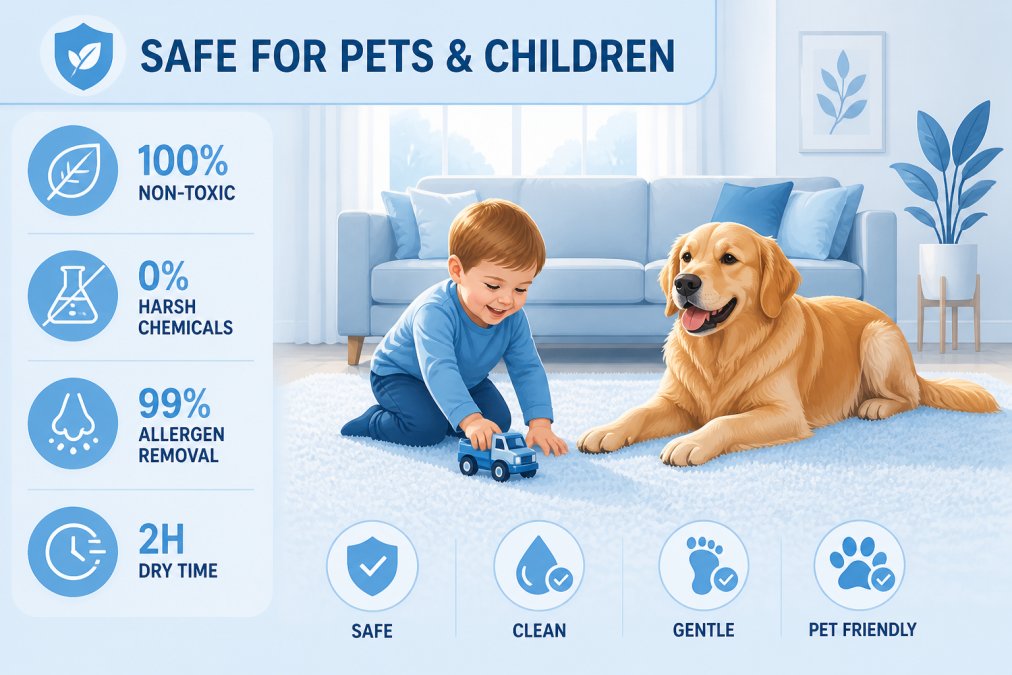
For households with pets that have had accidents, eco-friendly enzymatic cleaners are particularly effective. They break down uric acid and other organic compounds that create odors, rather than masking them with fragrances. This matters because pets can still smell old urine even if humans can’t, and they may re-mark the same spots if the original odor isn’t completely eliminated.
Parents in the Lake Geneva area often cite this safety factor as their primary reason for choosing eco-friendly cleaning. With children and pets as core household members, reducing chemical exposure becomes a health priority, not just a preference.
Eco-friendly solutions are the only choice for homes with infants, toddlers, or pets with respiratory sensitivities. The safety margin isn’t marginal, it’s the difference between chemical exposure and zero exposure.
How Long Does Carpet Take to Dry After Cleaning?
Drying time is a practical concern that affects your daily life immediately after cleaning, but it’s also where a deeper environmental question emerges: Is professional eco-friendly cleaning actually more efficient than DIY rental methods, or does the water and energy consumption offset the chemical benefits?
Most eco-friendly carpet cleaning services using low-moisture extraction or carbonation-based systems achieve drying in 2-4 hours. Traditional hot-water extraction (steam cleaning) saturates carpet fibers and padding, requiring 12-24 hours or more. In basements or areas with poor ventilation, that window extends further, and humidity levels during the season affect how long moisture lingers.
The practical advantage is clear: faster drying means lower mold risk in humid environments, no musty odors from moisture sitting in padding, and your family can use the space the same day. For commercial spaces, a retail shop or office can’t afford 24 hours of wet carpets, so eco-friendly cleaning allows normal operations to resume immediately.
But here’s where the environmental picture gets more complex. A professional truck-mounted hot-water extraction system uses approximately 1-2 gallons of water per 100 square feet of carpet, heated to 200-250°F. A rental unit from a home improvement store uses similar water volumes but with less efficient extraction, meaning more moisture remains in the carpet and longer drying times. The energy cost of heating that water in a professional system is offset by superior extraction efficiency, less water stays behind, so less energy is needed for evaporation.
DIY rental cleaning, while cheaper upfront, often leaves more residual moisture because the equipment lacks the suction power of professional-grade machines. This means your home’s HVAC system works harder to dehumidify the space, consuming more energy over 24-48 hours. A professional eco-friendly cleaning that dries in 4 hours may actually consume less total household energy than a DIY rental that dries in 20 hours, even though the professional service uses more water initially.
Water disposal is another consideration. Professional services dispose of wastewater through municipal systems where it’s treated before entering waterways. DIY rental wastewater often goes down household drains, which may bypass treatment in some systems. Eco-friendly solutions are biodegradable, so the environmental impact of disposal is minimal either way, but the efficiency of the extraction process matters.
For homeowners concerned about environmental impact, the choice isn’t between "wet carpet for 4 hours" versus "wet carpet for 24 hours." It’s between a professional system optimized for extraction efficiency and a rental system that’s a compromise between cost and performance. The faster drying from professional eco-friendly cleaning is a side benefit of a process designed to minimize total water use and maximize contaminant removal in a single pass.
In the Lake Geneva area, where seasonal humidity is high and basements are common, this efficiency difference becomes measurable. A carpet that dries in 4 hours versus 20 hours reduces the window for mold growth significantly, and the energy savings from faster dehumidification compound over time.
If you’re choosing between DIY rental and professional eco-friendly cleaning based on drying time alone, you’re missing the efficiency picture. Professional systems use water more effectively, extract more contaminants, and reduce your home’s total energy consumption during the drying cycle.
Traditional vs. Eco-Friendly Methods: The Real Differences
Understanding the actual differences between traditional and eco-friendly carpet cleaning helps you evaluate whether the switch makes sense for your situation.
| Aspect | Traditional (Synthetic) | Eco-Friendly (Plant-Based) |
|---|---|---|
| Primary cleaning agent | Synthetic detergents, VOCs | Plant-based surfactants, enzymes |
| Drying time | 12-24+ hours | 2-4 hours |
| Chemical residue | Often leaves sticky buildup | Biodegrades completely |
| Pet/child safety | Risk of respiratory irritation | Non-toxic, hypoallergenic |
| Odor control | Fragrance masking | Enzymatic breakdown |
| Environmental impact | Harms waterways, non-biodegradable | Biodegradable, water-safe |
| Cost | Typically lower | Slightly higher |
| Effectiveness on set stains | Very effective initially | Equally effective, longer-lasting |
The table reveals the core trade-off: traditional methods cost less upfront but carry hidden costs in health exposure, re-soiling risk, and drying inconvenience. Eco-friendly methods cost more but eliminate those secondary costs.
Traditional cleaning works by suspending soil with harsh chemicals, then extracting it. The problem is that some chemical residue remains, creating a sticky surface that attracts new dirt within weeks. Your carpet looks dingy again faster not because the cleaning didn’t work, but because the residue is doing its job, attracting soil.
Eco-friendly cleaning works by enzymatically breaking down soil molecules and suspending them with plant-based surfactants. When extracted, these leave no sticky film behind. Your carpet stays cleaner longer because there’s nothing attracting new soil.
The effectiveness perception often comes from this residue difference. Traditional cleaning feels more powerful because the harsh chemicals are aggressive. Eco-friendly cleaning feels gentler because the process is quieter and less chemical-smelling. But the actual cleaning power is comparable or superior, the difference is what’s left behind.
If your carpet re-soils quickly after cleaning, you’re likely experiencing the residue problem. Switching to eco-friendly methods often solves this without needing to clean more frequently.
Impact on Indoor Air Quality and Allergen Removal
This is where eco-friendly carpet cleaning shows measurable health benefits that extend far beyond the carpet itself.
Your carpet acts as a filter for your home’s air quality. It traps dust, allergens, dust mites, pet dander, and other particles that would otherwise circulate in your breathing air. The problem is that carpets become saturated with these contaminants over time, and conventional cleaning doesn’t always remove them completely.
Hot-water extraction with eco-friendly solutions removes allergens and dust mites from deep within carpet fibers and padding. The heat kills dust mites (which thrive in warm, humid environments), and the extraction pulls out their remains and feces, the primary allergen trigger. This is different from vacuuming, which only removes surface particles.
People with allergies or asthma often report significant improvement after professional eco-friendly cleaning. The reduction in indoor allergens directly impacts respiratory health. According to American Lung Association guidance on indoor air quality, removing allergen sources from carpets is one of the most effective ways to improve home air quality for people with respiratory sensitivities.
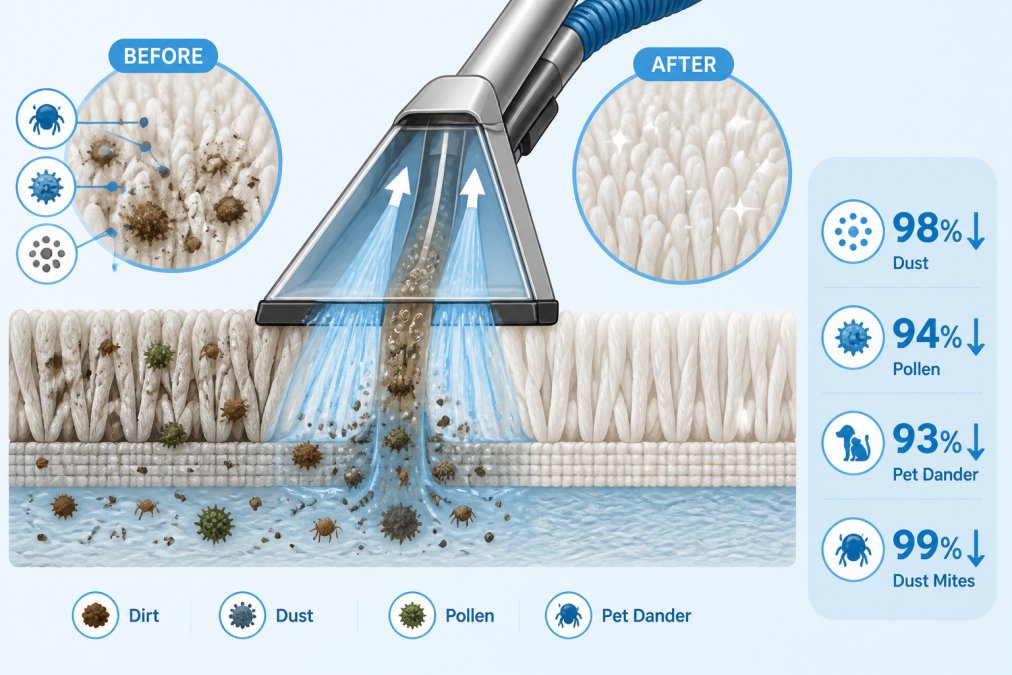
Eco-friendly solutions are particularly effective for allergen removal because they don’t leave chemical residues that can trigger respiratory reactions. You’re improving air quality without introducing new irritants. This matters for people with chemical sensitivities or asthma triggered by VOCs.
The impact is measurable. Homes in the Lake Geneva area with high humidity and seasonal dust accumulation benefit especially from regular eco-friendly cleaning. The combination of moisture control and allergen removal creates noticeably fresher indoor air.
Volatile organic compounds from traditional cleaning chemicals can actually worsen air quality temporarily. Your carpet gets cleaner, but your air gets chemically contaminated. Eco-friendly methods clean the carpet while improving air quality simultaneously.
Long-Term Carpet Health and Longevity
Choosing eco-friendly cleaning isn’t just about immediate cleanliness, it’s an investment in how long your carpet lasts before replacement becomes necessary.
Harsh synthetic chemicals degrade carpet fibers over time. They break down the structural integrity of the fibers and backing, causing premature wear, fraying, and color fading. This is why carpets cleaned repeatedly with conventional methods sometimes look worn or dull, the chemicals are literally damaging the fibers.
Plant-based eco-friendly solutions clean without degrading fiber integrity. They’re pH-balanced to match carpet fiber chemistry, which means they clean effectively without causing chemical damage. Your carpet maintains its appearance and structural integrity longer.
The residue issue also affects longevity. When sticky chemical residue builds up in carpet fibers, it attracts and traps more dirt. This accelerates visible soiling and wear patterns. Eco-friendly cleaning avoids this cycle, so your carpet stays cleaner-looking longer and shows less traffic wear.
Professional hot-water extraction, the method Lake Geneva Carpet Cleaning uses, is gentler on carpet fibers than DIY methods or low-quality professional cleaning. The equipment is calibrated to deliver the right combination of heat, pressure, and extraction timing to clean deeply without over-wetting or damaging fibers.
Carpet replacement is a significant expense. A high-quality carpet costs thousands to purchase and install. Extending carpet life by 3-5 years through proper eco-friendly cleaning often pays for itself many times over. Homeowners who maintain their carpets with regular professional eco-friendly cleaning report that carpets last 15+ years versus 10-12 years with conventional cleaning or no professional cleaning.
The longevity advantage is especially important in the Lake Geneva area, where seasonal contaminants like road salt, mud, and sand accumulate in carpets. These abrasive particles damage fibers when ground into the pile by foot traffic. Professional extraction removes these contaminants before they cause permanent wear.
Chemical Transparency and Green Certifications
When evaluating whether eco-friendly carpet cleaning is worth it, understanding what "eco-friendly" actually means is essential. Not all green cleaning products are created equal, and marketing claims often outpace reality. The difference between a genuinely effective eco-friendly solution and greenwashing comes down to transparency, third-party verification, and the chemistry of how the product interacts with your carpet fibers.
Third-Party Certifications That Matter
Legitimate eco-friendly carpet cleaning solutions should carry third-party certifications that verify their claims independently. The most credible certifications are:
- EPA Safer Choice: The Environmental Protection Agency’s label indicates the product meets strict criteria for human health and environmental safety. Products must be tested for toxicity, aquatic safety, and biodegradability. This is the gold standard because it’s backed by federal environmental standards.
- Green Seal: This certification verifies that products meet environmental performance standards, including reduced chemical hazards and sustainable manufacturing practices. Green Seal-certified cleaners must disclose all ingredients and prove biodegradability within 28 days.
- EcoLogo: A third-party certification that confirms products meet environmental performance standards across their entire lifecycle, from manufacturing to disposal.
If a company won’t disclose which certifications their solutions carry, that’s a red flag. Transparency about certifications is a hallmark of genuinely eco-friendly products.
The pH Chemistry Behind Fiber Protection
Here’s where the technical difference matters for long-term carpet health. Carpet fibers, whether nylon, polyester, or wool, have an optimal pH range (typically 6.5-7.5) where they maintain structural integrity. Traditional synthetic detergents are highly alkaline, often with a pH of 10-13. This high alkalinity breaks down soil effectively but also degrades the fiber’s protective coating and can cause color fading, fiber swelling, and brittleness over time.
Eco-friendly plant-based solutions are formulated to be pH-balanced, staying within or close to the fiber’s optimal range. This means they clean effectively without chemically damaging the carpet. The difference is measurable: a carpet cleaned repeatedly with high-alkaline detergents shows visible wear and color loss within 5-7 years. A carpet maintained with pH-balanced eco-friendly solutions can look new for 12-15 years with the same traffic patterns.
When evaluating a cleaning service, ask about the pH of their solution. If they don’t know or won’t disclose it, they’re not using a genuinely eco-friendly product. Legitimate providers can cite the pH and explain why it matters for fiber longevity.
Biodegradability: Speed and Environmental Impact
Biodegradability claims should specify the timeframe. A product that biodegrades in 28 days (the standard for Green Seal certification) has minimal environmental persistence. A product that takes 6 months or a year to break down lingers in waterways and soil longer, potentially accumulating in ecosystems.
Plant-based surfactants derived from coconut oil, corn, or other renewable sources biodegrade quickly because microorganisms in soil and water recognize them as food sources. Synthetic surfactants, even those labeled "biodegradable," may take months or years to break down completely. The faster the biodegradation, the less environmental impact from the chemical persisting in waterways.
When wastewater from carpet cleaning enters municipal treatment systems, fast-biodegrading solutions are broken down before discharge into rivers or lakes. Slow-biodegrading synthetics sometimes pass through treatment systems partially intact, accumulating in aquatic ecosystems and affecting fish and plant life.
Ingredient Transparency and Greenwashing Red Flags
Some companies use the term "eco-friendly" loosely to mean they’re slightly less harmful than the worst alternatives. True eco-friendly solutions go further: they’re non-toxic, fully biodegradable, safe for aquatic ecosystems, and transparent about every ingredient.
Red flags for greenwashing include:
- Vague terms like "natural" or "green" without specific certifications
- Refusal to disclose ingredient lists or safety data sheets
- Claims of "hypoallergenic" or "non-toxic" without third-party testing
- Marketing that emphasizes one benefit (e.g., "plant-based") while hiding other chemicals
- Prices significantly lower than certified eco-friendly alternatives (often indicates lower quality or misleading claims)
Professional cleaning services should be able to provide a Safety Data Sheet (SDS) for their cleaning solutions. This document lists every ingredient, concentration, hazard warnings, and disposal instructions. If a company won’t provide an SDS, they’re not operating with genuine transparency.
The Cost of Certification
Legitimate third-party certifications cost manufacturers money, testing, documentation, and ongoing compliance. This is why genuinely certified eco-friendly solutions cost more than conventional detergents. If a cleaning service claims to use eco-friendly solutions but charges the same as conventional cleaning, ask to see the certifications. The math often doesn’t add up.
This doesn’t mean certified eco-friendly cleaning is always expensive, but it should cost more than the cheapest conventional option. The price difference reflects the cost of safer ingredients, third-party verification, and environmental responsibility.
“Natural” doesn’t automatically mean safe or effective. Some plant-based ingredients can still trigger allergies or sensitivities in certain individuals. Always ask about specific ingredients, certifications, and any known allergens before committing to service. Request an SDS [if you have](/pet-safe-carpet-cleaning-in-lake-geneva-the-expert-homeowners-guide-2026/) chemical sensitivities or respiratory conditions.
Is Eco-Friendly Carpet Cleaning Worth Your Investment?
The answer depends on your specific situation, but for most homeowners the investment pays for itself through health benefits, carpet longevity, and reduced re-soiling.
If you have pets, children, or anyone with respiratory sensitivities, eco-friendly cleaning is worth it. The elimination of chemical exposure alone justifies the cost. You’re not just cleaning your carpet, you’re improving your family’s daily health.
If your carpet re-soils quickly after conventional cleaning, eco-friendly methods will likely solve this problem. The absence of sticky chemical residue means your carpet stays cleaner longer, reducing the frequency of cleaning needed. This compounds savings over time.
If you’re concerned about indoor air quality or allergen accumulation, eco-friendly cleaning delivers measurable improvements. The combination of deep extraction and non-toxic solutions creates noticeably fresher air and fewer allergen triggers.
If you want your carpet to last 15+ years instead of 10-12 years, regular professional eco-friendly cleaning is one of the best investments you can make. The cost per cleaning is offset by extended carpet life and delayed replacement.
If you’re in the Lake Geneva area dealing with seasonal contaminants, road salt, mud, sand, professional extraction with eco-friendly solutions protects your carpet investment from the specific environmental challenges of your region.
The cases where conventional cleaning might make more sense are rare: if budget is your absolute only concern and you’re willing to accept chemical exposure, shorter carpet life, and faster re-soiling. Most homeowners find that the total cost of ownership favors eco-friendly cleaning.
Protecting your family’s health while maintaining your home’s appearance doesn’t require choosing between them. Lake Geneva Carpet Cleaning delivers eco-friendly carpet cleaning using state-of-the-art hot water extraction technology combined with plant-based solutions. With over 32 years of experience serving Wisconsin homeowners, our owner-operated team specializes in removing dirt, germs, allergens, and stubborn odors while ensuring your carpets dry quickly and stay cleaner longer. Experience the difference that comes from choosing a service committed to both your home’s longevity and your family’s wellbeing. Contact Lake Geneva Carpet Cleaning for a consultation and discover why homeowners throughout the region trust us to transform their carpets, and their indoor air quality.
Frequently Asked Questions
Are eco-friendly cleaning products actually effective at removing tough stains?
Yes, plant-based and enzyme-based eco-friendly solutions effectively break down stains and odors when used properly. Biodegradable surfactants in products like Puracy Natural Carpet Cleaner target stain molecules at the fiber level. Professional hot-water extraction with eco-friendly solutions removes embedded dirt and allergens more thoroughly than DIY spot treatments. Results depend on stain age and application method, fresh spills respond faster than set-in stains requiring multiple treatments.
Is eco-friendly carpet cleaning safe for pets and children?
Eco-friendly carpet cleaning methods are specifically designed to be safe for pets and children. Plant-derived, non-toxic solutions contain no harsh chemicals, volatile organic compounds (VOCs), or artificial fragrances that trigger allergies or sensitivities. Unlike synthetic detergents, these biodegradable formulas leave no toxic residue on fibers or padding. Always verify that cleaning solutions are free from sulfates, dyes, and parabens before use, and ensure adequate ventilation during application.
How long does carpet take to dry after eco-friendly cleaning?
Drying time varies by method. Hot-water extraction (steam cleaning) typically requires 8-24 hours for complete drying, though modern equipment with powerful extraction reduces this to 4-8 hours. Low-moisture eco-friendly systems like carbonation-based methods dry carpets in 1-4 hours. Factors affecting drying include humidity, air circulation, carpet thickness, and padding type. Opening windows, using fans, and adjusting thermostats accelerates drying and prevents moisture-related issues like mold.
What makes eco-friendly carpet cleaning different from traditional methods?
Eco-friendly methods use plant-based, biodegradable solutions instead of synthetic chemicals, reducing environmental impact and indoor air pollution. Traditional steam cleaning relies on hot-water extraction with chemical surfactants; eco methods achieve similar results using enzymatic cleaners or carbonation. Eco-friendly approaches prioritize fiber integrity and carpet longevity by avoiding harsh residues. Both methods effectively remove dirt, allergens, and odors, but eco-friendly solutions protect waterways, eliminate VOC exposure, and support sustainability.
This article was written using GrandRanker