Last Updated: November 1, 2026
Quick Summary
To remove pet stains in carpet, blot the accident with a dry white towel, apply an enzyme cleaner and let it dwell for hours, then rinse, extract, and dry completely. Pet stains soak into the backing and padding, so surface cleaning alone rarely removes the odor source.
- Test every cleaner on a hidden carpet scrap and wait a full 24 hours before using it.
- Never scrub a fresh accident, because scrubbing pushes urine deeper into the backing and pad.
- Rehydrate dried stains with water and plastic for 30 to 60 minutes before applying enzyme.
- Use a blacklight flashlight in a dark room to find hidden contamination before treating.
- Call a professional when odor returns within days or padding feels squishy and soaked.
Table of Contents
- Why Pet Stains Sink Past the Carpet Surface
- What You Need Before You Start
- How to Remove Pet Urine from Carpet: A Step-by-Step Method
- How to Remove Old Pet Stains from Carpet
- How to Get Pet Odor Out of Carpet
- Matching the Method to Your Carpet Fiber
- Common Mistakes and Chemical Safety at Home
- When Professional Pet Stain and Odor Removal Is the Right Call
- Drying, Weather, and Prevention in Southeast Wisconsin
- Book a Free Pet Stain Assessment in Burlington and Nearby Towns
- Frequently Asked Questions
Why Pet Stains Sink Past the Carpet Surface
A pet stain is never just a surface mark. Urine passes through the carpet fibers, soaks the backing, and settles in the padding below, which is why so many cleaning attempts fail.
At Lake Geneva Carpet Cleaning, we have worked in Burlington homes for over 32 years. The stain on top is rarely the whole story. Below, we walk through exactly how to remove pet stains in carpet Burlington WI homeowners can repeat at home, and when to stop trying.
Here is the part most guides get wrong: the visible spot is the smallest part of the problem.
What Urine Does to Carpet Fibers, Backing, and Padding
Urine is mostly water, plus urea, salts, and proteins. The water carries all of it downward fast.
- Carpet fibers hold the color and texture. They stain easily and can weaken when scrubbed wet.
- Carpet backing is the woven layer under the fibers. It traps liquid and holds it against the pad.
- Carpet padding acts like a sponge. It soaks up the full volume and keeps it there.
- Subfloor takes whatever passes through the padding. Wood and concrete both absorb odor over time.
Once urine reaches the padding, surface cleaning does almost nothing. The source sits below your cleaning tool.
Why Odor Returns Weeks After Surface Cleaning
Odor comes back because moisture reactivates dried urine salts. Every humid day or spill feeds them again.
Urine that dried in the pad turns into concentrated crystals. When humidity rises, those crystals pull moisture from the air and release odor again. That is the cycle behind “lingering odors” that seem to vanish and then return.
If you have already cleaned and the smell keeps coming back, the cycle described above is the likely cause. You can read more about why pet urine smell returns after cleaning to understand the full cycle.
What You Need Before You Start
Gather your supplies first so you are not hunting for a towel mid-clean. A short, complete kit matters more than an expensive one.
Your supply checklist:
- Rubber gloves
- White towels or microfiber cloths (several)
- Enzyme cleaner made for pet stains
- Spray bottle with plain water
- White vinegar
- Baking soda
- A wet/dry vacuum if you have one
- A blacklight flashlight to find hidden spots
- Plastic bags for soiled towels
- A fan or dehumidifier for drying
Two rules before you touch anything. Test every product on a hidden scrap of carpet first. And never mix cleaners, because some combinations release fumes.
Skip store-bought spot cleaners with strong bleach or optical brighteners. They can strip color from carpet fibers and leave a light patch that never blends back in.
How to Remove Pet Urine from Carpet: A Step-by-Step Method
The full method is blot, treat with an enzyme, rinse, extract, and dry. Each step matters, and skipping one is why DIY cleaning often fails. This routine works on fresh accidents and most recent stains. Older, set-in stains need the deeper approach covered in the next section.
Step 0: Test Every Product on a Hidden Scrap First
Before you touch the stain, find an inconspicuous area, inside a closet, under a piece of furniture, or a corner behind a door, and apply a small amount of your enzyme cleaner there. Wait a full 24 hours and check for color shift, bleaching, or fiber frizzing. Wool, in particular, can felt or shrink when over-wetted, and some enzyme formulas can dull dyed nylon. If the test patch changes, stop and use plain water only, or call a professional before proceeding.
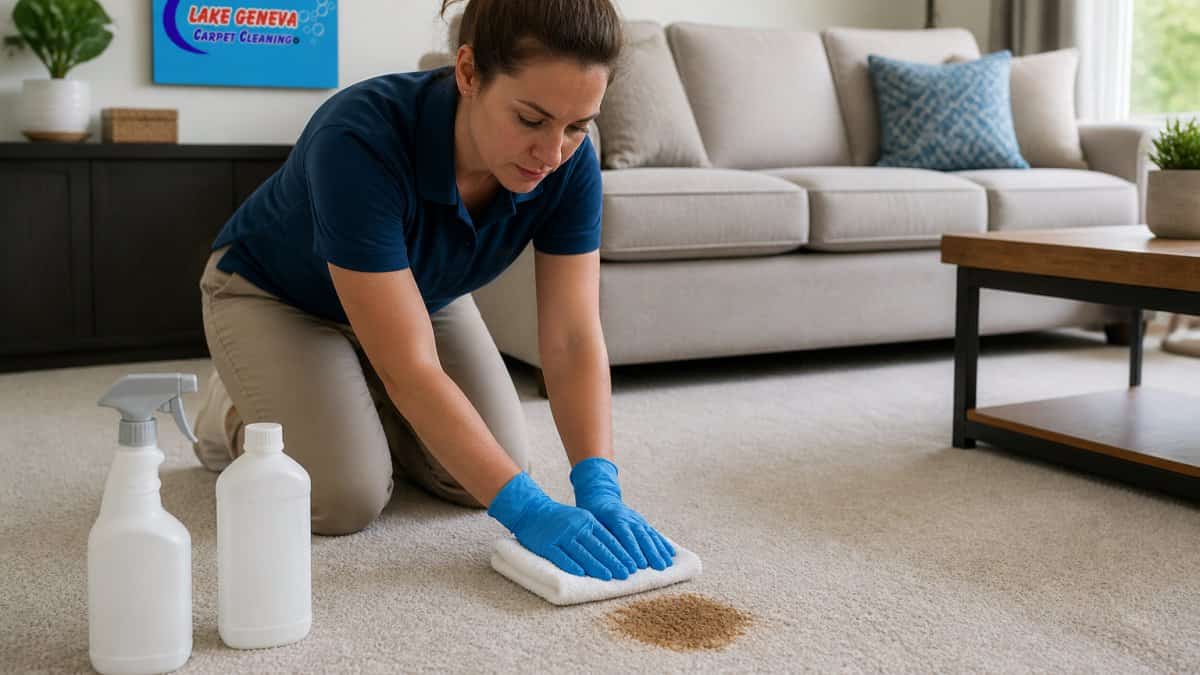
Step 1: Blot, Never Scrub, a Fresh Accident
Press down hard with a dry white towel and hold it. Replace the towel as it soaks up liquid, and keep going until no more transfers. Scrub only if you want to push urine deeper into the backing and pad, scrubbing frays fibers and spreads the stain sideways. Blotting lifts; scrubbing buries.
For a fresh accident, work fast. The less urine that reaches the padding, the easier everything else becomes. If the spot is still wet, you can often lift most of the volume with towels alone before any cleaner is needed.
Step 2: Apply an Enzyme Treatment and Let It Work
An enzyme cleaner is a cleaning solution that uses live enzymes to break down the proteins and uric acid in pet urine, which is what makes the odor source disappear rather than just get masked. Apply enough to reach the depth of the stain, then walk away. Most enzyme products need a dwell time of several hours to work, and covering the area with plastic helps keep it wet. Do not rush this step, enzymes need time and moisture to do their job, and a quick wipe does nothing. If you are wondering is enzymatic cleaner effective for old stains, that guide covers what actually works.
Step 3: Rinse, Extract, and Dry Completely
Rinse the area with clean water, then pull the moisture back out with a wet/dry vacuum or clean towels. Residue left behind attracts dirt, so rinse until the water runs clear. Then dry hard. Place a fan or dehumidifier on the spot and keep the room ventilated.
Watch out: carpet that stays damp for more than a day can grow mold underneath and start to smell musty. Drying is not optional.
Fresh vs. Dried: How the Sequence Changes
A fresh accident is a liquid problem; a dried stain is a crystal problem. For fresh urine, blot first, then apply enzyme while the area is still damp, the enzymes have an easier time because the uric acid has not yet bonded tightly to the fibers. For a dried stain, rehydrate first: mist with water, cover with plastic, and let it sit for 30 to 60 minutes so the dried crystals soften before the enzyme goes down. Skipping the rehydration step is one of the most common reasons a dried stain seems to resist treatment.
Fiber-Specific Cautions Before You Spray
Not every carpet handles the same treatment. Nylon holds stains and takes dye easily, so a gentle enzyme and cool rinse are usually safe. Polyester can cling to oil-based messes, so use a light enzyme and cool water. Wool shrinks and felts when wet, so keep moisture minimal and dry fast. Olefin is heat sensitive, so use cool water only and no heat tools. When in doubt, test first and keep the treatment light.
Keep pets and children out of the treated room until the carpet is fully dry. Wear gloves, ventilate the space, and never mix cleaners, some combinations release fumes.
How to Remove Old Pet Stains from Carpet
Old stains need a different plan. The urine has dried, bonded to the fibers, and often spread wider than the visible mark.
You are no longer cleaning a spot. You are locating contamination and treating it at depth.
Find the Hidden Contamination First
Use a blacklight flashlight in a dark room. Urine glows under UV light, and it will show you spots you never noticed.
Mark each glowing area with a piece of tape. Then press a dry towel down and smell it, or step firmly and listen for a squish. Dried urine often sits in a wider ring than the stain suggests.
This step tells you the real size of the job before you start treating.
Treating Dried Stains and Affected Padding
Rehydrate first. Mist the area with water, cover it, and let it sit so the dried urine softens.
Then apply enzyme treatment and give it a long dwell time. If the padding is soaked through, the carpet may need to be lifted so the pad can be replaced. For a deeper walkthrough of removing old pet stains from carpet, including affected padding, see our full guide. No cleaner reaches urine trapped under a saturated pad.
How to Get Pet Odor Out of Carpet
Odor removal is a separate job from stain removal. A carpet can look clean and still smell, because the source sits in the pad.
Start with these steps:
- Find every contaminated spot with a blacklight.
- Treat each one with enzyme cleaner and let it dwell.
- Rinse and extract thoroughly.
- Sprinkle baking soda, let it sit overnight, then vacuum.
- Ventilate and dry the room completely.
If the smell survives all five steps, the contamination is likely in the padding or subfloor. For a focused guide on how to remove pet urine smell from carpet permanently, see our dedicated page. At that point, masking sprays only hide it for a few days.
Matching the Method to Your Carpet Fiber
Not every carpet handles the same treatment. Test first, and match your approach to the fiber.
| Fiber Type | Watch For | Safest Approach |
|---|---|---|
| Nylon | Holds stains, takes dye easily | Enzyme treatment, gentle rinse |
| Polyester | Oil-based stains cling | Light enzyme, cool water rinse |
| Wool | Shrinks and felts when wet | Minimal moisture, pro drying |
| Olefin | Heat sensitive | Cool water only, no heat tools |
Test any cleaner on a hidden corner and wait a full day before using it on the stain. If the color shifts, stop and use plain water only.
Common Mistakes and Chemical Safety at Home
Most failed DIY jobs come down to a handful of repeat mistakes. Here are the ones we see most.
- Scrubbing instead of blotting, which drives urine deeper.
- Skipping the rinse, which leaves sticky residue that pulls in dirt.
- Over-wetting, which soaks the pad and invites mold.
- Mixing cleaners, which can create dangerous fumes.
- Using heat on fresh urine, which sets the stain.
- Skipping the dry, which leaves odor and moisture behind.
Keep pets and kids out of the treated room until it is fully dry. Wear gloves, ventilate the space, and store cleaners out of reach. If you have allergies or asthma, read labels carefully before spraying anything.
The EPA indoor air quality guidance is a useful reference for keeping cleaning products safe at home.
When Professional Pet Stain and Odor Removal Is the Right Call
Some jobs are beyond a towel and a bottle. Professional pet stain and odor removal is the right call when contamination has reached the padding, when odor returns after repeated DIY attempts, or when the affected area is large.
Signs it is time to call:
- The smell returns within days of cleaning.
- The stain covers a wide area or multiple spots.
- Padding feels squishy or has clearly soaked through.
- Anyone in the home has allergies or asthma.
- The carpet has been cleaned several times with no lasting result.
Truck-mounted hot water extraction is the method this business uses to reach deeper into carpet than surface cleaning does.
Over-wetting the carpet yourself can push more moisture into the pad and make the odor worse.
Drying, Weather, and Prevention in Southeast Wisconsin
Humidity and cold weather shape how carpet dries here. In lake country, damp summers and closed-up winters both slow drying and make odor more noticeable. Burlington and the surrounding towns sit close to the lakes, and that proximity matters: summer humidity can keep a cleaned carpet damp for well over a day, and winter homes that stay sealed against the cold trap moisture and stale odor indoors.
Drying tips for our climate:
- Run fans and a dehumidifier after any wet cleaning. In humid summer stretches, a dehumidifier does more than an open window.
- Open windows on dry, mild days to move air. On damp or rainy days, keep them closed and rely on mechanical air movement instead.
- Avoid cleaning carpet right before a humid stretch or a cold snap. Both slow drying and give odor more time to resurface.
- Keep the heat or AC running to pull moisture from the air. A closed-up winter home with the heat off is one of the slowest drying environments there is.
- Give the area at least 24 hours of active air movement before you walk on it or put furniture back.
Prevention is simpler than repair. Keep pets off freshly cleaned carpet until it is dry, place washable mats at doors and feeding areas, and clean accidents the same day. Regular vacuuming also lifts the dirt that holds odor. In lake-country homes, watch the humidity in basements and rooms near exterior doors, those are the spots where odor tends to return first.
For any pet stain, remember the rule: blot, treat, rinse, extract, and dry.
Book a Free Pet Stain Assessment in Burlington and Nearby Towns
DIY works for fresh spots, but set-in stains and recurring odor often need a deeper reach. That is where we come in.
Lake Geneva Carpet Cleaning is an owner-operated business serving Lake Geneva, Twin Lakes, Genoa City, Walworth, Fontana, Darien, Burlington, Elkhorn, Williams Bay, Delavan, and East Troy. We have served Wisconsin homeowners for over 32 years.
Our team uses truck-mounted hot water extraction and eco-friendly methods, backed by a 10-day satisfaction guarantee.
Pricing depends on the job, so reach out for a free quote. If you are searching for pet stain and odor removal near me in Burlington, book a free pet stain assessment with our team and get a straight answer on what your carpet needs.
Frequently Asked Questions
What is the best way to remove pet stains from carpet?
Blot up as much liquid as possible with a clean towel, then apply an enzyme cleaner that breaks down the uric acid crystals in pet urine. Let it sit for the full dwell time on the label, rinse with clean water, and extract with a wet vacuum. For dried or repeated accidents, the urine has usually reached the padding and backing, so you may need to lift the carpet or call a professional with hot water extraction equipment.
Can old pet urine stains be removed from carpet?
Yes, but old pet stains take more work than fresh ones. The urine has dried into the backing and padding, so surface sprays often only mask the smell. Start by locating the contamination with a blacklight, then apply an enzyme treatment in several passes and allow longer dwell time. If the stain has set for months or the padding is saturated, professional pet stain and odor removal is usually the only way to fully clear it.
Should you blot or scrub a fresh pet stain?
Always blot. Scrubbing pushes urine deeper into the carpet fibers and backing, spreads the stain, and can fray the fiber tips. Press a clean white towel firmly onto the spot, stand on it if needed, and swap to a dry section as it absorbs. Repeat until no more moisture transfers, then move on to an enzyme treatment rather than rubbing the area.
How do you get pet odor out of carpet after cleaning?
If odor returns after cleaning, the source was not fully removed. Check for hidden spots with a blacklight, treat any affected padding, and use an odor neutralizer rather than a fragrance cover-up. Make sure the carpet dries completely within a day, since trapped moisture can cause a musty smell. When odor keeps coming back, professional extraction reaches the subfloor and padding where home methods cannot.
Pet accidents will happen, but lingering odor does not have to be part of life with a pet. If a stain or smell keeps coming back, let our team take a look. Get started with Lake Geneva Carpet Cleaning and enjoy fresher carpet, cleaner air, and the peace of mind that comes from a job done right.