
Table of Contents
- Why Mold Develops After Carpet Cleaning
- How to Dry Carpet After Cleaning
- How Long Does Carpet Take to Dry After Cleaning
- Controlling Indoor Humidity to Stop Mold Growth
- Signs of Mold in Carpet
- What to Do If Carpet Stays Wet After Cleaning
- Prevention Checklist for After Professional Carpet Cleaning
- Frequently Asked Questions
Last Updated: October 6, 2026
Why Mold Develops After Carpet Cleaning
Professional carpet cleaning leaves your carpets saturated with water, the perfect environment for mold if you don’t take steps to prevent mold after carpet cleaning by drying them quickly and thoroughly. Mold needs moisture, darkness, and warmth, all of which your carpet provides. When wet carpet stays damp too long, spores colonize the fibers, the padding, and even the subfloor.
How excess moisture creates mold conditions
Carpet cleaning uses hot water extraction to remove dirt and allergens, injecting water deep into the fibers and padding before extracting as much as possible. Even so, significant moisture remains. Spores already present in your home’s air land on damp carpet and germinate within 24-48 hours, and risk peaks in that first 48-hour window. Above 50 percent relative humidity, evaporation slows and the danger window extends, basements and bathrooms are especially risky.
Mold can spread to hidden areas you can’t see. If padding stays wet longer than 48 hours, the entire pad may need removal. Subfloor mold is much harder to remediate and can compromise the structural integrity of your flooring.
Why carpet padding and subfloor are at highest risk
Carpet padding absorbs water during cleaning and dries far more slowly than the visible surface. The top of your carpet may feel dry after a few hours while the padding stays saturated for days. The subfloor beneath is even more vulnerable: water seeping through wet padding becomes trapped in wood or plywood, which absorbs readily and dries slowly. You can’t see either layer, and that hidden dampness is where mold thrives.
How to Dry Carpet After Cleaning
The key to prevent mold after carpet cleaning is speed. The faster you remove moisture, the lower your mold risk. Start drying immediately after cleaning finishes.
Immediate steps in the first hour
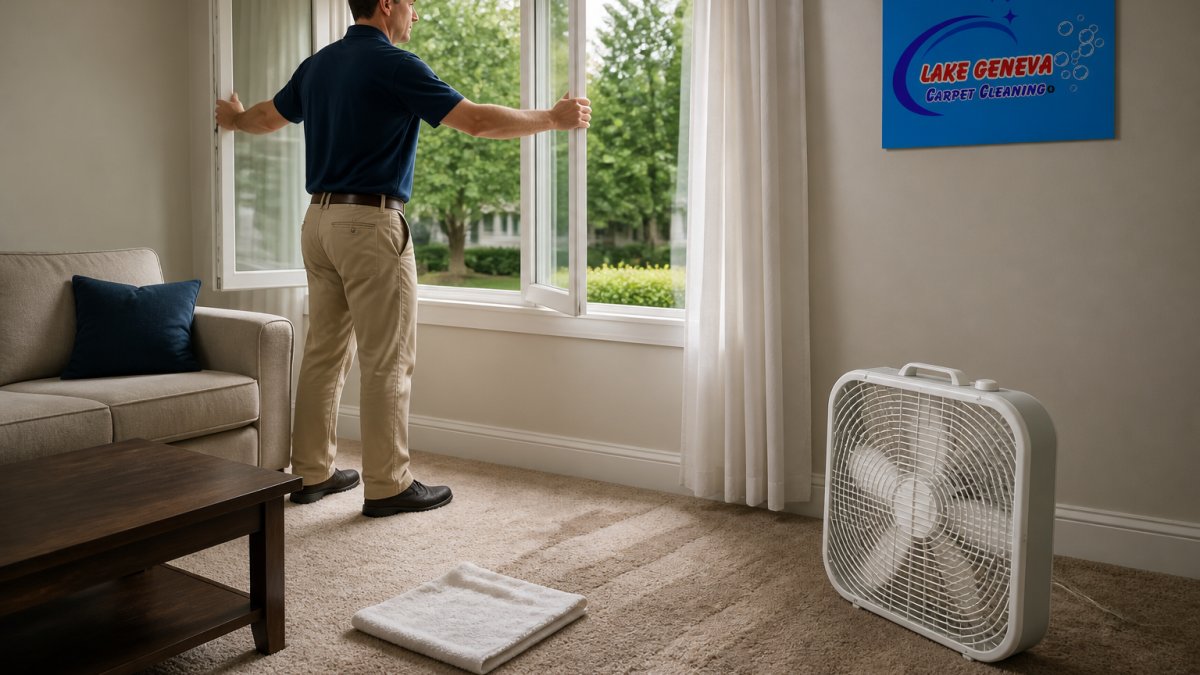
Open all windows and doors. Air circulation is your first line of defense. Even in cool weather, open windows so outside air moves through and moisture escapes.
Turn off the air conditioning. Cooler air holds less moisture and evaporates more slowly. Keep AC off for at least the first 24 hours.
Move furniture off the wet carpet. Furniture traps moisture and blocks airflow. Push couches, chairs, and tables to the center of the room or move them out entirely.
Wring out any wet towels or cloths. Replace wet towels with dry ones, changing them every 30 minutes for the first few hours.
If you have a wet/dry vacuum, use it to extract additional water from the carpet. Run it slowly across the wet areas multiple times. This single step can reduce drying time by 12-24 hours.
Using air circulation and ventilation
Air movement accelerates evaporation; stagnant air lets moisture accumulate.
Set up fans strategically. Place box or pedestal fans to blow across the wet carpet, aimed toward open windows or doors so humid air is pushed outside. Use at least two if possible, one across the carpet, one out a window.
Create cross-ventilation. Open windows on opposite sides of the home, including basement windows, to pull moisture through.
Keep fans running for 24-48 hours. Continuous air movement prevents moisture from settling back into the carpet and padding.
Deploying dehumidifiers and air movers
A dehumidifier pulls moisture from the air and removes it from your home, especially important in humid climates or summer months when outdoor air is already damp.
Run a dehumidifier in the room with wet carpet. Set it to run continuously and empty the tank every few hours, or connect a hose to drain outside. It can drop indoor humidity from 70 percent to 40-50 percent within hours.
Air movers beat household fans. If you have access to one, position it to blow across the carpet surface, it moves far more air volume and speeds drying dramatically.
Combine methods. Fans accelerate evaporation while the dehumidifier removes the moisture they lift into the air; together they’re more effective than either alone.
How Long Does Carpet Take to Dry After Cleaning
Drying time depends on how much water the cleaning left behind, air temperature, indoor and outdoor humidity, and airflow. In most homes, a professionally cleaned carpet is dry to the touch within 6 to 10 hours and fully dry through carpet and pad within 24 to 48 hours. In a cool, humid Lake Geneva basement in spring or fall, that window can stretch to 3 to 5 days, exactly when mold risk climbs.
The carpet surface is a poor indicator of what’s below. Fibers release water quickly, but the pad is a sponge and the subfloor beneath it is often plywood or oriented strand board that absorbs and holds water. A carpet that feels dry can still sit on a soaked pad, the most common reason homeowners think they’re safe, then find a musty smell a week later.
A realistic drying timeline with checkpoints
Use these checkpoints as a guide, not a guarantee. Adjust for your home’s temperature, humidity, and airflow.
0 to 2 hours: The carpet should feel damp, not squishy.
2 to 6 hours: The surface should shift from wet to damp, with fans at full strength and a dehumidifier pulling moisture from the air.
6 to 12 hours: The surface should feel dry or nearly dry, but the pad underneath is still holding most of its moisture.
12 to 24 hours: The carpet should be dry and the pad drying from the top down. This is the highest-risk window for mold, keep fans and the dehumidifier running continuously, even overnight.
24 to 48 hours: Both carpet and pad should be dry. Confirm with the moisture checks below before turning anything off.
Beyond 48 hours: If carpet or pad is still damp, treat it as a moisture problem, not a drying problem.
How to check the carpet, pad, and subfloor separately
This is the step most homeowners skip, and it is the one that matters most.
Check the carpet surface. Press a clean white paper towel or cloth firmly into several spots, near walls, under where furniture sat, and in low-traffic corners. If it comes away cool or damp, the carpet isn’t dry.
Check the pad. At a doorway, floor vent, or accessible wall edge, gently lift the carpet and press into the pad. It should feel springy and dry, not cool, heavy, or spongy.
Check the subfloor. If you can lift the carpet and pad at an edge, look at and touch the subfloor. It should be dry with no dark staining, soft spots, or musty smell.
Check the room, not just the carpet. A hygrometer on the floor near the cleaned area shows whether the air is dry enough to keep pulling moisture from the carpet. Above 50 percent relative humidity, the carpet keeps reabsorbing moisture.
A dry-feeling carpet over a wet pad is the most common setup for mold after cleaning. If you cannot access the pad or subfloor to check, assume the pad is still damp until at least 24 hours have passed with continuous airflow and dehumidification.
What actually extends drying time
Cool indoor temperatures. Evaporation slows noticeably below about 65 degrees. Raising the thermostat to 72-75 degrees during the drying window speeds things up without discomfort.
High outdoor humidity. On a humid southeastern Wisconsin summer day, opening windows can slow drying by pulling moist air inside. Close them and rely on a dehumidifier instead.
Basements and below-grade rooms. These are cooler, more humid, and often poorly ventilated. Budget an extra 24 to 48 hours and run a dehumidifier continuously.
Limited air exchange. Older homes with few windows or poor cross-ventilation dry more slowly.
Furniture left in place. Furniture blocks airflow and traps moisture. Keep pieces off the carpet until the pad and subfloor check dry.
If your carpet hasn’t passed the pad and subfloor checks by 48 hours, stop waiting.
Controlling Indoor Humidity to Stop Mold Growth
Mold spores need sustained moisture to colonize, in a home, relative humidity above roughly 50 percent for an extended period plus a damp surface like freshly cleaned carpet or pad. Keeping indoor humidity down is the difference between carpet that dries in a day and carpet that stays damp long enough for mold to take hold.
Lake Geneva and southeastern Wisconsin make this harder than it sounds. Summers are humid, spring and fall bring cool, damp air that slows evaporation, and winter basement carpet can still sit over a cool, damp slab.
What ‘below 50 percent’ actually means in practice
Relative humidity is the water vapor in the air compared to the maximum it can hold at that temperature. Warm air holds more moisture than cool air, so the same absolute amount of water reads as a higher percentage in a cool room.
For mold prevention after carpet cleaning, keep the cleaned room between about 40 and 50 percent relative humidity for at least 48 to 72 hours. Below 40 percent is fine and even helpful for drying. Above 60 percent for more than a day or two is where mold risk rises sharply.
A simple monitoring routine
You don’t need professional equipment, a basic hygrometer, a small indoor humidity and temperature meter, is enough.
Place it in the cleaned room, near the floor. Humidity near the carpet matters, not a wall thermostat reading in another room.
Check it every 4 to 6 hours for the first 48 hours. Record the readings so you can see the trend, not just the current number.
Compare readings with equipment on and off. If humidity climbs within an hour of turning off the dehumidifier, the room isn’t dry yet.
Keep checking for at least 72 hours after the carpet feels dry. The surface can read dry while the pad and subfloor still release moisture.
If your hygrometer shows the room climbing above 55 percent even with a dehumidifier running, the unit is either too small for the space, its tank is full, or the room is getting moisture from somewhere else, an open basement window, a nearby bathroom, or a damp crawlspace.
Matching your strategy to the season
Humid summer days. Outdoor air is already loaded with moisture, so opening windows works against you. Close them, run the dehumidifier continuously, and keep fans moving air across the carpet. This is the most common homeowner mistake after a summer cleaning.
Cool spring and fall days. Cool air slows evaporation. Open windows for cross-ventilation during the day, run fans, use a dehumidifier if indoor humidity climbs, and raise the thermostat a few degrees so the air can carry moisture away.
Winter. Indoor air is usually dry, which helps, but basement carpet over a cold slab can still stay damp. Keep a dehumidifier running in basements and below-grade rooms even when the rest of the house feels dry.
Rainy stretches. After several days of rain, treat outdoor air as a moisture source. Keep windows closed and rely on dehumidification until the weather clears.
Habits that keep indoor humidity from climbing
Pause moisture-generating activities during the drying window. Showers, laundry, dishwashing, and cooking all add water vapor. Postpone them for 24 to 48 hours if you can; if not, run the exhaust fan and keep the door closed.
Keep bathroom and kitchen doors shut. These are the biggest indoor moisture sources in most homes; closing the door keeps their humidity from reaching the cleaned carpet.
Run exhaust fans in bathrooms and kitchens. Even a short shower adds significant moisture; an exhaust fan vented outside removes it before it spreads.
Check for other moisture sources. A damp crawlspace, leaking basement window, slow plumbing drip, or dryer venting indoors can keep humidity elevated no matter how many dehumidifiers you run.
Don’t over-water indoor plants in the cleaned room. A large potted plant on damp carpet adds moisture right where you’re trying to dry things out.
The 48 to 72 hours after carpet cleaning are the window that matters. Keep the cleaned room between 40 and 50 percent relative humidity, keep air moving, and adjust for the season, humid summers call for closed windows and dehumidification, while cool spring and fall days call for ventilation plus a little heat.
If humidity won’t stay down despite fans and a dehumidifier, the moisture problem is bigger than the carpet. Call the company that cleaned your carpet to check the pad and subfloor, or bring in a professional drying service. Catching it in the first two days is far easier than dealing with mold that has reached the subfloor.
Signs of Mold in Carpet
Mold doesn’t always announce itself, some signs are obvious, others subtle. Catching it early prevents it from spreading to the padding and subfloor.
Visible growth and discoloration
Dark spots or patches on the carpet surface are the most obvious sign. Mold can appear black, green, white, or brown, and spots usually grow larger over days if moisture remains.
Discoloration that wasn’t there before cleaning is a red flag, if areas change color in the days after cleaning, mold may be responsible.
Fuzzy or slimy texture on the carpet surface indicates active mold growth.
Staining on the carpet backing or padding visible from underneath is serious. If you lift the carpet edge and see dark stains on the padding, mold has already penetrated below the surface.
Musty odors and health warning signs
A musty, earthy smell is often the first sign, even before visible growth. It comes from spores and compounds released as mold grows. If your carpet smells musty days after cleaning, investigate immediately.
Increased allergy symptoms or respiratory irritation after cleaning can indicate mold growth. Spores trigger allergic reactions and asthma symptoms in sensitive people. If family members suddenly develop sneezing, coughing, or congestion, mold may be the cause.
Persistent odor despite cleaning suggests mold is growing in the padding or subfloor. If the musty smell doesn’t go away after 72 hours of drying, get professional help.
What to Do If Carpet Stays Wet After Cleaning
Sometimes carpet doesn’t dry as expected, weather, humidity, or equipment issues can push drying past 48 hours.
Safe DIY moisture removal steps
Increase dehumidification immediately. If the carpet is still noticeably damp after 24 hours, add a second dehumidifier or run the first longer. Empty tanks frequently so the unit keeps working.
Add more fans and position them correctly. Fans should blow across the carpet surface toward an open window or door. Use at least three for a large carpet.
Check for pooling or standing water. If water is visibly pooling on the surface, use a wet/dry vacuum to extract it manually, running it multiple times across affected areas.
Increase home temperature to 72-75 degrees. Warm air accelerates evaporation. If you can safely raise the temperature without discomfort, do so for 24-48 hours.
Keep windows and doors open so humid air can escape.
When to seek professional help
If carpet is still damp after 48 hours despite fans and a dehumidifier, you need professional drying equipment. Carpet cleaning companies have industrial air movers and dehumidifiers far more powerful than household units.
If you notice visible mold growth, stop DIY efforts immediately. Remediation requires professional treatment, cleaning moldy carpet yourself can spread spores throughout your home.
If the musty odor persists after 72 hours of drying, mold has likely reached the padding or subfloor. Professional assessment and remediation are necessary.
If you have basement or below-grade carpet, consider professional drying from the start. These spaces are prone to moisture problems, and professional equipment prevents issues before they develop.
Lake Geneva Carpet Cleaning uses advanced truck-mounted hot water extraction technology that removes more water during the initial cleaning than standard methods. This means your carpet starts the drying process with less moisture, reducing the time and effort required to prevent mold.
Prevention Checklist for After Professional Carpet Cleaning
Use this checklist immediately after your carpet cleaning appointment to prevent mold.
First hour:
- Open all windows and doors
- Turn off air conditioning
- Move furniture away from wet carpet
- Place fans to blow air across the carpet
- Change any wet towels for dry ones
- Use a wet/dry vacuum to extract additional water
First 24 hours:
- Keep fans running continuously
- Run a dehumidifier in the cleaned room
- Check humidity with a meter every 4-6 hours
- Keep humidity below 50 percent
- Avoid using showers, dishwashers, or laundry
- Keep bathroom and kitchen doors closed
- Increase home temperature to 72-75 degrees
- Check carpet for dampness by pressing a white cloth on it
24-48 hours:
- Continue running fans and dehumidifier
- Maintain low humidity
- Check for visible mold or musty odors
- Test carpet dryness every 12 hours
- Keep windows open for air circulation
After 48 hours:
- Verify carpet feels completely dry
- Check padding for moisture if you can access it
- Confirm no musty odors are present
- Turn off fans and dehumidifier once carpet is fully dry
- Return furniture to normal positions
Mold after carpet cleaning is preventable. Act fast in the first 48 hours: use fans, open windows, run a dehumidifier, and keep humidity below 50 percent. Most carpet dries completely within 24-48 hours with these steps.
If your carpet isn’t drying as expected, or you notice visible mold or musty odors, professional help is the right choice. Lake Geneva Carpet Cleaning serves homeowners with professional carpet cleaning and can advise on drying strategies specific to your home. Contact us for a free quote and to discuss how our eco-friendly cleaning methods help protect your carpets and indoor air quality.
Frequently Asked Questions
Can mold grow after carpet cleaning?
Yes, mold can develop after carpet cleaning if carpet, padding, and subfloor remain damp longer than 24-48 hours. Carpet cleaning adds moisture to your flooring, and without proper drying, ventilation, and humidity control, mold spores can begin to grow. This is especially true in carpet padding and subfloor areas where moisture gets trapped. Preventing mold after carpet cleaning requires immediate action: open windows, run fans, use a dehumidifier, and monitor moisture levels to keep relative humidity below 50 percent.
How long should carpet take to dry after cleaning?
Most carpet dries within 24-48 hours when proper drying techniques are used. However, drying time depends on humidity levels, air circulation, carpet thickness, padding density, and subfloor material. In humid conditions or poorly ventilated spaces, drying can take 3-5 days or longer. Check carpet at the 12-hour, 24-hour, and 48-hour marks by pressing a dry cloth on the surface. If moisture is still present after 48 hours, increase air circulation with fans and dehumidifiers, or contact a professional.
What are the signs that my carpet has mold?
Mold in carpet shows as dark spots, patches, or discoloration (black, green, or white growth) and produces a musty, earthy odor. You may also notice increased allergy symptoms, sneezing, or respiratory irritation when near the affected area. Mold often hides in carpet padding and subfloor, so visible growth on the surface may indicate deeper contamination. If you detect a musty smell or see discoloration after carpet cleaning, act quickly: increase ventilation, run a dehumidifier, and contact a professional if the problem persists.
What should I do if my carpet is still damp the next day?
If carpet is still damp after 24 hours, increase air circulation immediately. Open all windows, turn on ceiling fans, and place portable fans to direct airflow across the wet carpet. Run a dehumidifier continuously to remove excess moisture from the air and carpet. If you have a wet/dry vacuum, use it to extract additional water from the carpet surface and padding. Monitor humidity levels with a meter to ensure they stay below 50 percent. If carpet remains damp after 48 hours despite these efforts, contact a professional to assess for water intrusion or padding saturation.