Table of Contents
- Why Carpets Get Dirty Quickly After Cleaning
- Detergent and Soap Residue Buildup
- Understanding Carpet Wicking Causes
- Over-Wetting and Extended Drying Times
- How to Prevent Carpet Resoiling
- Carpet Cleaning Residue Removal Techniques
- Low-Quality Equipment and Improper Rinsing
- Carpet Age, Fiber Degradation, and Maintenance
- Professional Cleaning vs. DIY Methods
- Conclusion
Last Updated: August 13, 2026
Why Carpets Get Dirty Quickly After Cleaning
When carpets get dirty after cleaning, it feels like a betrayal. You’ve invested time and money into professional service or a DIY deep clean, and within days or weeks, your carpet looks dingy again. This frustrating cycle is more common than you might think, and it’s rarely a sign that your cleaning failed. Instead, it usually points to one of several specific causes that most homeowners don’t understand until it’s too late.
At Lake Geneva Carpet Cleaning, we’ve spent over 32 years helping homeowners in Wisconsin understand why their carpets resoil so quickly. The answer almost always comes down to residue, moisture, or technique, and the good news is that once you know what’s happening, you can prevent it from happening again.
The real problem isn’t that your carpet is dirty. It’s that something in the cleaning process left behind conditions that attract soil faster than normal. Understanding what that something is will change how you approach carpet maintenance forever.
Detergent and Soap Residue Buildup
The most common culprit behind carpets that get dirty after cleaning is leftover detergent or soap residue. When cleaning solutions aren’t fully rinsed away, they leave a sticky film on carpet fibers. This sticky residue acts like a magnet for dust, dirt, and debris, causing your carpet to look soiled again within days.
Here’s what happens: cleaning agents are designed to break down oils and suspend soil particles so they can be extracted. But if the rinse cycle is incomplete or insufficient, those detergent molecules stay behind. They dry on the fibers and create an adhesive surface. Every footstep, every air current, every dust particle in your home finds its way to that sticky film. Your carpet essentially becomes a dirt-catching trap.
The problem intensifies in high-traffic areas where foot traffic constantly deposits new soil onto the residue layer. What looked clean immediately after cleaning becomes visibly dingy within one to two weeks. This is one of the primary reasons why carpets get dirty after cleaning, the cleaning solution itself is the culprit.
Professional cleaners know this, which is why the rinse phase is as important as the cleaning phase. Thorough extraction and multiple rinse cycles remove the detergent completely. When this step is skipped or rushed, you’re left with a carpet that will resoil at an accelerated rate.
Understanding Carpet Wicking Causes
Carpet wicking is a phenomenon where moisture and soil from the carpet backing and padding wick up through the fibers to the surface, creating dark spots or overall dinginess that appears days or even weeks after cleaning. It’s one of the most misunderstood carpet problems, and it’s a major reason why carpets get dirty after cleaning.
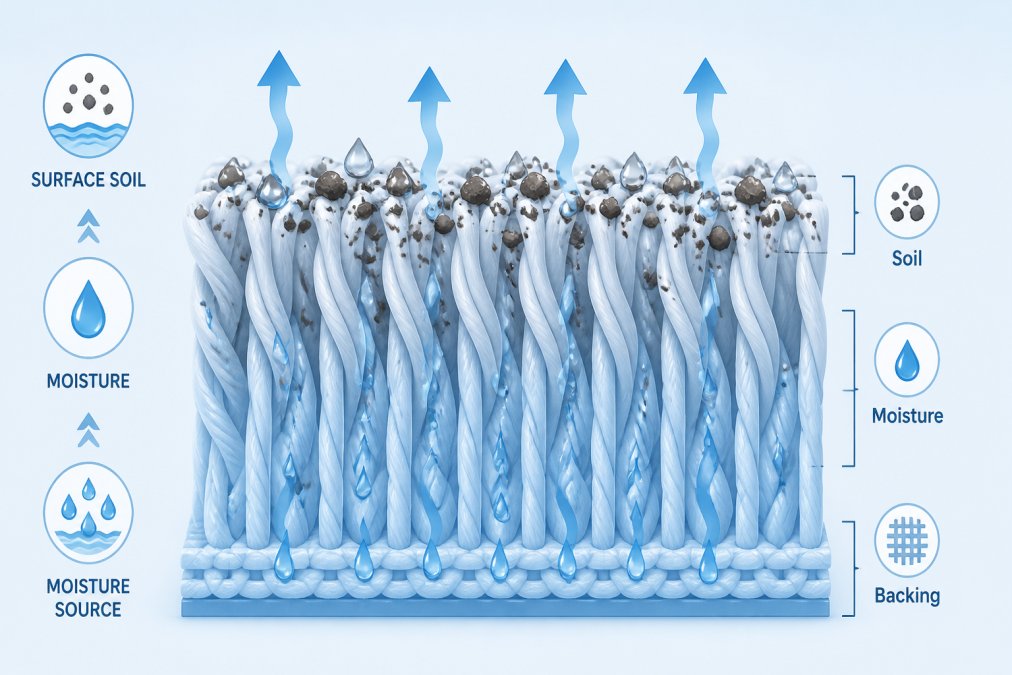
Here’s the mechanics: carpet consists of pile (the visible fibers), backing, and padding underneath. When you apply water during cleaning, some of that moisture soaks through to the backing and pad. If the carpet isn’t dried quickly enough, capillary action pulls that moisture, along with dissolved soil, detergent residue, and bacteria from deep in the carpet, back up through the fibers. The result is a dark, dingy appearance that looks like your carpet is dirty again.
Wicking is particularly problematic in older homes or homes with high humidity. The longer moisture sits in the carpet structure, the more soil wicks to the surface. This is why carpets cleaned in humid conditions often show wicking more severely than those cleaned on dry days.
The solution involves both proper extraction during cleaning and rapid drying afterward. Professional-grade equipment removes far more moisture than consumer machines. Proper airflow, dehumidifiers, and fans all help prevent this common problem.
Over-Wetting and Extended Drying Times
Over-wetting is one of the easiest mistakes to make when cleaning carpets, and it’s a direct cause of why carpets get dirty after cleaning. When too much water is applied during the cleaning process, the carpet becomes saturated. Saturated carpet takes much longer to dry, creating an extended window during which wicking, mold growth, and mildew can occur.
Extended drying times also give soil particles more opportunity to resettle on the carpet fibers. As the carpet dries slowly, any remaining moisture carries dissolved soil upward. This soil then deposits on the surface as the moisture evaporates, leaving behind visible residue and discoloration.
Over-wetting is common with rental carpet cleaning equipment because these machines lack the suction power of professional-grade equipment. A homeowner using a rental machine may apply water generously, assuming that more water equals better cleaning. In reality, the machine can’t extract that water effectively, leaving the carpet soaked. The result is a carpet that takes 24 to 48 hours or longer to dry completely, during which time wicking and resoiling occur.
Professional cleaning equipment, by contrast, uses powerful suction to remove most of the water immediately after cleaning. This dramatically reduces drying time and prevents the conditions that lead to resoiling. The difference between a carpet that dries in 6 to 8 hours and one that takes 48 hours is significant when it comes to preventing carpets from getting dirty after cleaning.
How to Prevent Carpet Resoiling
Preventing carpet resoiling requires a multi-step approach that addresses the root causes: residue, moisture, and soil attraction. The good news is that once you understand these causes, prevention becomes straightforward.
Start with proper pre-cleaning preparation. Remove all loose soil by vacuuming thoroughly before any wet cleaning. This reduces the total soil load and means less dissolved soil to wick back up later. Many people skip this step or do a cursory vacuum, but thorough pre-vacuuming is essential.
Use the right cleaning solution and proper dilution. Cleaning solutions must be diluted correctly. Too much detergent concentrate means more residue left behind. Too little means ineffective cleaning. The ideal balance depends on your water hardness, carpet fiber type, and soil type. Professional cleaners adjust their formulas based on these factors.
Ensure adequate rinsing. This is non-negotiable. After the cleaning solution does its job, the carpet must be rinsed with clean water multiple times. Each rinse cycle should remove more detergent residue. Professional equipment allows for multiple rinse cycles without excessive water application.
Control drying conditions. Use fans, open windows, and dehumidifiers to speed drying. The faster your carpet dries, the less time wicking has to occur. In humid conditions, dehumidifiers are especially important. Aim for drying times under 12 hours if possible.
Apply carpet protector when appropriate. Some homeowners choose to apply a protective coating after professional cleaning. This creates a barrier that reduces soil attraction and makes future cleaning easier. However, this is optional and depends on your carpet type and preferences.
Maintain regular vacuuming. After your carpet is fully dry, resume regular vacuuming. This removes soil before it can be ground into the fibers or reattract moisture.
Carpet Cleaning Residue Removal Techniques
Residue removal requires understanding the chemistry behind why residue forms in the first place. Most cleaning solutions are alkaline (pH 9-13) to break down oils and suspend soil. If that alkaline detergent isn’t fully rinsed away, it dries sticky on the fibers. The solution isn’t just water extraction, it’s pH balancing.
The pH Balancing Method (Most Effective)
After standard cleaning, an acid rinse neutralizes leftover alkaline detergent. This is why professional cleaners often finish with a secondary rinse using slightly acidic water (pH 5-6). White vinegar works for this reason: its acidity (pH around 2.5) counteracts alkaline residue. Mix one part white vinegar with three parts water and spray lightly onto affected areas. Let it sit for 10 to 15 minutes, this dwell time allows the acid to chemically neutralize the alkaline film, then extract with a wet vacuum or carpet cleaning machine. The carpet will feel noticeably less sticky because the residue has been neutralized, not just diluted.
Repeat as needed until the carpet no longer feels tacky to the touch. This is the key indicator that pH has been restored to neutral and residue has been broken down.
Hot Water Rinse Without Detergent
A secondary rinse using hot water only (no cleaning solution) can remove some residue, but it’s less effective than pH balancing because water alone doesn’t neutralize alkaline molecules, it only dilutes them. Use your carpet cleaning machine with hot water only, making multiple passes over affected areas. This works best for light residue; heavy buildup requires the chemical action of an acid rinse.
Enzyme-Based Cleaners for Protein Residue
Some residues are protein-based (from food, body oils, or biological matter) rather than detergent-based. Enzyme-based cleaners break down these protein chains chemically, making them easier to extract. These cleaners work differently than acid rinses and are most effective on organic residues. Apply according to product instructions, allow dwell time, and extract thoroughly.
Professional Residue Removal
For severe or stubborn residue buildup, professional re-cleaning designed specifically to remove residue is often the fastest solution. Professional cleaners use truck-mounted extraction equipment with significantly higher suction power than consumer machines, removing far more residue in a single pass. They also have access to specialized rinse solutions formulated to break down specific types of residue and can perform multiple extraction cycles without over-wetting the carpet. This approach is particularly effective when DIY methods have been attempted without success.
Low-Quality Equipment and Improper Rinsing
The equipment used during cleaning, and the technique behind it, determines whether your carpet will resoil. This difference is rooted in extraction mechanics and drying science.
Extraction Power: The Core Difference
Consumer-grade carpet cleaners and rental machines typically generate 40-60 pounds per square inch (PSI) of water pressure but extract moisture at rates around 1-2 gallons per minute. Professional truck-mounted systems deliver 300-500 PSI with extraction rates of 10-20 gallons per minute or higher. This means professional equipment removes dramatically more water from the carpet structure in a single pass.
Why this matters: when water remains in the carpet backing and padding, capillary action pulls that moisture, along with dissolved soil and detergent, back up through the fibers as the carpet dries. The longer moisture sits, the more wicking occurs. Professional extraction removes so much water that drying time drops from 24-48 hours (typical with rental machines) to 6-8 hours. This compressed drying window dramatically reduces the opportunity for wicking and resoiling.
Fiber-Specific Reactions to Residue and Moisture
Different carpet fibers respond differently to residue and extended moisture exposure. Synthetic fibers like nylon and polyester are hydrophobic (water-repellent) but hygroscopic (they absorb moisture slowly). When these fibers stay wet for extended periods, they can swell and become matted. Matted synthetic fibers trap soil more easily and appear dingy even when relatively clean. Inadequate extraction leaves synthetic carpets vulnerable to this matting.
Natural fibers like wool are naturally hygroscopic and absorb moisture readily. Wool can tolerate moisture better than synthetics, but prolonged wetness still increases the risk of mildew and odor. Wool also requires gentler extraction to avoid fiber damage. Consumer machines often lack the precision to extract wool effectively without over-agitating the fibers.
The implication: if your carpet is synthetic, rapid extraction is critical to prevent matting and resoiling. If it’s wool, you need both adequate extraction and careful technique to avoid damaging the fibers.
Environmental Factors: Humidity and Airflow
Even with adequate extraction, drying conditions matter enormously. A carpet cleaned in a humid environment (above 60% relative humidity) will dry much more slowly than one cleaned on a dry day. High humidity slows evaporation, extending the window during which wicking can occur. This is why carpets cleaned in summer or in naturally humid climates often resoil more quickly than those cleaned in drier seasons.
Airflow also affects drying. A carpet in a well-ventilated room with open windows and ceiling fans will dry faster than one in a closed, stagnant room. Professional cleaners often recommend running fans and dehumidifiers for 12-24 hours after cleaning to accelerate drying and prevent resoiling. If your home has poor airflow or high humidity, this step becomes even more critical.
Improper Rinsing Technique
Even with professional-grade equipment, improper rinsing leaves residue behind. The rinse phase must receive as much attention as the cleaning phase. Adequate rinsing means:
- Multiple rinse cycles: After the cleaning solution is extracted, at least two to three additional rinse cycles with clean water should follow. Each cycle removes more detergent residue.
- Adequate dwell time: Rinse water must saturate the carpet fully before extraction, allowing it to contact all residue. Rushing this step leaves detergent molecules behind.
- Complete extraction: Each rinse cycle must be extracted thoroughly. Partial extraction leaves rinse water (and any residue it contains) in the carpet.
Consumer machines often have small water tanks that require frequent refilling, interrupting the rinsing rhythm. Professional equipment uses large tanks (50-100+ gallons) that allow continuous, consistent rinsing without interruption.
The Bottom Line
Low-quality equipment combined with improper technique creates the perfect conditions for resoiling: incomplete residue removal, extended drying times, and moisture-trapped in the carpet structure. Professional equipment and technique eliminate these conditions, which is why professionally cleaned carpets typically stay cleaner longer.
Carpet Age, Fiber Degradation, and Maintenance
Older carpets are more prone to rapid resoiling than newer ones, for several reasons. As carpet ages, the fibers become more fragile and susceptible to damage. Cleaning itself, while necessary, can accelerate fiber degradation if not done carefully.
Synthetic fibers like polyester and nylon can become matted or frayed with age and repeated cleaning. Matted fibers trap soil more easily and can appear dingy even when relatively clean. This is why older carpets sometimes look dirty again quickly, the fiber structure itself has changed.
Additionally, older carpet padding may have deteriorated. Degraded padding doesn’t dry as quickly and can trap moisture longer, increasing the likelihood of wicking. If padding is very old, it may hold moisture almost indefinitely, making resoiling almost inevitable.
Maintenance history also affects how quickly carpets resoil. Carpets that have been regularly vacuumed and spot-cleaned tend to stay cleaner longer after professional cleaning. Conversely, carpets that have been neglected or exposed to heavy soil loads may have embedded soil deep in the fibers and backing. This soil can take longer to remove completely, and some may remain even after professional cleaning.
For older carpets or those in poor condition, managing expectations is important. Professional cleaning can improve appearance dramatically, but it may not return a very old or heavily soiled carpet to like-new condition. In some cases, replacement may be more practical than repeated deep cleaning.
Professional Cleaning vs. DIY Methods
The difference between professional and DIY carpet cleaning is substantial, particularly when it comes to preventing resoiling. Understanding these differences helps explain why carpets get dirty after cleaning with DIY methods more often than with professional service.
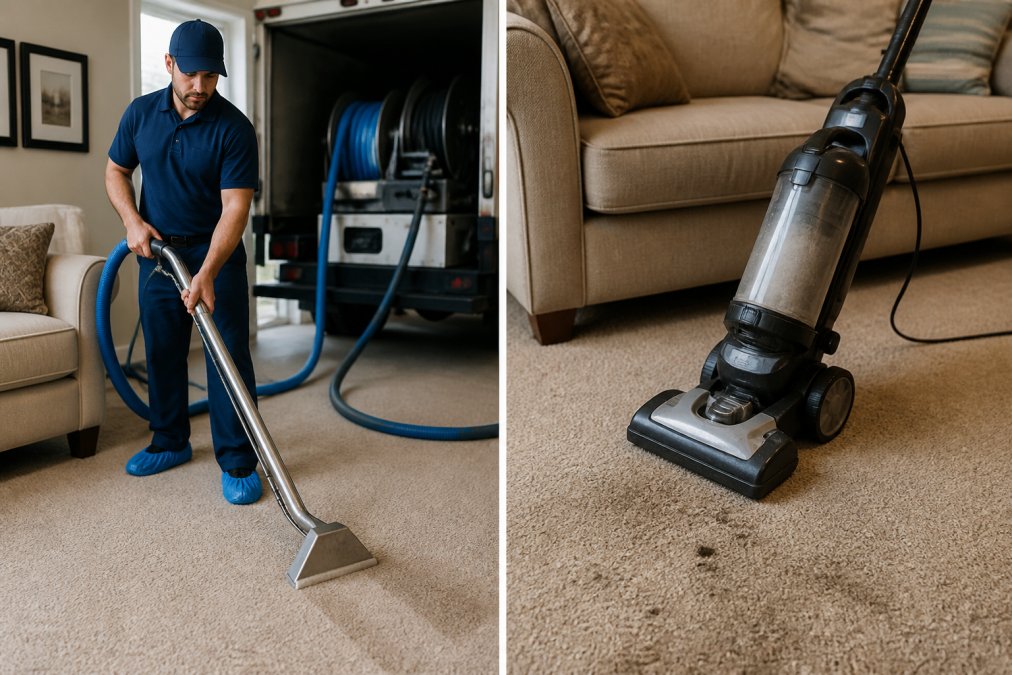
Professional cleaning uses truck-mounted equipment that delivers hot water at high pressure while simultaneously extracting water with powerful suction. This combination removes far more soil, moisture, and detergent residue than consumer machines can achieve. Professional cleaners also have years of experience knowing exactly how much water to apply, how long to let cleaning solution dwell, and how thoroughly to rinse.
DIY methods using rental or consumer machines have significant limitations. The water pressure is lower, suction power is weaker, and the machines are heavier and more awkward to maneuver. Most homeowners don’t have experience with the technique, so they may apply too much water, use too much detergent, or rush the rinse phase.
Drying time is another critical difference. Professional cleaning typically results in carpets that are dry within 6 to 8 hours. DIY cleaning often leaves carpets damp for 24 to 48 hours or longer. This extended drying window is when most resoiling occurs through wicking and soil resettlement.
Lake Geneva Carpet Cleaning uses state-of-the-art truck-mounted hot water extraction technology specifically designed to prevent the conditions that cause carpets to get dirty after cleaning. The equipment removes more moisture, and the technique is perfected through decades of experience.
That said, DIY methods aren’t worthless. They’re appropriate for spot cleaning, light maintenance, and situations where professional service isn’t available. The key is understanding their limitations and not expecting results comparable to professional cleaning.
If your carpets are getting dirty quickly after cleaning, the cause is likely one of the issues covered here: residue, wicking, over-wetting, or inadequate extraction. Understanding the cause helps you choose the right solution.
For homeowners in Wisconsin looking to break the resoiling cycle, professional carpet cleaning offers a proven way to achieve results that last. Lake Geneva Carpet Cleaning specializes in removing the deep soil, residue, and moisture that cause carpets to resoil, using advanced extraction technology and techniques refined over 32 years of service. Our 10-day satisfaction guarantee means you can trust that your carpet will stay cleaner longer. Contact Lake Geneva Carpet Cleaning today to schedule a cleaning and discover the difference that comes from entrusting your carpets to true experts.
Frequently Asked Questions
What is carpet wicking and why does it make carpets get dirty after cleaning?
Carpet wicking occurs when moisture trapped in the carpet backing or padding moves upward through the fibers, bringing dissolved soil and residue to the surface as the carpet dries. This happens when carpets are over-wetted during cleaning or when detergent residue remains in the fibers. The soil suspension created by cleaning chemicals can wick back up, making carpets appear dirty again within days. Professional extraction methods minimize wicking by removing excess moisture and rinsing thoroughly to eliminate residue.
How long should carpet take to dry after professional cleaning?
Properly cleaned carpet should dry within 4-8 hours under normal conditions, depending on humidity, temperature, and air circulation. Carpets that take longer than 12 hours to dry indicate over-wetting, which increases the risk of mold growth, odor, and rapid resoiling. Professional-grade equipment with strong suction power removes more water, reducing drying time significantly. Adequate ventilation, ceiling fans, and open windows speed up the process and help prevent moisture-related problems in your home.
Can soap residue cause carpets to attract more dirt?
Yes, detergent buildup is one of the primary reasons carpets resoil quickly. Residual detergent creates a sticky film on carpet fibers that attracts and traps soil particles, dust, and allergens. This residue also increases static electricity in synthetic fibers, which causes dirt to cling more readily. Proper rinsing during cleaning is critical to remove all detergent. High pH cleaning solutions are particularly prone to leaving residue, so using pH-balanced products and thorough extraction helps prevent this problem and keeps carpets cleaner longer.
What are the most common causes of rapid carpet resoiling?
Rapid resoiling stems from multiple factors: detergent residue, over-wetting, improper rinsing, low-quality equipment, and failure to remove loose soil before wet cleaning. Environmental factors like high humidity, poor air circulation, and seasonal contaminants also accelerate dirt attraction. Older carpets with degraded fibers are more susceptible to soil attraction due to pile distortion. Regular vacuuming before professional cleaning, ensuring proper drying times, and using professional-grade extraction equipment all help prevent the problem and extend the time between cleanings.
This article was written using GrandRanker