Table of Contents
- What Professional Carpet Cleaning Actually Removes
- How Professional Carpet Cleaning Improves Indoor Air Quality
- Professional Carpet Cleaning vs DIY Methods
- How Often to Professionally Clean Carpets
- Professional Carpet Cleaning Drying Time and Aftercare
- Professional Carpet Cleaning and Carpet Lifespan
- Removing Stubborn Stains and Pet Odors
- Why Routine Vacuuming Isn’t Enough
- Frequently Asked Questions
Last Updated: October 12, 2026
What Professional Carpet Cleaning Actually Removes
Professional carpet cleaning reaches far deeper than routine vacuuming ever could. When you hire a professional carpet cleaning service, you’re investing in the removal of embedded dirt, allergens, bacteria, and contaminants that have worked their way into carpet fibers and the padding beneath. Most homeowners don’t realize that abrasive soil, sand, salt, and grit, embeds itself into the base of carpet fibers over time, causing microscopic damage that weakens the fibers themselves.
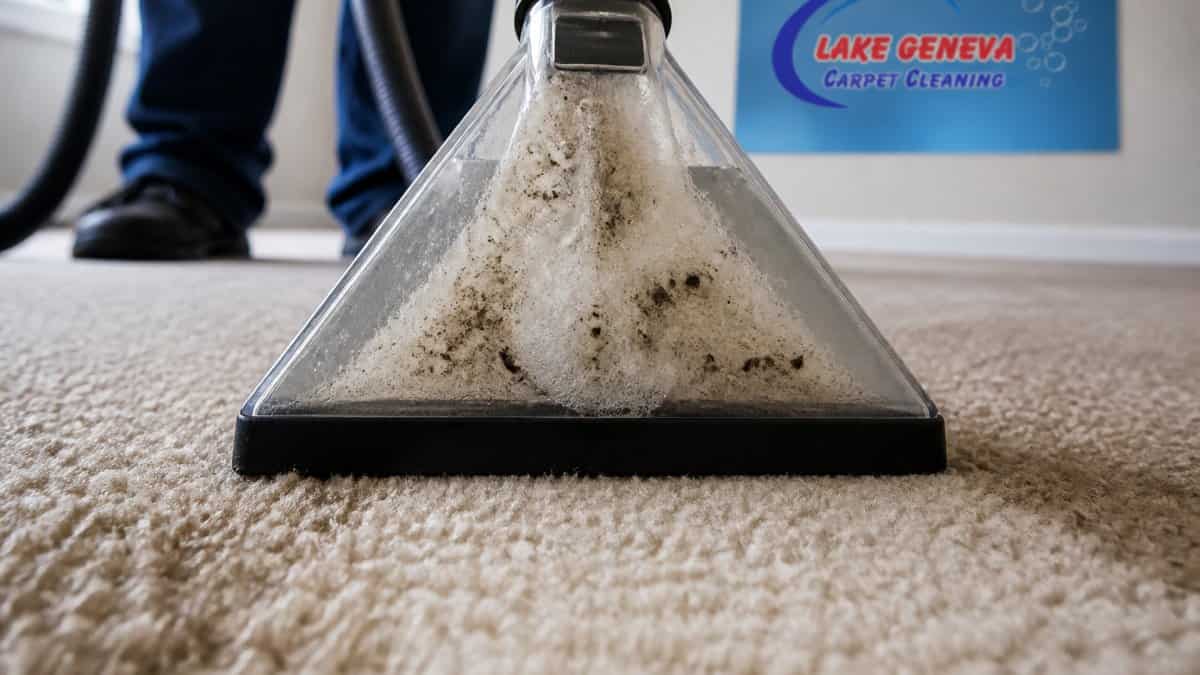
A professional carpet cleaning approach uses hot water extraction technology to break down and flush out these deep contaminants. Unlike surface-level cleaning, this method reaches the padding and base of the carpet where dust mites, pet dander, and mold spores accumulate. At Lake Geneva Carpet Cleaning, we use truck-mounted hot water extraction equipment specifically designed to pull out trapped allergens and stubborn residue that store-bought spot cleaners simply cannot address.
The difference becomes visible immediately. Carpets that looked dull and dingy suddenly reveal their original color and texture. More importantly, what you can’t see, the bacteria, dust mites, and allergens, gets removed, creating a genuinely healthier living environment for your family.
Professional carpet cleaning removes embedded dirt, allergens, and bacteria that routine vacuuming leaves behind, transforming not just appearance, but the actual cleanliness and health of your carpets.
How Professional Carpet Cleaning Improves Indoor Air Quality
Indoor air quality directly impacts respiratory health, allergies, and overall comfort in your home. Carpets act as a filter, trapping airborne particles, dust, pollen, pet dander, and mold spores, that would otherwise circulate through your living space. Over time, these trapped contaminants build up, and your carpet becomes a source of poor air quality rather than a filter.
When dust mites colonize carpet fibers and padding, they produce waste that triggers allergies and asthma symptoms. Many people don’t connect their persistent allergies to the carpet beneath their feet. Professional carpet cleaning removes the dust mites themselves, along with their waste, significantly improving the air you breathe indoors.
The eco-friendly cleaning methods used by professional services don’t introduce harsh chemical residues that can linger in your home. This matters especially for families with children, pets, or anyone with respiratory sensitivity. After professional cleaning, the reduction in airborne allergens is noticeable, people often report breathing easier within hours.
Professional Carpet Cleaning vs DIY Methods
DIY carpet cleaning and rental machines look like a reasonable shortcut, but the difference between them and professional service comes down to four things: water temperature, suction power, moisture control, and what happens to the residue left behind. Understanding those mechanics explains why results diverge so sharply.
How the main methods actually work
- Routine vacuuming. Agitation and airflow lift loose soil from the surface of the pile. It does not reach the base of the fibers or the padding, and it does nothing for sticky or oily residue.
- Store-bought spot cleaners. These rely on surfactants and solvents to loosen a stain, then you blot it up. They work on the top layers of the pile. Many leave a sticky residue that attracts new soil, which is why a spot can look clean for a week and then darken again.
- Rental machines. These are typically portable units that spray a cleaning solution and vacuum it back up. They can reach moderate depth, but water temperature drops quickly, suction is limited by a small motor and short hose, and the homeowner controls the pass speed. The most common outcome is overwetting: too much water in, too little recovered.
- Professional hot-water extraction. A truck-mounted unit heats water at the truck and delivers it through a long hose at consistent temperature, then recovers it with far stronger vacuum. The result is deeper flushing of the fibers and padding and much more complete water recovery.
The trade-offs that matter most
| Method | Depth of clean | Typical drying time | Residue risk | Who controls moisture |
|---|---|---|---|---|
| Routine vacuuming | Surface only | Not applicable | None | Homeowner |
| Store-bought spot cleaners | Top layers | Several hours | Moderate to high | Homeowner |
| Rental machines | Moderate | 12-24 hours | Moderate | Homeowner |
| Professional extraction | Deep fibers and padding | 4-8 hours | Low when properly rinsed | Trained technician |
Two of those columns deserve a closer look.
Residue is the hidden variable. Cleaning solutions that are not fully rinsed out leave a film that acts like a magnet for soil. This is one of the most common reasons a DIY-cleaned carpet looks dull again within weeks. Professional extraction pairs the cleaning solution with a rinse step, so what goes in comes back out.
Moisture control is the other. When a carpet stays damp for more than about 12 hours, the padding underneath becomes a favorable environment for mold and mildew, and the backing can delaminate. Rental machines frequently leave carpets in that window. Truck-mounted extraction recovers enough water that most carpets are dry to the touch within 4-8 hours.
What this means for your carpet’s warranty
Many carpet manufacturers specify professional hot-water extraction as the recommended cleaning method and require it at a set interval to keep the warranty valid. Some also warn against excessive moisture or against cleaning agents that leave residue. If you are relying on a rental machine or a spot cleaner, you may be doing something the warranty does not cover. It is worth checking the paperwork that came with your flooring before you decide.
When DIY is genuinely fine
DIY is not useless. For a fresh spill you catch within a few minutes, a store-bought spot cleaner and a clean white cloth are reasonable. For a single small high-traffic patch between professional visits, a light spot treatment is fine. What DIY cannot do is reset the whole carpet: flush the padding, remove the accumulated grit at the base of the fibers, or restore the pile across an entire room.
If you have tried store-bought cleaners and rental machines without lasting results, the pattern usually points to residue or incomplete moisture recovery rather than to the stain itself. Professional extraction addresses both.
A quick way to decide
- One fresh, small spill: DIY spot treatment is fine.
- A room that looks dull despite regular vacuuming: professional extraction.
- Pet accidents that have soaked into the padding: professional extraction.
- Allergy symptoms that flare in carpeted rooms: professional extraction.
- A whole-home refresh before a season change or event: professional extraction.
If you are unsure which category you fall into, that is a normal question, and it is one we answer on every estimate.
How Often to Professionally Clean Carpets
There is no single correct interval, but there is a defensible way to arrive at yours. Three inputs drive the answer: what your carpet manufacturer requires, how much traffic and moisture your home sees, and what the seasons are doing outside your door.
Start with the manufacturer’s requirement
Most residential carpet warranties specify professional hot-water extraction at a set interval, commonly somewhere between every 12 and 18 months, and many require it more often in high-traffic areas. If you skip that interval and later file a claim for premature wear or matting, the missing cleaning history can be used to deny it. Check the warranty document that came with your flooring, or the manufacturer’s care guide, before you set a schedule. This is the one input you should not guess at.
Then adjust for your household
| Household profile | Suggested interval | Why |
|---|---|---|
| Adults only, low traffic, no pets | Every 12-18 months | Meets most warranty minimums; soil accumulates slowly |
| Average family, some foot traffic | Every 12 months | Balances cost of ownership against fiber wear |
| Children in the home | Every 9-12 months | Spills, crafts, and tracked-in soil raise the load |
| One or more pets | Every 6-9 months | Dander, oils, and accidents reach the padding |
| Allergy or asthma sufferers in the home | Every 6-9 months | Keeps dust mite and allergen load down |
| Home office or small business with customer foot traffic | Every 4-6 months | Commercial-level soil loading on residential carpet |
These are starting points, not rules. A household with two large dogs and a backyard that stays muddy will need the shorter end of the range. A retired couple with a no-shoes policy and no pets can often stretch to the longer end.
Why Lake Geneva homes need a seasonal adjustment
Lake Geneva sits on a lake, and that shapes carpet care in ways a generic schedule misses.
- Winter road salt and sand. From roughly November through March, salt and grit get tracked in from driveways, sidewalks, and parking lots. Salt is hygroscopic, meaning it pulls moisture from the air, and grit is abrasive. Both work their way to the base of the pile. A late-winter or early-spring professional cleaning removes the season’s accumulation before it does another year of fiber damage.
- Spring mud and pollen. Thaw season means wet soil and a heavy pollen load. Pollen is a fine particulate that settles into the pile and contributes to allergy symptoms indoors. A spring cleaning after the thaw is a common and sensible choice.
- Summer lake traffic. Boats, beaches, and guests mean wet feet, sand, and sunscreen. Sunscreen and tanning oils are among the harder residues to remove with surface cleaning because they are oily and bind to the fiber.
- Fall leaf debris and early heating. Once the furnace comes on, windows close and indoor air recirculates. Whatever is in the carpet stays in the air you breathe. A fall cleaning before the house closes up for the season is a good fit for allergy-sensitive households.
- Humidity and basements. Lake-adjacent homes often have higher ambient humidity, and finished basements are common. Damp carpet in a humid space is the combination that supports mold and mildew, so basement carpet in these homes often benefits from the shorter end of the interval.
A practical pattern for many Lake Geneva homes is two cleanings a year, timed to the seasons rather than to the calendar: one in late winter or early spring to remove salt, sand, and mud, and one in early fall before the house closes up.
The counterintuitive part
Cleaning more often can extend the life of the carpet rather than wear it out. The damage comes from abrasive soil grinding against fibers under foot traffic, and that damage is cumulative and irreversible. Removing the soil before it reaches the base of the pile is what preserves the fiber. A carpet cleaned on a sensible schedule routinely outlasts one that is only cleaned when it looks bad, because by the time a carpet looks bad, the wear has already happened.
If your carpet has not been professionally cleaned in more than two years, or if you cannot find the warranty documentation, it is worth having a professional assess the current condition before setting a schedule. Deeply soiled carpet sometimes needs an initial deeper clean before a normal interval makes sense.
Signs it is time, regardless of the calendar
- The carpet looks dull in traffic lanes even after vacuuming.
- A musty or pet odor returns within days of vacuuming.
- Allergy symptoms are worse in carpeted rooms than in uncarpeted ones.
- The pile feels matted or stiff in walkways.
- You are hosting an event, listing the home, or moving in or out.
If you are not sure where your home falls, we are happy to look at your traffic patterns, pets, and carpet type and recommend an interval. Pricing depends on the job, so contact us for a free quote.
Professional Carpet Cleaning Drying Time and Aftercare
Drying time matters more than many homeowners realize. Wet carpets create an environment where mold and mildew can develop, especially in humid climates or basements. Professional carpet cleaning should leave your carpets damp but not soaking wet, typically dry to the touch within 4-8 hours.
After professional cleaning, a few aftercare steps protect your investment:
- Avoid walking on wet carpets for at least 2-3 hours
- Ensure good air circulation by opening windows or running ceiling fans
- Keep pets off cleaned areas until completely dry
- Vacuum lightly once dry to restore carpet pile
The drying time difference between professional and DIY methods is significant. Rental machines often leave carpets saturated, requiring 24 hours or more to dry fully. Professional truck-mounted extraction removes moisture more efficiently, reducing the risk of mold growth and allowing you to use your home normally sooner.
Slow drying creates ideal conditions for mold and mildew. If carpets remain wet for more than 12 hours, you risk hidden moisture damage in the padding beneath.
Professional Carpet Cleaning and Carpet Lifespan
Carpet is an investment in your home’s comfort and appearance. Most quality carpets last 8-10 years with proper care, but that lifespan shrinks dramatically without professional maintenance. Abrasive soil and embedded dirt act like sandpaper on carpet fibers, causing them to fray and wear prematurely.
Professional carpet cleaning removes the grit and contaminants that damage fibers, effectively extending your carpet’s useful life by several years. This means you avoid premature replacement and maintain your home’s aesthetic appeal longer. The fiber wear that happens from walking on dirty, abrasive carpets is cumulative and irreversible, prevention through regular professional cleaning is far more cost-effective than replacement.
Removing Stubborn Stains and Pet Odors
Stubborn stains and pet odors represent some of the most frustrating carpet problems. Store-bought stain removers often mask odors temporarily without addressing the root cause. Pet accidents, in particular, leave urine that soaks into the padding, where it continues to produce odor even after the surface stain disappears.
Professional carpet cleaning tackles these problems at the source. Hot water extraction flushes out the urine compounds trapped in padding, eliminating odor rather than covering it. For stubborn stains, wine, pet stains, old residue, professional-grade cleaning solutions combined with powerful extraction remove what household cleaners cannot.
The difference is immediate and lasting. After professional cleaning, odors don’t return within weeks the way they often do with DIY spot treatments. This is especially important for pet owners in the area who want their homes to feel fresh and clean.
Why Routine Vacuuming Isn’t Enough
Vacuuming is essential maintenance, but it only removes surface dirt and loose debris. It cannot extract embedded soil, allergens, or contaminants that have settled into carpet fibers and padding. Even the best household vacuum lacks the heat and suction power needed to reach deep into the carpet structure.
Over time, the dirt you can’t see accumulates. Your carpet looks reasonably clean on the surface, but beneath that appearance, allergens, dust mites, and bacteria are thriving. This is why people often report that their carpets look dingy or feel less fresh despite regular vacuuming, the surface looks okay, but the deeper contamination creates that dull, tired appearance.
Routine vacuuming should happen weekly to manage surface debris and foot traffic soil. But vacuuming alone cannot prevent the buildup that leads to poor indoor air quality, shorter carpet lifespan, and stubborn odors. Professional carpet cleaning removes what vacuuming cannot, making it an essential complement to your regular maintenance routine.
Professional carpet cleaning is not a luxury, it’s a practical investment in your home’s health, appearance, and longevity. When you understand what professional cleaning actually removes and how it improves your indoor environment, the decision becomes clear. Lake Geneva Carpet Cleaning brings over 32 years of experience and state-of-the-art truck-mounted equipment to deliver results that protect your carpets and your family’s health. Our eco-friendly approach ensures a clean home without harsh chemical residue. Contact us for a free quote and discover why homeowners throughout Wisconsin trust our meticulous attention to detail and commitment to quality.
Frequently Asked Questions
Why is professional carpet cleaning important for my home?
Professional carpet cleaning removes embedded dirt, allergens, dust mites, bacteria, and odors that routine vacuuming cannot reach. This deep cleaning extends your carpet’s lifespan, improves indoor air quality, and creates a healthier living environment. For homeowners with allergies, pets, or high foot traffic, professional cleaning is essential to maintain both appearance and hygiene.
How often should I have my carpets professionally cleaned?
Most homeowners benefit from professional carpet cleaning every 12-18 months for normal household traffic. Homes with pets, children, or allergy sufferers may need cleaning every 6-12 months. High-traffic commercial spaces may require more frequent cleaning. The right schedule depends on your specific situation, contact us for a recommendation tailored to your home.
Can professional carpet cleaning actually remove pet odors permanently?
Professional hot water extraction reaches deep into carpet padding where pet accidents soak, removing odor-causing bacteria and residue that surface treatments cannot address. This method is far more effective than DIY spot cleaners or rental machines. However, if padding is severely damaged, replacement may be necessary. Professional cleaning addresses the root cause rather than masking the smell.
Will professional carpet cleaning help with dust mites and allergens?
Yes. Professional carpet cleaning with hot water extraction removes dust mites, their droppings, and other allergens trapped deep in carpet fibers and padding. This significantly improves indoor air quality, especially beneficial for those with allergies or asthma. Regular professional cleaning combined with vacuuming creates a cleaner, healthier home environment.