Table of Contents
- Understanding Indoor Allergens and Their Sources
- How to Reduce Dust in the House with Daily Habits
- How Often to Wash Bedding for Allergies
- Control Humidity to Prevent Dust Mites and Mold
- Best Air Purifier for Allergies and Indoor Air Quality
- How to Clean Carpets to Reduce Allergens
- Room-by-Room Action Plan for Allergen Reduction
- Replace HVAC Filters and Maintain Air Circulation
- Reduce Allergen-Trapping Fabrics and Surfaces
- Frequently Asked Questions
Last Updated: October 11, 2026
Understanding Indoor Allergens and Their Sources
Indoor allergens are substances that trigger allergic reactions inside your home. Common triggers include dust mites, pet dander, pollen, mold spores, and cockroach droppings. These particles settle in carpets, bedding, furniture, and air ducts where they accumulate over time.
The challenge is that allergens are invisible. You can’t see dust mites living in your mattress or the pollen tracked indoors on shoes. But if you or your family experience sneezing, itching, congestion, or breathing difficulties indoors, allergens are likely the culprit.
Understanding where allergens hide helps you target them effectively. Carpets are a major reservoir because fibers trap particles deep where vacuums can’t always reach. Bedding collects dead skin cells that feed dust mites. Humidity creates conditions where mold thrives. Air circulation determines whether allergens stay suspended or settle where you breathe them.
The good news: you can reduce indoor allergens naturally through consistent habits. Most people don’t need expensive equipment or harsh chemicals. Simple daily practices combined with strategic changes make a measurable difference.
How to Reduce Dust in the House with Daily Habits
Dust accumulation happens constantly. Dead skin cells, fabric fibers, outdoor dirt, and dust mite debris settle on surfaces daily. The key is removing dust before it becomes embedded or gets stirred back into the air.
Dusting Techniques That Trap Allergens
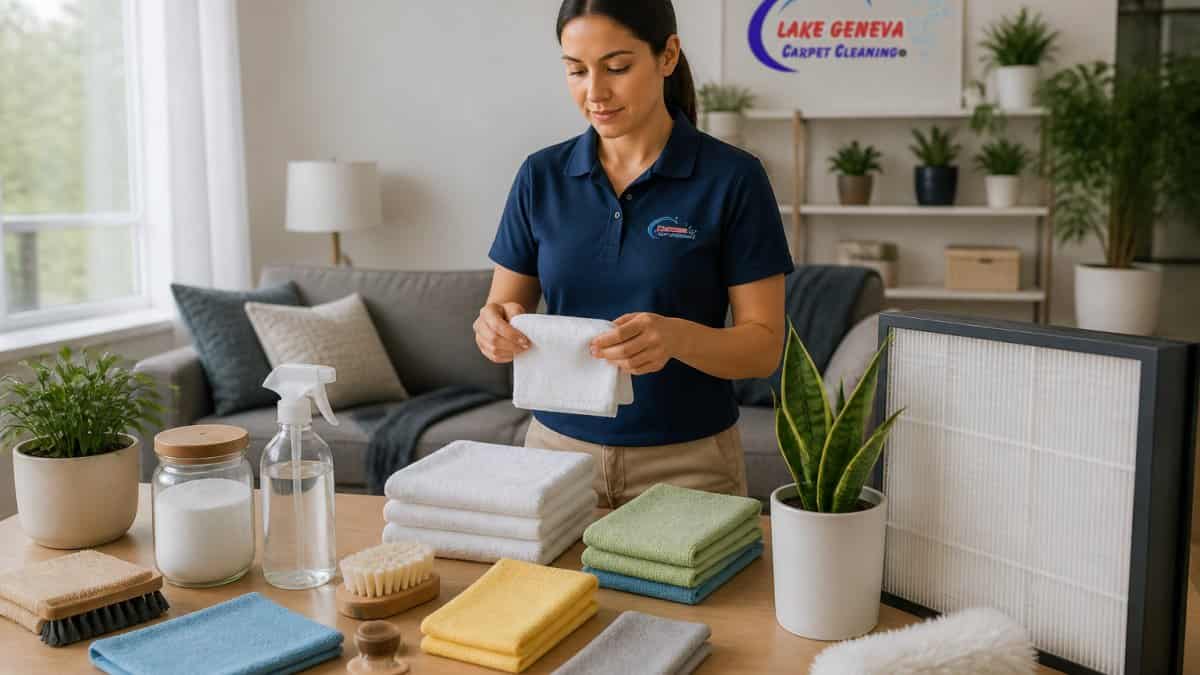
Use a damp cloth instead of dry dusting. Dry dusting spreads particles into the air where you breathe them. A slightly damp microfiber cloth traps dust and holds it on the cloth. Wring out excess water so the cloth is damp, not wet.
Dust from top to bottom. Particles fall downward as you work, so start with ceiling corners, light fixtures, and shelves. Move to furniture and end with baseboards and floors.
Wipe surfaces weekly in bedrooms and living areas where you spend the most time. Pay special attention to:
- Ceiling fans and vents
- Windowsills and blinds
- Furniture surfaces
- Shelves and picture frames
- Door frames and baseboards
Microfiber cloths work best because they grab fine particles that cotton cloths miss. Wash your dusting cloth after each use to prevent redepositing allergens.
Vacuuming with HEPA Filtration
A vacuum with HEPA filtration captures small particles that standard filters miss. HEPA filters trap allergens instead of releasing them back into the air during vacuuming.
Vacuum carpeted areas twice weekly if you have allergies or pets. High-traffic zones and bedrooms should get priority. Slow, deliberate passes work better than quick sweeping because they give the vacuum time to pull allergens from carpet fibers.
Key vacuuming practices:
- Empty the vacuum outside to avoid releasing trapped allergens indoors
- Replace filters according to manufacturer guidance
- Vacuum before the air settles after dusting
- Use a vacuum with sealed suction to prevent air leaks
For hard floors, use a damp mop rather than dry sweeping, which stirs up dust.
How Often to Wash Bedding for Allergies
Your bed is ground zero for dust mites and allergens. Wash bedding weekly in hot water to kill dust mites and remove their droppings.
Hot water is essential. Dust mites die at temperatures above 130°F. Cold or warm water doesn’t eliminate them. If you can’t use hot water due to fabric care, use the hottest setting your bedding tolerates.
Washing frequency by item:
| Bedding Item | Washing Frequency | Water Temperature |
|---|---|---|
| Sheets and pillowcases | Weekly | Hot (130°F or higher) |
| Blankets and comforters | Every 2 weeks | Hot when possible |
| Mattress pads | Monthly | Hot when safe for fabric |
| Pillows | Every 3-6 months | Check care label |
Don’t skip this step. Weekly hot water washing is one of the most effective natural ways to reduce dust mites in your bedroom.
Using Allergen-Proof Mattress and Pillow Covers
Allergen-proof covers create a barrier between you and dust mites living inside your mattress and pillows. These covers have a tight weave that blocks dust mite allergens while allowing air and moisture through.
Install covers on your mattress and pillows before any dust mites colonize them. If your mattress already has mites, covers prevent new allergens from escaping while you reduce the population through hot water washing of sheets.
Replace covers if they tear or develop holes. A single opening defeats the purpose. Wash covers monthly with your bedding using hot water.
Quality covers feel similar to regular fabric. They’re not plasticky or uncomfortable when chosen properly. Many people notice better sleep once they reduce nighttime allergen exposure.
Control Humidity to Prevent Dust Mites and Mold
Dust mites absorb moisture from the air rather than drinking water, so they cannot survive when indoor relative humidity stays low. Mold needs liquid water or sustained dampness to grow. That difference matters: you fight dust mites by managing air moisture, and you fight mold by finding and fixing the water source.
Aim for indoor relative humidity between 30% and 50%. Below 30% can dry out airways and irritate sinuses; above 50% to 60% gives dust mites and mold the conditions they need. A simple hygrometer from a hardware store lets you track this room by room.
Find the Moisture Source Before You Buy Equipment
A dehumidifier treats the symptom. Finding the source treats the cause. Work through this troubleshooting sequence:
- Check for active leaks. Look under sinks, around toilets, behind the washing machine, and at the water heater. Even a slow drip feeds mold behind cabinets and baseboards.
- Inspect for condensation. Foggy windows, damp window sills, and dark spots on exterior walls point to warm moist air meeting a cold surface. This is common in Wisconsin during winter, when indoor heating and tight windows create condensation on glass and frames.
- Look for past water damage. Stained ceiling tiles, bubbling paint, warped flooring, and a musty smell in a closet or basement all signal moisture that may still be present.
- Check drainage outside. Gutters that overflow, downspouts that dump water next to the foundation, and grading that slopes toward the house push water into basements and crawl spaces.
- Vent moisture at the source. Run bathroom exhaust fans during and for 15 to 20 minutes after showers. Run the kitchen exhaust fan while cooking. Make sure dryer vents exhaust outdoors, not into the attic or crawl space.
Seasonal Humidity in Lake Geneva and Southeastern Wisconsin
Humidity here swings hard across the year, and your approach should swing with it:
- Spring and summer: Warm, humid air pushes indoor humidity up, especially in basements. This is peak dust mite and mold season. Run air conditioning or a dehumidifier, and keep windows closed on muggy days.
- Fall: Cooler air arrives, but leaf debris and rain can keep basements damp. Clean gutters before the first freeze.
- Winter: Heating dries indoor air, which can drop humidity below 30% and irritate airways. This is when condensation on cold windows and exterior walls becomes the main mold risk, because indoor moisture condenses on cold surfaces. Vent bathrooms and kitchens consistently, and watch for frost or fog on windows.
If you see recurring condensation on the same window or wall every winter, that surface is a mold risk. Improving ventilation or adding a small dehumidifier nearby usually solves it before mold establishes.
When Mold Needs Professional Help
Small surface mold on a bathroom tile or window frame can often be cleaned with a damp cloth and good ventilation. But call a qualified mold remediation professional when you see:
- Mold covering an area larger than roughly 10 square feet
- Mold inside walls, under flooring, or in HVAC ductwork
- A persistent musty odor with no visible mold
- Mold that returns within days of cleaning
- Any mold after a sewage backup or long-standing leak
If you rent, report moisture problems and mold to your landlord in writing. Landlord-controlled repairs are not something you can fix yourself, but documenting the issue protects you and often speeds the fix.
Renter-Friendly Humidity Control
You do not need a whole-house system to make progress. A portable dehumidifier in a damp basement, a bathroom exhaust fan run consistently, and a hygrometer to confirm your numbers cover most situations. If your building has no exhaust fan, a window cracked during showers and a small plug-in fan to move air can reduce condensation. Keep closet doors open and avoid pushing furniture tight against exterior walls so air can circulate.
Best Air Purifier for Allergies and Indoor Air Quality
Air filtration is one of the few indoor allergen measures with clear mechanical logic behind it: a filter physically traps particles, so fewer of them stay airborne for you to inhale. What matters is matching the device to the room and running it consistently.
What HEPA Filtration Actually Captures
A true HEPA filter is rated to capture at least 99.97% of particles down to 0.3 microns. That size range covers the allergens that matter most indoors: dust mite debris, pet dander, pollen grains, and many mold spores. Standard filters let these pass through and recirculate them.
For a portable unit, look for a clean air delivery rate that matches your room size, the packaging usually states a recommended square footage. A unit that is undersized for the room will run constantly without clearing the air. Place it where air can circulate freely, away from walls, curtains, and furniture, and run it continuously rather than in short bursts.
Evidence-Conscious: What Works and What Is Overhyped
It helps to separate measures with a clear physical mechanism from remedies that get repeated online without support:
Backed by a clear mechanism:
- HEPA filtration that traps particles
- Hot water washing of bedding to kill dust mites
- Keeping humidity between 30% and 50%
- Damp dusting and HEPA vacuuming to remove settled allergens
- Sealing mattresses and pillows in allergen-proof covers
Popular but unproven or overstated:
- Essential oil diffusers and scented sprays, these add particles and volatile compounds to the air and can irritate airways rather than help
- Ozone generators, these are not appropriate for occupied indoor spaces
- Houseplants as meaningful air purifiers, the effect is negligible at realistic plant counts
- Salt lamps, crystals, and similar items, no established effect on airborne allergens
Some “natural” air treatments can make allergies worse by adding fragrance, ozone, or fine particles. If a product promises to neutralize allergens without filtration or removal, treat the claim with skepticism.
When Natural Methods Are Not Enough
Natural, nonchemical steps handle a lot, but they have limits. Consider that you may need more than home measures if:
- Symptoms persist for weeks despite consistent cleaning and filtration
- You wake with congestion every morning even after bedding changes
- You notice wheezing or shortness of breath, which warrants a medical evaluation
- You have known mold growth or a pest problem that keeps returning
A doctor or allergist can help identify which allergen is actually triggering symptoms, which is far more efficient than guessing. Testing turns a broad cleanup effort into a targeted one.
Renter-Friendly and Budget-Conscious Options
You do not need to renovate or replace major systems to improve air quality:
- A single well-sized portable air purifier in the bedroom often delivers the biggest improvement, since you spend a third of your day there
- A basic hygrometer confirms whether humidity is actually a problem before you invest in a dehumidifier
- Washable curtains and throw blankets let you remove allergens in the laundry instead of replacing furnishings
- A vacuum with sealed HEPA filtration reduces what gets stirred back into the air
- Keeping windows closed on high-pollen days costs nothing and keeps outdoor allergens out
Prioritize the bedroom first, then the main living area. Filtration complements dusting, vacuuming, and humidity control, it does not replace them, because settled allergens in carpet and bedding stay put until they are physically removed.
How to Clean Carpets to Reduce Allergens
Carpets trap allergens deep in the fibers and padding where regular vacuuming can’t reach. Professional deep cleaning removes embedded allergens that accumulate over months and years.
Hot water extraction reaches deep into carpet fibers and padding. This method uses heated water and suction to pull out trapped allergens, pet dander, dust mite debris, and mold spores.
Regular vacuuming removes surface allergens between deep cleanings. But vacuuming alone leaves the deeper layers untouched. That’s where the majority of allergens hide.
When Professional Deep Cleaning Makes the Difference
Professional deep cleaning becomes important when:
- You have persistent allergy symptoms despite regular vacuuming
- Your carpets haven’t been deep cleaned in over a year
- You have pets that shed dander
- Your home has experienced water damage or moisture issues
- You’re moving into a home with existing carpets
- You have visible stains or odors
Deep cleaning removes allergens that natural methods can’t address. Hot water extraction is far more effective than surface cleaning or store-bought spot cleaners at pulling allergens from carpet padding.
For homeowners in Lake Geneva dealing with seasonal contaminants like road salt and outdoor debris, professional cleaning removes these particles that track indoors and accumulate in carpet fibers.
Lake Geneva Carpet Cleaning uses truck-mounted hot water extraction technology to address embedded allergens and improve indoor air quality. This approach goes deeper than conventional surface methods, effectively removing the allergens that trigger symptoms.
Room-by-Room Action Plan for Allergen Reduction
A systematic approach works better than scattered efforts. Prioritize rooms where you spend the most time and where allergen exposure is highest.
Bedroom (highest priority):
- Wash sheets and pillowcases weekly in hot water
- Install allergen-proof mattress and pillow covers
- Dust surfaces weekly with a damp cloth
- Vacuum twice weekly with HEPA filtration
- Run an air purifier during sleep hours
- Keep humidity between 30% and 50%
- Remove carpets if possible; use hard flooring instead
Living room:
- Vacuum twice weekly
- Dust furniture and surfaces weekly
- Wash throw blankets monthly
- Run an air purifier during the day
- Control humidity levels
- Consider removing upholstered furniture if allergies are severe
Kitchen:
- Use exhaust fans while cooking to remove moisture
- Keep surfaces clean and dry
- Address any leaks or water damage promptly
- Ensure good air circulation
Bathroom:
- Run exhaust fans during showers and after baths
- Fix leaks immediately
- Keep surfaces dry to prevent mold
- Wash bath mats weekly
Basement (if you have one):
- Control moisture with a dehumidifier if needed
- Ensure proper drainage around the foundation
- Address any water intrusion
- Store items in sealed containers to prevent dust accumulation
Start with your bedroom since you spend a third of your time there. Once bedroom allergen levels drop, you’ll notice better sleep and fewer morning symptoms. Expand your efforts to other rooms gradually.
Replace HVAC Filters and Maintain Air Circulation
Your heating and cooling system circulates air throughout your home. If the filter is clogged with dust and allergens, it can’t clean the air effectively.
Check your HVAC filter monthly. Replace it when it looks visibly dirty or dusty. Most filters need replacement every 1 to 3 months depending on:
- How many people live in your home
- Whether you have pets
- Local air quality
- Filter type and thickness
A clean HVAC filter improves air circulation and reduces allergens circulating through your home. It also helps your system run more efficiently.
Proper air circulation matters too. Close interior doors to keep allergens concentrated in fewer rooms. Open windows on dry days to exchange indoor air with fresh outdoor air. Avoid blocking air vents with furniture or curtains.
In Wisconsin, seasonal changes affect air quality. During high pollen seasons, keep windows closed and rely on filtered air circulation indoors. In winter, monitor humidity since heating systems dry indoor air, which can irritate airways.
Reduce Allergen-Trapping Fabrics and Surfaces
Certain materials trap allergens more effectively than others. Reducing these materials decreases allergen accumulation.
High-allergen materials to minimize:
- Wall-to-wall carpeting (especially in bedrooms)
- Upholstered furniture
- Heavy curtains and drapes
- Thick rugs
- Fabric wall hangings
- Decorative pillows
Lower-allergen alternatives:
- Hard flooring like tile, wood, or laminate
- Leather or vinyl furniture
- Washable throw blankets and pillow covers
- Roller shades or washable blinds
- Minimal wall decorations
You don’t need to eliminate all fabric immediately. Start by removing carpeting from bedrooms if possible. Replace heavy curtains with washable alternatives or roller shades. Choose furniture that’s easy to clean.
Washable fabrics are better than permanent ones. Curtains, rugs, and blankets that you can throw in the washing machine are preferable to fixed carpeting or heavy upholstery.
Dust settles on all surfaces, but it accumulates fastest in fabric. Hard surfaces are easier to wipe clean and don’t harbor dust mites or mold.
Reducing indoor allergens naturally takes consistency, but the results are worth the effort. Most people notice symptom improvements within 2 to 4 weeks of implementing these strategies.
For carpets, weekly vacuuming and monthly washing of bedding help, but they have limits. Allergens embedded deep in carpet padding require professional extraction to fully remove. Lake Geneva Carpet Cleaning specializes in deep allergen removal using hot water extraction technology. Our team removes the embedded dust mites, pet dander, and allergens that trigger symptoms. Contact us for a free quote and discover how professional cleaning transforms your indoor air quality.
Frequently Asked Questions
What are the most common indoor allergens I should focus on reducing?
The primary indoor allergens are dust mites, pet dander, pollen tracked indoors, mold spores, and cockroach droppings. Dust mites thrive in bedding, carpets, and upholstered furniture, especially in humid environments. Pet dander accumulates on surfaces and in carpets. Reducing these requires a multi-step approach: washing bedding weekly in hot water, using allergen-proof mattress covers, vacuuming with HEPA filters, controlling humidity below 50%, and maintaining clean air through regular filter replacement and professional carpet cleaning.
How often should I wash bedding to reduce allergens effectively?
Wash all bedding, including sheets, pillowcases, and blankets, in hot water at least once per week to kill dust mites and remove allergens. Hot water above 130°F is most effective. If someone in your home has severe allergies, consider washing twice weekly. Use allergen-proof encasements on mattresses and pillows to create a barrier that dust mites cannot penetrate, reducing the number of allergens you need to wash away.
Do air purifiers actually help reduce indoor allergens?
Yes, air purifiers with HEPA filters can capture airborne allergens like pollen, pet dander, and dust particles, improving indoor air quality. However, they work best as part of a complete strategy, they remove particles already in the air but don’t address allergens settled on surfaces. For maximum effectiveness, combine an air purifier with regular vacuuming using HEPA-filter vacuums, dusting with damp cloths, washing bedding frequently, and controlling humidity levels.
When should I consider professional carpet cleaning to reduce allergens?
Professional deep cleaning removes allergens embedded deep in carpet fibers and padding that regular vacuuming cannot reach. Consider professional cleaning annually or more frequently if you have pets, severe allergies, or visible staining. Hot water extraction methods are particularly effective at removing dust mites, pet dander, and allergen residues. This is especially important in high-traffic areas and bedrooms where allergen exposure is highest.