Table of Contents
- Signs You Need Professional Carpet Cleaning
- Why DIY Methods Fall Short for Deep Cleaning
- How Often to Clean Carpets for a Healthy Home
- The Benefits of Hot Water Extraction for Carpet Allergen Removal
- Seasonal Carpet Care for Wisconsin Lakeside Homes
- Extending Carpet Life and Protecting Your Investment
- Trust the Experts at Lake Geneva Carpet Cleaning
- Frequently Asked Questions
Last Updated: September 7, 2026
Signs You Need Professional Carpet Cleaning
Your carpet works harder than almost anything else in your home. Every footstep grinds in soil, every spill leaves a residue, and every pet sheds dander deep into the pile. When vacuuming stops making a difference, those are the signs you need professional carpet cleaning. At Lake Geneva Carpet Cleaning, we have spent over 32 years helping homeowners in Wisconsin recognize when surface care is no longer enough.
The truth is that most carpets look acceptable on the surface while hiding significant buildup below. A vacuum reaches only the top layer of the pile. Everything else settles deeper, where it affects both the carpet’s appearance and the air your family breathes. If you are noticing any of the following warning signs, professional intervention is likely overdue.
Visible Stains and Dingy High-Traffic Paths
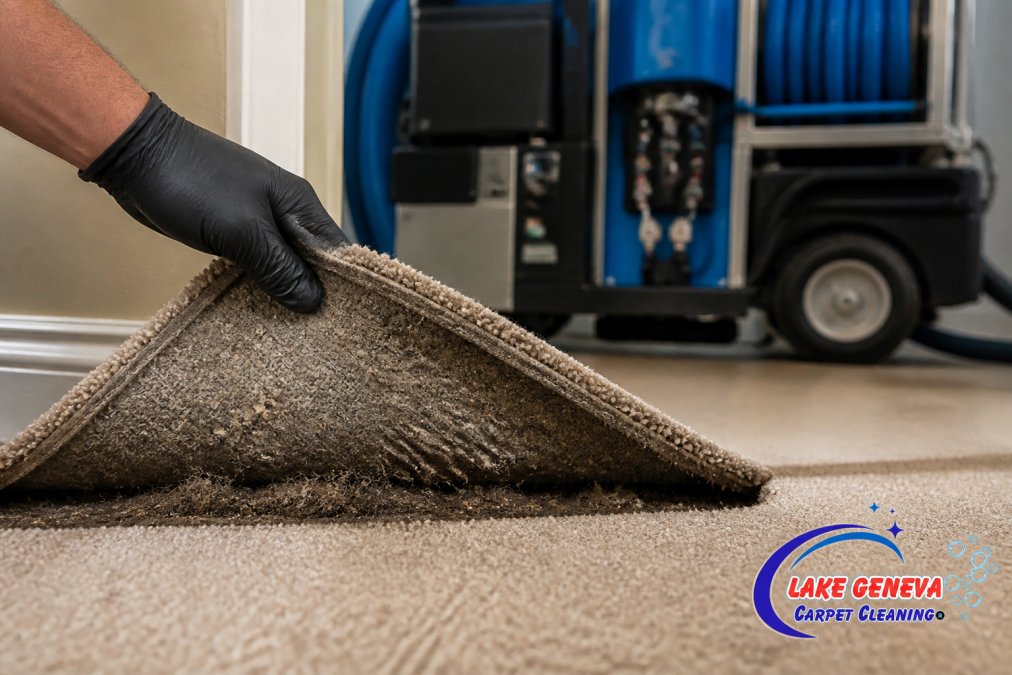
Walk through your home and look at the routes people actually use. The hallway from the entry door, the path to the kitchen, and the area in front of the sofa all show wear first. When those high-traffic areas look darker or dirtier than the rest of the room, even right after vacuuming, the soil has worked its way deep into the carpet fibers.
Surface stains tell part of the story, but the discoloration you see in traffic lanes is different. That dingy appearance comes from ground-in soil that has bonded to the fibers over time. Spot treatment and vacuuming cannot reverse this type of soiling. The carpet needs a thorough flushing to remove the accumulated grit that is literally grinding against the fibers with every step.
Persistent Odors That Vacuuming Can’t Fix
A carpet should not carry the smell of the household. If you notice odors that return within days of vacuuming, the source is below the surface. Spills, pet accidents, and even everyday moisture seep into the padding beneath the carpet, where bacteria begin to grow.
Professional carpet cleaning addresses the source of the smell, not just the surface. Hot water extraction flushes the entire depth of the carpet and the padding, removing the organic material that causes persistent odors. If your home has a recurring smell that fresheners only mask, that is one of the clearest signs you need professional carpet cleaning.
Increased Allergy Symptoms and Dust Mites
Many homeowners in the Lake Geneva area notice their allergies worsen during the months when windows stay closed. Carpets act as a filter for the entire home, trapping dust mites, pollen, pet dander, and other allergens. Over time, this filter becomes saturated, and every step releases those particles back into the air you breathe.
Dust mites thrive in the warm, humid environment deep within carpet fibers. Regular vacuuming removes surface debris but cannot extract the microscopic allergens embedded in the pile and padding. According to guidance from the Environmental Protection Agency on indoor air quality, controlling dust mites and allergens in the home is important for respiratory health. Professional hot water extraction removes these contaminants at the source, which is why carpet allergen removal is one of the primary health benefits of professional cleaning.
Why DIY Methods Fall Short for Deep Cleaning
Rental machines and store-bought spot cleaners share a common limitation: they only address the surface. A homeowner using a rental unit typically sees impressive results in the first hour, only to watch the carpet look dingy again within a couple of weeks. The problem is not just weak suction, it is a fundamental difference in how the equipment interacts with your carpet’s fibers.
The Mechanical Difference: Temperature, Pressure, and Extraction
Professional truck-mounted systems and consumer rental units operate on different principles. Hotter water breaks down oily soils and organic residues that cooler water cannot dissolve. Professional systems inject solution at higher pressure, forcing it deep into the backing where the heaviest soil accumulates.
The most critical difference, however, is extraction. Professional truck-mounted systems generate suction strong enough to pull the vast majority of the moisture back out, leaving carpets dry in 2 to 4 hours. That difference is not just about convenience, prolonged moisture creates the warm, humid environment where mold and mildew thrive in the padding beneath your carpet.
The Residue Cycle and Why Carpets Look Dirtier Faster
Consumer-grade machines leave behind a sticky residue of cleaning solution. That residue acts like glue, trapping new dirt the moment it enters your home. This creates the frustrating cycle where carpets look clean briefly, then appear dirtier than before. Professional extraction removes the solution completely.
How Different Carpet Fibers Respond to DIY vs. Professional Cleaning
Not all carpets react the same way to cleaning, and this is where DIY methods cause the most subtle damage. Understanding your carpet’s fiber type helps explain why professional cleaning is often the safer choice.
Nylon is the most common residential carpet fiber, prized for its resilience. But nylon is also absorbent, meaning it holds onto oily soils and stains stubbornly. Rental machines often push these oils deeper into the fiber rather than removing them. Professional hot water extraction breaks the bond between the oil and the nylon, flushing it out completely.
Polyester resists water-based stains but is prone to crushing and matting. The aggressive brushing action of some rental machines can flatten polyester fibers permanently. Professional cleaning uses controlled pressure.
Wool is the most delicate common carpet fiber. Wool is naturally absorbent and sensitive to high pH and heat. Many store-bought cleaning solutions are too alkaline for wool and can cause yellowing or shrinkage. Professional cleaners adjust their solution pH specifically for wool, and the lower drying time helps prevent the fiber from staying wet long enough to develop mildew.
Olefin is often used in basements and outdoor areas because it resists moisture. However, olefin is also oil-loving, making it prone to attracting oily soils. Rental machines rarely remove these oils effectively. Professional cleaning with hot water extraction can flush oil from olefin fibers without leaving residue.
The biggest mistake homeowners make with rental machines is using too much cleaning solution. The residue left behind acts like glue for dirt, making carpets look worse within weeks. This is especially damaging for nylon and wool, which absorb the residue more readily. Professional extraction removes the solution completely.
The Long-Term Cost of DIY Cleaning on Carpet Lifespan
Every pass with a rental machine that leaves residue behind accelerates the soiling cycle. The abrasive grit that gets trapped in that residue grinds against the fibers with every footstep, cutting into the pile like sandpaper. Over time, this abrasion causes the carpet to lose its texture, flatten, and develop the matted appearance that signals the end of its useful life. Professional cleaning removes the grit before it can do this damage.
How Often to Clean Carpets for a Healthy Home
Most carpet manufacturers recommend professional cleaning every 12 to 18 months as a condition of maintaining the carpet warranty. For many households in Wisconsin, that schedule is a reasonable starting point. But the right frequency depends heavily on who lives in your home, what you track in from outside, and the season.
The Warranty Factor: What Manufacturers Actually Require
Carpet warranties typically include a clause requiring professional hot water extraction at least every 12 to 18 months. Failure to document this maintenance can void the warranty, leaving you responsible for the full replacement if the carpet fails prematurely. Keep your receipts from professional cleanings, they are your proof of compliance if you ever need to file a claim.
Household-Specific Triggers That Shorten the Interval
The table below provides a starting point, but the real determinant is what happens in your home on a daily basis.
| Household Type | Recommended Cleaning Frequency | Primary Concern |
|---|---|---|
| Single person or couple, no pets | Every 12-18 months | Routine soil buildup |
| Family with children | Every 6-12 months | Spills, tracked-in dirt |
| Household with pets | Every 3-6 months | Odors, dander, accidents |
| Allergy or asthma sufferers | Every 3-6 months | Dust mites, allergen removal |
| Business or office space | Every 3-6 months | High foot traffic, appearance |
Beyond the table, watch for these specific triggers that should move your cleaning date up:
- A pet accident that soaked through to the padding. Even if you cleaned the surface thoroughly, urine reaches the padding where bacteria continue to grow. Professional cleaning flushes the padding and neutralizes the odor at the source.
- A visible dust cloud when you vacuum. If you see dust particles floating in the air as you vacuum, your carpet is releasing trapped allergens with every pass. This is a sign the filter is saturated.
- A new allergy diagnosis in the household. If a family member develops asthma or allergy symptoms, reducing the allergen load in the home becomes a priority. A professional deep cleaning removes the reservoir of dust mites and dander that regular vacuuming cannot reach.
- A major renovation or move. Construction dust is extremely fine and abrasive. It settles deep into carpet fibers and can cut them if left in place. Clean professionally after any renovation work is complete.
The Wisconsin Seasonal Rhythm: Why Twice a Year Makes Sense
Living in Wisconsin means your carpet faces a unique cycle of challenges that inland or southern climates do not. Aligning your professional cleaning schedule with the seasons addresses each type of soil before it has a chance to bond to the fibers.
Spring (March-May): Mud season. Melting snow and rain turn yards into tracking zones. The silt and clay from Wisconsin soil are fine and abrasive, working deep into the pile. A professional cleaning in early spring removes the winter accumulation of road salt and slush grime before the humidity of summer sets in.
Summer (June-August): Lake Geneva brings sand from the shore, carried in on feet and beach gear. Sand is silica, essentially tiny glass particles that are highly abrasive to carpet fibers. Summer humidity also increases the moisture content in the air, which can activate dormant odors in the padding. A mid-summer cleaning addresses both the sand and the humidity-related mustiness.
Fall (September-November): Leaf debris and the start of the heating season. When you turn on your furnace for the first time, it circulates dust that has settled in the ductwork all summer. That dust settles into your carpet. A professional cleaning in early fall removes the summer’s sand and pollen accumulation and prepares the carpet for the winter months when windows stay closed.
Winter (December-February): Road salt and slush. The salt used on Wisconsin roads is corrosive and can damage carpet fibers if it remains embedded. The abrasive grit from slushy streets cuts into the pile. A professional cleaning in late winter or early spring removes this salt before it causes permanent fiber damage.
For lakeside homeowners in the Lake Geneva area, scheduling professional cleaning at the transition between spring and summer, and again between fall and winter, addresses the unique demands of the Wisconsin climate. This twice-a-year rhythm is not just about appearance, it is about removing the specific types of abrasive and corrosive soil that the local environment deposits into your home before they cause lasting damage.
The Benefits of Hot Water Extraction for Carpet Allergen Removal
Hot water extraction, often called steam cleaning, remains the method recommended by most carpet manufacturers and industry professionals. The process injects hot water and cleaning solution into the carpet under pressure, then immediately extracts it along with the dissolved soil, allergens, and bacteria.
This method excels at carpet allergen removal because it physically flushes contaminants from the full depth of the carpet. Dust mites, pet dander, pollen, and mold spores are suspended in the hot water and then pulled out by the extraction vacuum. The American Lung Association guidance on indoor allergens emphasizes that reducing allergen reservoirs in the home is key to managing symptoms. For families dealing with allergies, this deep flushing makes a measurable difference in indoor air quality.
The benefits extend beyond allergens. Hot water extraction also removes the chemical residues left by previous cleaning attempts, and reduces the bacterial load that contributes to household odors.
Eco-Friendly Cleaning for Families and Pets
Families with children and pets often worry about the chemicals used in carpet cleaning. Those concerns are valid. Many traditional cleaning products leave residues that pets and toddlers come into contact with daily.
Eco-friendly cleaning agents address this concern directly. These solutions break down naturally and do not leave toxic residues behind. When combined with hot water extraction, they clean effectively while keeping the home safe for everyone in it. The key is verifying that the extraction process removes them completely, leaving no chemical trace behind.
Ask your carpet cleaning provider which specific cleaning agents they use and whether they are safe for pets and children. A reputable company will answer openly and explain how their products work without leaving residue.
Seasonal Carpet Care for Wisconsin Lakeside Homes
Living near Lake Geneva presents cleaning challenges that inland homeowners rarely face. The lake environment brings moisture, sand, and seasonal debris into homes in ways that demand extra attention to carpet care.
Spring in Wisconsin means mud season, with melting snow and rain turning yards into tracking zones. Summer brings sand from the lake shore, carried in on feet and beach gear. Fall introduces leaf debris and the beginning of the heating season, which circulates dust through the home. Winter brings road salt and the grime of slushy streets, a particularly abrasive contaminant that can damage carpet fibers if left to sit.
Each season deposits different types of soil that require different responses. A professional deep cleaning at the transition between seasons helps remove the buildup from the previous months and prepares the carpet for what comes next. For lakeside homeowners, scheduling professional cleaning in the spring and again in the fall addresses the unique demands of the Wisconsin climate.
Extending Carpet Life and Protecting Your Investment
Carpet represents a significant investment in any home or business. Proper maintenance directly affects how long that investment lasts. Carpet that receives regular professional cleaning typically lasts years longer than carpet that only sees vacuuming and spot treatments.
The reason comes down to the abrasive nature of soil. Dirt particles trapped in the carpet act like sandpaper, cutting into the fibers every time someone walks across them. This abrasion causes the carpet pile to flatten, lose its texture, and develop the matted appearance common in older carpets. Removing that soil before it grinds into the fibers is the most effective way to preserve the carpet’s appearance.
Professional cleaning also helps maintain the carpet manufacturer warranty, which often requires documented professional cleaning at regular intervals. Skipping this maintenance can void the warranty, leaving you responsible for the full replacement cost if the carpet fails prematurely. For property owners looking to protect their investment, regular professional cleaning is a valuable service.
Trust the Experts at Lake Geneva Carpet Cleaning
The signs of carpet distress are usually visible long before homeowners acknowledge them. Dingy traffic paths, returning odors, worsening allergies, and carpets that never quite look clean all point to the same conclusion: it is time to call a professional.
For over 32 years, Lake Geneva Carpet Cleaning has served homeowners and businesses throughout Walworth and Kenosha counties with owner-operated service and meticulous attention to detail. Our truck-mounted hot water extraction system removes embedded dirt, allergens, and pet odors while our eco-friendly cleaning agents keep your home safe for children and pets. We back every job with a 10-day satisfaction guarantee, so you can book with confidence.
If your carpet is showing any of the signs described here, do not wait until the damage is permanent. Contact Lake Geneva Carpet Cleaning for a free estimate and experience the difference that true professional deep cleaning makes. Visit our website or call today to schedule your appointment and breathe new life into the heart of your home.
Frequently Asked Questions
How often should you have carpets professionally cleaned in Wisconsin?
For most Wisconsin homes, the standard recommendation is every 12 to 18 months. However, you may need professional carpet cleaning more frequently if you have pets, young children, or family members with allergies. Homes near the lake or with high foot traffic should consider scheduling a cleaning every 6 to 12 months to manage sand, mud, and road salt that get tracked in, which can cause rapid fiber wear.
Does professional carpet cleaning remove pet odors permanently?
Yes, professional hot water extraction is the most effective method for permanently removing pet odors. Store-bought spot cleaners and shampoos often only mask the smell or clean the surface fibers. Professional equipment extracts the urine and bacteria from deep within the carpet pile and padding, neutralizing the source of the odor rather than just the surface symptom. This prevents the smell from returning when the carpet gets damp.
Why does my carpet look dirty even after vacuuming?
When your carpet looks dingy right after vacuuming, it means you’re seeing embedded soil deep in the carpet pile that your vacuum can’t reach. This is a clear sign you need professional carpet cleaning. Over time, gritty particles and sticky residues build up at the base of the fibers. Professional truck-mounted hot water extraction flushes these particles out from the bottom up, restoring the carpet’s original color.
Is professional carpet cleaning safe for my family and pets?
Professional carpet cleaning is safe when you choose a company that uses eco-friendly products. Reputable services, like Lake Geneva Carpet Cleaning, use non-toxic cleaning agents that are safe for children and pets once the carpet is dry. The hot water extraction method also removes chemical residues left behind by previous cleaning attempts, leaving your home healthier and reducing the risk of skin irritation or respiratory issues.