Last Updated: November 6, 2026
Quick Summary
A steam cleaner in Williams Bay uses truck-mounted hot water extraction to inject heated water into carpet fibers under pressure, then pulls the water, soil, and grime back out in the same pass. Most carpets cleaned this way dry in four to eight hours. Lake Geneva Carpet Cleaning has served the area for 32 years.
- Vacuum all carpeted areas thoroughly before the crew arrives, including under furniture edges.
- Run ceiling fans and box fans in cleaned rooms and keep the HVAC on a normal setting.
- Wait until the carpet is fully dry before replacing furniture to avoid rust marks and indentations.
- Wool, silk, and delicate fibers need lower heat and gentler, low-moisture methods.
- Winter road salt, spring mud, and summer sand all work past the surface into the backing.
Table of Contents
- What a Steam Cleaner in Williams Bay Actually Does for Your Floors
- Steam Cleaning Versus Store-Bought Carpet Cleaners
- Your Carpet Cleaning Preparation Checklist Before the Truck Arrives
- Professional Carpet Steam Cleaning: What the Process Looks Like
- Carpet Drying Time After Steam Cleaning and How to Speed It Up
- Surface-by-Surface Safety: Wool, Upholstery, Tile, and Grout
- Rental Machines and Store-Bought Tools: What to Expect
- Seasonal Soil Around the Lakes: Salt, Sand, and Mud
- Book Steam Cleaning in Williams Bay With a Local Team
- Frequently Asked Questions
What a Steam Cleaner in Williams Bay Actually Does for Your Floors
A steam cleaner in Williams Bay is not a magic wand, and it is not a mop with a heater attached. It is a machine that injects heated water into carpet fibers under pressure, then pulls the water, soil, and dissolved grime back out in the same pass. That two-way action is the whole point.
Here is what most homeowners get wrong. They picture steam rising off the carpet, like a kettle. In practice, the water is hot but not vaporized, and the cleaning power comes from pressure and extraction, not from visible steam. The machine floods the base of the fiber, loosens what is trapped there, and vacuums it away before it can settle back down.
That matters in a lakeside home. Sand, road salt, and fine clay from a wet Wisconsin spring work their way past the surface and sit in the backing. A vacuum lifts what it can reach. A steam cleaner reaches deeper.
At Lake Geneva Carpet Cleaning, we use truck-mounted hot water extraction, and we have been serving this area for 32 years.
Below, we break down how the process works, what you can safely do yourself, and when to call in a local team.
Steam Cleaning Versus Store-Bought Carpet Cleaners
Store-bought spot cleaners and rental machines handle surface soil. Steam cleaning handles what is below it. That is the short version, and it explains almost every complaint homeowners bring us.
A store-bought spray or foam lifts a stain to the top of the fiber so you can blot it away. It works on a fresh spill. It does nothing for the gray film that builds up across a whole room, because that film is not sitting on the surface. It is distributed through the pile and into the backing.
Rental machines sit somewhere in between. They do spray and extract, but the water tank is small, the suction is limited, and the operator is usually learning as they go. Over-wetting is the classic result. The carpet gets soaked, the pad underneath stays damp, and the homeowner spends two days waiting for it to dry.
Professional steam cleaning, meaning truck-mounted hot water extraction, solves the suction problem. The unit sits in the truck, the hose runs to the door, and the vacuum is strong enough to pull most of the moisture back out immediately. That is why drying time drops from days to hours.
The trade-off is honest: you are paying for equipment and experience you do not own. If you want the comparison laid out side by side, our page on professional carpet cleaning versus DIY rental machines walks through results, effort, and what each method actually removes.
Your Carpet Cleaning Preparation Checklist Before the Truck Arrives
Preparation is the difference between a smooth appointment and a wasted one. The good news: it takes about 20 minutes, and most of it is moving things.
Here is a checklist to help you prepare before the appointment:
- Vacuum all carpeted areas thoroughly, including under furniture edges
- Clear the floor: move small furniture, pet bowls, toys, and floor plants out of the rooms
- Move breakables and electronics off tables and shelves in the work area
- Pin up or tuck any loose curtains, drapes, or bed skirts that touch the floor
- Point out every stain, pet accident, and high-traffic lane you want addressed
- Secure pets in a closed room away from the work area and the open door
- Arrange for someone to be home for the full appointment
- Note any furniture you cannot move yourself so the crew can help
Two items on that list get skipped most often. The first is vacuuming beforehand. It feels redundant, but a pre-vacuum removes loose dry soil so the extraction pass can focus on what is bonded to the fiber. The second is the pet. A nervous dog underfoot slows the crew down and creates a safety risk with hoses running through doorways.
If you want the full walkthrough, our guide on how to prepare your home for professional carpet cleaning covers room-by-room prep, what to do with heavy furniture, and how to handle a basement or a finished lower level.
Professional Carpet Steam Cleaning: What the Process Looks Like
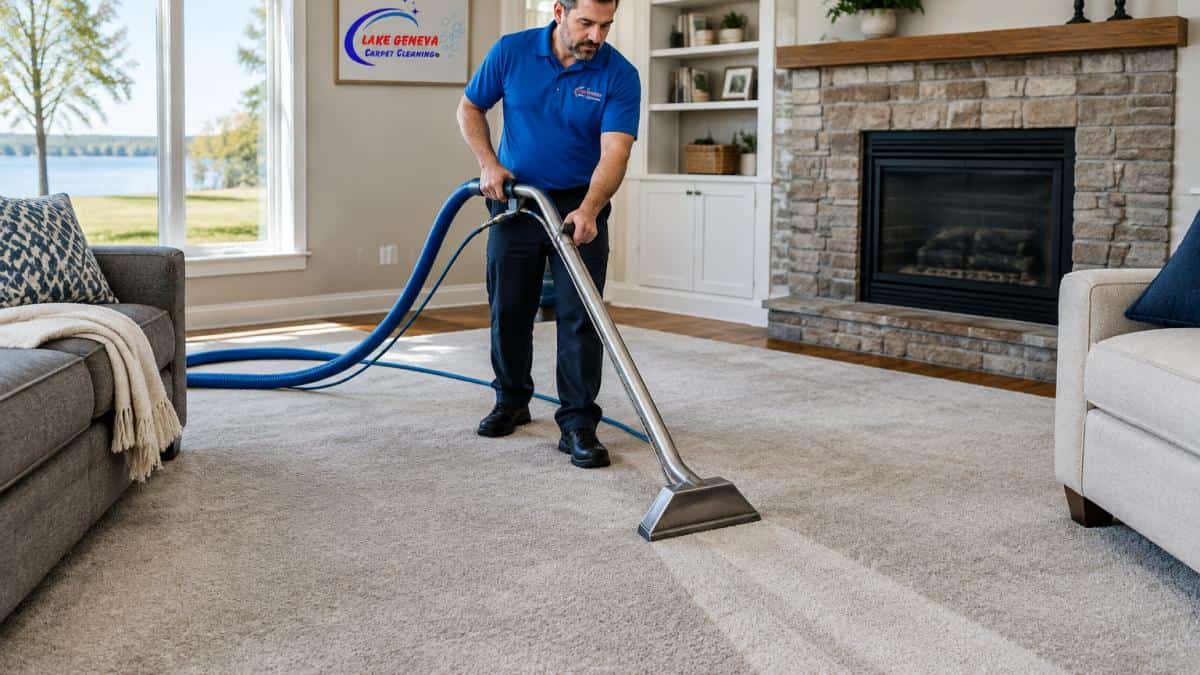
A professional steam cleaning appointment follows a predictable sequence, and knowing it removes most of the anxiety. Here is what happens from the knock at the door to the final walkthrough.
Our 10-day satisfaction guarantee means if something is not right, you can call us back.
Carpet Drying Time After Steam Cleaning and How to Speed It Up
Most carpets cleaned with truck-mounted hot water extraction dry in four to eight hours. Dampness beyond that usually points to over-wetting, low airflow, or humid weather, not to the method itself.
You can shorten drying time with a few simple moves:
- Run ceiling fans and box fans in the cleaned rooms
- Open windows if the outdoor humidity is low
- Keep the HVAC running on a normal setting, not off
- Avoid walking on the carpet in socks or bare feet until it is dry
- Wait to replace furniture until the carpet is fully dry
Watch out: putting furniture back on a damp carpet can leave rust marks from metal legs and permanent indentations from heavy pieces. Wait the full drying window.
If you want realistic drying expectations for your specific rooms, our Lake Geneva carpet cleaning team can tell you what to expect based on your carpet type and the season.
Here is the drying window to expect and the simple steps that shorten it.
| Item | Value | Note |
|---|---|---|
| Typical drying time | Four to eight hours | Truck-mounted hot water extraction |
| Longer dampness points to | Over-wetting, low airflow, humid weather | Not the method itself |
| Fans | Run ceiling fans and box fans | In the cleaned rooms |
| Windows | Open if outdoor humidity is low | Helps airflow |
| HVAC | Keep running on a normal setting | Not off |
| Foot traffic | Avoid socks or bare feet | Until carpet is dry |
| Furniture | Wait until carpet is fully dry | Damp carpet can leave rust marks and indentations |
Surface-by-Surface Safety: Wool, Upholstery, Tile, and Grout
Not every surface wants the same treatment. Matching the method to the material is where experience matters most, and it is where a generic approach can do real damage. The two variables that matter are heat and moisture: how much of each the fiber or surface can tolerate, and how quickly it can dry afterward.
Wool carpet and area rugs. Wool fibers have a natural crimp and lanolin content that harsh detergents strip away, leaving the rug flat and dull. Wool also felts when it is agitated while wet, so high heat, heavy moisture, and aggressive scrubbing are the wrong combination. Most practitioners find that wool responds best to lower temperature, gentler chemistry, and controlled drying. Test in an inconspicuous spot first, and keep air moving until the rug is fully dry.
Upholstery. Sofas and chairs often mix fabrics within one piece, and a cleaning agent safe for one panel can bleed dye from another. Always test in an inconspicuous spot first. Watch for color transfer on the test cloth, and stop if you see any. Delicate blends, silk, and some synthetics should never see high heat or heavy moisture; those get dry or low-moisture methods instead.
Tile and grout. Tile is hard and forgiving, but grout is porous. It absorbs soil and grease, and a mop just pushes the mess deeper. High-pressure cleaning plus a seal afterward keeps grout lines looking clean longer. If you have tile alongside carpet, our tile and grout cleaning in Lake Geneva service covers both in one visit.
Delicate fibers. Silk, sisal, and some blends should never see high heat or heavy moisture. Those get dry or low-moisture methods instead. The same caution applies to any rug with a natural backing or hand-knotted construction, where moisture can weaken the foundation.
Drying and moisture management. Drying time is part of surface safety. Most carpets cleaned with truck-mounted hot water extraction dry in four to eight hours. Dampness beyond that usually points to over-wetting, low airflow, or humid weather, not to the method itself. Run ceiling fans and box fans in the cleaned rooms, open windows if outdoor humidity is low, and keep the HVAC running on a normal setting. Avoid walking on the carpet in socks or bare feet until it is dry, and wait to replace furniture until the carpet is fully dry.
Watch out: putting furniture back on a damp carpet can leave rust marks from metal legs and permanent indentations from heavy pieces. Wait the full drying window, and check the pad underneath if the surface still feels cool or damp after a day.
A common mistake is assuming a rental machine set to “gentle” is safe for wool. It is not the setting that matters; it is the water volume and the chemistry. If you are unsure what your carpet or upholstery can tolerate, our Lake Geneva carpet cleaning team can tell you what to expect based on your fiber type and the season.
Rental Machines and Store-Bought Tools: What to Expect
Rental machines and store-bought spot cleaners can handle a light refresh, but they are not a substitute for deep extraction. The difference is not just suction; it is water volume, dwell time, operator technique, and how much moisture is left behind. Here is what to expect if you go the do-it-yourself route, and where it tends to fall short.
What rental machines do well. A rental unit can lift surface soil from a small, lightly soiled room. It sprays a cleaning solution and pulls some of it back. For a single traffic lane or a quick refresh before guests arrive, it is workable. The limits show up fast on a whole house, a pet-heavy home, or carpet that has not been deep cleaned in years.
The over-wetting problem. Rental machines typically have smaller tanks and weaker suction than truck-mounted equipment. The result is that more water goes in than comes out. The carpet surface may feel dry within a few hours, but the pad underneath can stay damp for a day or more. That trapped moisture is what leads to the musty smell, the wicking stains, and the “it looked clean yesterday” complaint.
A practical DIY sequence if you rent. Start by vacuuming the room thoroughly, including edges and under furniture where soil collects. Test the cleaning solution in a closet or corner first. Work in small sections, overlap your passes, and do not soak the carpet. Make two dry passes for every wet pass to pull moisture back out. Keep fans running and the HVAC on. Wait until the carpet is fully dry before replacing furniture.
Store-bought spot cleaners. These are formulated for fresh spills, not for embedded soil. They lift a stain to the surface so you can blot it away. They do nothing for the gray film that builds up across a whole room, because that film is distributed through the pile and into the backing. Over-applying a spot cleaner can also leave residue that attracts new soil, which is why the spot looks clean for a week and then darkens again.
When DIY is the wrong call. Pet accidents that reached the pad, whole-house cleaning, wool or delicate fibers, and any home with allergy or asthma concerns are better handled by professional extraction. Truck-mounted equipment pulls most of the moisture out in the same pass, which is why drying time drops from a day or more to hours. If you want the comparison laid out side by side, our page on professional carpet cleaning versus DIY rental machines walks through results, effort, and what each method actually removes.
Watch out: a rental machine set to “gentle” is not automatically safe for wool or delicate blends. The setting does not change the water volume or the chemistry, and over-wetting can damage fibers that a professional would clean with a low-moisture method.
Seasonal Soil Around the Lakes: Salt, Sand, and Mud
Living near the water means your carpet can be exposed to seasonal soil such as road salt, mud, and sand.
Winter brings road salt. It gets tracked in from driveways and parking lots, dries into a white haze, and works into the pile. Salt is also hygroscopic, meaning it pulls moisture from the air, which is why carpets near entryways feel damp in January.
Spring means mud. Snowmelt, rain, and thawing ground turn every path into a track. Fine clay particles are small enough to slip past the surface and settle in the backing, where a vacuum cannot reach them.
Summer is sand season. Beach trips, lake access, and open windows bring grit in, and grit acts like sandpaper on carpet fibers every time someone walks across it. That abrasion is what wears a carpet out early.
Fall brings leaf debris, dampness, and the start of the salt cycle again.
The practical takeaway: entryway mats and a no-shoes rule help, but seasonal soil accumulates anyway.
Book Steam Cleaning in Williams Bay With a Local Team
Here is the challenge. You can rent a machine, spend a Saturday pushing it around, and hope the carpet dries by Monday. Or you can hand the job to a local team that has cleaned carpets in this lakeside climate for 32 years and knows exactly what salt, sand, and spring mud do to a fiber.
We are Lake Geneva Carpet Cleaning, an owner-operated business with over 32 years of experience. We use truck-mounted hot water extraction and eco-friendly cleaning methods. Our 10-day satisfaction guarantee backs our work.
Pricing depends on the job, so contact us for a quote. If you are searching for a steam cleaner in Williams Bay near me, we are the local team that shows up, extracts deeply, Get started with Lake Geneva Carpet Cleaning and breathe easier in a genuinely clean home.
Ready to stop guessing and get your carpets properly cleaned? Reach out for a free estimate and we will walk you through exactly what your home needs.
Frequently Asked Questions
How should I prepare my home before a steam cleaner arrives in Williams Bay?
Clear the floors first. Move small furniture, pick up toys and pet bowls, and vacuum loose debris so the technician can reach the full carpet. Note any pet accident spots or heavy traffic lanes so they get extra attention. Secure pets in a separate room and plan for foot traffic to stay off the carpet until it is dry. A short carpet cleaning preparation checklist like this keeps the appointment on schedule and helps the steam cleaner work evenly across every room.
How long does carpet take to dry after professional steam cleaning?
Drying time varies with conditions, and proper airflow helps. Carpet drying time after steam cleaning depends on fiber type, pile depth, humidity, and how much air movement the room gets. Run ceiling fans, open interior doors, and keep the HVAC running. Avoid walking on damp carpet in socks or bare feet, and wait until the surface feels dry before replacing furniture.
Is steam cleaning safe for wool carpet and upholstery?
Wool and other delicate fibers need a gentler approach than synthetic carpet. Ask the provider to confirm the method suits the fiber, use lower moisture and controlled heat, and test an inconspicuous area first. Upholstery cleaning follows the same rule: fabric care codes and fiber content decide the method.
Can professional carpet cleaning remove pet odors and allergens for good?
Hot water extraction removes soil and residue trapped below the surface. Ask us about our approach for households with pets or allergies.