Last Updated: November 11, 2026
Quick Summary
The best carpet cleaner for cat pee is an enzymatic cleaner made for pet urine, because enzymes break down the urine compounds that keep the smell coming back. Blot fresh urine first, apply the product, let it sit for the full dwell time, then dry the area completely. If the odor returns after drying, the urine has likely reached the padding.
- Blot fresh urine with a dry white towel and never rub it.
- Use an enzymatic cleaner labeled for pet urine and test it on a hidden spot first.
- Let the cleaner sit for the full time listed on the label.
- Air-dry the carpet and padding completely with fans or open windows.
- If the smell returns after drying, the urine may have reached the padding and needs professional help.
Table of Contents
- Why Cat Pee Smell Keeps Coming Back
- Identifying Fresh and Dried Cat Urine Stains
- How to Remove Fresh Cat Pee from Carpet Step by Step
- Will Vinegar Get Cat Pee Smell Out of Carpet?
- How to Get Cat Urine Smell Out of Carpet After It Has Dried
- When Urine Has Reached the Padding or Subfloor
- DIY Cleaning Versus a Professional Carpet Cleaner for Cat Pee
- Booking Your Carpet Cleaning in Fontana, WI
- Frequently Asked Questions
Why Cat Pee Smell Keeps Coming Back
If your carpet smells like cat urine again after a few weeks, you are not alone, and a good carpet cleaner for cat pee can help break that cycle. Most people clean the visible spot, the smell fades for a while, and then it returns. The reason is usually not the cleaning itself but what is left behind.
Cat urine soaks past the carpet fibers into the carpet backing and padding. Surface cleaning removes the wet spot, but it does not reach the source. Moisture and residue sitting deeper in the carpet keep releasing odor as the area warms or gets damp.
This is a common problem for cat owners in Lake Geneva and the surrounding towns. Lake Geneva Carpet Cleaning has spent 32 years helping homeowners deal with stubborn pet odors.
- Surface spots fade, but deeper urine keeps the smell alive
- Padding holds moisture for days, which feeds odor
- Humidity and heat bring the smell back
Identifying Fresh and Dried Cat Urine Stains
Fresh cat urine is usually easy to spot. The area looks wet or damp, and the smell is sharp and ammonia-like. Dried urine is harder to find because the stain may look faint or nearly gone.
A black light is the most reliable tool for finding old stains. Turn off the room lights and shine a UV flashlight over the carpet. Cat urine often glows a pale yellow-green under UV light, which helps you map the full area, not just the spot you can see.
Check these areas too:
- Corners and edges of rooms
- Under furniture and rugs
- Near doorways and litter box areas
- Carpet close to walls, where cats often spray
How to Remove Fresh Cat Pee from Carpet Step by Step
Acting fast gives you the best chance of stopping deep penetration. Follow these steps for fresh urine:
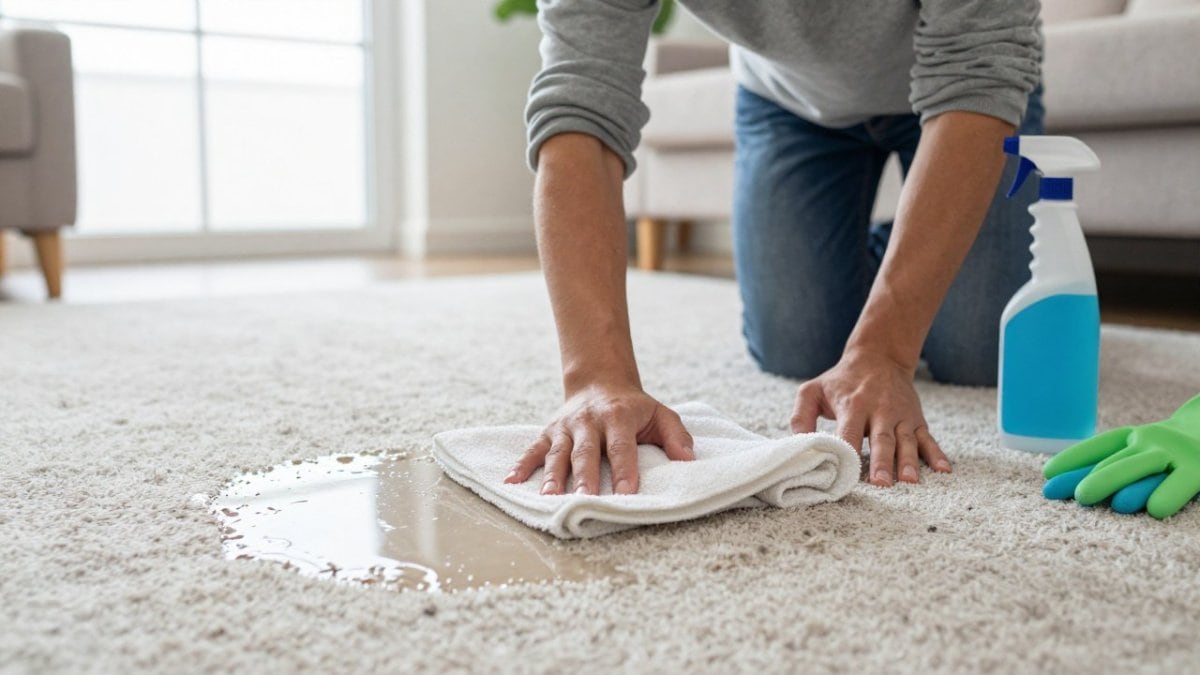
- Blot first. Press a dry white towel into the spot to soak up as much liquid as you can. Do not rub, because rubbing pushes urine deeper.
- Rinse lightly. Dampen a clean cloth with cool water and blot again to dilute the remaining urine.
- Test your cleaner. Before using any product, test it on a hidden area of carpet to check colorfastness.
- Apply the cleaner. Use an enzymatic cleaner made for pet urine. Soak the area enough to reach the backing.
- Allow dwell time. Let the cleaner sit for the time listed on the label. Enzymes need time to break down urine compounds.
- Blot and extract. Blot up the cleaner and residue, then rinse and extract the area.
- Air-dry completely. Run fans or open windows so the carpet and padding dry fully.
Choosing an Enzymatic Cleaner
Enzymatic cleaners work by breaking down the proteins and uric acid crystals in urine. Look for a product labeled for pet urine and check that it is safe for your carpet fiber.
Avoid harsh chemicals that can discolor carpet or leave residue. Many common household cleaners also contain ammonia, which can smell like urine to cats and encourage repeat marking.
How to Get Cat Pee Out of Carpet Without Enzyme Cleaner
Enzyme cleaners are the best choice, but they are not always on hand. A simple alternative is to blot, rinse with cool water, and then use a mixture of mild dish soap and water. For a full walkthrough of removing cat urine from carpet, see our complete cat urine removal guide. Blot again with clean water and dry the area fully.
This method removes some of the urine but will not fully break down the residue the way an enzyme cleaner does. If the smell stays after drying, you will likely need a deeper treatment.
Acting quickly and following the right order gives fresh urine the best chance of being removed before it soaks deeper.
| Step | What to do | Time or frequency |
|---|---|---|
| Blot first | Press a dry white towel into the spot | Right away |
| Rinse lightly | Blot with a cloth dampened in cool water | Right after blotting |
| Test your cleaner | Check colorfastness on a hidden area | Before first use |
| Apply the cleaner | Use an enzymatic cleaner for pet urine | Soak enough to reach the backing |
| Allow dwell time | Let the cleaner sit as the label says | Time listed on the label |
| Blot and extract | Blot up cleaner and residue, then rinse and extract | After dwell time |
| Air-dry completely | Run fans or open windows | Until fully dry |
Will Vinegar Get Cat Pee Smell Out of Carpet?
Vinegar is a popular home remedy, and it can help a little. Its acidity can neutralize some ammonia odor on the surface. Many people use a diluted solution of white vinegar and water as a first step.
However, vinegar does not break down uric acid crystals the way enzymes do. It may mask the smell for a short time, and the odor can return once the carpet dries. Test vinegar on a hidden spot first, since it can affect some carpet dyes.
How to Get Cat Urine Smell Out of Carpet After It Has Dried
Dried urine is harder to remove, but it is still treatable. Start by re-wetting the stain with cool water so the urine dissolves again. Then apply an enzymatic cleaner and let it dwell for the full recommended time.
Blot and extract the area, then repeat if needed. Old stains often take more than one treatment. Give the carpet plenty of time to dry between rounds so moisture does not stay trapped in the padding.
When Urine Has Reached the Padding or Subfloor
Surface cleaning only works when the urine is still in the carpet face fibers. If it has already reached the subfloor beneath, see how to get dog pee out of a carpet subfloor. Once it has soaked through the backing and into the padding, and sometimes into the subfloor beneath, no amount of blotting or spraying on top will reach the source. The smell keeps returning because the contamination is still there, releasing odor every time the area warms up or picks up humidity.
How to Tell How Deep the Urine Went
Work through these checks in order, from least to most invasive:
- The press test. Press a folded white paper towel firmly into the spot for about 30 seconds. If moisture or a yellow-brown tint wicks up, liquid is still sitting in the backing or padding.
- The smell test at floor level. Get down close to the carpet and sniff after the area has been closed up for a few hours. A sharp ammonia smell at the surface usually means active contamination; a musty, sour smell can point to moisture that has been trapped a while.
- The black light map. In a dark room, run a UV flashlight slowly across the area. Urine typically glows a pale yellow-green. Mark the outer edges with painter’s tape so you treat the full footprint, not just the center.
- The lift check. At a corner, doorway, or vent opening, gently lift the carpet edge away from the tack strip. Look at the padding underneath. Discolored, stiff, or damp padding means urine has passed through the carpet.
- The subfloor check. If the padding is saturated, peel back a small section. Concrete or wood subfloor that is stained, dark, or smells strongly is a sign the contamination has reached the bottom layer.
Watch out: lifting carpet yourself can stretch or tear it, and re-stretching it correctly is harder than it looks. If the carpet is tightly installed or you are unsure, stop at the press test and black light and let a professional do the lift.
What Each Layer Means for Treatment
- Carpet face only: Fresh or recent accidents that have not soaked through. Enzymatic cleaning and thorough extraction can usually resolve it.
- Backing and padding: The padding acts like a sponge and holds urine for days. Surface treatment will not reach it. The padding often has to be removed, treated, or replaced, and the carpet backing cleaned from both sides.
- Subfloor: Concrete and wood both absorb urine. Sealing or encapsulating the subfloor after cleaning is often necessary, because residual salts and uric acid crystals keep off-gassing odor even after the carpet is clean.
Why Padding Is Usually the Deciding Layer
Carpet padding is designed to hold air and cushion footsteps, which also makes it good at holding liquid. Once urine saturates the padding, it stays damp far longer than the carpet surface, and that trapped moisture feeds both odor and, over time, mold and mildew. A common pattern in homes with stubborn odor is a spot that was blotted promptly on top but never extracted below, so the padding stayed wet and the smell came back within weeks.
When Replacement Is the Realistic Answer
If the padding is saturated across a large area, has been wet for an extended period, or shows signs of mold, replacing that section of padding is usually more reliable than trying to clean it in place. In severe cases where the subfloor is heavily contaminated, the carpet and padding may both need to come up so the subfloor can be cleaned and sealed before new material goes down. A professional inspection can tell you which layer is affected and whether cleaning, padding replacement, or full replacement is the right call for your home.
If you suspect deep contamination, do not keep layering cleaners on top. Each round of moisture without full extraction pushes residue deeper and can make the odor harder to remove. A professional assessment is the safest next step.
DIY Cleaning Versus a Professional Carpet Cleaner for Cat Pee
Most cat urine problems fall somewhere between “a fresh spot I can handle” and “the whole room smells no matter what I do.” If you would rather have the stain fully eliminated, a professional pet stain removal service can deep clean and sanitize the area. The trick is knowing which side of that line you are on before you spend another weekend blotting. Use the thresholds below as a practical guide.
When DIY Is a Reasonable First Move
DIY cleaning tends to work when all of these are true:
- The accident is fresh, ideally within the first day or two.
- The spot is small, roughly the size of a dinner plate or less.
- You can reach the spot easily and the carpet is a standard synthetic fiber.
- There is no strong odor at floor level after the area dries.
- Your cat has had one accident, not a repeated pattern in the same spot.
In those cases, blotting, a proper enzymatic treatment with full dwell time, and complete drying with fans or open windows is often enough. The key is patience: enzymes need the labeled dwell time, and the carpet and padding need to dry fully, not just feel dry on top.
When DIY Is Likely to Fall Short
Move toward professional help when any of these apply:
- The stain is old or you cannot find its edges. Dried urine has bonded to the fibers and often spread wider than the visible mark.
- The odor returns after drying. That is the clearest sign the source is below the surface.
- The affected area is larger than a plate, or there are multiple spots. DIY tools cannot flush and extract a large footprint evenly.
- The padding feels soft, damp, or stiff. Urine has passed through the carpet.
- Your cat keeps marking the same spot. Repeat marking usually means residual odor is still detectable to the cat, even if you cannot smell it.
- The carpet is wool or another delicate fiber. These need fiber-specific care, and the wrong product can cause shrinkage, browning, or dye loss.
- Someone in the home has asthma or allergies. Residual urine residue and the moisture it holds can aggravate symptoms.
Watch out: layering more and more store-bought spot cleaners on a stubborn spot can leave sticky residue that attracts dirt and can actually set the odor in. If two rounds of proper enzymatic treatment with full drying have not solved it, stop and get an inspection.
What Professional Cleaning Actually Does Differently
A professional can also identify whether the padding or subfloor is involved and treat the layers in the right order.
A Simple Decision Path
- Fresh, small, one-time accident: DIY with an enzymatic cleaner and full drying.
- Odor returns after drying, or the spot is old: professional inspection.
- Padding damp or stained underneath: professional treatment, possibly padding replacement.
- Repeat marking or a large area: professional cleaning plus a conversation about why the cat is marking.
Pricing depends on the size and condition of the job, so contact us for a quote and we can tell you which path fits your situation. You can also book professional carpet cleaning in Fontana, WI directly.
Booking Your Carpet Cleaning in Fontana, WI
If you live in Fontana, WI, and cat urine odor keeps returning, professional help can break the cycle. Learn how to remove cat urine smell from carpet permanently with expert enzymatic methods. Lake Geneva Carpet Cleaning serves Fontana along with Lake Geneva, Twin Lakes, Genoa City, Walworth, Darien, Burlington, Elkhorn, Williams Bay, Delavan, and East Troy, and we have done so for 32 years.
Our owner-operated team uses eco-friendly methods and offers a 10-day satisfaction guarantee, so you can book with confidence. Reach out to schedule a visit and get a quote for your home.
Stubborn cat urine odor does not have to be permanent. Lake Geneva Carpet Cleaning has spent 32 years helping homeowners across Lake Geneva and nearby towns get their carpets truly clean and odor-free. Contact us today for a free quote and let our experienced team take the guesswork out of removing cat pee for good.
Frequently Asked Questions
What is the best way to clean cat urine out of carpet?
Start by blotting up as much liquid as you can with clean white towels, pressing rather than rubbing. Then apply an enzymatic cleaner made for pet urine, let it sit for the dwell time listed on the label, and blot again. Enzymatic cleaners break down the uric acid crystals that cause the smell, while ordinary household cleaners often only mask it. Test any product on a hidden spot first to check colorfastness. If the odor returns after drying, the urine may have soaked into the padding, which usually calls for professional extraction.
Will a carpet cleaner get rid of cat pee?
A professional carpet cleaner using hot water extraction can remove a large share of cat urine from carpet fibers and can treat the area with cleaning solutions designed for pet odor. Results depend on how long the urine has been there and whether it reached the padding or subfloor. Fresh accidents respond best. Older stains may need more than one treatment. Contact Lake Geneva Carpet Cleaning for a quote, since pricing depends on the job.
Will vinegar remove cat pee smell from carpet?
Vinegar can help with light, fresh accidents because its acidity loosens some residue and it dries without leaving much of its own scent. However, vinegar does not break down the uric acid crystals that keep cat urine smelling strong, so the odor often returns once the area is damp again. For lasting results, use an enzymatic cleaner, and if urine has soaked into the padding, have a professional treat the area.
How can you clean cat pee from carpet without an enzyme cleaner?
Blot the area thoroughly, then rinse the spot with cool water and blot again to lift remaining urine. A mixture of water and a small amount of mild, carpet-safe detergent can follow, with a final rinse and blotting. Air-dry with good airflow and test on a hidden area first. These methods may lift surface residue but are less likely to eliminate odor deep in the backing, so repeat marking or a lingering smell is common without an enzymatic treatment.