
Table of Contents
- Why Lake Geneva Tile Floors Lose Their Shine
- How to Clean Tile and Grout: What Actually Works
- What Professional Tile and Grout Cleaning Involves
- Grout Sealing Services: Protecting the Work You Just Paid For
- Kitchen, Bath, and Entryway: Matching the Method to the Room
- Stain and Odor Removal Treatments for Grout Lines
- Maintenance Schedules for High-Traffic Areas
- Residential and Commercial Tile Cleaning in Lake Geneva
- Frequently Asked Questions
Last Updated: September 12, 2026
Why Lake Geneva Tile Floors Lose Their Shine
Tile and grout cleaning in Lake Geneva is a bigger job than most homeowners expect, because the same lake-effect weather that makes this area beautiful also punishes hard floors. This guide from Lake Geneva Carpet Cleaning explains why tile dulls, what actually restores it, and how to keep it that way through a Wisconsin winter.
Here’s the part most guides get wrong: the tile itself rarely fails. Grout does.
Grout is the cement-based filler between tiles, and it is porous by nature. Every drop of spilled coffee, every muddy paw print, and every splash of road salt rides into those pores and stays there. Unglazed grout absorbs soil the way a sponge absorbs water, then holds it. Over a season or two, the grout lines that once looked uniform turn gray, then brown, then black along the traffic path.
Two forces drive that decline in Lake Geneva specifically:
- Seasonal contaminants. Sand, road salt, and mud get tracked in from October through April, and they settle into grout before anyone notices.
- Moisture and humidity. Lakeside homes hold more ambient moisture, which encourages mold and mildew to establish in damp grout lines and corners.
Ceramic tile and porcelain tile resist staining well. Natural stone is a different story, since it is softer and more absorbent and needs gentler chemistry. But in all three cases, the visible decline is dirt accumulation in the grout, not damage to the tile.
That distinction matters, because it changes what actually fixes the problem. A mop pushes soil around. It does not pull soil out of a porous surface.
How to Clean Tile and Grout: What Actually Works
The most effective home routine combines dry removal, a pH-balanced solution, and mechanical agitation, in that order. Skip a step and you simply move dirt from the floor into the grout.
Here is the logic behind the sequence. Dry soil comes up easily with a vacuum or dry mop, so remove it before it turns into mud. A pH-balanced solution loosens what is bonded to the surface without etching the grout or stripping a sealer. Agitation with a soft brush lifts the loosened soil out of the pores. Clean water then carries it away.
What does not work: flooding the floor with water and letting it air dry. Standing water drives soil deeper and, on a porous surface, invites mildew.
Step-by-Step: A Safe Weekly Routine
A ten-minute weekly pass prevents most of the buildup that leads to expensive restoration later.
- Vacuum or dry-mop the entire floor to remove loose grit.
- Mix a pH-balanced cleaner according to the label directions.
- Apply it to a small section, roughly two square meters at a time.
- Agitate grout lines with a soft-bristle brush, working along the lines, not across them.
- Wipe up the loosened soil with a clean, damp cloth before it resettles.
- Rinse the section with clean water and dry it with a towel.
- Repeat section by section, changing rinse water often.
Never mix cleaning products. Combining an alkaline cleaner with an acidic one can produce fumes and can damage grout and sealer. Use one product at a time and rinse thoroughly between applications.
Where DIY Cleaning Stops Working
Home methods reach the surface. They do not reach what has bonded into the grout over years.
Three signs tell you it is time to stop scrubbing:
- The grout darkens again within days. That means soil is still inside the pores, not on top of them.
- A haze remains after drying. Grout haze is a residue film that routine mopping spreads rather than removes.
- Odors return. If a bathroom or entryway smells musty after cleaning, moisture and organic matter are trapped below the surface.
The tool that makes the difference at this stage is high-pressure extraction, paired with professional-grade equipment and a cleaning solution matched to the tile type. That combination pulls suspended soil out rather than wiping it around. Getting there by hand is possible, but it takes equipment most households do not own.
What Professional Tile and Grout Cleaning Involves
Professional tile and grout cleaning is a multi-stage process that combines high-pressure extraction, matched cleaning chemistry, and controlled drying to remove soil from deep within grout lines without damaging the tile or the surrounding surface.
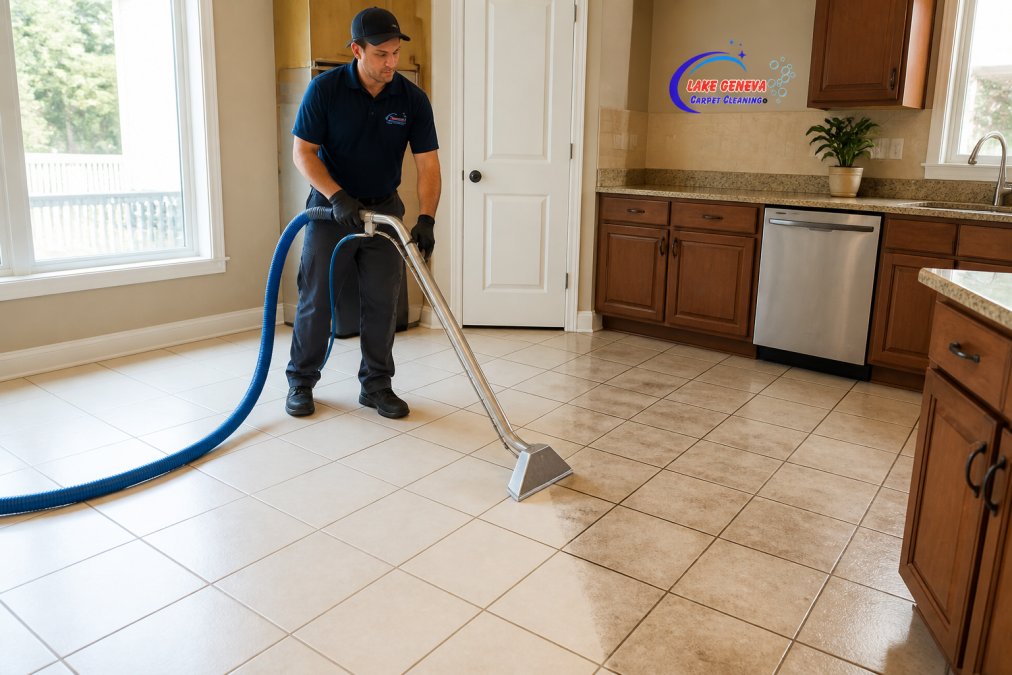
A typical visit follows a defined sequence:
- Inspection. The technician identifies the tile type (ceramic, porcelain, or natural stone) and checks grout condition and existing sealer.
- Dry soil removal. Vacuuming up loose debris first keeps the rest of the process from turning grit into slurry.
- Pre-treatment. A matched cleaner is applied and left to dwell so it can break the bond between soil and grout.
- Agitation. Scrubbing equipment works the solution into the grout lines.
- High-pressure extraction. A wand flushes the loosened soil and pulls it away in the same pass.
- Spot treatment. Stubborn areas get a second, targeted application.
- Drying and inspection. The floor is dried and checked under good light before the job is called done.
Two details separate a good result from a temporary one. The first is chemistry: alkaline cleaners handle grease and organic soil, while acidic solutions address mineral deposits and grout haze, and the wrong choice on natural stone can etch the surface. The second is extraction. Vacuum extraction removes the soil and most of the moisture in one motion, which is why a properly extracted floor is walkable far sooner than a mopped one.
Grout Sealing Services: Protecting the Work You Just Paid For
Grout sealing services apply a protective barrier that slows how quickly grout absorbs liquid and soil. Sealing does not make grout waterproof or stain-proof, and it does not replace cleaning, but it buys time between deep cleans and keeps light grout looking light.
Think of it as the difference between a rain jacket and a waterproof wetsuit. A sealer repels most spills long enough for you to wipe them up. Leave a spill overnight and it can still penetrate.
Sealing is worth scheduling when:
- The grout is freshly cleaned and fully dry.
- Water no longer beads on the surface, which indicates the previous sealer has worn off.
- The grout is light-colored and sits in a high-traffic path.
- The floor is in a kitchen, bathroom, or entryway where spills are routine.
Color restoration is the companion service. When grout has stained permanently or worn unevenly, a color sealer can even out the tone across the whole floor rather than leaving patchy dark lines next to clean ones. It is the closest thing to a fresh grout installation without removing anything.
Sealing over dirty grout traps the stain inside the sealer. Always clean and fully dry the grout first, or you will lock in the discoloration you were trying to fix.
Kitchen, Bath, and Entryway: Matching the Method to the Room
No single routine fits every room, because each space collects a different kind of soil. Matching the method to the room is what keeps results consistent.
Kitchens carry grease, food splatter, and sticky residue, especially around the stove and sink. Alkaline cleaners work best here, with more frequent spot treatment on the splash zone.
Bathrooms deal with soap scum, hard water minerals, and constant humidity. Mineral deposits need an acidic approach on ceramic and porcelain, but natural stone requires a gentler, stone-safe product. Ventilation matters as much as chemistry, since mold and mildew remediation starts with drying the room out.
Entryways take the brunt of Wisconsin weather: sand, salt, and mud tracked in from the driveway. These floors benefit from a walk-off mat outside and inside, plus a maintenance schedule built around the wet months rather than the calendar.
| Room | Main Soil Type | Best Cleaning Approach | Extra Step |
|---|---|---|---|
| Kitchen | Grease, food residue | Alkaline cleaner, frequent spot treatment | Wipe spills same day |
| Bathroom | Soap scum, minerals, mildew | Acidic cleaner on ceramic, stone-safe on natural stone | Run ventilation after every use |
| Entryway | Sand, salt, mud | Pre-treat, agitate, extract | Two walk-off mats, one inside and one out |
| Laundry or mudroom | Detergent film, grit | pH-balanced cleaner, regular rinse | Dry-mop weekly in winter |
The room determines the chemistry. Using a bathroom cleaner on a kitchen floor, or an acidic product on natural stone, causes more harm than the soil you were trying to remove.
Stain and Odor Removal Treatments for Grout Lines
Stain and odor removal starts with identifying what caused the stain, because grout responds differently to grease, minerals, and organic matter. Treating the wrong category is why so many home remedies fail, and why some of them make the stain worse.
Break the problem down by type:
- Grease and food oil: alkaline cleaners, applied with dwell time, then agitated. These respond well to home treatment if you catch them within a day or two.
- Hard water and mineral film: acidic cleaners on ceramic and porcelain only. Natural stone needs a stone-safe product instead, because acid can etch the surface.
- Organic staining and mildew: sanitization after cleaning, plus moisture control. If the stain comes back within weeks, the moisture source is still active.
- Deep or set-in discoloration: professional spot treatment or color restoration. Home products generally cannot reach soil that has bonded into the pores over years.
Odor is a separate signal. Grout that smells musty after cleaning usually means moisture is trapped in the substrate or in a poorly ventilated corner. Cleaning the surface will not fix that. The moisture source has to be addressed, whether that is a slow leak, a failing caulk line, or simple lack of airflow.
For pet owners, the same principle applies to hard floors as to carpet: surface cleaning handles the visible mess, while the odor source often sits deeper, in the grout pores or the subfloor beneath. If the smell returns within weeks, the treatment did not reach the source.
When to Treat It Yourself vs. When to Call a Professional
This is the question most guides skip, and it is the one that decides whether you spend an afternoon or a weekend on the same stain.
Handle it yourself when:
- The stain is fresh, within a day or two of the spill.
- The discoloration sits on the surface and wipes away with a damp cloth.
- The grout is sealed and the sealer is still beading water.
- The odor is mild and disappears after the room dries out.
Call a professional when:
- The grout darkens again within days of a home cleaning.
- A haze remains after the floor dries, which usually means grout haze is bonded to the surface.
- The odor returns after the room has been ventilated and dried.
- The stain is in a large area, or it spans multiple rooms.
- The tile is natural stone and you are unsure which chemistry is safe.
The reason the line falls where it does is mechanical. Home methods reach the surface of the grout. High-pressure extraction, paired with a solution matched to the tile type, pulls suspended soil out of the pores rather than wiping it around. That is the difference between a floor that looks clean for a week and one that stays clean for a season.
Test any cleaner on a small, hidden area of grout first and wait a few minutes. Grout that lightens or crumbles under a test patch will do the same across the whole floor.
Never mix cleaning products. Combining an alkaline cleaner with an acidic one can produce fumes and can damage grout and sealer. Use one product at a time and rinse thoroughly between applications.
If you are not sure which category your stain falls into, the safest move is to stop applying products and get an assessment. Pricing depends on the job, so contact us for a free quote and we will tell you honestly what will and will not come out.
Maintenance Schedules for High-Traffic Areas
Most tile and grout advice stops at “clean regularly.” That is useless when you are standing in a Lake Geneva mudroom in February trying to decide whether this week is a mop week or a scrub week. The schedule should be built from three inputs: how many people live or work in the space, whether there are pets, and how much outdoor soil gets tracked in.
Here is a practical way to set the cadence.
Household size. Two adults in a condo generate far less grout soil than a family of five. As a rule of thumb, add one weekly dry pass for every two additional people using the same entryway or kitchen.
Pets. One dog roughly doubles the soil load on entryways and kitchens. Two or more pets, or any pet that goes outside in wet weather, pushes those rooms into the “scrub weekly, extract monthly” tier.
Outdoor conditions. A home on a gravel driveway, near a shoreline, or on a street that gets sanded in winter will always track more grit than a home on a paved, landscaped lot.
| Space | Light Use (1-2 people, no pets) | Moderate Use (3-4 people or 1 pet) | Heavy Use (5+ people, 2+ pets, or business entry) |
|---|---|---|---|
| Kitchen | Dry-mop weekly, scrub monthly | Dry-mop 2x weekly, scrub every 2 weeks | Dry-mop daily, scrub weekly |
| Bathroom | Scrub every 2 weeks | Scrub weekly | Scrub 2x weekly, ventilate daily |
| Entryway | Dry-mop weekly | Dry-mop 2-3x weekly, scrub monthly | Dry-mop daily, scrub weekly |
| Mudroom or laundry | Dry-mop weekly in wet months | Dry-mop 2x weekly in wet months | Dry-mop daily in wet months |
Three tiers of care sit on top of that room-by-room rhythm:
- Weekly: dry removal and a damp pass on all high-traffic paths. Entryways and kitchens get this most often.
- Monthly: deeper agitation of grout lines with a soft brush and a pH-balanced solution, followed by a clean-water rinse.
- Seasonally: professional deep cleaning and a sealer check, timed to the start and end of the wet season.
In Lake Geneva, the seasonal tier matters more than most homeowners realize. Road salt and sand arrive with the first snow and keep coming through spring. Scheduling a deep clean in late fall, before the salt starts, and again in spring, after it stops, keeps the floor ahead of the damage instead of catching up to it. Homes on the lake side of town also deal with higher ambient humidity, which means bathrooms and laundry rooms benefit from a ventilation check at the same time as the seasonal clean.
For local business owners, the calculus shifts. A retail shop or professional office with a tiled entry sees more foot traffic in a single day than most homes see in a week. Those spaces usually need the monthly tier treated as weekly, and a documented cleaning schedule helps maintain a professional appearance for customers. Restrooms in commercial spaces should be treated as heavy-use bathrooms regardless of headcount, because the humidity and traffic never really stop.
Build the schedule from people, pets, and outdoor conditions, not from the calendar. A one-size-fits-all routine is why so many Lake Geneva floors look tired by March.
If the grout darkens again within days of a home cleaning, the schedule is not the problem, the soil is below the surface, and that is the point where a professional deep clean and a fresh sealer reset the clock.
Residential and Commercial Tile Cleaning in Lake Geneva
Residential and commercial tile cleaning differ mainly in scale, scheduling, and the standard of finish required. A homeowner wants a floor that looks and feels clean. A business owner needs that same result on a predictable schedule that does not disrupt operations.
For homeowners around the lake, the priorities tend to be allergen removal, odor control, and protecting floor longevity in kitchens, baths, and mudrooms. For local business owners, the priority is consistency: the entryway looks the same on a Tuesday in February as it did in July.
Both cases come down to the same three-part approach:
- Match the cleaning chemistry to the tile and grout type.
- Use high-pressure extraction to remove soil rather than redistribute it.
- Seal and maintain on a schedule that reflects actual traffic.
If you are searching for tile and grout cleaning near me in the Lake Geneva area, the practical question is not who can scrub a floor. It is who can identify the tile type, choose the right solution, extract the soil, and tell you honestly what will and will not come out.
Lakeside homes, pet owners, and local businesses with tiled entryways, kitchens, or restrooms that see heavy seasonal traffic.
Tile and grout in this climate take a beating that most cleaning routines were never designed to handle. Sand, salt, and lake humidity work their way into porous grout all year, and once soil settles below the surface, no mop will reach it. Lake Geneva Carpet Cleaning has served Wisconsin homeowners and business owners for over 32 years as an owner-operated team, using eco-friendly methods and truck-mounted hot water extraction to remove dirt, allergens, and odors rather than spread them around. Every job is backed by a 10-day satisfaction guarantee and the kind of meticulous attention to detail that only an owner-operated business delivers. Get started with Lake Geneva Carpet Cleaning and see what your tile floor looks like when the grout is genuinely clean.
Frequently Asked Questions
How often should you have tile and grout professionally cleaned in Lake Geneva?
Most Lake Geneva homes do well with professional tile and grout cleaning every 12 to 18 months. Kitchens, entryways, and bathrooms that see daily use may need it every 6 to 12 months, especially in homes with pets or kids. If you have grout sealing services applied after cleaning, that protective layer can stretch the interval further. High-traffic areas show wear first, so check grout lines there before scheduling.
Is professional tile and grout cleaning worth it for residential floors?
It depends on how far the grout has declined. Surface mopping removes light soil, but grout is a porous surface that traps dirt, grease, and grout haze below the top layer. Professional cleaning uses high-pressure extraction and alkaline cleaners to pull that out, which typical household tools cannot reach. If your grout looks uniformly dingy or discolored after routine cleaning, professional service is usually the faster route to visible results.
Can professional cleaning restore the original color of my grout?
In most cases, yes. Grout discoloration usually comes from soil, oils, and mineral buildup sitting inside the pores, not from the grout itself changing color. Deep extraction paired with the right cleaner lifts that layer and reveals the original tone. Grout that has cracked, crumbled, or been stained by dye-based spills may need color restoration or regrouting instead. A technician can tell you which outcome to expect after inspecting the floor.
How do professionals remove deep-seated stains from grout lines?
The process starts with matching the cleaner to the stain and the tile type. Alkaline cleaners break down grease and organic soil, while acidic formulas handle mineral deposits and grout haze. Technicians agitate grout lines with scrubbing equipment, then use high-pressure extraction and vacuum extraction to pull the loosened soil out rather than spreading it. For ceramic and porcelain tile, this is usually safe; natural stone needs pH-balanced solutions to protect surface integrity.