
Last Updated: November 16, 2026
Quick Summary
To deep clean area rugs for allergies, vacuum thoroughly from several directions, pre-treat stains with a mild dye-free solution, clean with a soft brush along the pile, rinse fully, then blot and dry the rug completely. Vacuum high-traffic rugs at least once or twice a week, and plan a deeper clean every few months.
- Vacuum slowly and make multiple passes in different directions, since a second and third pass often pull up more dust.
- Rinse thoroughly, because leftover cleaning solution attracts new dirt.
- Check that the backing is fully dry before putting the rug back down to avoid mold or mildew.
- Households with allergy sufferers usually need more frequent cleaning than general advice suggests.
- Always check the rug’s care label and test any product on a hidden corner first.
Table of Contents
- Why Area Rugs Trap Allergens and Dust Mites
- What You Need Before You Start Cleaning Your Area Rug
- How to Clean an Area Rug at Home, Step by Step
- How Often to Deep Clean Rugs When Someone in the Home Has Allergies
- How to Reduce Allergens in the Bedroom Beyond the Rug
- When DIY Cleaning Falls Short and Professional Deep Cleaning Helps
- Fiber-Specific Cleaning Tips for Wool, Synthetic and Low-Pile Rugs
- Lake Geneva Seasonal Allergen Tips and a Cleaning Schedule for Allergy Sufferers
- Book a Professional Deep Clean for Your Allergy-Prone Rugs With Lake Geneva Carpet Cleaning
- Frequently Asked Questions
Why Area Rugs Trap Allergens and Dust Mites
Area rugs act like filters. They catch dust, pollen, pet dander and dust mite matter in their fibers and backing, then hold onto it. Rugs in lakeside homes often feel dusty even after regular vacuuming, and understanding why is the first step toward a cleaner result.
Dry soil is the main culprit. Tracked-in grit from shoes, pollen carried in on pets and clothing, and skin flakes that feed dust mites all settle deep in the pile. A surface pass with a vacuum rarely reaches the base of the rug, which is why a proper deep clean area rugs routine targets the allergen load that sits there.
Pile type matters too. Thick, high-pile rugs hide more debris than flat-weave or low-pile styles. Dense construction makes it harder for air and cleaning solutions to move through the rug.
Watch out: vacuuming alone can leave a rug looking clean while allergens stay locked in the backing. Plan a deeper cleaning as well.
What You Need Before You Start Cleaning Your Area Rug
Gather your supplies before you begin. Our HEPA vacuum guide for allergies covers which features matter most for allergy control if you are buying or borrowing one. Having everything ready keeps the process moving and reduces the chance of damaging the rug.
- A vacuum with a HEPA filter and an upholstery or rug attachment
- A soft-bristle brush for loosening dirt
- Clean white microfiber towels
- A mild, dye-free cleaning solution labeled safe for your rug fiber
- A spray bottle for pre-treating spots
- A fan or dehumidifier for drying
Check the rug’s care label first. Wool, synthetic and natural-fiber rugs each need different handling. If there is no label, test any product on a hidden corner.
How to Clean an Area Rug at Home, Step by Step
Follow these steps in order for the best results. Set aside a full day so the rug can dry completely.
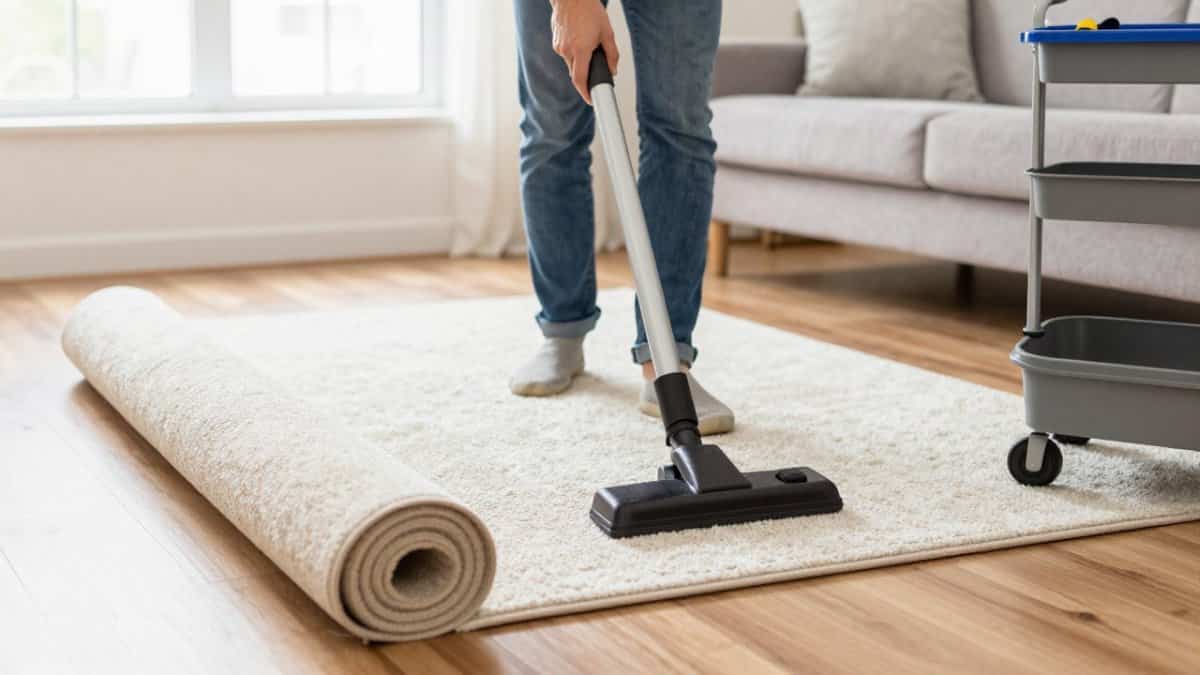
- Move furniture off the rug and remove any loose items.
- Vacuum the rug thoroughly from several directions.
- Pre-treat stains and heavy spots with your mild solution.
- Clean the rug with a soft brush, working in the direction of the pile.
- Rinse the rug to remove leftover cleaning solution.
- Blot out excess moisture and let the rug dry fully.
Pre-Cleaning Vacuum and Multiple Passes
Vacuum slowly. Make multiple passes in different directions, because dirt hides at many angles in the pile. Many people stop after one pass, but a second and third pass often pull up noticeably more dust. For a deeper result, consider steam cleaning, which removes deep dirt, allergens and odors. Our steam cleaning guide for rugs explains what to expect and how to prepare.
Rinsing, Residue Control and Safe Drying
Leftover cleaning solution attracts new dirt, so rinse thoroughly. Blot the rug with clean towels until little moisture transfers. Then let it dry in a well-ventilated room with a fan running. Check that the backing is fully dry before putting the rug back down. Damp backing can grow mold or mildew, which creates a new allergy problem.
The core cleaning process breaks down into six steps, each with a clear purpose.
| Step | What to do | Time or frequency |
|---|---|---|
| 1 | Move furniture and loose items off the rug | Before starting |
| 2 | Vacuum from several directions | Multiple passes |
| 3 | Pre-treat stains with mild solution | Before scrubbing |
| 4 | Clean with soft brush, along the pile | Work in sections |
| 5 | Rinse to remove leftover solution | Thoroughly |
| 6 | Blot moisture and let rug dry fully | Set aside a full day |
How Often to Deep Clean Rugs When Someone in the Home Has Allergies
Households with allergy sufferers usually need more frequent cleaning than the general advice suggests. Vacuum high-traffic rugs at least once or twice a week. Plan a deeper cleaning every few months, or sooner if pets shed heavily or someone spills in the room. A personalized schedule works better than a fixed rule, and our carpet cleaning schedule guide can help you set one.
How to Reduce Allergens in the Bedroom Beyond the Rug
Rugs are only one source of allergens. Bedding, curtains and upholstered furniture collect dust mites too. Wash bedding in hot water each week, use allergen-proof covers on pillows and mattresses, and dust with a damp cloth instead of a dry one. Keep humidity moderate so dust mites have a harder time surviving. For a broader set of natural methods, see our guide to reducing indoor allergens naturally.
When DIY Cleaning Falls Short and Professional Deep Cleaning Helps
Home methods have limits. Store-bought spot cleaners and rental machines may not reach the backing, and heavy soiling can leave residue behind. Rugs with delicate fibers or old stains often need equipment and training that most homeowners do not have. Professional deep cleaning can pull dirt, allergens and odors from deep in the pile. Pricing depends on the rug’s size, fiber and condition, so contact us for a free quote.
Fiber-Specific Cleaning Tips for Wool, Synthetic and Low-Pile Rugs
Allergen cleaning is only a win if the rug survives it. Fiber and construction decide how much water, agitation, and heat a rug can take, and getting this wrong causes shrinkage, dye bleeding, browning, or backing delamination, all of which create new problems for sensitive occupants. Before you deep clean area rugs at home, match your method to the rug, not the other way around.
Wool and wool blends. Wool is the most common natural fiber in area rugs and the least forgiving of overwetting. Most practitioners find that wool tolerates only light, even moisture and must dry fast; soaked wool can shrink, felt, or bleed dye, especially in reds and deep blues. Use a low-moisture method, work in small sections, avoid scrubbing the pile against its direction, and dry with airflow on both sides. Never leave a wool rug folded or rolled while damp.
Silk and silk-blend rugs. Silk is the highest-risk fiber in a home. Water alone can cause watermark rings, pile distortion, and color migration, and agitation can crush the pile permanently. Do not wet-clean silk yourself; vacuum gently with a bare-floor or upholstery tool on low suction, blot spills immediately with a white towel, and stop there. These rugs belong with a specialist.
Cotton and other plant fibers. Cotton, jute, sisal, and seagrass absorb water readily and can brown, mildew, or lose shape if they stay damp. Jute and sisal also shed fibers when scrubbed. Use minimal moisture, blot rather than soak, and dry flat with strong airflow. Because these fibers hold dampness in the core, check the underside and the pad, not just the surface.
Synthetics (polypropylene, polyester, nylon, olefin). Synthetics tolerate more water and agitation than natural fibers, which makes them the safest DIY candidates. The trade-off is oil attraction: synthetic pile holds onto cooking grease, pet oils, and oily soil, and leftover detergent turns sticky and grabs new dirt. For safe removal of deep pet stains and odors, see our Lake Geneva guide for pet-friendly carpet cleaning. Rinse thoroughly and use a low-residue, fragrance-free cleaner. Olefin and polypropylene can also crush under heat, so keep any heat-based method moderate.
Hand-knotted and hand-woven rugs. Hand-knotted rugs have a foundation of warp and weft threads beneath the pile, and that foundation is where allergens and grit settle. They also have fringe and side selvages that fray with rough handling. Vacuum the face gently, avoid the fringe with a beater bar, and treat any wet cleaning as a specialist job, uneven moisture on a hand-knotted rug can distort the weave.
Rugs with backing, pads, or non-slip layers. Many modern rugs have a latex, synthetic, or fabric backing, and latex-backed rugs are especially vulnerable to moisture. Water trapped between the pile and the backing softens the adhesive, causing curling, delamination, and odor, and a damp backing is a prime spot for mold. Lift the rug and check the pad after any cleaning; if the pad is damp, dry it separately or replace it.
Flat-weave and low-pile rugs. Flat-weaves and low-pile styles are easier to vacuum deeply because debris sits closer to the surface, but they show water marks and pile distortion. Blot instead of scrubbing, clean in the direction of the weave, and dry flat. Kilim-style flat-weaves can bleed dye, so test any solution on a hidden edge first.
Antique, valuable, and color-unstable rugs. If a rug is antique, hand-dyed, or has ever bled color when blotted with a damp white towel, stop. Dye instability and fragile foundations are not DIY problems, and a failed wash can cost far more than the cleaning would have. For these rugs, vacuum what you can and hand the rest to a specialist.
Watch out: the care label is a starting point, not a guarantee. If there is no label, or the label conflicts with what the rug actually does when you test a hidden corner, trust the test, and when in doubt, use less water, less agitation, and more drying time.
Lake Geneva Seasonal Allergen Tips and a Cleaning Schedule for Allergy Sufferers
A cleaning schedule built for allergy sufferers is not the same as a generic one. It should respond to what is actually in the air and on the floor in the Lake Geneva area, and to what is happening inside the home, pets, foot traffic, and how sensitive the occupants are. Use the seasonal notes below to time your deep cleans, then use the household variables to adjust frequency.
Spring (roughly March through May). Snowmelt, mud, and the start of the outdoor pollen season mean more tracked-in debris. Pollen rides in on shoes, pets, and clothing and settles into pile, so a doormat at every entrance and a shoes-off habit do more than most people expect. This is the season to vacuum high-traffic rugs more often and to schedule a deep clean once the spring mud season eases.
Summer (roughly June through August). Open windows and outdoor activity bring in pollen and grit, and lakeside humidity can keep rugs from drying fully after a spill or wash. Watch the humidity in the room where rugs sit; a damp rug in a humid room is the setup for mold and mildew, which is its own allergen problem. Dry rugs with airflow and check the backing before putting them back down.
Fall (roughly September through November). Leaf debris, mold spores from outdoor decay, and the start of heavier indoor living all raise the load. This is a good time for a deep clean before the house closes up for winter, and a good time to wash or replace entry mats that have absorbed summer grit.
Winter (roughly December through February). Road salt, sand, and grit come in on boots, and closed-up homes recirculate dust and pet dander. Salt and sand are abrasive and work into pile, so vacuum entry rugs frequently and deep clean them once the salt season ends. Indoor humidity often drops in winter, which is easier on rugs but can dry out some natural fibers, keep an eye on wool and plant-fiber rugs for brittleness.
Adjust the schedule to the household, not just the calendar.
- Households with pets: vacuum high-traffic rugs at least twice a week, and deep clean more often if the pet sheds heavily or spends time on the rug. Pet dander and oils build up in pile faster than dust alone.
- High foot traffic (entries, family rooms, homes with kids): vacuum these rugs more often than low-traffic rugs, and expect to deep clean them sooner.
- Sensitive occupants (asthma, known dust mite or pet allergy): treat vacuuming as a weekly minimum on rugs in bedrooms and main living areas, and keep a HEPA-filtered vacuum on hand. Deep clean on a schedule rather than waiting for visible soil.
- Low-traffic or decorative rugs: a less frequent deep clean is usually enough, but still vacuum regularly so debris does not settle into the backing.
A practical schedule to start from:
- Weekly: vacuum high-traffic and bedroom rugs with a HEPA vacuum, using slow, overlapping passes.
- Monthly: vacuum rugs in lower-traffic rooms, spot-treat visible marks, and check pads and backings for dampness or odor.
- Seasonally: schedule a deep clean at the change of seasons, spring after mud season and fall before the house closes up are the two most useful points.
- After spills, pet accidents, or tracked-in salt and mud: clean the area promptly, blot thoroughly, and dry fully before walking on the rug again.
Watch out: a schedule is a starting point, not a rule. If someone in the home is reacting more than usual, or a rug smells musty after cleaning, that is a signal to clean sooner and check for moisture, not to wait for the next scheduled date.
Book a Professional Deep Clean for Your Allergy-Prone Rugs With Lake Geneva Carpet Cleaning
Allergy-prone rugs deserve a thorough clean. Lake Geneva Carpet Cleaning serves Lake Geneva, Twin Lakes, Genoa City, Walworth, Fontana, Darien, Burlington, Elkhorn, Williams Bay, Delavan and East Troy, Wisconsin, and has served the area for 32 years. Our team removes embedded allergens and odors from rugs. Contact us for a free quote and a deep clean that helps your home feel fresher.
Frequently Asked Questions
What is the best way to clean my carpet if I have allergies?
Vacuum slowly with a HEPA-filter vacuum, making several passes in different directions so dust mites, pollen and pet dander are lifted rather than pushed deeper. Then deep clean the rug with a method that rinses out cleaning residue and dries fully within a day. Residue left behind can irritate sensitive airways, so thorough rinsing matters as much as the cleaning itself. For persistent dust mite problems or heavily soiled rugs, professional cleaning can help remove embedded allergens. Schedule regular vacuuming between deep cleans to slow allergen buildup.
How often should I deep clean an area rug for allergies?
Households with allergy sufferers generally benefit from deep cleaning area rugs at least twice a year, with more frequent cleaning during spring and fall pollen seasons or after pets have spent time on the rug. Vacuuming once or twice a week between deep cleans keeps dry soil and dust from accumulating. Rugs in bedrooms and play areas, where people spend the most time, deserve priority. Watch for signs such as increased sneezing or itchy eyes when you walk on the rug, which often mean it is due for cleaning.
Can a damp area rug make allergy symptoms worse?
Yes. A rug that stays damp can encourage mold and mildew growth, and mold spores are a common allergy trigger. After any cleaning, lift the rug or check the padding and backing with your hand to confirm they are fully dry. Good airflow, a fan and open windows help speed drying. If a rug still smells musty or feels cold and wet after a day, it has not dried properly and should be addressed before it goes back on the floor.
When should I hire a professional to clean an area rug?
Consider a professional when allergy symptoms persist despite regular vacuuming and home cleaning, when the rug is large, delicate or made of a fiber that is hard to clean at home, or when pet odors and stains have returned after previous attempts. Professionals can pull moisture and embedded particles out of the pile and padding. Pricing depends on the job, so contact Lake Geneva Carpet Cleaning for a free quote.