Table of Contents
- How Steam Cleaning Works for Rugs
- Deep Cleaning vs Steam Cleaning Rugs
- How to Prepare Rugs for Professional Cleaning
- The Steam Cleaning Process: Step-by-Step
- Choosing the Right Cleaning Solution
- Drying Time and Preventing Mold Growth
- Removing Tough Stains and Pet Odors
- Professional Rug Cleaning Services in Your Area
- Maintenance Tips for Longevity After Cleaning
- Conclusion
Last Updated: August 22, 2026
How Steam Cleaning Works for Rugs
Steam cleaning for rugs relies on hot water extraction, a process that forces heated water deep into carpet fibers and backing, then immediately recovers it along with embedded dirt, allergens, and odors. The method works by injecting pressurized water mixed with cleaning solution into the pile, agitating the fibers to dislodge contaminants, and then extracting the dirty water back out through powerful suction. This cycle removes what surface vacuuming cannot reach.
The key difference between steam cleaning and other methods is depth. A regular vacuum removes surface debris; steam cleaning penetrates the rug backing where dust mites, pet dander, and years of accumulated grime live. The heat itself serves two purposes: it helps dissolve stubborn stains and kills many bacteria and allergens that thrive in cool, damp environments.
At Lake Geneva Carpet Cleaning, we use truck-mounted hot water extraction equipment that delivers consistent water temperature and recovery power far beyond what rental machines or portable units can achieve. This equipment maintains proper water temperature throughout the cleaning cycle, which is critical for breaking down soil and ensuring thorough extraction. Without adequate suction power, moisture remains trapped in the carpet, creating conditions for mold and mildew growth, a problem many homeowners encounter after DIY attempts.
The extraction nozzle moves across the rug in overlapping passes, and each pass recovers water that would otherwise sit in the fibers. This water recovery stage is where amateur cleaning often fails. Homeowners using rental machines frequently report that their carpets stay damp for 24 hours or longer, which defeats the purpose of cleaning and introduces new problems.
Deep Cleaning vs Steam Cleaning Rugs
Deep cleaning and steam cleaning are often used interchangeably, but they’re not identical. Steam cleaning is one method of deep cleaning, specifically, hot water extraction. Other deep cleaning approaches include dry cleaning compounds, encapsulation treatments, and foam cleaning. Understanding the distinction matters because each has different applications, drying times, and effectiveness on specific fiber types.
Hot water extraction (steam cleaning) is the most widely recommended method for most residential rugs because it offers the most thorough soil removal and is effective on synthetic and natural fibers alike. The heat and moisture combination breaks down oils and proteins that other methods struggle with, particularly pet stains and food residues. However, steam cleaning does leave moisture behind if not done properly, which is why suction power and drying management are critical.
Dry cleaning methods use minimal water and special compounds that crystallize dirt particles, which are then vacuumed away. These methods dry faster, often within 1-2 hours, but don’t penetrate as deeply and may leave residue if not rinsed thoroughly. They work well for maintenance cleaning between deep cleanings but aren’t ideal for rugs with embedded odors or heavy soiling.
Encapsulation is a hybrid approach that uses polymer-based solutions to surround soil particles, making them easier to vacuum later. It dries quickly and leaves minimal residue, but it’s a surface-level treatment best suited to lightly soiled carpets. For a rug with years of accumulated dirt or serious pet damage, encapsulation alone won’t address the root problem.
For most homeowners in the Lake Geneva area dealing with seasonal contaminants like road salt, mud, and sand, or for pet owners managing stubborn odors, hot water extraction is the most effective choice. It’s the gold standard that professional rug cleaning services rely on because the results are measurable and long-lasting when done correctly.
How to Prepare Rugs for Professional Cleaning
Preparation isn’t glamorous, but it directly impacts cleaning quality and safety. Proper preparation prevents damage to the rug, protects your home from water damage, and allows the cleaning technician to work efficiently without interruptions.
Pre-cleaning vacuuming and debris removal
Start by vacuuming thoroughly, and we mean thoroughly. Most homeowners underestimate how much surface debris remains in carpet pile even after regular vacuuming. Use slow, overlapping passes with a standard upright or canister vacuum. The goal is to remove as much loose dirt, dust, pet hair, and crumbs as possible before the professional arrives.
Pay special attention to high-traffic areas, under furniture, and along baseboards where debris accumulates. If you have pets, use a vacuum with strong suction and consider multiple passes over pet-prone areas. Removing this surface layer makes the extraction process more effective because the cleaning solution can penetrate deeper without being blocked by loose debris.
For larger debris, visible dirt clods, sand, or gravel, pick these up by hand first. Vacuuming over large particles can damage your vacuum and wastes the professional’s time.
Identifying problem areas and stains
Walk through the rug and note any visible stains, odors, or problem areas. If you know the source of a stain (pet accident, food spill, mud), mention it to the cleaning technician. This information helps them select the right pre-treatment approach and adjust their technique for stubborn spots.
For pet accidents or lingering odors, mark the location clearly. Odor problems often extend beyond the visible stain, so the technician needs to know where to focus extra attention. Many homeowners assume a stain is gone when it’s just dried, the odor molecules remain trapped in the backing and padding, which is why professional extraction is necessary to address the root cause.
Don’t attempt to remove stains yourself with store-bought spot cleaners immediately before professional cleaning. Residual chemicals can interfere with the professional cleaning solution and may cause discoloration or damage. If you’ve already treated a stain, let the professional know what product you used.
The Steam Cleaning Process: Step-by-Step
Professional steam cleaning follows a structured sequence designed to maximize soil removal while protecting the rug. Understanding each phase helps you know what to expect and why certain steps matter.
Pre-treatment and spot work
Before full extraction begins, the technician applies a pre-treatment solution to the entire rug or to problem areas, depending on soil level. This solution is pH-balanced to break down oils, proteins, and other substances that water alone cannot remove. The pre-treatment sits for a few minutes, allowing it to penetrate the pile and begin dissolving embedded soil.
For stubborn stains or odor sources, the technician may apply a stronger spot treatment directly to the affected area. This targeted approach ensures that problem zones receive extra attention without over-treating the entire rug. Pet stains, in particular, benefit from this localized pre-treatment because the solution can address both the visible residue and the odor molecules trapped deeper in the backing.
The waiting period during pre-treatment is not wasted time, it’s essential chemistry. Rushing into extraction without allowing the solution to work reduces effectiveness and may require a second pass, which extends drying time unnecessarily.
Hot water extraction and agitation
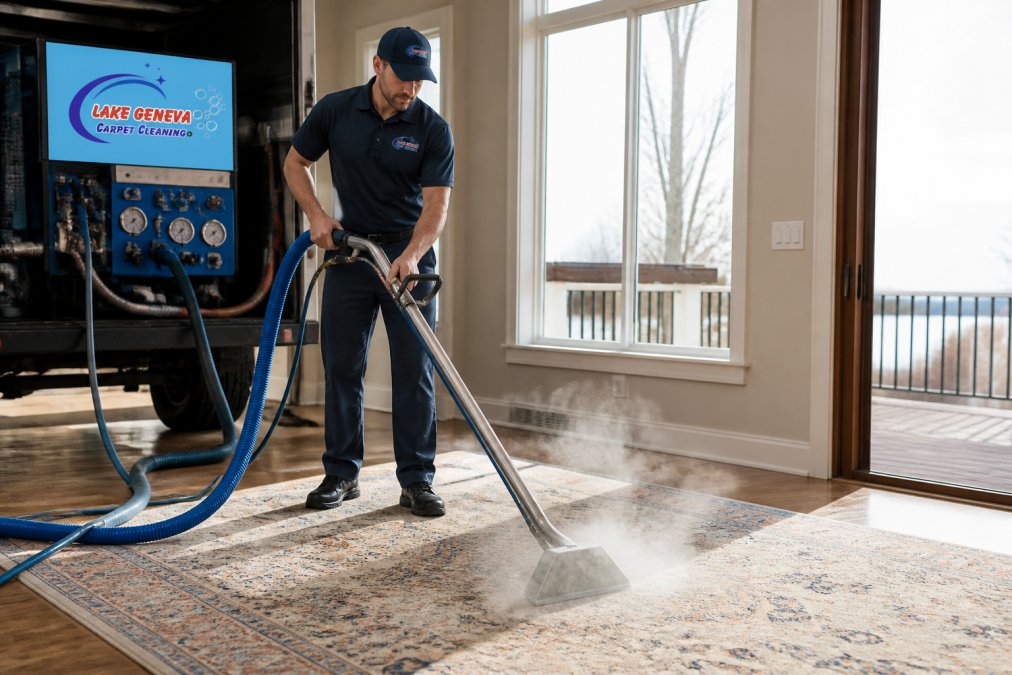
Once pre-treatment has done its work, the extraction process begins. The technician positions the extraction nozzle and moves it slowly across the rug in overlapping passes. The machine injects hot water at pressure while simultaneously pulling dirty water back out through powerful suction. This simultaneous injection and recovery is what distinguishes professional extraction from DIY methods.
The hot water temperature is critical, typically between 150-200°F, because heat helps dissolve oils and improves extraction efficiency (peer-reviewed research). Cooler water, as often happens with rental machines or portable units, is less effective at breaking down stubborn soil and may leave residue behind. Professional truck-mounted equipment maintains consistent temperature throughout the cleaning cycle.
Agitation, the mechanical action of the nozzle and the water pressure itself, helps dislodge soil from deep within the pile and backing. The combination of heat, moisture, chemical action, and agitation is what makes professional steam cleaning effective for embedded dirt, allergens, and odors that surface cleaning cannot address.
Water recovery and moisture control
The extraction nozzle recovers water continuously as it moves across the rug. This water recovery stage is where the quality of equipment becomes obvious. Professional-grade equipment has powerful suction that removes the majority of water, leaving the rug damp rather than soaked. Rental machines and portable units often lack sufficient suction power, which is why homeowners frequently report that their carpets stay wet for 24+ hours after DIY cleaning attempts.
After the final extraction pass, many professionals make a dry pass, running the extraction equipment without injecting water, using only suction to pull out remaining moisture. This step significantly reduces drying time and prevents moisture from re-wetting the rug as it dries.
Proper moisture control is essential for preventing mold and mildew growth in the rug backing and padding. If too much water remains, the rug becomes a breeding ground for microorganisms, which creates new odor problems and can damage the rug structure itself.
Choosing the Right Cleaning Solution
Not all cleaning solutions are created equal, and choosing the right one matters for both cleaning effectiveness and rug safety. The solution must be strong enough to dissolve soil but gentle enough to protect the rug fibers and backing.
A pH-balanced cleaning solution is essential. Most carpet fibers, whether synthetic or natural, are sensitive to highly acidic or alkaline conditions. A solution that’s too alkaline can leave residue that attracts dirt, causing the rug to look dingy again within weeks (the FTC). A solution that’s too acidic can damage delicate fibers or cause color bleeding. Professional-grade solutions are formulated to sit in a neutral pH range that maximizes cleaning power while protecting the rug.
Eco-friendly solutions are increasingly important for homeowners concerned about chemical exposure in their homes. These solutions break down soil effectively without relying on harsh solvents or toxic compounds. They’re safer around children and pets, and they don’t leave chemical residues that can irritate skin or respiratory systems.
The solution should also be designed for the specific cleaning method. Hot water extraction solutions are formulated to work with the temperature and agitation of the extraction process. Using the wrong solution, or worse, household cleaners, can reduce effectiveness or damage the rug.
Lake Geneva Carpet Cleaning uses eco-friendly, professional-grade solutions specifically formulated for hot water extraction on residential rugs. These solutions are selected based on soil type and fiber composition, ensuring maximum effectiveness without risk to your home or the rug itself.
Drying Time and Preventing Mold Growth
Drying time is one of the most common concerns homeowners express, and rightfully so. A rug that stays wet for days creates conditions for mold, mildew, and odor problems, essentially undoing the benefits of cleaning.
Professional steam cleaning, when done correctly, leaves the rug damp but not soaked. Most rugs dry within 4-8 hours under normal conditions, though drying time varies based on:
- Humidity levels in your home
- Air circulation and ventilation
- Rug thickness and pile density
- How thoroughly water was recovered during extraction
To accelerate drying after professional cleaning, open windows if weather permits, turn on ceiling fans, and increase air circulation. Avoid walking on the rug until it’s completely dry, wet fibers are more prone to matting and damage from foot traffic.
If your rug remains visibly wet after 12 hours, moisture wasn’t adequately recovered during extraction. This is a red flag that the equipment or technique wasn’t sufficient. Proper professional cleaning should leave the rug damp enough to feel cool but not dripping or squishy.
Mold and mildew thrive in damp conditions, particularly in humid environments or homes with poor ventilation. Prevention is simpler than remediation: ensure the rug dries completely within 24 hours, maintain reasonable humidity levels in your home, and avoid re-wetting the rug before it’s fully dry.
Removing Tough Stains and Pet Odors
Tough stains and pet odors are the reasons most homeowners call for professional cleaning. These problems persist because they’re not surface-level, they’re embedded in the rug backing and padding where regular vacuuming cannot reach.
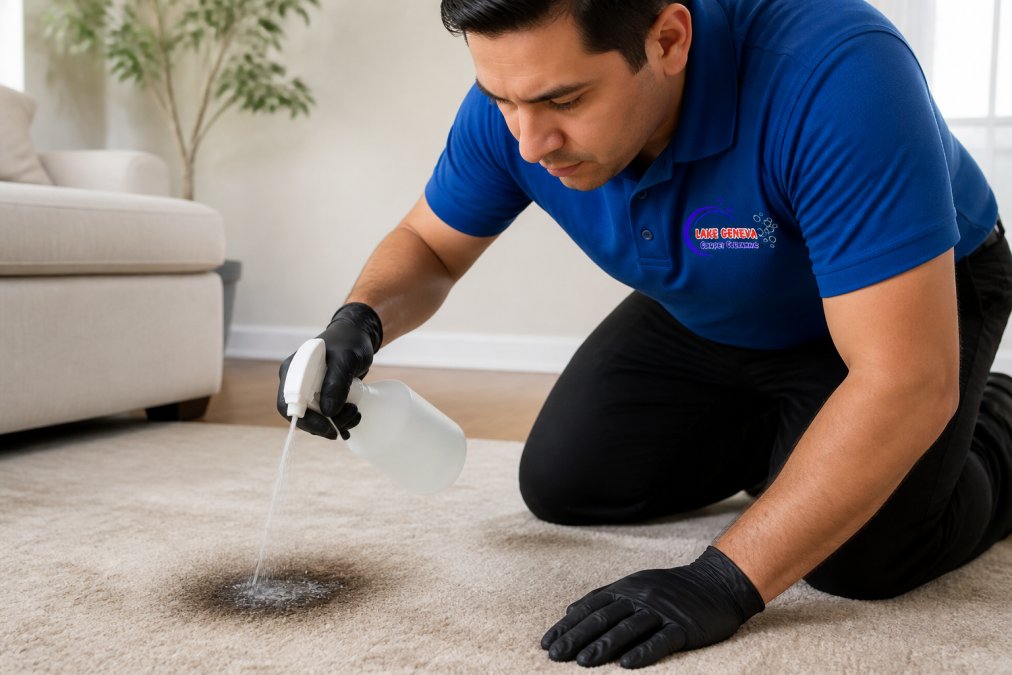
Pet accidents are particularly challenging because they involve both visible residue and odor molecules. Urine soaks through the pile into the backing and padding, where it dries and crystallizes (peer-reviewed research). When humidity rises or the rug gets damp, those crystals reactivate and release odor. Store-bought spot cleaners address the surface but rarely penetrate deep enough to eliminate the source.
Professional steam cleaning with targeted pre-treatment can break down these crystals and extract them completely. The high-temperature water dissolves the residue, and the suction removes it before it can re-dry in the rug. For severe pet damage, multiple treatments or specialized enzymatic solutions may be necessary, but the goal is always to extract the problem at its source rather than just mask it.
Food stains, mud, and other common household stains respond well to standard steam cleaning if treated promptly. The longer a stain sits, the more it bonds to the fiber, making removal harder. Professional extraction is far more effective than DIY methods because the heat and pressure work together to break the stain’s bond and pull it out completely.
For stubborn stains that don’t fully lift during standard extraction, the technician may apply additional pre-treatment and make extra passes over the area. Some stains may require specialized solutions or techniques, but professional cleaning offers far better results than attempting repeated spot treatments at home.
Professional Rug Cleaning Services in Your Area
If you’re in the Lake Geneva area or surrounding Wisconsin counties, professional rug cleaning services offer a level of effectiveness that DIY methods simply cannot match. The difference comes down to equipment, expertise, and the ability to tailor the cleaning approach to your specific rug and soil conditions.
Professional services handle the entire process, from proper preparation to thorough extraction to moisture management, eliminating the guesswork and risk of damage. They understand fiber types, recognize when a rug needs specialized care, and know how to address problem areas without causing discoloration or wear.
For homeowners with pets, allergies, or heavy foot traffic, professional cleaning is an investment in the rug’s longevity and your home’s health. Regular professional cleaning removes allergens, dust mites, and bacteria far more effectively than vacuuming alone, which is why many health-conscious homeowners schedule professional cleaning annually or semi-annually.
Local providers understand the specific challenges of your environment, seasonal contaminants like road salt and sand, humidity levels that affect drying, and local water hardness that impacts cleaning solution effectiveness. They can also address emergency situations like water damage or severe pet accidents with specialized equipment and techniques.
Maintenance Tips for Longevity After Cleaning
Professional cleaning gives your rug a fresh start, but maintenance habits determine how long those results last. A few simple practices extend the cleanliness and lifespan of your rug significantly.
Vacuum regularly, ideally weekly for high-traffic areas and at least bi-weekly for the rest of the rug. Regular vacuuming removes surface debris before it becomes embedded, making your next professional cleaning more effective and extending the interval between professional services.
Address spills and stains immediately. Blot (don’t rub) fresh spills with a clean cloth to remove excess liquid, then allow the area to dry. Waiting hours or days before treating a stain allows it to set deeper into the fibers, making professional removal harder.
Use entry mats or rugs at exterior doors to reduce the amount of dirt tracked onto your carpets. This single practice dramatically reduces soil accumulation, particularly important in the Lake Geneva area where seasonal contaminants like road salt and sand are common.
Rotate your rug periodically, every 6-12 months, to ensure even wear and sun exposure. This prevents high-traffic lanes from becoming matted while other areas remain pristine, and it helps the rug age uniformly.
Avoid placing heavy furniture directly on damp rugs after professional cleaning. Wait until the rug is completely dry before moving furniture back into place. Furniture legs can leave permanent indentations in damp carpet pile, and the weight can trap moisture underneath, creating mold risk.
Consider professional cleaning annually or every 18 months, depending on household activity level and traffic. Regular professional maintenance prevents soil from becoming deeply embedded, keeps allergens and odors under control, and extends the rug’s lifespan by years.
Steam cleaning for rugs is the most effective method for removing embedded dirt, allergens, and odors that regular vacuuming cannot address. The combination of heat, moisture, chemical action, and professional-grade suction creates results that DIY methods simply cannot match. If you’re dealing with stubborn stains, pet odors, or allergies in your Lake Geneva home, professional steam cleaning offers a solution that actually addresses the root problem rather than just masking it temporarily. Lake Geneva Carpet Cleaning brings over 32 years of experience and truck-mounted hot water extraction equipment specifically designed for deep rug cleaning. Contact us for a free quote and discover the difference that professional cleaning expertise can make in your home.
Frequently Asked Questions
Do steam cleaners actually work on rugs?
Yes. Steam cleaning uses hot water extraction to penetrate deep into carpet pile and rug backing, loosening embedded dirt, allergens, and bacteria that vacuuming cannot reach. The combination of heat, water pressure, and suction power removes debris trapped deep within the fibers, making it one of the most effective methods for thorough rug cleaning and allergen reduction.
How long does it take for a rug to dry after steam cleaning?
Drying time typically ranges from 6 to 12 hours, depending on humidity, air circulation, and the rug's thickness. Professional-grade equipment with high suction power removes more moisture than rental machines, reducing drying time. To speed up the process, increase ventilation by opening windows and using fans. Avoid walking on the rug until it is completely dry to prevent mold growth and fiber damage.
Will steam cleaning remove pet odors permanently?
Steam cleaning removes odor-causing bacteria and urine salts embedded in the carpet and padding, significantly reducing odors. However, if urine has saturated the backing or subfloor, professional pre-treatment and extraction may be needed to address the source. Multiple treatments or specialized enzymatic solutions may be required for severe, long-standing pet accidents. A professional can assess the damage and recommend the best approach.
Is steam cleaning safe for all types of rugs?
Steam cleaning is safe for most synthetic and natural fiber rugs, but some delicate materials require special care. Wool, silk, and antique rugs may need lower temperatures and gentler agitation to prevent damage. Always check the rug manufacturer's care label and consult a professional before cleaning valuable or heirloom rugs. Professional cleaners can identify fiber type and adjust their method accordingly to protect your investment.
This article was written using GrandRanker