Table of Contents
- Common Signs Your Carpet Cleaner Needs Repair
- Troubleshooting Carpet Cleaning Machines: Step-by-Step
- Carpet Cleaner Maintenance Tips to Prevent Breakdowns
- When DIY Troubleshooting Isn’t Enough
- Finding Professional Carpet Cleaning Services Lake Geneva
- Deep Cleaning vs. Repair: What Your Carpet Really Needs
- Why Professional Maintenance Saves Time and Money
- Conclusion
Last Updated: August 21, 2026
Common Signs Your Carpet Cleaner Needs Repair
Your carpet cleaner isn’t working the way it used to. Maybe the water won’t spray, or the suction has gotten weak. Before you assume it’s time to replace the machine, understanding what’s actually broken can save you time and frustration. Many homeowners in the Lake Geneva area face these issues and don’t realize how often simple fixes can restore their equipment to working condition.
The most obvious signs are the ones you feel immediately: reduced water pressure, weak extraction, or a motor that won’t start at all. But there are subtler warnings too. If your carpets take longer to dry than they used to, or if the water tank fills slower than normal, these are early indicators that something’s off. Catching these problems early matters because small issues compound. A clogged filter forces the motor to work harder, which leads to overheating, which eventually causes the motor to fail entirely (peer-reviewed research).
Listen to your machine. If it’s making unusual sounds, grinding, squealing, or rattling, that’s your signal to investigate before running it again. Running a damaged machine can turn a fixable problem into a replacement situation. The good news: most common issues are straightforward to diagnose and address on your own.
Troubleshooting Carpet Cleaning Machines: Step-by-Step
When something goes wrong with your carpet cleaner, the fix often starts with the basics. Work through these steps methodically, and you’ll identify the issue without needing to call for help immediately. The key is to approach troubleshooting like a detective: check the obvious things first, then move to the more complex systems.
Machine Won’t Spray Water
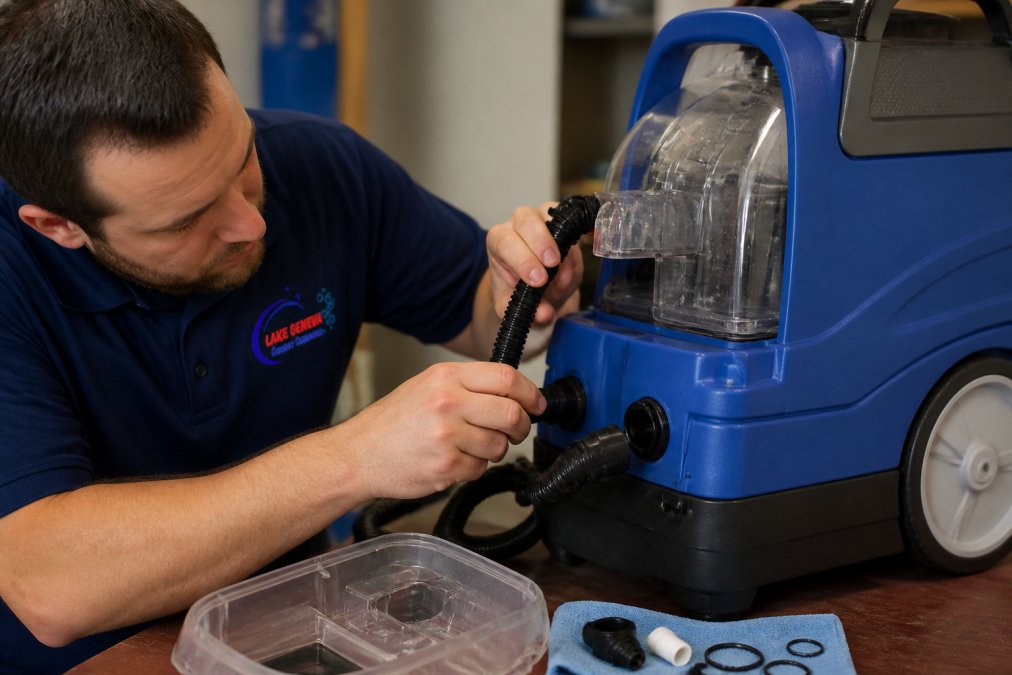
No water coming out? Before you panic, check the water tank. Is it actually full? Many people forget this step. Fill it completely, then check the spray trigger again. If water still won’t come out, the problem is likely in the hose or spray nozzle.
Disconnect the hose from the machine and look inside the connection point. You’re looking for mineral buildup or debris blocking the opening. Hard water deposits are common in Wisconsin, especially in the Lake Geneva region where water mineral content is higher (usgs.gov). Run warm water through the hose from a faucet to flush out any blockages. If water flows freely through the hose but still won’t spray from the nozzle, the nozzle itself is clogged.
Unscrew the nozzle and soak it in white vinegar for 30 minutes. This dissolves mineral deposits that block the tiny spray holes. Use a small pin or needle to gently clear each hole. Don’t force it, you can crack the nozzle. Rinse thoroughly under running water and reattach.
If the hose and nozzle are clear but water still won’t spray, the problem is internal. The pump may have failed, or the water line inside the machine may be blocked. This is the point where professional service becomes necessary.
Poor Suction or Weak Extraction
Weak suction is the most common complaint from homeowners. Your machine is pulling water but not efficiently, leaving carpets wetter than they should be. Start with the dirty water tank. If it’s full, the machine automatically reduces suction to prevent overflow. Empty it completely, even if it doesn’t look full. Sometimes the float valve sticks.
Next, check the filter. A clogged filter is the number-one reason for weak suction. Most machines have a foam or pleated filter that traps dirt and debris. If it’s visibly dirty or discolored, it needs cleaning. Rinse it under warm running water, never use hot water, which can damage foam filters. Let it dry completely before reinstalling. A wet filter won’t work properly and can cause mold growth inside the machine.
Look at the hose connections. Is the dirty water hose connected firmly to the tank outlet? A loose connection allows air to escape, breaking the seal and killing suction. Push it on firmly until you hear or feel it click. Check every connection point: tank to machine, hose to tank, hose to nozzle.
Inspect the suction motor intake. On many machines, there’s a small vent or air intake near the motor. If it’s clogged with debris or lint, the motor can’t pull air efficiently. Use a damp cloth to wipe it clean.
If the filter is clean, connections are tight, and the tank is empty but suction is still weak, the motor itself may be failing. That requires professional evaluation.
Motor Won’t Start or Keeps Shutting Off
A motor that won’t start could be a simple electrical issue or something more serious. First, confirm the machine is plugged in and the outlet is working. Plug a lamp or phone charger into the same outlet to verify power. Try a different outlet to rule out a tripped circuit breaker.
Check the power cord for visible damage. Cracks, burns, or exposed wires mean the cord needs replacement, don’t attempt to use the machine. If the cord looks fine, look for a reset button on the motor housing. Many machines have a thermal reset that trips when the motor overheats. Press it firmly. Wait 15 minutes and try starting the machine again.
A motor that starts but shuts off after a few minutes is usually overheating. This happens when the filter is clogged, restricting airflow to the motor. Clean the filter as described above. If the motor still shuts off after a clean filter, the motor’s cooling system may be failing. This requires professional service.
If the motor won’t start at all and the outlet is fine, the motor itself has likely failed and needs replacement.
Carpet Cleaner Maintenance Tips to Prevent Breakdowns
Preventing problems is always easier than fixing them. A simple maintenance routine keeps your machine running reliably and extends its lifespan significantly. Think of it like changing your car’s oil, small regular effort prevents big expensive failures.
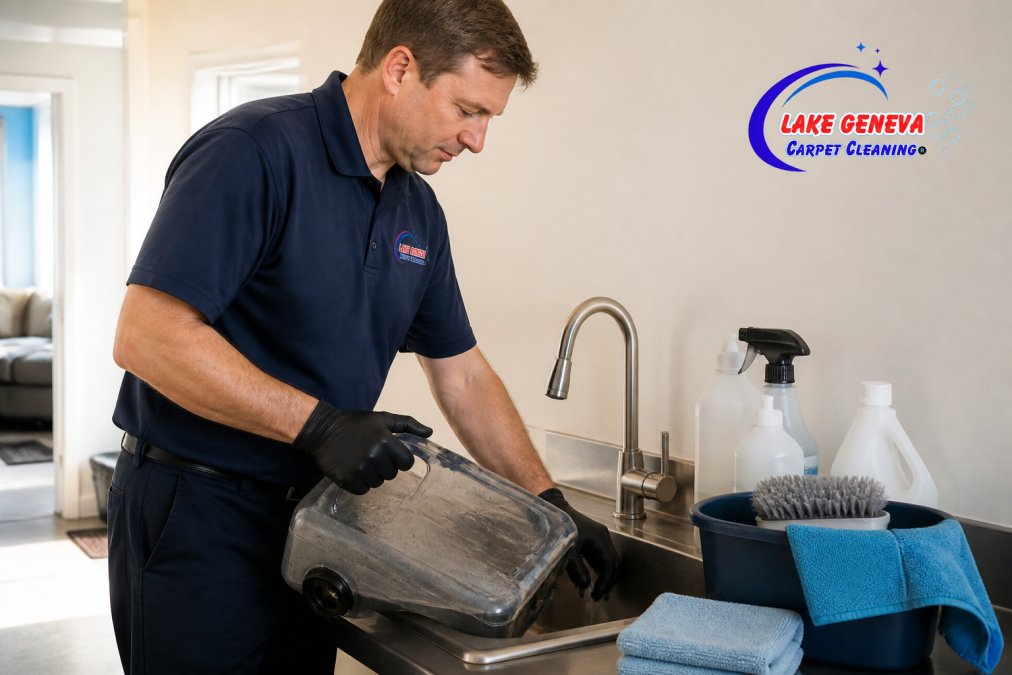
After every use, empty both the clean water tank and the dirty water tank. Don’t let dirty water sit in the tank overnight. It breeds bacteria and mold, and the residue hardens, making it harder to empty next time. Rinse both tanks with clean water and leave them open to air dry.
Clean the filter every time you use the machine. A dirty filter reduces suction immediately and forces the motor to work harder. A clean filter takes 30 seconds to rinse and makes a massive difference in performance. Replace the filter annually, even if you clean it regularly. Filters wear out and lose effectiveness over time.
Flush the hoses monthly, especially if you live in an area with hard water. Connect the clean water hose to a faucet and run water through it for a minute. Do the same with the dirty water hose. This prevents mineral buildup and keeps water flowing freely.
Check all connections monthly. Tighten any that have loosened. Vibration during operation can gradually loosen hose clamps and tank connections. A tight connection now prevents a major leak later.
Store your machine in a dry location. Moisture promotes rust and mold growth. Never store it with water still in the tanks. If you live in a damp climate, common in Wisconsin, consider storing it in a climate-controlled space during winter months.
Inspect the power cord before each use. Look for cracks, fraying, or discoloration. A damaged cord is a safety hazard and a sign the machine needs professional attention.
When DIY Troubleshooting Isn’t Enough
Not every carpet cleaner problem is a DIY fix. Knowing when to stop troubleshooting and call a professional protects both your safety and your machine. Some repairs require specialized tools, training, and diagnostic equipment that homeowners don’t have.
Safety hazards that demand professional help:
Electrical problems beyond a simple reset are dangerous. If you’ve confirmed the outlet works, tried a different outlet, and pressed any thermal reset button but the motor still won’t start, the issue is likely inside the electrical system. Faulty wiring, a failed capacitor, or a damaged motor winding can cause electrocution or fire. Don’t attempt to open the motor housing or rewire connections yourself. A professional has the proper testing equipment to diagnose electrical faults safely and the knowledge to repair or replace components without risk.
A damaged power cord is also a safety issue. If you see cracks, burns, exposed wires, or discoloration on the cord, stop using the machine immediately. Attempting to repair a power cord with tape or other temporary fixes is a fire hazard. The cord needs professional replacement.
Water leaking from the motor housing or electrical connections is another red flag. Water and electricity don’t mix. If you see moisture near the motor or electrical components, unplug the machine and don’t use it until a professional has inspected and repaired it.
Repair complexity beyond homeowner scope:
Internal components like the pump, heating element, and motor require specialized knowledge to access and repair. These parts are often sealed or require partial disassembly of the machine. If your troubleshooting has identified a problem with the pump (water won’t spray despite clear hoses and nozzles), the heating element (water isn’t hot enough), or the motor itself (won’t start or keeps shutting off after filter cleaning), these need professional service.
Seals and gaskets inside the machine can fail, causing leaks that aren’t visible from outside. A professional can identify internal leaks by pressure testing the system, something you can’t do with basic tools.
If you’ve worked through all the troubleshooting steps in this guide and the machine still isn’t working, you’ve likely identified a problem that requires professional diagnosis. At that point, continuing to troubleshoot risks causing additional damage.
When repair makes sense vs. replacement:
A machine that’s less than five years old is usually worth repairing. Newer machines have parts availability and repair costs are typically reasonable relative to replacement. A machine that’s ten years old or older may not be worth the investment in major repairs, especially if it requires a new motor or pump.
Consider the machine’s overall condition, not just the current problem. If it’s had multiple repairs in the past year, or if you’ve already replaced several components, replacement might make more financial sense than pouring more money into an aging machine. A professional can give you an honest assessment of what the repair will involve and help you think through the replacement question.
The key is this: if you’re uncertain whether a repair is safe or if you’ve exhausted basic troubleshooting without success, professional service is the right choice. It’s faster, safer, and often prevents additional damage that could make the problem worse.
Finding Professional Carpet Cleaning Services Lake Geneva
When you need professional carpet cleaning, choosing the right provider matters. The Lake Geneva area has several options, but quality, reliability, and expertise vary significantly. Knowing what to look for helps you find a service that will actually solve your problem instead of providing a temporary fix.
Evaluate experience and local knowledge:
Look for services that have been established in the Lake Geneva community for many years. Experience matters because technicians have encountered every type of problem and know how to diagnose and fix it efficiently. A service with deep roots in the area also understands local conditions that affect carpet: Wisconsin’s hard water mineral content, seasonal humidity and moisture challenges, the types of carpet common in older Lake Geneva homes, and the specific contaminants that accumulate in the region.
Ask how long they’ve been in business and whether they specialize in carpet cleaning. Some providers focus primarily on one service.
Check reviews and ask specific questions:
Read customer reviews carefully, but don’t just count stars. Pay attention to what people actually say. Look for patterns: Do reviewers mention that the service was reliable and showed up on time? Did the work actually solve the problem, or did the issue return shortly after? Are customers satisfied with the quality, or do they mention shortcuts or incomplete work?
When you contact a service, ask specific questions:
- What’s your warranty or guarantee on repairs? Reputable services stand behind their work. If a repair fails within a reasonable timeframe, they should fix it again at no charge. This shows confidence in their workmanship.
- Do you use truck-mounted or portable equipment for cleaning? Truck-mounted systems typically deliver better results because they have more powerful extraction and heating capabilities than portable machines.
- What’s your approach to eco-friendly or chemical-sensitive cleaning? If you have children, pets, or sensitivities to cleaning products, ask whether they offer options that clean effectively without harsh chemicals.
- How long does it take for carpets to dry after cleaning? Faster drying means less disruption to your home and lower risk of mold or mildew growth.
- Do you handle both residential and commercial cleaning? Services that work with both types of clients often have broader experience and can handle complex situations.
Ask about their diagnostic process:
If you’re calling for equipment repair, ask how they diagnose problems. Do they charge for a diagnostic visit, or is it included? A service that charges separately for diagnosis should be transparent about that cost upfront. Do they explain what they find and give you options before proceeding with repairs? You want a provider who communicates clearly about what’s wrong and what it will take to fix it.
Verify they’re licensed and insured:
Professional carpet cleaning services should carry liability insurance. This protects you if something goes wrong during the service. Ask to see proof of insurance. In Wisconsin, carpet cleaning services may also need specific licenses or certifications depending on the chemicals they use. Don’t hesitate to ask about this.
Trust your instincts:
When you call or meet with a service, pay attention to how they treat you. Are they professional and courteous? Do they answer your questions clearly, or do they seem dismissive? Do they listen to what you’re describing, or do they jump to conclusions? A service that respects your concerns and takes time to understand your situation is more likely to do quality work.
The goal is finding a provider who understands your specific needs, has the expertise to handle them, and stands behind their work. Taking time to evaluate your options upfront saves frustration and money later.
Deep Cleaning vs. Repair: What Your Carpet Really Needs
Sometimes the problem isn’t your machine, it’s your carpet. If your cleaner is working properly but your carpets still look dingy after cleaning, you might need a different approach. Understanding the difference between routine cleaning and deep cleaning helps you make the right choice.
Routine cleaning removes surface dirt and dust. It’s what most people do monthly or quarterly to maintain appearance. If you’re doing this regularly with a working machine, your carpets should stay reasonably clean. But routine cleaning doesn’t remove embedded dirt, allergens, or odors that have settled deep in the carpet fibers and padding.
Deep cleaning uses hot water extraction to reach dirt that’s trapped in the carpet structure. This is the method that professional services use, and it’s significantly more thorough than what most home machines can achieve. If your carpets have stubborn stains, pet odors, or visible discoloration that doesn’t respond to regular cleaning, deep cleaning is what you need.
Pet owners in the Lake Geneva area often discover that home machines can’t fully eliminate pet odors. The smell keeps returning because the source is deep in the padding, not just the surface fibers. Professional deep cleaning reaches that depth and actually removes the odor-causing bacteria and urine crystals, not just masks the smell temporarily.
Allergies and indoor air quality are another reason to consider professional deep cleaning. Dust mites, allergens, and bacteria accumulate in carpet over time (the CDC). Regular vacuuming helps, but it doesn’t remove what’s embedded deep. If you or family members have allergies or respiratory sensitivity, professional deep cleaning significantly improves indoor air quality.
Why Professional Maintenance Saves Time and Money
Investing in professional carpet cleaning service might seem like an expense, but it actually saves money over time. Here’s why: professional cleaning extends carpet lifespan. Dirt that accumulates in carpet fibers acts like sandpaper, gradually breaking down the fiber structure. Regular professional cleaning removes that dirt before it causes permanent damage. A carpet that receives professional maintenance every 12-18 months lasts significantly longer than one that only gets home cleaning.
Professional services also prevent the need for carpet replacement. Replacing carpet is expensive. Maintaining it is not. If professional cleaning keeps your carpet looking good and lasting longer, the math is straightforward, maintenance costs far less than replacement.
There’s also the time factor. Deep cleaning your entire home yourself takes hours and physical effort. You’re renting or operating equipment, moving furniture, and waiting for carpets to dry. Professional service handles all of this while you do something else. Your time has value, and outsourcing this task frees you to focus on what matters.
Lake Geneva Carpet Cleaning uses state-of-the-art truck-mounted hot water extraction technology that achieves results home machines simply can’t match. Their 32 years of experience means they know how to handle different carpet types, stubborn stains, and the specific challenges of Wisconsin homes. They’re not just cleaning your carpet, they’re protecting your investment in your home.
For homeowners concerned about chemicals and safety, their eco-friendly approach removes dirt, germs, allergens, and odors without harsh chemicals. This matters if you have children, pets, or sensitivities to cleaning products. You get a deeply clean carpet without worrying about chemical residue in your home.
Your carpet cleaner is a tool that needs care, just like any other piece of equipment in your home. When problems arise, many are fixable with basic troubleshooting. But when repair goes beyond simple fixes, or when your carpets need the deep cleaning that home machines can’t provide, professional service makes sense. Lake Geneva Carpet Cleaning offers the expertise and equipment to handle professional carpet cleaning. Their 10-day satisfaction guarantee means you can trust that the work will be done right. Contact them for a free quote and discover how professional service can transform your carpets and extend their lifespan for years to come.
Frequently Asked Questions
Why has my carpet cleaner stopped working?
Most carpet cleaner failures stem from clogged filters, blocked water lines, or a full dirty water tank. Check the filter first, a clogged filter reduces suction and spray pressure. Empty the dirty water tank completely, as an overfull tank triggers automatic shutoff on many machines. Inspect both the clean and dirty water hoses for kinks, clogs, or cracks. If the motor runs but nothing sprays, the solution tank may be empty or the spray valve stuck. These are the most common issues homeowners can fix themselves before calling for professional repair.
What are common signs that a carpet cleaner needs professional repair?
If the motor won't start after checking the power outlet and cord, or if it starts then immediately shuts off due to electrical issues, professional repair is necessary. Leaking water from seams or connections, grinding noises from the motor, or a burning smell all indicate internal damage requiring a technician. Additionally, if you've cleared clogs and the machine still has no suction or spray after troubleshooting, internal pump or valve failure is likely. These problems are beyond safe DIY fixes.
How can I prevent my carpet cleaner from breaking down?
Empty both the clean and dirty water tanks after every use, never leave water sitting inside, as it breeds mold and corrodes internal parts. Rinse and dry the filters completely before storing. Check hoses and connections monthly for cracks or blockages. Store the machine in a dry location away from extreme temperatures. Run clean water through the system at the end of each session to flush out cleaning solution residue. These maintenance habits extend the life of your machine significantly and prevent most common failures.
Should I attempt DIY repairs on my carpet cleaning machine?
DIY troubleshooting for clogs, filters, and tank issues is safe and often effective. However, do not attempt internal repairs involving the motor, pump, or electrical components, these carry risk of injury or permanent damage. If the problem involves electrical failure, motor damage, or internal leaks, contact a professional repair service. Simple fixes like clearing a clogged spray nozzle or replacing a filter are fine to try, but know your limits and call a technician when you're unsure.
This article was written using GrandRanker