Table of Contents
- What Is Steam Cleaning and How It Works
- Benefits of Professional Carpet Cleaning
- Hot Water Extraction: The Gold Standard for Deep Cleaning
- How to Prepare for Carpet Cleaning
- Removing Pet Stains and Odors
- Allergen Reduction and Indoor Air Quality
- How Long Does Carpet Take to Dry After Cleaning
- Seasonal Carpet Care for Wisconsin Climates
- Why Professional Cleaning Beats DIY Methods
- Conclusion
Last Updated: August 20, 2026
What Is Steam Cleaning and How It Works
Steam cleaning uses hot water extraction to penetrate deep into carpet fibers and remove embedded dirt, allergens, and odors. The process involves injecting heated water mixed with cleaning solution into the carpet, then immediately extracting it along with the loosened contaminants. Unlike surface cleaning methods, this approach reaches down to the carpet padding where the majority of pollutants accumulate.
The hot water extraction method works by breaking down soil bonds at the fiber level. When water heated to 200+ degrees is forced into the carpet, it agitates the fibers and suspends dirt particles. The powerful suction then pulls the contaminated water back out, leaving the carpet significantly cleaner than other methods can achieve. This is why professional-grade truck-mounted steam cleaning delivers results that home cleaning equipment simply cannot match.
Many homeowners are surprised to learn that the majority of carpet contamination lives below the surface. Dust mites, pet dander, bacteria, and allergens settle into the carpet padding over time. Vacuuming only addresses surface dust. Steam cleaning actually extracts these embedded pollutants, which is why people with allergies and pet owners often notice the most dramatic improvement in their homes after a professional deep cleaning.
The key difference between rental machines and professional truck-mounted equipment is suction power and water temperature. Rental units typically operate at lower temperatures and have limited extraction capability, which is why carpets often feel damp for hours afterward. Professional systems achieve superior results because they heat water to higher temperatures and pull moisture out more completely.
Benefits of Professional Carpet Cleaning
Deep cleaning extends carpet lifespan significantly by removing abrasive soil particles that wear down fibers over time. When dirt accumulates in carpet, it acts like sandpaper, breaking down the fiber structure with every footstep. Professional cleaning removes this damaging soil, allowing your carpets to maintain their appearance and integrity for years longer.
Beyond appearance, professional carpet cleaning directly improves indoor air quality. Carpets trap allergens, dust mites, pet dander, and bacteria that circulate through your home every time someone walks across the floor or the HVAC system runs. Steam cleaning extracts these contaminants rather than just moving them around, which is especially important for households with asthma, allergies, or immune sensitivities.
Pet owners face a unique challenge: odors that seem to disappear with spot cleaning often return within weeks. This happens because the odor-causing bacteria live deep in the carpet padding, beyond the reach of surface treatments. Professional steam cleaning eliminates odor at the source by sanitizing the entire carpet structure, not just the visible fibers.
Regular professional cleaning also maintains your carpet’s warranty. Most carpet manufacturers require professional cleaning at specific intervals to keep the warranty valid. Neglecting this requirement can void coverage if you later need warranty service, making professional maintenance a smart financial decision for protecting your investment.
Professional steam cleaning removes what you can’t see, the allergens, bacteria, and odor-causing compounds living in the carpet padding. This is why the difference between DIY cleaning and professional results is so dramatic for people with health concerns.
Hot Water Extraction: The Gold Standard for Deep Cleaning
Hot water extraction is the cleaning method recommended by carpet manufacturers and recommended by the Institute of Inspection, Cleaning and Restoration Certification (IICRC) as the most effective approach for removing embedded contaminants. This method combines heat, pressure, and powerful extraction to achieve deep cleaning that other techniques cannot replicate.
The process begins with pre-treatment. Professional technicians apply specialized cleaning solutions designed to break down specific types of soil and stains. The solution is allowed to dwell for a short period, giving it time to penetrate the fibers and suspend the dirt particles. This preparation step is critical, it’s what separates professional results from surface-level cleaning.
Next comes the extraction phase. Hot water mixed with additional cleaning solution is injected deep into the carpet under pressure, agitating the fibers and loosening embedded soil. Immediately after injection, powerful suction removes the contaminated water, dirt, allergens, and excess moisture. Truck-mounted steam cleaning systems generate suction power measured in thousands of CFM (cubic feet per minute), which is why they extract so much more moisture than portable machines.
The final step is the rinse cycle. Many professional cleaners perform a second pass with clean water and no cleaning solution to remove any residual chemical residue. This ensures the carpet is truly clean and won’t attract dirt as quickly during the drying phase. This extra step is standard practice for professional-grade service.
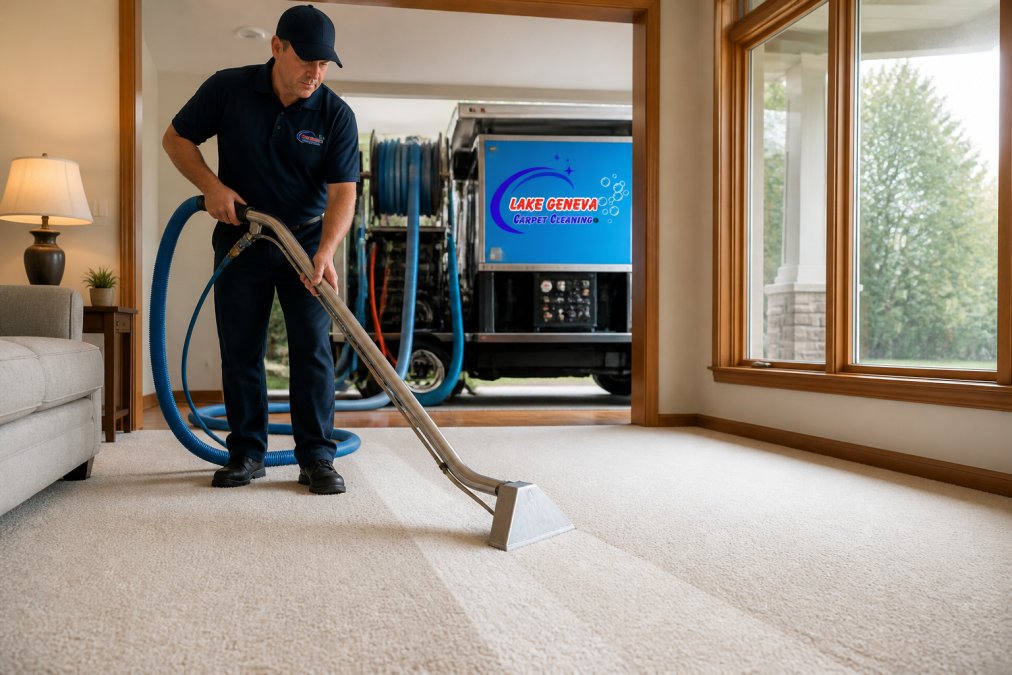
Lake Geneva Carpet Cleaning uses truck-mounted hot water extraction technology specifically because it delivers superior results compared to other methods. The equipment operates with industrial-strength power that portable machines cannot achieve, ensuring that embedded allergens, stubborn pet odors, and seasonal contaminants are completely removed from your carpets.
Avoid over-wetting your carpet during cleaning. If too much water is left in the carpet after cleaning, it can lead to mold growth, musty odors, and extended drying times. Professional equipment minimizes this risk by extracting moisture efficiently, but inadequate extraction is a common problem with rental machines and inexperienced operators.
How to Prepare for Carpet Cleaning
Proper preparation ensures the technician can access all areas and deliver the best possible results. Start by removing small items from the floor, toys, books, magazines, and personal belongings should be cleared from the cleaning area. This eliminates obstacles and allows the technician to work efficiently without interruption.
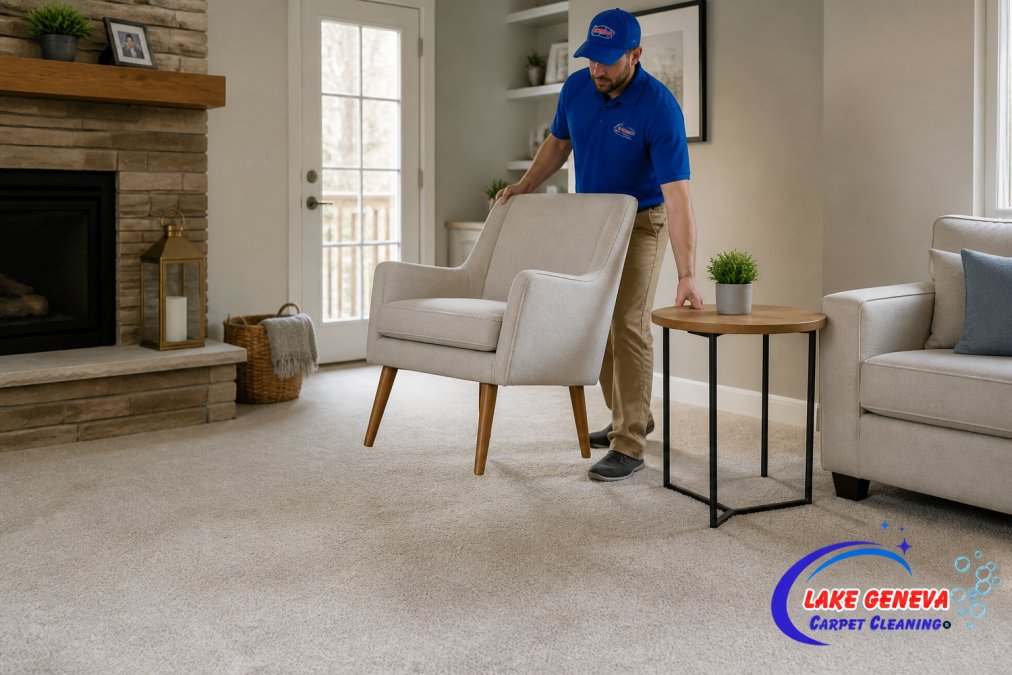
Move furniture away from the carpeted areas. Lightweight chairs and small tables can usually be moved by the homeowner, but for heavier pieces, let the technician know in advance. Many professional cleaners can move furniture as part of their service, though this is easier if you’ve already cleared the smaller items. Removing furniture also allows the technician to clean under and around pieces where dust and allergens accumulate.
Vacuum the carpet thoroughly before the appointment. This removes surface dust and debris that would otherwise be suspended in the cleaning water, making the extraction process more effective. A good vacuuming also helps the pre-treatment solution penetrate the fibers more evenly.
Identify any stains or problem areas and point them out to the technician when they arrive. If you know what caused a stain, pet accident, wine spill, mud tracked in, mention it. Different stains require different treatment approaches, and knowing the stain’s origin helps the technician select the most effective solution.
Check that the technician has clear access to water and electrical outlets. Professional equipment requires both a water supply for filling and electricity to operate. If your home’s layout makes access difficult, mention this during scheduling so the technician can plan accordingly.
Inform the technician if anyone in your household has chemical sensitivities or if you prefer eco-friendly cleaning solutions. Lake Geneva Carpet Cleaning offers eco-friendly options that are safe for families with children and pets while still delivering powerful cleaning results. Communicating your preferences upfront ensures the right approach is used.
Removing Pet Stains and Odors
Pet accidents create two problems: visible stains and odor that persists long after the stain appears gone. Odor happens because urine soaks through the carpet fibers into the padding and subfloor, where bacteria colonize and produce the smell. Surface cleaning cannot reach these deep layers, which is why spot treatments fail to eliminate odors permanently.
Professional steam cleaning addresses both issues simultaneously. The hot water extraction process penetrates the padding where urine has settled, sanitizing the area and removing the bacteria causing the odor. The powerful suction extracts the contaminated water and moisture that harbors odor-causing compounds.
Pre-treatment with specialized pet odor elimination solutions is critical for severe cases. These solutions are designed specifically to neutralize the chemical compounds in urine rather than just masking the smell. When combined with hot water extraction, they eliminate odors at the source rather than temporarily suppressing them.
Enzyme-based treatments are particularly effective for pet stains because enzymes break down the organic compounds in urine. Professional cleaners understand which enzyme treatments work best for different situations and apply them correctly to maximize effectiveness. This is significantly different from store-bought spot cleaners, which often lack the concentration and dwell time needed for deep stain removal.
If your pet has had repeated accidents in the same spot, that area may require multiple treatments or extended dwell time with specialized solutions. Don’t expect a single cleaning pass to eliminate odors that have built up over months or years. Professional technicians can assess the severity and recommend the appropriate approach.
Prevention matters as much as treatment. Once your carpets are professionally cleaned and odors are eliminated, use enzymatic cleaners immediately on any new accidents. The faster you treat fresh stains, the less time bacteria have to colonize the padding, making future professional cleaning more effective.
Allergen Reduction and Indoor Air Quality
Carpets are major allergen reservoirs. Dust mites thrive in carpet fibers, feeding on dead skin cells and producing waste that triggers allergic reactions. Pet dander, pollen, and mold spores also accumulate in carpet where they circulate through your home via foot traffic and air movement. For people with allergies or asthma, carpet contamination directly impacts health and quality of life.
Professional steam cleaning removes the majority of these allergens by extracting them from the carpet structure. The hot water kills dust mites and bacteria, while the powerful suction removes their remains and waste products. Studies on carpet cleaning and allergen reduction show that professional hot water extraction significantly reduces allergen levels compared to vacuuming alone.
The improvement in indoor air quality is often noticeable within hours of cleaning. People with dust mite allergies frequently report breathing more easily and sleeping better after professional carpet cleaning. Pet owners notice that the air smells fresher and that allergy symptoms improve, especially in bedrooms where pets sleep.
Maintaining clean carpets between professional cleanings helps sustain these improvements. Regular vacuuming with a HEPA filter vacuum removes surface allergens before they settle deeper into the carpet. However, only professional steam cleaning can extract the allergens that have already migrated to the padding.
For households with severe allergies, scheduling professional cleaning more frequently, such as every three to four months instead of annually, can provide meaningful relief. The investment in cleaner air and better health is significant for families dealing with allergies.
How Long Does Carpet Take to Dry After Cleaning
Drying time depends on several factors: carpet thickness, humidity levels, air circulation, and the amount of moisture left after extraction. Professional steam cleaning typically leaves carpets damp but not soaking wet, with drying times ranging from a few hours to overnight in most cases.
Thicker carpets and plush textures retain more moisture than low-pile carpets, extending drying time. A thick shag carpet might take 12-24 hours to dry completely, while thin commercial-style carpet might dry in 4-6 hours. Humidity also plays a role, carpets dry faster in low-humidity conditions and more slowly on humid days.
Air circulation significantly speeds drying. Open windows and doors to allow air movement, and use ceiling fans to circulate air across the carpet. If it’s cold outside and you can’t open windows, run your HVAC system to move air throughout the home. Some professional cleaners recommend turning on the air conditioning even in cooler seasons to facilitate drying.
Avoid walking on damp carpet more than necessary, as foot traffic can redeposit dirt and slow drying. If you must use the cleaned areas, wear clean socks or shoes. Don’t replace furniture until the carpet is completely dry, wet carpet under furniture can develop mold or mildew.
Professional truck-mounted equipment extracts moisture much more effectively than rental machines, which is why carpets cleaned by professionals typically dry faster. The superior suction power removes more water in the initial extraction, reducing overall drying time and minimizing the risk of moisture-related problems.
Seasonal Carpet Care for Wisconsin Climates
Wisconsin’s four seasons create distinct carpet challenges. Winter brings road salt, sand, and moisture tracked in on shoes and boots. Spring mud season deposits clay and organic matter. Summer brings pollen and dust, while fall leaves and yard debris accumulate. Each season requires slightly different maintenance approaches.
Winter is the toughest season for carpets in Wisconsin. Road salt is particularly damaging because it’s hygroscopic, it attracts moisture and promotes mold growth. Salt also degrades carpet fibers over time. Regular vacuuming helps, but professional steam cleaning is essential in late winter or early spring to remove salt deposits and prevent damage. Many homeowners schedule a professional cleaning in March or April specifically to address winter accumulation.
Spring mud season requires immediate attention to fresh stains. Mud tracked indoors dries quickly and becomes harder to remove if left sitting. Vacuum dried mud immediately, then address any remaining stains with appropriate treatments. A professional cleaning in late spring removes the mud and allergens that accumulated during the season.
Summer pollen and dust require regular vacuuming but don’t necessarily demand professional cleaning more frequently. However, if you have pets that shed heavily during summer, professional cleaning helps remove the excess pet hair and dander that accumulates in the carpet.
Fall leaf debris and yard materials tracked indoors are mostly surface contamination that vacuuming handles well. However, if you have a fireplace or wood stove, soot and ash can accumulate in carpet near those areas. Professional cleaning addresses these specific problem areas effectively.
Scheduling professional cleaning at seasonal transitions, particularly before winter and after spring mud season, keeps your carpets healthier year-round. Lake Geneva Carpet Cleaning understands the specific challenges that Wisconsin homeowners face and can recommend a maintenance schedule that addresses seasonal issues.
Why Professional Cleaning Beats DIY Methods
The gap between DIY cleaning and professional results comes down to equipment capability, chemical formulations, and technique. Rental machines and store-bought spot cleaners operate at a fraction of the power and temperature that professional equipment delivers, which is why they leave carpets damp and results often disappoint.
Rental machines typically generate 200-300 PSI (pounds per square inch) of water pressure and have modest suction power. Professional truck-mounted systems operate at 500+ PSI and generate thousands of CFM of suction. This difference in power means professional equipment extracts significantly more soil, water, and contaminants from the carpet.
Water temperature matters enormously. Most rental machines heat water to 150-160 degrees Fahrenheit, while professional systems reach 200+ degrees. Higher temperature water is more effective at breaking down soil bonds and killing bacteria. This is why professional cleaning delivers superior sanitization and odor elimination.
Chemical formulations used by professionals are also more effective than retail products. Professional cleaning solutions are concentrated formulas designed for specific problems, pet stains, general soil, allergen removal, and are applied at proper dilution ratios. Store-bought products are pre-diluted and often contain fillers that reduce effectiveness.
Technique and experience matter significantly. Professional technicians understand how to adjust water pressure, temperature, and dwell time based on carpet type, soil level, and specific problems. They know how to avoid over-wetting, which causes mold and extended drying times. They understand pre-treatment strategies and extraction sequencing that maximize results.
The time and effort required for DIY cleaning is substantial. Renting equipment, learning how to operate it, doing the actual cleaning, and managing the drying process takes many hours. Professional cleaning is faster, more effective, and delivers results that DIY methods cannot match.
DIY cleaning can maintain carpets between professional cleanings, but it cannot replace professional deep cleaning. Think of professional service as the foundation, the deep clean that removes embedded contaminants, with DIY spot cleaning as maintenance between those professional appointments.
Conclusion
Steam cleaning is the most effective method for maintaining healthy, fresh-smelling carpets. Whether you’re dealing with pet odors, allergen concerns, seasonal contaminants, or simply want to extend your carpet’s lifespan, professional hot water extraction delivers results that other methods cannot achieve.
Lake Geneva Carpet Cleaning brings over 32 years of experience and owner-operated commitment to quality. Using truck-mounted steam cleaning technology, the team removes embedded allergens, eliminates stubborn pet odors, and sanitizes your carpets to improve indoor air quality. Their eco-friendly approach ensures a clean home without harsh chemicals, and their meticulous attention to detail means your carpets receive the care they deserve.
Frequently Asked Questions
How often should I steam clean my carpets in Walworth, WI?
Most homeowners benefit from professional steam cleaning every 12 to 18 months for normal household traffic. Homes with pets, children, or high-traffic areas may need cleaning every 6 to 12 months. Wisconsin's seasonal weather, including road salt and mud tracked indoors, can increase soiling, so you may need more frequent cleaning during winter and spring. A professional can assess your carpet's condition and recommend a schedule tailored to your home.
Does professional steam cleaning actually remove pet odors permanently?
Professional steam cleaning with hot water extraction removes odor-causing bacteria and urine particles embedded deep in carpet fibers and padding. Unlike surface treatments or spot cleaners, truck-mounted extraction reaches the root of the problem. However, if urine has soaked into the subfloor, additional treatment may be needed. A professional can evaluate the extent of damage and recommend the best approach for your situation.
Is steam cleaning safe for my family and pets?
Professional steam cleaning uses hot water extraction with eco-friendly cleaning solutions that are safe for families and pets when applied by trained technicians. The process relies primarily on heat and water pressure rather than harsh chemicals. You can discuss your concerns about specific allergens or sensitivities with your cleaning provider before service, and they can adjust their approach accordingly to ensure your home remains a safe, healthy environment.
Will my carpet stay wet after steam cleaning?
Professional truck-mounted steam cleaning systems extract most of the water from your carpet, typically leaving it damp rather than soaking wet. Most carpets dry within 4 to 8 hours, though drying time depends on humidity, air circulation, and carpet thickness. Opening windows, using fans, and running air conditioning speeds up drying. Your cleaning provider can give you specific drying time estimates based on your home's conditions and recommend steps to protect your carpet during the drying process.
Ready to experience the difference professional steam cleaning makes? Contact Lake Geneva Carpet Cleaning for a free estimate and discover why homeowners throughout the region trust their carpets to true experts.
This article was written using GrandRanker