Table of Contents
- Start With Your Allergy Triggers, Not the Vacuum Aisle
- What True HEPA Filtration Actually Captures
- Why a Sealed HEPA Vacuum Beats a HEPA Filter Alone
- Choosing a Vacuum for Dust Mite Allergies
- Why Allergies Get Worse After Vacuuming (and How to Prevent It)
- How Often to Vacuum for Allergies: A Room-by-Room Routine
- Carpet, Hard Floors, and Upholstery: Matching the Machine to the Surface
- Bagged or Bagless, Weight, Noise, and Everyday Ease of Use
- Conclusion
- Frequently Asked Questions
Last Updated: October 16, 2026
Start With Your Allergy Triggers, Not the Vacuum Aisle
Most people shop for a HEPA vacuum backwards. They walk into a store, see a wall of machines, and pick the one with the biggest “allergy” sticker on the box. That approach fails because it skips the only question that matters: what are you actually allergic to?
A HEPA vacuum is a vacuum built to trap the tiny particles that trigger allergy symptoms instead of blowing them back into your room. The filter is the core of it, but the machine around the filter matters just as much.
At Lake Geneva Carpet Cleaning, we’ve spent over 32 years pulling allergens out of Wisconsin homes, and we can tell you the machine is only half the story. What’s left in your carpet after vacuuming matters more than what’s in the canister.
Below, we’ll walk through how to choose a HEPA vacuum for allergies, step by step, so you buy once and buy right. But first, here’s what most guides get wrong: they treat every allergy the same.
Dust Mites, Pet Dander, Pollen, and What Southeastern Wisconsin Adds
Different allergens behave differently, and that changes what you need.
- Dust mites live deep in carpet padding and bedding. They thrive in warm, humid spaces.
- Pet dander is light and sticky. It clings to fabric and floats back up when disturbed.
- Pollen rides in on shoes, pets, and open windows, especially in spring and fall.
Lake Geneva sits on a lake, and that matters. Lakeside humidity keeps indoor air moister than inland homes, which is exactly what dust mites want. Add road salt, sand, and mud tracked in from the shoreline, and your carpet holds more than the average home.
So the first step isn’t picking a vacuum. It’s naming your trigger. Write it down before you shop.
What True HEPA Filtration Actually Captures
True HEPA filtration is a filter standard that captures 99.97% of airborne particles down to 0.3 microns, which includes dust mite debris, pet dander, pollen, and many fine particles.
That number comes from the U.S. Environmental Protection Agency’s indoor air quality guidance, which is the reference point you should check before trusting any “HEPA-like” or “HEPA-style” claim.
Here’s the trap. Many machines sold as “HEPA” only have a HEPA filter somewhere inside. Air can still leak around the filter, past the seals, and back into the room. The label says HEPA. The machine doesn’t perform like it.
Look for the words true HEPA or HEPA filter on the machine itself, not just the box. If the spec sheet doesn’t state the 0.3 micron figure, treat the claim as marketing until proven otherwise.
A filter labeled “HEPA-type” or “HEPA-like” is not held to the same standard as true HEPA. Buying one for allergy relief often means you paid for the word and not the performance.
Why a Sealed HEPA Vacuum Beats a HEPA Filter Alone
A sealed HEPA vacuum is a machine designed so that every bit of air pulled in passes through the filter before it exits, with no leaks around the seams, gaskets, or canister.
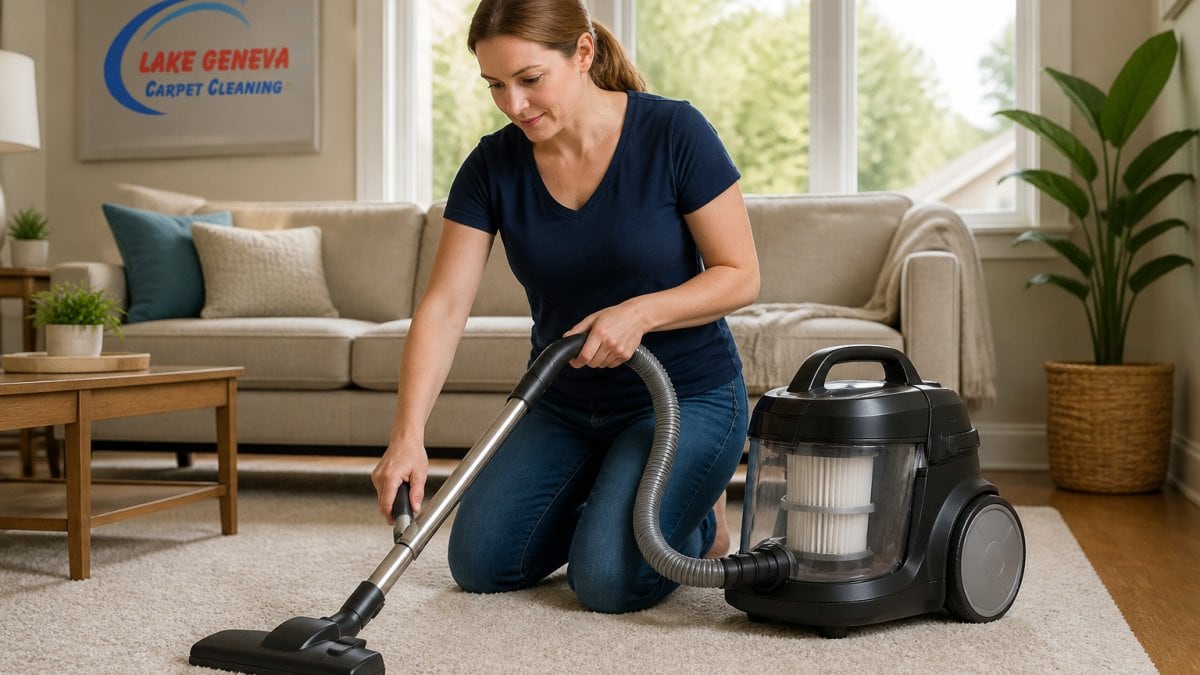
This is the single most overlooked spec in the whole category. A great filter on a leaky machine is like a good screen door on a submarine.
Whole-machine filtration is the term to search for. It means the manufacturer tested the entire unit, not just the filter, for particle leakage. That’s the difference between a vacuum that helps your allergies and one that makes them worse.
When you compare models, ask one question: does the air exit only through the filter? If the answer is unclear, keep looking.
Choosing a Vacuum for Dust Mite Allergies
For dust mite allergies, the priority order is different than for pet dander. Dust mites and their waste settle deep, so you need strong suction and real agitation, not just filtration.
A vacuum for dust mite allergies should have:
- A motorized brush roll to beat the carpet fibers
- Strong suction at the floor head, not just at the hose
- A sealed system so disturbed particles stay trapped
- A HEPA filter rated for fine particles
The brush roll is doing the heavy lifting. Suction alone won’t pull mites out of padding. The bristles loosen them, and the airflow carries them away.
What most guides miss is that a worn brush roll quietly kills performance. If the bristles are flattened, you’re basically pushing dust around. Check the brush roll before you blame your allergies.
Why Allergies Get Worse After Vacuuming (and How to Prevent It)
Allergies often get worse after vacuuming because the act of cleaning stirs up settled particles, and a leaky or bagless machine releases some of them back into the air. That’s the cruel part of this whole topic. You clean to feel better, and for an hour afterward you feel worse.
The mechanism is worth understanding. Fine particles settle out of the air over hours. When you vacuum, the brush roll and airflow lift them back into suspension. A sealed HEPA machine captures them on the way out. A leaky machine, a full bag, or a clogged filter sends them back into the room. The result is a spike in airborne allergen concentration right when you’re breathing hardest.
The Routine That Actually Reduces Exposure
The fix is a sequence, not a product:
- Vacuum slowly. Fast passes leave debris behind and kick up more dust. Overlap each pass.
- Use a sealed HEPA machine so exhaust air is clean.
- Empty or change the bag outdoors, never in the living room. Wear a mask while you do it.
- Leave the room for 20 to 30 minutes after vacuuming so suspended particles settle or get captured.
- Run a standalone air cleaner afterward to catch what’s still floating.
- Change your HVAC filter on schedule. A dirty furnace filter re-circulates what your vacuum just removed.
Timing by Trigger and by Room
When you vacuum matters as much as how often, and it depends on what you’re reacting to:
- Dust mite allergy: vacuum the bedroom in the morning, then leave the room closed for a while. Dust mite allergen settles in bedding and carpet; giving it time to resettle before you get back in bed reduces nighttime exposure.
- Pet dander: vacuum after the pet has been out of the room for a bit, not while the pet is lying on the carpet you’re about to clean. Dander is light and re-suspends easily.
- Pollen: vacuum entryways and hallways after high-pollen days, and keep windows closed while you clean. In Lake Geneva, spring tree pollen and fall ragweed are the two peaks to plan around.
- Heating season: from late fall through early spring, indoor air is drier and dust circulates more. Expect to vacuum more often and check your filter more frequently.
What to Do Between Vacuumings
A vacuum is one tool in a routine. The American Lung Association’s guidance on indoor air quality makes the same point: controlling the source beats reacting to symptoms. That means washing bedding in hot water on a schedule, keeping humidity in check, and giving carpets a deeper clean when surface vacuuming stops making a difference.
Empty your canister or swap the bag outdoors, and wear a mask while you do it. This one habit removes the biggest allergen release moment in the entire cleaning routine.
If you have a bagless machine, empty it into a sealed bag outdoors, not into an open trash can indoors. The dust cloud from an indoor empty can undo an entire cleaning session.
How Often to Vacuum for Allergies: A Room-by-Room Routine
How often you vacuum for allergies depends on the room and the traffic it gets. Once a week is not enough in a home with pets or a dust mite allergy.
Here’s a routine we’d actually follow:
| Room | Frequency | Why |
|---|---|---|
| Bedroom | 2-3 times weekly | Dust mites concentrate in bedding and carpet |
| Living room | 1-2 times weekly | Highest foot traffic and pet time |
| Hallways | Weekly | Tracked-in pollen, salt, and sand |
| Upholstery | Every 2 weeks | Dander and dust settle into fabric |
| Under furniture | Monthly | Hidden dust reservoirs |
Bedrooms come first. You spend a third of your life there, and dust mites love a warm, humid room.
For a deeper reset, professional hot water extraction reaches what a vacuum can’t. That’s where we come in, and we’ll get to that.
Carpet, Hard Floors, and Upholstery: Matching the Machine to the Surface
No single machine is perfect for every surface, so match the tool to the floor. This is where most buyers overspend on the wrong features.
For carpet, you need a motorized brush roll and strong suction. Carpet holds the most allergens, so this is where your budget should go.
For hard floors, turn the brush roll off or use a soft attachment. Spinning bristles can scratch and just scatter dust.
For upholstery, use a crevice tool and a brush attachment. Sofas and chairs trap dander that a floor head never reaches.
- Carpet: brush roll on, slow passes
- Hard floors: brush roll off, soft head
- Upholstery: crevice tool plus brush
- Stairs: handheld or hose with a small head
Flooring type should decide your attachment kit, not the sticker price.
Bagged or Bagless, Weight, Noise, and Everyday Ease of Use
Bagged vacuums generally win for allergies because you remove a sealed bag instead of dumping a cloud of dust into your air. Bagless machines are convenient, but every empty sends fine particles airborne. If you have a dust allergy, that moment undoes your work. A bagged design with a sealed collar is the safer pick.
Then weigh the daily realities:
- Weight: a heavy machine stays in the closet. Pick one you’ll actually push up and down stairs.
- Noise level: quieter models let you clean without waking the house, and lower noise usually means less exhaust turbulence stirring up settled dust.
- Capacity: bigger bags mean fewer changes and less allergen release.
- Maneuverability: swivel heads help around furniture and tight corners.
- Filter access: check that you can reach and reseat the HEPA filter without tools.
Filter Maintenance: The Part That Decides Whether Your Vacuum Still Works Next Year
A HEPA vacuum is only as good as its filter on the day you use it. Two maintenance habits separate machines that keep performing from machines that quietly stop filtering:
- Washable versus non-washable filters. Some HEPA filters can be rinsed; others are destroyed by water. Follow the manufacturer’s instruction exactly. A rinsed-and-reinstalled filter that is still damp can grow mold and push musty air into the room.
- Replacement intervals. Most manufacturers specify replacing the HEPA filter on a set schedule, often every 6 to 12 months in a home with pets or heavy allergen load. A clogged filter drops airflow, which reduces suction at the floor head and forces the motor to work harder.
- Pre-motor and post-motor filters. Many machines have a foam or felt pre-filter that catches larger debris before it reaches the HEPA media. Cleaning or replacing that pre-filter extends the life of the expensive HEPA filter behind it.
- Seal integrity. Every time you reseat a filter, check the gasket. A pinched or dried-out gasket turns a sealed system into a leaky one.
A simple rule: if suction feels weaker than it did a month ago, check the filter before you blame the machine.
A Step-by-Step Way to Choose (Use This Before You Buy)
Most guides hand you a list of features. Here is the decision path instead:
- Name your trigger. Dust mites, pet dander, pollen, or a mix. This sets your priority order.
- List your surfaces. Carpet, hard floor, upholstery, stairs. This sets your attachment kit and whether you need a motorized brush roll.
- Confirm true HEPA. The spec sheet should state 99.97% capture at 0.3 microns.
- Confirm a sealed system. Ask whether the entire unit was tested for leakage, not just the filter.
- Choose bagged or bagless. Bagged with a sealed collar is the safer allergy pick.
- Check filter and bag availability. Confirm you can get replacements nearby or shipped quickly before you commit.
- Test the ergonomics in person if you can. Lift it, push it, and check the hose reach.
For allergy relief, a sealed bagged machine with true HEPA filtration, a washable-or-replaceable filter you can actually source, and a weight you’ll tolerate beats a flashy bagless model every time.
Lake Geneva Note: Heating Season and Filter Load
In southeastern Wisconsin, homes run heat for roughly half the year. Indoor air gets drier, dust circulates more, and filters load faster than they do in a mild climate. If you live near the lake, add shoreline humidity in summer and road salt and sand in winter to the mix. Plan on checking your filter more often than the manual’s minimum, especially from late fall through early spring.
Conclusion
Choosing the right vacuum helps, but it only reaches so far. Allergens sit deep in carpet padding, and no vacuum pulls them all out. That’s the limit most people hit.
If you’ve vacuumed constantly and your allergies still flare, the carpet itself may need a deeper clean. Lake Geneva Carpet Cleaning uses truck-mounted hot water extraction to pull embedded allergens, pet dander, and odors out of carpet and upholstery, not just off the surface. We’re owner-operated, we’ve served Wisconsin homeowners for over 32 years, and every job is backed by our 10-day satisfaction guarantee.
Pricing depends on the job, so reach out for a free quote. Get started with Lake Geneva Carpet Cleaning and breathe easier in your own home.
Frequently Asked Questions
Do HEPA filters really help with allergies?
A true HEPA filter captures fine particles like dust, pollen, and pet dander that trigger symptoms, and it keeps them inside the machine instead of recirculating them into the room. The filter only helps if the vacuum is sealed, though. On an unsealed machine, air escapes through gaps before it reaches the filter. Pair a true HEPA filter with a sealed body, and you get real particle capture instead of a marketing claim.
Why are my allergies worse after vacuuming?
Vacuuming stirs up dust, dander, and dust mite debris that has settled deep in the carpet. If your vacuum leaks air around the seals or has a clogged or missing filter, those particles blow back into the room and you breathe them in. Emptying a bagless dustbin indoors can do the same thing. Look for a sealed HEPA vacuum, change or rinse filters on schedule, and empty the bin outside to reduce that reaction.
How often should I vacuum if I have allergies?
High-traffic rooms and bedrooms used by allergy sufferers benefit from vacuuming two to three times a week, while lighter-use rooms can wait a week. Homes with pets or anyone with asthma may need more frequent passes. A vacuum for dust mite allergies works best on a steady schedule rather than occasional deep cleans, since dust mites and dander build up continuously in carpet and upholstery.
Can vacuuming remove allergens from carpet?
A sealed HEPA vacuum pulls a meaningful amount of surface dust, dander, and pollen out of carpet fibers, and it prevents those particles from blowing back into the air. What it cannot reach is the debris packed into the padding and backing. For embedded allergens, hot water extraction by a professional carpet cleaning service reaches deeper than any household vacuum. Pair routine vacuuming with periodic professional cleaning for the best indoor air quality.