
Last Updated: October 31, 2026
Quick Summary
To safely clean wool rugs at home, first confirm the fiber and run a dye test on a hidden spot, then vacuum dry soil and blot spills with cool water instead of scrubbing. Use only mild, pH-neutral solutions, never soak the rug, and dry it flat with airflow until the backing is fully dry.
- Wool smells like burning hair and leaves crumbly ash; synthetics melt into a hard bead.
- Turn off the beater bar and vacuum both sides of fringed or hand-knotted rugs.
- Blot spills from the outside in with a white towel; scrubbing pushes stains into the backing.
- For grease, sprinkle cornstarch or baking soda, wait 15 to 30 minutes, then vacuum.
- A wool rug typically needs a full day or more to dry, depending on humidity.
Table of Contents
- Wool Rug Identification and Dye-Stability Testing Before You Clean
- Wool Rug Vacuuming Tips: Remove Dry Soil First
- Wool Rug Spot Cleaning: Fast, Gentle Spill Response
- How to Remove Stains from a Wool Rug Without Damaging Fibers
- Choosing a Mild, Wool-Safe Cleaning Solution
- Wet Cleaning Without Over-Wetting: Cold Water and Blotting Technique
- How to Dry a Wool Rug After Cleaning
- DIY vs Professional Cleaning: A Decision Guide for Lake Geneva Homes
- Book a Wool Rug and Carpet Cleaning Assessment in Lake Geneva
- Frequently Asked Questions
Wool Rug Identification and Dye-Stability Testing Before You Clean
Before you touch a wool rug with water or cleaner, confirm what it is made of. Wool fibers behave very differently from synthetic fibers, and a wrong guess can cost you a beautiful rug. This guide from Lake Geneva Carpet Cleaning walks you through the safe method for how to safely clean wool rugs at home, starting with identification. For over 32 years, Lake Geneva Carpet Cleaning has served homeowners in Lake Geneva, Twin Lakes, Genoa City, Walworth, Fontana, Darien, Burlington, Elkhorn, Williams Bay, Delavan, and the East Troy WI area.
Wool is a natural protein fiber clipped from sheep. It holds dye deeply, resists crushing, and ages well when cared for gently. That same protein structure makes it sensitive to heat, harsh chemicals, and too much water.
How to tell if your rug is 100% wool
Start with a simple fiber check. Pull a few loose fibers from a corner or from the rug backing.
- Burn test: Wool smells like burning hair and leaves a crumbly ash. Synthetic fibers melt into a hard bead.
- Touch test: Wool feels warm and slightly coarse. It springs back when you press it.
- Pile test: Part the pile and look at the base. A woven wool rug shows individual knots or a tight flat weave.
- Label check: Look for a care tag or backing stamp. “100% wool” or “hand-knotted wool” is a clear signal.
If the rug is a blend, treat it as delicate. Blends can bleed or shrink faster than pure wool.
The hidden dye test every wool rug owner should run
Dye stability is a key factor in whether a rug can handle moisture. Run this test before you clean.
- Dampen a white cloth with cool water.
- Rub it firmly on a hidden spot, like a corner or under a sofa.
- Check the cloth. Any color transfer means unstable dyes.
- Repeat on each color block, since reds and blues bleed most often.
If color lifts onto the cloth, do not wet-clean the rug yourself. Call a professional. This step helps catch color bleeding before it causes damage.
Wool Rug Vacuuming Tips: Remove Dry Soil First
Dry soil removal comes before any liquid touches the rug. Wool fibers trap grit deep in the pile, and that grit acts like sandpaper when you walk on it. Vacuuming first also means your spot cleaner has less to lift.
Vacuum settings that protect wool pile
The right vacuum settings protect the wool fibers and the rug backing at the same time.
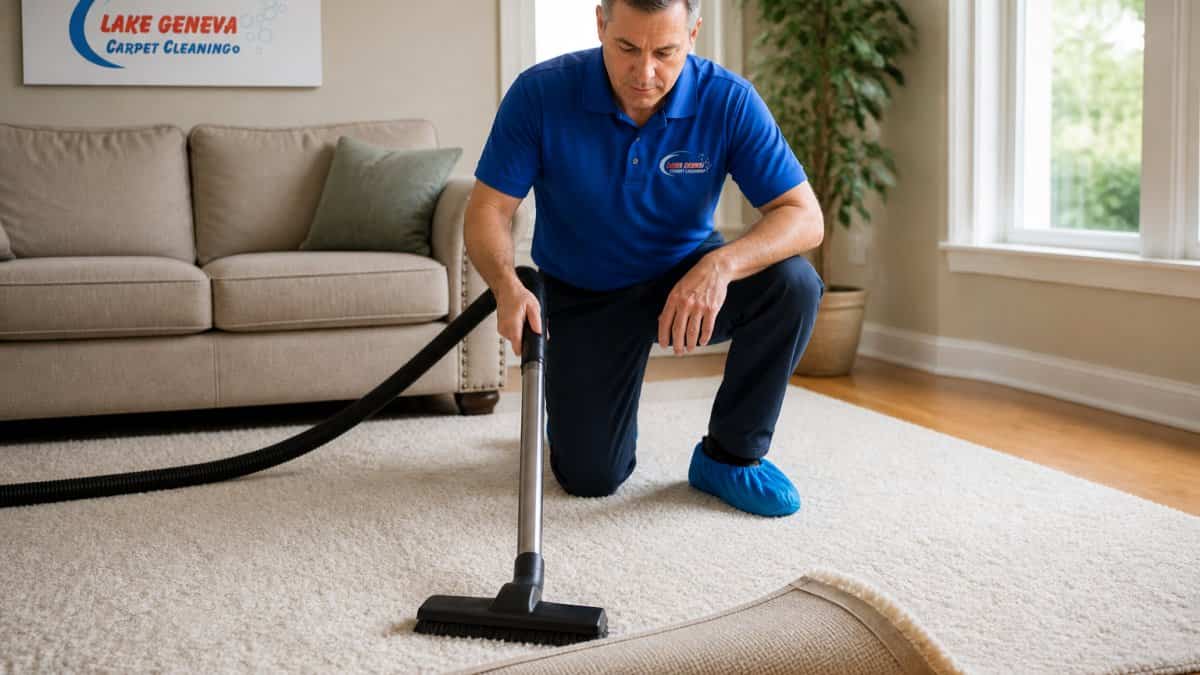
- Turn off the beater bar on fringed or hand-knotted rugs. The brush can snag knots and pull fringe.
- Use suction only on the rug face, with a brush attachment for low-pile wool.
- Vacuum both sides. Flip the rug and run suction across the backing to lift embedded dirt.
- Work in slow passes. Overlapping strokes pull more grit than fast back-and-forth motion.
- Skip the edges gently. Fringe and binding need a hand vacuum or a soft brush.
Vacuum wool rugs weekly in high-traffic rooms. Expect some shedding at first, which is normal for new wool. Frequent, gentle vacuuming is the single best routine maintenance habit you can build.
Wool Rug Spot Cleaning: Fast, Gentle Spill Response
Speed matters more than strength when a spill hits wool. Most stains set within minutes, so blot first and reach for cleaner second. This is the core of safe wool rug spot cleaning.
- Blot, do not scrub. Press a clean white towel straight down on the spill. Scrubbing pushes liquid into the backing and roughens the pile.
- Work from the outside in. Blot around the edge of the stain, then move toward the center to stop spreading.
- Use cool water only. Dab a white cloth with cool water and blot again. Never pour water directly on the rug.
- Lift solids with a spoon. Scoop up food or mud before blotting the residue.
- Rinse with a damp cloth. Wipe away cleaner residue with clean, cool water, then blot dry.
Watch out: scrubbing a fresh spill is the most common mistake we see. It drives the stain into the rug backing, where it becomes much harder to remove. If a spill reaches the fringe, treat it with extra care. For fringe-specific steps, see our guide on how to remove fringe stains from antique rugs.
How to Remove Stains from a Wool Rug Without Damaging Fibers
The safest approach to how to remove stains from a wool rug is to match the treatment to the stain and to the fiber. Wool is a protein fiber with a scaly outer layer called the cuticle. Heat, alkalinity, and agitation lift those scales, which is what causes felting, shrinkage, and dull patches. Every stain step below is built around keeping the cuticle flat: cool water, mild pH, and blotting pressure instead of rubbing.
Work through this sequence for any stain before you reach for a specialty product:
- Lift solids first. Use a spoon or a dull edge to scoop up food, mud, or wax. Scooping removes material; wiping spreads it.
- Blot the liquid. Press a white towel straight down and hold for several seconds. Move to a clean section of towel as it picks up color.
- Test the treatment on a hidden corner or under a sofa, exactly as you did with the dye test earlier.
- Apply the weakest solution that works, dabbed on with a cloth, never poured.
- Rinse with cool water on a clean cloth, then blot dry.
- Stop and reassess. If the stain has not lifted after two or three gentle attempts, more rubbing will damage the pile before it removes the stain.
Stain-by-stain treatment
- Coffee and tea: These are tannin stains. Blot, then dab with cool water and a drop of mild soap. Tannins respond to dilution and time more than to strength. Rinse and blot dry. Our wool rug coffee stain guide walks through this step by step.
- Red wine: Blot immediately, the longer it sits, the more the pigment binds to the fiber. Dab with cool water and blot. Do not rub, and do not reach for salt, which draws moisture deeper into the backing. If the color remains after two gentle passes, stop and call a professional.
- Grease and oil: Water pushes oil deeper, so start dry. Sprinkle cornstarch or baking soda over the spot, let it sit for 15 to 30 minutes to absorb, then vacuum it up before any water touches the spot. Repeat if the spot still feels oily.
- Mud: Let it dry completely, then vacuum. Wet mud smears deeper into the pile and drives grit into the cuticle.
- Ink: Blot with a cloth dampened with rubbing alcohol on a hidden test spot first. Use sparingly and blot, alcohol can lift dye as well as ink, so check the cloth for color transfer as you go.
- Blood: Use cold water only. Warm water sets protein stains into wool. Blot, then dab with cool water and a drop of mild soap.
- Vomit and food: Scoop solids, blot, then treat with a mild wool-safe solution and rinse thoroughly. Residue left in the pile attracts soil and can yellow over time.
Two rules apply to every stain. Use cool water, never hot. And blot, never scrub. Fiber damage, shrinkage, and distortion all start with too much water and too much rubbing.
Never use bleach, ammonia, or strong alkaline cleaners on wool. They strip the natural lanolin that keeps wool soft and can permanently alter the dye. A product labeled “natural” is not automatically wool-safe, check that it is pH-neutral and free of bleach before it touches the rug.
Pet urine and odor limitations
Pet stains are the hardest case for home cleaning, and honesty helps here. Urine soaks through the pile into the backing and padding, where surface blotting cannot reach it. The salts in urine also wick moisture, which is why an old stain can reappear as a ring after you clean the surface.
- Blot fresh urine right away with towels, pressing firmly.
- Rinse with cool water and blot again to dilute the salts.
- Use an enzyme-based pet cleaner made for wool, following the label. Enzymes need dwell time to break down the uric acid crystals that cause odor, usually 10 to 15 minutes, per most product labels.
- Place the rug on a waterproof surface so urine does not soak through to the floor.
- Dry thoroughly and check for odor after the rug is fully dry, not while it is damp.
The limitation: old urine that has dried in the backing often keeps releasing odor. Home spot cleaning may lighten the smell but rarely removes it fully, because the source sits below the pile. For deeper help, see our guide on removing pet odors from area rugs, and know when to call in professional extraction.
A Lake Geneva seasonal note
Homes around Geneva Lake track in more than the average household. Winter road salt and sand, spring mud, and summer lake damp all work into wool pile, and salt in particular is hygroscopic, it pulls moisture from the air and keeps a stain active longer. Winter road salt and sand are common seasonal contaminants in lakeside homes. If a stain keeps returning after you clean it, the residue is likely still in the backing, and that is a sign to stop home treatment and get an assessment.
Choosing a Mild, Wool-Safe Cleaning Solution
Less is more with wool. A mild, wool-safe cleaner protects the fibers, while harsh detergents strip natural oils and leave wool stiff and dull. Here is what to look for and what to avoid.
| Cleaner Type | Safe for Wool | Notes |
|---|---|---|
| Mild dish soap, a few drops in cool water | Yes | Best for spot cleaning |
| Wool-safe shampoo | Yes | Follow label dilution exactly |
| Enzyme pet cleaner made for wool | Yes | Test on a hidden spot first |
| White vinegar diluted in cool water | Yes, sparingly | Good for rinsing residue |
| Bleach or ammonia | No | Strips color and damages fibers |
| Hot water and strong detergent | No | Causes shrinkage and color bleeding |
| Store-bought spot cleaners, untested | No | Test first, or skip |
Mix only what you need, and use the weakest solution that works. Natural cleaning products and non-toxic products are fine choices for wool as long as they are pH-neutral and free of bleach. Test any cleaning solution on a hidden corner before you use it on the visible pile.
Wet Cleaning Without Over-Wetting: Cold Water and Blotting Technique
Control the water and you control the risk. Wool can handle a light, cool rinse, but saturation is where rugs get ruined. This is where most home cleaning goes wrong.
- Dampen, never soak. Use a spray bottle set to a fine mist, or a cloth wrung out until it barely drips.
- Use cold or cool water. Lukewarm water is the upper limit, and only for stubborn spots.
- Blot after every pass. Press a dry towel down to pull moisture back out before adding more.
- Work in small sections. Finish one area before moving on, so no part of the rug stays wet for long.
- Skip steam cleaning and wet shampoo at home. These push water deep into the backing and are best left to professionals with proper extraction tools.
A simple rule: if you can wring water out of the rug, it is too wet. Gentle cycle cleaning, meaning light moisture and light agitation, is all wool needs for routine freshening.
How to Dry a Wool Rug After Cleaning
Fast, flat, and airy drying prevents the two biggest post-cleaning problems: mildew and shrinkage. Getting this step right matters as much as the cleaning itself, and it is the step most home cleaners rush. Wool can hold a surprising amount of water in its core even when the surface feels dry, so the goal is to move moisture out of the backing and the pad, not just off the pile.
- Blot up all surface moisture with dry towels. Press firmly with your weight, then swap in fresh towels. Repeat until the towel comes up barely damp.
- Lay the rug flat on a clean, dry surface. Raise it slightly on blocks or a rack so air reaches the backing. Never fold or roll a damp rug, creases set into wool and can become permanent.
- Run fans and open windows. Good airflow dries wool faster than heat does. A box fan pointed across the rug face, plus one aimed at the backing, moves more moisture than a single fan.
- Keep it out of direct sun. Strong sun can fade dyes, and UV exposure on a damp rug accelerates color loss.
- Hang dry only small rugs. Large rugs can stretch out of shape on a line. If you must hang, support the full width so the weight is distributed.
- Flip the rug after a few hours so both sides dry evenly. The backing holds moisture longer than the pile.
- Do not walk on it until fully dry. Damp wool crushes and holds footprints, and grit tracked onto damp pile works into the cuticle.
How to tell a wool rug is actually dry
A wool rug typically needs a full day or more to dry, depending on humidity. Surface feel is not a reliable test. Use these checks instead:
- The press test: Press your palm firmly into the pile and hold for a few seconds. If your hand feels cool or damp when you lift it, the core is still wet.
- The backing test: Lift a corner and feel the backing and any pad. The backing dries last.
- The weight test: A fully dry rug feels noticeably lighter than a damp one. If you can compare, lift one corner before and after.
- The smell test: A faint musty or wet-wool smell means moisture is still trapped. Dry wool smells neutral.
Never put a wool rug back under furniture while it is even slightly wet. Damp wool crushes under weight, and moisture trapped between the rug and the floor can damage hardwood, warp laminate, and stain concrete. In Lake Geneva homes with seasonal humidity, humid summers and snowmelt in spring, a rug can stay damp longer than expected. Give it extra drying time in those months.
Moisture problems to watch for
- Mildew: Musty odor, dark spots, or a powdery film on the backing. Mildew sets quickly in humid conditions and can stain wool permanently. If you smell it, get the rug dry and aired immediately.
- Shrinkage and distortion: Wool that dries unevenly can pucker or pull out of square. Drying flat and flipping helps the rug dry evenly.
- Bleeding: If dye wicked to the surface while drying, the rug was too wet to begin with. Blot and dry faster next time, and have a professional assess any color transfer.
- Floor damage: Moisture under a rug is the most common cause of cupped hardwood and musty subfloor. A waterproof barrier under a drying rug protects the floor.
If a rug stays damp after 48 hours despite airflow, or if you smell mildew, stop home drying and call a professional. Trapped moisture is far easier to fix early than after mildew has set into the backing.
DIY vs Professional Cleaning: A Decision Guide for Lake Geneva Homes
Home cleaning handles light soil and fresh spills well. Deep soil, pet accidents, and large rugs need professional equipment. This decision guide helps Lake Geneva homeowners choose with confidence.
Clean it yourself if:
- The rug is small and easy to move
- The stain is fresh, and the dye test passed
- The rug is a low-cost piece with no sentimental value
- You only need surface freshening
Call a professional if:
- The rug is hand-knotted, antique, or valuable
- Urine or odor has set into the backing
- The dye test showed color transfer
- The rug is large, heavy, or wall-to-wall wool carpet
- Your allergies or dust mites are the main concern
Lakeside homes around Geneva Lake face extra grit from road salt, sand, and mud tracked in through the seasons. That soil works deep into wool pile. If you are weighing the two paths, our guide on professional rug cleaning explains what the process involves. For a deeper clean, hot water extraction reaches embedded soil and allergens that home methods leave behind. Pricing depends on the job, so contact us for a free quote.
Book a Wool Rug and Carpet Cleaning Assessment in Lake Geneva
Your wool rug is an investment, and protecting it starts with knowing when home care is enough. If you are ready to hand off the deep clean, Lake Geneva Carpet Cleaning is here to help. Learn more about professional area rug cleaning in Elkhorn WI and how to protect your investment. We are owner-operated, with over 32 years serving homeowners and local business owners in the Lake Geneva area. Our eco-friendly methods remove dirt, germs, allergens, and odors, and our truck-mounted hot water extraction reaches embedded soil. We also offer a 10-day satisfaction guarantee.
Wool rugs reward gentle, patient care, and the steps above will keep yours looking its best for years. When a stain, odor, or deep soil problem goes beyond what home cleaning can fix, Lake Geneva Carpet Cleaning is ready to help. Our team brings over 32 years of experience, eco-friendly cleaning methods, and truck-mounted hot water extraction to every job, and we offer a 10-day satisfaction guarantee. Get started with Lake Geneva Carpet Cleaning and give your wool rugs the deep, safe clean they deserve.
Frequently Asked Questions
Can I use a carpet cleaner on a wool rug?
Most consumer carpet cleaning machines are too wet and too hot for wool rugs, which can cause shrinkage, distortion, and color bleeding. Wool rugs need controlled moisture, cool water, and gentle agitation. If you use a home machine, test a hidden corner first and keep passes light. For wall-to-wall wool carpet or valuable area rugs, professional cleaning is generally the safer choice.
How long does a wool rug take to dry after cleaning?
A wool rug cleaned at home typically needs 12 to 24 hours to dry, depending on humidity and airflow. Lake Geneva-area homes often have higher humidity in summer and spring, which slows drying. Use fans, open windows when possible, and hang or lay the rug flat with air circulating underneath. If the rug stays damp longer than a day, call a professional to prevent mildew and backing damage.
Will water ruin a wool rug?
Water alone does not ruin wool, but too much water and heat can. Wool fibers absorb moisture and can shrink or distort if soaked or dried slowly. Use cold or cool water, blot rather than soak, and dry quickly with airflow. Avoid steam cleaning or wet shampoo on wool rugs unless a trained technician confirms the rug can handle it.
When should I have a wool rug professionally cleaned?
Schedule professional cleaning every 12 to 18 months for high-traffic wool rugs, or sooner if you notice odors, pet accidents, or deep soil that vacuuming will not lift. Rugs with fringe, hand-knotted construction, or visible dye bleeding should be assessed by a professional before any home cleaning. In the Lake Geneva area, seasonal road salt, sand, and mud make regular deep cleaning especially important.