
Table of Contents
- Why Antique Rug Fringe Stains Are Different
- Tools and Materials You Need Before You Start
- Preparation and Colorfastness Testing for Antique Rugs
- How to Clean Fringe on a Persian Rug: Step-by-Step
- Cleaning Stains From Wool Rug Fringe Without Bleeding Color
- Antique Rug Cleaning at Home: Drying and Moisture Control
- Can You Remove Fringe From a Rug? Repair vs. Cleaning
- Common Mistakes That Damage Antique Rug Fringe
- When to Call a Professional in Lake Geneva and Williams Bay, WI
- Frequently Asked Questions
Last Updated: October 21, 2026
Why Antique Rug Fringe Stains Are Different
Fringe stains on antique rugs are different because fringe is usually cotton warp, not wool pile, and cotton soaks up water and dye faster than any other part of the rug. At Lake Geneva Carpet Cleaning, we’ve pulled 32 years of lessons out of rugs across this region, and the fringe is almost always where the damage starts. This guide shows you how to remove fringe stains from antique rugs without spreading color, fraying threads, or trapping moisture in the foundation.
Here’s the part most guides get wrong: the fringe is not decoration. It’s the end of the warp threads that hold the whole rug together.
The Structure of Fringe: Cotton Warp and Wool Pile
Cotton warp is the set of lengthwise threads the weaver knotted the pile around. On a hand-knotted oriental rug or Persian rug, those warp threads extend past the pile as fringe.
Wool pile sheds water slowly. Cotton warp drinks it. That’s why a spill that beads on the field can wick straight down the fringe and dry into a brown tide line.
How Natural and Synthetic Dyes React to Water
Natural fibers hold vegetable dyes differently than synthetic dyes. Some antique dyes stay put. Others, especially reds, move the moment water touches them.
- Vegetable dyes can bleed into damp cotton
- Synthetic dyes may set fast or run, depending on the mordant
- Mixed dye lots in one rug can behave two different ways
Wetting fringe without a colorfastness test is the fastest way to turn one small stain into a pink halo that never comes out.
Tools and Materials You Need Before You Start
Gather everything first. Rummaging mid-clean means the fringe sits wet while you search, and moisture damage starts in minutes.
| Tool | What It Does | Why It Matters |
|---|---|---|
| Soft brush | Lifts dry soil | Gentle agitation without fraying |
| White absorbent cloths | Blots liquid | No dye transfer from colored rags |
| Spray bottle | Applies diluted solution | Controls how much water hits the fringe |
| pH-neutral detergent | Lifts residue | Protects fiber integrity |
| White vinegar | Rinses residue | Mild acid cuts detergent film |
| Hand-held fan or blower | Moves air | Speeds drying, limits moisture damage |
| Fringe comb | Grooms warp threads | Restores a straight, even finish |
Skip paper towels. They shred on wet cotton warp and leave lint behind.
Preparation and Colorfastness Testing for Antique Rugs
Test before you touch the stain. That single step separates a clean fringe from a ruined one, and it is the step most home guides rush past.
Why Antique Dyes Are Unpredictable
An antique rug can carry vegetable dyes, early synthetic dyes, or a mix of both, sometimes within the same rug. Vegetable dyes such as madder red and indigo were often applied without modern mordants, so they can migrate into damp cotton warp long after the rug was woven. Early synthetic dyes behave the opposite way: some are locked in tight, and others release the moment water touches them. You cannot tell which is which by looking. You test.
The Four-Point Colorfastness Test
Run all four tests before any wet cleaning. Each one checks a different risk.
- Fringe tip test. Dampen a white cloth with lukewarm water and press it against a hidden section of fringe for 30 seconds. Check for color transfer.
- Field-to-fringe wick test. Dampen a cloth and press it against the wool pile right where it meets the fringe. If dye moves from the field into the fringe, rinsing will spread it.
- Detergent test. Mix a few drops of pH-neutral detergent in lukewarm water, dab it on a hidden corner of fringe, and blot. Some dyes survive plain water but release under detergent.
- Acid test. Dab diluted white vinegar on a separate hidden spot. Vegetable dyes react to acid differently than synthetic dyes, and this tells you whether a vinegar rinse is safe for your rug.
Wait ten minutes after each test, then check again. Dye migration is often slow, and a cloth that looks clean at one minute can show color at ten.
Wetting fringe without a colorfastness test is the fastest way to turn one small stain into a pink halo that never comes out. If any test shows color on the cloth, stop and call a professional.
Local Water Matters in the Lake Geneva Area
Water chemistry affects how cleaners behave on antique fibers. Homes around Geneva Lake and Williams Bay often draw from wells with higher mineral content than municipal supplies, and hard water can leave deposits in cotton warp that dull the fringe and trap soil. If your water leaves spots on glass, it is hard enough to matter here. Use distilled or filtered water for your test solutions and rinse cloths, and keep the rinse passes short so minerals do not build up in the fringe.
Lake-effect humidity is the other local factor. Air near the lake holds moisture longer, especially in late summer and early fall, so a fringe that feels dry to the touch may still be damp at the warp. Plan your drying time around that, not around the clock.
Test the pile too, not just the fringe. Dyes in the field can wick into the fringe during rinsing, even when the fringe itself tests clean.
How to Clean Fringe on a Persian Rug: Step-by-Step
Work in shade, never direct sun. Sun bakes moisture into cotton warp and sets stains.
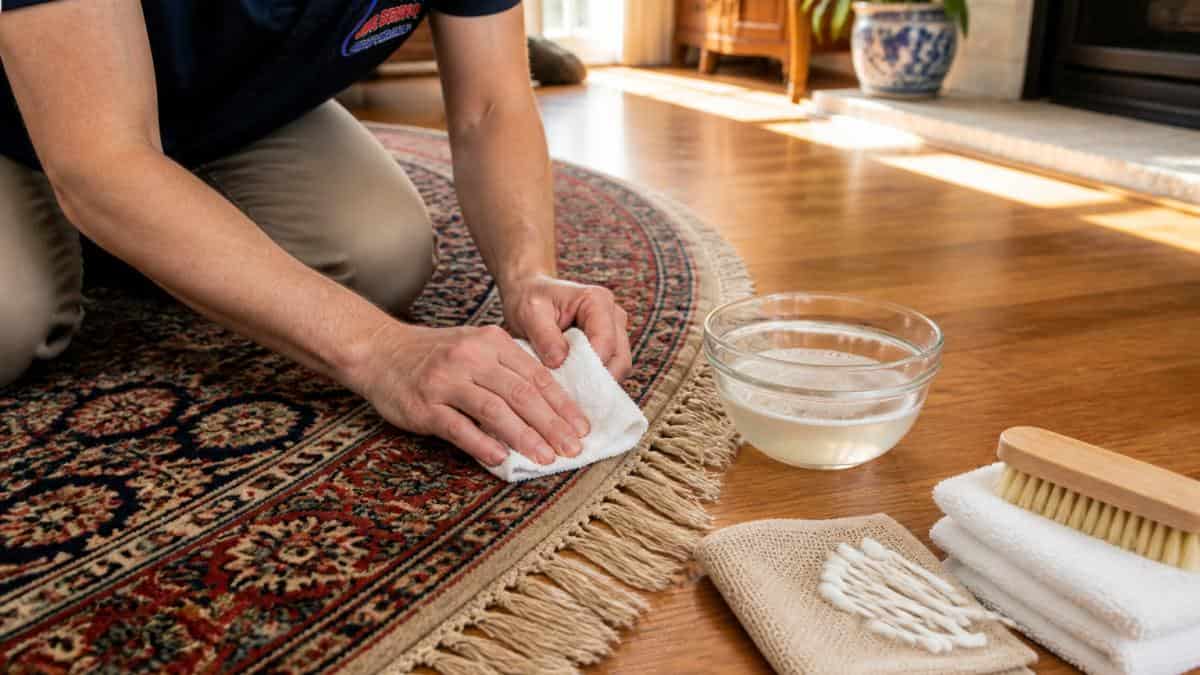
Step 1: Dry Soil Removal and Gentle Agitation
Brush the dry fringe first, from the rug outward toward the tips. Use light strokes. Gentle agitation lifts grit without pulling warp threads loose.
Then vacuum on low suction. A common mistake is using a beater bar here. It chews fringe.
Step 2: Spot Cleaning With a pH-Neutral Diluted Solution
Spray the diluted solution lightly onto a white cloth, not directly on the rug. Press the cloth into the stain and hold.
Start at the outer edge of the stain and work inward. That keeps the stain from spreading into clean cotton.
Step 3: Blotting Technique and Rinsing Residue Buildup
Blot, don’t scrub. Scrubbing abrades wet cotton and fuzzes the tips.
Rinse by pressing a cloth dampened with diluted white vinegar over the area. This cuts residue buildup that attracts new dirt. Repeat with clean water until the cloth lifts nothing.
Cleaning Stains From Wool Rug Fringe Without Bleeding Color
The trick to cleaning stains from wool rug fringe is controlling water, not adding more cleaner. More solution means more bleeding risk.
- Work one small section at a time
- Keep the rug flat so liquid can’t run along the warp
- Blot dry between every pass
- Never let the fringe stay wet for long stretches
For spot cleaning on wool fringe, less is genuinely more. A damp cloth and patience beat a soaked one every time.
If the stain hasn’t lifted after three gentle passes, stop. Repeated wetting does more harm than the stain itself.
Antique Rug Cleaning at Home: Drying and Moisture Control
Dry the fringe fast and flat. Moisture damage is the silent killer here: cotton warp left damp can rot from the inside, and you won’t see it until threads snap. In a lake-area home, that window is longer than most people expect.
Why Cotton Warp Holds Water
Cotton is a hollow, absorbent fiber. Once water enters the warp, it travels along the thread by capillary action, well past the spot you cleaned. That is why a fringe that looks dry on the surface can still be damp an inch up the warp, inside the foundation of the rug. Wool pile sheds water and dries from the outside in; cotton warp dries from the inside out, and the inside is the part you cannot see.
Step-by-Step Drying
- Blot up all surface moisture with white cloths, pressing firmly and changing cloths as they saturate.
- Lay the rug flat, fringe fanned out and not folded under itself.
- Run a fan or blower across the fringe, not straight down into it. Air moving parallel to the warp pulls moisture out along the thread instead of pushing it deeper.
- Flip the rug after a few hours and air the back. The foundation holds moisture the face does not show.
- Check the warp by feel, not by sight. Pinch a fringe thread between your fingers; if it feels cool or damp, keep drying.
- Keep pets and foot traffic off until fully dry, and do not put furniture back on the rug early.
Humidity and Timing Around Geneva Lake
Homes near Geneva Lake, Fontana, and Williams Bay sit in a humid pocket that holds moisture longer than inland Walworth County. In late summer and early fall, indoor relative humidity can stay high enough that a rug dried in a closed room will not fully dry overnight. Run a dehumidifier or open windows on a dry day, and expect drying to take longer than the fan-alone estimate. A rug dried in a cool, humid room can smell musty within a day even though the surface feels dry.
Signs the Fringe Is Not Fully Dry
- The warp feels cool or clammy when pinched
- A musty or wet-wool smell near the fringe
- The fringe looks darker at the base than at the tips
- The rug feels heavy at the ends when lifted
If any of these show up, keep air moving and do not roll or store the rug.
Never fold or roll a rug with damp fringe. That traps moisture in the foundation and invites mildew, and mildew in cotton warp is very hard to reverse without professional help.
Dry time depends on airflow, humidity, and how much water reached the warp, not on a fixed number of hours. When in doubt, dry longer.
Can You Remove Fringe From a Rug? Repair vs. Cleaning
Yes, fringe can be removed, but removal and cleaning are two different jobs. Most stained fringe needs cleaning, not cutting.
Cleaning restores the existing cotton warp. Repair reweaves or replaces damaged threads. Removal trims the fringe off entirely, which changes the rug’s look and can lower its value.
| Situation | Best Move |
|---|---|
| Surface stain, colorfast fringe | Clean at home |
| Frayed or broken warp threads | Repair by a specialist |
| Fringe too far gone to save | Removal, done professionally |
| Sentimental or high-value antique | Professional assessment first |
On a hand-knotted antique, cut fringe is hard to undo. Get a second opinion before anyone picks up scissors.
Common Mistakes That Damage Antique Rug Fringe
Here are the errors we see most often, and what each one costs you.
- Soaking the fringe. Cotton warp wicks water into the rug’s core.
- Using bleach or strong spot cleaners. They strip dye and weaken cotton.
- Scrubbing instead of blotting. Wet fibers fray fast.
- Skipping the colorfastness test. One wrong move and dye runs.
- Drying in direct sun. Heat sets stains and dries unevenly.
- Rolling a damp rug. Mildew starts within a day.
Store-bought spot cleaners often leave a sticky residue that attracts dirt. The stain looks gone, then a gray patch appears weeks later.
When to Call a Professional in Lake Geneva and Williams Bay, WI
Call a professional when the fringe bleeds, the warp threads are frayed, or the rug is a valuable antique. Lakeside homes around Geneva Lake also deal with road salt, sand, and seasonal mud working into fringe, which often requires deep extraction.
If you live near Williams Bay, WI, or anywhere around the lake, we can assess the rug in person. Lake Geneva Carpet Cleaning uses truck-mounted hot water extraction to flush embedded soil and residue from natural fibers without over-wetting the foundation.
We’re owner-operated, we’ve served this area for 32 years, and every job comes with our 10-day satisfaction guarantee.
Fringe stains don’t have to mean a trip to a textile restorer. With the right tools, a colorfastness test, and patient blotting, most surface stains lift cleanly at home. When a rug is antique, valuable, or already bleeding, our team at Lake Geneva Carpet Cleaning is here to help. We bring 32 years of experience, eco-friendly methods, and meticulous attention to detail to every rug, from Lake Geneva to Williams Bay and across Walworth County. Call us for a free quote and let us protect the rug you love.
Frequently Asked Questions
Can you remove fringe from a rug permanently?
You can cut fringe off, but on most hand-knotted antique rugs the fringe is the exposed end of the cotton warp threads that hold the knots together. Cutting it shortens those warp threads and can cause the rug to unravel at the edges. For rugs with damaged or heavily stained fringe, a textile restoration specialist can often replace or rebuild the fringe instead. Cleaning and grooming the fringe is almost always the safer first step before considering removal.
What is the safest way to remove stains from antique rug fringe?
Test a hidden spot for colorfastness first, then blot rather than scrub. Use a pH-neutral diluted solution applied with a white absorbent cloth, work from the outer edge of the stain inward, and rinse with a clean damp cloth to prevent residue buildup. Keep the wool pile itself dry and focus only on the fringe. Air dry flat with good airflow and comb the fringe straight once it is nearly dry.
Can you use dish soap to clean fringe on an antique rug?
Mild dish soap diluted heavily in lukewarm water can lift light soil from cotton fringe, but it is not ideal for antique textiles. Many dish soaps leave residue that attracts new dirt, and some contain dyes or degreasers that can affect vegetable dyes. A pH-neutral textile cleaner is the safer choice. If you use dish soap, use only a few drops in a large bowl of water and rinse thoroughly with a clean damp cloth afterward.
When should you call a professional to clean stained rug fringe?
Call a professional when the stain has spread into the wool pile, when the fringe is brittle or breaking, when colors bleed during your spot test, or when the rug is hand-knotted, antique, or has sentimental value. Homeowners in Lake Geneva, Williams Bay, and the surrounding Walworth County towns can reach out for an assessment. Contact us for a free quote.