Table of Contents
- Why Pet Odors Linger in Area Rugs (and Where They Hide)
- Method 1: Blot Fresh Accidents Right Away (and Never Rub)
- Method 2: Absorb Lingering Odor With Baking Soda
- Method 3: Use a Vinegar and Water Solution for Mild Smells
- Method 4: Choose a Pet Odor Eliminator for Rugs That Breaks Down Urine
- Method 5: Deep Clean or Steam Clean When DIY Is Not Enough
- How to Remove Pet Urine Smell From an Area Rug: Step-by-Step
- Why Does My Rug Still Smell Like Dog After Cleaning?
- How to Dry an Area Rug After Cleaning (Without Mildew)
- When to Call a Professional for Pet Odor Removal
- Frequently Asked Questions
Last Updated: October 14, 2026
Why Pet Odors Linger in Area Rugs (and Where They Hide)
Pet odor is the smell of bacteria breaking down proteins in urine, saliva, and shed skin cells, and knowing how to remove pet odors starts with understanding where they hide. In an area rug, that smell can survive surface cleaning because the source sits deep in the pile, the backing, or the pad underneath. At Lake Geneva Carpet Cleaning, we’ve pulled pet odor out of rugs for more than 32 years, and the pattern is always the same: what you smell on top is rarely where the problem lives.
Here’s the part most guides skip. An area rug is not one surface. It’s a stack.
- Carpet fibers at the top, where fresh accidents land
- The backing, where liquid wicks sideways
- The rug pad, a sponge that holds moisture and odor
- The floor beneath, which traps whatever soaks through
Urine is mostly water, so it travels down fast. Once it reaches the backing, surface sprays can’t touch it.
That’s why a rug can smell clean for a week and then turn again on a humid day.
Odor that returns after cleaning usually means the source was never reached. Treat the rug as a layered system, not a single surface.
When Odor Reaches the Rug Pad, Backing, or Floor Beneath
Odor that has soaked past the pile needs a different approach than odor sitting on top.
Lift a corner of the rug and smell the pad and the floor underneath. If the smell is stronger there than on the face of the rug, the contamination has traveled. No amount of surface spraying will fix that.
Watch for these signs:
- A musty or sour note mixed with the urine smell, which points to trapped moisture
- Dark staining on the pad or subfloor
- Odor that spikes in warm, humid weather
Wisconsin summers give us plenty of humid days, and lake-area homes hold moisture longer than most. That trapped dampness keeps odor active.
Method 1: Blot Fresh Accidents Right Away (and Never Rub)
Speed matters more than any product. The faster you lift liquid out of the pile, the less reaches the backing and pad.
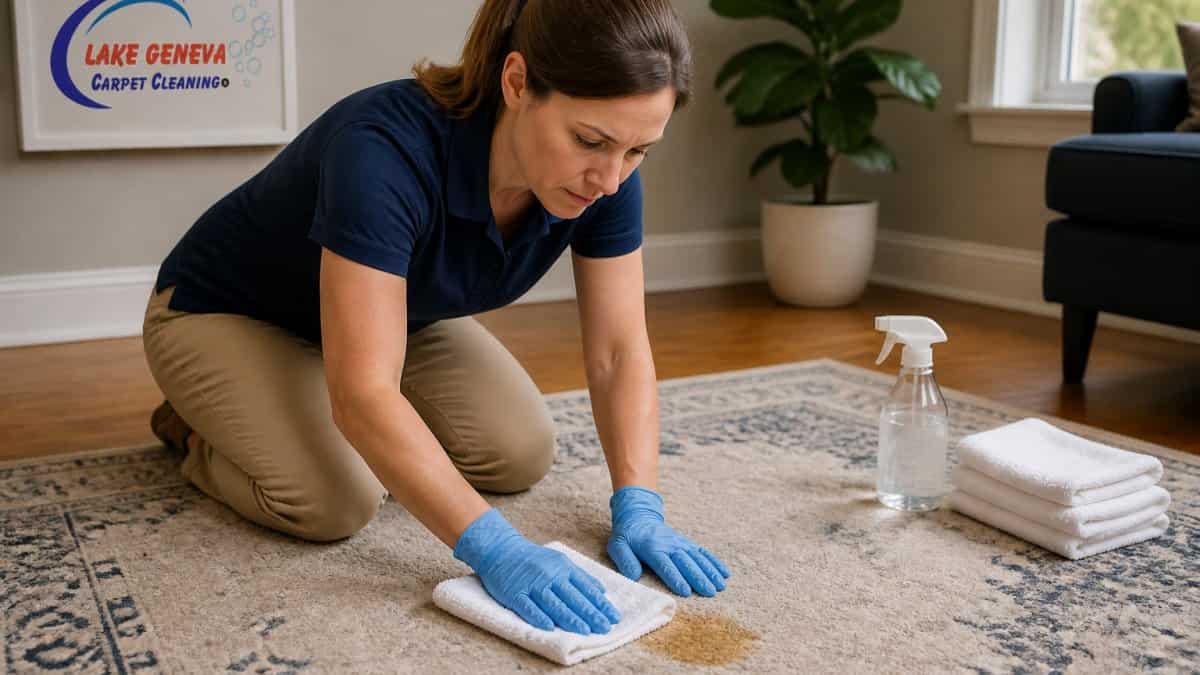
Grab a stack of clean white towels or microfiber cloths and press down hard. Stand on the cloth if you need weight. Keep swapping in dry cloths until no more moisture transfers.
Never rub. Rubbing pushes urine deeper into the carpet fibers and spreads the stain sideways. It also fuzzes the pile, which is permanent.
A common mistake is scrubbing harder when the spot won’t lift. That makes it worse every time.
After blotting, rinse the area with plain water and blot again. This pulls out residue that would otherwise attract dirt and hold odor.
Method 2: Absorb Lingering Odor With Baking Soda
Baking soda is the most common odor tool in American kitchens, and it works by absorption rather than masking. But on an area rug, how well it works, and whether it is safe at all, depends entirely on what the rug is made of.
How Baking Soda Actually Pulls Odor
Baking soda is sodium bicarbonate, a mildly alkaline powder with a porous crystalline structure. Odor molecules from urine, saliva, and bacteria settle into those pores and bind there, which is why the powder has to be worked into the pile rather than just dusted on top. The longer it sits, the more odor it traps. An hour is the minimum. Overnight is better.
Then vacuum it all up. Use slow passes, and go over the area twice.
Fiber-by-Fiber Safety
Not every area rug should get the same treatment. Here is how the common rug materials respond:
- Wool and wool blends. Baking soda is generally safe on a sturdy wool rug, but skip it on fragile, antique, or hand-knotted wool. The grit works fibers loose over time, and agitation from brushing can lift the pile permanently.
- Silk and silk blends. Do not use baking soda on silk. The powder is abrasive against fine filaments, and brushing can snag and distort the weave. Silk rugs should be handled by a professional.
- Cotton and flatweave. Safe on most cotton rugs, but the powder sifts through flatweaves and lands on the floor beneath rather than in the pile. Vacuum both sides.
- Synthetics (polypropylene, polyester, nylon). The most forgiving category. Baking soda is safe, and these fibers tolerate gentle brushing without damage.
- Hand-knotted and antique rugs. Treat as fragile regardless of fiber. The knots and dyes are the concern, not just the surface.
Dye and Colorfastness
Baking soda itself does not bleach or strip dye, but the brushing step can. On a rug with hand-dyed or vegetable-dyed wool, aggressive agitation can abrade the surface and dull the color unevenly. Use your fingers, not a stiff brush, on any rug where the dye looks uneven or the pile feels delicate.
Application Steps
- Confirm the rug is completely dry. On a damp rug, baking soda cakes into the fibers and becomes very hard to remove.
- Sprinkle a generous, even layer over the affected area. Do not dump it in a pile.
- Work it in with your fingers or a soft brush. On fragile rugs, use only your hands.
- Let it sit at least one hour, ideally overnight.
- Vacuum with slow, overlapping passes. Go over the area twice.
- If powder remains, vacuum again the next day. Leftover powder dulls the rug and clogs the pile.
What Baking Soda Cannot Do
Baking soda handles mild, surface-level odor well. It will not reach a soaked pad, a contaminated backing, or urine that has wicked into the floor beneath. If the smell returns within a day or two of vacuuming, the source is below the pile and you need an enzyme treatment or professional extraction.
Baking soda is a surface tool. Match it to the fiber, keep the rug dry, and vacuum thoroughly, but do not expect it to fix odor that has traveled into the pad or backing.
Method 3: Use a Vinegar and Water Solution for Mild Smells
A vinegar and water solution is a reasonable middle step for mild pet odor, but on an area rug the margin between helpful and harmful is narrower than most guides admit. Vinegar is an acid, and area rugs are not all built to handle acid or added moisture.
Why Vinegar Works, and Its Limits
White vinegar is dilute acetic acid. It neutralizes some alkaline odor compounds left behind by urine and bacteria, and it evaporates cleanly without leaving perfume or residue. What it does not do is break down uric acid crystals, which are the persistent source of urine smell. For that, you need an enzyme cleaner. Vinegar is a deodorizer, not an eliminator.
Fiber and Dye Considerations
- Wool. Wool is naturally acidic and generally tolerates diluted white vinegar, but prolonged wetting can felt the fibers and distort the weave. Use a light mist, not a soak.
- Silk. Skip vinegar on silk. Silk is a protein fiber and acids can dull its luster and weaken the filaments over repeated exposure.
- Cotton and flatweave. Generally safe, but flatweaves have little pile to hold liquid, so most of the solution runs straight through to the backing and floor. Blot immediately.
- Synthetics. The most tolerant category. Diluted vinegar is low-risk on polypropylene, polyester, and nylon.
- Hand-knotted and antique rugs. Do not treat these with home solutions. The dyes are often unstable and the backings are fragile.
The Spot Test Is Not Optional
Before any solution touches the rug, test it on a hidden corner, under a piece of furniture, or along an edge that faces a wall. Apply a small amount, wait ten minutes, and press a white cloth against the spot. If any color transfers to the cloth, stop. That rug is not colorfast and should not be wet-cleaned at home.
How to Apply It Safely
- Mix one part white vinegar with two parts cool water in a spray bottle.
- Spot test on a hidden area and wait ten minutes.
- If the rug passes, mist a light, even layer over the affected area. Do not soak.
- Let it sit for ten minutes.
- Blot with a clean white cloth. Swap cloths as they pick up moisture.
- Rinse with plain cool water and blot again to remove any residue.
- Air-dry completely with airflow on both sides.
The smell of vinegar itself fades as the rug dries. If it lingers, the rug is not drying fast enough, increase airflow rather than adding more vinegar.
Never soak a rug with a liquid solution. Over-wetting the backing and pad is how you trade a pet odor problem for a mildew problem. Damp, not wet, is the goal. On thick or hand-knotted rugs, even a light mist can take 24 hours or more to dry in humid weather.
When Vinegar Is the Wrong Tool
Vinegar is best as a follow-up to blotting, not as a first response to a fresh accident. It is also the wrong choice when:
- The rug is silk, antique, or hand-knotted
- The spot test shows any color transfer
- The odor is strong and persistent, which points to uric acid crystals that only enzymes can break down
- The rug has a jute, cotton, or latex backing that holds moisture
If any of those apply, move to an enzyme cleaner or call a professional rather than risk permanent damage.
Method 4: Choose a Pet Odor Eliminator for Rugs That Breaks Down Urine
Enzyme-based cleaners are the only DIY products that actually break down urine rather than cover it. That’s the key difference.
Urine contains uric acid crystals. Those crystals bind to carpet fibers and stay there, releasing odor whenever moisture in the air rises. An enzyme cleaner uses live bacteria and enzymes to consume the uric acid, which removes the source of the smell.
Here’s how to use one well:
- Blot up any fresh liquid first.
- Apply the enzyme cleaner so it reaches the same depth the urine did. That often means more product than you’d expect.
- Cover the area with a damp towel and let it sit. Enzyme products need dwell time to work.
- Let it air-dry completely. Don’t rush it with heat.
- Vacuum once dry.
Two things most people get wrong. First, they use too little product, so the enzymes never reach the bottom of the pile. Second, they clean with a detergent first, which leaves residue that stops the enzymes from working.
For a pet odor eliminator for rugs, look for a product labeled for urine and safe for the fiber you have. Check the label for wool safety before you buy.
Method 5: Deep Clean or Steam Clean When DIY Is Not Enough
Deep cleaning is the answer when odor has reached the pad, the backing, or the floor. At that point, surface methods can’t win.
Hot water extraction, often called steam cleaning, flushes the carpet fibers and pulls the loosened soil and odor back out with strong suction. It reaches depths that blotting, powders, and sprays cannot.
It’s the right call when:
- The smell returns within days of every DIY attempt
- Odor is stronger under the rug than on top
- The rug is large, thick, or wall-to-wall
- Multiple pets or years of accidents are involved
One honest limitation: not every area rug should be deep cleaned at home. Antique, hand-knotted, and silk rugs can bleed dye or lose shape when they get too wet. Those are best handled by a professional who can match the method to the fiber.
That’s the point where most homeowners stop guessing. We bring truck-mounted hot water extraction to the job, which reaches embedded allergens and stubborn pet odor that surface cleaning leaves behind. You can read the EPA’s guidance on indoor air quality and pets to understand why deep extraction matters for a healthier home.
How to Remove Pet Urine Smell From an Area Rug: Step-by-Step
Learning how to remove pet odors and pet urine smell from an area rug comes down to one rule: work from the top down, and dry completely between steps.
Use this sequence:
- Blot fresh urine with clean cloths. Press, don’t rub.
- Rinse with cool water and blot again to remove residue.
- Spot test any solution on a hidden corner before you apply it.
- Treat with an enzyme cleaner and give it full dwell time.
- Sprinkle baking soda once dry to absorb lingering odor, then vacuum.
- Air-dry the rug fully, with airflow on both sides if you can.
- Repeat the enzyme step if odor returns after drying.
- Call a professional if odor persists after two full rounds.
| Method | Best For | Time Needed | Watch Out For |
|---|---|---|---|
| Blotting | Fresh accidents | Minutes | Never rub the pile |
| Baking soda | Mild surface odor | 1 hour to overnight | Must apply to a dry rug |
| Vinegar and water | Mild smells, colorfast rugs | 15-20 minutes | Always spot test first |
| Enzyme cleaner | Urine that soaked in | Several hours | Needs full dwell time |
| Deep cleaning | Odor in pad or backing | Professional visit | Not for fragile rugs |
Why Does My Rug Still Smell Like Dog After Cleaning?
If your rug still smells like dog after cleaning, the odor source is almost always below the surface you cleaned.
The three usual culprits:
- The rug pad. It soaks up urine and holds it like a sponge.
- The floor beneath. Sealed hardwood traps odor at the seams. Concrete wicks it in.
- Incomplete drying. Damp backing grows bacteria, which smells like a wet dog even when the urine is gone.
There’s a fourth cause people miss: cleaning products that leave residue. Detergent film attracts new dirt and holds odor. If you cleaned with a soap-based product and didn’t rinse it out, that film may be the smell.
Test the pad first. If it smells, replace it. Pads are inexpensive compared with the rug, and a contaminated pad will re-scent a freshly cleaned rug within days.
How to Dry an Area Rug After Cleaning (Without Mildew)
Knowing how to dry an area rug after cleaning is what separates a fix from a repeat problem.
Mildew needs moisture and still air. Remove either one and it can’t grow.
Do this:
- Lay the rug flat, or hang it over a sturdy line or railing
- Run fans across both the top and the underside
- Open windows for cross-ventilation
- Turn up the heat slightly in cool weather
- Lift the rug after a few hours to check the backing
Never fold or roll a damp rug. Trapped moisture in the fold is where mildew starts.
Skip direct sunlight on dyed or antique rugs. Sunlight can fade color fast. Indirect light and moving air are safer.
Most rugs dry in 12 to 24 hours with good airflow. Thick wool rugs and humid lake-area weather push that longer. If the rug still feels cool or damp after a full day, keep the fans running.
When to Call a Professional for Pet Odor Removal
Call a professional when odor survives two rounds of home treatment, when the pad or subfloor smells, or when the rug is one you can’t safely wet.
Here’s the honest test. If you’ve blotted, treated with enzymes, dried fully, and the smell still comes back, the contamination is deeper than your tools can reach. More DIY attempts at that point just add moisture and risk.
Professional equipment makes the difference in three ways. Truck-mounted hot water extraction reaches deep into the pile and pad layer. Strong suction pulls the loosened soil and odor out instead of leaving it behind. And trained eyes can spot fiber damage risk before cleaning starts.
For homeowners in Lake Geneva and the surrounding counties, this is where we come in. We’ve served Wisconsin homeowners for over 32 years as an owner-operated business, and pet stain and odor removal is one of our core services. Our eco-friendly methods are built to remove dirt, germs, allergens, and odors, not just mask them.
If you’re searching for pet odor removal near me, the deciding factors should be experience, equipment, and a clear guarantee. We back our work with a 10-day satisfaction guarantee, so there’s no risk in trying us.
Before any cleaner starts, ask how they confirm the odor source. A pro should check the pad and the floor beneath the rug, not just the surface. If they skip that step, the smell will return.
Pricing depends on the job, so we quote each home individually. Reach out for a free quote and we’ll tell you exactly what your rug needs.
Pet odor in an area rug is stubborn because it hides in layers you can’t see. Blotting, baking soda, vinegar, and enzyme cleaners handle the surface, but odor that reaches the pad or the floor beneath needs deep extraction to leave for good. Lake Geneva Carpet Cleaning removes embedded pet odor with truck-mounted hot water extraction, eco-friendly methods, and more than 32 years of local experience, all backed by a 10-day satisfaction guarantee. Get started with Lake Geneva Carpet Cleaning and get a rug that smells as clean as it looks.
Frequently Asked Questions
How do I get the dog smell out of my area rug?
Start by blotting any fresh spots without rubbing, then sprinkle baking soda over the rug, let it sit, and vacuum. For lingering odor, mix a vinegar and water solution, mist lightly, and air-dry. If the smell stays after these steps, the urine has likely soaked into the rug pad or floor beneath, and a deep clean with hot water extraction is the reliable way to remove pet odors at the source rather than just masking them.
What is the most powerful pet odor eliminator for rugs?
Enzyme-based cleaners are the most effective option for pet urine because they break down the uric acid crystals that cause odor instead of covering them up. Look for a formula labeled for urine odor and safe for the rug’s fibers. Always spot test on a hidden corner first, since some dyes and natural fibers react to moisture. Enzyme treatments work best when the rug stays damp long enough for the enzymes to act.
Why does my rug still smell like dog after cleaning?
Odor usually returns for one of three reasons: the cleaning only reached the surface and missed the rug pad or subfloor, the rug stayed damp too long and developed a mildew smell, or the pet re-marked the same spot. If you have cleaned more than once and the smell comes back within days, the contamination is likely beneath the rug. A professional deep clean with hot water extraction reaches the backing and pad area.
Can baking soda help remove pet odors from an area rug?
Baking soda absorbs surface odor and moisture, which makes it useful for mild dog smell and as a step after blotting. Sprinkle a generous layer over the dry rug, let it sit for several hours, then vacuum thoroughly. It will not neutralize urine that has soaked into the backing or pad, so treat deeper spots with an enzyme cleaner or plan a professional deep clean if the smell persists.