Table of Contents
- Why Professional Carpet Cleaning for Pet Owners Is Different
- Immediate Steps After a Pet Accident: Blotting, Absorbing, and Acting Fast
- Pet Safe Carpet Cleaning Solutions and What to Avoid
- Steam Cleaning vs Dry Cleaning for Pet Stains: Which Wins?
- Sub-Floor Odor Remediation: The Problem Most Guides Ignore
- How Often to Clean Carpets with Pets for Best Results
- Cost of Professional Carpet Cleaning for Pets in Lake Geneva, WI
- Preventing Future Pet Accidents and Protecting Your Carpets
- Conclusion: The Right Professional Carpet Cleaning for Pet Owners
Last Updated: May 24, 2026
Pet owners face a cleaning challenge that most carpet guides dramatically underestimate. Professional carpet cleaning for pet owners is a fundamentally different discipline from standard residential cleaning, and Lake Geneva Carpet Cleaning has spent over 32 years helping Wisconsin homeowners understand exactly why. The core problem is not the visible stain on the surface. It is the uric acid crystals, ammonia compounds, and biological residue that migrate deep into carpet fibers, the carpet pad, and sometimes the sub-floor itself. Below, we will show you exactly how to handle pet accidents at every stage, from the first 60 seconds after an incident to the professional treatments that actually eliminate odor rather than mask it.
Why Professional Carpet Cleaning for Pet Owners Is Different
Standard carpet cleaning removes surface-level soil. Pet stain removal requires a completely different approach because the contamination is biological, chemically complex, and often invisible to the naked eye.
How Uric Acid and Pet Odor Penetrate Beyond the Surface
Pet urine is the central problem, and most homeowners underestimate its chemistry. When a dog or cat urinates on carpet, the liquid immediately begins wicking downward through the carpet fibers, into the absorbent carpet pad, and in severe cases, into the sub-floor beneath. As the moisture evaporates, uric acid crystals remain behind. These crystals are largely odor-dormant when dry, which is why a room can smell clean until humidity rises, then suddenly smell overwhelmingly of ammonia. Heat reactivates the crystals, which is why steam cleaning without proper enzymatic pre-treatment can actually intensify odors rather than eliminate them.
Uric acid also bonds to carpet fibers at a molecular level. This is not a stain that sits on top of the material. It is chemically embedded, and pH-balanced cleaning solutions are required to break it down without damaging the fiber structure.
Why DIY Methods Often Fall Short
The most common DIY mistake is treating only what is visible. A urine spot on the surface may represent a contamination zone three to four times larger at the carpet pad level, because liquid spreads laterally as it descends. Homeowners who clean the visible area with a spot cleaner leave the majority of the contamination untouched.
A second failure point is residue. Many consumer cleaning solutions leave a sticky residue in carpet fibers that actually attracts more soil over time. Pets can also detect residual urine scent that humans cannot, which encourages repeat accidents in the same location. According to the Humane Society’s guidance on pet behavior and house training, pets are significantly more likely to re-soil areas where urine scent remains detectable to them, even after visible cleaning.
Professional carpet cleaning for pet owners addresses both problems: full-depth extraction and odor neutralization rather than surface-level stain removal.
Immediate Steps After a Pet Accident: Blotting, Absorbing, and Acting Fast
The first ten minutes after a pet accident determine how difficult the cleanup will be. Acting fast limits how deeply the urine penetrates, which directly reduces the likelihood of sub-floor contamination.
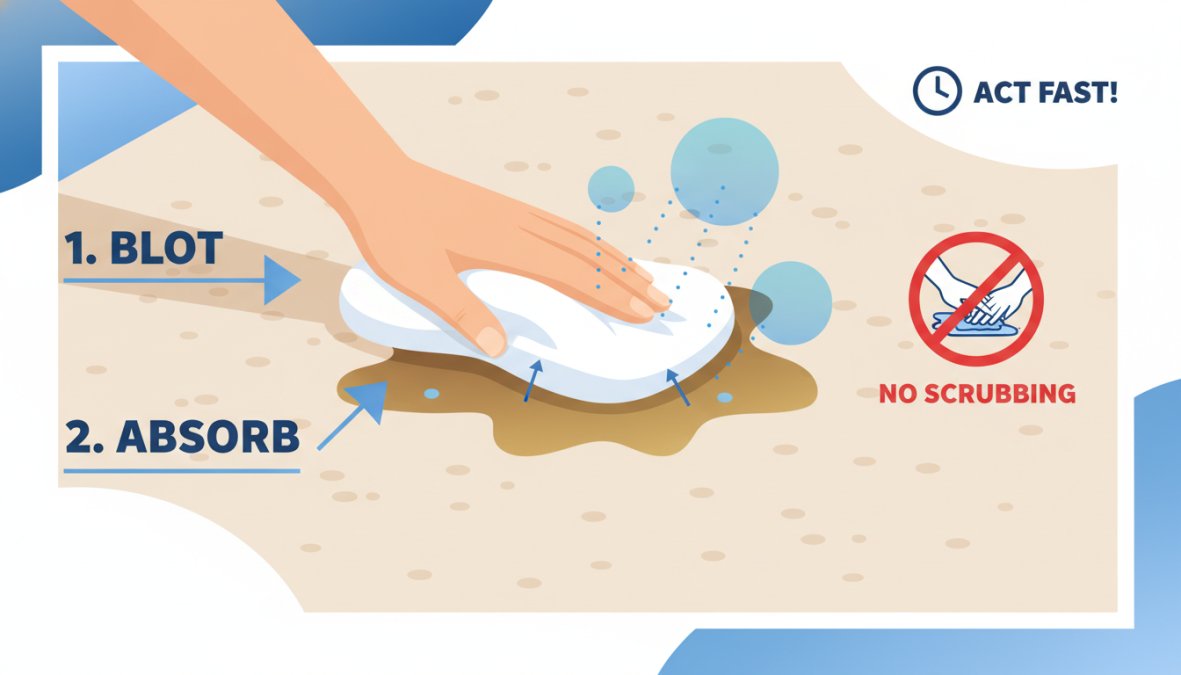
Start with absorbent material. Lay several layers of clean white cloth or paper towels over the wet area and apply firm, even pressure. The goal is to wick moisture upward before it migrates further into the carpet pad.
Blotting vs. Scrubbing: Why Technique Matters
Blotting is the correct technique. Scrubbing is the instinctive one, and it causes real damage.
Scrubbing a fresh pet stain does two harmful things. First, it drives the liquid deeper into the carpet fibers and pad rather than drawing it out. Second, it physically damages the carpet fiber structure, causing fraying and permanent texture changes that no amount of cleaning will reverse. With blotting, you press down and lift straight up repeatedly, working from the outer edge of the stain inward to prevent spreading.
For dry or set stains, lightly mist the area with cold water first to rehydrate the uric acid crystals before blotting. Hot water is counterproductive here because it can set protein-based stains into the fibers permanently.
Home Remedies: Baking Soda, Vinegar, and Their Limits
Baking soda and white vinegar are genuinely useful for fresh, minor pet accidents. Baking soda is an odor-absorbing compound that draws moisture and neutralizes mild odors when applied after blotting. Vinegar, diluted with water at roughly a 1:1 ratio, helps neutralize the alkaline compounds in fresh urine.
The limitation is significant, though. Neither baking soda nor vinegar breaks down uric acid crystals. They address surface odor and some surface chemistry, but they do not penetrate the carpet pad. For any accident that has been left for more than an hour, or any repeat-accident area, home remedies are inadequate as a sole treatment. They are a useful first response, not a complete solution.
Never use ammonia-based cleaning products on pet urine stains. Ammonia is a component of urine, and using it as a cleaner signals to pets that the area is an appropriate bathroom location. This is one of the most common mistakes that leads to repeat accidents in the same spot.
Pet Safe Carpet Cleaning Solutions and What to Avoid
Choosing the right cleaning solution matters as much as technique. The wrong product can damage carpet fibers, leave harmful residue, or create genuine health risks for pets who walk on treated surfaces and then groom themselves. This last point is the one most cleaning guides skip entirely, and for pet owners, it is arguably the most important.
Bio-Enzymatic Cleaners: How They Break Down Pet Stains
A bio-enzymatic cleaner is a cleaning solution that contains live bacterial cultures or isolated enzymes specifically formulated to digest the biological compounds in pet waste. These are the most effective consumer-grade option for pet stain and odor removal because they address the root chemistry rather than masking it.
The enzymes target uric acid, proteins, and other organic compounds, breaking them down into carbon dioxide and water through a natural biological process. The key requirement is dwell time: bio-enzymatic cleaners need to remain moist and in contact with the stain for a minimum of 10 to 15 minutes, and often longer for set stains. Covering the treated area with a damp cloth prevents the solution from drying out before the enzymes complete their work.
Once fully dry, most bio-enzymatic cleaners are considered pet-safe because the active bacterial cultures and enzyme proteins break down into inert compounds. The risk window is during and immediately after application, before the product has dried completely.
Chemical Residue Toxicity: The Safety Window Most Guides Don’t Explain
This is the angle almost no carpet cleaning guide addresses directly, and it is the one that matters most to pet owners.
Pets are exposed to carpet cleaning residues in two ways that humans are not: paw contact followed by grooming, and direct surface licking. A dog or cat that walks across a recently treated carpet and then licks their paws is ingesting whatever chemical residue remains on the surface. The toxicity risk is not from the carpet itself, it is from this ingestion pathway.
The categories of concern, in order of risk:
High concern, keep pets off treated areas until fully dry and ventilated:
- Optical brighteners found in some consumer carpet shampoos are not acutely toxic in small amounts, but repeated low-level ingestion through paw-licking is an unnecessary exposure with no cleaning benefit for pet stain removal.
- Quaternary ammonium compounds (quats), used as disinfectants in some carpet sanitizers, are effective antimicrobials but are classified as irritants and can cause oral and gastrointestinal irritation if ingested. They are commonly found in products marketed as "sanitizing" or "disinfecting" carpet treatments. According to ASPCA Animal Poison Control Center guidance on household chemicals, quaternary ammonium compounds are a recognized irritant for cats and dogs.
- Synthetic fragrance compounds added to many consumer pet odor products do not neutralize odor, they mask it, and some fragrance ingredients are known respiratory irritants for cats in particular, whose liver metabolism handles certain aromatic compounds differently than dogs or humans.
Lower concern when used correctly:
- Bio-enzymatic cleaners from reputable manufacturers (look for products that explicitly state non-toxic, pet-safe formulation on the label) present minimal risk once dry. The active enzymes denature as they dry and the bacterial cultures are not pathogenic strains.
- Hydrogen peroxide-based cleaners at the 3% concentration found in consumer products are generally low-risk once dry, but should not be used on wool or dark-colored carpets due to bleaching risk, and pets should be kept off the area while the solution is still wet and actively off-gassing.
- Baking soda is genuinely non-toxic and safe for households with pets.
Always avoid:
- Ammonia-based cleaners for the behavioral reason noted elsewhere in this guide, but also because ammonia is a respiratory irritant for pets at the concentrations found in cleaning products.
- Phenol-based disinfectants, including many pine-oil products. Phenols are significantly more toxic to cats than to humans or dogs, and cats lack the liver enzyme (glucuronyl transferase) needed to metabolize phenolic compounds efficiently. Even diluted pine-oil cleaners used on carpet can pose a risk to cats who walk on the surface and groom.
- Bleach or bleach-based products on carpet, both for fiber damage and because sodium hypochlorite residue is an irritant to paws and mucous membranes.
If you use any commercial carpet cleaning product, the minimum safe practice is to keep pets completely off the treated area until the carpet is fully dry to the touch, not just surface-dry, but dry through the fiber depth. In most residential conditions with adequate ventilation, this means a minimum of two to four hours for spot treatments and six or more hours after full steam cleaning. Do not rely on the smell being gone as a dryness indicator; many residues are odorless before they are safe.
Carpet Material Sensitivity: Matching Solutions to Fiber Type
This is the second angle most cleaning guides skip entirely, and it causes real damage.
Different carpet fiber types respond very differently to cleaning solutions. Synthetic carpets, including nylon and polyester, are generally tolerant of most pH-balanced enzymatic cleaners. Natural fiber carpets, including wool, sisal, and cotton blends, are significantly more sensitive. Alkaline solutions can cause wool fibers to felt and shrink irreversibly. Acidic solutions can strip natural oils from wool and cause color bleeding.
A quick reference:
| Carpet Fiber | Safe Solutions | Avoid |
|---|---|---|
| Nylon (synthetic) | Most enzymatic cleaners, pH-balanced solutions | Bleach, high-alkaline products |
| Polyester (synthetic) | Enzymatic cleaners, mild detergents | Oil-based solvents |
| Wool (natural) | Wool-safe, pH-neutral formulas only | Alkaline cleaners, hot water, phenol-based products |
| Sisal/Jute (natural) | Minimal moisture, dry cleaning preferred | Wet extraction, vinegar, enzymatic wet treatments |
| Olefin/Polypropylene | Most commercial cleaners | Heat-based methods, bleach |
When uncertain, test any cleaning solution on a hidden area first and allow it to dry fully before evaluating the result. For wool specifically, the combination of enzymatic cleaners and heat, such as covering with a warm damp cloth to extend dwell time, can cause felting even with a pH-neutral formula, because the mechanical action of fiber swelling and the enzyme activity together stress the wool scale structure.
For wool or natural fiber carpets, skip the DIY enzymatic treatment entirely and call a professional who has experience with natural fiber cleaning. The risk of irreversible fiber damage from the wrong solution or technique is high enough that the cost of professional cleaning is clearly worth it. Ask specifically whether the company has experience with wool or natural fiber carpets before booking, not all residential carpet cleaners do.
Steam Cleaning vs Dry Cleaning for Pet Stains: Which Wins?
Steam cleaning outperforms dry cleaning for pet stain and odor removal in most residential situations, but the advantage disappears if the method is applied incorrectly.
Steam Cleaning Do’s and Don’ts for Pet Households
Steam cleaning, technically hot water extraction, works by injecting heated water under pressure into carpet fibers and immediately extracting it along with dissolved soil, bacteria, and odor compounds. For pet households, this method reaches the carpet pad level, which is where most of the biological contamination actually lives.
The critical do’s and don’ts:
Do:
- Pre-treat with a bio-enzymatic cleaner and allow full dwell time before steam cleaning
- Use a professional-grade truck-mounted system for deep contamination, which generates significantly higher water temperature and extraction pressure than portable rental units
- Allow adequate drying time, typically 6 to 12 hours, with good ventilation
Don’t:
- Steam clean without enzymatic pre-treatment on urine stains, as heat can permanently set uric acid compounds into fibers
- Over-wet the carpet, particularly on natural fiber types or in areas with potential sub-floor contamination
- Use steam cleaning as a substitute for enzymatic treatment on heavily soiled areas
Dry cleaning methods use low-moisture compounds or encapsulation chemistry and work well for maintenance cleaning. For active pet stain remediation, they lack the penetration depth to address carpet pad contamination.
Sub-Floor Odor Remediation: The Problem Most Guides Ignore
Here is what most carpet cleaning guides will not tell you: if a pet has repeatedly urinated in the same area over months or years, the carpet and pad are not the only problem. The urine has very likely saturated through to the sub-floor, and no amount of carpet cleaning will permanently eliminate the odor while the sub-floor remains contaminated.
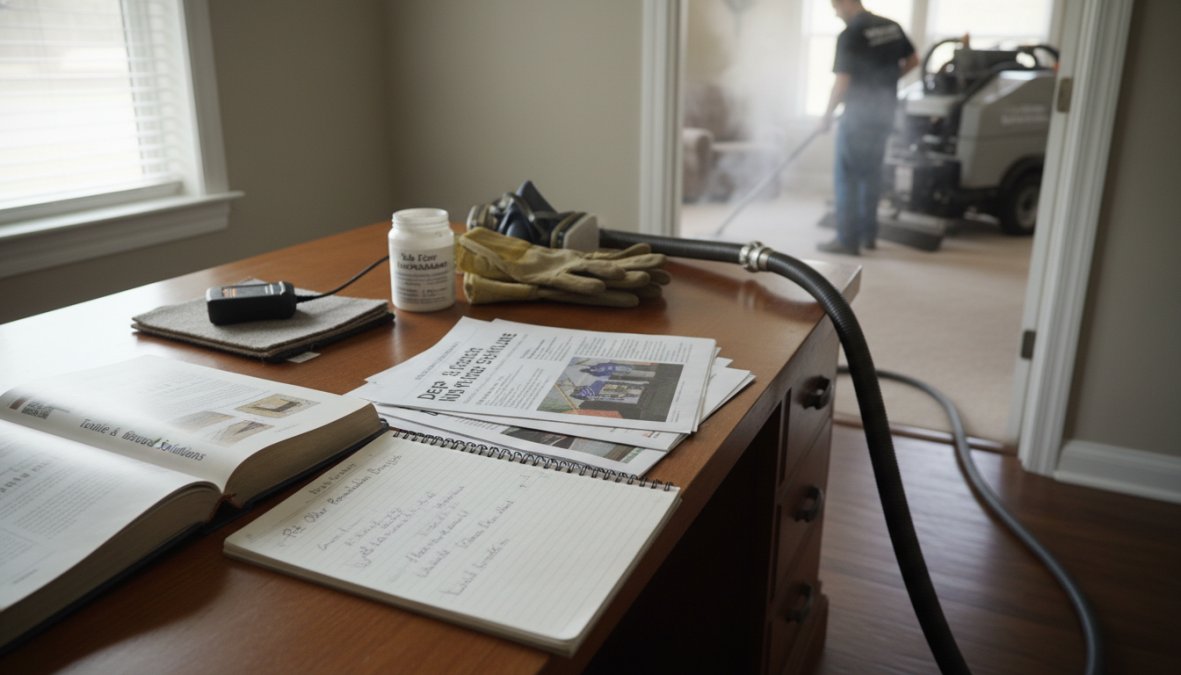
Sub-floor odor remediation is a multi-step process that goes beyond standard carpet cleaning:
- Identify the extent of contamination using a UV blacklight, which causes urine deposits to fluoresce. This reveals the full contamination zone, which is almost always larger than the visible stain.
- Remove and replace the carpet pad in heavily contaminated areas. The pad is highly absorbent and essentially impossible to fully decontaminate once saturated.
- Treat the sub-floor directly with a concentrated enzymatic or oxidizing solution before installing new pad material.
- Seal the sub-floor with an odor-blocking primer or sealant in cases of severe contamination, particularly on wood sub-floors where urine can penetrate the grain.
- Replace the carpet if the fibers themselves are heavily saturated and the contamination is extensive.
Most homeowners discover sub-floor contamination only after replacing the carpet and finding the odor persists. Addressing it before new flooring installation saves significant cost and frustration.
According to EPA guidance on indoor air quality and biological contaminants, persistent biological contamination in flooring materials is a meaningful contributor to poor indoor air quality, particularly for households with allergy or asthma sufferers.
How Often to Clean Carpets with Pets for Best Results
The standard advice, clean every six to twelve months, is a starting point, not a complete answer. For pet households, the right cleaning frequency depends on factors that vary significantly from home to home, and applying the wrong schedule in either direction has real consequences: too infrequent and contamination becomes embedded and expensive to remediate; too frequent with the wrong method and you risk over-wetting, fiber wear, and residue buildup.
A Framework for Setting Your Actual Cleaning Schedule
Rather than a single number, use these variables to determine the right interval for your household:
Pet count and size: A single small dog with no accident history is a fundamentally different cleaning challenge than two large dogs or a multi-cat household. More animals means more dander, more tracked-in outdoor soil, and statistically more accident events. Households with three or more pets should treat quarterly professional cleaning as a baseline rather than an option.
Accident frequency: If your pet has regular accidents, due to age, health conditions, or incomplete house training, the cleaning schedule should be driven by contamination load, not the calendar. A single heavily soiled area that is not professionally extracted within a few weeks begins to develop the sub-floor saturation described elsewhere in this guide. At that point, the cost of remediation exceeds the cost of several preventive cleanings.
Resident health factors: According to the Asthma and Allergy Foundation of America’s guidance on pet allergens, pet dander is one of the most common indoor allergen triggers for asthma and allergic rhinitis. For households where any resident has asthma, allergies, or respiratory sensitivities, professional cleaning every three to four months is a meaningful health intervention, not just a cosmetic one. HEPA vacuuming twice weekly between professional visits is the complementary habit that makes the professional cleaning more effective and longer-lasting.
Carpet age and fiber type: Older carpets and natural fiber carpets accumulate contamination differently than newer synthetic installations. Older carpet backing and padding have often lost their original moisture barrier properties, meaning liquids penetrate more quickly and more deeply. If your carpet is more than eight to ten years old and you have pets, err toward more frequent professional cleaning rather than less.
The Dander Accumulation Problem: Why Vacuuming Alone Is Not Enough
Pet dander, microscopic flecks of dried skin shed continuously by cats, dogs, and other animals, is not the same as pet hair, and it behaves differently in carpet. Hair sits on top of and between carpet fibers and is removed effectively by regular vacuuming. Dander particles are small enough to migrate deep into the carpet fiber structure and become trapped in the pile, where surface vacuuming cannot reach them.
This is the mechanism behind a pattern many pet owners notice: the home smells reasonably clean and looks clean, but allergy symptoms persist or worsen over time. The dander load in the carpet is accumulating below the reach of routine maintenance.
Hot water extraction at professional depth, particularly with a truck-mounted system that generates higher suction pressure than portable units, physically removes dander from deep in the pile in a way that vacuuming cannot replicate. This is one of the underappreciated reasons why professional cleaning frequency matters for pet households beyond visible stain and odor management.
Spot Cleaning Between Professional Visits
Spot cleaning is not a substitute for professional deep cleaning, but it is essential for maintaining results between visits. Address any pet accident within the first hour using the blotting and enzymatic treatment process described earlier in this guide. For high-traffic pet areas, a portable carpet cleaner used monthly on the most affected zones extends the life of professional cleaning results significantly.
The most common spot cleaning mistake is using too much cleaning solution. Excess solution that is not fully extracted leaves residue that attracts soil and can create a cleaning cycle that makes areas look worse over time. Use the minimum effective amount of any cleaning product, and always follow with a plain cold-water rinse pass to dilute and extract residue.
A second common mistake is treating spot cleaning as a reason to delay professional cleaning. Spot treatments address the surface and upper fiber layer. They do not reach the carpet pad. If you are spot-cleaning the same area repeatedly, that is a signal that the contamination has migrated below the reach of your spot treatment, and that professional extraction is overdue, not something that can be deferred further.
The most effective maintenance schedule for most pet households is: HEPA vacuuming of high-traffic pet areas twice weekly, enzymatic spot treatment of any accident within the first hour, and professional hot water extraction every four to six months if you have multiple pets or any resident with allergies, or every six to twelve months for single-pet households with no chronic accident issues. If you notice odor returning between professional visits despite consistent spot cleaning, treat that as a diagnostic signal, not a cleaning failure, but an indicator that sub-floor contamination may need to be assessed.
Cost of Professional Carpet Cleaning for Pets in Lake Geneva, WI
Pricing for professional carpet cleaning for pet owners in Lake Geneva varies based on square footage, the severity of pet contamination, and whether sub-floor treatment is required. Standard professional cleaning in the Lake Geneva area generally runs higher per room than basic residential cleaning because pet treatment requires specialized enzymatic pre-treatment products, additional dwell time, and often multiple extraction passes.
Homeowners searching for carpet cleaning near me in the Lake Geneva area should ask specifically whether the quoted price includes enzymatic pre-treatment, or whether pet treatment is an add-on charge. The two pricing structures lead to very different outcomes. A quote that looks lower may exclude the treatment steps that actually address odor rather than just surface appearance.
Sub-floor remediation, when required, is a separate service with separate pricing. Getting a thorough assessment before committing to a cleaning plan prevents the frustration of paying for carpet cleaning that does not resolve the underlying odor problem.
Preventing Future Pet Accidents and Protecting Your Carpets
Prevention is a more effective long-term strategy than remediation. Several practical approaches reduce both the frequency of accidents and the severity of damage when they do occur.
Deterrent strategies that work:
- Apply enzymatic cleaner to previously soiled areas and allow it to dry fully. This removes the scent markers that draw pets back to the same locations.
- Use carpet protector treatments after professional cleaning. These create a barrier on carpet fibers that slows liquid absorption, giving you more time to blot before the urine penetrates to the pad level.
- Place waterproof mats or runners in areas where pets spend significant time, particularly near doors and feeding areas.
- Address house training issues directly. Repeat accidents in the same area are often a behavioral signal, and consulting a veterinarian or trainer is more effective than cleaning alone.
For households with elderly pets or animals with incontinence issues, area rugs over hard flooring in high-traffic zones are significantly easier to clean than wall-to-wall carpet and reduce the risk of sub-floor contamination entirely.
According to the American Kennel Club’s guidance on house training and accident prevention, consistent routine and immediate positive reinforcement are the most effective tools for reducing indoor accidents in dogs of all ages.
Conclusion: The Right Professional Carpet Cleaning for Pet Owners
Pet-related carpet contamination goes deeper than it appears, and surface-level cleaning consistently fails to address the uric acid, biological residue, and sub-floor saturation that cause persistent odor. The difference between a home that smells clean and one that does not usually comes down to whether the cleaning reached the carpet pad and sub-floor, not just the visible surface.
Frequently Asked Questions
Does professional carpet cleaning remove pet urine?
Yes, professional carpet cleaning can remove pet urine, but the method matters. Truck-mounted hot water extraction combined with bio-enzymatic pre-treatments breaks down uric acid crystals that cause lingering odor. Standard surface cleaning often misses urine that has soaked into the carpet pad or sub-floor. For deep-set pet accidents, a professional who treats both the carpet fibers and the underlying layers will deliver far better odor elimination than DIY spot cleaning alone.
How often should pet owners get their carpets professionally cleaned?
Pet owners should schedule professional carpet cleaning every 3 to 6 months, compared to the 12-month recommendation for pet-free homes. Homes with multiple pets, heavy shedders, or pets prone to accidents may need service every 3 months. Between professional visits, regular vacuuming, prompt blotting of accidents, and spot cleaning with a pH-balanced bio-enzymatic cleaner help maintain carpet condition and reduce allergen and dander buildup.
Is professional carpet cleaning safe for pets?
Professional carpet cleaning is generally safe for pets when the right solutions are used. Look for pH-balanced, non-toxic, and residue-free cleaning products. Pets should be kept off treated areas until carpets are fully dry, typically 2 to 6 hours depending on the method. Avoid cleaners containing ammonia, as the scent can actually attract pets back to the same spot. Ask your cleaning provider specifically about pet-safe formulations before booking.
What is the best carpet cleaning method for pet owners?
Hot water extraction, commonly called steam cleaning, is widely considered the best method for pet owners. It reaches deep into carpet fibers and the carpet pad to remove embedded pet urine, dander, and odor-causing bacteria. When paired with a bio-enzymatic pre-treatment that targets uric acid, it outperforms dry cleaning and portable carpet cleaners for households with pets. For synthetic carpets, this method is both effective and safe when performed by an experienced professional.
How do professionals get rid of deep-set pet odors?
Professionals address deep-set pet odors by first applying a bio-enzymatic cleaner that breaks down uric acid at the molecular level. Hot water extraction then flushes contaminants from carpet fibers and the carpet pad. In severe cases, sub-floor treatment or sealing may be required to prevent odors from wicking back up through the carpet. Some professionals also use odor-neutralizing agents and recommend air purifiers with activated carbon filters to improve indoor air quality after treatment.
For Lake Geneva homeowners dealing with pet stains and persistent odors, Lake Geneva Carpet Cleaning brings over 32 years of owner-operated experience and truck-mounted hot water extraction technology that reaches contamination at the pad and sub-floor level. The team uses eco-friendly, pet-safe cleaning methods and backs every job with a 10-day satisfaction guarantee. Get started with Lake Geneva Carpet Cleaning and experience the difference between masking a problem and actually solving it.
This article was written using GrandRanker