
Table of Contents
- Why Old Coffee Stains Are Harder to Remove
- What You’ll Need: Supplies and Tools for Stain Removal
- Step-by-Step Process to Remove Old Coffee Stains
- Best Practices for Carpet Spot Cleaning
- How to Remove Set-In Carpet Stains Using Advanced Methods
- Professional Carpet Stain Removal: When to Call an Expert
- Preventative Maintenance to Avoid Future Stains
- Frequently Asked Questions
Last Updated: September 22, 2026
Why Old Coffee Stains Are Harder to Remove
Old coffee stains cling to carpet fibers differently than fresh spills. When coffee sits on carpet for hours or days, it penetrates deeper into the pile and backing. The liquid dries and bonds with the fibers, making it far harder to lift out.
Fresh stains rest on the surface. Old stains have settled into the carpet structure itself. This is why blotting works immediately but fails days later.
The longer coffee sits, the more it oxidizes. This chemical change darkens the stain and makes it resistant to water and basic cleaning solutions. What started as a light brown mark can become a stubborn dark spot that seems permanent.
The first 24 hours are critical. If you miss that window, expect to work harder and use stronger methods. Many homeowners discover old stains only when they’re already set in, which is when professional help becomes valuable.
What You’ll Need: Supplies and Tools for Stain Removal
Removing old coffee stains requires the right combination of tools and solutions. But what works on synthetic carpet may damage wool, and what’s safe around pets differs from what works in a pet-free home. Choosing the right supplies means matching them to your carpet fiber and household safety needs.
Essential tools:
- Absorbent cloths or white towels
- Microfiber towels (better at absorbing liquid than cotton)
- Spray bottle for applying solutions
- Soft-bristled brush or old toothbrush
- Wet/dry vacuum or carpet cleaning machine
- Bucket for mixing solutions
Why these matter: Microfiber towels trap more liquid than cotton. White towels let you see the stain transfer as you blot. A spray bottle gives you precise control over solution application, preventing over-saturation.
Natural DIY Cleaning Solutions
Many homeowners prefer natural solutions before trying stronger treatments. These work well on moderately set stains and are safer around pets and children.
White vinegar solution: Mix one part white vinegar with two parts water. This mild acid helps break down coffee stains without damaging most carpet fibers. Spray lightly and blot repeatedly. Safe around pets and children when used as directed. Vinegar is non-toxic and biodegradable, making it ideal for households concerned about chemical residue.
Baking soda paste: Combine baking soda with a small amount of water to form a thick paste. Apply to the stain, let sit for 15-30 minutes, then scrub gently and rinse. Baking soda absorbs odors and can lift some stain saturation. It’s completely safe for pets and children and leaves no harmful residue. This method works especially well on wool carpets, which are delicate and sensitive to acidic solutions.
Dish soap and water: A few drops of dish soap in warm water creates a gentle cleaning solution. This works best on fresh or lightly set stains. Use sparingly; too much soap leaves residue that attracts dirt and can be difficult to rinse from delicate fibers. This option is pet-safe when diluted properly.
Hydrogen peroxide (for light carpets only): Test on a hidden area first. Hydrogen peroxide can lighten stains on light-colored carpets but may bleach darker fibers or damage wool. Use a 3% solution, not industrial strength. Avoid this method if you have pets, as ingestion of stronger concentrations poses a risk.
Fiber-Specific Considerations
Your carpet fiber type determines which solutions and techniques are safe and effective.
Synthetic fibers (polyester, nylon, polypropylene): These are durable and forgiving. Most natural solutions work well on synthetics. Vinegar and baking soda are safe choices. Synthetic fibers can tolerate slightly warmer water and more agitation than natural fibers. They’re also less prone to color loss, so you have more flexibility in solution strength.
Wool carpets: Wool is delicate and requires gentler treatment. Avoid acidic solutions like vinegar, which can damage the protein structure of wool fibers. Baking soda paste is the safest choice for wool. Use only cool or lukewarm water, never hot. Wool is also prone to color bleeding, so always test solutions in a hidden area first. If you’re uncertain about your carpet fiber, assume it’s wool and use the gentlest approach.
High-pile and frieze carpets: These plush styles trap liquid deeper in the pile, making extraction harder. Use less solution and more frequent blotting cycles. Avoid aggressive brushing, which can mat down the pile permanently. These carpets benefit from professional extraction equipment that can reach deep into the pile without damaging the fibers.
Pet and Child Safety
If your household includes pets or young children, prioritize non-toxic solutions.
Safest options: White vinegar solution, baking soda paste, and plain water are completely non-toxic. Pets may be attracted to vinegar’s smell, so ensure the area is dry before allowing access. Baking soda is safe even if ingested in small amounts.
Avoid: Hydrogen peroxide above 3% concentration, oxygen-based cleaners with added surfactants, and any solution containing ammonia or bleach. These can cause respiratory irritation, skin sensitivity, or gastrointestinal upset if pets ingest residue or walk through wet treated areas.
After cleaning: Rinse thoroughly with plain water and allow the carpet to dry completely before pets or children return to the area. Residual cleaning solution on damp carpet can irritate paws or skin.
Never mix vinegar and hydrogen peroxide. This combination creates peracetic acid, which is toxic to humans and pets. Always use one solution at a time, and rinse thoroughly between applications.
Step-by-Step Process to Remove Old Coffee Stains
Old coffee stains require patience and the right technique. Rushing the process often pushes the stain deeper into the carpet backing instead of lifting it out.
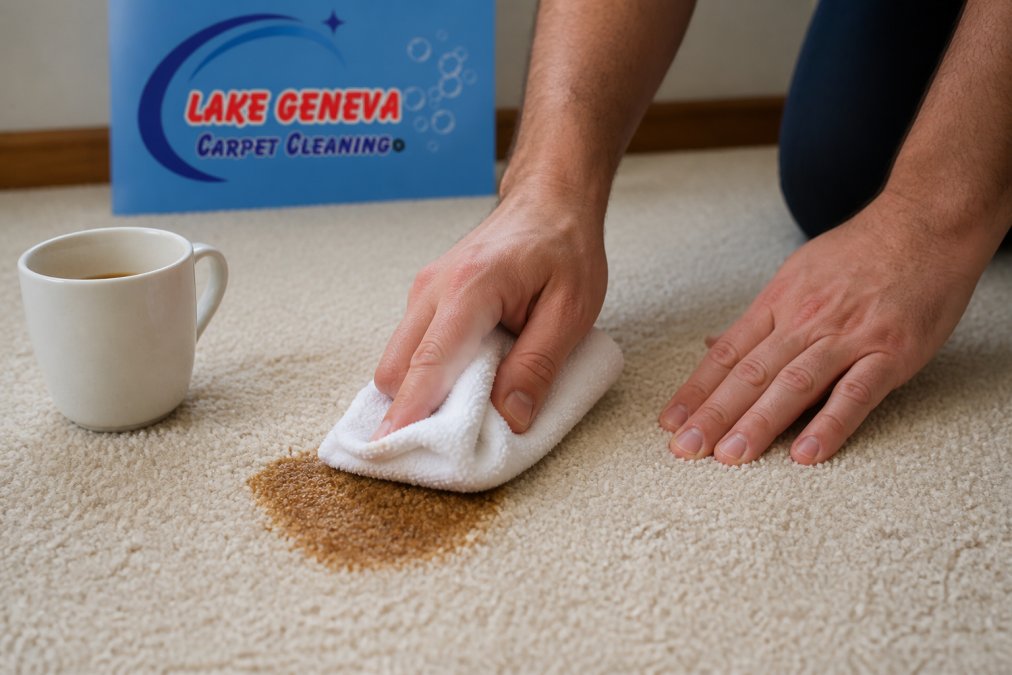
Step 1: Blot and Assess Stain Saturation
Start by blotting the stain, even if it’s completely dry. Use a clean white cloth or microfiber towel and press firmly without rubbing. Blotting lifts any remaining loose particles and helps you gauge how deeply the stain has set.
Work from the outer edges toward the center. This prevents the stain from spreading outward. Press down for 5-10 seconds, then check the cloth. If color transfers, the stain still has moisture or loose particles to release.
For completely dry stains, blotting may show little result. That’s normal. You’re preparing the stain for the next step, not removing it entirely at this stage.
Step 2: Apply Your Chosen Solution
Select one solution and apply it sparingly to the stain. Don’t soak the carpet. A light mist is enough.
Let the solution sit for 5-15 minutes. This gives it time to break down the dried coffee and begin lifting the stain from the carpet fibers. Longer isn’t always better, extended sitting can push the liquid deeper into the backing.
Work in small sections if the stain is large. This gives you better control and prevents over-saturating the carpet.
Step 3: Agitation and Extraction
After the solution has sat, use a soft brush or old toothbrush to gently agitate the stain. Light circular motions help loosen the coffee particles from the carpet pile. Don’t scrub hard, aggressive brushing can damage fibers or spread the stain.
Blot immediately after agitation. Use a fresh cloth and press firmly. You should see more color transfer now as the solution lifts the stain.
Repeat the agitation and blotting cycle 2-3 times. Each pass removes more of the stain residue. The cloth should show less color with each blot.
Step 4: Rinse Cycle and Residue Removal
After the stain has lightened, rinse the area with clean water. Use a spray bottle or damp cloth to apply plain water. This removes any remaining solution and dissolved stain particles.
Blot the wet area thoroughly with a clean, dry cloth. Press down firmly to remove as much moisture as possible. Excess water left in the carpet can cause mildew or attract dirt.
If you have a wet/dry vacuum or carpet cleaning machine, use it now to extract remaining moisture. This speeds drying and prevents water damage to the carpet backing.
Allow the area to air dry completely. Open windows or use a fan to speed the process. Damp carpet attracts dust and can develop odors if it stays wet too long.
Best Practices for Carpet Spot Cleaning
Effective spot cleaning goes beyond removing a single stain. It’s about protecting your carpet and preventing future damage.
Blot, never rub. Rubbing spreads the stain and can damage carpet fibers. Blotting lifts the stain straight up and out.
Work from outside in. Always move from the stain’s edges toward the center. This prevents the stain from spreading outward across clean carpet.
Use cold water first, then warm. Cold water works best on fresh stains. Warm water can set protein-based stains. For old coffee stains, warm water helps dissolve the dried residue, but test first.
Apply less solution, not more. A light mist is more effective than soaking. Over-wetting pushes the stain deeper into the carpet backing and padding.
Change your cloth frequently. A dirty cloth spreads the stain around instead of lifting it. Fresh cloths show you progress and prevent redepositing stain particles.
Avoid walking on wet carpet. Wet fibers are delicate and can be damaged by foot traffic. Keep the area cordoned off until completely dry.
How to Remove Set-In Carpet Stains Using Advanced Methods
When DIY solutions don’t work, advanced methods can tackle stubborn old stains that have settled deep into the carpet structure. Each method works differently, and choosing the right one depends on your carpet fiber, stain age, and the depth of penetration.
Enzymatic cleaners break down organic compounds in coffee at a molecular level. These solutions contain natural enzymes that digest the stain’s protein and tannin components. They work slowly, often requiring 12-24 hours of contact time, but are highly effective on old stains because they target the stain’s chemical structure rather than trying to dissolve it. Apply the enzyme solution, let it sit undisturbed, then rinse thoroughly. Enzymatic cleaners are safe for all carpet fibers, including wool, and are non-toxic around pets and children. The downside is patience, you won’t see results immediately, and the stain may look worse before it improves as the enzyme breaks down the stain particles.
Oxygen-based cleaners release oxygen bubbles that lift stains from the carpet pile through oxidation. These are gentler than chlorine-based alternatives and work well on most fiber types. The bubbling action helps loosen stain particles without aggressive scrubbing. Oxygen-based cleaners are particularly effective on old stains because the oxidation process breaks down the chemical bonds that hold the stain to the fiber. They’re safer than acidic or alkaline solutions and leave no harsh residue. Follow product instructions carefully for dilution and timing; over-application can leave a sticky residue that attracts dirt.
Steam extraction uses hot water and suction to pull stains from deep within the carpet pile. This method requires special equipment, either a rental machine or professional-grade truck-mounted system, and is most effective when combined with a cleaning solution. The heat helps dissolve old stain residue while the suction removes it completely, along with the solution and dissolved stain particles. Steam extraction works on all fiber types but is especially effective on synthetic carpets, which tolerate heat well. Wool and delicate natural fibers can be damaged by excessive heat, so lower temperatures are safer for these materials. The advantage of steam extraction is speed and thoroughness; the disadvantage is the equipment cost and the risk of over-wetting the carpet if you’re unfamiliar with the technique.
Hydrogen peroxide treatments can lighten stubborn stains on light-colored carpets through oxidation. Use a 3% solution and test first on a hidden area. This method works by breaking down the stain’s color compounds, essentially bleaching the stain away. It’s most effective on tan, beige, and cream-colored carpets. Avoid this method on dark fibers, reds, blues, and greens, which can lose color permanently. Hydrogen peroxide is not suitable for wool or natural fibers, which are sensitive to oxidation damage.
Choosing the Right Advanced Method
For old stains on synthetic carpet: Steam extraction or oxygen-based cleaners are your best options. Both work quickly and thoroughly on durable synthetic fibers.
For old stains on wool or natural fibers: Enzymatic cleaners are the safest choice. They work gently without heat or harsh chemicals that can damage delicate fibers.
For light-colored carpets with visible staining: Oxygen-based cleaners or hydrogen peroxide (3% only, tested first) can lighten the stain significantly.
For large stains or multiple failed attempts: Steam extraction is most effective because it combines heat, solution, and powerful suction to remove stains that surface methods can’t touch.
Set-in stains often require equipment and expertise beyond home remedies. If home methods fail after 3-4 attempts, professional extraction removes stains that seem permanent. Professionals assess your carpet fiber, choose the appropriate method, and have equipment that homeowners cannot match.
Professional Carpet Stain Removal: When to Call an Expert
Some stains are beyond home remedies. Knowing when to call a professional saves time, money, and prevents carpet damage from aggressive DIY attempts.
Call a professional if:
- The stain covers a large area (more than a few square feet)
- Multiple treatments haven’t worked
- The stain has been there for months or years
- You’re uncertain about your carpet fiber type
- The carpet is valuable or delicate (wool, natural fibers)
- You’ve already tried several solutions and made the stain worse
Professional cleaners in the Lake Geneva area have truck-mounted hot water extraction equipment that homeowners can’t match. This technology combines heated water, powerful suction, and specialized solutions to remove stains that seem permanent.
Lake Geneva Carpet Cleaning uses eco-friendly methods that remove old coffee stains without harsh chemicals. Their team understands how different carpet fibers respond to cleaning and adjusts their approach accordingly. With over 32 years of experience, they’ve tackled a wide variety of stains.
Professional extraction also removes the solution residue, which can help prevent the stain from returning as the carpet dries. This is crucial for old stains, which can reappear if cleaning solution remains in the fibers.
Preventative Maintenance to Avoid Future Stains
Once you’ve removed an old coffee stain, protect your carpet from future damage.
Act fast on fresh spills. Blot immediately. The first few minutes determine whether a stain sets permanently. Keep absorbent cloths near high-risk areas like the kitchen and living room.
Vacuum regularly. Weekly vacuuming removes surface dirt and debris before they work into the carpet pile. This reduces the overall dirt load and makes occasional stains easier to remove.
Use area rugs in high-traffic zones. Rugs protect carpet in kitchens, entryways, and under furniture where spills happen most often. They’re easier to clean than wall-to-wall carpet.
Apply carpet protectant. Professional-grade protectants create a barrier on carpet fibers that repels liquids and prevents stains from setting quickly. This buys you time to blot a fresh spill before it bonds to the fibers.
Address spills before they dry. This is the single most important rule. A stain that sits for hours becomes exponentially harder to remove. Treat spills within the first 24 hours whenever possible.
Maintain proper humidity. Damp carpet attracts mold and mildew. Use dehumidifiers in humid climates and ensure good air circulation after cleaning.
Old coffee stains test your patience, but they’re not permanent. Start with natural solutions and blotting techniques. If those don’t work, step up to enzymatic cleaners or oxygen-based treatments. When nothing works, professional extraction removes stains that seem set forever.
Lake Geneva Carpet Cleaning specializes in removing stubborn stains. Their truck-mounted hot water extraction technology, eco-friendly solutions, and 32 years of experience make them a trusted choice for deep stain removal across Wisconsin. Contact them for a free quote and discover the difference professional cleaning makes. Their 10-day satisfaction guarantee means you can trust the results.
Frequently Asked Questions
Can old coffee stains really be removed from carpet?
Yes, old coffee stains can be removed, though success depends on how long the stain has set and your carpet fiber type. Fresh stains are easiest to lift with blotting and DIY solutions. Stains that have dried into the carpet fibers may require enzymatic cleaners or professional extraction methods. The longer a stain sits, the deeper it penetrates the carpet pile and padding, making removal more challenging but not impossible.
What’s the best way to treat dried coffee spills on carpet?
Start by testing any solution on a hidden area to check for colorfastness. Blot the stain with a damp cloth using cold water first, then apply a mixture of white vinegar, dish soap, and warm water. Work the solution into the carpet fibers using gentle agitation, then blot repeatedly with an absorbent cloth. Rinse with clean water to remove residue and pH balance the fibers. For set-in stains, hydrogen peroxide or enzymatic cleaners may work better than vinegar alone.
When should you call a professional for carpet stain removal?
Call a professional if the stain covers a large area, has penetrated deep into the carpet backing and padding, or if DIY methods haven’t worked after two or three attempts. Professional carpet stain removal uses hot water extraction and specialized equipment. Professionals can also assess the condition of the carpet.
Are old coffee stains permanent if left too long?
Coffee stains become harder to remove over time as the liquid sets into carpet fibers and oxidizes, but they are rarely truly permanent. However, if left for months or years, the stain may have bonded with synthetic carpet fibers or natural fibers so deeply that complete removal becomes extremely difficult. The sooner you treat a coffee stain, the better your chances of full removal. Even stubborn stains can often be significantly lightened with professional deep cleaning methods.