Last Updated: November 7, 2026
Quick Summary
Hot water extraction is a deep-cleaning method that injects heated water and cleaning solution into carpet fibers under pressure, then immediately vacuums the dirty water back out. In Lake Geneva, WI, we use truck-mounted hot water extraction to flush embedded soil, salt, and sand from the full depth of the pile. It is a restorative cleaning process, not a surface wipe.
- We have run truck-mounted hot water extraction for 32 years across the Lake Geneva area.
- The process runs in three stages: pre-spray and agitation, heated high-pressure rinse and extraction, then water removal and grooming.
- Vacuum thoroughly before cleaning, because dry soil removal keeps rinse water from turning into mud.
- Run ceiling fans and a dehumidifier, and keep the HVAC on, to speed drying safely.
- Schedule a spring deep clean after winter salt season, before traffic lanes show.
Table of Contents
- What Hot Water Extraction in Lake Geneva, WI Actually Does to Your Carpet
- How Hot Water Extraction Works, Step by Step
- Carpet Cleaning Preparation: What to Do Before the Truck Arrives
- Carpet Drying Time After Hot Water Extraction and How to Speed It Up Safely
- Hot Water Extraction for Area Rugs: Oriental Rugs and Delicate Fibers
- Carpet Allergen and Odor Removal for Families and Pet Owners
- Hot Water Extraction vs. Low-Moisture Cleaning and Rental Machines
- Lake Geneva Seasonal Carpet Care: Winter Salt, Sand, and Summer Traffic
- Carpet Fiber Suitability and Warranty-Safe Care
- Book Your Hot Water Extraction in Lake Geneva, WI
- Frequently Asked Questions
What Hot Water Extraction in Lake Geneva, WI Actually Does to Your Carpet
Hot water extraction in Lake Geneva, WI is a deep-cleaning method that injects heated water and cleaning solution into carpet fibers under pressure, then immediately pulls the dirty water back out through a powerful vacuum. For homeowners here, it is the difference between a carpet that looks clean and one that actually is.
At Lake Geneva Carpet Cleaning, we have run truck-mounted hot water extraction for 32 years across this lakeside region. A vacuum lifts what sits on top. It cannot reach the grit packed against the backing, the dust mites buried in the padding, or the salt and sand that winter drags in from the driveway.
Hot water extraction is a restorative cleaning process, not a maintenance wipe. It flushes the full depth of the carpet pile with heated water, suspends embedded soil in that water, and extracts it before it can settle back down. The result is a carpet that dries cleaner, smells fresher, and holds up longer under foot traffic.
Below, we walk through exactly how the process works, how to prepare, how long drying takes, and how to tell whether your carpet can handle it.
How Hot Water Extraction Works, Step by Step
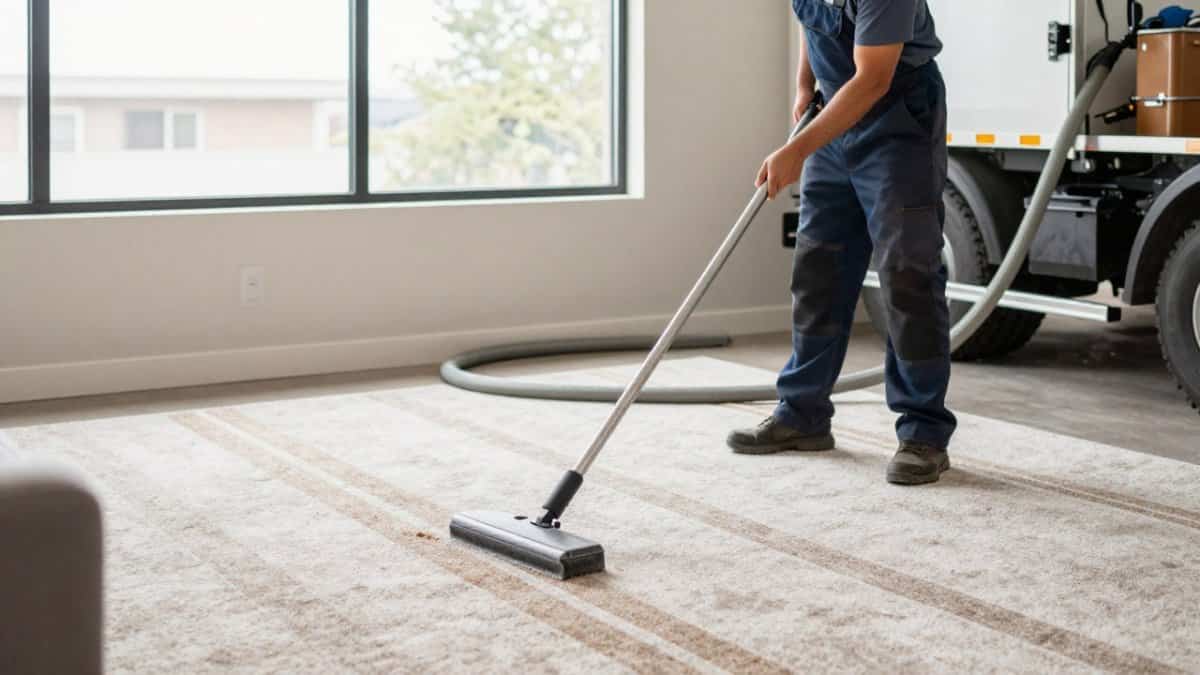
The process runs in three stages, and each one matters. Skip a stage and you leave soil behind or over-wet the carpet.
Pre-Spray and Agitation
First, we apply a pre-spray solution across the carpet and let it dwell. This loosens the bond between soil and fiber. Then agitation works that solution into the pile so the soil lifts before the rinse ever starts. Skipping agitation leaves soil behind, so we do not skip it.
Heated High-Pressure Rinse and Soil Extraction
Next comes the core of the method. Heated water under pressure drives through the carpet, and the wand’s vacuum pulls it back out along with suspended soil, grit, and residue. The full explanation of hot water extraction and why it is the gold standard covers the equipment and the reasoning behind truck-mounted systems.
Water Removal and Grooming
Finally, we make extra passes to pull remaining moisture and groom the pile so fibers dry in the right direction. Proper water removal is what separates a carpet that dries in hours from one that stays damp all day.
Carpet Cleaning Preparation: What to Do Before the Truck Arrives
Preparation is simple, and it protects both your carpet and your furniture. A little work before we arrive makes the cleaning faster and the results better.
- Clear the floor: move small furniture, toys, and floor plants out of the rooms being cleaned
- Vacuum thoroughly, especially along walls and under furniture edges
- Pick up loose items, cords, and pet bowls from the carpet
- Note problem spots so you can point them out to the technician
- Arrange for pets and kids to be out of the work area during cleaning
- Plan for airflow: open windows or set up fans once we finish
One mistake homeowners make is skipping the pre-vacuum because “the machine will get it anyway.” Dry soil removal before wet cleaning is what keeps the rinse water from turning into mud.
Carpet Drying Time After Hot Water Extraction and How to Speed It Up Safely
Drying time depends on humidity, airflow, and pile depth. Homeowners often ask whether carpet will stay wet all day, and the answer depends on how well the water is extracted.
To speed drying safely:
- Run ceiling fans and a dehumidifier in the cleaned rooms
- Open windows on dry, low-humidity days
- Keep the HVAC running to circulate air
- Avoid walking on the carpet in socks or bare feet until dry
- Do not replace furniture until the pile is fully dry
Watch out: closing up the house and turning off airflow is the fastest way to leave moisture trapped in the padding. That is where musty odors and mold problems start.
Hot Water Extraction for Area Rugs: Oriental Rugs and Delicate Fibers
Area rugs need a different touch than wall-to-wall carpet. Oriental rugs and delicate fibers can shrink, bleed, or lose shape if they are cleaned like a synthetic carpet, so the method has to match the material.
The guide to which carpet types handle hot water extraction safely breaks down the risks to avoid before you book.
Carpet Allergen and Odor Removal for Families and Pet Owners
Hot water extraction is a deep-cleaning method that reaches soil below the surface of the carpet.
If your dog has had accidents for years and the smell keeps returning, the issue is usually residue left in the padding. Surface treatments mask it. A deep flush and extraction pulls the source out. Families dealing with dust mites can read how hot water extraction eliminates dust mites for the science behind it.
We use eco-friendly cleaning methods, which matters when kids and pets are on the floor every day.
Hot Water Extraction vs. Low-Moisture Cleaning and Rental Machines
Most homeowners comparing cleaning options are really asking one question: which method actually pulls the soil out, and which one just moves it around? The three options you will encounter behave very differently, and the difference is mechanical, not marketing.
Hot water extraction uses a truck-mounted system to heat water and cleaning solution, push it through the carpet pile under pressure, and immediately vacuum it back out along with suspended soil. Because the water reaches the backing and the suction pulls it out in the same pass, soil that has worked its way below the surface comes up with it. The trade-off is moisture: the carpet is genuinely wet when the pass is done, and drying depends on airflow and humidity in the room.
| Method | How it reaches soil | Drying time | Best use |
|---|---|---|---|
| Hot water extraction | Heated water driven to the backing, extracted in the same pass | A few hours with airflow | Heavily soiled carpets, pet homes, allergen concerns, post-winter salt |
| Low-moisture cleaning | Surface and mid-pile agitation, residue vacuumed later | Under an hour | Light maintenance between deep cleans, offices with no downtime |
| Rental machine | Shallow, operator-dependent | Often most of a day | Small isolated spots, not whole-room cleaning |
A practical way to choose: if the carpet has visible traffic lanes, pet history, winter salt tracked in from the entryway, or anyone in the house with dust or dander sensitivities, low-moisture and rental options will not reach the problem. If the carpet was deep-cleaned recently and just needs a refresh, low-moisture is a sensible bridge.
Watch out: a rental machine used on a carpet that has not been vacuumed first will turn dry soil into mud and push it deeper into the backing, the opposite of cleaning.
The benefits of professional hot water extraction explain why it outperforms do-it-yourself options for embedded soil and allergens.
Lake Geneva Seasonal Carpet Care: Winter Salt, Sand, and Summer Traffic
Lake Geneva weather can put your carpet through two very different stress seasons. Winter can bring road salt, sand, and slush tracked in from the driveway and entryway.
For winter, use mats at every entry, take shoes off at the door, and clean salt residue before it dries into the pile. Our winter road salt protection guide covers mats, barriers, and safe cleaning methods. For summer, vacuum more often and schedule a deep clean after the busy season.
Carpet Fiber Suitability and Warranty-Safe Care
Carpet is not one material, and the way a fiber responds to heat, water, and agitation determines whether hot water extraction is the right method or the wrong one. Knowing your fiber also tells you what your warranty expects, which matters if you ever need to make a claim.
Synthetic fibers, nylon, polyester, and olefin (polypropylene). These are the most common wall-to-wall carpets in Lake Geneva homes and the most forgiving. They handle heated water and standard extraction well. Nylon resists crushing and springs back; polyester is softer but mats more easily under traffic; olefin is moisture-resistant and often used in basements and commercial spaces. All three tolerate hot water extraction, though olefin benefits from lower heat because it can distort at very high temperatures.
Wool. Wool is durable and naturally soil-resistant, but it is also the fiber most sensitive to over-wetting and to high-pH cleaning agents. Wool needs controlled moisture, a rinse that fully removes residue, and drying flat or with strong airflow so the pile does not stay damp. A wool carpet cleaned like a synthetic one can brown out, felt, or lose its shape.
Delicate and natural fibers, silk, viscose, and similar. These are usually found in area rugs rather than wall-to-wall, and they are the fibers most likely to shrink, bleed, or water-mark. They generally need a specialized approach rather than standard extraction, and the method should be confirmed before any water touches the rug.
What a warranty actually requires. Carpet warranties often include care requirements, so check your specific warranty terms, because the intervals and approved methods vary by manufacturer.
How often to clean by household. In Lake Geneva, the winter salt season is a good reason to schedule a deep clean in spring rather than waiting for the carpet to look visibly soiled, by the time traffic lanes show, the soil has already reached the backing.
A common mistake is assuming all carpets are the same. They are not, and cleaning method should follow the fiber. If you are unsure what your carpet is made of, check the manufacturer’s label or your original purchase paperwork before booking, and mention it when you call so the method can be matched to the material.
Book Your Hot Water Extraction in Lake Geneva, WI
Your carpet takes a beating from lake country living, and surface cleaning will not keep up with it. Lake Geneva Carpet Cleaning brings 32 years of owner-operated experience, truck-mounted hot water extraction, and eco-friendly methods to every job. We serve Lake Geneva, Twin Lakes, Genoa City, Walworth, Fontana, Darien, Burlington, Elkhorn, Williams Bay, Delavan, and the East Troy area. Pricing depends on the job, so contact us for a quote before you book.
Ready to get the grit, allergens, and odors out of your carpet for good? Get started with Lake Geneva Carpet Cleaning and schedule your hot water extraction with a team that has served this area for 32 years. Call 262-581-6140 today.
Frequently Asked Questions
How does hot water extraction work?
Hot water extraction uses a truck-mounted system to spray a heated cleaning solution into the carpet fibers, then immediately extract it with high-pressure suction. The process loosens embedded soil, grit, and allergens from deep in the pile and padding, then pulls the dirty water into a holding tank. Most carpets are left damp rather than soaked, and air movement finishes the drying.
How long does carpet take to dry after hot water extraction?
Drying time depends on air circulation, pile thickness, and humidity. To speed drying safely, run ceiling fans and a dehumidifier, keep the thermostat at a normal comfortable setting, and avoid walking on the carpet in shoes until it is fully dry.
Is hot water extraction safe for most carpets?
Carpet type affects how hot water extraction should be done. If you are unsure what your carpet is made of, check the manufacturer’s tag or contact us before booking.
Can hot water extraction remove odors and allergens from carpet?
Hot water extraction pulls out the dust, dander, and grit that hold odors and trigger allergies. For pet accidents, the key is flushing the contamination from the backing and padding, not just the surface fibers. A single surface pass often leaves residue that wicks back up, which is why the smell returns. Deep extraction combined with targeted odor treatment addresses the source. Homeowners with allergies often notice easier breathing and less dust within a day or two.