
Table of Contents
- Why Furniture Leaves Indentations in Carpet Fibers
- The Ice-Cube Method for Lifting Carpet Fibers
- How to Remove Carpet Dents Without Ice
- How to Get Dents Out of Wool Carpet
- How Long Carpet Dents Take to Come Out
- How to Prevent Furniture Marks on Carpet
- When to Call a Professional for Carpet Indentation Repair
- Frequently Asked Questions
Last Updated: October 4, 2026
Why Furniture Leaves Indentations in Carpet Fibers
Furniture indentations carpet problems happen because carpet is designed to bounce back, but heavy weight over time wears that ability down. When a sofa, bed frame, or bookshelf sits in one spot for weeks or months, the fibers beneath it compress under constant pressure. The carpet pile flattens. The backing loses its resilience. What you’re left with is a visible dent that makes your carpet look worn and tired, even if the rest of the floor is in perfect condition.
Carpet fibers are designed to flex and recover, but recovery requires energy. When weight presses down continuously, the fibers stay compressed because they never get a chance to relax and spring back to their original height.
How carpet pile becomes compressed
Carpet pile refers to the visible fibers that sit on top of the backing. These fibers are looped or cut, depending on the carpet type. They’re held in place by the backing layer underneath. When furniture sits on the pile, the weight pushes those fibers down against the backing. Over time, the fibers lose their crimp, the natural wave or curl that gives them bounce.
The longer the weight stays in place, the more permanent the compression becomes. A sofa that hasn’t moved in two years creates a much deeper indentation because the fibers have been trained to stay flat.
Heat also plays a role. Furniture that traps warmth against the carpet can speed up the flattening process. The heat weakens the fiber’s ability to recover, making the dent settle in faster and stick around longer.
Carpet fiber and backing differences that affect recovery
Not all carpets are created equal. The type of fiber and the backing material determine how quickly an indentation can be lifted.
Natural fibers like wool have natural resilience built in. Wool fibers have a crimp structure that helps them bounce back after compression. Wool carpet can often recover on its own or respond quickly to moisture and heat treatment.
Synthetic fibers like polyester, nylon, and polypropylene are engineered to resist staining and wear, but they vary in how well they recover from compression. Some synthetics spring back easily. Others, especially lower-quality polyester, can hold a dent longer because the fibers lack the natural elasticity of wool.
The backing material matters too. Carpet with a dense, sturdy backing recovers better than carpet with thin or weak backing. A strong backing supports the fibers and helps them return to their original position. Weak backing lets fibers stay compressed because there’s not enough structural support underneath to push them back up.
Check your carpet type before treating it. If you’re unsure whether your carpet is wool or synthetic, touch a small hidden area and note how it feels. Wool feels warmer and has more natural texture. Synthetic fibers feel smoother and cooler. This matters because different fiber types respond differently to ice, moisture, and heat.
The Ice-Cube Method for Lifting Carpet Fibers
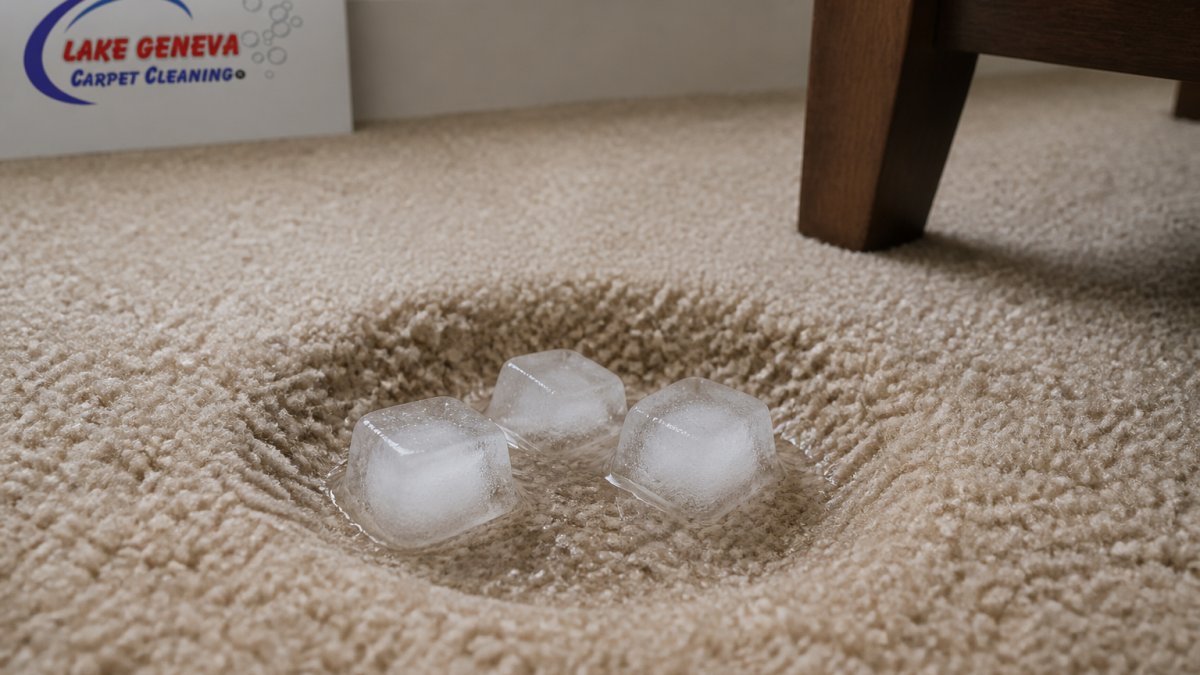
The ice-cube method is one of the simplest ways to lift furniture indentations from carpet fibers. It works because ice melts slowly, releasing moisture gradually into the compressed pile. That moisture helps the fibers relax and recover their original shape.
Here’s how to do it:
- Place ice cubes directly on the indented area. Space them out so they cover the entire dent but don’t overlap.
- Let the ice melt completely. This takes several hours, depending on room temperature and humidity. The slower the melt, the better the results.
- As the ice melts, use your fingers or a soft brush to gently lift the fibers upward. Work in the direction the pile naturally grows.
- Once the area is damp, use a clean white cloth to blot excess water. Do not rub or scrub.
- Let the carpet air dry completely. Point a fan at the treated area to speed up drying and help fibers stand upright as they dry.
The key is patience. Slow moisture release gives the fibers time to relax without shock.
Do not let water pool on the carpet. Excess moisture can seep into the backing and padding underneath, creating a damp environment where mold or mildew can grow. Blot carefully and dry the area completely within 24 hours.
This method works best on fresh indentations (less than a few weeks old).
How to Remove Carpet Dents Without Ice
If ice cubes aren’t your preference, or if you need faster results, several other household methods can address furniture indentations carpet issues. The key is matching the method to your carpet type and dent severity. Below is a decision framework to help you choose.
Choosing the right method for your carpet type and dent severity
Before applying any treatment, identify your carpet fiber and assess how long the dent has been present. This determines which method is safest and most likely to succeed.
For wool carpet:
- Fresh indentations (under 4 weeks): Use the damp-cloth and warm-iron method on low heat.
- Moderate indentations (4-12 weeks): Use steam treatment with short bursts, keeping the nozzle 3+ inches away.
- Deep indentations (3+ months): Combine steam with manual fiber lifting, or consider professional help.
- Caution: Never use high heat on wool. Keep iron on low to medium with a damp cloth barrier, and allow 24-48 hours drying time.
For synthetic carpet:
- Fresh indentations (under 4 weeks): Ice cubes, damp cloth with low heat, or steam all work well.
- Moderate indentations (4-12 weeks): Damp-cloth and warm-iron method is most effective.
- Deep indentations (3+ months): Apply steam in short bursts, lift fibers by hand between applications, and allow 12-24 hours drying time.
- Caution: High heat can melt synthetic fibers. Keep iron on medium or lower, test on a hidden area first, and watch for color bleeding.
For blended or unknown fiber types:
- Start conservatively with the ice-cube method or light damp-cloth treatment on low heat.
- Test any method on a hidden area (inside a closet, under furniture) before treating the visible dent.
- If the test area shows no damage after 24 hours, proceed with confidence.
Damp-cloth and warm-iron method
This approach combines moisture and gentle heat to relax compressed fibers. It works faster than ice because the heat accelerates the recovery process.
Here’s the step-by-step process:
- Dampen a clean white cloth with water. The cloth should be damp, not soaking wet. Wring out excess water so no drips fall onto the carpet.
- Place the damp cloth directly over the indented area.
- Set a clothes iron to low or medium heat. Never use high heat; this can melt synthetic fibers or damage wool.
- Press the iron gently onto the damp cloth for 5-10 seconds. Do not hold it in one spot. Move it slowly across the cloth in circular motions.
- Lift the cloth and check the fibers. Use your fingers to gently lift and fluff the pile.
- Repeat if needed, but allow the area to cool slightly between applications.
- Once the dent is lifted, blot the area with a dry cloth and let it air dry completely.
The combination of moisture and warmth helps fibers relax faster than moisture alone.
Never place a hot iron directly on carpet fibers. Always use a damp cloth as a buffer. This protects the fibers and prevents burns or melting. If the iron feels too hot to hold your hand near (more than a few seconds), it’s too hot for your carpet. Keep the iron moving, do not let it rest in one spot.
This method typically shows results within 15-30 minutes and is ideal for moderately compressed dents.
Steam treatment for carpet indentations
A handheld steam cleaner or garment steamer can also lift furniture indentations from carpet fibers. Steam applies heat and moisture simultaneously, which is effective for recovering compressed pile. It penetrates deeper than surface moisture alone and works well on both wool and synthetic fibers when used carefully.
Steps for steam treatment:
- Fill your steam cleaner or garment steamer with water and let it heat fully.
- Hold the steamer nozzle 2-3 inches above the indented area. Do not place it directly on the carpet; direct steam can scald fibers or oversaturate the backing.
- Apply steam in short bursts (2-3 seconds at a time), moving slowly across the dent. Avoid concentrating steam in one spot for more than a few seconds.
- After each burst of steam, use your fingers or a soft brush to gently lift the fibers upward.
- Blot excess moisture with a clean white cloth. Do not let water pool.
- Allow the area to dry completely within 24 hours. Point a fan at the treated area to speed drying and help fibers set upright.
Steam penetrates deeper than surface moisture and helps reset fiber structure as it dries. However, excessive steam can weaken backing or cause color bleeding. Always test on a hidden area first and avoid oversaturation.
Blotting and lifting fibers by hand
Sometimes the simplest approach is the most effective. After applying moisture or heat, manually lifting the fibers can accelerate recovery and reset their structure.
Here’s how:
- Dampen the indented area lightly with water or use the ice-cube or steam method first.
- Using your fingers or a soft brush, gently lift the compressed fibers upward. Work in the direction the pile naturally grows (usually away from the furniture that created the dent).
- Use a spoon or coin edge to carefully separate fibers that are matted together. Hold the spoon at a shallow angle and gently rake through the pile. This works especially well on loop-pile carpet.
- Blot excess water with a clean white cloth. Do not rub or scrub.
- Allow the area to air dry while the fibers are still standing upright. A fan helps set the fibers in their recovered position.
This manual approach works best on fresh indentations or after applying moisture or heat.
Use a soft brush rather than a stiff one. Stiff brushes can damage delicate fibers, especially on wool carpet or plush pile types. A soft-bristled brush or even your fingers are often more effective. For cut-pile carpet, use your fingers or a soft brush. For loop-pile carpet, a spoon edge works well to separate matted loops without breaking them.
How to Get Dents Out of Wool Carpet
Wool carpet is naturally more resilient than many synthetic options, but wool indentations still require careful treatment. Wool fibers have inherent elasticity, which works in your favor.
For wool carpet, the ice-cube method and damp-cloth approaches work well, but with some important adjustments:
- Use less heat. Wool can be sensitive to high temperatures. Keep iron settings on low to medium, and always use a damp cloth barrier.
- Be patient with moisture. Wool absorbs water readily, which is good for recovery, but it also takes longer to dry. Allow extra drying time to prevent mold or mildew in the padding.
- Avoid harsh brushing. Wool fibers can felt or mat if brushed too aggressively. Use gentle, light strokes when lifting fibers by hand.
- Consider professional help for old indentations. Wool carpet that’s been compressed for months or years may need professional steam cleaning to fully recover.
Wool’s natural crimp structure means it often recovers on its own with time and the right conditions. A light application of moisture combined with air circulation often lifts wool indentations faster than synthetic carpet.
How Long Carpet Dents Take to Come Out
Recovery time depends on several factors: how long the furniture sat in place, the carpet type, the depth of the indentation, and the treatment method you use.
Fresh indentations (1-4 weeks old) often recover on their own within a few days to a week. Light treatment with ice or moisture can speed this up to 24-48 hours.
Moderate indentations (1-3 months old) typically need active treatment. The ice-cube method or damp-cloth approach usually shows visible improvement within 24-48 hours, with full recovery in 3-7 days.
Deep or set-in indentations (3+ months old) are more stubborn. These may take 1-2 weeks of repeated treatment, or they may require professional intervention if the backing has permanently weakened.
Temperature and humidity also affect recovery speed. Warm, dry conditions help carpet fibers dry quickly and set in their recovered position. Cool, humid environments slow the drying process and may delay results.
Consistency matters: repeat treatments over several days often produce better results than a single aggressive application.
How to Prevent Furniture Marks on Carpet
Prevention is always easier than repair. Several strategies can minimize or eliminate furniture indentations before they happen. The most effective approaches address the root causes of compression: sustained pressure, moisture, and poor fiber resilience.
Redistribute weight and reduce pressure points
Rearrange furniture regularly. Moving heavy pieces every 4-6 weeks prevents deep compression in any one area. Even moving furniture a few inches changes pressure points and allows fibers to recover.
Use furniture pads or cups under all legs. These distribute weight over a larger surface area, reducing pressure on individual fibers. Felt pads work well on most carpet types. For heavy furniture, use wider pads designed for heavier loads. Check pads every 6-12 months and replace worn ones.
Avoid placing furniture directly on seams or weak spots. If your carpet has visible seams or areas where the backing appears thin, position furniture legs on stronger sections of the carpet. Weak backing compounds compression problems because there’s less structural support to help fibers recover.
Maintain carpet fiber resilience
Maintain carpet pile height with regular vacuuming. Carpet that’s well-maintained recovers from minor compression much faster than neglected carpet. Vacuum high-traffic areas and furniture-contact zones at least once a week. Upright vacuums with beater bars work best for restoring pile height. A healthy, upright pile is more resilient and bounces back faster when weight is removed.
Reduce moisture and humidity. Damp carpet loses structural integrity and is more prone to compression. Use a dehumidifier in basements and lower levels, aiming for indoor humidity between 30-50%. Wipe up spills immediately and allow wet areas to dry completely within 24 hours. Use fans to increase air circulation in damp rooms.
Increase air circulation. Fans help carpet fibers stay upright and resilient, and prevent moisture from lingering in the carpet.
Protect high-risk areas
Use area rugs or runners in spots where heavy furniture sits. These protect the underlying carpet and are easier to replace than wall-to-wall carpet. Place rugs under sofas, beds, desks, and dining tables. Rugs also reduce foot traffic wear and distribute weight more evenly across the floor.
Use rug pads under area rugs. Rug pads prevent slipping and also help distribute weight more evenly. Non-slip rug pads with felt backing are especially useful under furniture legs that sit on top of rugs.
Protect high-traffic zones. Hallways, entryways, and paths between rooms experience both foot traffic and furniture compression. Consider placing runners in these areas to extend the life of your main carpet.
Lake Geneva-specific seasonal considerations
Lake Geneva’s climate, with cold winters, humid summers, and significant seasonal temperature swings, creates unique challenges for carpet preservation:
- Winter: Heating systems reduce indoor humidity, which helps carpet resilience. However, salt and moisture tracked in from outside can damage carpet and weaken backing. Use entry mats and encourage residents to wipe feet thoroughly.
- Summer: High humidity softens carpet backing and makes fibers more prone to compression. Run dehumidifiers in basements and lower levels. Increase air circulation with fans.
- Spring and fall: Fluctuating temperatures and humidity can cause carpet to expand and contract slightly. Avoid moving heavy furniture during these transitions; wait for stable conditions.
- Seasonal furniture moves: If you rearrange furniture seasonally (moving a sofa closer to a fireplace in winter, for example), do so during stable weather periods and allow the carpet to acclimate for a few days before placing heavy weight.
The best time to prevent indentations is before furniture sits in one spot too long. Move pieces regularly, use furniture pads, maintain good air circulation, and keep humidity in check. In Lake Geneva’s humid climate, dehumidifiers and fans are especially valuable investments in carpet longevity.
When to Call a Professional for Carpet Indentation Repair
Most furniture indentations can be lifted with household methods. But some situations call for professional help.
Call a professional if:
- The indentation has been present for more than 3-4 months and home treatments haven’t worked
- The carpet backing appears damaged, weak, or deteriorated
- The indentation is extremely deep and covers a large area
- You’re unsure about your carpet type or fiber content
- The carpet is antique, delicate, or made of specialty fibers
- You’ve tried multiple treatments and the dent keeps returning
- Moisture treatments have left the area damp and you’re concerned about mold
Professional carpet cleaners have access to commercial-grade steam equipment and specialized techniques that go deeper than household methods. They can assess whether the indentation is truly recoverable or if the carpet backing has been permanently damaged, and clean the surrounding area to ensure your entire carpet looks fresh and uniform.
Furniture indentations are frustrating, but they’re usually fixable. Start with simple methods like ice cubes or the damp-cloth approach. Be patient and allow proper drying time. For stubborn dents or if you want professional-grade results, Lake Geneva Carpet Cleaning offers expert carpet restoration services backed by over 32 years of experience. We’ll assess your carpet’s condition and lift those indentations using proven techniques tailored to your specific fiber type. Contact us for a free quote and discover how we can restore your carpet to like-new condition.
Frequently Asked Questions
Do carpet indentations go away on their own?
Light indentations from furniture may partially recover over time as carpet fibers naturally spring back, especially in high-traffic areas where foot traffic helps lift the pile. However, deep indentations from heavy furniture left in place for months or years often require active treatment. Moisture and gentle heat accelerate the recovery process significantly faster than waiting for natural fiber recovery alone.
How long does it take for furniture indentations to come out of carpet?
Recovery time depends on indentation depth and the method used. Light dents may respond within 24 hours using ice or steam treatment. Deeper indentations typically require 48 to 72 hours of repeated moisture and heat application. Some stubborn marks may take a week or longer of periodic treatment. Professional steam extraction can accelerate results in severe cases.
Can you use a spoon to lift carpet fibers after moving furniture?
Yes, a spoon or coin edge can gently lift compressed carpet fibers after moisture treatment softens them. Use light, upward strokes along the indentation edges to fluff the pile. Avoid scraping forcefully, which can damage fibers. This manual lifting works best after applying moisture or steam, when fibers are more pliable and receptive to being raised back to their original height.
What’s the difference between removing dents from wool carpet versus synthetic carpet?
Wool carpet fibers are more resilient and moisture-responsive than synthetic fibers, making them generally easier to restore. Wool responds well to steam and damp-cloth methods because the natural protein fibers relax when heated and moistened. Synthetic fibers require more patience and gentler heat to avoid damage. Both types benefit from moisture, but wool typically shows results faster with less risk of fiber damage.