Table of Contents
- What Deep Steam Cleaning for Carpets Actually Means
- How the Deep Cleaning Process Works, Step by Step
- How to Prepare for Carpet Cleaning
- Carpet Cleaning Drying Time: What to Expect
- Removing Allergens from Carpets: Dust Mites, Pet Dander, and More
- Eco-Friendly Solutions: What Safe Really Means
- DIY vs. Professional Deep Steam Cleaning
- Carpet Maintenance Between Deep Cleans
- Common Mistakes to Avoid with Deep Steam Cleaning
- Frequently Asked Questions
Last Updated: September 15, 2026
What Deep Steam Cleaning for Carpets Actually Means
Deep steam cleaning for carpets is a hot water extraction process that flushes embedded soil, allergens, and residue out of carpet fibers and backing rather than lifting them from the surface. At Lake Geneva Carpet Cleaning, we’ve run this process in Wisconsin homes for over 32 years, and the difference between a true deep clean and a quick surface pass shows up within weeks. This guide explains how the process works, how to prepare, what drying time to expect, and when to handle it yourself versus calling in a professional.
Most homeowners picture a machine that “steams” dirt away. What actually happens is closer to a high-pressure rinse: heated water and a cleaning solution are injected deep into the pile, then immediately pulled back out along with the suspended soil. The U.S. Environmental Protection Agency notes that indoor air can carry two to five times the pollutant load of outdoor air, and carpet acts as a reservoir for much of it, which is why EPA indoor air quality guidance recommends regular deep cleaning as part of a healthy home.
Steam Cleaning vs. Hot Water Extraction: What’s the Difference?
The two terms describe the same core method. Hot water extraction is the technical name for injecting heated cleaning solution into carpet fibers under pressure and vacuuming it back out. “Steam cleaning” is the common nickname, though true steam is rarely the mechanism, water vapor and hot solution do the work.
What matters is extraction power, not the label on the machine. A unit with strong vacuum lift pulls more suspended soil and more moisture out of the carpet in a single pass.
Why Surface Cleaning Leaves Dirt Behind
Soil doesn’t sit on top of a carpet. It migrates down the fiber shaft and settles near the backing, where a vacuum can’t reach it. Surface cleaning lifts the top layer and leaves the rest.
That’s why a carpet can look clean for a week and then turn dingy again. Nothing was removed from the base of the pile, so the remaining soil wicks back up as the carpet dries.
If your carpet looks dull again within two weeks of cleaning, the soil was never fully extracted. Deep cleaning targets the base of the pile, not the tips of the fibers.
How the Deep Cleaning Process Works, Step by Step
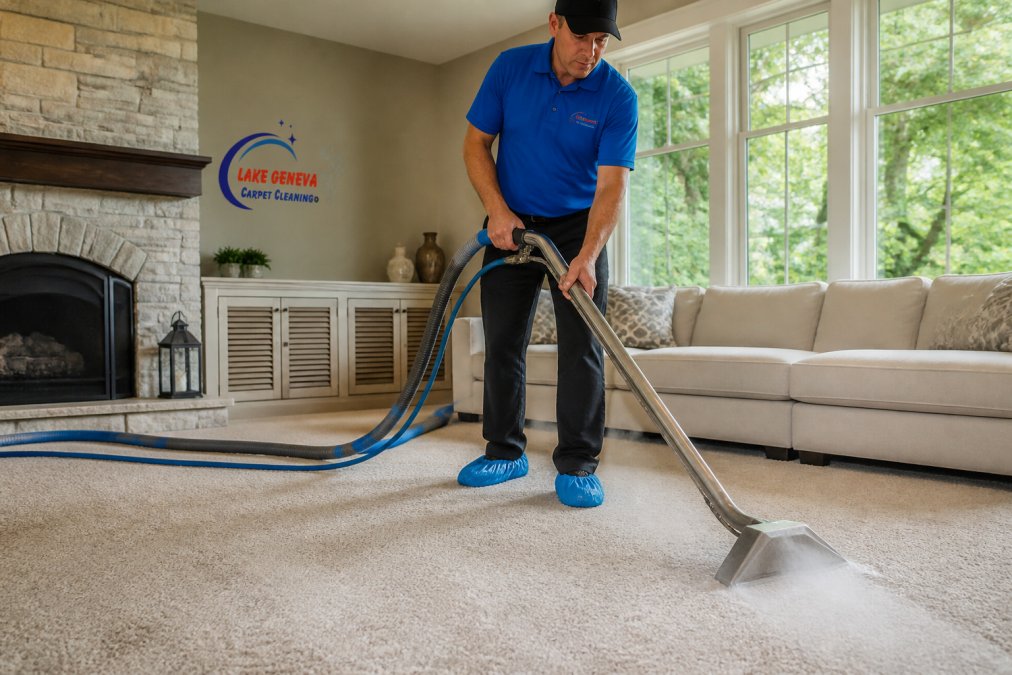
A professional deep clean follows a fixed sequence: inspect, pre-treat, agitate, rinse, extract, and dry. Skipping any step, especially pre-treatment and extraction, is the most common reason a carpet looks clean but doesn’t stay clean.
Here’s the standard order of operations:
- Inspection. Identify fiber type, stain types, and problem areas before any moisture touches the carpet.
- Pre-treatment. Apply a cleaning solution matched to the soil and fiber.
- Agitation. Work the solution into the pile so it can break the bond between soil and fiber.
- High-pressure rinse. Flush the loosened soil out of the pile with heated water.
- Vacuum extraction. Pull the soil and moisture out in the same pass.
- Controlled drying. Manage airflow and humidity so the carpet dries evenly.
Pre-Treatment and Deodorizing
Pre-treatment is where most of the actual cleaning happens. The solution needs dwell time to soften and lift soil before the rinse pass. Deodorizing works the same way: it treats the source of the odor in the backing and padding, not the air above it.
For pet accidents, this step is non-negotiable. Odor that returns within weeks usually means the contamination reached the padding and was never fully neutralized.
High-Pressure Rinse and Vacuum Extraction
The rinse and extraction pass is what separates a deep clean from carpet shampooing. Shampooing can leave residue that attracts new soil. A high-pressure rinse followed by immediate vacuum extraction leaves fibers residue-free.
One pass removes the loosened soil. A second pass pulls additional moisture. That second pass is the difference between a carpet that’s damp for a few hours and one that’s wet for a day.
How to Prepare for Carpet Cleaning
Preparation takes about 20 minutes and prevents most scheduling problems. Clear the floors, secure pets, and plan for a few hours of limited foot traffic.
Before the crew arrives:
- Vacuum thoroughly to remove loose surface soil
- Clear small items, cords, and breakables from carpeted rooms
- Move pets to a separate area or another floor
- Pin up any floor-length curtains or drapes
- Plan to keep foot traffic off the carpet for several hours
- Arrange for ventilation, open windows or run fans if weather allows
If you have heavy furniture you can’t move, point it out during the inspection so it can be worked around or moved safely.
Carpet Cleaning Drying Time: What to Expect
Most carpets dry within 4 to 8 hours when the job is done correctly. Humidity, airflow, and how much moisture the equipment leaves behind all affect the timeline. A carpet that stays wet for a full day usually means excess water was left in the padding.
That’s a real concern in Lake Geneva and across southeastern Wisconsin, where summer humidity regularly sits above 70 percent and winter brings its own drying challenges. In a finished basement with poor airflow and cool concrete underneath, evaporation slows dramatically. Mold needs sustained moisture to take hold, so drying time is a health issue, not just a convenience one.
Why Drying Time Varies So Much in Wisconsin
The same cleaning job can dry in four hours in one home and twelve in another. The variables are almost always environmental:
- Outdoor humidity. On a humid July day in Lake Geneva, opening windows can actually slow drying because the outside air holds more moisture than the inside air. Run the air conditioning or a dehumidifier instead.
- Indoor airflow. Ceiling fans, box fans, and open interior doors move air across the carpet surface, which is what actually carries moisture away. Stagnant air is the biggest cause of slow drying.
- Surface temperature. Carpet over a cold basement slab dries more slowly than carpet over a heated main floor. Cool surfaces condense moisture rather than releasing it.
- Moisture left by the equipment. A weak extraction pass leaves more water in the padding. This is the one variable the cleaning method controls directly.
- Carpet thickness and padding density. Plush carpet and thick padding hold more water than low-pile commercial carpet.
Seasonal Drying Tips for Lake Geneva Homes
Summer: Run the air conditioning or a dehumidifier rather than opening windows. Wisconsin summer air is often too humid to help. Keep interior doors open so air circulates between rooms.
Winter: Indoor air is dry, which helps drying, but keep the heat running normally. Don’t open windows in freezing temperatures, you’ll create condensation on cold surfaces and slow the process.
Spring and fall: These are the easiest seasons for drying. Open windows when outdoor humidity is low, and run fans to keep air moving.
Tips to Speed Up Drying
Air movement matters more than heat. Run ceiling fans, box fans, or a dehumidifier in the cleaned rooms, and keep interior doors open so air can circulate.
- Increase ventilation by opening windows only when outdoor humidity is low
- Run a dehumidifier in basements and lower levels
- Avoid walking on the carpet until it’s dry to the touch
- Skip plastic carpet runners, they trap moisture underneath
- Wait at least 24 hours before moving heavy furniture back
- Keep pets off damp carpet to prevent matting and tracking
Don’t place furniture back on a damp carpet or block airflow with rugs and mats. Trapped moisture under a heavy item is where odor and mildew problems start, and in a humid Wisconsin summer, that can happen faster than most homeowners expect.
When Slow Drying Signals a Problem
If a carpet is still damp after 24 hours, the cause is almost always one of two things: too much water was left in the padding, or the room has no airflow. The first is a cleaning-method issue. The second is a ventilation issue you can fix with fans and a dehumidifier.
A carpet that stays wet for days, develops a musty smell, or shows dark spots near the baseboards needs attention. Those are signs that moisture reached the padding and stayed there. In that case, call a professional to assess whether the carpet can be saved or whether the padding needs replacement.
Removing Allergens from Carpets: Dust Mites, Pet Dander, and More
Removing allergens from carpets requires extraction, not just surface cleaning. Dust mites, pet dander, and pollen settle deep in the pile and padding, and routine vacuuming pulls only a fraction of them out.
This is the question we hear most from allergy sufferers: does hot water extraction actually reach the allergens, or is it marketing? It reaches them. The combination of heated solution, agitation, and strong extraction pulls allergen-laden soil out of the fiber and backing, which is why the Asthma and Allergy Foundation of America points to deep cleaning as one of the practical steps for reducing indoor triggers.
For households in lake geneva with pets, seasonal contaminants add another layer. Road salt, sand, and mud tracked in from the lake and trails work their way into the pile and need the same deep extraction to come out.
Eco-Friendly Solutions: What Safe Really Means
“Eco-friendly” should mean a specific thing: cleaning solutions that are low in volatile organic compounds, free of harsh solvents, and safe for kids and pets once dry. Ask what’s being used and how it’s applied, because the term gets used loosely.
A residue-free rinse matters here too. Solution left behind in the carpet can attract new soil and stay in contact with skin and paws. Proper extraction removes both the soil and the cleaning product.
If you’re worried about chemicals around children or pets, ask two questions before booking: what solutions are used, and how is residue removed? A provider who can answer both clearly is the one to hire.
DIY vs. Professional Deep Steam Cleaning
DIY works for light maintenance and small spot treatment. Professional deep cleaning is the better call for whole-home cleaning, pet damage, and allergen reduction. The dividing line is extraction power, moisture control, and how much soil actually leaves the pile.
What Rental Machines and Store-Bought Spot Cleaners Can Realistically Do
Rental machines and store-bought spot cleaners handle isolated spills and routine touch-ups. If you have one small stain and a carpet that’s otherwise in good shape, a rental machine can be enough.
The catch is moisture and lift. Rental units typically have weaker vacuum lift than truck-mounted equipment, so they leave more water behind. That means longer drying times, a higher risk of wicking stains back to the surface, and a greater chance of odor developing in the padding. Store-bought spot cleaners are even more limited, they treat the surface of the stain, not the contamination that has migrated into the backing.
A common pattern we see in Lake Geneva homes: a homeowner rents a machine, the carpet looks better for a week, then the stain reappears. That’s not a cleaning failure, it’s a moisture and extraction failure. The soil was loosened but never fully pulled out.
What Professional Equipment Actually Changes
Truck-mounted hot water extraction delivers far more vacuum lift and heated solution pressure than a rental unit. That combination does three things a rental can’t:
- Reaches the base of the pile. Soil that has migrated to the backing is suspended and extracted, not just loosened.
- Pulls more moisture out in the same pass. A second dry pass removes additional water, which shortens drying time and reduces the risk of mildew.
- Controls residue. A proper rinse leaves fibers residue-free, so the carpet doesn’t attract new soil faster than before.
For a homeowner in Lake Geneva dealing with pet odor that keeps returning, or allergens that flare up after a DIY attempt, that extraction difference is usually the deciding factor.
A Simple Decision Framework
| Situation | DIY Approach | Professional Approach |
|---|---|---|
| Single fresh spill | Spot treatment works | Not necessary |
| Whole-home cleaning | Rental machine, longer dry time, weaker lift | Truck-mounted extraction, faster dry, deeper soil removal |
| Pet accidents in padding | Often resurfaces within weeks | Source treated and extracted from backing and padding |
| Allergy-driven cleaning | Limited depth, surface allergens only | Deep allergen removal from pile and backing |
| Carpet looks dingy in weeks | Soil remains in pile | Soil extracted at the base |
| Heavy furniture or tight spaces | Difficult to maneuver | Equipment and technique adapted to the room |
The Cost-Benefit Question, Answered Without Guesswork
Most homeowners weighing DIY against professional cleaning are really asking whether the rental, the solution, and their own time add up to a result that lasts. The honest answer: it depends on the job. A single spill is a DIY job. A whole-home deep clean, pet contamination in the padding, or allergy-driven cleaning is not, the equipment and moisture control required are simply beyond what a rental unit delivers.
Pricing for professional deep cleaning depends on the size of the home, the number of rooms, the fiber type, and the level of contamination. We don’t quote flat rates because no two jobs are the same. Contact us for a free quote and we’ll walk through what your specific carpet needs.
DIY is a maintenance tool, not a deep-cleaning substitute. If the goal is removing soil from the base of the pile, controlling moisture, and keeping results longer than a few weeks, professional extraction is the only method that gets there.
Carpet Maintenance Between Deep Cleans
Between professional visits, maintenance comes down to vacuuming frequency and speed of response to spills. Most carpets need a deep clean every 12 to 18 months, sooner in homes with pets, kids, or heavy foot traffic.
- Vacuum high-traffic areas at least twice a week
- Blot spills immediately, never rub, since rubbing pushes soil deeper
- Use doormats at every entry to cut tracked-in soil
- Rotate area rugs so wear stays even
- Schedule deep cleaning before the wear becomes visible
The “dingy in two weeks” problem usually traces back to one of two things: soil left in the pile from a weak extraction pass, or new soil tracked in faster than it’s removed. Fixing the first is a cleaning issue. Fixing the second is a doormat and vacuuming habit.
Common Mistakes to Avoid with Deep Steam Cleaning
The mistakes that cause the most damage are over-wetting, skipping pre-treatment, and rushing the dry. Each one shortens carpet longevity and undoes the work you paid for.
- Over-wetting. Too much water and too little extraction soaks the padding and invites odor and mildew.
- Skipping pre-treatment. Without dwell time, the rinse pass can’t lift bonded soil.
- Using too much solution. Excess detergent leaves residue that attracts new dirt.
- Rushing the dry. Furniture replaced too soon traps moisture against the backing.
- Ignoring the fiber type. Wool and some synthetics need different solutions and pressure than standard nylon.
- Treating only the visible stain. Odor and contamination often sit beyond the visible edge.
A common mistake is judging a cleaner by how wet the carpet feels afterward. The best sign of a proper job is a carpet that’s barely damp and dry within hours, not one that’s soaked.
Carpet that stays clean, dries fast, and doesn’t trigger allergies comes down to one thing: how much soil and moisture actually gets extracted. That’s the part most homeowners can’t see, and it’s the part that determines whether the results last two weeks or two years. Lake Geneva Carpet Cleaning has served Wisconsin homeowners for over 32 years with truck-mounted hot water extraction, eco-friendly solutions, meticulous attention to detail, and a 10-day satisfaction guarantee. Whether you need pet stain and odor removal, allergen reduction, or routine deep cleaning for a home or local business, get started with Lake Geneva Carpet Cleaning and contact us for a free quote.
Frequently Asked Questions
Do steam cleaners really work on carpets?
Yes, when used correctly. Professional steam cleaning, which is actually hot water extraction, pushes a cleaning solution deep into carpet fibers and then extracts it under high pressure. This removes embedded dirt, allergens, and bacteria that regular vacuuming misses. Consumer-grade steam mops only clean the surface and can leave too much moisture, but truck-mounted professional equipment reaches the base of the carpet and extracts over 95% of the water. For best results, hire a professional with truck-mounted hot water extraction.
How long does carpet cleaning drying time usually take?
With professional hot water extraction and proper air circulation, carpets typically dry in 4 to 8 hours. Factors like humidity, airflow, and carpet thickness affect drying time. To speed it up, run fans and a dehumidifier, keep windows open if weather permits, and avoid walking on the carpet until fully dry. If carpets stay wet longer than 24 hours, mold can develop. Our truck-mounted equipment extracts most moisture immediately, so drying is faster than rental machines.
How often should you have your carpets professionally deep cleaned?
Most homes need professional deep cleaning every 12 to 18 months. If you have pets, allergies, or high foot traffic, every 6 to 12 months is better. In Lake Geneva, seasonal road salt, sand, and mud tracked in from outdoors can break down fibers faster, so a yearly deep clean helps maintain carpet longevity and indoor air quality. Regular vacuuming between cleanings extends the results.
What are the disadvantages of steam cleaning carpets?
The main drawbacks are drying time and potential over-wetting if done incorrectly. DIY steam cleaners often leave carpets too wet, leading to mold or delamination. Some delicate fibers like wool or sisal can be damaged by excessive heat or moisture. Professional steam cleaning avoids these issues by using controlled temperature and powerful extraction. Always check with a qualified technician before cleaning delicate or antique rugs.