Table of Contents
- How Carpets Trap Allergens and Affect Indoor Air Quality
- HEPA Filtration Vacuuming: Your First Line of Defense
- How to Reduce Dust Mites in Carpet for Long-Term Relief
- Professional vs. DIY Carpet Cleaning for Allergies
- Hot Water Extraction vs. Dry Cleaning Methods
- The Benefits of Professional Carpet Cleaning for Allergen Removal
- Post-Cleaning Drying Protocols and Carpet Material Sensitivity
- Indoor Air Quality Improvement: Monitoring Your Progress
- Common Mistakes That Worsen Allergy Symptoms
- Breathe Easier with Expert Carpet Cleaning in Lake Geneva
- Frequently Asked Questions
Last Updated: September 5, 2026
If you wake up with a stuffy nose or itchy eyes more often than not, the culprit may be directly beneath your feet. For many households, carpet cleaning for allergy sufferers is the missing piece in their indoor air quality strategy. At Lake Geneva Carpet Cleaning, we have spent over 32 years helping Wisconsin families breathe easier, and we know that a carpet is either a filter that protects your air or a reservoir that pollutes it. Below, we show you exactly how to tip that balance in your favor.
How Carpets Trap Allergens and Affect Indoor Air Quality
Carpets act as a passive air filter, capturing dust mites, pet dander, pollen, mold spores, and microscopic allergens that would otherwise float in the air you breathe. This is a benefit until the carpet reaches its holding capacity and begins releasing those trapped particles back into the room with every footstep, creating a cycle of respiratory irritation that vacuuming alone cannot break.
The structure of the carpet is what makes it so effective at trapping these pollutants. Dense carpet fibers and the padding beneath them create countless tiny spaces where airborne contaminants settle and stay, safely out of your lungs as long as they remain undisturbed. However, the Environmental Protection Agency notes that indoor air can be significantly more polluted than outdoor air, and carpeting that is not properly maintained becomes a primary contributor to this problem EPA guidance on indoor air quality and carpet maintenance.
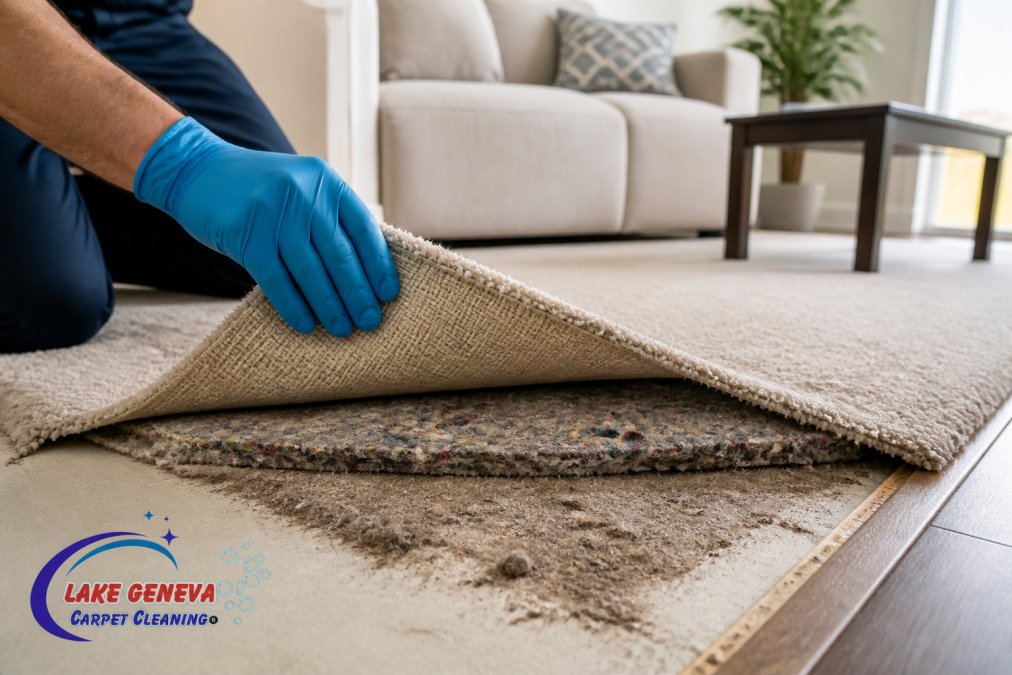
The problem is not the carpet itself but the allergen buildup from infrequent or surface-level cleaning. A carpet that looks clean can still hold years of trapped dust and dander deep within its fibers, which is why visual inspection is a poor gauge of when professional deep cleaning is needed.
HEPA Filtration Vacuuming: Your First Line of Defense
HEPA filtration vacuuming is the single most effective daily defense against allergen buildup, provided you use the vacuum correctly. A true HEPA vacuum captures micro-particles as small as 0.3 microns, including dust mite debris, pollen, and pet dander, rather than blowing them back into the room through the exhaust.
Standard vacuums recirculate a portion of the fine dust they pick up, which is why you can sometimes smell a dusty odor while cleaning. A HEPA system traps that material, keeping it out of your breathing zone.
For allergy sufferers, a weekly pass is the minimum, but high-traffic areas and homes with pets benefit from vacuuming every two to three days. Slow, overlapping passes allow the brush roll to agitate carpet fibers and lift embedded soil, whereas a quick once-over simply skims the surface.
Run your vacuum in two directions, north to south and then east to west. This crosshatch pattern lifts fibers in both directions and removes significantly more particle buildup than a single pass.
How to Reduce Dust Mites in Carpet for Long-Term Relief
Dust mites are microscopic creatures that thrive in warm, humid environments, and your carpet provides an ideal habitat. While you cannot eliminate them entirely, you can reduce dust mite populations to a level where they no longer trigger allergic rhinitis or asthma symptoms. The strategy combines environmental control with a consistent cleaning routine.
Dust mites feed on dead skin cells and absorb moisture from the air, making humidity control your most powerful tool. Keeping your home’s relative humidity below 50 percent makes the environment less hospitable, and a dehumidifier in damp basements or lakeside homes can make a measurable difference.
Control Humidity and Temperature
Dust mites draw moisture directly from the air. When indoor humidity climbs above 50 percent, mite populations expand rapidly, a particular concern for Lake Geneva homeowners dealing with lakeside moisture. A hygrometer helps you monitor conditions, and a dehumidifier or air conditioner keeps the environment dry enough to slow mite reproduction.
Dust mites prefer conditions between 68 and 77 degrees Fahrenheit, so cooler bedrooms during allergy season can help reduce their activity. While you cannot keep your entire home below that range, focusing on the bedroom, where you spend eight hours breathing, is worthwhile.
Establish a Weekly Washing Routine
Bedding is the other major dust mite habitat, directly seeding your carpet with allergens every time you get in and out of bed. Washing sheets, pillowcases, and blankets weekly in hot water kills dust mites and removes their waste, the actual allergen that triggers symptoms.
Every allergen that falls off your bedding lands on the floor. A weekly washing routine, combined with regular vacuuming, breaks the cycle of recontamination.
Professional vs. DIY Carpet Cleaning for Allergies
The real difference between professional and DIY carpet cleaning for allergy sufferers is not effort, it is the depth of extraction and the fate of the water used. For a homeowner in Lake Geneva, where lake-effect moisture and seasonal pollen are constant challenges, understanding this distinction determines whether your carpet becomes a filter or a reservoir.
Why Rental Machines Fall Short for Allergen Removal
Rental machines and store-bought spot cleaners operate at a fraction of the water pressure and suction of professional truck-mounted systems. A typical rental unit cannot drive water deep enough to flush out the dust mite feces, pollen grains, and pet dander that settle in the lower third of the carpet pile and the padding, leaving the allergen reservoir intact.
There is also the hidden risk of cross-contamination. Rental machines are shared equipment; the previous user may have cleaned a home with pet waste, mold, or heavy dust mite infestations. The hoses, brushes, and solution tanks can harbor residual bacteria and mold spores that get introduced directly into your carpet, actively worsening symptoms.
The Residue Problem
DIY cleaning solutions often contain high-foaming detergents designed to make carpets look cleaner. When a rental machine fails to extract all of that solution, a sticky residue remains in the fibers, acting like flypaper that attracts new dust, dirt, and allergens within days. A carpet that looked refreshed quickly becomes a denser allergen trap than before.
Professional hot water extraction, by contrast, uses a cleaning agent that encapsulates allergens and a high-powered vacuum that pulls the solution, the encapsulated particles, and the rinse water out of the carpet. The goal is to leave the carpet barely damp, not wet, which is the critical difference for allergy management.
The Local Angle: Wisconsin’s Seasonal Allergen Load
Lake Geneva’s position in the upper Midwest means a distinct allergen calendar: tree pollen peaks in April and May, grass pollen follows in June and July, and ragweed dominates from August through September. Each season tracks different particles into your home, on shoes, pet fur, and clothing. A DIY surface clean in July cannot undo the deep accumulation of June’s grass pollen in the padding.
Professional cleaning, scheduled strategically, such as a deep extraction in late spring to reset before grass pollen season and another in early fall to remove ragweed residue, provides a level of control that DIY methods cannot match.
Making the Right Choice for Your Home
For small spills and spot stains between professional cleanings, a store-bought spot cleaner is a reasonable tool. But for the allergy sufferer whose symptoms persist despite regular vacuuming, the limitation is clear: DIY methods do not reach the deep reservoir of allergens.
A professional cleaning with truck-mounted extraction equipment reaches that reservoir. The higher water temperature, typically 180 to 200 degrees Fahrenheit, helps denature allergens and kill dust mites, while the powerful suction removes them from the home entirely. This is a targeted intervention for indoor air quality, not a luxury.
If you use a rental machine between professional cleanings, run two extraction passes with plain hot water after the cleaning solution pass. This helps rinse out residual detergent that would otherwise attract new allergens.
For homeowners in Lake Geneva, the choice between professional and DIY cleaning is also a choice about who is accountable for the result. A local, owner-operated service brings consistency and a vested interest in your satisfaction. When you hire a professional who understands the regional allergen load and the needs of lakeside homes, you are resetting your indoor environment, not just cleaning a surface.
Hot Water Extraction vs. Dry Cleaning Methods
The choice between hot water extraction and dry cleaning is the most consequential decision in carpet cleaning for allergy sufferers. Understanding how they differ at the particle level explains why one is consistently recommended for allergen removal while the other is better suited for different goals.
How Hot Water Extraction Works
Hot water extraction, often called steam cleaning, does not use steam. Instead, it injects water heated to between 180 and 200 degrees Fahrenheit into the carpet at high pressure. Combined with a cleaning agent, this serves three functions for allergy relief:
- Thermal denaturation: The heat disrupts the protein structure of dust mite allergens and pet dander, rendering them less reactive to your immune system.
- Physical dislodging: The pressure drives water deep into the pile and padding, physically separating allergens from the fibers.
- Suspension and removal: The cleaning agent encapsulates the dislodged particles, and the powerful vacuum suction, typically 150 to 200 inches of water lift in a truck-mounted system, pulls the solution, the allergens, and the rinse water out of the carpet.
A professional service aims to extract as much water as possible, leaving the carpet damp, not soaked. This high extraction rate helps prevent the post-cleaning mold risk that concerns many allergy sufferers.
How Dry Cleaning Works
Dry cleaning methods use minimal moisture. Some systems apply a solvent or absorbent compound, often a powder or foam, that is worked into the carpet fibers and then vacuumed up. Others use a low-moisture encapsulation technology where a polymer solution crystallizes around dirt particles, removed with a standard vacuum.
The advantage of dry cleaning is speed, carpets are typically dry within one to two hours. However, for allergy sufferers, the trade-off is significant:
- Limited depth: Dry cleaning compounds primarily address surface soil and the upper layer of the pile. They do not flush out the water-soluble allergens, dust mite feces, pollen, and mold spores, that reside deep in the padding.
- No thermal benefit: Without high heat, there is no denaturation of protein-based allergens.
- Residue potential: If the absorbent compound is not fully vacuumed up, it can leave a powdery residue that becomes airborne and triggers respiratory irritation.
The Allergen-Specific Comparison
Different allergens respond differently to each method. Consider what is actually in your Lake Geneva carpet:
| Allergen Type | Hot Water Extraction | Dry Cleaning |
|---|---|---|
| Dust mite feces (water-soluble proteins) | Flushed out by hot water | Not effectively removed |
| Pollen (water-resistant, buoyant) | Suspended and extracted | Surface removal only |
| Pet dander (sticky, protein-based) | Denatured by heat, then flushed | Partial removal |
| Mold spores (hydrophobic) | Flushed with surfactant | Minimal impact |
| Road salt and fine sand (tracked in winter) | Dissolved and extracted | Abrasive, may not be fully removed |
This table illustrates why allergy organizations and carpet manufacturers consistently recommend hot water extraction for homes with allergy sufferers: it physically removes the particles that trigger symptoms rather than merely trapping them at the surface.
Drying Time and the Mold Risk Trade-Off
The primary disadvantage of hot water extraction is drying time. Even with professional extraction, carpets can take several hours to dry completely, depending on humidity, airflow, and carpet thickness. If the carpet remains damp beyond 24 hours, mold spores can germinate, introducing a new allergen source.
In Lake Geneva, summer humidity can exceed 70 percent, slowing drying significantly. A professional service will account for this by using air movers or recommending that you run your HVAC system and ceiling fans to bring the carpet to full dryness within 8 to 12 hours.
Carpet Material Sensitivity
The choice between methods also depends on your carpet’s fiber. Synthetic fibers like nylon and polyester tolerate the high heat and moisture of hot water extraction well. Natural fibers, particularly wool, are more delicate, wool can shrink, felt, or become damaged at high temperatures, and it absorbs more water, extending drying time.
For wool carpets, a professional will adjust the water temperature downward and may use a lower-moisture approach or a specialized cleaning agent. This is not a compromise on allergen removal, the carpet itself must survive the cleaning to continue serving as an effective filter.
The Verdict for Allergy Sufferers
For the allergy sufferer, hot water extraction is the method of choice. It is the only approach that physically flushes out the deep, water-soluble allergens that trigger symptoms, and it provides the thermal benefit of denaturing proteins. The longer drying time is a manageable trade-off against the alternative: a carpet that continues to release allergens into your breathing zone.
If you have wool carpet or a home with high humidity, ask your professional cleaner how they will adjust the hot water extraction process to protect the fibers while still achieving deep allergen removal. The right approach balances thoroughness with carpet safety.
A professional service will also recommend a post-cleaning protocol: keep windows open if outdoor pollen counts are low, run ceiling fans, and avoid walking on the carpet until it is fully dry. This attention to the drying phase separates a cleaning that provides lasting allergy relief from one that merely shifts the problem.
The Benefits of Professional Carpet Cleaning for Allergen Removal
Professional carpet cleaning delivers a level of allergen removal that home equipment cannot match, particularly in the deep layers of the carpet. Truck-mounted hot water extraction systems operate at higher temperatures and greater suction power than portable units, extracting more water, soil, and allergens in a single pass.
A thorough extraction removes the microscopic allergens embedded in the padding, the reservoir that continues to release particles into your air long after a surface cleaning. This is why many allergy sufferers report noticeable symptom relief in the days following a professional cleaning.
For Lake Geneva residents, professional cleaning also addresses seasonal contaminants from lakeside living, including road salt, sand, and mud that get tracked into carpets and break down into fine dust. An owner-operated local service brings accountability and consistency, since the person who answers your call is often the same person who cleans your carpets.
Professional hot water extraction is the only method that reaches allergens deep in the carpet padding. If you vacuum regularly but still experience allergy symptoms, this is the missing step.
Post-Cleaning Drying Protocols and Carpet Material Sensitivity
The hours after a professional cleaning are critical, because improper drying can undo all the allergen removal you just paid for. Carpets that remain damp for more than 24 hours create ideal conditions for mold and mildew growth, introducing a new set of allergens into your home.
Proper drying starts before the cleaning begins. A professional service will extract as much water as possible, leaving the carpet merely damp rather than soaked. Afterward, speed up the process by opening windows, running ceiling fans, and turning on your HVAC system to circulate air.
Carpet material sensitivity also influences drying. Synthetic fibers like nylon and polyester dry relatively quickly, while natural fibers such as wool absorb more moisture and require more time and gentler handling. A professional who understands these differences will adjust their approach to protect your carpet while still delivering a thorough clean.
Never walk on a freshly cleaned carpet with shoes, and avoid placing furniture back on it until it is completely dry. Doing so can compress the damp fibers and trap moisture, which risks mold growth and undoes the allergen removal.
Indoor Air Quality Improvement: Monitoring Your Progress
Indoor air quality improvement is an ongoing process, and tracking your progress helps you know what is working. A simple way to monitor is to pay attention to your symptoms: if you wake up with less congestion or reach for tissues less often, your cleaning routine is having an effect.
For a more objective measure, an indoor air quality monitor can track particle levels over time. Many homeowners are surprised to see particle levels spike after vacuuming, which is normal, and then drop to their lowest point in the days following a professional cleaning.
The key is consistency. A single deep cleaning provides temporary relief, but maintaining low allergen levels requires regular vacuuming with HEPA filtration, humidity control, and professional extraction at appropriate intervals. For most homes, this means regular professional cleaning, with more frequent service for homes with pets or severe allergies.
Common Mistakes That Worsen Allergy Symptoms
Several well-intentioned habits can actually make allergy symptoms worse. The most common mistake is cleaning too infrequently, allowing allergens to accumulate until they become embedded deep in the carpet fibers and padding.
Another frequent error is using the wrong cleaning products. Harsh chemicals and fragrances can introduce volatile organic compounds into your home, triggering respiratory irritation that mimics allergy symptoms. Eco-friendly, non-toxic cleaning agents are safer, especially in homes with children and pets.
A third mistake is neglecting the padding. When cleaning only addresses the surface, allergens migrate deeper over time, and the padding becomes a permanent reservoir. This is why professional extraction that reaches the padding is essential for long-term allergy management.
Breathe Easier with Expert Carpet Cleaning in Lake Geneva
Living with allergies means constantly managing your environment, and your carpet is one of the largest surfaces in your home. If you have tried regular vacuuming and store-bought cleaning solutions without relief, the problem may be allergens entrenched deep in your carpet fibers and padding that only professional extraction can remove.
At Lake Geneva Carpet Cleaning, we combine over 32 years of owner-operated experience with eco-friendly, truck-mounted hot water extraction to deliver carpet cleaning for allergy sufferers that actually works. Our method removes embedded allergens, pet dander, and odors while enhancing your indoor air quality, and our 10-day satisfaction guarantee ensures you are protected. Whether you are dealing with dust mite allergies, seasonal pollen, or pet-related sensitivities, our meticulous approach revitalizes your carpets and your home environment.
Frequently Asked Questions
Can a dirty carpet cause allergies?
Yes, a dirty carpet can worsen allergies. Carpets act as a filter, trapping dust mites, pet dander, pollen, and mold spores deep within the fibers. When you walk across the carpet, these microscopic allergens become airborne and can trigger respiratory irritation, allergic rhinitis, and asthma symptoms. Regular vacuuming with HEPA filtration removes surface dirt, but professional hot water extraction is often needed to flush out the allergens embedded deeper in the carpet and padding.
How often should allergy sufferers have their carpets professionally cleaned?
For allergy sufferers, regular professional carpet cleaning is generally recommended. If you have pets or live in an area with high pollen counts, you may need to schedule cleanings more frequently. Professional hot water extraction removes the deep-seated allergens and micro-particles that regular vacuuming misses, helping to maintain better indoor air quality and reduce asthma triggers in your home.
What is the difference between steam cleaning and dry cleaning for allergy control?
For allergy control, hot water extraction, often called steam cleaning, is generally the more effective method. It uses hot water and non-toxic cleaning agents injected deep into the carpet fibers to break up and suspend allergens, which are then extracted by powerful suction. Dry cleaning methods rely on chemicals and minimal moisture, which may only clean surface fibers and can leave residues that attract new dirt. Professional hot water extraction also helps control dust mite populations by removing their food source.
Your carpets should not be working against your health. Contact Lake Geneva Carpet Cleaning today for a free quote and discover the difference that true deep cleaning makes for allergy relief in your Lake Geneva home.