
Table of Contents
- Why Timing Matters for Professional Carpet Cleaning
- Spring: The Ideal Season for Deep Cleaning
- Fall Carpet Maintenance Before the Holidays
- Summer Cleaning Advantages and Fast Drying
- Winter Considerations and Salt Removal
- How Often to Get Carpets Professionally Cleaned
- Understanding Carpet Cleaning Drying Time
- Preparing Your Home for Carpet Cleaning
- Professional Cleaning for Allergy Relief
- Frequently Asked Questions
Last Updated: September 21, 2026
Why Timing Matters for Professional Carpet Cleaning
The best time of year for professional carpet cleaning depends on your climate, lifestyle, and carpet condition. Many homeowners assume they should clean their carpets only when visible dirt appears, but that reactive approach misses the real opportunity: strategic cleaning that prevents damage, extends carpet lifespan, and maintains indoor air quality year-round.
At Lake Geneva Carpet Cleaning, we’ve worked with thousands of Wisconsin homeowners and learned that seasonal timing matters far more than most people realize. The region’s dramatic weather swings, from humid summers to salt-laden winters, create distinct challenges at different times of year. A spring cleaning tackles winter’s accumulated contaminants. A fall cleaning prepares carpets for heavy holiday traffic. Summer’s low humidity accelerates drying. Winter requires special attention to salt and moisture.
The key insight most guides miss: the best cleaning schedule isn’t one-size-fits-all. It’s built around your specific situation, your carpet type, household traffic, local weather patterns, and whether you have pets or allergy concerns. Below, we’ll show you exactly how to choose the ideal timing for your home.
Professional carpet cleaning works best when scheduled around seasonal challenges in your area. Spring and fall are ideal for most homeowners, but the right timing for you depends on your household’s specific needs and local climate patterns.
Spring: The Ideal Season for Deep Cleaning
Spring is widely considered the best time for professional carpet cleaning, and for good reason. Winter leaves behind salt residue from roads, tracked-in mud, and accumulated dust and allergens that have settled deep into carpet fibers during months of closed windows and heating systems running continuously.
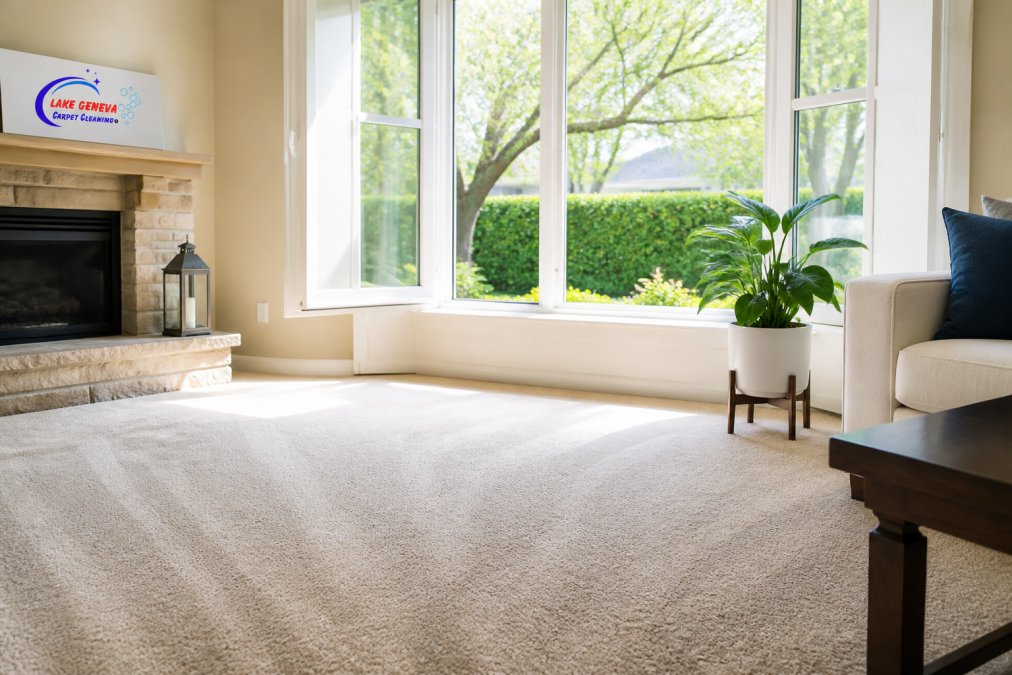
A spring professional carpet cleaning removes these embedded winter contaminants before they cause permanent damage to carpet fibers. The warming temperatures and increasing daylight hours also create ideal conditions for drying. Carpets dry faster in spring than in any other season, reducing the risk of mold growth or musty odors that can develop when moisture lingers too long.
Spring cleaning also prepares your carpets for the heavier traffic of warmer months when doors open frequently and family members spend more time indoors and outdoors. If you have allergies or asthma, spring is the optimal window to eliminate dust mites, pet dander, and pollen that have accumulated in your carpet during winter. The combination of deep cleaning and improved air circulation through open windows creates a noticeably healthier indoor environment.
For homeowners in the Lake Geneva area, spring cleaning is particularly valuable because winter road salt and sand tracked indoors break down carpet fibers if left to sit. Professional hot water extraction removes these abrasive particles before they cause permanent wear patterns.
Schedule your spring cleaning in late April or early May, after the last snow but before humidity spikes. This timing gives you the fastest drying times and the best window for opening windows to improve air circulation.
Fall Carpet Maintenance Before the Holidays
Fall cleaning is equally important and often overlooked. As summer heat and humidity fade, fall is when you should prepare your carpets for the busiest season of the year, the holiday months when guests visit, family gatherings happen, and foot traffic increases dramatically.
A fall professional carpet cleaning removes summer dust, pollen, and outdoor debris tracked inside during months of open doors and windows. It also eliminates any mildew or musty odors that may have developed in humid conditions. More importantly, it restores your carpet’s appearance and stain resistance before the holiday entertaining season begins.
Fall is also the ideal time to address any stains or odors that developed over summer. Pet accidents, food spills, and everyday wear leave marks that are easier to address before they set permanently. Professional cleaning in September or October gives you a fresh carpet for November and December gatherings.
The weather in fall also supports good drying conditions. Temperatures are mild, humidity is lower than summer, and you can still open windows for air circulation without the extreme heat. For homeowners with high-traffic areas or pets, fall cleaning is preventive maintenance that protects your investment before the season that stresses carpets most.
Summer Cleaning Advantages and Fast Drying
Summer cleaning is often overlooked, but it offers distinct advantages, and distinct challenges, that depend heavily on your carpet type and local humidity conditions. Understanding when summer makes sense requires looking beyond simple “heat speeds drying” logic.
Wisconsin summers present a mixed picture. While daytime temperatures reach the 70s and 80s, humidity levels frequently climb into the 60-75% range, especially in July and August. This moderate-to-high humidity slows evaporation significantly compared to spring and fall. However, summer’s longer daylight hours and generally stable weather patterns make scheduling easier, and the ability to open windows and doors wide without losing heating creates superior air circulation compared to winter or early spring.
The real summer advantage emerges when you understand carpet material behavior. If your home has predominantly synthetic carpets and you can schedule cleaning on a low-humidity day (early morning before afternoon moisture builds), summer cleaning can work well.
Summer is also ideal if you have light-colored carpets that show dirt easily. The intense natural sunlight reveals exactly how clean your carpets are after professional cleaning, which provides immediate visual satisfaction and motivation for maintaining them through the year. For households with heavy summer traffic, children home from school, frequent outdoor activity, or guests visiting during vacation season, summer cleaning removes accumulated debris before it becomes ground into fibers.
However, summer isn’t the best choice if your home lacks strong air circulation, if you have high-pile or wool carpets, or if you live in a particularly humid microclimate. For most Lake Geneva-area homeowners, spring and fall remain superior choices because they combine seasonal necessity with faster, more predictable drying. Summer works best as a secondary or supplemental cleaning for high-traffic households, not as your primary annual cleaning.
If you choose summer cleaning, schedule it in early June or late August when humidity tends to be lower than mid-summer peaks. Avoid scheduling during extended humid spells, and ask your professional cleaner about their equipment’s dehumidification capacity, this becomes critical in high-humidity conditions.
Winter Considerations and Salt Removal
Winter is the most challenging season for carpet cleaning, yet it’s often the most necessary. Road salt, sand, and moisture tracked indoors from snow and ice create a harsh environment for carpet fibers. Salt is particularly damaging because it breaks down carpet material and can cause permanent discoloration and wear.
Many homeowners delay winter cleaning because they worry about drying times and moisture damage. This is a mistake. Winter cleaning is essential, you just need the right approach. Professional hot water extraction removes salt and debris before they cause permanent damage. The key is managing moisture carefully through proper ventilation, air circulation, and sometimes dehumidification.
If winter cleaning is necessary in your home, schedule it on a day when you can open windows and doors to improve air circulation. Use fans and your HVAC system to move air through the house. Professional equipment removes far more moisture than DIY methods, reducing drying time significantly.
For homeowners with heavy winter traffic, multiple children, pets, or frequent guests, winter cleaning may be unavoidable. The alternative is accepting permanent salt stains and fiber damage that shortens your carpet’s lifespan considerably.
Winter salt and moisture damage carpets faster than any other contaminant. If you delay winter cleaning, the damage to your carpets could be significant. Address salt accumulation quickly to protect your investment.
How Often to Get Carpets Professionally Cleaned
The ideal frequency for professional carpet cleaning depends on your household’s specific situation. Most homeowners benefit from professional cleaning twice per year, once in spring and once in fall. This schedule prevents seasonal contaminants from building up and maintains carpet appearance and hygiene year-round.
However, some households need more frequent cleaning:
- High-traffic households (families with children, multiple pets, or frequent guests) should consider professional cleaning three times per year, spring, summer, and fall.
- Pet owners dealing with odors or accidents may need cleaning every three to four months.
- Allergy sufferers benefit from more frequent cleaning to reduce dust mites, pet dander, and pollen.
- Light-colored carpets show dirt more easily and may need more frequent attention to maintain appearance.
Conversely, some households can stretch to once per year:
- Minimal-traffic homes (single occupants, no pets, infrequent guests) may maintain carpets adequately with annual professional cleaning plus regular vacuuming.
- Newer carpets with protective treatments can sometimes go longer between cleanings.
- Commercial spaces with moderate traffic may follow a different schedule than residential homes.
The relationship between cleaning frequency and carpet lifespan is direct: more frequent professional cleaning extends carpet life. Dirt and salt accumulation breaks down fibers progressively. Regular removal prevents this damage and keeps carpets looking newer longer.
Understanding Carpet Cleaning Drying Time
Drying time is a major concern for homeowners considering professional carpet cleaning, and it’s one of the most misunderstood aspects of the process. The fear of wet carpets sitting for days, risking mold growth and musty odors, keeps many people from scheduling service. Understanding what actually affects drying time, and how seasonal conditions in Wisconsin create specific challenges, helps you make the right decision and choose the ideal timing.
Several factors control how long carpets stay wet after professional cleaning, and they interact in ways that make seasonal timing critical:
Humidity levels have the biggest impact on drying speed. Humidity is the percentage of moisture already present in the air. When humidity is low (below 50%), the air can absorb moisture from wet carpets quickly through evaporation. When humidity is high (above 70%), the air is already saturated and can’t absorb much additional moisture, carpets stay wet much longer. Wisconsin’s humidity patterns vary dramatically by season: spring averages 55-65% humidity, fall averages 50-60%, summer averages 65-75%, and winter averages 40-50% (though winter’s cold temperatures slow evaporation despite lower humidity). This is why spring and fall typically offer the fastest drying times in the region, and why summer cleaning requires careful timing.
Air circulation is the second critical factor. Fans, open windows, and HVAC systems move air across carpet surfaces, which continuously replaces saturated air with drier air from elsewhere in the home. Homes with good ventilation, open floor plans, multiple windows, functioning HVAC systems, dry carpets 30-50% faster than tightly sealed spaces. In winter, when opening windows means losing heated air, air circulation becomes much harder to achieve, which is one reason winter cleaning is challenging. In spring and fall, you can open windows freely without energy loss, dramatically improving circulation.
Carpet type and pile height affect drying in ways many homeowners don’t realize. Dense, low-pile synthetic carpets dry in 4-8 hours under good conditions because water sits on the surface and evaporates quickly. Thick, plush carpets and wool carpets absorb water deep into the pile and backing, creating a larger moisture reservoir that takes 12-24 hours or longer to dry. If you have high-pile or wool carpets, spring and fall’s moderate humidity and good air circulation become even more important because they’re your best chance at reasonable drying times.
Professional equipment quality determines how much water is actually removed during cleaning. Truck-mounted hot water extraction systems (the industry standard for professional service) use powerful vacuum motors that extract 80-90% of the water from carpets during the cleaning process itself. This leaves carpets damp but not soaking wet. Portable equipment or rental machines extract only 50-60% of water, leaving carpets much wetter and requiring significantly longer drying times, often 24+ hours. This is why professional service dries faster than DIY methods, regardless of season.
Dehumidification speeds drying in humid conditions by actively pulling moisture from the air and carpets simultaneously. Some professional equipment includes dehumidifiers that can reduce ambient humidity, dramatically accelerating evaporation. This is particularly valuable in summer or during Wisconsin’s humid stretches.
Temperature also plays a role, though it’s less critical than humidity. Warmer air holds more moisture and evaporates water faster than cold air. Spring and summer offer faster evaporation than fall and winter for this reason, but only if humidity is also low. High humidity negates the benefit of warmth, a humid 75°F day dries carpets slower than a dry 55°F day.
In practice, most homeowners experience drying times of 4-12 hours with professional equipment in normal spring or fall conditions. Summer drying times depend heavily on humidity levels and air circulation. Winter drying times are typically the longest, because of low air circulation and cold temperatures that slow evaporation. This is why spring and fall are ideal: they combine fast equipment extraction with favorable humidity, temperature, and air circulation.
Before scheduling professional carpet cleaning, ask us about our specific equipment’s water extraction rate and whether we offer dehumidification. Also ask for a drying time estimate based on your carpet type, current humidity levels, and home layout. This helps you plan around the actual drying window rather than guessing.
Preparing Your Home for Carpet Cleaning
Proper preparation ensures your professional carpet cleaning delivers maximum results and minimizes disruption to your household. A few simple steps before the service arrives make a significant difference in outcomes and efficiency.
Clear the floors of toys, cords, small furniture, and personal items. This allows technicians to access all carpet areas and prevents damage to your belongings. Move lightweight furniture if possible; heavier pieces can often stay in place while technicians work around them.
Vacuum thoroughly before service. This removes surface dirt and allows the professional equipment to focus on deep cleaning rather than surface debris. Vacuuming also helps your technician assess carpet condition and identify problem areas.
Identify problem areas in advance. Point out stains, odors, pet accidents, or high-traffic zones so your technician can apply extra attention and specialized treatments where needed.
Ensure good ventilation by opening windows and doors on the day of service. This improves air circulation during and after cleaning, which speeds drying and helps eliminate any moisture-related concerns.
Keep pets and children away from cleaned areas until they’re completely dry. Wet carpets are uncomfortable to walk on and can be damaged by activity before they’ve fully set.
Protect cleaned areas after service by keeping foot traffic minimal for the first few hours. If drying conditions are good, carpets are usually safe to use normally within 4-6 hours.
Professional Cleaning for Allergy Relief
Allergies and asthma are often triggered or worsened by indoor air quality problems directly related to dirty carpets. Dust mites, pet dander, pollen, and mold spores accumulate deep in carpet fibers where regular vacuuming can’t reach them. Professional carpet cleaning removes these allergens and significantly improves the breathing environment in your home.
Dust mites thrive in carpet fibers and feed on dead skin cells. A single carpet can harbor thousands of dust mites. Vacuuming removes only surface dust; deep allergens remain embedded in the pile and padding. Professional hot water extraction reaches these deep layers and removes the allergens where they actually live.
For pet owners, professional cleaning eliminates pet dander and odors that cause allergic reactions in sensitive individuals. Pet urine odors, in particular, penetrate deep into padding and require professional treatment to fully remove. Store-bought spot cleaners mask odors temporarily but don’t address the root cause.
Seasonal allergens like pollen accumulate in carpets during spring and fall. A professional cleaning at the start of allergy season removes these accumulated allergens and provides relief. Many allergy sufferers report noticeable improvement in symptoms within days of professional cleaning.
The timing of professional cleaning for allergy relief is important. Spring cleaning removes winter accumulation and prepares for spring pollen season. Fall cleaning eliminates summer pollen before fall allergen season begins. For severe allergy sufferers, summer cleaning provides an additional allergen removal opportunity.
Professional carpet cleaning also improves overall indoor air quality by reducing the dust and allergen load in your home’s environment. This benefits everyone in the household, not just allergy sufferers, by creating a healthier living space.
The best time for professional carpet cleaning in your home depends on your specific situation, but the pattern is clear: spring and fall offer the ideal combination of seasonal necessity and favorable drying conditions for most Wisconsin homeowners. Whether you’re managing winter salt damage, preparing for holiday guests, or reducing allergens that affect your family’s health, strategic timing makes professional cleaning more effective and less disruptive.
Lake Geneva Carpet Cleaning helps homeowners across the region determine the right cleaning schedule for their carpets and household needs. Our team uses state-of-the-art truck-mounted hot water extraction equipment to deliver deep cleaning results. Whether you need spring maintenance, fall preparation, or allergy relief, we’re here to help. Contact us for a free quote and let’s find the perfect timing for your home.
Frequently Asked Questions
What is the best time of year for professional carpet cleaning?
Spring and fall are ideal for professional carpet cleaning. Spring offers dry conditions and natural ventilation for faster drying, while fall prepares carpets before heavy winter traffic and holiday guests. Summer works well if you have air conditioning to manage humidity. Winter is possible but drying takes longer due to moisture and cold temperatures. The best time depends on your schedule and climate conditions.
How often should I schedule professional carpet cleaning for my home?
Most homeowners benefit from professional carpet cleaning twice yearly, typically in spring and fall. High-traffic households, homes with pets, or those with allergy concerns may need cleaning every 6-8 weeks. Light-traffic areas might need cleaning annually. Professional cleaning removes embedded dirt, allergens, and contaminants that regular vacuuming cannot reach, extending carpet lifespan and maintaining indoor air quality.
How does humidity affect carpet cleaning drying time?
High humidity significantly slows carpet drying, potentially extending drying time from 4-6 hours to 12-24 hours or more. Wisconsin’s seasonal humidity variations mean spring and fall typically offer faster drying than summer. Winter’s lower humidity aids drying, but cold temperatures slow the process. Professional hot water extraction removes excess moisture more effectively than other methods, and using air circulation and dehumidification equipment helps reduce drying time regardless of season.
Will professional carpet cleaning help with allergies and dust mites?
Yes, professional carpet cleaning is highly effective for allergy relief. Hot water extraction removes embedded allergens, dust mites, and their debris from carpet fibers and padding that vacuuming cannot reach. This deep cleaning significantly improves indoor air quality and reduces allergy symptoms. For maximum benefit, schedule professional cleaning before allergy season and combine it with regular vacuuming. Those with severe allergies may benefit from twice-yearly professional cleaning.