
Last Updated: October 27, 2026
Quick Summary
A dust mite problem in bedroom carpets is best prevented by vacuuming regularly around and under the bed with a HEPA-filter vacuum and keeping indoor humidity between 30 and 50 percent. Dust mites feed on the skin cells you shed at night and multiply in damp air, so controlling both food and moisture keeps their numbers down.
- Vacuum the carpet around and under the bed regularly with a HEPA-filter vacuum.
- Place a hygrometer at mattress height and track humidity for a week.
- Keep relative humidity steady between 30 and 50 percent.
- Run a dehumidifier and bathroom exhaust fans to limit moisture in the bedroom.
- DIY powders like baking soda do not kill mites or reach deep carpet allergens.
Table of Contents
- Why Bedroom Carpets Attract Dust Mites
- Dust Mite Prevention Checklist for Bedrooms
- How Often to Clean Bedroom Carpets
- Vacuuming Correctly: Choosing a Vacuum and Filter
- Controlling Indoor Humidity and Dust Mites
- Washing Bedding and Reducing Fabric Surfaces
- Using Hot-Water Washing and Ventilation Together
- Safety of DIY Treatments and Store-Bought Products
- When to Call a Professional for Dust Mite Allergens
- Schedule Your Carpet Cleaning with Lake Geneva Carpet Cleaning
- Frequently Asked Questions
Why Bedroom Carpets Attract Dust Mites
Dust mites are tiny creatures that feed on dead skin cells. Every night you shed skin while you sleep, and much of it settles onto the floor around your bed.
- Carpet fibers trap skin flakes and dust
- Bedrooms collect debris from bedding and clothing
- Humidity helps mites survive and multiply
Dust Mite Prevention Checklist for Bedrooms
- Vacuum the carpet around and under the bed
- [ ]
- [ ]
- [ ]
- Open the windows for fresh air when weather allows
- Remove clutter, stacks of paper, and extra rugs
- [ ]
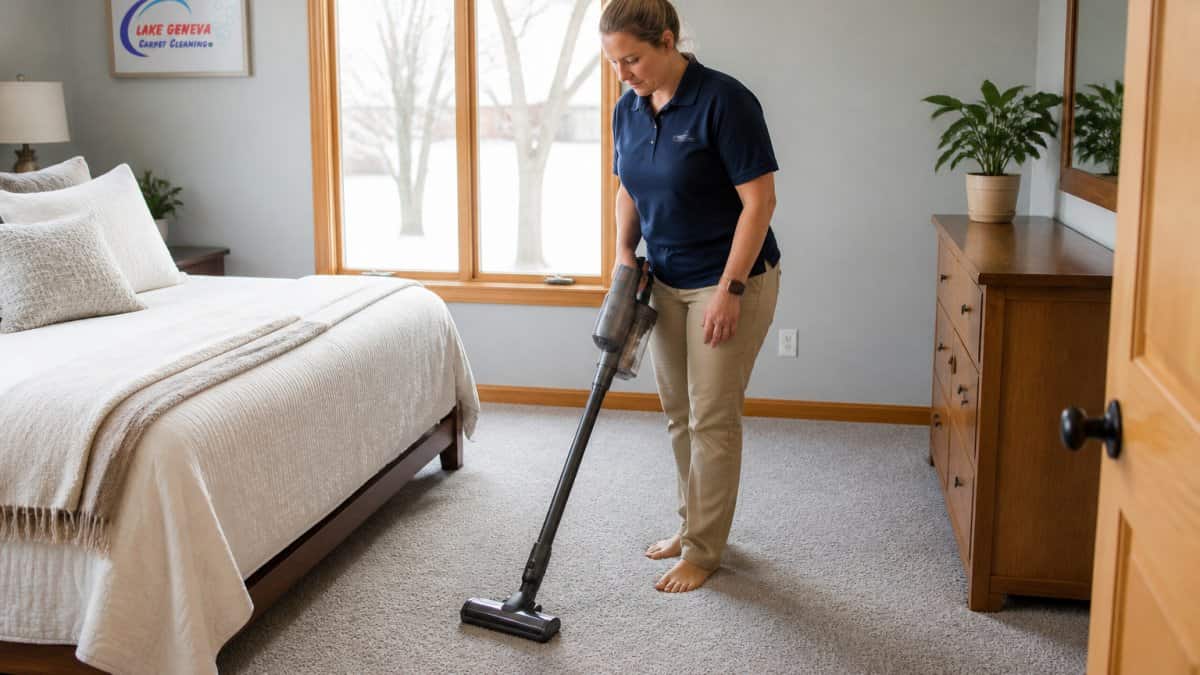
How Often to Clean Bedroom Carpets
Professional carpet cleaning is also worth scheduling.
Contact Lake Geneva Carpet Cleaning for a free quote based on your home.
Vacuuming Correctly: Choosing a Vacuum and Filter
A good vacuum makes a real difference. Look for a model that seals in fine particles instead of blowing them back into the air.
What to Look for in a Vacuum
- A HEPA filter that traps very fine particles
- A sealed design that prevents air leaks
- A strong brush that agitates the carpet fibers
- A bag or bin that is easy to empty without spilling
Controlling Indoor Humidity and Dust Mites
Dust mites absorb moisture from the air, and most species stop reproducing when relative humidity stays below about 50 percent for extended periods. For the full step-by-step approach, see our professional methods for dust mites in carpet. That single number is the most important target in bedroom mite prevention, but hitting it takes measurement, not guesswork.
Measure Before You Adjust
Buy an inexpensive hygrometer, a small digital humidity gauge widely sold at hardware stores, and place it on a nightstand or dresser at mattress height. Read it in the morning and again in the late afternoon for a week. You are looking for a consistent reading between 30 and 50 percent. Below 30 percent can feel uncomfortably dry and may irritate airways; above 50 percent gives mites the moisture they need.
Lake Geneva and Southeastern Wisconsin Seasonal Adjustments
- **** Lake Geneva, Twin Lakes, Fontana, and Williams Bay sit near water, and summer humidity often climbs well past 60 percent indoors without air conditioning.
Practical Dehumidification and Airflow Steps
- Run a dehumidifier in the bedroom or the adjacent hallway, and keep the bedroom door open so treated air circulates.
- Use bathroom exhaust fans during and after showers to keep moisture from drifting into bedrooms.
- Keep furniture a few inches off exterior walls, where condensation and cool surfaces raise local humidity.
- Open windows for 15 to 20 minutes on dry, low-humidity days, not during humid summer afternoons.
- Avoid drying laundry indoors in or near the bedroom during humid months.
The table below summarises the humidity and airflow steps covered in this section.
| Step | What to do | Timing or target |
|---|---|---|
| Measure humidity | Place a hygrometer at mattress height | Read morning and late afternoon for a week |
| Target range | Keep relative humidity steady | Between 30 and 50 percent |
| Dehumidify | Run a dehumidifier in the bedroom or hallway | Keep bedroom door open for air to circulate |
| Bathroom fans | Run exhaust fans during and after showers | During and after showers |
| Window airing | Open windows on dry, low-humidity days | 15 to 20 minutes |
| Furniture placement | Keep furniture off exterior walls | A few inches off the wall |
| Indoor drying | Avoid drying laundry in or near the bedroom | During humid months |
Washing Bedding and Reducing Fabric Surfaces
- Use washable curtains or blinds instead of heavy drapes
- Choose leather or hard-surface furniture where you can
- Store extra blankets in sealed containers
- Limit stuffed toys and decorative throw pillows
Using Hot-Water Washing and Ventilation Together
Ventilate the room while you clean. Open a window for 15 to 20 minutes after vacuuming to let fresh air push out stirred-up dust. Compare with professional hot water extraction for allergen removal and faster drying.
Safety of DIY Treatments and Store-Bought Products
Store shelves and social feeds are full of DIY mite remedies. Some help a little; some leave residue that makes allergies worse. Here is a realistic look at the common options and their limits. Before hiring anyone, read what to look for when choosing a carpet cleaner.
Baking Soda
Baking soda is mildly alkaline and can absorb odors and loosen light surface dust. Sprinkled on carpet, left for 15 to 30 minutes, and vacuumed up, it may lift some surface debris. What it does not do is penetrate the carpet backing where mite allergens accumulate, and it does not kill mites. Left too long or applied too heavily, it leaves a fine white residue that clogs vacuum filters and can irritate airways. Use it sparingly, vacuum thoroughly afterward, and treat it as a supplement to vacuuming, never a replacement.
Carpet Powders and Store-Bought Sprays
Many carpet powders and mite sprays contain fragrances, solvents, or insecticides. Read the label before buying: some are not intended for use on bedding or on carpets where children crawl. Test any product on a small hidden patch first and let it dry fully before walking on it. Keep children and pets out of the room until the carpet is completely dry, and ventilate well during and after application. Products marketed as ‘allergen reducers’ often only neutralize surface proteins; they do not remove the source.
Diatomaceous Earth
Diatomaceous earth is a fine silica powder that damages the waxy outer layer of insects and mites on contact. It works only when dry and only where the powder actually reaches the mite, which, in a carpet, is mostly the surface. It is not a deep-carpet solution. Use food-grade diatomaceous earth only, wear a mask when applying, keep it away from pets and children, and vacuum it up after a day or two. Avoid breathing the dust, which can irritate lungs.
What DIY Treatments Cannot Do
- They do not reach allergens embedded in the carpet backing or pad.
- They do not lower humidity, which is the underlying driver of mite populations.
- They do not replace weekly hot-water washing of bedding.
If allergy symptoms persist after consistent vacuuming, humidity control, and bedding washing, the next step is a professional deep extraction clean rather than stronger DIY products. Pricing depends on the job, so contact us for a free quote.
When to Call a Professional for Dust Mite Allergens
Call a professional if allergy symptoms persist despite regular cleaning.
Consider professional help if:
- Your carpet is more than a few years old
- Allergy symptoms worsen in the bedroom
- You have pets that shed heavily
- Dampness or musty odors appear in the room
Schedule Your Carpet Cleaning with Lake Geneva Carpet Cleaning
Lake Geneva Carpet Cleaning has served homeowners in the area for over 32 years. Our hot-water extraction process removes allergens, dust, and debris.
Keep your bedroom fresher and healthier with a professional deep clean. Contact Lake Geneva Carpet Cleaning today for a free quote, and let us help you breathe easier at home.
Frequently Asked Questions
How can you tell if you have dust mites in your carpet?
Dust mites are too small to see. If allergy symptoms persist, speak with a healthcare provider.
How often should you vacuum bedroom carpets to reduce dust mite allergens?
Vacuum bedroom carpets at least once a week, and more often if someone in the home has allergies. Use a vacuum with a HEPA filter and replace bags or filters on schedule, since a full or worn filter can blow fine allergens back into the room. Vacuum slowly and make several passes over high-traffic areas near the bed. Combine vacuuming with washing bedding regularly for the best results.
What indoor humidity level helps discourage dust mites?
Dust mites thrive in humid conditions, so keeping indoor humidity lower helps discourage them. Many guidelines suggest keeping relative humidity below about 50 percent, and a inexpensive hygrometer lets you monitor levels in the bedroom. Use ventilation, exhaust fans in humid rooms and a dehumidifier when needed, particularly in damp Wisconsin summers and during wet seasons.
Does professional carpet cleaning help reduce dust mite allergens?
Lake Geneva Carpet Cleaning uses hot-water extraction to address dirt, germs, allergens, and odors. Contact Lake Geneva Carpet Cleaning for information about carpet cleaning.