
Last Updated: October 25, 2026
Quick Summary
How to keep carpets clean with indoor pets starts at your entryway by wiping paws before they track dirt inside, then maintaining a regular vacuuming schedule of 2-4 times weekly depending on traffic, combined with prompt stain treatment and professional deep cleaning every 12-18 months.
- Wipe pet paws at the door using towels or absorbent mats to stop dirt from embedding in carpet fibers
- Vacuum high-traffic areas and pet sleeping spots 3-4 times per week using slow, deliberate passes
- Remove pet hair between vacuuming with rubber brooms, carpet rakes, or damp gloves to prevent buildup
- Treat fresh urine accidents immediately by blotting, flushing with water, and applying enzymatic treatment
- Schedule professional hot water extraction every 12-18 months to remove embedded allergens and odors
Table of Contents
- Wipe Paws and Manage Entryway Mess
- How Often to Vacuum Carpet With Pets
- Pet Hair Removal From Carpet
- Grooming and Shedding Control
- How to Remove Pet Urine From Carpet
- Spot Cleaning Fresh Stains and Accidents
- Managing Pet Odors in Your Carpet
- Professional Carpet Cleaning for Homes With Pets
- Schedule Your Pet-Friendly Carpet Maintenance
- Frequently Asked Questions
Wipe Paws and Manage Entryway Mess
The first line of defense against carpet dirt is your entryway. Understanding how to keep carpets clean with indoor pets starts with pet paws that track in mud, dirt, sand, and moisture every single time they come inside. This happens whether you live in Lake Geneva or anywhere else with seasonal weather and outdoor spaces.
Stop the mess before it reaches your carpet. Create a dedicated paw-wiping station right at your door.
Here’s what works:
- Place a towel or absorbent mat directly inside the entry
- Keep a second towel nearby for backup
- Wipe each paw thoroughly before your pet moves deeper into the home
- For muddy paws, consider a paw-washing station with a small basin of water
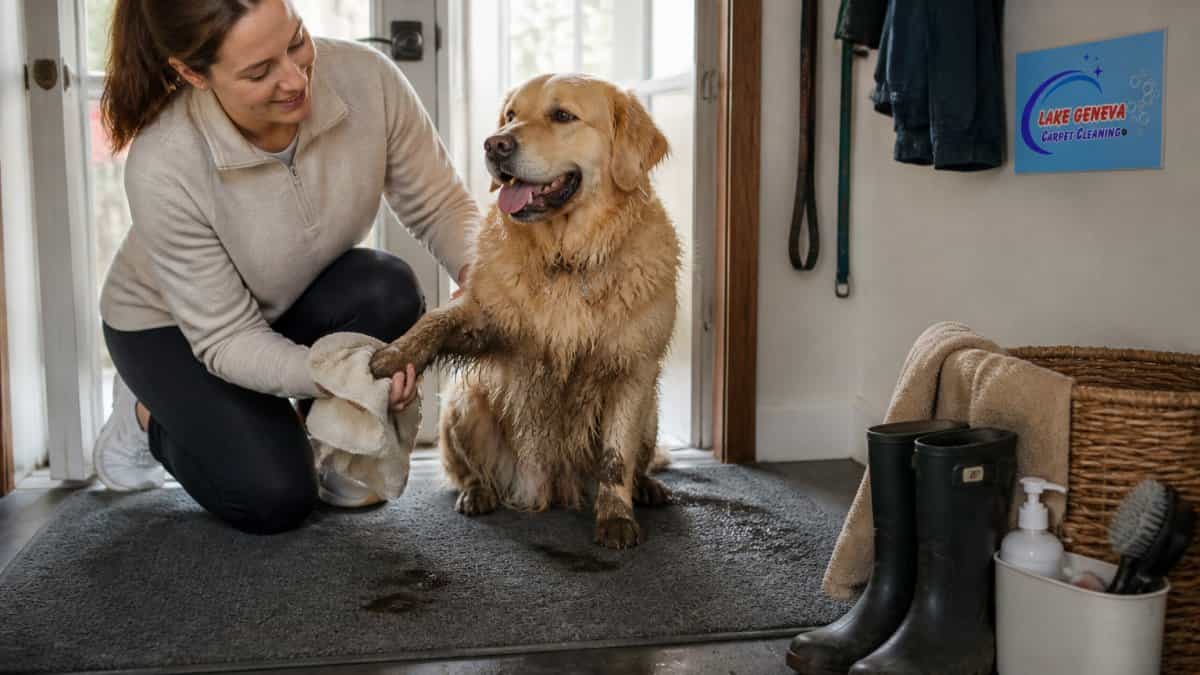
This simple habit prevents dirt from being ground into carpet fibers where it becomes nearly impossible to remove. The longer dirt sits in your carpet, the more it breaks down the fibers and embeds itself deeper.
Seasonal conditions in the Lake Geneva area make this especially important. Winter brings road salt and sand. Spring and fall bring mud and moisture. Summer can mean pollen and dust. Each season presents different challenges, but the solution remains the same: catch it at the door.
Keep supplies accessible. If your cleaning towels are in a closet upstairs, you won’t use them consistently. Store them in a basket or bin right by the entrance. The easier you make it, the more likely your household will follow through.
How Often to Vacuum Carpet With Pets
Vacuum frequency depends on how many pets you have and their activity level. Most pet-owning households benefit from vacuuming multiple times per week rather than once weekly.
Here’s a practical schedule:
- High-traffic areas and pet sleeping spots: 3-4 times per week
- Moderate-traffic areas: 2 times per week
- Low-traffic areas: 1 time per week
Pet hair, dander, and tracked-in debris accumulate quickly. Regular vacuuming removes these before they work deeper into the carpet pile.
Use slow, deliberate passes with your vacuum. Move it slowly over each section. This gives the vacuum time to pull debris from the carpet fibers rather than just skimming the surface. Fast vacuuming misses embedded dirt and hair.
Pay special attention to areas where your pets spend the most time. If your dog has a favorite sleeping spot, that area needs more frequent attention. Pet play areas also accumulate debris faster than other parts of your home.
EPA guidance on indoor air quality and allergen control emphasizes that regular vacuuming with a high-efficiency filter reduces allergens in your home. This is especially important if anyone in your household has allergies or asthma.
Vacuuming also prevents dirt from becoming compacted and permanent in your carpet. Fresh debris is easier to remove than old, ground-in dirt.
Adjust your vacuuming frequency based on traffic and pet activity to keep carpets clean.
| Area Type | Frequency | Reason |
|---|---|---|
| High-traffic areas and pet sleeping spots | 3-4 times per week | Pet hair and debris accumulate fastest |
| Moderate-traffic areas | 2 times per week | Regular maintenance prevents embedding |
| Low-traffic areas | 1 time per week | Less pet activity means slower buildup |
Pet Hair Removal From Carpet
Pet hair clings to carpet fibers and resists regular vacuuming. Dedicated pet hair removal requires a different approach than standard vacuuming.
Use a vacuum designed for pet hair. These models have stronger suction and specialized brush rolls that grab hair more effectively.
Between vacuuming, use these methods:
- Rubber brooms or squeegees: Drag these across carpet to collect hair into piles, then vacuum up
- Lint rollers: Effective for small areas and furniture
- Carpet rakes: Designed specifically to lift pet hair from carpet fibers
- Damp rubber gloves: Put on damp gloves and rub the carpet; hair sticks to the moisture
Timing matters. Remove pet hair when it’s fresh rather than waiting for it to embed deeper. Hair that sits for weeks becomes harder to extract.
Some pet owners use these tools daily on high-shedding pets. Others use them weekly. The more you remove hair early, the less it accumulates in your carpet and the easier your regular vacuuming becomes.
Grooming and Shedding Control
Grooming your pet directly reduces the amount of hair that ends up in your carpet. A well-groomed pet sheds less and tracks in less debris.
Regular brushing removes loose hair before it falls out naturally. Brush your pet several times per week, more frequently during heavy shedding seasons. This simple step significantly reduces carpet damage and maintenance demands.
Bathing your pet as recommended by your veterinarian also helps. Clean fur sheds less aggressively than dirty fur. Check with your vet about the appropriate bathing frequency for your pet’s breed and skin type.
Nail trimming prevents another carpet problem: snags and pulls. Long nails catch carpet fibers and create small tears that spread over time. Keeping nails trimmed protects your carpet from this damage.
American Veterinary Medical Association guidance on pet grooming recommends regular grooming as part of overall pet health. The carpet benefits are a bonus to your pet’s wellbeing.
Some shampoos and treatments leave residue that affects how your carpet cleans later.
Pet grooming is an investment that pays dividends in carpet longevity and appearance.
How to Remove Pet Urine From Carpet
Pet urine is the hardest accident to fully remove because it does not stay on the surface. It wicks down through the carpet face, into the backing, and often into the padding and subfloor beneath. Surface blotting removes the visible moisture but leaves the uric acid salts that cause odor and that can draw your pet back to the same spot. The goal is to remove both the liquid and the odor-causing residue, not just the stain.
Step 1: Blot, don’t rub
Press paper towels or a clean white cloth firmly onto the spot to draw up as much liquid as possible. Stand on the towels for 30 to 60 seconds if the spot is fresh. Rubbing pushes urine deeper into the backing and spreads the stain. Replace towels until they stop picking up moisture.
Step 2: Flush with clean water
Pour a small amount of cool clean water onto the spot and blot again. Repeat two or three times. This dilutes the remaining urine so the treatment can work on a weaker concentration. Do not over-wet the area; you want to flush, not flood the padding.
Step 3: Apply an enzymatic treatment
Enzymatic cleaners use enzymes to break down the uric acid and other compounds in urine that cause odor and staining. Apply according to the product label, respect the stated dwell time, and keep pets and children off the area until it is fully dry. Follow the label’s residue-removal directions, because leftover cleaner can attract dirt or irritate paws.
Step 4: Dry thoroughly
Blot up excess moisture, then allow the area to air-dry with good ventilation. A fan or open window speeds drying. Trapped moisture under the carpet is what lets odor return and can lead to mildew in the padding. Do not walk on the spot until it is dry.
Fresh versus old accidents
A fresh accident responds well to prompt blotting and one enzymatic treatment. An old accident that has dried and set usually needs repeated flushing and treatment, and the odor may persist if urine reached the padding. If the spot still smells after two or three treatment cycles, the contamination is likely below the carpet face and needs deeper extraction than surface cleaning can provide.
Never use ammonia-based cleaners on pet urine. Ammonia smells like urine to pets and can encourage them to use the same spot again. Also avoid combining cleaners; mixing products can create fumes that are harmful to pets and people.
Pet-safe product cautions
Choose cleaners labeled for use around pets and follow the label exactly, including rinse and residue-removal steps. Keep pets out of the treated area until it is dry, and store all products out of reach. If you are unsure whether a product is appropriate for your pet’s sensitivity, ask your veterinarian before use.
For stubborn or recurring urine odors, professional extraction reaches the padding and backing where home methods cannot. If the same spot keeps attracting your pet or the odor returns after treatment, that is a sign the contamination is deeper than the surface.
Spot Cleaning Fresh Stains and Accidents
Quick action on fresh stains prevents permanent damage. Most pet accidents involve urine, vomit, or feces. Each requires slightly different handling.
For fresh stains:
- Remove solid material first (tissue, paper towels)
- Blot liquid with absorbent cloth
- Apply a spot cleaner or enzymatic treatment
- Let it sit for the recommended time
- Blot again until the area is dry
For vomit or feces, remove the bulk of the material before treating the stain. Use paper towels or a scraper to lift it away, then proceed with blotting and cleaning.
Never use ammonia-based cleaners on pet stains. The ammonia smell resembles urine and can actually encourage your pet to use that spot again.
Fresh stains respond well to store-bought spot cleaners when applied immediately. The longer you wait, the more the stain sets and the harder it becomes to remove completely.
Managing Pet Odors in Your Carpet
Pet odors come from urine, feces, sweat, and general pet dander. These odors embed in carpet fibers and padding, not just on the surface.
Baking soda is an effective household odor absorber. Sprinkle it on affected areas, let it sit for several hours or overnight, then vacuum thoroughly. Baking soda absorbs odor molecules rather than just masking smells.
For comprehensive methods for removing pet odors from carpet, professional solutions address odors at the source rather than treating symptoms.
Prevent odors by:
- Cleaning accidents promptly and thoroughly
- Vacuuming regularly to remove dander and debris
- Ensuring good ventilation in your home
- Using washable rugs or mats in pet areas
- Grooming your pets regularly
Some odors persist despite your best efforts. These indicate that urine or other contaminants have soaked into the carpet padding beneath the visible fibers. Surface cleaning alone won’t solve this problem.
Professional Carpet Cleaning for Homes With Pets
Professional carpet cleaning reaches deep into carpet fibers and padding where pet odors and allergens hide. DIY methods clean the surface, but they don’t remove embedded contamination.
Professional pet stain removal service uses specialized equipment and techniques that homeowners cannot replicate. Hot water extraction pulls dirt, allergens, and odor-causing compounds from deep within the carpet structure.
Professional cleaning is especially valuable for:
- Stubborn pet odors that won’t go away
- Old stains that have set into the carpet
- Homes with multiple pets
- Allergies or asthma related to carpet allergens
- Preparing carpets for sale or after a pet accident
Pet-safe cleaning methods are essential. Professional cleaners understand which products work on pet stains without harming your carpet or endangering your pets.
Lake Geneva Carpet Cleaning specializes in pet stain and odor removal using eco-friendly methods and hot water extraction technology. This approach eliminates allergens and stubborn odors while protecting your carpet fibers and your family’s health.
Schedule Your Pet-Friendly Carpet Maintenance
Learning how to keep carpets clean with indoor pets requires a consistent maintenance routine. Combine daily paw-wiping, regular vacuuming, prompt stain treatment, and periodic professional cleaning.
Your carpet maintenance schedule should include:
- Daily: Wipe paws at the entryway
- 2-3 times per week: Vacuum high-traffic and pet areas
- Weekly: Brush or groom your pet
- As needed: Treat fresh stains immediately
- Every 12-18 months: Professional deep cleaning
This routine prevents dirt from accumulating and keeps odors manageable. It also extends your carpet’s life and maintains your home’s appearance and air quality.
Professional cleaning removes what regular maintenance cannot. Even the best home care leaves embedded allergens and deep odors that only professional extraction can address.
Lake Geneva Carpet Cleaning serves homeowners throughout the region, Lake Geneva, Twin Lakes, Genoa City, Walworth, Fontana, Darien, Burlington, Elkhorn, Williams Bay, Delavan, and East Troy. Our team uses eco-friendly methods and advanced hot water extraction to eliminate pet odors, allergens, and stubborn stains. We understand the unique challenges pet owners face and deliver results that DIY methods cannot match. Contact us for a free quote and discover how professional cleaning transforms your carpets.
Frequently Asked Questions
How often should you vacuum carpet when you have pets?
Homes with pets benefit from vacuuming at least 2-3 times per week in high-traffic areas and pet sleeping zones. If you have multiple pets or notice visible hair buildup, daily vacuuming in those spots helps prevent matting and reduces shedding accumulation. Vacuuming slowly and overlapping passes ensures you capture embedded pet hair and dander deep in the carpet fibers.
What is the best way to remove fresh pet urine from carpet?
Blot fresh urine immediately with clean towels to absorb as much as possible, do not rub. For stubborn odors that return, professional carpet cleaning with hot water extraction reaches deep into the padding where urine soaks, removing bacteria and odor sources that household methods cannot fully eliminate.
Does baking soda help clean pet odors from carpet?
Baking soda absorbs surface odors temporarily by neutralizing odor molecules, but it does not remove the source. Sprinkle it on the carpet, let it sit for 15-30 minutes, then vacuum thoroughly. For persistent odors, especially from old urine or multiple accidents, baking soda alone is insufficient. Professional hot water extraction removes embedded odors from carpet fibers and padding, providing lasting freshness.
How can you keep pet hair from building up in carpet?
Regular brushing and bathing reduce the amount of loose hair your pet sheds onto carpet. Combine grooming with frequent vacuuming using a vacuum designed to handle pet hair, which captures more debris than standard models. Protective area rugs in pet sleeping and play areas contain hair and reduce direct contact with main carpets, making cleanup easier and extending the life of your flooring.
| Maintenance Task | Frequency | Why It Matters |
|---|---|---|
| Wipe paws at entry | Daily | Stops dirt before it enters carpet |
| Vacuum high-traffic areas | 3-4 times weekly | Removes fresh debris before it embeds |
| Brush or groom pet | 2-3 times weekly | Reduces shedding and tracked debris |
| Treat fresh stains | Immediately | Prevents permanent staining |
| Professional cleaning | Every 12-18 months | Removes embedded allergens and odors |