
Last Updated: November 4, 2026
Quick Summary
A good carpet cleaning schedule for asthma pairs twice-weekly HEPA vacuuming with professional hot water extraction on a set interval. Vacuuming removes surface allergens, while professional cleaning reaches the deep padding where dust mites and dander collect. Adjust timing for carpet type, pets, and seasonal pollen.
- Vacuum bedrooms and living areas twice a week with a HEPA vacuum.
- Use a genuine HEPA filter rated for 99.97 percent at 0.3 microns.
- Choose fragrance-free, low-VOC cleaning products and test them on a hidden patch first.
- Make sure carpet dries fully within about 24 hours to prevent mold.
- Increase cleaning after floods, renovations, or heavy dust, and reassess if symptoms persist.
Table of Contents
- Why Carpets Hold Asthma Triggers
- How to Remove Allergens from Carpet Between Professional Cleanings
- Weekly Maintenance Routine for Asthma Sufferers
- Choosing a HEPA Vacuum and Safe Cleaning Products
- Professional Carpet Cleaning Frequency for Asthma Homes
- Lake Geneva Seasonal Factors That Change Your Schedule
- Asthma Friendly Carpet Maintenance Checklist
- Drying, Ventilation and Coordinating with HVAC Maintenance
- Scheduling Your Next Professional Carpet Cleaning
- Frequently Asked Questions
Why Carpets Hold Asthma Triggers
Carpet is one of the biggest places asthma triggers hide in a home. Fibers trap dust mites, pet dander, pollen tracked in from outside, and fine dust that settles deep in the pile. Every step stirs some of it back into the air.
That is why a regular carpet cleaning schedule for asthma matters. Vacuuming alone does not reach what sits deep in the backing and padding. This guide shows how to build a schedule that fits your home and your breathing.
- Dust mites thrive in carpet fibers and feed on shed skin cells
- Pet dander clings to carpet long after the animal has moved on
- Pollen and mold spores settle in carpet during seasonal shifts
- Foot traffic pushes trapped particles back into the air
How to Remove Allergens from Carpet Between Professional Cleanings
Between professional visits, the goal is to keep allergens from building up. Vacuum at least twice a week, slowly, with a HEPA-filtered machine. Quick passes skim the surface and leave the particles behind.
Spot treat accidents and spills right away. Damp residue attracts dust, so dry the area fully after you clean it.
- Vacuum high-traffic areas two to three times a week
- Go slowly so the brush can lift debris from the pile
- Empty the vacuum or change the bag before it overflows
- Wash bedding weekly in hot water to remove mites
Weekly Maintenance Routine for Asthma Sufferers
A simple weekly routine keeps the schedule working between deep cleanings. Pick one day and treat it as a fixed habit. Consistency matters more than doing a lot at once.
Start in the bedroom, where you spend the most hours breathing. Then move to the main living areas and entryways, where dirt enters from outside.
- Vacuum bedrooms and living rooms with a HEPA vacuum
- Check entryway mats and shake them outdoors
- Dust hard surfaces with a damp cloth so particles stay put
- Keep windows closed on high-pollen days when possible
Choosing a HEPA Vacuum and Safe Cleaning Products
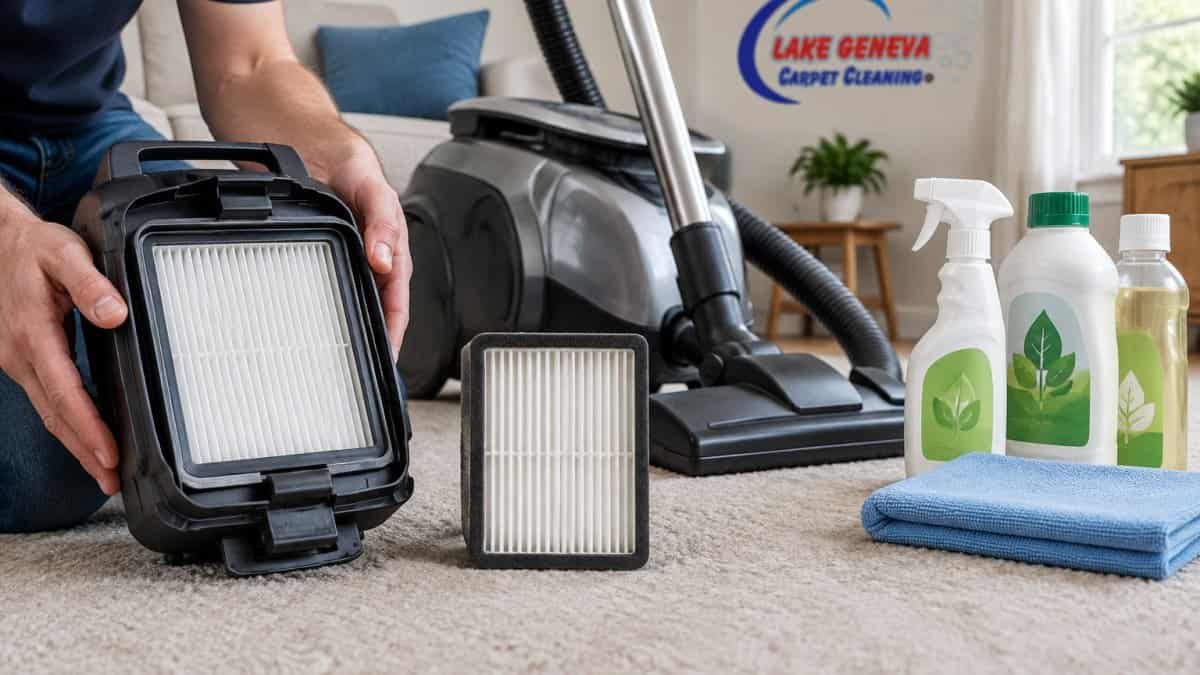
A vacuum with a true HEPA filter captures very fine particles that standard filters let escape. Look for a sealed system so the exhaust does not push dust back into the room. A poorly sealed machine can undo your efforts.
What the HEPA rating actually means
A genuine HEPA filter is rated to capture at least 99.97 percent of airborne particles at 0.3 microns. A filter labeled “HEPA-type” or “HEPA-like” is not held to that standard, so read the filter spec rather than the marketing name on the box.
A sealed system matters as much as the filter. On a poorly sealed machine, air escapes around the filter housing and carries fine dust back into the room before it ever reaches the media. Check that the filter sits in a gasketed housing and that the body has no visible gaps at the seams.
- Confirm the filter is rated for 99.97 percent at 0.3 microns
- Look for a sealed or gasketed filter housing, not a loose drop-in
- Choose a machine with a bag or a sealed canister you can empty outdoors
- Replace or wash the filter on the schedule the manual gives, not when it looks dirty
Watch out: emptying a bagless canister indoors dumps a cloud of fine dust back into the air, which can defeat the point of vacuuming with a HEPA machine in the first place.
Choosing low-VOC and fragrance-free cleaning products
Strong scents and volatile organic compounds (VOCs) are a common asthma trigger, and they are easy to bring into a home without noticing. Learn whether eco-friendly carpet cleaning delivers real results and is safe for your household. Fragrance mixes, aerosol propellants, and solvent-based spot cleaners are the usual culprits. The practical approach is to read the label for a low-VOC or VOC-free claim, choose fragrance-free versions, and skip aerosol sprays in favor of pump or trigger sprays that put less into the air.
- Look for a low-VOC or VOC-free statement on the label
- Choose fragrance-free over scented, even when the scent is described as natural
- Avoid aerosol propellants and solvent-heavy spot cleaners
- Test any new product on a hidden patch of carpet first
If a product’s label does not list ingredients or make a low-VOC claim, treat it as unknown rather than assume it is safe for a sensitive household. A common pattern among families managing asthma is to keep one fragrance-free spot cleaner on hand for accidents and leave the rest of the cleaning to plain water and a damp cloth.
Matching the tool to the carpet
Carpet type changes how much allergen a vacuum can lift. Low-pile and tightly looped carpets release debris more readily, while high-pile and plush carpets hold particles deeper and need slower, overlapping passes. Synthetic fibers generally shed less than wool, but wool’s natural texture can trap fine dust in the pile. Adjust your pass speed and frequency to the carpet rather than treating every room the same.
- Low-pile and looped carpet: standard passes, twice weekly
- High-pile and plush carpet: slower, overlapping passes, and consider a third weekly pass in bedrooms
- Area rugs over hard floors: vacuum both sides and the floor beneath
Professional Carpet Cleaning Frequency for Asthma Homes
Professional hot water extraction is a method that works below the surface of the carpet, where home vacuums do not reach.
The right interval depends on what is in the home and how the carpet is built, not on a single calendar rule.
A trigger-based schedule
Use the conditions in the home to set the interval rather than picking a number at random:
- Sooner after a flood, renovation, or heavy dust event, once the carpet is fully dry
Watch out: cleaning a carpet that is still damp from a leak or a spill traps moisture in the padding and can grow mold, which is a trigger in its own right. Confirm the carpet is dry before scheduling extraction.
Carpet type changes the interval
Different carpets hold allergens differently, and the schedule should reflect that. High-pile and plush carpets trap more fine dust and dander deep in the pile and generally benefit from the shorter end of the range. Low-pile and tightly looped carpets release debris more readily and can often stretch toward the longer end. Synthetic fibers tend to shed less than wool, but wool’s texture can hold fine particles in the pile. Area rugs over hard floors should be cleaned on the same schedule as the carpet around them, and the floor beneath them vacuumed at the same time.
When to replace rather than clean
Cleaning has limits. Carpet that is more than about ten years old, has padding that has broken down, or shows persistent musty odor after a full dry is a candidate for replacement rather than another cleaning cycle. The same is true when a household member’s symptoms keep worsening despite a consistent cleaning schedule. In those cases, removing the carpet and switching to a hard floor with washable rugs is often the more effective step for asthma control.
Ask your doctor whether your triggers call for a tighter schedule. Your own symptoms between cleanings are the best guide to whether the interval is working.
U.S. EPA indoor air quality and asthma trigger guidance
The table below summarises the carpet types and when each one calls for a tighter or looser schedule.
Carpet type | Cleaning interval | Note |
|---|---|---|
High-pile and plush | Shorter end of the range | Traps more fine dust and dander deep in the pile |
Low-pile and tightly looped | Longer end of the range | Releases debris more readily |
Synthetic fibers | Generally sheds less | Easier to keep clean |
Wool | Watch closely | Texture can hold fine particles in the pile |
Area rugs over hard floors | Same schedule as surrounding carpet | Vacuum the floor beneath at the same time |
Lake Geneva Seasonal Factors That Change Your Schedule
Lake Geneva’s seasons shape how much allergen reaches your carpet. Spring brings pollen and mud tracked in from wet yards. Fall brings leaf debris and mold spores. Winter brings road salt, sand, and moisture on boots, while the heating system dries indoor air and stirs up dust.
Plan a deeper clean in spring and again in fall. Add extra vacuuming during the winter months when salt and grit arrive on every boot.
Asthma Friendly Carpet Maintenance Checklist
Use this checklist to keep your schedule on track:
- Vacuum bedrooms and living areas twice a week with a HEPA vacuum
- Wash bedding in hot water every week
- Spot treat spills and pet accidents within 24 hours
- Shake out entry mats outdoors weekly
- Keep indoor humidity moderate to limit mold and mites
- Book a professional deep clean on your chosen schedule
- Note any symptom changes and share them with your doctor
Drying, Ventilation and Coordinating with HVAC Maintenance
Carpet must dry fully after cleaning. Damp carpet grows mold, which is a trigger in its own right. Run fans, open windows if the weather allows, and keep the room well ventilated for at least 24 hours.
Coordinate your carpet schedule with HVAC maintenance. Change furnace and air conditioning filters on time, and have ducts checked periodically. Clean air systems and clean carpets work together to lower the particles in your home.
Scheduling Your Next Professional Carpet Cleaning
Set your next professional cleaning date now, before the season changes. Choose a time when the home can stay empty and ventilated while carpets dry. Pair the visit with a deep vacuum and a check of your filters.
Lake Geneva Carpet Cleaning has served homeowners in the area for over 32 years, and our owner-operated team uses eco-friendly, truck-mounted hot water extraction. Pricing depends on the job, so contact us for a free quote and we will build a cleaning plan that fits your home and your breathing needs.
Frequently Asked Questions
How often should carpets be cleaned if someone in the house has asthma?
Most households with asthma do well with professional carpet cleaning about once or twice a year, and more often if pets live in the home or the carpet sits in a high-traffic area. Between professional visits, vacuum high-traffic areas at least twice a week with a HEPA-filter vacuum and keep up with spot cleaning. Pricing depends on the size and condition of the job, so contact Lake Geneva Carpet Cleaning for a free quote tailored to your home.
What time of year is worse for dust mites in carpet?
Dust mite activity tends to be highest in warm, humid months, when indoor moisture rises and windows are closed for long stretches. Dry winter heating can also stir up particles when people walk across carpets. Scheduling a thorough cleaning in late spring and again in early fall helps reduce allergen buildup before peak seasons.
Can professional carpet cleaning help reduce asthma triggers?
Professional carpet cleaning can address deeper soil than regular vacuuming reaches. It works best as one part of a routine that includes frequent vacuuming and good ventilation. Lake Geneva Carpet Cleaning can assess your carpets and recommend a timing that fits your household.