Last Updated: November 5, 2026
Quick Summary
Professional carpet cleaning reaches dust, pollen, pet dander, and grit that settle deep in the pile and padding, where regular vacuuming cannot. Hot water extraction is the most common deep-cleaning method, while low-moisture methods suit quick refreshes. Lake Geneva Carpet Cleaning has served the Delavan area for 32 years.
- Vacuuming only reaches the top few millimeters of carpet, so soil settles deeper into the padding.
- Store-bought spot cleaners can leave residue that attracts new dirt and makes carpet look dingy.
- Hot water extraction flushes soil from the backing but needs several hours to dry.
- Low-moisture methods use less water and dry quickly, but clean less deeply than extraction.
- Ask providers which method suits your fiber, how long drying takes, and how they handle residue.
Table of Contents
- Why Professional Carpet Cleaning Matters in Delavan Homes
- Carpet Cleaning Preparation Checklist Before the Crew Arrives
- Cleaning Methods Explained and Where Each One Fits
- Carpet Drying Time After Professional Cleaning
- Removing Pet Odors, Allergens and Residue for Better Indoor Air
- Professional Carpet Cleaning Questions to Ask Before You Hire
- Commercial Carpet Cleaning in Delavan WI for Local Businesses
- Book Your Carpet Cleaning Appointment With Lake Geneva Carpet Cleaning
- Frequently Asked Questions
Why Professional Carpet Cleaning Matters in Delavan Homes
Carpet holds more than most homeowners realize. Dust, pollen, pet dander, and tracked-in grit settle into the pile and the padding underneath, and regular vacuuming only reaches the top few millimeters. For a home in Delavan, where Lake Geneva’s seasonal traffic brings sand, mud, and road grime through the door, that buildup comes faster than people expect. Professional cleaning reaches the layers a vacuum cannot.
Many homeowners try to keep up with a rental machine or store-bought spot cleaner between visits. Those tools help with fresh spills, but they rarely pull soil out of the backing. Residue left behind can attract new dirt and make carpet look dingy within a few weeks. A professional extraction cleans deeper and rinses more completely.
Lake Geneva Carpet Cleaning has served the Delavan area and surrounding communities for 32 years. As an owner-operated business, we explain each step before we start.
Carpet Cleaning Preparation Checklist Before the Crew Arrives
A little preparation helps the visit go smoothly and gives the cleaning the best result. The checklist below is ordered by when to do each step, so you can work through it in the days and hours before the crew arrives.
A few days before the appointment
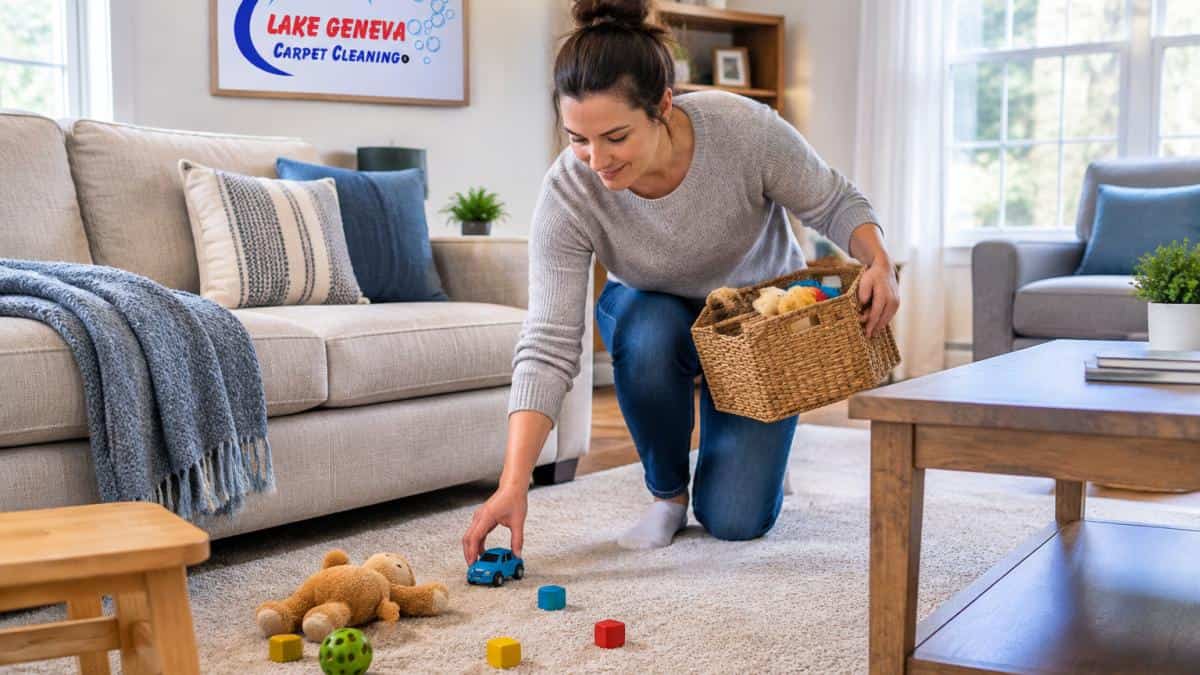
- Clear the floor of small furniture, toys, cords, pet bowls, and loose items so the crew can reach every section of carpet. Large pieces like sofas and beds can usually stay if they sit against a wall, but let us know in advance if anything heavy needs to move.
- Move valuables, breakables, electronics, and floor lamps out of the work area. Carpet cleaning involves water and equipment, so anything that could be splashed or bumped should be relocated.
- Lift or pull back any area rugs that will not be cleaned on-site, and let us know which rugs are coming with us. Rugs with fringe, natural fibers, or delicate dyes are often cleaned off-site rather than in the home.
- Write down the spots that concern you. Note where pet accidents happened, which high-traffic paths look dingiest, and any stains you have already tried to treat. Pretreatment is often needed before the main cleaning, and knowing the history helps the crew choose the right approach.
The day before the appointment
- Vacuum the carpet if you can. A pass with your vacuum lifts loose soil and pet hair so the professional cleaning can focus on what is bound to the fibers. It is not required, but it helps.
- Confirm access. Make sure the crew can get to the rooms being cleaned, and clear a path from the door to the work area. If you have a driveway or parking spot that is easier for equipment, mention it when you book.
- Plan for pets and children. Arrange for pets to be out of the work area during the visit, and plan where kids will play while the carpet is being cleaned and drying.
The day of the appointment
- Point out problem areas in person. Walk the crew through the rooms and show them the stains, pet spots, and high-traffic zones you noted. This is the best time to ask questions about method and drying time.
- Plan for the drying period. Carpet usually needs several hours to dry, so keep pets off freshly cleaned areas and avoid walking on them until the surface feels dry to the touch. Ventilation helps, so open a window if the weather allows.
- Keep a pair of clean socks or indoor shoes handy. Shoes should stay off damp carpet, and socks let you move through the house without tracking soil back in.
Watch out: Do not apply a store-bought spot cleaner right before the crew arrives. Some products leave residue or set a stain, and the crew will not know what was applied. Tell them what you used and when, and let them pretreat the area themselves.
Contact us for a free quote so you know what to expect before the appointment.
Cleaning Methods Explained and Where Each One Fits
Not every carpet needs the same approach. The right method depends on the fiber type, the level of soil, and how quickly the room needs to be back in use. Our team will recommend the best option for your floors after an inspection, but the overview below explains what each method does and where it fits, so you can ask better questions and set realistic expectations.
Low-Moisture and Dry Methods
Low-moisture methods use less water than deep cleaning. Some rely on a cleaning compound that is worked into the pile and then vacuumed out; others use a light mist and a bonnet or pad to lift soil from the surface. They suit light soil, some synthetic fibers, and situations where a room needs to be back in use quickly. Their limit is that they do not flush as much soil from the backing, so they are less effective for heavy buildup, long-term residue, or pet accidents that have reached the padding. Drying time is short, often a couple of hours or less, depending on humidity.
Hot Water Extraction for Deep Cleaning
Hot water extraction is the method most often used for deep residential cleaning. Heated water and cleaning solution are sprayed into the carpet, agitated to loosen soil, and then pulled back out with powerful suction. The heat helps dissolve oily soils and allergens, and the extraction removes the water along with what it carries. Done correctly, it leaves carpet cleaner and reduces residue. Drying time is longer than with low-moisture methods, typically several hours and sometimes longer for thick pile or heavy padding.
Hot water extraction is not right for every carpet. Some fibers and backings react poorly to heat or excess moisture, so a careful inspection comes first. Wool and other natural fibers, in particular, need a gentler approach and controlled moisture.
How to Compare the Methods
When you compare methods, ask three questions: how deep does it clean, how long will the carpet take to dry, and what fiber is it safe for. Low-moisture methods win on downtime and are a reasonable choice for light refreshment between deeper cleanings. Hot water extraction wins on soil removal and is the better choice for heavy buildup, allergies, and pet odors that have settled into the padding. A common pattern is to use deep extraction as the main cleaning and low-moisture methods for quick touch-ups in between.
Spot and Pet Stain Treatment
Spots and pet stains need targeted attention. Fresh stains often respond well to prompt blotting and a suitable spot treatment, while older stains may need several passes and pretreatment before the full cleaning. Pet urine in particular can penetrate the padding, which is why surface cleaning alone often fails to fully remove the odor. Some stains may not disappear completely, especially if the fiber has been permanently discolored.
Watch out: Be cautious with do-it-yourself spot treatments on unknown fibers. Some products can bleach, shrink, or set a stain, and the damage is often permanent. Test in an inconspicuous area first, and when in doubt, let the crew pretreat the spot during the visit.
Pricing depends on the job, including the method chosen and the condition of the carpet. Contact us for a free quote and we will walk through the options for your home.
The main methods differ in how deep they clean, how long they take to dry, and which fibers suit them.
| Method | Best for | Key difference |
|---|---|---|
| Low-moisture / dry | Light soil, quick refreshment | Uses less water; short drying time |
| Hot water extraction | Deep cleaning, pet odors, allergens | Flushes soil from backing; longer drying |
| Spot and pet stain treatment | Fresh or set stains | Targeted pretreatment; may need several passes |
Carpet Drying Time After Professional Cleaning
Drying time depends on the cleaning method, the humidity in the home, the thickness of the carpet and padding, and how well the air moves through the room. Most carpets dry within several hours, but thick pile or heavy padding can take longer.
To speed drying, run fans or open windows if the weather allows, and keep the thermostat at a comfortable level rather than turning the heat up sharply. Avoid walking on the carpet until it feels dry, and keep pets off it.
Slow drying can be a sign of trapped moisture. If the carpet still feels damp well after the expected time, or if you notice a musty smell, contact us so we can check the area and take the right steps.
Removing Pet Odors, Allergens and Residue for Better Indoor Air
Pet odors, dust mites, and allergens tend to settle deep in carpet padding, where surface vacuuming never reaches. A thorough extraction removes much of this material, but the result depends on how well the carpet and padding are rinsed and dried.
Residue deserves special attention. Leftover cleaning solution can attract soil quickly and leave carpet feeling stiff or sticky. Proper rinsing and extraction reduce this problem and help carpet stay cleaner for longer.
Regular maintenance between professional cleanings also helps. Frequent vacuuming with a good filter, prompt attention to spills, and periodic professional cleaning all support healthier indoor air.
Professional Carpet Cleaning Questions to Ask Before You Hire
Before you book any carpet cleaner, ask a few direct questions. Ask what cleaning method they use and whether it suits your carpet fiber. Ask how long drying will take and what you should do to help. Ask whether they pretreat stains and what results are realistic for your specific stains.
Ask how they handle residue. Request references, reviews, or examples of past work, and confirm that they will inspect your carpets before recommending a method.
Lake Geneva Carpet Cleaning welcomes these questions. Contact us for a free quote and we will walk through each of these points with you.
Commercial Carpet Cleaning in Delavan WI for Local Businesses
Carpet in a business takes on heavy foot traffic, so it needs a regular cleaning schedule to look professional and last longer. Retail shops, professional offices, and waiting areas all benefit from consistent maintenance, and a clean entrance makes a strong first impression on customers and clients.
Local businesses in Delavan and the surrounding towns trust us to handle both residential and commercial carpet. If your business needs regular carpet care, contact us for a free quote tailored to your space.
Book Your Carpet Cleaning Appointment With Lake Geneva Carpet Cleaning
Clean carpet makes a home healthier and a business more inviting. With 32 years of experience serving Lake Geneva, Twin Lakes, Genoa City, Walworth, Fontana, Darien, Burlington, Elkhorn, Williams Bay, Delavan, and East Troy, Lake Geneva Carpet Cleaning is ready to handle your next job.
Contact us for a free quote and let us inspect your carpets, recommend the right method, and explain what to expect. We look forward to working with you.
Frequently Asked Questions
How should I prepare my home for professional carpet cleaning?
Clear floors of small items, furniture and cords, vacuum thoroughly the day before, and move breakables out of the work area. Mark any known stains or pet accident spots so the technician can pre-treat them. Keep pets and children out of the room until the carpet is fully dry, and make sure the path from the entrance to the carpet is open for equipment.
How long does carpet take to dry after professional cleaning?
Most carpets dry within several hours, though thick pile, heavy padding and humid weather can extend drying time. Good airflow from fans and open windows helps speed the process. Avoid walking on carpet until it is dry to the touch, and ask your provider what drying time to expect for your specific carpet before the appointment.
What should I ask before hiring a carpet cleaning service in Delavan?
Ask which cleaning method they use and whether it suits your carpet type, how long drying takes, whether they pre-treat stains and pet odors, and whether they carry insurance. Request references or reviews you can check, and ask how pricing is determined. Pricing depends on the job, so request a free quote from Lake Geneva Carpet Cleaning rather than relying on general estimates.
Can professional carpet cleaning help remove odors and allergens?
Hot water extraction removes dirt, allergens and residue that vacuuming leaves behind, which can improve how a room feels and smells. Pet odors often need targeted pre-treatment in addition to a full cleaning, and results vary with how long the odor has been set in. Regular professional cleaning supports better indoor air quality over time.