
Last Updated: November 14, 2026
Quick Summary
Carpet cleaning dry time depends on the cleaning method, the carpet and padding underneath, and the humidity and airflow in the room. Carpet can feel dry on top while the padding stays wet, so check the padding before assuming it is dry. Moisture that lingers past 48 hours raises mold risk.
- Thick, plush carpet and heavy foam or rubber padding take longest to dry.
- Run fans, open windows, and use a dehumidifier to speed drying.
- Keep fans running for the first full day after cleaning.
- Press a dry paper towel on the carpet to test whether moisture remains.
- Call your cleaner if carpet stays wet beyond 48 hours.
Table of Contents
- How Long Carpet Takes to Dry After Cleaning
- Factors That Slow Carpet Drying in Southeastern Wisconsin Homes
- How to Dry Carpet After Cleaning Faster
- How Long Carpet Can Stay Wet Before Mold Becomes a Concern
- A Simple Method to Check Whether Carpet and Padding Are Dry
- Carpet Still Wet After Cleaning Overnight: What to Do Next
- Preventing Dry Time and Mold Problems Before Your Cleaning Appointment
- Scheduling Your Carpet Cleaning in Elkhorn, WI With Drying in Mind
- Frequently Asked Questions
How Long Carpet Takes to Dry After Cleaning
Drying time after a professional cleaning varies, and thick padding and humid conditions can stretch the window. Drying time depends on the method used, the carpet itself, and the air in the room.
Carpet can feel dry on top while the padding underneath stays wet. That gap is where most drying problems start, so it helps to know what to expect before the cleaning crew arrives.
Drying Expectations by Cleaning Method
Different cleaning methods leave different amounts of water in the carpet.
Ask your cleaner which method they plan to use so you can plan your day around it.
Drying Expectations by Carpet and Padding Type
Thick, plush carpet holds more water than a low, tight loop. Heavy padding takes the longest to dry because water settles into it and stays there. Synthetic fibers generally dry faster than natural wool, which absorbs more moisture.
- Plush or thick carpet: Takes longer to release moisture
- Heavy foam or rubber padding: Holds water and slows drying
Drying time depends on the cleaning method and the carpet and padding underneath, as summarised below.
| Factor | Effect on drying | Note |
|---|---|---|
| Plush or thick carpet | Takes longer to release moisture | Holds more water than low, tight loops |
| Heavy foam or rubber padding | Holds water and slows drying | Water settles into it and stays |
| Synthetic fibers | Generally dry faster | Dry more quickly than natural wool |
| Natural wool | Absorbs more moisture | Slower to dry |
Factors That Slow Carpet Drying in Southeastern Wisconsin Homes
Local conditions matter more than many homeowners expect. Humidity rises in late spring and summer, and damp lake-region air can keep carpets wet for longer. Cooler fall and winter months bring their own challenge, since homes are often closed up with windows shut and heat running dry.
- Humidity: High moisture in the air slows evaporation from carpet and padding
- Indoor temperature: Cool rooms dry more slowly than warm ones
- Limited airflow: Closed rooms trap moisture near the floor
- Basement installs: Lower-level rooms tend to stay damp longer
If you live near the lake, expect drying times to run on the longer side during humid stretches. Wet carpet that lingers can invite mold, so our guide on preventing mold in carpet after water damage covers the five critical steps to protect your home.
How to Dry Carpet After Cleaning Faster
You can speed up drying with a few simple steps. Good airflow does most of the work, so start there.
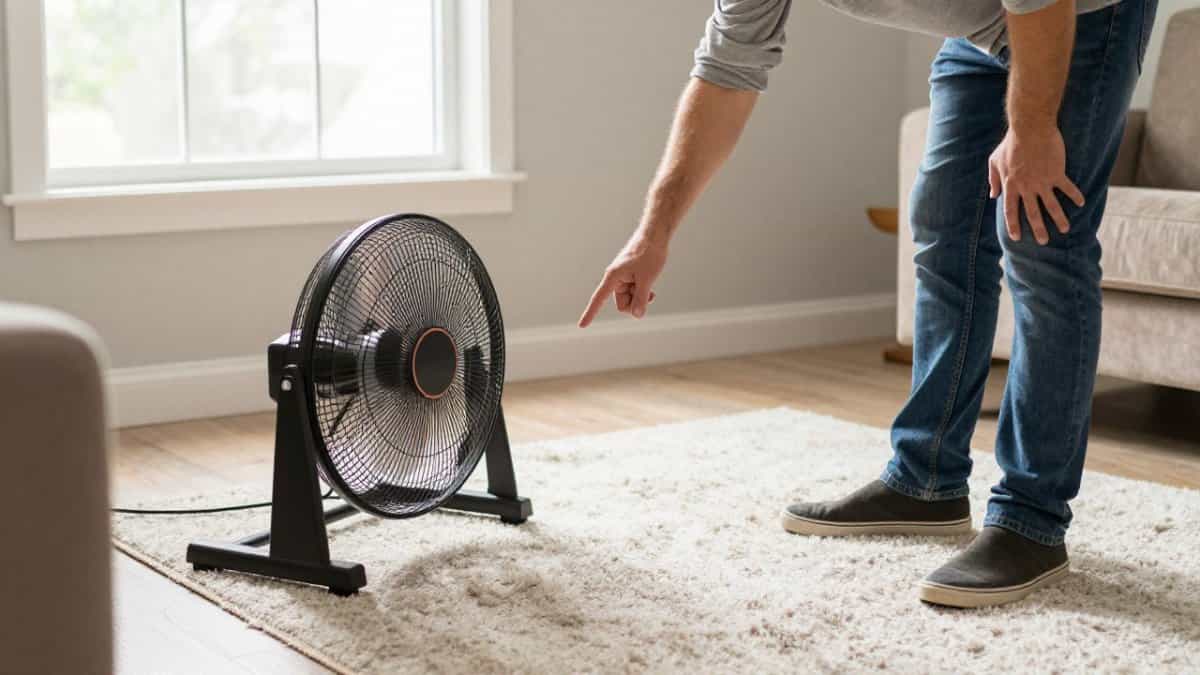
- Run fans: Point box fans or air movers across the carpet to move air over the surface
- Open windows: Fresh air carries moisture out of the room, especially on dry days
- Turn on the dehumidifier: Lower humidity pulls water out of the carpet and padding faster
- Keep foot traffic off: Walking on damp carpet can push water deeper into the padding
- Lift furniture pads: Set aside furniture caster cups so air can reach the floor underneath
A homeowner in a bright living room in a Wisconsin home points a box fan toward a freshly cleaned carpet, with the window open and natural light falling across the floor.
Keep the fans running for the first full day. Stopping too early is one of the most common reasons carpet stays damp.
How Long Carpet Can Stay Wet Before Mold Becomes a Concern
Mold needs three things to take hold: moisture, a food source, and a temperature range it can grow in, and a longer carpet cleaning dry time gives it more chances to get established. Carpet and padding supply the food source (cellulose in backing, jute, and natural fibers, plus dust and soil trapped in the pile), and a normally heated home supplies the temperature. That leaves moisture as the variable you can actually control, which is why drying time matters more than any single clock-based rule.
Carpet and padding that dry within the first 24 hours after cleaning generally carry less mold risk when the room is ventilated and the padding is not left soggy. The risk rises when moisture lingers past 24 to 48 hours, and it rises faster when the room is warm, the padding is thick or foam-based, or the carpet sits over a concrete slab that holds cool dampness. Moisture duration, temperature, material, and how much soil is in the carpet all interact, so no single hour marks when mold starts.
Dampness vs. Confirmed Mold
Dampness is a moisture reading. Mold is a biological growth. They are not the same thing, and confusing them leads homeowners to either panic over a carpet that just needs another day of airflow or ignore a real problem because the surface looks fine.
- Damp but no visible growth: the carpet or padding feels cool or spongy, may smell faintly earthy, but shows no discoloration. This is a drying problem, keep air moving and recheck.
- Suspected mold: visible dark, green, or black speckling; a strong musty odor that persists after drying; or a sticky, slimy feel on the backing. This is a contamination problem and needs a different response than more fans.
- Hidden moisture: the surface feels dry but the padding or subfloor stays damp. This is the most common pattern behind musty odors that appear days after a cleaning.
Watch out: a musty smell that returns after the carpet feels dry usually means moisture is trapped in the padding or subfloor, not the pile, running more fans on the surface will not fix it.
Warning Signs to Act On
- A musty or earthy odor that does not fade as the carpet dries
- Dark spots, rings, or speckling on the carpet face or along baseboards
- Padding that stays spongy or cool more than 48 hours after cleaning
- Visible moisture or discoloration at the carpet edge where it meets the wall
- Anyone in the home reporting new sneezing, coughing, or irritation that clears when they leave the room
If you notice any of these, stop treating it as a drying delay and treat it as a moisture problem that needs investigation. Our guide on how to prevent mold after carpet cleaning covers the steps to take before problems start, and our guide on how to remove mold from carpet safely at home walks through safe removal if growth is already visible.
A Simple Method to Check Whether Carpet and Padding Are Dry
Surface dryness does not tell the whole story. Use this quick check to confirm the padding is dry, not just the carpet pile.
- Press a dry paper towel firmly on several spots, including near walls and under furniture. If it comes away damp, moisture remains.
- Lift a small corner of the carpet near a baseboard and feel the padding. It should feel dry and firm, not spongy or cool.
- Check the subfloor at the edge of the carpet. Dark or soft spots mean water has reached it.
- Use your nose. A musty or earthy smell often signals trapped moisture.
Repeat the check the next morning. If anything feels damp, keep the fans running and the dehumidifier going.
Carpet Still Wet After Cleaning Overnight: What to Do Next
It is not unusual for carpet to feel damp the morning after a cleaning, especially with thick padding or humid weather. Start by turning on fans, opening windows if the outdoor air is dry, and running a dehumidifier in the room.
- Keep air moving for another full day
- Avoid walking on the wet areas
- Recheck the padding using the press test above
- Call your cleaner if the carpet stays wet beyond 48 hours
Persistent dampness can mean water has soaked deeper than expected. Contact us for help figuring out the next step.
Preventing Dry Time and Mold Problems Before Your Cleaning Appointment
A little preparation before the cleaning crew arrives can shorten drying time and lower mold risk. Start by clearing the floor of small items, furniture pads, and anything that could block airflow. Plan to keep the room accessible for fans and a dehumidifier.
- Move valuables and small items out of the room
- Clear high-traffic paths so you can walk around the carpet afterward
- Set up fans and a dehumidifier before the crew leaves
- Plan for the drying window by keeping pets and kids off the carpet
Ask your cleaner about the method they will use and what drying time to expect. Knowing the plan ahead keeps stress low on cleaning day.
Our guide on planning a deep carpet cleaning in Lake Geneva covers what to expect and how to prepare your home. Reading it before your appointment can make the whole process smoother.
Scheduling Your Carpet Cleaning in Elkhorn, WI With Drying in Mind
Timing your cleaning well makes drying easier. Schedule carpet cleaning on a day with dry weather and good airflow, and avoid booking right before a rainy or humid stretch. Leave the rest of the day free so you can run fans and keep foot traffic off the carpet.
A morning appointment gives the carpet the full day to dry with fresh air moving through the room.
Ready to book? Schedule your carpet cleaning in Elkhorn, WI with Lake Geneva Carpet Cleaning. We’ve been serving the area for 32 years.
Lake Geneva Carpet Cleaning has served the Lake Geneva area for 32 years, and we know how drying conditions shape the results. Pricing depends on the size and condition of your carpet, so contact us for a free quote. Our team will walk you through the drying plan and help keep your home dry, clean, and mold-free.
Frequently Asked Questions
Can mold grow after carpet cleaning?
Mold can grow if carpet and padding stay damp for too long after cleaning. Mold needs moisture, and the padding underneath is the spot most likely to hold water and stay wet after the surface feels dry. Good airflow, moderate indoor humidity, and a moisture check of both the carpet and the padding within the expected drying window lower the risk. If the carpet still feels damp after a full day, ventilate the room and contact the cleaning company that did the work for a follow-up visit.
What should I do if carpet is still wet the next day?
Start by turning on fans and running a dehumidifier if you have one, and keep the room closed off from traffic. Open windows when outdoor air is drier than indoor air. Check the carpet and the padding edges with the moisture check described in this guide. If the carpet remains wet beyond the normal drying window, contact the cleaning company that performed the service and ask them to inspect it, since lingering moisture can point to too much water left in the padding.
How can I tell whether moisture has reached the carpet padding?
Press a dry paper towel firmly onto the carpet in several spots, then lift a corner of the carpet near a wall or seam and feel the padding underneath with your hand. Damp, cool, or spongy padding means moisture is still present. Surface dryness alone does not confirm that the padding has dried, so check both layers before deciding the carpet is ready for regular foot traffic.
How long should carpet be damp after cleaning?
Carpet should feel only slightly cool or barely damp on the surface within several hours of cleaning and should be dry to the touch by the next day in most homes. Heavy padding, thick carpet, humid weather, and limited airflow all extend drying time. If the carpet still feels wet after a full day, that is a sign to increase airflow and to recheck the padding rather than wait longer without action.