Table of Contents
- Why Rug Restoration Beats Replacement for Lake Geneva Homeowners
- 1. Extend Your Rug’s Lifespan and Protect Your Investment
- 2. Breathe Easier: How Rug Restoration Improves Indoor Air Quality
- 3. Remove Stubborn Stains, Odors, and Embedded Dirt
- 4. Eliminate Bacteria, Mold, and Mildew for a Healthier Home
- 5. Restore Color and Original Beauty While Making Rugs Easier to Maintain
- Signs a Rug Needs Professional Restoration
- The Rug Restoration Process: What to Expect
- Rug Repair and Restoration: Fixing Damage Before It Spreads
- Conclusion
- Frequently Asked Questions
Last Updated: October 19, 2026
Why Rug Restoration Beats Replacement for Lake Geneva Homeowners
Professional rug restoration is the process of deep cleaning, repairing, and reviving a rug so it looks and performs closer to its original condition. At Lake Geneva Carpet Cleaning, we have served homeowners across Lake Geneva, WI and the surrounding towns for 32 years, and we have watched far too many good rugs get rolled out to the curb when they only needed careful work. A quality area rug holds sentimental value, ties a room together, and often costs more to replace than most people realize.
Here is the part most guides get wrong: they treat restoration as a fancy word for cleaning. It is not. Cleaning lifts surface dirt. Restoration addresses fiber damage, worn edges, fading, and embedded soil that has worked its way into the base of the rug.
Below, we break down the top 5 benefits of professional rug restoration. Each one explains what actually changes for your home, your health, and your rug.
1. Extend Your Rug’s Lifespan and Protect Your Investment
Restoration adds years to a rug by removing the grit that grinds away at carpet fibers. Every step across a dirty rug pushes abrasive soil deeper into the pile. Over time, that soil cuts fibers from the inside, and the damage cannot be undone.
Deep cleaning and repair stop that cycle. We inspect the backing, edges, and fringe, then address weak spots before they spread. A rug that gets this kind of attention holds its shape and pile far longer than one that only sees a vacuum.
Think of it as maintenance for a valuable piece of your home. You would not skip service on a good furnace. A handmade or wool rug deserves the same care.
Lift and rotate your area rugs twice a year. Sun exposure and foot traffic wear one side faster, and rotating spreads the load so the rug ages evenly.
2. Breathe Easier: How Rug Restoration Improves Indoor Air Quality
Rug restoration improves indoor air quality by pulling out the dust, dirt, and allergens trapped deep in the pile. Rugs act like filters. They catch particles from the air, but unlike a filter, they never get changed.
That trapped material does not stay put. Every walk across the rug stirs some of it back into the air. For anyone with allergies or asthma triggers at home, that matters.
Professional equipment reaches what a household vacuum cannot. Hot water extraction flushes embedded soil from the base of the rug and lifts it away. The result is a fresher room and less dust floating around your living space.
If someone in your home has allergies, this benefit alone often justifies the work.
3. Remove Stubborn Stains, Odors, and Embedded Dirt
Stubborn stains and odors need more than a store-bought spot cleaner. Surface treatments often push the mess deeper or leave a sticky residue that attracts new dirt.
Pet accidents are the classic case. The liquid soaks through the pile and into the backing and pad. If the source is not fully flushed out, the smell returns within weeks. A common mistake is treating the visible spot and calling it done.
Restoration targets the whole problem:
- Flushing the full depth of the pile and backing
- Neutralizing odor at the source, not masking it
- Lifting old, set-in stains with fiber-safe solutions
- Removing the fine grit that makes rugs look dingy
In practice, this means a rug that smells clean and stays clean longer.
4. Eliminate Bacteria, Mold, and Mildew for a Healthier Home
Bacteria, mold, and mildew thrive in rugs that stay damp or hold organic soil. Lake Geneva’s lake-effect humidity and wet winters make this a real concern for local homes, especially in basements and entryways.
Mold and mildew leave musty odors and can irritate the lungs. Once they take hold in a rug’s backing, simple vacuuming will not fix it. Proper extraction and controlled drying are what break the cycle.
Our process uses hot water extraction and careful drying so the rug does not sit wet. That combination removes the moisture mold needs to grow and leaves the fibers clean and dry.
For a healthier home, this step is not optional. It is the difference between a rug that supports your family’s health and one that works against it.
Never roll up or store a rug while it is still damp. Trapped moisture feeds mildew in the backing, and the musty smell can set in within days.
5. Restore Color and Original Beauty While Making Rugs Easier to Maintain
Restoration brings back the color and depth a rug had when it was new, but the reason colors dull is worth understanding. Embedded soil scatters light off the fiber surface, so a wool or silk rug reads gray and flat even when the pattern is intact. Once that soil layer is flushed out, the original dye tones show through again and patterns read clearly.
Color is also where rug restoration separates itself from routine cleaning. Three issues come up often in Lake Geneva, WI homes:
- Sun fading. A rug placed in front of a west- or south-facing window can fade unevenly, leaving a bright rectangle where furniture once sat. Restoration assessment identifies whether the fading is surface-level or has reached the dye in the fiber.
- Dye bleed and crocking. Moisture from a spill, a pet accident, or a damp basement can move dye between color blocks. Fiber-safe treatment and controlled drying limit how far that dye travels, but timing matters.
- Abrash and natural variation. Hand-knotted wool rugs often show intentional color variation. A careful restoration preserves that character instead of flattening it with aggressive treatment.
Material matters here. Wool takes dye and cleaning differently than silk, cotton, or synthetic fibers. Silk is far less forgiving of moisture and agitation, and synthetic rugs can be sensitive to heat. A restoration plan should be built around what the rug is made of, not a single method applied to everything.
There is a practical payoff too. A clean, properly restored rug is easier to maintain. Regular vacuuming works better when the pile is not packed with grit, and future spot removal is simpler on a clean surface. Rotate the rug twice a year, use a pad that fits the floor type, and blot spills from the edge inward rather than rubbing, and the restored appearance holds far longer.
| Benefit | What It Fixes | What You Notice |
|---|---|---|
| Longer lifespan | Fiber wear from embedded grit | Rug holds shape and pile for years |
| Better air quality | Trapped dust and allergens | Fresher rooms, fewer allergy flare-ups |
| Stain and odor removal | Deep-set spots and pet accidents | No returning smells |
| Bacteria and mold control | Damp, musty backing | Healthier, drier home |
| Restored color | Dull, grayed fibers and uneven fading | Richer color and clear patterns |
Keep restored rugs out of direct afternoon sun and rotate them every six months. Lake Geneva summers bring strong western sun through large windows, and even fading is easier to prevent than to correct.
Signs a Rug Needs Professional Restoration
Knowing when to call for help saves rugs. Watch for these signs:
- Frayed edges or loose fringe that keeps unraveling
- Dark traffic lanes that vacuuming will not lift
- A musty or pet odor that returns after cleaning
- Stains that have set and darkened over time
- Flat, matted pile that no longer springs back
- Visible mold or water marks on the backing
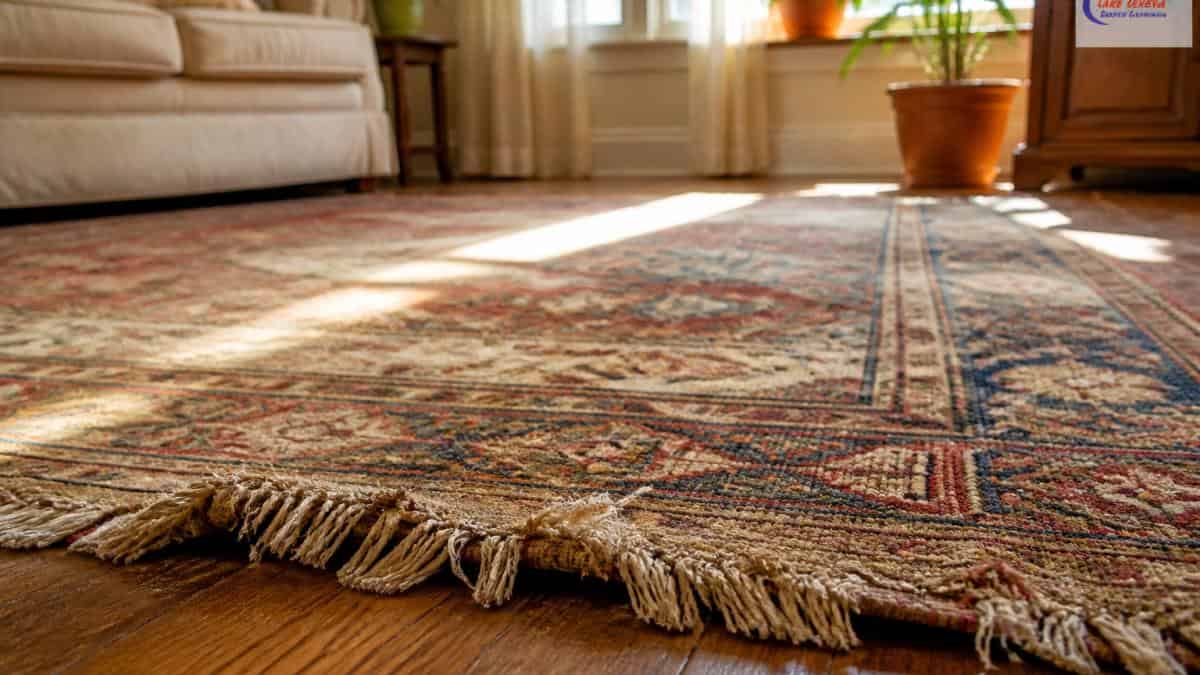
One or two of these signs usually means the rug is a good candidate for restoration. Waiting lets the damage spread, and some of it becomes permanent.
The Rug Restoration Process: What to Expect
The rug restoration process follows a clear sequence, and knowing it helps you set expectations. Most guides stop at “clean and dry.” Real restoration goes further, because a rug is a structure, not just a surface.
- Assessment. We inspect fibers, backing, fringe, and edges to find damage, identify the material, and set a plan. This is where we decide whether the rug needs cleaning, repair, or both.
- Dry soil removal. We pull out loose grit before any moisture touches the rug. Skipping this step is what drives abrasive soil deeper into the pile.
- Deep cleaning. Fiber-safe washing flushes embedded soil from the base of the pile. Wool, silk, cotton, and synthetic rugs each call for different handling, and silk in particular needs a gentler approach.
- Stain and odor treatment. Targeted solutions address spots and smells at the source rather than masking them.
- Repair work. This is the part that makes it restoration. Fringe gets re-secured, edges get rebound, tears in the backing get mended, and weakened foundation areas get reinforced before they spread.
- Controlled drying. Proper airflow and drying protect against mold and mildew, which is a real concern in Lake Geneva’s humid lake-area summers and wet winters.
Timing depends on the rug’s size, material, and condition. A lightly soiled wool rug may move through quickly, while a rug with fringe damage, dye bleed, or backing repairs takes longer because each step needs its own drying and curing time. We will give you a clear picture when we assess it.
Cleaning removes soil. Restoration also repairs fringe, edges, backing, and foundation. Ask any provider which of those steps is actually included.
Rug Repair and Restoration: Fixing Damage Before It Spreads
Rug repair and restoration work together. Repair fixes what is already broken. Restoration keeps the rest of the rug from following.
Small problems grow fast. A loose edge becomes a frayed edge. A frayed edge becomes a missing border. Catching these early keeps the fix simple and protects the rug’s structure.
Common repair needs we see include:
- Re-securing fringe and binding
- Mending tears in the backing
- Reinforcing worn edges
- Treating areas weakened by moisture
If you are searching for rug restoration near me in the Lake Geneva area, act on the small signs. An early assessment is the cheapest form of protection for a rug you love.
Repair stops existing damage. Restoration prevents new damage. A rug needs both to last.
Conclusion
A good rug is hard to replace and easy to neglect. Dirt, moisture, and daily traffic wear it down quietly, and by the time the damage shows, simple cleaning is no longer enough.
At Lake Geneva Carpet Cleaning, we have spent 32 years helping homeowners across Lake Geneva, Twin Lakes, Genoa City, Walworth, Fontana, Darien, Burlington, Elkhorn, Williams Bay, Delavan, and the East Troy area protect the rugs and carpets they value. Our owner-operated team uses hot water extraction, eco-friendly methods, and a 10-day satisfaction guarantee on every job.
Pricing depends on the rug and the work it needs, so reach out for a free quote. Get started with Lake Geneva Carpet Cleaning and give your rug the care that brings it back to life.
Frequently Asked Questions
Is professional rug restoration worth it?
For most rugs with sentimental value or quality construction, yes. Restoration can extend a rug’s lifespan by years, improve indoor air quality, and remove deep-set dirt and allergens that regular vacuuming misses. It also preserves the rug’s original color and fibers. If your rug shows signs like fraying, stubborn stains, or lingering odors, restoration is often more practical than replacement. Contact Lake Geneva Carpet Cleaning for a free assessment.
Can professional rug restoration remove stains and odors?
Professional restoration uses specialized cleaning solutions and equipment to tackle stains and odors that household products can’t reach. Hot water extraction, for example, pulls embedded dirt and odor-causing bacteria from deep within the fibers and padding. Pet accidents, food spills, and mildew smells can often be eliminated. The key is addressing them before they set permanently. A professional can assess the stain type and choose the right treatment.
How long does professional rug restoration take?
Timing depends on the rug’s condition, size, and the specific restoration needed. Minor cleaning and spot treatment might be completed in a few days, while extensive repairs like reweaving or fringe restoration can take longer. Lake Geneva Carpet Cleaning will provide a timeline after inspecting your rug. Factors like drying time also affect the total duration. Ask for an estimate during your consultation.
How can I tell whether my rug needs cleaning or restoration?
Cleaning addresses surface dirt and mild stains, while restoration tackles deeper damage like fiber wear, color fading, fringe damage, or structural issues. Signs you need restoration include frayed edges, discoloration that won’t lift, persistent odors, or visible holes. If your rug is simply dusty or has a few spots, professional cleaning may suffice. A professional inspection will determine the right approach for your rug’s condition.