Last Updated: November 10, 2026
Quick Summary
Natural carpet cleaning for allergies starts with thorough HEPA-filter vacuuming to remove dust mites, pet dander, and pollen before any liquid is used. A light mist of diluted distilled white vinegar, followed by blotting with plain water and complete drying, helps lift residue without soaking the carpet. Baking soda can absorb odors, and a professional deep clean once or twice a year adds further reduction.
- Vacuum slowly, about one inch per second, making two or three passes in perpendicular directions.
- Use a sealed HEPA-filter vacuum so fine particles are trapped instead of blown back into the room.
- Mix one cup of distilled white vinegar with two cups of warm water for a basic spray.
- Test any solution on a hidden corner first and avoid soaking the carpet to prevent mold.
- For most allergy-prone homes, a professional deep clean once or twice a year is a reasonable starting point.
Table of Contents
- Why Carpets Hold Allergens and What Natural Cleaning Can Do
- Ingredients for a Homemade Carpet Cleaner
- Step-by-Step Instructions for Cleaning Carpet at Home
- How Baking Soda and Vinegar Work on Odors and Residue
- Vacuuming Techniques That Pull Allergens Out of Carpet
- How to Reduce Indoor Allergens in Wisconsin Homes
- Why Professional Carpet Allergen Removal Goes Deeper
- How Often to Clean Carpets for Allergy Management
- Safety Tips for Homes with Pets and Children
- Booking Your Carpet Allergen Cleaning With Lake Geneva Carpet Cleaning
- Frequently Asked Questions
Why Carpets Hold Allergens and What Natural Cleaning Can Do
Carpets trap dust mites, pet dander, pollen, and mold spores deep in their fibers and padding. Over time, these particles build up and get stirred back into the air every time you walk across the floor. For people with allergies, that constant exposure can mean sneezing, itchy eyes, and nighttime congestion.
Gentle cleaning methods can help loosen and lift those particles. The goal is not to sterilize the carpet but to reduce the load of irritants that set off symptoms.
- Dust mites feed on dead skin and thrive in humid, undisturbed carpet
- Pet dander clings to fibers and stays airborne when disturbed
- Mold spores can settle in carpet that stays damp too long
Ingredients for a Homemade Carpet Cleaner
A simple homemade cleaner uses a few pantry staples. Distilled white vinegar helps cut grime and neutralize some odors. Sodium bicarbonate, also known as baking soda, absorbs smells and acts as a mild abrasive to lift dirt from fibers.
For a basic spray, mix one cup of distilled white vinegar with two cups of warm water. Add a few drops of natural dish soap to help break up oils. Some people add a few drops of essential oils for scent, but skip them if anyone in the home is sensitive to fragrance.
- 1 cup distilled white vinegar
- 2 cups warm water
- 1 teaspoon natural dish soap (plant-based, fragrance-free)
- Sodium bicarbonate for dry deodorizing
- Spray bottle and clean microfiber cloths
Step-by-Step Instructions for Cleaning Carpet at Home
Start by vacuuming the entire carpet thoroughly. Use a HEPA-filter vacuum if you have one, since it traps fine particles instead of blowing them back out. Vacuum slowly, passing over each area several times in different directions.
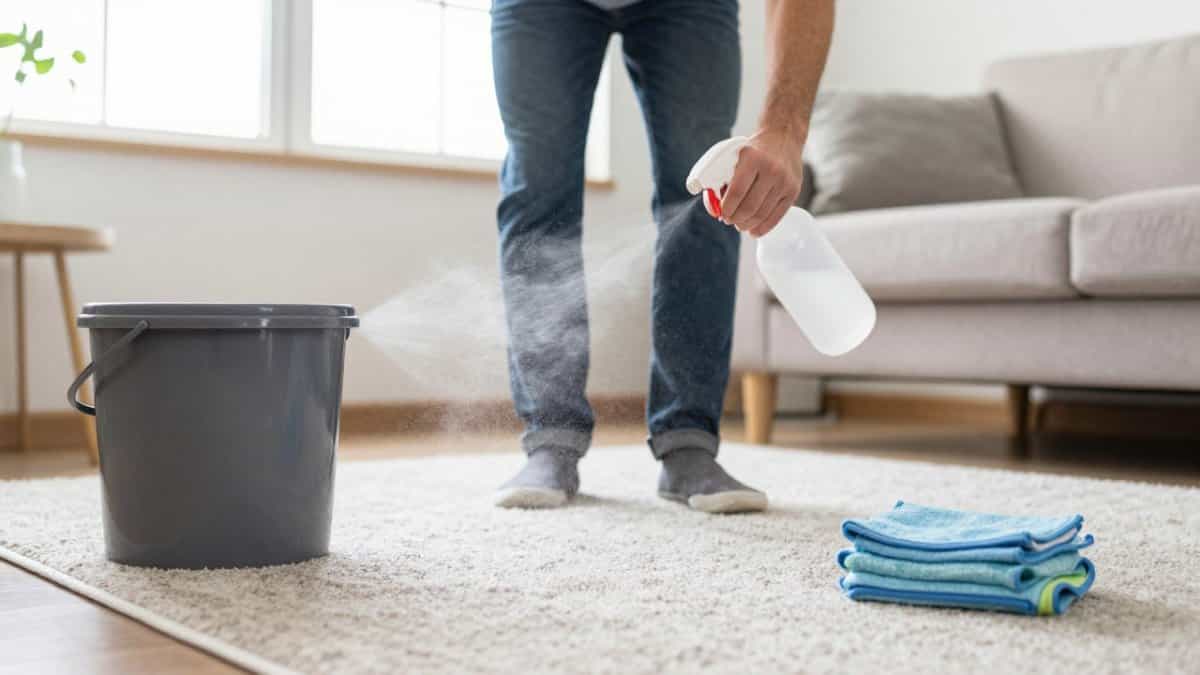
Next, test your solution on a hidden corner first. Wait a few minutes and check for any color change or fiber damage. If the test area looks fine, lightly mist the stained or high-traffic section. Avoid soaking the carpet, because excess moisture can lead to mold and a long drying time.
Gently blot the area with a clean cloth rather than scrubbing hard. Work from the outside of a stain toward the center to keep it from spreading. Rinse the cloth often and blot with plain water to remove leftover solution.
Finally, let the carpet dry completely. Open windows or run a fan to speed up drying. Once dry, vacuum again to lift the fibers back into place.
How Baking Soda and Vinegar Work on Odors and Residue
Baking soda is a good choice for odors because it absorbs moisture and smell from carpet fibers. Sprinkle a thin layer over the area, let it sit for 15 to 30 minutes, and then vacuum it up. For stubborn smells, you can repeat the process.
Vinegar works differently. Its mild acidity helps break down residue and some pet odors. Because it is acidic, use it sparingly and always rinse with plain water afterward. Do not mix vinegar and baking soda directly in a closed container, since the reaction can make a mess without adding cleaning power.
Vacuuming Techniques That Pull Allergens Out of Carpet
Vacuuming is one of the key steps for removing allergens from carpet. Any liquid cleaning you do, whether a vinegar spray or a baking soda treatment, works best when the loose particles have already been removed. Wet residue can bind dust into fibers, so vacuuming first and again after the carpet dries gives you the cleanest result and avoids pushing dust deeper into the pile.
The type of vacuum matters. A HEPA-rated filter is designed to trap fine particles, which is why many people choose one for allergy-prone homes. A standard vacuum without a sealed HEPA system can exhaust fine particles back into the room, which undoes the work. Check that the vacuum has a sealed system, not just a HEPA-labeled exhaust filter, since leaks at the seals let fine dust escape even when the filter itself is good.
Technique is the second half of the job. Move the head slowly, roughly one inch per second, so the brushroll has time to loosen particles from the base of the pile. Make two or three passes in perpendicular directions, paying extra attention to high-traffic lanes, doorways, and areas near pet bedding. Overlap each pass to avoid missed strips. A beater-bar or brushroll that is clogged with hair or fiber will not agitate carpet properly, so clear it regularly.
Maintenance decides whether the vacuum keeps working. Empty the canister or replace the bag before it is more than about two-thirds full, because a full container loses suction and drops the particles it should be capturing. Clean or replace the pre-motor and exhaust filters on the schedule in the manufacturer’s manual, and rinse washable filters fully and let them dry before reinstalling. A vacuum that loses suction gradually can look like it is working while it leaves more allergen behind than you expect.
Watch out: running the vacuum over wet carpet can damage the motor and spread moisture, so always vacuum before any liquid cleaning and again only after the carpet is completely dry. For homes where people are sensitive to fine dust, a vacuum-only routine is not enough on its own, and combining regular HEPA vacuuming with periodic liquid cleaning and professional extraction gives the most lasting reduction in carpet allergen load.
Here is a quick reference for the vacuuming habits covered above.
| Task | Recommended practice | Why it matters |
|---|---|---|
| Vacuum speed | About one inch per second | Gives the brushroll time to loosen particles |
| Number of passes | Two or three, in perpendicular directions | Catches dust missed on a single pass |
| Canister or bag | Empty before about two-thirds full | A full container loses suction |
| Brushroll | Clear hair and fiber regularly | A clogged brushroll will not agitate carpet |
| Timing with liquid cleaning | Vacuum before, and again after carpet is dry | Wet residue binds dust into fibers |
How to Reduce Indoor Allergens in Wisconsin Homes
Homes in the Lake Geneva area and across Walworth County deal with a seasonal pattern that generic cleaning advice rarely addresses. Spring and summer bring tree and grass pollen, and that pollen is tracked in on shoes, paws, and clothing, then settles into carpet fibers where it stays until it is vacuumed or extracted. Late summer and early fall bring ragweed and other weed pollens, which can keep carpet loaded with irritants well into autumn when windows are closed for the season.
Humidity is the other local factor. Lakeside and lower-level rooms, including finished basements common in the region, tend to hold moisture for longer stretches. Dust mites tend to thrive in humid conditions, and damp carpet padding can encourage mold. A basic hygrometer, available at most hardware stores, lets you check readings in the rooms where carpet sits closest to the floor. If a room stays consistently humid, running a dehumidifier and keeping the space ventilated will do more for carpet allergen load than any cleaning solution.
Seasonal habits make a difference here. Place sturdy doormats at every entry and ask household members to step onto them before walking into carpeted rooms. After outdoor work or yard time during peak pollen weeks, change clothing before sitting on the carpet. Keep windows closed on high-pollen days, typically the mornings and windy afternoons, and run a HEPA-filter air purifier in bedrooms where people spend the most hours. Winter brings its own issue: road salt and grit carried in on boots can abrade fibers and hold moisture, so a quick vacuum of entry-area carpet on snowy days helps keep the load down.
The key point for Wisconsin homeowners is timing. Vacuuming and any liquid cleaning should be scheduled around the pollen cycle and the humid months rather than whenever the carpet happens to look dirty. A light HEPA vacuum after spring pollen peaks and another in early fall, combined with the humidity steps above, tends to keep allergen levels more stable through the year than a single large cleaning. For a deeper look at how dust mites are managed in this climate, see our dust mite removal guide for Walworth County.
Why Professional Carpet Allergen Removal Goes Deeper
Home cleaning removes surface dust, and deeper particles can remain in carpet padding. Professional truck-mounted hot water extraction is one way to address carpet more deeply.
Our team uses truck-mounted hot water extraction to remove embedded dirt, odors, and contaminants from carpet.
How Often to Clean Carpets for Allergy Management
For most households with allergy sufferers, a professional deep clean once or twice a year is a reasonable starting point. Homes with pets, heavy foot traffic, or young children may need more frequent cleaning. Regular vacuuming between professional cleanings keeps the load of allergens lower.
Pricing depends on the job, so contact us for a free quote. You can also learn more about our carpet cleaning services for allergy sufferers in Southeast Wisconsin.
Safety Tips for Homes with Pets and Children
Keep children and pets out of the room while a carpet is damp and drying. Choose fragrance-free, plant-based cleaners when possible, and always test a hidden spot first. Store cleaning products out of reach and rinse thoroughly after using any solution.
Dogs and cats can lick freshly cleaned carpet, so let it dry fully before allowing them back on it. Ventilate the room well during and after cleaning.
Booking Your Carpet Allergen Cleaning With Lake Geneva Carpet Cleaning
Home cleaning helps, and a professional deep clean reaches areas that home methods may not. Lake Geneva Carpet Cleaning has served the area for 32 years as an owner-operated business. We use eco-friendly methods designed to remove dirt, germs, allergens, and odors from carpets and rugs.
Ready to breathe easier at home? Book your professional carpet cleaning with Lake Geneva Carpet Cleaning today and let our experienced team take care of the hard work.
Frequently Asked Questions
What is the best way to clean my carpet if I have allergies?
Start by vacuuming slowly with a HEPA-filter vacuum, then treat stains with a mild, plant-based solution that leaves no sticky residue. Keep the carpet dry afterward by running a fan or opening a window so moisture does not encourage mold. Vacuum again once the carpet is fully dry. If you want a more thorough clean, professional hot water extraction is one option. Lake Geneva Carpet Cleaning offers professional carpet cleaning.
How often should carpets be professionally cleaned to manage allergies?
Most homes with allergy sufferers benefit from a professional cleaning at least once a year, and households with pets or heavy foot traffic often need it more frequently. Between professional visits, regular vacuuming with a HEPA-filter vacuum helps keep dust mites and dander from building up. The right schedule depends on your household, so contact Lake Geneva Carpet Cleaning for a recommendation based on your home.
Can natural ingredients effectively neutralize carpet allergens?
Natural ingredients such as distilled white vinegar and sodium bicarbonate can help loosen residue and reduce odors, but they do not replace the extraction of allergens from deep within carpet fibers and padding. Use them for spot treatment and light maintenance, and rely on a professional deep clean to address the allergens that settle deeper in the carpet over time.